

John Hope Franklin (1915–2009)
Author of From Slavery to Freedom: A History of African Americans
About the Author
The son of an attorney who practiced before the U.S. Supreme Court, John Hope Franklin was born in Rentiesville, Oklahoma on January 2, 1915. He received a B. A. from Fisk University in 1935 and a master's degree in 1936 and a Ph.D. in 1941 from Harvard University. During his career in education, show more he taught at a numerous institutions including Brooklyn College, Harvard University, the University of Chicago, and Duke University. He also had teaching stints in Australia, China, and Zimbabwe. He has written numerous scholarly works including The Militant South, 1800-1861 (1956); Reconstruction After the Civil War (1961); The Emancipation Proclamation (1963); and The Color Line: Legacy for the 21st Century (1993). His comprehensive history From Slavery to Freedom: A History of African-Americans (1947) is generally acknowledged to be the basic survey of African American history. He received numerous awards during his lifetime including the Medal of Freedom in 1995 and the John W. Kluge Prize for the Study of Humanities in 2006. He worked with Thurgood Marshall's team of lawyers in their effort to end segregation in the 1954 case Brown v. Board of Education and participated in the 1965 march from Selma to Montgomery, Alabama with Dr. Martin Luther King, Jr. He was president of the American Historical Association, the Organization of American Historians, the Southern Historical Association, and the American Studies Association. He was also a founding member of the Black Academy of Arts and served on the U.S. Commission for UNESCO and the Committee on International Exchange of Scholars. He died of congestive heart failure on March 25, 2009 at the age of 94. (Bowker Author Biography) show less
Image credit: Public domain (Wikipedia)
Works by John Hope Franklin
The Color Line: Legacy for the Twenty-First Century (Paul Anthony Brick Lectures) (1993) 43 copies, 2 reviews
From Slavery to Freedom: A History of African Americans, Vol. 2: From the Civil War to the Present (Chapters 11-24 Vol 2) (1997) 29 copies
Associated Works
Bearing Witness: Selections from African-American Autobiography in the Twentieth Century (1991) — Contributor — 74 copies
The Word: Black Writers Talk About the Transformative Power of Reading and Writing (2011) — Contributor — 35 copies, 2 reviews
Bridges of Memory: Chicago's First Wave of Black Migration (Chicago Lives) (2003) — Foreword — 31 copies
One America in the 21st century : the report of President Bill Clinton's initiative on race (2009) — Foreword — 3 copies
Tagged
Common Knowledge
- Canonical name
- Franklin, John Hope
- Birthdate
- 1915-01-02
- Date of death
- 2009-03-25
- Gender
- male
- Education
- Fisk University (BA|1935)
Harvard University (MA|1936|Ph.D|1941) - Occupations
- historian
university professor - Organizations
- Duke University Law School
Duke University
University of Chicago
Brooklyn College
Howard University
North Carolina College for Negroes (show all 12)
St. Augustine's University
Fisk University
Southern Historical Association
Southern Historical Association
Fellowship of Southern Writers (charter member)
American Historical Association - Awards and honors
- Presidential Medal of Freedom (1995)
American Academy of Arts & Sciences (1964)
American Philosophical Society (1973)
Peggy V. Helmerich Distinguished Author Award (1997)
NAACP Spingarn Medal (1995)
Phi Beta Kappa's Sidney Hook Memorial Award (1994) (show all 16)
Bruce Catton Prize for Lifetime Achievement (1994)
Charles Frankel Prize (1993)
Anisfield-Wolf Book Award (Lifetime Achievement, 1999)
Gold Medal, American Academy of Arts and Letters (2002)
John W. Kluge Prize (2006)
Cleanth Brooks Medal for Lifetime Achievement (1989)
Richard Nelson Current Award of Achievement (1998)
Jefferson Lecture (1976)
Cosmos Club (1962)
Phi Beta Kappa - Cause of death
- congestive heart failure
- Nationality
- USA
- Birthplace
- Rentiesville, Oklahoma, USA
- Places of residence
- Durham, North Carolina, USA
- Place of death
- Durham, North Carolina, USA
- Associated Place (for map)
- North Carolina, USA
Members
Reviews
The Color Line: Legacy for the Twenty-First Century (Paul Anthony Brick Lectures) by John Hope Franklin
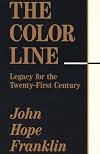
[Review written by my younger self]
Franklin's The Color Line is the chronicle of US racial struggles from the 17th century onwards. The color line, that subtle racial strain that separates society in schools, housing, government, and employment, is covered in great detail. Focusing on the oppression of the African American race in the US, Franklin covers President Carter's attempts at recruiting more women and black people into his administration and goes on to criticize President Reagan's show more attempts at removing any office appointment that contradicted his values. The various incidents of racial tension and outright persecution become the framework for Franklin's stand against the color line.
As first suggested by the distinguished writer, sociologist, and co-founder of the NAACP, William Edward Bughardt Do Bois, the racism that divides American will keep on growing and alienating persons. In carrying on this premonition, Franklin admonishes, just as Du Bois, that the world in general cannot function properly if color continues to be a fact in all aspects of life and in considerations of rank and leadership.
Franklin denounces those who claim the United States is color-blind and accuses them of being noncommittal, not interested in changing their country for the better. He refers to the Plessy vs. Ferguson case, stating that the Supreme Court Justice John Marshall Harlan and Plessy's attorney Albion Tourgee figured prominently in the dissent of civil rights, adamantly believing the law and Constitution, like justice herself, is color-blind. Not acknowledging racial tension, Franklin believes, allows others to abuse racial discrimination.
The various claims Franklin makes are supported with a plethora of evidence and instances. This should be expected with the gravity of the accusations he makes. State governments, he writes, would not be color-blind while the national government executes non-racist laws purely on the reluctant need and superficial responsibility of pleasing the people.
He reveals the government's extensive role in the color line going as far back as Virginia's explicit definitions of a "Negro" in 1879 (with the main requirement of having one-fourth or more of "Negro" blood). Franklin infers that such precise, authorized forms of discrimination can occur again if the color line is not recognized and eliminated.
At first glance, Franklin's work appears far from an objective historical reference. While his accounts of the pivotal events of the civil rights movement are seemingly accurate, Franklin's acrid attitude and condescending tone may make the reader dubious. Across the pages, his script has a tone of anger and frustration at the silence of the African American race and the people who invoke this silence. He takes on a certain sarcasm in speaking of the unappreciated achievements of the African American.
It is possible, though, that the biased demeanor of his prose is purposeful, meant to inspire people to further investigate the implications of the color line. Franklin spews forth his information without mercy or sensitivity. In his aggression for the color line, Franklin is not suggesting the elimination of aspects of culture and the total disregard of color. Franklin advises his readers to sway the government away from the color line, and to look to themselves as individuals not to keep lengthening the color line's divisions. The solution, he says, is in looking at America's past without dismissing it or flinching at it, without closing eyes or minds to the brutal events of racial inhumanity. In doing so, Franklin endeavors all Americans to look at each other, not in terms of color, but as human beings. show less
Franklin's The Color Line is the chronicle of US racial struggles from the 17th century onwards. The color line, that subtle racial strain that separates society in schools, housing, government, and employment, is covered in great detail. Focusing on the oppression of the African American race in the US, Franklin covers President Carter's attempts at recruiting more women and black people into his administration and goes on to criticize President Reagan's show more attempts at removing any office appointment that contradicted his values. The various incidents of racial tension and outright persecution become the framework for Franklin's stand against the color line.
As first suggested by the distinguished writer, sociologist, and co-founder of the NAACP, William Edward Bughardt Do Bois, the racism that divides American will keep on growing and alienating persons. In carrying on this premonition, Franklin admonishes, just as Du Bois, that the world in general cannot function properly if color continues to be a fact in all aspects of life and in considerations of rank and leadership.
Franklin denounces those who claim the United States is color-blind and accuses them of being noncommittal, not interested in changing their country for the better. He refers to the Plessy vs. Ferguson case, stating that the Supreme Court Justice John Marshall Harlan and Plessy's attorney Albion Tourgee figured prominently in the dissent of civil rights, adamantly believing the law and Constitution, like justice herself, is color-blind. Not acknowledging racial tension, Franklin believes, allows others to abuse racial discrimination.
The various claims Franklin makes are supported with a plethora of evidence and instances. This should be expected with the gravity of the accusations he makes. State governments, he writes, would not be color-blind while the national government executes non-racist laws purely on the reluctant need and superficial responsibility of pleasing the people.
He reveals the government's extensive role in the color line going as far back as Virginia's explicit definitions of a "Negro" in 1879 (with the main requirement of having one-fourth or more of "Negro" blood). Franklin infers that such precise, authorized forms of discrimination can occur again if the color line is not recognized and eliminated.
At first glance, Franklin's work appears far from an objective historical reference. While his accounts of the pivotal events of the civil rights movement are seemingly accurate, Franklin's acrid attitude and condescending tone may make the reader dubious. Across the pages, his script has a tone of anger and frustration at the silence of the African American race and the people who invoke this silence. He takes on a certain sarcasm in speaking of the unappreciated achievements of the African American.
It is possible, though, that the biased demeanor of his prose is purposeful, meant to inspire people to further investigate the implications of the color line. Franklin spews forth his information without mercy or sensitivity. In his aggression for the color line, Franklin is not suggesting the elimination of aspects of culture and the total disregard of color. Franklin advises his readers to sway the government away from the color line, and to look to themselves as individuals not to keep lengthening the color line's divisions. The solution, he says, is in looking at America's past without dismissing it or flinching at it, without closing eyes or minds to the brutal events of racial inhumanity. In doing so, Franklin endeavors all Americans to look at each other, not in terms of color, but as human beings. show less
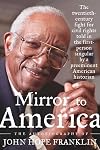
John Hope Franklin, historian, celebrated his 90th birthday in 2005 with the publication of his autobiography, Mirror to America. As historians will remind us, autobiographies, while certainly valuable for first-hand accounts of events, need to be read with a healthy dose of skepticism and weighed against other evidence in the historical record. Nevertheless, there is something quite compelling about reading autobiographies. I’m not sure I can explain it, but it seems to me a certain kind show more of intimacy is created between the autobiographical writer and the reader.
Franklin, like all admired historians, really knows how to tell a story. I was engrossed by his easy prose, the clarity of his thought and expression, his complex insights simply stated—in short, his ability to write for the reading pleasure of ordinary folks. Not to mention that Franklin’s life story is so fascinating, and ultimately affirms the capacity for beauty and generosity toward others that all humanity share. In this book, Franklin not only brings the reader along with his personal struggles and triumphs, he invites you to know how his life “mirrors” the social milieu of 20th century US. show less
Franklin, like all admired historians, really knows how to tell a story. I was engrossed by his easy prose, the clarity of his thought and expression, his complex insights simply stated—in short, his ability to write for the reading pleasure of ordinary folks. Not to mention that Franklin’s life story is so fascinating, and ultimately affirms the capacity for beauty and generosity toward others that all humanity share. In this book, Franklin not only brings the reader along with his personal struggles and triumphs, he invites you to know how his life “mirrors” the social milieu of 20th century US. show less
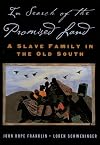
This book is a case study of the family of slave Sally Thomas in the antebellum era through the conclusion of the Civil War. Sally's owner allowed her to establish a laundry business in the city of Nashville and to live independently with her two Virginia-born sons and, later, a third son born several years after her arrival in Nashville. Eventually Sally was able to accumulate enough money to buy her own freedom and the freedom of two of her sons. (Her middle son, with her encouragement, show more escaped North to Buffalo in 1834.)
The family's history has been preserved through letters, personal papers, and the autobiography of Sally's youngest son, James. These family papers, plus additional research in census, property, court, newspaper, and other types of records, allowed the authors to reconstruct this family's history. This is both a strength and a weakness of the book. Sally never learned to read or write, but all of her sons were literate, as were the grandsons we learn of in the book. The family letters and reminiscences allow us to know much more about Sally than could be discovered solely through the public records that remain from the era. What is missing, however, is a woman's perspective, whether Sally's or any other woman's. The letters and autobiography were written by Sally's sons and grandsons, and both of the book's authors are men. This shows in the portions of the book describing Sally's life and thoughts. I learned just enough about Sally to make me regret that there isn't more that can be known about her. show less
The family's history has been preserved through letters, personal papers, and the autobiography of Sally's youngest son, James. These family papers, plus additional research in census, property, court, newspaper, and other types of records, allowed the authors to reconstruct this family's history. This is both a strength and a weakness of the book. Sally never learned to read or write, but all of her sons were literate, as were the grandsons we learn of in the book. The family letters and reminiscences allow us to know much more about Sally than could be discovered solely through the public records that remain from the era. What is missing, however, is a woman's perspective, whether Sally's or any other woman's. The letters and autobiography were written by Sally's sons and grandsons, and both of the book's authors are men. This shows in the portions of the book describing Sally's life and thoughts. I learned just enough about Sally to make me regret that there isn't more that can be known about her. show less
I am pleased I encountered this book in audio form, because if I had read it with my eyeballs, I think I would have found it tediously repetitive. Throughout the book, Franklin is constantly rendered "speechless" by yet another accolade, and always accepting prestigious posts "with pleasure". Yet, when you hear him relate the highlights of his life in his own voice, filled with such pride and pleasure, you just want to smile. You feel like you are sitting with him in his study while he goes show more through boxes filled with evidence of a long life well-lived. This is clearly the autobiography written by someone who is 90 years old, not 70, not 60 . . . it seems the longer you live, the more likely you are to focus on the upside.
So yes, there is a lack of analysis and insight. Sometimes I wonder if Franklin doesn't even remember all the details, and is relying on the items saved in the boxes to jog his memory. When he says an event was followed by a black tie dinner, which he and his wife were delighted to attend -- is he just referring to the invitation he found in the box? We don't hear anything else about the dinner and wonder why he found it worth mentioning.
You do get to learn a little bit about Franklin's research topics, but not much about his research process. How did he grow as a historian over his lifetime? How did the profession of historian change? In another example of a story partially told, Franklin relates a detailed description of how he was recruited to be chair of the Department of History at Brooklyn College, and then you hear nothing more about Brooklyn College until he is recruited to leave there for the University of Chicago. I thought perhaps he had stayed at Brooklyn only a few months, until I looked on Wikipedia and saw he was there 8 years. The actual work he did there does not merit even a paragraph in the autobiography: All you hear is that one of the upsides to the move to Chicago was relief from administrative duties in Brooklyn. What classes did he teach? How did students respond? What did he learn about teaching, how was Brooklyn different from other schools, how was history taught at that time? You get the feeling that over the course of his lifetime he spent an enormous amount of time teaching and preparing for classes, but he says almost nothing about it.
Despite my unanswerd questions, I recommend this book, especially in audio form, for the introduction it provides to this highly accomplished historian. Perhaps it's too bad he didn't write his autobiography when he was younger and sharper, but that would have taken time away from his many, many other worthwhile projects: The audiobook's highlights are when Franklin reads from his own works. I've just ordered Racial Equality in America (Jefferson Lecture in the Humanities, 1976). Franklin read from these lectures in the audiobook, but they were written in his prime, and perhaps they will give me a better idea of the work for which he earned all the accolades.
I was particularly intrigued by Franklin's disgust for how the media covered his work as chair for President Clinton's national panel on race. Franklin said when there was no controversy, the press treated the panel as if they were doing nothing; and when there was controversy, the press treated the panel as if they were failing. When he reads this portion of the book, he does not hide his frustration and anger over the obstacles the press placed in the way of success. And he treats as laughable their assertion that the work of the panel was doomed by the Lewinsky scandal and by Franklin's own failings. As if, he says, America's disdain for facing racial issues wasn't explanation enough. show less
So yes, there is a lack of analysis and insight. Sometimes I wonder if Franklin doesn't even remember all the details, and is relying on the items saved in the boxes to jog his memory. When he says an event was followed by a black tie dinner, which he and his wife were delighted to attend -- is he just referring to the invitation he found in the box? We don't hear anything else about the dinner and wonder why he found it worth mentioning.
You do get to learn a little bit about Franklin's research topics, but not much about his research process. How did he grow as a historian over his lifetime? How did the profession of historian change? In another example of a story partially told, Franklin relates a detailed description of how he was recruited to be chair of the Department of History at Brooklyn College, and then you hear nothing more about Brooklyn College until he is recruited to leave there for the University of Chicago. I thought perhaps he had stayed at Brooklyn only a few months, until I looked on Wikipedia and saw he was there 8 years. The actual work he did there does not merit even a paragraph in the autobiography: All you hear is that one of the upsides to the move to Chicago was relief from administrative duties in Brooklyn. What classes did he teach? How did students respond? What did he learn about teaching, how was Brooklyn different from other schools, how was history taught at that time? You get the feeling that over the course of his lifetime he spent an enormous amount of time teaching and preparing for classes, but he says almost nothing about it.
Despite my unanswerd questions, I recommend this book, especially in audio form, for the introduction it provides to this highly accomplished historian. Perhaps it's too bad he didn't write his autobiography when he was younger and sharper, but that would have taken time away from his many, many other worthwhile projects: The audiobook's highlights are when Franklin reads from his own works. I've just ordered Racial Equality in America (Jefferson Lecture in the Humanities, 1976). Franklin read from these lectures in the audiobook, but they were written in his prime, and perhaps they will give me a better idea of the work for which he earned all the accolades.
I was particularly intrigued by Franklin's disgust for how the media covered his work as chair for President Clinton's national panel on race. Franklin said when there was no controversy, the press treated the panel as if they were doing nothing; and when there was controversy, the press treated the panel as if they were failing. When he reads this portion of the book, he does not hide his frustration and anger over the obstacles the press placed in the way of success. And he treats as laughable their assertion that the work of the panel was doomed by the Lewinsky scandal and by Franklin's own failings. As if, he says, America's disdain for facing racial issues wasn't explanation enough. show less
Lists
Awards


You May Also Like


Associated Authors
Statistics
- Works
- 32
- Also by
- 18
- Members
- 2,493
- Popularity
- #10,289
- Rating
- 4.0
- Reviews
- 15
- ISBNs
- 99
- Languages
- 5
- Favorited
- 11