
Taylor Branch
Author of Parting the Waters: America in the King Years 1954-63
About the Author
Taylor Branch is the bestselling author of Parting the Waters: America in the King Years, 1954-63; Pillar of Fire: America in the King Years, 1963-65; At Canaan's Edge: America in the King Years, 1965-1968; and The Clinton Tapes. He has won the Pulitzer Prize, the National Book Critics Circle show more Award, the National Humanities Medal, and the Dayton Literary Peace Prize's Life-time Achievement Award. He lives in Baltimore with his wife, Christy Macy. show less
Series
Works by Taylor Branch
Nonviolent Leadership 1 copy
Associated Works
Tagged
Common Knowledge
- Birthdate
- 1947-01-14
- Gender
- male
- Education
- Princeton University (MPA|1970)
University of North Carolina (BA|1968) - Occupations
- journalist
editor - Organizations
- The Washington Monthly
Harper's Magazine
Esquire - Awards and honors
- Morehead Scholarship
MacArthur Fellowship (1991)
National Humanities Medal (1999)
Anisfield-Wolf Book Award (Lifetime Achievement, 2007)
Dayton Literary Peace Prize's Lifetime Achievement Award (2008) - Nationality
- USA
- Places of residence
- Baltimore, Maryland, USA
- Associated Place (for map)
- Maryland, USA
Members
Reviews
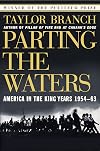
Taylor Branch makes the life of Dr. Martin Luther King, Jr. the primary focus of this first volume,
while he illuminates the faith and strength of the many brave, daring, and controversial men and women who supported,
inspired and sustained him. That Dr. King did not always do the same for them is an example of the author's extensive
research, sparing no one, Black or White, male or female, rich or poor, Baptist or Atheist, radical or conservative - from the Kennedys to King -
to examine
fault show more lines, evil, and greatness.
From Vernon Johns and Stanley Levison to Robert Moses, Bayard Rustin, and John Lewis, all are heroes!
Taylor Branch moves with understated eloquence and honesty as he relates how kids were risking their lives
in pursuit of FREEDOM while their rich religious elders and the liberal establishment in Washington created
a violent farce for white racists to gloat over. They could continue to murder, then sue the survivors for creating a disturbance.
Questions: Did MLK ever help those men he was imprisoned with? He gave them a promise.
Why did Eisenhower do so little to help?
and, most important, would Dr. King have sent his own children out to face the deadly hoses and the snarling dogs?
The "Children's March" that saved The South could so easily have turned into the Bull Connor/George Wallace Children's Massacre.
Would King and the other pacifist leaders have confronted the men who sent that little girl rolling down the street?
How did the rich northern Baptist churches justify themselves when so many African Americans in the South
faced lives of near-starvation, poverty, and no schools, doctors, or hospitals?
The author 'parts the waters' is so many ways, revealing the lame and dangerous excuses the Kennedys offered for their refusals
to send in the desperately needed federal forces to end and prevent the violence and murders of those merely seeking to register to vote.
Where was the promised "Voter Protection?!?"
And why did the Baptist leaders waste so much time and money on ridiculous confrontations
like the Taylor Preacher fracas? Again, Taylor Branch spares no fools.
What could be improved are the confusingly marked photographs, notably the first set. show less
while he illuminates the faith and strength of the many brave, daring, and controversial men and women who supported,
inspired and sustained him. That Dr. King did not always do the same for them is an example of the author's extensive
research, sparing no one, Black or White, male or female, rich or poor, Baptist or Atheist, radical or conservative - from the Kennedys to King -
to examine
fault show more lines, evil, and greatness.
From Vernon Johns and Stanley Levison to Robert Moses, Bayard Rustin, and John Lewis, all are heroes!
Taylor Branch moves with understated eloquence and honesty as he relates how kids were risking their lives
in pursuit of FREEDOM while their rich religious elders and the liberal establishment in Washington created
a violent farce for white racists to gloat over. They could continue to murder, then sue the survivors for creating a disturbance.
Questions: Did MLK ever help those men he was imprisoned with? He gave them a promise.
Why did Eisenhower do so little to help?
and, most important, would Dr. King have sent his own children out to face the deadly hoses and the snarling dogs?
The "Children's March" that saved The South could so easily have turned into the Bull Connor/George Wallace Children's Massacre.
Would King and the other pacifist leaders have confronted the men who sent that little girl rolling down the street?
How did the rich northern Baptist churches justify themselves when so many African Americans in the South
faced lives of near-starvation, poverty, and no schools, doctors, or hospitals?
The author 'parts the waters' is so many ways, revealing the lame and dangerous excuses the Kennedys offered for their refusals
to send in the desperately needed federal forces to end and prevent the violence and murders of those merely seeking to register to vote.
Where was the promised "Voter Protection?!?"
And why did the Baptist leaders waste so much time and money on ridiculous confrontations
like the Taylor Preacher fracas? Again, Taylor Branch spares no fools.
What could be improved are the confusingly marked photographs, notably the first set. show less

A monumental work in scope, research and importance. Although Martin Luther King, Jr. is the central figure, the book isn't exactly a biography of MLK, it's more a biography of a movement that changed the United States and became an inspiration for many other social movements. The work and sacrifices of hundreds of people is chronicled within this book, which can be a little daunting especially when you consider that at over 900 pages of text and another 150 or so of notes, references and show more the index, this is only the first book in a trilogy. Lucky for us, the writing is clear and the stories of the struggle are filled with drama, poignancy, and political gamesmanship.
Although incredible gains have been made in the 70 years since the time this book covers, this book still resonates as many of the issues still exist. Black people are incarcerated more easily and more subject to police violence, voting rights are being attacked and, in general, the administration currently seems to agree with many that somehow civil rights went too far.
In terms of the book, my only complaint is that the chapters are too long. I wish the author could have figured out a way to break them up into more digestible chunks. Even so, I look forward to reading the next book in the trilogy. show less
Although incredible gains have been made in the 70 years since the time this book covers, this book still resonates as many of the issues still exist. Black people are incarcerated more easily and more subject to police violence, voting rights are being attacked and, in general, the administration currently seems to agree with many that somehow civil rights went too far.
In terms of the book, my only complaint is that the chapters are too long. I wish the author could have figured out a way to break them up into more digestible chunks. Even so, I look forward to reading the next book in the trilogy. show less
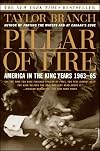
Most of this book was as thorough and well-researched as the first in the trilogy. There were two significant issues, though.
First, the beginning of this book (at least 20% of the text) repeats time covered in the first book. There's enough new information that the reader can't skip it altogether, but enough repeated that reading gets pretty tedious.
Second, this book does not do a good job of explaining Malcolm X, Elijah Muhammad, or the Nation of Islam. None of them were substantially show more introduced in the first book (despite being active in that time period) and they don't receive enough background in this book. In particular, their role in the civil rights movement and their goals seem to receive less attention than their internal power struggles. show less
First, the beginning of this book (at least 20% of the text) repeats time covered in the first book. There's enough new information that the reader can't skip it altogether, but enough repeated that reading gets pretty tedious.
Second, this book does not do a good job of explaining Malcolm X, Elijah Muhammad, or the Nation of Islam. None of them were substantially show more introduced in the first book (despite being active in that time period) and they don't receive enough background in this book. In particular, their role in the civil rights movement and their goals seem to receive less attention than their internal power struggles. show less
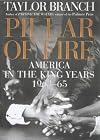
In "Pillar of Fire", the second volume of his America in the King Years trilogy, Taylor Branch portrays the civil rights era at its zenith. The first volume, "Parting the Waters", won the Pulitzer Prize for History. It is a monumental chronicle of a movement that stirred from Southern black churches to challenge the national conscience during the Eisenhower and Kennedy years. In this masterly continuation of the narrative, Branch recounts the climactic struggles as they commanded the show more national and international stage. "Pillar of Fire" covers the far-flung upheavals of the years 1963 to 1965-- Dallas, St. Augustine, Mississippi Freedom Summer, LBJ's Great Society and the Civil Rights Act of 1964, Vietnam, Selma. And it provides a frank, revealing portrait of Martin Luther King, Jr.-- haunted by blackmail, factionalism, and hatred while he tried to hold the nonviolent movement together as a dramatic force in history. Allies, rivals, and opponents addressed racial issues that went deeper than fair treatment at bus stops or lunch counters. Participants on all sides stretched themselves and their country to the breaking point over the meaning of simple words: dignity, equal votes, equal souls. Branch's gallery of historic characters also includes: Malcolm X, who challenged King's vision of nonviolent integration and lived under threat of death from the Nation of Islam. Lyndon Johnson, who believed racial conflict was destroying his political base in the South and threatening his dream to end poverty. J. Edgar Hoover, under whose direction the FBI, with Attorney General Robert Kennedy's approval, spied on King with wiretaps and bugs, and yet solved the most heinous racial crimes of the era. Diane Nash, the passionate leader behind sit-ins and Freedom Rides, whose determination shaped the Selma voting rights movement. Abraham Heschel, the Hasidic theologian who bonded with King in devotion to the Hebrew prophets. Robert Moses, the Mississippi SNCC leader who finally came undone over the human suffering caused by his Freedom Summer. Fannie Lou Hamer, a sharecropper who commanded a powerful voice for the unlettered. "Pillar of Fire" takes readers inside the dramas that shook every American institution, from the local pulpit to the Presidency. We disappear with courageous young people into Mississippi's feudal Parchman Penitentiary. We absorb the shock of a single Presidential election in 1964 that revolutionized the structure of partisan politics. We follow Northern rabbis summoned by King, and Mary Peabody, mother of the governor of Massachusetts, into the segregated jails of St. Augustine, Florida. We witness the Shakespearean conflicts between Lyndon Johnson and King and Hoover and Robert Kennedy. Branch brings to bear fifteen years of research-- archival investigation; nearly two thousand interviews: new primary sources, from FBI wiretaps to White House telephone recordings-- in a seminal work of history. "Pillar of Fire" captures the intensity of the legendary King years, when the movement broke down walls between races, regions, sexes, and religions, and between America and the larger world. Its struggle to rescue and redeem, its victories and defeats, its failings and sacrifices gave rise to opposing tides that still dominate the national debate about justice and democratic government. The story of this movement is an incandescent chapter in America's distinctive quest for freedom. show less
Lists
Awards


You May Also Like


Associated Authors
Statistics
- Works
- 13
- Also by
- 5
- Members
- 5,594
- Popularity
- #4,440
- Rating
- 4.4
- Reviews
- 56
- ISBNs
- 74
- Languages
- 5
- Favorited
- 12

