
Bob Woodward (1) (1943–)
Author of Fear: Trump in the White House
For other authors named Bob Woodward, see the disambiguation page.
About the Author
Bob Woodward is the author or co-author of seven #1 national bestsellers, including "All the President's Men," "The Brethren," & "The Agenda." He is Assistant Managing Editor of "The Washington Post" & lives in Washington, D.C. (Publisher Provided) Journalist and author Bob Woodward was born in show more Geneva, Illinois on March 26, 1943. He majored in history and English literature at Yale University on a Naval ROTC scholarship. After graduating in 1965, he spent four years in the United States Navy. At the end of his military service, he was accepted into Harvard Law School, but decided to become a journalist. Woodward and Carl Bernstein, both reporters for The Washington Post, uncovered the Watergate scandal that led to the resignation of President Richard Nixon. They wrote two books together All the President's Men about their account of the investigation and The Final Days about the collapse of the Nixon administration. He also has written numerous nonfiction books including three on the presidency of George W. Bush. He has twice contributed to collective journalistic efforts that earned The Washington Post and its staff a Pulitzer Prize. He also was awarded the 2003 Gerald R. Ford Prize for Distinguished Reporting on the Presidency. He is currently the assistant managing editor at The Washington Post and is responsible for the paper's special investigative projects. Woodward's title's,The Last of the President's Men and Fear, made the New York Times bestseller list. (Bowker Author Biography) show less
Image credit: Wikipedia page
Series
Works by Bob Woodward
The Trump Tapes - The Historical Record: Bob Woodward's Twenty Interviews with President Donald Trump (2022) 77 copies, 2 reviews
Secrets: A Reporter's Memoir 2 copies
Strah: Trump u Bijeloj Kući 1 copy
Veil r 1 copy
Trump in the White House 1 copy
WOO Greenspan 1 copy
Associated Works
Shaking the Foundations: 200 Years of Investigative Journalism in America (Nation Books) (2003) — Contributor — 45 copies
Tagged
Common Knowledge
- Canonical name
- Woodward, Bob
- Legal name
- Woodward, Robert Upshur
- Birthdate
- 1943-03-26
- Gender
- male
- Education
- Yale University (BA|1965)
- Occupations
- assistant managing editor (The Washington Post)
investigative reporter - Organizations
- The Washington Post
United States Navy - Awards and honors
- Heywood Broun Memorial Award (1972)
Worth Bingham Prize (1972, 1986)
George Polk Award (1972)
William Allen White Award (2000)
Gerald R. Ford Prize for Distinguished Reporting on the Presidency (2002)
Elijah Parish Lovejoy Award (2012) (show all 7)
Walter Cronkite Award for Excellence in Journalism (2001) - Agent
- Robert B. Barnett
- Nationality
- USA
- Birthplace
- Geneva, Illinois, USA
- Places of residence
- Geneva, Illinois, USA
Wheaton, Illinois, USA - Associated Place (for map)
- Illinois, USA
Members
Discussions
Bob Woodward's "Peril" -- Plan To Read It?. . .Discussion in Pro and Con (September 2021)
Reviews
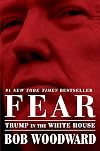
Because so much of the dialogue in “Fear: Trump in the White House” is between Trump’s generals and staffers, his lawyers and a few cabinet members, a portrait of the real Donald Trump kind of creeps out of the pages of this book quietly.
Donald Trump believes that fear instills if not loyalty at least obedience in his White House and beyond, and that is what this book is all about: what Donald Trump’s mantra means to governing America at home, and how it sets the stage for relations show more with its allies and enemies.
Donald Trump wants you to be afraid of him. And many of us are, but not for the reasons that would necessarily serve his ends.
Much of the dialogue appears without reflection or analysis. We kind of get what the antagonists feel, but not too much of what the author feels or how the author compares what he is hearing to what he has written about at length before: what other presidents felt, or what other presidents did that actually worked.
In the short time frame of the book we never get to find out if things Trump did actually worked except that almost everything he says creates fierce, constant criticism and contempt.
Woodward starts with a Donald Trump premise and then rolls it out against the advice of his staff and the wider world. For example, why should America bother subsiding trade deficits with South Korea and paying billions for a military presence in that country if America gets nothing in return and the North Koreans continue unabated to build their nuclear offensive capabilities?
Why should America stay in Afghanistan at all when it cost America close to a trillion dollars to find out it is incapable of controlling the political landscape there or recouping its expense by harvesting Afganistan’s supposed mineral wealth?
Trump feels he never gets a straight answer from his advisors, but the answer is pretty elementary: nuclear weapons are no laughing matter for those who have them and those who strive to acquire them. They give you leverage, a concept Trump is certainly well aware of. And the more nations who have them, the weaker everybody is to control them.
That is why America’s military is so outsized in relation to the immediate threats that face it. It’s because neither America nor anybody else wants to see what happens when that button gets pushed again.
That’s also why the outsized influence of Steve Bannon on Donald Trump is so worrisome. Build walls, smash global trade, ignore climate change.
These are really dumb ideas.
For all that ails American capitalists and American democratic institutions; for the inequities between who creates American wealth and who gets to keep it, for all those who believe in individual sovereignty (read: abortion rights) and those who want to enforce supposed Christian standards of behaviour by fiat; for those who believe that automatic weapons have no place in the polity; for those who believe America is wealthy enough to provide basic health care insurance; for all those who despise the influence of libertarians in public debate, this story is only about one man and his loyalties.
In the 2018 midterm elections, Trump tried to divert attention away from the unpopular Republican stand against pre-existing conditions in the Affordable Care Act. He called out troupes to defend the southern border against aliens creeping into America.
During this whole episode, one heard so little in the media about why these people were so desperate to risk incarceration at the US border, or risk having their children taken from them. There was no discussion about the problems failed states to the south face or what their neighbours are trying to do to correct the violence and corruption at home.
It is not that different from what is causing Europe palpitations over the tidal wave of migrants on their borders.
Also troubling about this book is the way it satirizes the so-called adults in the room. If Trump doesn’t get the answers he wants from his advisors, there’s a suggestion that there’s something wrong with the advisors. Indeed there is. The retired generals and Wall Street types around him supposedly understand the right thing to do, but Woodward makes them out to be somewhat twisted individuals as well — which they probably are. But the inference is that Trump is actually right.
Nobody wants to hear that. show less
Donald Trump believes that fear instills if not loyalty at least obedience in his White House and beyond, and that is what this book is all about: what Donald Trump’s mantra means to governing America at home, and how it sets the stage for relations show more with its allies and enemies.
Donald Trump wants you to be afraid of him. And many of us are, but not for the reasons that would necessarily serve his ends.
Much of the dialogue appears without reflection or analysis. We kind of get what the antagonists feel, but not too much of what the author feels or how the author compares what he is hearing to what he has written about at length before: what other presidents felt, or what other presidents did that actually worked.
In the short time frame of the book we never get to find out if things Trump did actually worked except that almost everything he says creates fierce, constant criticism and contempt.
Woodward starts with a Donald Trump premise and then rolls it out against the advice of his staff and the wider world. For example, why should America bother subsiding trade deficits with South Korea and paying billions for a military presence in that country if America gets nothing in return and the North Koreans continue unabated to build their nuclear offensive capabilities?
Why should America stay in Afghanistan at all when it cost America close to a trillion dollars to find out it is incapable of controlling the political landscape there or recouping its expense by harvesting Afganistan’s supposed mineral wealth?
Trump feels he never gets a straight answer from his advisors, but the answer is pretty elementary: nuclear weapons are no laughing matter for those who have them and those who strive to acquire them. They give you leverage, a concept Trump is certainly well aware of. And the more nations who have them, the weaker everybody is to control them.
That is why America’s military is so outsized in relation to the immediate threats that face it. It’s because neither America nor anybody else wants to see what happens when that button gets pushed again.
That’s also why the outsized influence of Steve Bannon on Donald Trump is so worrisome. Build walls, smash global trade, ignore climate change.
These are really dumb ideas.
For all that ails American capitalists and American democratic institutions; for the inequities between who creates American wealth and who gets to keep it, for all those who believe in individual sovereignty (read: abortion rights) and those who want to enforce supposed Christian standards of behaviour by fiat; for those who believe that automatic weapons have no place in the polity; for those who believe America is wealthy enough to provide basic health care insurance; for all those who despise the influence of libertarians in public debate, this story is only about one man and his loyalties.
In the 2018 midterm elections, Trump tried to divert attention away from the unpopular Republican stand against pre-existing conditions in the Affordable Care Act. He called out troupes to defend the southern border against aliens creeping into America.
During this whole episode, one heard so little in the media about why these people were so desperate to risk incarceration at the US border, or risk having their children taken from them. There was no discussion about the problems failed states to the south face or what their neighbours are trying to do to correct the violence and corruption at home.
It is not that different from what is causing Europe palpitations over the tidal wave of migrants on their borders.
Also troubling about this book is the way it satirizes the so-called adults in the room. If Trump doesn’t get the answers he wants from his advisors, there’s a suggestion that there’s something wrong with the advisors. Indeed there is. The retired generals and Wall Street types around him supposedly understand the right thing to do, but Woodward makes them out to be somewhat twisted individuals as well — which they probably are. But the inference is that Trump is actually right.
Nobody wants to hear that. show less
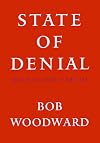
Bob Woodward's latest insider account of the Bush Administration at war, State of Denial is by far the most disturbing of the three volumes (the others being Bush at War and Plan of Attack). While some have described this new, extremely critical book as a change of course for Woodward based on public perceptions of the Administration and a judgement of what would sell more books (I have heard him described as a "weathervane"), I think it makes more sense to view State of Denial as a new show more point on a progressive continuum. As the Bush Administration has proceeded through military operations in Afghanistan and in Iraq, more information about the governing style of the president and his closest advisors has become evident - this book couldn't have been written in 2002 - or in 2004 - but Woodward could not have avoided writing it in 2006.
I worked very hard to avoid all the advance publicity from this book, from the scoops obtained by the New York Times to the excerps in the Washington Post and all the coverage on cable and network news. Of course to have done so completely would have been impossible, and I learned many of Woodward's revelations before I had a chance to read the actual book. Nonetheless, that did nothing to blunt the impact of the narrative, which examines the Administration's decision to go to war in Iraq, the planning for that decision, the fruitless search for weapons of mass destruction, and the acute failure to plan for postwar Iraq in a meaningful or effective way.
The president does not emerge well from this book. Neither does Donald Rumsfeld, who is portrayed as a micromanaging pain-in-the-everything; he comes off (even and perhaps particularly in the moments where Woodward interviews with him on the record) as oblivious to what's really going on around him, selectively remembering details of conversations with other members of the Administration (including the president) and running roughshod over the uniformed military officers when their views did not align precisely with his own.
To be fair, Woodward treats just about every major participant harshly, and deservedly so. What struck me most when reading this book was the high number of "right there" moments ... right there, I would think to myself, what if person X had not given in, what if the argument had continued, what if minds had been changed by five more minutes of discussion? Above all, what if the president of the United States had been willing to ask questions instead of accepting a bunch of sycophantic head-bobbing? What if some of the greatest strategic minds in America today had been consulted rather than ignored? Would America, and Iraq, find themselves in the circumstances which exist today?
Like his earlier volumes, this latest product from Woodward is readable and engaging. It's also eminently depressing, but should be read nonetheless.
http://philobiblos.blogspot.com/2006/10/book-review-state-of-denial.html show less
I worked very hard to avoid all the advance publicity from this book, from the scoops obtained by the New York Times to the excerps in the Washington Post and all the coverage on cable and network news. Of course to have done so completely would have been impossible, and I learned many of Woodward's revelations before I had a chance to read the actual book. Nonetheless, that did nothing to blunt the impact of the narrative, which examines the Administration's decision to go to war in Iraq, the planning for that decision, the fruitless search for weapons of mass destruction, and the acute failure to plan for postwar Iraq in a meaningful or effective way.
The president does not emerge well from this book. Neither does Donald Rumsfeld, who is portrayed as a micromanaging pain-in-the-everything; he comes off (even and perhaps particularly in the moments where Woodward interviews with him on the record) as oblivious to what's really going on around him, selectively remembering details of conversations with other members of the Administration (including the president) and running roughshod over the uniformed military officers when their views did not align precisely with his own.
To be fair, Woodward treats just about every major participant harshly, and deservedly so. What struck me most when reading this book was the high number of "right there" moments ... right there, I would think to myself, what if person X had not given in, what if the argument had continued, what if minds had been changed by five more minutes of discussion? Above all, what if the president of the United States had been willing to ask questions instead of accepting a bunch of sycophantic head-bobbing? What if some of the greatest strategic minds in America today had been consulted rather than ignored? Would America, and Iraq, find themselves in the circumstances which exist today?
Like his earlier volumes, this latest product from Woodward is readable and engaging. It's also eminently depressing, but should be read nonetheless.
http://philobiblos.blogspot.com/2006/10/book-review-state-of-denial.html show less
Rage by Bob Woodward
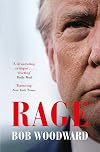
Sadly with a couple of years hindsight, although Woodward’s record of the first three years of Trump’s presidency remains damning, the main argument that Trump was not suitable to be President of the USA is now also commonplace. We lived through those mad times and survived.
As you should expect as written by Woodward, it is eminently readable, broken into 46 chapters which take you from department to department of Trump’s administration, moving the story forwards, history.
Where the show more book works best for me is in telling the stories of Mattis, Tillerson and Coats. People who served their country, but were betrayed by their President.
I am currently also reading the stoic philosophy of Marcus Aurelius’s Meditations, and I think a lot of the military personnel who were asked to serve the US in the Trump administration were probably more than a little conversant with the stoicism of the Meditations.
The coverage of the Covid-19 pandemic is necessarily incomplete, as the book covers the period to July 2020, but it is illuminating for being written in that moment.
Although the book might now be viewed as historical reportage, it remains fascinating to read and I was particularly taken with chapter eleven about the nuclear threat of North Korea, where I hadn’t previously appreciated the US/South Korean response.
I will be reading Woodward’s next book, Peril. show less
As you should expect as written by Woodward, it is eminently readable, broken into 46 chapters which take you from department to department of Trump’s administration, moving the story forwards, history.
Where the show more book works best for me is in telling the stories of Mattis, Tillerson and Coats. People who served their country, but were betrayed by their President.
I am currently also reading the stoic philosophy of Marcus Aurelius’s Meditations, and I think a lot of the military personnel who were asked to serve the US in the Trump administration were probably more than a little conversant with the stoicism of the Meditations.
The coverage of the Covid-19 pandemic is necessarily incomplete, as the book covers the period to July 2020, but it is illuminating for being written in that moment.
Although the book might now be viewed as historical reportage, it remains fascinating to read and I was particularly taken with chapter eleven about the nuclear threat of North Korea, where I hadn’t previously appreciated the US/South Korean response.
I will be reading Woodward’s next book, Peril. show less

This hurts to say, but like many others, I was excited as hell when this book came out. I've been a Woodward fan since the '70s and a Trump hater for just as long, so when I heard he'd gotten a good bit of time with Trump, possibly a little dirt too (I generally don't like gossip, but since most Trump gossip [& lies] come from Trump himself, I need another source for any good stuff.
Woodward for me and millions of others seemed the epitome of the traditional investigative journalist, a job, show more like many others, that seems to have disappeared despite the title remaining. I've respected him for so long because he was a "shining beacon" for other investigative journalists and those aspiring to be. But this book (and his previous one) were so incredibly disappointing, that not only did I feel really let done, but I almost felt betrayed in an odd way, by Woodward, who has clearly lost the edge he had long had. Not only did he largely lob softballs to the walking id, but he cozied up to him and chatted as though they were buds of the same "class," meeting as near equals (Trump doesn't believe anyone but his master, Putin, could ever be an equal) as high profile expensive restaurants, likely over luxurious food and fancy cocktails most Americans Trump has long helped put out of work, along with his truly rich buddies who haven't been faking it for decades, so Woodward came off not only as a dinosaur who once earned and deserved respect for his brains and guts but has traded that in for a lifestyle he may be entitled to, may have earned, may even deserve, but at the cost of his integrity as in guilt by association. Deeply disappointed, but it is a dying profession like so many others, sadly. Not remotely recommended. show less
Woodward for me and millions of others seemed the epitome of the traditional investigative journalist, a job, show more like many others, that seems to have disappeared despite the title remaining. I've respected him for so long because he was a "shining beacon" for other investigative journalists and those aspiring to be. But this book (and his previous one) were so incredibly disappointing, that not only did I feel really let done, but I almost felt betrayed in an odd way, by Woodward, who has clearly lost the edge he had long had. Not only did he largely lob softballs to the walking id, but he cozied up to him and chatted as though they were buds of the same "class," meeting as near equals (Trump doesn't believe anyone but his master, Putin, could ever be an equal) as high profile expensive restaurants, likely over luxurious food and fancy cocktails most Americans Trump has long helped put out of work, along with his truly rich buddies who haven't been faking it for decades, so Woodward came off not only as a dinosaur who once earned and deserved respect for his brains and guts but has traded that in for a lifestyle he may be entitled to, may have earned, may even deserve, but at the cost of his integrity as in guilt by association. Deeply disappointed, but it is a dying profession like so many others, sadly. Not remotely recommended. show less
Lists
Drugs Books (1)
Awards


You May Also Like


Associated Authors
Statistics
- Works
- 36
- Also by
- 10
- Members
- 24,257
- Popularity
- #865
- Rating
- 3.7
- Reviews
- 433
- ISBNs
- 418
- Languages
- 17
- Favorited
- 31


