
Ron Suskind
Author of The One Percent Doctrine: Deep Inside America's Pursuit of Its Enemies Since 9/11
About the Author
Ron Suskind is the author of The Way of the World, The One Percent Doctrine, The Price of Loyalty, and A Hope in the Unseen. From 1993 to 2000 he was the senior national affairs writer for The Wall Street Journal, where he won a Pulitzer Prize. He lives in Washington, D.C.
Image credit: Is America's Body Politic Broken?, The C Douglas Dillon Lecture, 16 October 2012 By Chatham House - Ron Suskind, Senior Fellow, Edmund Safra Center for Ethics, Harvard University, CC BY 2.0, https://commons.wikimedia.org/w/index.php?curid=26223587
Works by Ron Suskind
The One Percent Doctrine: Deep Inside America's Pursuit of Its Enemies Since 9/11 (2006) 889 copies, 14 reviews
The Price of Loyalty: George W. Bush, the White House, and the Education of Paul O'Neill (2004) 857 copies, 5 reviews
A Hope in the Unseen: An American Odyssey from the Inner City to the Ivy League (1998) 850 copies, 43 reviews
Confidence Men: Wall Street, Washington, and the Education of a President (2011) 404 copies, 10 reviews
Without a Doubt [article] 1 copy
Associated Works
Tagged
Common Knowledge
- Legal name
- Suskind, Ronald Steven
- Birthdate
- 1959-11-20
- Gender
- male
- Occupations
- journalist
- Organizations
- The Wall Street Journal
PBS - Awards and honors
- Pulitzer Prize (Feature Writing, 1995)
- Agent
- The Wylie Agency
- Nationality
- USA
- Birthplace
- Kingston, New York, USA
- Places of residence
- Washington, D.C., USA
- Associated Place (for map)
- USA
Members
Reviews
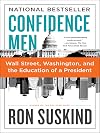
This is a PHENOMENAL recounting of the 2008 financial meltdown - the heroes, villains, and Barack Obama, who falls in the middle. The most venal: all the banksters and their lobbyists, especially Blankfein and Dimon; Rahm Emanuel, he-man-woman-hater and Obama's Chief of Staff and old friend; Larry Summers, he-man-woman-hater and self-proclaimed expert on all matters economic; Tim Geithner, a man with no morals, in the pocket of Wall St. In Congress, Chris Dodd and Barney Frank, who sold out show more to Wall St by blowing big holes in what would have been the reformation of how they do business. The heroes are the regulators Gary Gensler and Paul Volker; Peter Rouse, who succeeded Rahm Emanuel; Elizabeth Warren, who invented the Consumer Financial Protection Bureau but wasn't trusted to run it; Paul Volker, whose rule separating commercial banks from sketchy and lucrative debt financing was obliterated. The president, newly elected, keeps around his old Chicago campaign buddies and allows them to make disastrous decisions for him. The war between Wall St and Washington devolves into the greedy hands washing each other, and it takes two years for Obama to grasp the reins. Maybe not so shocking should be the pervasive sexism that sidelined talented professional women, as Emanuel and Summers never did conceal their lack of regard for their skills. This 2011 book is so riveting that almost 24 hours of audio, read by the outstanding James Lurie, flies by too quickly. A masterwork, an indictment, and a superb analysis. show less
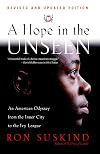
What is most impressive about A Hope in the Unseen is Suskind's ability to turn hard journalism into a compelling narrative that reads like fiction but is faithful to the truths of his subjects' lives. I am a high school teacher who sees students who struggle with the same issues of race and class and what it means to try to break out of the rigid and defeating expectations set by the community and society. It is Cedric's strength of character and refusal to cede his morals to those around show more him which makes him a role model for our age. show less
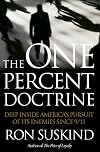
This book is not so much an eye opener, as for most of the world it was always clear that the 11th September attacks were just used as a pretext to prosecute a war against Iraq that was never justified by the events. However it was a clear vindication of all that many many people were saying, based on testimony from some very well placed sources. As such this was a good piece of journalism in book form.
From the opening pages it was clear that Suskind was going to take no prisoners. He tells show more us that Bush was never much of a reader (despite the efforts to project an image that he was), and that he based his decisions on gut reactions based on face to face meetings.
The genius of Suskind is that he writes in a way that shows he is not just twisting a knife in the dying corpse of a discredited administration. In fact he makes a good case for Bush's strengths in his use of gut feeling - something that served him well over the years. Yes, the author is fairly clear that Cheney was really pulling the strings in the US administration (with the help of Rumsfeld et al.), but we see Bush fighting to assert his own authority, and his strengths and weaknesses laid bare.
The result is, of course, a fairly damning indictment on men who followed an obsession against the evidence, leading America into what we can all now see to be the biggest American foreign policy disaster ever. Nevertheless it is written in a way that is not anti American. It is well informed, compassionate and articulately written.
My biggest problem with the book though was the slight;y piecemeal way it is laid out. The timeline jumps forward and back a little. As this is essentially a narrative history based on primary sources, I would have liked it to be laid out in a slightly more logical and chronological order. But that is not a reason not to read this book. In fact this book or something like it should be used in all future courses on American history! show less
From the opening pages it was clear that Suskind was going to take no prisoners. He tells show more us that Bush was never much of a reader (despite the efforts to project an image that he was), and that he based his decisions on gut reactions based on face to face meetings.
The genius of Suskind is that he writes in a way that shows he is not just twisting a knife in the dying corpse of a discredited administration. In fact he makes a good case for Bush's strengths in his use of gut feeling - something that served him well over the years. Yes, the author is fairly clear that Cheney was really pulling the strings in the US administration (with the help of Rumsfeld et al.), but we see Bush fighting to assert his own authority, and his strengths and weaknesses laid bare.
The result is, of course, a fairly damning indictment on men who followed an obsession against the evidence, leading America into what we can all now see to be the biggest American foreign policy disaster ever. Nevertheless it is written in a way that is not anti American. It is well informed, compassionate and articulately written.
My biggest problem with the book though was the slight;y piecemeal way it is laid out. The timeline jumps forward and back a little. As this is essentially a narrative history based on primary sources, I would have liked it to be laid out in a slightly more logical and chronological order. But that is not a reason not to read this book. In fact this book or something like it should be used in all future courses on American history! show less
A Hope in the Unseen is a brutally honest, well written, and incredibly eye opening work that deals with issues of race, inequality, education, overcoming odds that are against you and what it takes to succeed. Author Ron Suskind follows the real life, moving journey of Cedric Jennings. He is a young high school boy in inner city DC that has the brains and the drive to take him far in his academic career and his life, but his journey to try to succeed is harder than most. During his high show more school years, he dreams of going to a well acclaimed college, and making it out of his impoverished and low achieving area. There is such a surprising contrast, which is represented on the front cover saying, “An American odyssey from inner city to the ivy league”. This idea is a major reason a lot of people are interested in the book in the first place. When you think of students that would attend an Ivy League school, Cedric does not fit the image. Cedric is an inner city boy with an absent father that is in jail and a mother who can’t pay the bills, coming from a place many would refer to as the ghetto. He is at a school that accepts the fact that most of their students are not going to succeed in life, and he is the odd one out. Others at his high school resent him and physically, verbally, and emotionally abuse him for trying to be someone that they could never dream to be. None of this stops him, and neither does struggling at an MIT summer program and being told he would never be accepted into their program. Through his mother, Barbara Jennings’ support, as well as a few teachers, and his own motivation, he is able to get accepted into Brown University, an acclaimed Ivy League School as well as receive numerous scholarships to make this a feasible option for him. The rest of the novel follows his journey as he moves to Brown and begins to realize what an outsider he really is, and how hard the rigor of the coursework is at this caliber of a school. He struggles socially, academically, and emotionally through this transition. Academically you watch him grow through experience, his teachers, and most notably his tutor who showed him how to let his past make his academics stronger and not weaken them. Socially he learns to let people that are different from himself help him grow, and that letting people in isn't necessarily a bad thing. He also finds that he can incorporate the worlds of blacks and non-blacks at Brown, and that maybe they aren't as separated as he thought they were. As Suskind puts it, “…he said something about having spent his whole life among blacks and wanting to see if there is a place for him among non-blacks”. He so badly wants to reject where he came from and the whole culture that he came from that it takes him time to realize that maybe he doesn't have to. As he begins to acclimate and grow into his new life at Brown, he also begins to struggle emotionally. He describes this as “he had been feeling guilty for months now about not belonging in the southeast anymore, about leaving everyone behind”. Suskind does an incredible job showing how he works through these conflicts that he faces, and how he grows and learns from them. Through showing his raw journey without glamorizing it, the reader is able to truly begin to understand Cedric and learn from his amazing transformation.
Coming into reading this book, I expected it to be a story about overcoming the odds and a social commentary on the injustices and inequality in America through social class, race, and in our school systems. Although these topics were discussed and definitely held a prominent role, as they should, A Hope in the Unseen is so much more than that. In this raw account of the ups and downs and all the factors that played a role in Cedric's journey made it so much more than a stereotypical, seemingly perfect success story. I understand more of what it is actually like to be facing these issues. I am also more understanding of him because Suskind shows reasoning and explanation behind almost all of his decisions. Seeing that my story is so different from his, it is important that not only I hear his story but have a better understanding, so that it can influence the way I think about these issues, and Ron Suskind did an amazing job conquering this feat.
Being a freshman college student myself, I was surprised by not only how much I could relate to Cedric but also how much his story has influenced the way I’m thinking about my own. I come from a suburban upbringing and a school that pushed its students to their full potential, and expected all of its students to go to well acclaimed colleges. Although my background isn't even remotely similar to Cedric’s, I've still gained an appreciation for where I've come from, the good and the bad, and how much it has grown me as a person and lead me to where I am today. A Hope in the Unseen has not only changed my perspective on my own life, but also given me insight on the lives and struggles of others, which made the book truly an insightful read.
Author Ron Suskind used his highly observant and incredible insight he was able to get from not only Cedric but others that were a vital part in his story to paint a picture of what Cedric’s life was really like. Another book that relates a lot to how Suskind accomplished this is The Dirty Life, it explores author Kristen Kimball’s transition from being a city girl to following her dreams out to the country to be a farmer. Just like Kimball did in her memoir, Suskind uses his insight to truly paint the picture of what the transition was really like and how it affected the main character. Suskind mentions that “It is [his] hope that this book will similarly confuse dug-in racial expectations and, in some small way, help weave the black experience and the white experience… into a shared national narrative”. I think in some small way he did just that, by not forcing some opinion on the social issues in the book but through letting the story speak for itself. Cedric’s story helps us understand the impacts these issues have on people in America today, but also gives perspective on what that truly means. Through allowing readers to understand and maybe even relate to Cedric who is so different from many of the readers themselves, Suskind's goal was accomplished in the sense of being a small step towards the big picture goal. I truly enjoyed being taken on Cedric's journey, and opening my eyes to these issues I hadn't understood before. Therefore, I would recommend this book to college students because of the ways they can relate to Cedric, but also to anyone that enjoys broadening their horizons through literature and others experiences. show less
Coming into reading this book, I expected it to be a story about overcoming the odds and a social commentary on the injustices and inequality in America through social class, race, and in our school systems. Although these topics were discussed and definitely held a prominent role, as they should, A Hope in the Unseen is so much more than that. In this raw account of the ups and downs and all the factors that played a role in Cedric's journey made it so much more than a stereotypical, seemingly perfect success story. I understand more of what it is actually like to be facing these issues. I am also more understanding of him because Suskind shows reasoning and explanation behind almost all of his decisions. Seeing that my story is so different from his, it is important that not only I hear his story but have a better understanding, so that it can influence the way I think about these issues, and Ron Suskind did an amazing job conquering this feat.
Being a freshman college student myself, I was surprised by not only how much I could relate to Cedric but also how much his story has influenced the way I’m thinking about my own. I come from a suburban upbringing and a school that pushed its students to their full potential, and expected all of its students to go to well acclaimed colleges. Although my background isn't even remotely similar to Cedric’s, I've still gained an appreciation for where I've come from, the good and the bad, and how much it has grown me as a person and lead me to where I am today. A Hope in the Unseen has not only changed my perspective on my own life, but also given me insight on the lives and struggles of others, which made the book truly an insightful read.
Author Ron Suskind used his highly observant and incredible insight he was able to get from not only Cedric but others that were a vital part in his story to paint a picture of what Cedric’s life was really like. Another book that relates a lot to how Suskind accomplished this is The Dirty Life, it explores author Kristen Kimball’s transition from being a city girl to following her dreams out to the country to be a farmer. Just like Kimball did in her memoir, Suskind uses his insight to truly paint the picture of what the transition was really like and how it affected the main character. Suskind mentions that “It is [his] hope that this book will similarly confuse dug-in racial expectations and, in some small way, help weave the black experience and the white experience… into a shared national narrative”. I think in some small way he did just that, by not forcing some opinion on the social issues in the book but through letting the story speak for itself. Cedric’s story helps us understand the impacts these issues have on people in America today, but also gives perspective on what that truly means. Through allowing readers to understand and maybe even relate to Cedric who is so different from many of the readers themselves, Suskind's goal was accomplished in the sense of being a small step towards the big picture goal. I truly enjoyed being taken on Cedric's journey, and opening my eyes to these issues I hadn't understood before. Therefore, I would recommend this book to college students because of the ways they can relate to Cedric, but also to anyone that enjoys broadening their horizons through literature and others experiences. show less
Lists
Awards


You May Also Like


Associated Authors
Statistics
- Works
- 7
- Also by
- 3
- Members
- 3,759
- Popularity
- #6,741
- Rating
- 3.7
- Reviews
- 85
- ISBNs
- 83
- Languages
- 7
- Favorited
- 3