
John W. Dean (1) (1938–)
Author of Conservatives without Conscience
For other authors named John W. Dean, see the disambiguation page.
About the Author
John W. Dean was born in Akron, Ohio on October 14, 1938. He received a B.A. from The College of Wooster in 1961 and a J.D. from the Georgetown University Law Center in 1965. He served as the White House legal counsel to President Nixon for a thousand days. He also served as chief minority counsel show more for the House Judiciary Committee and as an associate deputy attorney general in the U.S. Department of Justice. He has written numerous non-fiction books including Blind Ambition, Lost Honor, Conservatives Without Conscience, The Rehnquist Choice, Worse than Watergate, Broken Government: How Republican Rule Destroyed the Legislative, Executive and Judicial Branches, and The Nixon Defense: What He Knew and When He Knew It. (Bowker Author Biography) show less
Works by John W. Dean
Broken Government: How Republican Rule Destroyed the Legislative, Executive, and Judicial Branches (2007) 224 copies, 2 reviews
The Rehnquist Choice: The Untold Story of the Nixon Appointment That Redefined the Supreme Court (2001) 133 copies, 1 review
Associated Works
Tagged
Common Knowledge
- Other names
- Dean, John Wesley, III (birth name)
- Birthdate
- 1938-10-14
- Gender
- male
- Education
- Georgetown University (JD|1965)
College of Wooster (AB|1961) - Occupations
- lawyer
banker
writer
lecturer - Organizations
- Republican Party
Richard Nixon administration (1970-1973) - Relationships
- Dean, Maureen (spouse)
Nixon, Richard (employer) - Short biography
- \
- Nationality
- USA
- Birthplace
- Akron, Ohio, USA
- Places of residence
- Akron, Ohio, USA
Beverly Hills, California, USA
Marion, Ohio, USA
Flossmoor, Illinois, USA - Associated Place (for map)
- USA
Members
Reviews
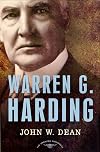
When I was a lad, perched on the wall there was a chart of the ratings of Presidential greatness. The two failures were Presidents Grant and Harding; their administrations were plagued by scandal. I've noticed latterly that the historians' scorn has this century tended more toward policy failures (e.g., Andrew Johnson, Buchanan, Pierce) than those beset by scandal, though I don't know whether Grant and Harding have actually escaped the category. I had assumed that the series' editors show more assigned John Dean to the Harding project because of his association with Watergate, which, along with Harding's Teapot Dome, ranks as the twentieth century's great political scandal, but it transpires that Dean hails from Harding's hometown and is a Harding hobbyist.
Dean has drawn a fascinating subject; Harding, both in life and death, has attracted an impressive vapor trail of calumny, some true, some dubious, some extremely dubious. He has managed to be credited with, inter alia, Afro-American ancestry, fathering an illegitimate child, having carnal relations with his mistress in a White House closet, and being poisoned by his wife. Dean gives us a full-throated apologia for the man. He credits almost none of the tittle-tattle and sets out a case that Harding was, if not quite great in his conduct of office, at the least a well-meaning, hard-working man who wanted to do well and often succeeded. To his credit, Dean does document Harding's fall from grace in the years after his death in great detail in a longish coda which takes up about an eighth of the book. He makes his case pretty well, and it's a voice which deserves to be heard. The problem is that this is, at bottom, a hagiography.. Some of the villains he excoriates were doubtless malevolent fast-buck artists, but their ranks also include many extremely reputable writers and thinkers. I ended up convinced that Harding meant well and to take most of the folklore surrounding him with a grain of salt. I'm not so sure that he had greatness within him, far less that he achieved it in the presidency. show less
Dean has drawn a fascinating subject; Harding, both in life and death, has attracted an impressive vapor trail of calumny, some true, some dubious, some extremely dubious. He has managed to be credited with, inter alia, Afro-American ancestry, fathering an illegitimate child, having carnal relations with his mistress in a White House closet, and being poisoned by his wife. Dean gives us a full-throated apologia for the man. He credits almost none of the tittle-tattle and sets out a case that Harding was, if not quite great in his conduct of office, at the least a well-meaning, hard-working man who wanted to do well and often succeeded. To his credit, Dean does document Harding's fall from grace in the years after his death in great detail in a longish coda which takes up about an eighth of the book. He makes his case pretty well, and it's a voice which deserves to be heard. The problem is that this is, at bottom, a hagiography.. Some of the villains he excoriates were doubtless malevolent fast-buck artists, but their ranks also include many extremely reputable writers and thinkers. I ended up convinced that Harding meant well and to take most of the folklore surrounding him with a grain of salt. I'm not so sure that he had greatness within him, far less that he achieved it in the presidency. show less
Arthur Schlesinger chose John Dean, President Nixon's White House counsel during the Watergate scandal, to write the biography of Warren Harding for the American Presidents series. An account of one of the most infamous, scandal-ridden administrations by one of the group caught up in the more recent scandal-ridden administrations. Really? Surprisingly enough, though, this is a good book! Dean has done the research - he's gone beyond the gossip and the overblown histories that have been show more published to source material released early in this decade - to put together a more accurate picture of a man known more for his tarred reputation than for his actual self.
Warren Harding was a second tier politician in the Ohio machine who was known for not making enemies of anybody. He traded on his good looks, inoffensive spirit and connections through his newspaper into first an Ohio legislature seat, then into the US Senate. In the Senate, he didn't really do much, but had a great reputation with other Senators. Then after Woodrow Wilson realized that he wasn't going to be able to run for a third term in 1920, Harding managed to use the same tactics to jump into the Republican nomination as a deadlock breaker, then into the Presidency itself. Harding loved to "bloviate" - flowery speeches in formal sounding language were his specialty - and actually brought the term into general use in the English language. He also liked his poker and his liquor, but not nearly as much as the House on K Street stories would later lead folks to believe.
Harding didn't accomplish much in the way of legislative agenda while in office. But he did pick some very good Cabinet members - Charles Evans Hughes and Herbert Hoover, for instance. These were able to get the country back on track economically after the war, and attempted to lead the world in naval disarmament. Unfortunately, he also selected Albert Fall at Interior and Harry Daugherty for Attorney General, leading to the Teapot Dome oil reserve scandal, and others. Just as multiple scandals were starting to come out, Harding died of a heart attack while on a trip to Alaska and the West Coast. The timing was perfect to allow the consequences of the scandals and investigations to completely color later historical evaluation of Harding.
If we can believe Dean, Harding was neither the corrupt politician he's often portrayed nor the clueless puppet that loved poker and women in smoked-filled back rooms. Yes, he had a long-term affair in his younger days. Yes, he made dome bad choices of friends. But he's also not the poster child for political corruption he was later made out to be. Dean's account is very good and is worth a look for those who want a more true picture of the man Warren Harding. show less
Warren Harding was a second tier politician in the Ohio machine who was known for not making enemies of anybody. He traded on his good looks, inoffensive spirit and connections through his newspaper into first an Ohio legislature seat, then into the US Senate. In the Senate, he didn't really do much, but had a great reputation with other Senators. Then after Woodrow Wilson realized that he wasn't going to be able to run for a third term in 1920, Harding managed to use the same tactics to jump into the Republican nomination as a deadlock breaker, then into the Presidency itself. Harding loved to "bloviate" - flowery speeches in formal sounding language were his specialty - and actually brought the term into general use in the English language. He also liked his poker and his liquor, but not nearly as much as the House on K Street stories would later lead folks to believe.
Harding didn't accomplish much in the way of legislative agenda while in office. But he did pick some very good Cabinet members - Charles Evans Hughes and Herbert Hoover, for instance. These were able to get the country back on track economically after the war, and attempted to lead the world in naval disarmament. Unfortunately, he also selected Albert Fall at Interior and Harry Daugherty for Attorney General, leading to the Teapot Dome oil reserve scandal, and others. Just as multiple scandals were starting to come out, Harding died of a heart attack while on a trip to Alaska and the West Coast. The timing was perfect to allow the consequences of the scandals and investigations to completely color later historical evaluation of Harding.
If we can believe Dean, Harding was neither the corrupt politician he's often portrayed nor the clueless puppet that loved poker and women in smoked-filled back rooms. Yes, he had a long-term affair in his younger days. Yes, he made dome bad choices of friends. But he's also not the poster child for political corruption he was later made out to be. Dean's account is very good and is worth a look for those who want a more true picture of the man Warren Harding. show less
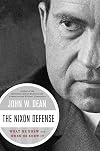
August 8, 1974 was not even two weeks after my eleventh birthday, and it is the first time I recall being aware that what I was experiencing was history. We were listening to Richard Nixon resign on the car radio as we drove. However, it was not until I read John Dean’s The Nixon Defense: What He Knew and When He It that I grasped the magnitude of that history.
Of course one of the early shivers that traveled my spin was that Nixon had nuclear codes mid-cold war. It’s never a good thing show more to have this much extinction building power in the hands of a man living so closely to the border of the Land of the Sociopath. The destruction wrought by Nixon has been much slower acting than the weapons invented by Oppenheimer et al, but no less damaging as cynicism fallout continues to pollute America.
Less than fifty years from the worst political corruption in Presidential history, the current administration has been discovered tapping the phones of the Associated Press, using the IRS to harass political enemies, and spying on Congressional committees, even though they are controlled by the same party. The expectations of our political leaders have become so low that as a nation our response has been little more than a yawn. More people trust as a source of their news creators of political humor than reporters of political significance. The noble definitions of liberalism and conservatism have become little more than rotten eggs we hurl at each other.
One of the things I like about Dean’s book is that he does not attempt to connect Nixon to a legacy, but rather simply reports his experience, and what he has learned since in listening to the Nixon tapes. There may be an argument that Dean comes off to clean in the book, but he certainly doesn’t deny his role in the cover-up. Let’s face it, Dick Nixon may have been many things, but entertaining is not one of them, and so from time to time, the book is as dry as Nixon himself.
While The Nixon Defense does not allow you to hide from this dark chapter in our history, it does offer perspective into just how fragile this right of freedom truly is, as well as the opportunity for gratitude that Nixon did not suffocate the liberty we Americans hold so dear. show less
Of course one of the early shivers that traveled my spin was that Nixon had nuclear codes mid-cold war. It’s never a good thing show more to have this much extinction building power in the hands of a man living so closely to the border of the Land of the Sociopath. The destruction wrought by Nixon has been much slower acting than the weapons invented by Oppenheimer et al, but no less damaging as cynicism fallout continues to pollute America.
Less than fifty years from the worst political corruption in Presidential history, the current administration has been discovered tapping the phones of the Associated Press, using the IRS to harass political enemies, and spying on Congressional committees, even though they are controlled by the same party. The expectations of our political leaders have become so low that as a nation our response has been little more than a yawn. More people trust as a source of their news creators of political humor than reporters of political significance. The noble definitions of liberalism and conservatism have become little more than rotten eggs we hurl at each other.
One of the things I like about Dean’s book is that he does not attempt to connect Nixon to a legacy, but rather simply reports his experience, and what he has learned since in listening to the Nixon tapes. There may be an argument that Dean comes off to clean in the book, but he certainly doesn’t deny his role in the cover-up. Let’s face it, Dick Nixon may have been many things, but entertaining is not one of them, and so from time to time, the book is as dry as Nixon himself.
While The Nixon Defense does not allow you to hide from this dark chapter in our history, it does offer perspective into just how fragile this right of freedom truly is, as well as the opportunity for gratitude that Nixon did not suffocate the liberty we Americans hold so dear. show less
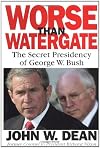
This book was written shortly before Bush's reelection by the former White House council to President Nixon--a man who is uniquely qualified to judge whether a political situation is similar to Watergate or not. It should be required reading for every American citizen or anyone else with an interest in the underhanded dealings of the current administration. Paired up with "All The President's Spin" it is one half of a damning record of the dissembling, obfuscation, and utter mendacity of the show more Bush White House. Dean's prose is pointed and concise. He doesn't mince words, but neither does he resort to mudslinging or empty polemicising, which makes his arguments all the more powerful. The author also chose to forego some of the more commonly-known scandals and dark doings of the administration in favor of discussing other not-so-well-known machinations. All of which, predictably, made my blood boil. Although I have the first edition hardback I also checked out the new material in the TPB, and it is as solid as the older. Read, read, read this book, and then weep that more people didn't bother to do so before the 2004 election. show less
Lists
Awards


You May Also Like


Associated Authors
Statistics
- Works
- 12
- Also by
- 1
- Members
- 3,091
- Popularity
- #8,259
- Rating
- 3.8
- Reviews
- 42
- ISBNs
- 75
- Languages
- 4
- Favorited
- 3


