
David Halberstam (1934–2007)
Author of The Best and the Brightest
About the Author
David Halberstam was born on April 10, 1934 in New York City and later attended Harvard University. After graduating in 1955, Halberstam worked at a small daily newspaper until he attained a position at the Nashville Tennessean. Halberstam has written over 20 books including The Children, a written show more account of his coverage of the Civil Rights Movement; The Best and Brightest, which was a bestseller; and The Game and October, 1964, both detailing his fascination of sports. Halberstam also won a Pulitzer Prize for his reports on the Vietnam War while working for the New York Times. He was killed in a car crash on April 23, 2007 at the age of 73. (Bowker Author Biography) show less
Disambiguation Notice:
Do not combine David Halberstam and David J. Halberstam. They are different authors.
Image credit: David Halberstam, 1994
Works by David Halberstam
The Amateurs: The Story of Four Young Men and Their Quest for an Olympic Gold Medal (1985) 259 copies, 4 reviews
The Making of a Quagmire: America and Vietnam During the Kennedy Era (1964) — Author — 173 copies, 3 reviews
Defining a Nation: Our America and the Sources of Its Strength (2003) — Editor; Contributor — 75 copies
David Halberstam on Sports: Summer of '49, October 1964, The Amateurs, Playing for Keeps (2018) 5 copies
Le teste d'uovo 1 copy
Ho: Portrait Of Ho Chi Minh 1 copy
The Death of Supply Column 21: a lesson from the Vietnam war on the press, the military, and authority {article} (2006) 1 copy
The Making of a Coach 1 copy
Japan society 1 copy
Associated Works
Booknotes: America's Finest Authors on Reading, Writing, and the Power of Ideas (1997) — Contributor — 457 copies, 5 reviews
The Book That Changed My Life: 71 Remarkable Writers Celebrate the Books That Matter Most to Them (2006) — Contributor — 411 copies, 18 reviews
Reporting Vietnam: American Journalism 1959-1969, Volume 1 (1998) — Contributor — 347 copies, 3 reviews
Moments: The Pulitzer Prize-Winning Photographs (2002) — Foreword, some editions — 311 copies, 2 reviews
American Patriots: The Story of Blacks in the Military from the Revolution to Desert Storm (2001) — Foreword, some editions — 149 copies
A Great and Glorious Game: Baseball Writings of A. Bartlett Giamatti (1998) — Foreword, some editions — 118 copies, 2 reviews
Dr. Jack's Leadership Lessons Learned From a Lifetime in Basketball (2004) — Foreword, some editions — 4 copies
Tagged
Common Knowledge
- Birthdate
- 1934-04-10
- Date of death
- 2007-04-23
- Gender
- male
- Education
- Harvard College (AB|1955)
- Occupations
- news journalist
sports journalist
war reporter - Organizations
- The Tennesseean
The New York Times - Awards and honors
- Pulitzer Prize
Quill Award
Elijah Parish Lovejoy Award (1997)
Norman Mailer Prize (2009) - Cause of death
- car accident
- Nationality
- USA
- Birthplace
- New York, New York, USA
- Places of residence
- Yonkers, New York, USA
Winsted, Connecticut, USA
The Bronx, New York, New York, USA - Place of death
- Menlo Park, California, USA
- Disambiguation notice
- Do not combine David Halberstam and David J. Halberstam. They are different authors.
- Associated Place (for map)
- New York, USA
Members
Reviews
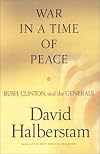
David Halberstam produces here a useful historical document, as an experienced journalist who undertook many primary source interviews to get some sense of the conflicts between the military and the political leadership over policy and power that took place under Bush I and Clinton (I).
The narrative is dominated by the crisis in Yugoslavia. This helped to define the new liberal internationalism that emerged in subsequent years (although Halberstam was not to know this). The book might be show more seen an ur-source for evaluating the seeds of the mess we are now in.
Completed just before 9/11, the book is remarkable for not mentioning the Middle East, bar one passing reference to the Peace Process, and relations with Russia are only considered indirectly. Fortunately, the collapse of the Soviet Union was not a matter for the generals as imminent war.
This all gives a slightly skewed picture but only if we do not understand what Halberstam is doing here. He is not writing a history of foreign policy or of national defence but only one about a dialectic - that between military realism and political short-termism and ideology.
Evaluating the lessons of this book might result in a very long and detailed essay so I will only pull out some themes and let the reader explore them himself based on the facts that Halberstam lays out in his book. You can judge whether his (and my) interpretations are correct on those facts.
I rather trust Halberstam within the limited territory he is exploring. He usefully understands the historic pull of past wars on American politics and on military thinking and he is an 'insider' insofar as an intellectual journalist can be one in a relatively free society.
The first theme is the importance of a President who actually understands the world he is dealing with. George H. Bush comes across as sophisticated, surrounded by people of judgement and experience. Clinton horrifies somewhat as clever and shallow, vacillating, almost 'feminine'.
Nor is Clinton's team particularly impressive. I do not think that Halberstam is showing any partisan bias (unusually for American political writing). They really are unable to cohere around clear macro-analyses and decisive effective planning with some notion of consequences.
I refuse to draw easy conclusions about the competence of Hillary Clinton who may soon be leader of the largest military empire the world has ever seen. She now has significant experience and she is not her husband but the historic conduct of Democrat foreign policy might reasonably worry us.
The second theme is the conservatism of the military. One leading figure is quoted as saying that the Democrats want a small military and to use it everywhere and the Republicans a large army and never use it all. This is borne out by the book (though things change with Bush II's neo-cons).
Surprisingly, one comes to the conclusion that, all things being equal, the US military and the Republicans to whom they tend are America's Peace Party and the Democrats, in opposition to traditional European 'Leftism', are the War Party.
Self-evidently, the American military were still in super-war mode, against the threat of a major world war, and adjusted only slowly to the collapse of the Soviet military threat. They also had no illusions about the massive costs of ground war operations (and remain cautious today).
The Gulf War under Bush certainly restored the American military's sense of what was possible against a second rank traditional state power but it told the military nothing about the costs of mountainous guerrilla war or managing failed states
Former Yugoslavia and Somalia taught them what the later Iraq War was to teach them. Destroying a formal state power is one thing and, if you are prepared to accept the body count, possible but reconstruction and policing are another thing. George C. Marshall was very much an army man.
To win is not to hold or settle. Body bags where the public cannot see their essential interest in the game (after all, America needed Pearl Harbour to undertake its mission against the rise of national socialism) implied a repetition of Vietnam's undermining of trust in the system.
Could liberal internationalism have gone ape around the world if 9/11 had not happened? We doubt it. And the strike against Iraq (unconnected to 9/11) mirrors the decision to go for Germany first instead of Japan after 1941 because of decisions already made elsewhere.
What strikes one here is that, until George W. Bush decided to invade a country on spurious grounds, the military and political establishment were both consistently nervous of taking any armed actions but for different reasons. How that changed is the story of the last third of the book.
For the military it was the justifiable fear of the costs of failure and concern at the inability of the civilians to come up with any plan for consequences (which was to prove fatal in Iraq). For civilians it was fear of domestic electoral consequences and simple ignorance of strategy.
What triggered interventionist strategies was ideological sentiment - mostly Democrat excitability about humanitarian issues in countries they scarcely understood. They certainly had no serious plan about what to do if the aggressor was beaten. It was "Something must be done!"
The blundering around in Clinton's first term is embarrassing - whether it be Somalia, Haiti or Bosnia. The sensible Vance-Owen proposals were sidelined by political half wits only to be returned to in essence and in a weaker version after much misery later.
Allies play scarcely any rule in the deliberations except as dead weights on action (early Clinton) or agents provocateurs (later Clinton). Speaking as a Brit, the US has often been manipulable by foreign powers from the British Empire through to Israel. This period was no exception.
By the second term we are moving into legacy time, that point where a narcissistic President starts to think about how he will be seen by history and realises that he is going to be seen as a middle ranker unless he solves some big question.
The Middle East Peace Process was the obvious solution but that all falls apart on the stunning obduracy of Yasser Arafat so the crisis in Yugoslavia emerges as the constant sore that is high risk but also high reward if something can be done - yet it is not the President who really drives this.
Where Halberstam is particularly good is on the personal dynamics that are the essence of the American State at the highest level - who is up, who is down, who is respected and who is not, what personal histories dictated what ideological presupposition.
We see the emergence or rather convergence of activist liberal internationalists genuinely concerned about the condition of the peoples of former Yugoslavia but also activists for the use of US power to order the world (a theme to be taken up by the neo-cons with more aggression later).
There are State Department officials and policy wonks but these are buttressed by two new forces - Wesley Clark as SACEUR and the arrival in London of the 'hawk' Tony Blair who seems to have had a ready-made model of global military intervention to hand.
The story of Wes Clark is most instructive for two reasons. He was clearly hated by the US military establishment but his role as SACEUR allowed him to push the envelope in using military resources to pursue a war that they saw no reason for. The second reason was air power.
The eternal conflict within the US military over the value and role of air power was not quite resolved by the Gulf War but it was arguable now that a state could be brought low simply with aggressive targeting by a new stock of precision-guided weaponry.
The radicals wanted to show that air power alone was sufficient to bring a tyrant to heel. Wes Clark (an army man) drove this tactic as far as he could against Milosevic despite European doubts and divisions in NATO and Pentagon attempts to deny him any ground support resources.
In fact, it worked but not in the simple way that liberal intellectuals have presented to the world since. It worked because the US was actually backing gangsters as bad as Milosevic in the KLA (just as it had earlier backed the quasi-fascists of Tudjman's Croatia) and the Serb people revolted.
As Halberstam points out, the Serb internal revolt was enabled because Yugoslavia precisely was not the total dictatorship of myth - Former Yugoslavia was a hybrid of single party secret police control and relative intellectual and civil society freedom. Milosevic pushed the people too far.
At the same time, Serbia lost its negotiating position because Russia, economically-dependent on the West under the corrupt Yeltsin, simply and overtly withdrew support from its old ally. This was from weakness and another seed of the future - Putin would reverse this within a few years.
Air power 'worked' but it could not be said to have done so without cost. The US was never tested with a ground invasion (the US military clearly did everything it could not to allow SACEUR that option) and the humanitarian mission was actually as much in support of gangsters as victims.
What Halberstam does not write about is the medium term and long term consequences of the flaccidity of a Clinton looking for a legacy, whose wife clearly has inherited that legacy not as short term fix but as an ideology - which may makes her as dangerous as her rival, more so perhaps.
The discovery of air power under conditions where the old superpower Russia could be treated with contempt and China was still rising but without skin in the game - and monomaniacs like Tony Blair could offer unstinting support - created a new mentality of 'possibility'.
It was not the humanitarian Democrats who took things to the next stage (although Al Gore is likely to have been a strong interventionist) but Bush II with a determined model of using humanitarian rhetoric to take out states that challenged US authority to set the global agenda.
Well, we know how that turned out - but equally interesting is the trajectory of non-US liberal internationalists into an ideology that abandoned over a century of Leftist aversion to the use of war and the effect of the Yugoslav warlets on a revived and aggressive NATO.
The first created Left claques for criminal operations against Iraq but also for an acceptance that military forces could legitimately be used to enforce Western liberal standards. Blair led the US by the nose after the apparently successful Sierra Leone campaign and then was led by the nose.
The second used the humanitarian model as cover for the expansion of liberal values by what had been hitherto an essentially defensive alliance, turning it into a force for potential aggression against anything that might prove a threat in the future - Russia being the most obvious.
The realist 'sphere of influence' understanding that reached its high point at Yalta gave priority to global peace over human rights. The collapse of the Soviet Union allowed liberals to switch the emphasis from global peace and the nation state to human rights (inherent in the Atlantic Charter).
Despite the Cold War, the superpowers maintained a sort of balance in which spheres of influence and ideas were contested short of direct military conflict until one of them collapsed. At that point, the beaten power could have been respected or treated as defeated - the West chose the latter.
Such triumphalism might have worked if the world carried on along the same trajectory but Russia revived with reason to be distrustful and not grateful, China watched how the US behaved and learned lessons and Political Islam and failed states started to grind down the American Empire.
Rights sound noble especially to intellectual leader writers in the West, easily seduced by ideas, but it meant that NATO started to move into every political vacuum presented to it, backed up by trade promises that could not be safely fulfilled, especially in relation to free movement of labour.
It then participated in the slow degradation of the European West's borderlands by interventions that pushed it right up to the borders of Russia itself and destabilised regimes such as Libya's that were brutal but which also acted as defensive lines against migration, terror and organised crime.
None of this could be known by the actors in Halberstam's book, completed in 2001 as contemporary history, but the crisis of our time cannot just be put down to the exploitation of new powers by George W. Bush and the Cheney Gang - that is all too easy.
It comes ultimately down to the narcissism and foreign policy ignorance of his predecessor whose weakness included an inability to engage with his foreign policy staffs and listen with care and respect to his military - and to allow men like Blair and Clark to drive the agenda.
The competent one, George H. Bush, turned out to be the one who could not win an election because, understandably, the American people are and should be most concerned with domestic prosperity and the theatre that is American politics. Democracy is problematic for empire.
We are coming up to another decisive election in a few months and there is an unusual intensity in this one regarding foreign policy. The foreign policy estasblishment that has locked itself into power since Kosovo is clearly terrified of a Trump who asks too many difficult questions.
The question is whether Hillary is better than her husband - that is a question for Americans to answer but insofar as her time at State was a continuation of the last days of her husband's rule under a more moderate, apparently competent and sensible Democrat President, doubts are normal.
As for Halberstam's book, it remains worth reading even if he could have done with a bit of sub-editing at times in the first third where he repeats himself a bit. His analyses are always plausible. His insight into the micro-politics of American statecraft genuinely enlightening.
It is worth reading the very short post-9/11 introduction after rather than before the rest of the book. Its tone is at variance with the main text and it reminds us that Americans really were shocked into counter-aggression by the Islamist aggression - and confused by what had happened.
But, finally, what really strikes me about his text is that it is part of a non-reflexive culture that finds it very difficult to ask more fundamental questions about its own imperial conduct - what does the nation actually want and do its people have much informed say in that decision? show less
The narrative is dominated by the crisis in Yugoslavia. This helped to define the new liberal internationalism that emerged in subsequent years (although Halberstam was not to know this). The book might be show more seen an ur-source for evaluating the seeds of the mess we are now in.
Completed just before 9/11, the book is remarkable for not mentioning the Middle East, bar one passing reference to the Peace Process, and relations with Russia are only considered indirectly. Fortunately, the collapse of the Soviet Union was not a matter for the generals as imminent war.
This all gives a slightly skewed picture but only if we do not understand what Halberstam is doing here. He is not writing a history of foreign policy or of national defence but only one about a dialectic - that between military realism and political short-termism and ideology.
Evaluating the lessons of this book might result in a very long and detailed essay so I will only pull out some themes and let the reader explore them himself based on the facts that Halberstam lays out in his book. You can judge whether his (and my) interpretations are correct on those facts.
I rather trust Halberstam within the limited territory he is exploring. He usefully understands the historic pull of past wars on American politics and on military thinking and he is an 'insider' insofar as an intellectual journalist can be one in a relatively free society.
The first theme is the importance of a President who actually understands the world he is dealing with. George H. Bush comes across as sophisticated, surrounded by people of judgement and experience. Clinton horrifies somewhat as clever and shallow, vacillating, almost 'feminine'.
Nor is Clinton's team particularly impressive. I do not think that Halberstam is showing any partisan bias (unusually for American political writing). They really are unable to cohere around clear macro-analyses and decisive effective planning with some notion of consequences.
I refuse to draw easy conclusions about the competence of Hillary Clinton who may soon be leader of the largest military empire the world has ever seen. She now has significant experience and she is not her husband but the historic conduct of Democrat foreign policy might reasonably worry us.
The second theme is the conservatism of the military. One leading figure is quoted as saying that the Democrats want a small military and to use it everywhere and the Republicans a large army and never use it all. This is borne out by the book (though things change with Bush II's neo-cons).
Surprisingly, one comes to the conclusion that, all things being equal, the US military and the Republicans to whom they tend are America's Peace Party and the Democrats, in opposition to traditional European 'Leftism', are the War Party.
Self-evidently, the American military were still in super-war mode, against the threat of a major world war, and adjusted only slowly to the collapse of the Soviet military threat. They also had no illusions about the massive costs of ground war operations (and remain cautious today).
The Gulf War under Bush certainly restored the American military's sense of what was possible against a second rank traditional state power but it told the military nothing about the costs of mountainous guerrilla war or managing failed states
Former Yugoslavia and Somalia taught them what the later Iraq War was to teach them. Destroying a formal state power is one thing and, if you are prepared to accept the body count, possible but reconstruction and policing are another thing. George C. Marshall was very much an army man.
To win is not to hold or settle. Body bags where the public cannot see their essential interest in the game (after all, America needed Pearl Harbour to undertake its mission against the rise of national socialism) implied a repetition of Vietnam's undermining of trust in the system.
Could liberal internationalism have gone ape around the world if 9/11 had not happened? We doubt it. And the strike against Iraq (unconnected to 9/11) mirrors the decision to go for Germany first instead of Japan after 1941 because of decisions already made elsewhere.
What strikes one here is that, until George W. Bush decided to invade a country on spurious grounds, the military and political establishment were both consistently nervous of taking any armed actions but for different reasons. How that changed is the story of the last third of the book.
For the military it was the justifiable fear of the costs of failure and concern at the inability of the civilians to come up with any plan for consequences (which was to prove fatal in Iraq). For civilians it was fear of domestic electoral consequences and simple ignorance of strategy.
What triggered interventionist strategies was ideological sentiment - mostly Democrat excitability about humanitarian issues in countries they scarcely understood. They certainly had no serious plan about what to do if the aggressor was beaten. It was "Something must be done!"
The blundering around in Clinton's first term is embarrassing - whether it be Somalia, Haiti or Bosnia. The sensible Vance-Owen proposals were sidelined by political half wits only to be returned to in essence and in a weaker version after much misery later.
Allies play scarcely any rule in the deliberations except as dead weights on action (early Clinton) or agents provocateurs (later Clinton). Speaking as a Brit, the US has often been manipulable by foreign powers from the British Empire through to Israel. This period was no exception.
By the second term we are moving into legacy time, that point where a narcissistic President starts to think about how he will be seen by history and realises that he is going to be seen as a middle ranker unless he solves some big question.
The Middle East Peace Process was the obvious solution but that all falls apart on the stunning obduracy of Yasser Arafat so the crisis in Yugoslavia emerges as the constant sore that is high risk but also high reward if something can be done - yet it is not the President who really drives this.
Where Halberstam is particularly good is on the personal dynamics that are the essence of the American State at the highest level - who is up, who is down, who is respected and who is not, what personal histories dictated what ideological presupposition.
We see the emergence or rather convergence of activist liberal internationalists genuinely concerned about the condition of the peoples of former Yugoslavia but also activists for the use of US power to order the world (a theme to be taken up by the neo-cons with more aggression later).
There are State Department officials and policy wonks but these are buttressed by two new forces - Wesley Clark as SACEUR and the arrival in London of the 'hawk' Tony Blair who seems to have had a ready-made model of global military intervention to hand.
The story of Wes Clark is most instructive for two reasons. He was clearly hated by the US military establishment but his role as SACEUR allowed him to push the envelope in using military resources to pursue a war that they saw no reason for. The second reason was air power.
The eternal conflict within the US military over the value and role of air power was not quite resolved by the Gulf War but it was arguable now that a state could be brought low simply with aggressive targeting by a new stock of precision-guided weaponry.
The radicals wanted to show that air power alone was sufficient to bring a tyrant to heel. Wes Clark (an army man) drove this tactic as far as he could against Milosevic despite European doubts and divisions in NATO and Pentagon attempts to deny him any ground support resources.
In fact, it worked but not in the simple way that liberal intellectuals have presented to the world since. It worked because the US was actually backing gangsters as bad as Milosevic in the KLA (just as it had earlier backed the quasi-fascists of Tudjman's Croatia) and the Serb people revolted.
As Halberstam points out, the Serb internal revolt was enabled because Yugoslavia precisely was not the total dictatorship of myth - Former Yugoslavia was a hybrid of single party secret police control and relative intellectual and civil society freedom. Milosevic pushed the people too far.
At the same time, Serbia lost its negotiating position because Russia, economically-dependent on the West under the corrupt Yeltsin, simply and overtly withdrew support from its old ally. This was from weakness and another seed of the future - Putin would reverse this within a few years.
Air power 'worked' but it could not be said to have done so without cost. The US was never tested with a ground invasion (the US military clearly did everything it could not to allow SACEUR that option) and the humanitarian mission was actually as much in support of gangsters as victims.
What Halberstam does not write about is the medium term and long term consequences of the flaccidity of a Clinton looking for a legacy, whose wife clearly has inherited that legacy not as short term fix but as an ideology - which may makes her as dangerous as her rival, more so perhaps.
The discovery of air power under conditions where the old superpower Russia could be treated with contempt and China was still rising but without skin in the game - and monomaniacs like Tony Blair could offer unstinting support - created a new mentality of 'possibility'.
It was not the humanitarian Democrats who took things to the next stage (although Al Gore is likely to have been a strong interventionist) but Bush II with a determined model of using humanitarian rhetoric to take out states that challenged US authority to set the global agenda.
Well, we know how that turned out - but equally interesting is the trajectory of non-US liberal internationalists into an ideology that abandoned over a century of Leftist aversion to the use of war and the effect of the Yugoslav warlets on a revived and aggressive NATO.
The first created Left claques for criminal operations against Iraq but also for an acceptance that military forces could legitimately be used to enforce Western liberal standards. Blair led the US by the nose after the apparently successful Sierra Leone campaign and then was led by the nose.
The second used the humanitarian model as cover for the expansion of liberal values by what had been hitherto an essentially defensive alliance, turning it into a force for potential aggression against anything that might prove a threat in the future - Russia being the most obvious.
The realist 'sphere of influence' understanding that reached its high point at Yalta gave priority to global peace over human rights. The collapse of the Soviet Union allowed liberals to switch the emphasis from global peace and the nation state to human rights (inherent in the Atlantic Charter).
Despite the Cold War, the superpowers maintained a sort of balance in which spheres of influence and ideas were contested short of direct military conflict until one of them collapsed. At that point, the beaten power could have been respected or treated as defeated - the West chose the latter.
Such triumphalism might have worked if the world carried on along the same trajectory but Russia revived with reason to be distrustful and not grateful, China watched how the US behaved and learned lessons and Political Islam and failed states started to grind down the American Empire.
Rights sound noble especially to intellectual leader writers in the West, easily seduced by ideas, but it meant that NATO started to move into every political vacuum presented to it, backed up by trade promises that could not be safely fulfilled, especially in relation to free movement of labour.
It then participated in the slow degradation of the European West's borderlands by interventions that pushed it right up to the borders of Russia itself and destabilised regimes such as Libya's that were brutal but which also acted as defensive lines against migration, terror and organised crime.
None of this could be known by the actors in Halberstam's book, completed in 2001 as contemporary history, but the crisis of our time cannot just be put down to the exploitation of new powers by George W. Bush and the Cheney Gang - that is all too easy.
It comes ultimately down to the narcissism and foreign policy ignorance of his predecessor whose weakness included an inability to engage with his foreign policy staffs and listen with care and respect to his military - and to allow men like Blair and Clark to drive the agenda.
The competent one, George H. Bush, turned out to be the one who could not win an election because, understandably, the American people are and should be most concerned with domestic prosperity and the theatre that is American politics. Democracy is problematic for empire.
We are coming up to another decisive election in a few months and there is an unusual intensity in this one regarding foreign policy. The foreign policy estasblishment that has locked itself into power since Kosovo is clearly terrified of a Trump who asks too many difficult questions.
The question is whether Hillary is better than her husband - that is a question for Americans to answer but insofar as her time at State was a continuation of the last days of her husband's rule under a more moderate, apparently competent and sensible Democrat President, doubts are normal.
As for Halberstam's book, it remains worth reading even if he could have done with a bit of sub-editing at times in the first third where he repeats himself a bit. His analyses are always plausible. His insight into the micro-politics of American statecraft genuinely enlightening.
It is worth reading the very short post-9/11 introduction after rather than before the rest of the book. Its tone is at variance with the main text and it reminds us that Americans really were shocked into counter-aggression by the Islamist aggression - and confused by what had happened.
But, finally, what really strikes me about his text is that it is part of a non-reflexive culture that finds it very difficult to ask more fundamental questions about its own imperial conduct - what does the nation actually want and do its people have much informed say in that decision? show less

The practice of using decades as a units of history seems to be popular in the US but not elsewhere. Appropriately, The Fifties is primarily about the United States; its topics may seem as insular as some of the individuals who figure in the story.. Another characteristic of the decade as an American historical unit is that it is probably more of a popular rather than an academic way to think about the past. The Fifties is popular not academic history.
CONS: Ends rather abruptly. Tend to lose show more track of the year being covered; since a lot of the biographical sketches naturally pre-date the period under consideration. Noteworthy gaps in coverage: general financial history, infrastructure and the economy, and taxes. Feminist history lacks nuance. Focusing on Betty Friedan limits scope to college-educated women’s careers. LGBT history barely touched on. Nothing on the environment although to be fair, the book was written before it became a big topic. Maybe too much attention paid to what I would consider relatively trivial popular culture topics: basketball, rock and roll, quiz shows. The juxtaposition with the themes of race relations and the development of the birth control pill (and the hydrogen bomb) with lengthy coverage of the passion of Charles Van Doren or the adventures of Allen Ginsberg at Columbia made me a little uncomfortable.
PROS. Highly readable. The biographies and the details of the topics the author chooses to cover are skillful and on point. The technique is not all that different from pre-modern histories except the biographies aren’t about kings, emperors, generals and clerics. History as a series of interesting lives can be a little misleading, on the other hand. Some items I found interesting:
Theme. The triumph of the Midwest. The image of the family, the family car, and the interaction of family and car on TV, all come out of the Midwest.
Biography. Pat Nixon meets Gloria Steinem. Pat Nixon did not have a Betty Friedan childhood. While, understandably, the author emphasizes the growth of the economy in the 50s, one wonders what portion of the population was not able to float with the rising tide.
The ironies of US foreign policy. Eisenhower, a former general, was nevertheless a fiscal conservative. His objection to the military industrial complex was that its minions spent too much taxpayer money. The trump card for the MI complex was the conventional wisdom that the Soviets were devoting most of their economy to weapons development. The U2 spyplane showed that the size and power of the Soviet arsenal was highly exaggerated. Eisenhower and his staff knew this, but the thinking was that making this common knowledge would be admitting that the US was flying over Soviet airspace and would, in addition, undermine the CIA, so the information had to be classified. So during the Eisenhower presidency the Democrats and the Republicans out of the classified loop constantly attacked the administration for not keeping up with the Soviets because the government was not spending enough on weapons development. This also resulted in the administration considering nuclear weapons as the first resort in times of crisis because they were seen as the cheaper alternative to conventional weapons development.
Detail: the pill. Gregory (Goody) Pincus was denied tenure at Harvard (possibly because he was Jewish). With financing via Margaret Sanger, he put together a laboratory and staff that isolated the steroid that would be used to regulate ovulation. The big pharma company Searle controlled the patent on progesterone, the basis of the oral contraceptive, and did not pay out royalties to Pincus, his widow, and his staff, but Searle generously donated a half million dollars to Harvard research! Related detail: during the 20s it was apparently against Roman Catholic doctrine to perform a Caesarean section (logically as unnatural as condoms and the pill, after all). John Rock, instrumental in the development of the pill, was Roman Catholic (devout, not nominal) and was nearly denied the sacrament because he performed Caesareans in his practice.
Detail. In segregated Alabama, African-Americans paid fare to the bus driver, but were then required to exit from the front and enter through the back door of the bus. Some bus drivers did not open the back door and simply drove off. Many more details about life as it was lived by African Americans in the decade. Micro and macro aggression squared. Eisenhower’s racism (see the anecdote about Ralph Bunche) and how it allowed the Little Rock crisis to expand. show less
CONS: Ends rather abruptly. Tend to lose show more track of the year being covered; since a lot of the biographical sketches naturally pre-date the period under consideration. Noteworthy gaps in coverage: general financial history, infrastructure and the economy, and taxes. Feminist history lacks nuance. Focusing on Betty Friedan limits scope to college-educated women’s careers. LGBT history barely touched on. Nothing on the environment although to be fair, the book was written before it became a big topic. Maybe too much attention paid to what I would consider relatively trivial popular culture topics: basketball, rock and roll, quiz shows. The juxtaposition with the themes of race relations and the development of the birth control pill (and the hydrogen bomb) with lengthy coverage of the passion of Charles Van Doren or the adventures of Allen Ginsberg at Columbia made me a little uncomfortable.
PROS. Highly readable. The biographies and the details of the topics the author chooses to cover are skillful and on point. The technique is not all that different from pre-modern histories except the biographies aren’t about kings, emperors, generals and clerics. History as a series of interesting lives can be a little misleading, on the other hand. Some items I found interesting:
Theme. The triumph of the Midwest. The image of the family, the family car, and the interaction of family and car on TV, all come out of the Midwest.
Biography. Pat Nixon meets Gloria Steinem. Pat Nixon did not have a Betty Friedan childhood. While, understandably, the author emphasizes the growth of the economy in the 50s, one wonders what portion of the population was not able to float with the rising tide.
The ironies of US foreign policy. Eisenhower, a former general, was nevertheless a fiscal conservative. His objection to the military industrial complex was that its minions spent too much taxpayer money. The trump card for the MI complex was the conventional wisdom that the Soviets were devoting most of their economy to weapons development. The U2 spyplane showed that the size and power of the Soviet arsenal was highly exaggerated. Eisenhower and his staff knew this, but the thinking was that making this common knowledge would be admitting that the US was flying over Soviet airspace and would, in addition, undermine the CIA, so the information had to be classified. So during the Eisenhower presidency the Democrats and the Republicans out of the classified loop constantly attacked the administration for not keeping up with the Soviets because the government was not spending enough on weapons development. This also resulted in the administration considering nuclear weapons as the first resort in times of crisis because they were seen as the cheaper alternative to conventional weapons development.
Detail: the pill. Gregory (Goody) Pincus was denied tenure at Harvard (possibly because he was Jewish). With financing via Margaret Sanger, he put together a laboratory and staff that isolated the steroid that would be used to regulate ovulation. The big pharma company Searle controlled the patent on progesterone, the basis of the oral contraceptive, and did not pay out royalties to Pincus, his widow, and his staff, but Searle generously donated a half million dollars to Harvard research! Related detail: during the 20s it was apparently against Roman Catholic doctrine to perform a Caesarean section (logically as unnatural as condoms and the pill, after all). John Rock, instrumental in the development of the pill, was Roman Catholic (devout, not nominal) and was nearly denied the sacrament because he performed Caesareans in his practice.
Detail. In segregated Alabama, African-Americans paid fare to the bus driver, but were then required to exit from the front and enter through the back door of the bus. Some bus drivers did not open the back door and simply drove off. Many more details about life as it was lived by African Americans in the decade. Micro and macro aggression squared. Eisenhower’s racism (see the anecdote about Ralph Bunche) and how it allowed the Little Rock crisis to expand. show less
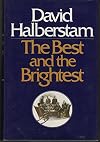
This is one of the most impressive works of journalism I have ever read. It's a beast of a book - don't start reading this one unless you want to spend a lot of time with it.
Halberstam's classic is an inside look at the Kennedy and Johnson administrations steady escalation of American involvement in Vietnam. It examines a complex and fascinating question: how did two administrations full of the best and brightest individuals the nation have to offer lose control and caused one of the great show more tragedies in our nation's history? The answer is nuanced and complex, and Halberstam analyzes all elements of the issue: surprising lack of knowledge about Asia, militant anti-Communism, intra-governmental and intra-military rivalries, intolerance of dissent, various character flaws of both presidents in question and prominent members of the administration, and much, much more. The result is an incredibly smart and detailed book, and one that is not dry by any means; Halberstam is a gifted writer indeed.
This one is highly recommended to anyone with a serious interest in the Vietnam war. show less
Halberstam's classic is an inside look at the Kennedy and Johnson administrations steady escalation of American involvement in Vietnam. It examines a complex and fascinating question: how did two administrations full of the best and brightest individuals the nation have to offer lose control and caused one of the great show more tragedies in our nation's history? The answer is nuanced and complex, and Halberstam analyzes all elements of the issue: surprising lack of knowledge about Asia, militant anti-Communism, intra-governmental and intra-military rivalries, intolerance of dissent, various character flaws of both presidents in question and prominent members of the administration, and much, much more. The result is an incredibly smart and detailed book, and one that is not dry by any means; Halberstam is a gifted writer indeed.
This one is highly recommended to anyone with a serious interest in the Vietnam war. show less
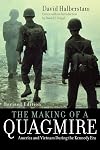
The Making of a Quagmire is an absolutely heartbreaking look, a clear-eyed examination of the failures of the Vietnam War that came out just a little too late to make a difference. Halberstam drew on his experience as a reporter to chart in detail three related problems.
The first was the government of Ngo Dinh Diem: isolated, corrupt, paranoid, Diem and his brother and sister-in-law the Nhus were the rotting head of South Vietnamese politics. Everything was cast through the lens of personal show more loyalty and palace intrigue. At one point, there were 13 separate and warring secret police factions. Competent men who told the truth were punished, corrupt toadies rewarded. Even as American aid and advice flowed in, it was absorbed by the infinite avarice of the South Vietnamese ruling class, rather than the peasants who were the center of gravity of the war.
The second side was the War in the Delta, and the related propaganda war on the American home front. ARVN units lacked the leadership to pursue and destroy Viet Cong forces, as commanders who lost troops were sacked. The Strategic Hamlet program was a twisted joke of forced relocation against a profoundly place-based culture. Meanwhile, General Harkins at MACV and various figures in the State department were feeding back the same optimistic and fundamentally false stats. Halberstam and the other reporters were ordered to get on the team, or get out.
The final bit is the Buddhist Crisis and the coup that depose Diem and the Nhus in 1963. Through an escalating series of missteps, the Diem government forced a showdown with the last vestige of independent civil society, the Buddhist masses. As protests rocked the streets, the CIA orchestrated a coup that brought down Diem, and replaced him with a rotating set of empty suits.
As Halberstam demonstrates again and again, American diplomacy was simply incapable of meaningfully changing the political culture of South Vietnam. New technological weapons like helicopters and APCs could provide a temporary advantage, but couldn't alter the fundamental dynamics of peasant political war. This book, written post '63 and published in 1965, predicted exactly what actually happened with the escalation. It seems like no one in power read it, and they certainly failed to understand its lessons. show less
The first was the government of Ngo Dinh Diem: isolated, corrupt, paranoid, Diem and his brother and sister-in-law the Nhus were the rotting head of South Vietnamese politics. Everything was cast through the lens of personal show more loyalty and palace intrigue. At one point, there were 13 separate and warring secret police factions. Competent men who told the truth were punished, corrupt toadies rewarded. Even as American aid and advice flowed in, it was absorbed by the infinite avarice of the South Vietnamese ruling class, rather than the peasants who were the center of gravity of the war.
The second side was the War in the Delta, and the related propaganda war on the American home front. ARVN units lacked the leadership to pursue and destroy Viet Cong forces, as commanders who lost troops were sacked. The Strategic Hamlet program was a twisted joke of forced relocation against a profoundly place-based culture. Meanwhile, General Harkins at MACV and various figures in the State department were feeding back the same optimistic and fundamentally false stats. Halberstam and the other reporters were ordered to get on the team, or get out.
The final bit is the Buddhist Crisis and the coup that depose Diem and the Nhus in 1963. Through an escalating series of missteps, the Diem government forced a showdown with the last vestige of independent civil society, the Buddhist masses. As protests rocked the streets, the CIA orchestrated a coup that brought down Diem, and replaced him with a rotating set of empty suits.
As Halberstam demonstrates again and again, American diplomacy was simply incapable of meaningfully changing the political culture of South Vietnam. New technological weapons like helicopters and APCs could provide a temporary advantage, but couldn't alter the fundamental dynamics of peasant political war. This book, written post '63 and published in 1965, predicted exactly what actually happened with the escalation. It seems like no one in power read it, and they certainly failed to understand its lessons. show less
Lists
Awards


You May Also Like


Associated Authors
Statistics
- Works
- 43
- Also by
- 28
- Members
- 16,058
- Popularity
- #1,412
- Rating
- 4.0
- Reviews
- 260
- ISBNs
- 241
- Languages
- 12
- Favorited
- 46


