
David Maraniss
Author of When Pride Still Mattered: A Life of Vince Lombardi
About the Author
David Maraniss is a Pulitzer Prize winning journalist who chronicled the Clinton era during his time at the Washington Post. After leaving the Washington Post, Maraniss wrote "First in His Class," a book about Clinton that won the American Society of Newspaper Editors Jesse Laventhal Prize. He has show more also published "The Clinton Enigma," a book interpreting the Clinton scandal. (Bowker Author Biography) show less
Works by David Maraniss
They Marched Into Sunlight: War and Peace Vietnam and America October 1967 (2003) 698 copies, 12 reviews
Path Lit by Lightning: The Life of Jim Thorpe (2022) — Narrator, some editions — 300 copies, 8 reviews
Tell Newt to Shut Up: Prize-Winning Washington Post Journalists Reveal How Reality Gagged the Gingrich Revolution (1996) 62 copies
The Clinton Enigma: A Four-and-a-Half-Minute Speech Reveals this President's Entire Life (1998) — Author — 42 copies
Into the Story: A Writer's Journey through Life, Politics, Sports and Loss (2010) 42 copies, 1 review
Associated Works
Booknotes: America's Finest Authors on Reading, Writing, and the Power of Ideas (1997) — Contributor — 457 copies, 5 reviews
Tagged
Common Knowledge
- Birthdate
- 1949
- Gender
- male
- Occupations
- journalist
author - Organizations
- The Washington Post
- Awards and honors
- Pulitzer Prize (National Reporting, 1993)
- Agent
- Rafe Sagalyn
- Nationality
- USA
- Places of residence
- Madison, Wisconsin, USA
Washington, D.C., USA - Associated Place (for map)
- USA
Members
Reviews
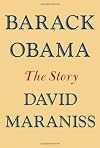
If you are looking for a book on Reptilians, Islamofascism, massive yet somehow plausible conspiracies, Stalino-Fascism, and 'reverse racism', this is not for you.
There is always a caveat on writing biographies about the living: they could always do something big to surprise you and change the whole 'narrative' of the life, so to speak. Maraniss has taken the long view, spending a large portion of the book on Obama's ancestors, and concluding this volume before he was to enter Harvard Law show more School.
The threads of Obama's ancestry are divergent, from rural Kansas to Kenya. It's also interesting to see how their personalities and goals shaped each other - Obama's paternal side was intense and fiery, whereas the man himself was famously cool and understated - the most anxious his friends saw him was when he smoked two cigarettes almost at once.
His childhood is also an interesting story. Well-traveled, bilingual, surrounded by different people - Hawaii, California, Indonesia. Unfocused, but ambitious. Quiet and observational, but still friendly and gifted in conversation. Played state championship basketball in High School, smoked weed on occasion. Struggling with identity and role.
An interesting biography. Helps understand the formation of the man, if not the whole of his life. show less
There is always a caveat on writing biographies about the living: they could always do something big to surprise you and change the whole 'narrative' of the life, so to speak. Maraniss has taken the long view, spending a large portion of the book on Obama's ancestors, and concluding this volume before he was to enter Harvard Law show more School.
The threads of Obama's ancestry are divergent, from rural Kansas to Kenya. It's also interesting to see how their personalities and goals shaped each other - Obama's paternal side was intense and fiery, whereas the man himself was famously cool and understated - the most anxious his friends saw him was when he smoked two cigarettes almost at once.
His childhood is also an interesting story. Well-traveled, bilingual, surrounded by different people - Hawaii, California, Indonesia. Unfocused, but ambitious. Quiet and observational, but still friendly and gifted in conversation. Played state championship basketball in High School, smoked weed on occasion. Struggling with identity and role.
An interesting biography. Helps understand the formation of the man, if not the whole of his life. show less
01/03/2025 - - I have owned this title for 20 years and have just now finished reading it - it is one helluva good book - the author David Maraniss (I've also read his excellent: "First in his Class - A Biography of Bill Clinton") provides an extraordinarily in depth look at the life of the legendary football coach - Vince Lombardi.
He was the son of Italian immigrants and was imbued with their Catholicism and dedication to hard work and family. Not a great football player himself, although show more a member of Fordham's "Blocks of Granite", he worked himself up from high school coach through college, and then as an NFL assistant (with Tom Landry) and finally as the head man with the Green Bay Packers, whose fortunes had descended in the years immediately preceding his arrival.
Maraniss provides way more than the usual won/lost record and the exploits of his players and the details of particular games, although there is more than enough of that in the book. He really gets into Lombardi as a man, as a student, as a son, as a husband and father, as a amateur philosopher and as a practicing Catholic. Lombardi was moody but well respected by his players - he was given to extremes towards his team - both negatively and positively - and he was really a very bright man.
Rather than me struggling to express the depth and brilliance of this man I think it best to provide two quotes from speeches Lombardi gave - both (in the late 1960s) of which exhibit the depth of his non-football related insight and the breadth of his intelligence and education:
1. "For most of the 20th century we as individuals have struggled to liberate ourselves from ancient traditions, congealed creeds and despotic states. Therefore, freedom was necessarily idealized against order, the new against the old, and genius against discipline. Everything was done to strengthen the rights of the individual and weaken the state, and weaken the church, and weaken all authority. I think we all shared in this rebellion, but maybe the battle was too completely won, maybe we have too much freedom. Maybe we have so long ridiculed authority in the family, discipline in education, and decency in conduct and law that our freedom has brought us close to chaos".
TELL ME THE ABOVE DOESN'T APPLY TO US IN 2025 - IN SPADES.
2. "I am sure you are disturbed like I am by what seems to be a complete breakdown of law and order and the moral code which is almost beyond belief. Unhappily, our youth, the most gifted segment of our population, the heirs to scientific advances and freedom's breath, the beneficiaries of their elders' sacrifices and achievements, seem, in too large numbers, to have disregard for the law's authority, for its meaning, for its indispensability to their enjoyment of the fullness of life, and have conjoined with certain of their elders, who should know better, to seek a development of a new right, the right to violate the law with impunity. The prevailing sentiment seems to be if you don't like the rule, break it".
THIS WAS WRITTEN 60 YEARS AGO BUT READS LIKE IT WAS WRITTEN IMMEDIATELY AFTER THE LEFTIST RIOTS OF 2020-2021 - THINGS NEVER CHANGE (WATTS RIOTS OF 1965).
Reading about old athletic stuff sometimes feels like a waste of time - sports continuously spins off stories of heroic men and ungodly achievements and presents day-to-day drama and excitement - but this particular book is still worth the time - it teaches us about principles and an ethos that transcend ball games and particular people and which can and should guide us in our daily lives. Success is worth the effort. show less
He was the son of Italian immigrants and was imbued with their Catholicism and dedication to hard work and family. Not a great football player himself, although show more a member of Fordham's "Blocks of Granite", he worked himself up from high school coach through college, and then as an NFL assistant (with Tom Landry) and finally as the head man with the Green Bay Packers, whose fortunes had descended in the years immediately preceding his arrival.
Maraniss provides way more than the usual won/lost record and the exploits of his players and the details of particular games, although there is more than enough of that in the book. He really gets into Lombardi as a man, as a student, as a son, as a husband and father, as a amateur philosopher and as a practicing Catholic. Lombardi was moody but well respected by his players - he was given to extremes towards his team - both negatively and positively - and he was really a very bright man.
Rather than me struggling to express the depth and brilliance of this man I think it best to provide two quotes from speeches Lombardi gave - both (in the late 1960s) of which exhibit the depth of his non-football related insight and the breadth of his intelligence and education:
1. "For most of the 20th century we as individuals have struggled to liberate ourselves from ancient traditions, congealed creeds and despotic states. Therefore, freedom was necessarily idealized against order, the new against the old, and genius against discipline. Everything was done to strengthen the rights of the individual and weaken the state, and weaken the church, and weaken all authority. I think we all shared in this rebellion, but maybe the battle was too completely won, maybe we have too much freedom. Maybe we have so long ridiculed authority in the family, discipline in education, and decency in conduct and law that our freedom has brought us close to chaos".
TELL ME THE ABOVE DOESN'T APPLY TO US IN 2025 - IN SPADES.
2. "I am sure you are disturbed like I am by what seems to be a complete breakdown of law and order and the moral code which is almost beyond belief. Unhappily, our youth, the most gifted segment of our population, the heirs to scientific advances and freedom's breath, the beneficiaries of their elders' sacrifices and achievements, seem, in too large numbers, to have disregard for the law's authority, for its meaning, for its indispensability to their enjoyment of the fullness of life, and have conjoined with certain of their elders, who should know better, to seek a development of a new right, the right to violate the law with impunity. The prevailing sentiment seems to be if you don't like the rule, break it".
THIS WAS WRITTEN 60 YEARS AGO BUT READS LIKE IT WAS WRITTEN IMMEDIATELY AFTER THE LEFTIST RIOTS OF 2020-2021 - THINGS NEVER CHANGE (WATTS RIOTS OF 1965).
Reading about old athletic stuff sometimes feels like a waste of time - sports continuously spins off stories of heroic men and ungodly achievements and presents day-to-day drama and excitement - but this particular book is still worth the time - it teaches us about principles and an ethos that transcend ball games and particular people and which can and should guide us in our daily lives. Success is worth the effort. show less
Summary: The biography of Green Bay Packers football coach Vince Lombardi, showing a man striving for excellence in, and caught in the tensions of the three priorities in his life: faith, family, and football.
Growing up a Cleveland Browns fan in the 1960's, if there was any team that quenched our hopes in the Jim Brown era, it was the Green Bay Packers quarterbacked by Bart Starr, with Hornung and Taylor in the backfield. And behind it all was legendary coach Vince Lombardi, for whom the show more Superbowl trophy is named, a coach with a consuming drive to win, characterized by the quote, "Winning isn't everything, it is the only thing."
David Maraniss is another author in the mold of George Will and David Halberstam, writing political biographies of Bill Clinton and Al Gore, but also fine pieces of sports writing including a biography of Roberto Clemente and this work on Lombardi. He traces the rise of Lombardi, the son of a Sheepshead Bay butcher, through his playing days at Fordham (one of the Seven Blocks of Granite, even though an average, but intense, player at best), through his first high school coaching positions, returning as assistant coach at Fordham, then five years at West Point under Red Blaik, perhaps the most formative in his development as a coach, and then the years as an assistant with the New York Giants, alongside fellow assistant Tom Landry. By this time, in 1959, he was in his mid-40s and beginning to despair of ever getting a head coaching position, wondering if his Italian name and heritage was working against him.
But Marannis' biography goes far beyond football. Lombardi was a deeply religious man, whose outlook was profoundly shaped by Catholic educators, notably ethics professor Ignatius Wiley Cox, S. J. whose teaching defined character as "an integration of habits of conduct superimposed on temperament, the will exercised on disposition, thought, emotion, and action." In both New York and Green Bay, he attended Mass daily, carried a rosary with him, and counted a number of priests as close friends. There was a continuity between his religious aspirations and football, as Marannis notes:
"The fundamental principles that he used in coaching--repetition, discipline, clarity, faith, subsuming individual ego to a larger good--were merely extensions of the religious ethic he learned from the Jesuits. In that sense, he made no distinction between the practice of religion and the sport of football" (p. 245).
He was also a family man, deeply in love with Marie, and yet the constantly fought, and she struggled between devotion to Vince's coaching success, and deep depression, alcoholism, and occasional overdoses. He struggled with his relationship with his children, particularly his son and namesake, Vincent. The demands of NFL coaching made him a more or less absentee father, who rarely attended his son's games.
Perhaps his struggle with an explosive temper revealed the tension he wrestled with to be true to his aspirations of faith, family and football. His son Vincent said of him:
"He went to mass to repent for his anger....He thought, I've got this temper. I fly off the handle and offend people. I apologize. But it's this temper that keeps me on edge and allows me to get things done and people to do things. Life was a struggle for him. He knew he wasn't perfect. He had a lot of habits that were far from perfect. His strengths were his weaknesses and vice versa. He fought it by taking the paradox to church. It went back to the Jesuits and the struggle between the shadow self and the real self--your humanity and your divinity. He saw that struggle in clear and concrete terms."
When Lombardi reaches Green Bay he takes a losing team and turns them into winners in a season, championship contenders the next and champions by the third season as head coach and general manager of the Packers. Marannis portrays him as a relentless teacher with the ability to simplify things in the minds of his players so they knew exactly what was expected of them, typified in the "Packer sweep". He demonstrated skilled psychological insights, pushing one player, coaching another, being like a son to Bart Starr. One of the fascinating sidelights was his commitment to racial equality, and even his sensitivities to homosexual players on his teams.
Lombardi reached the pinnacle of coaching success with his victories in the first two Superbowls. But things were changing. The league and its players were changing. He was tired. After a year as just General Manager, he became coach for the hapless Washington Redskins, once again turning them into a winning team in one season. Sadly, that is all he had. Marie was the first to notice and fear the worst. On September 3, 1970, he "ran to win" one more time, passing away from a particularly malignant form of colon cancer.
Marannis portrays a complex, multi-dimensional man, who called out the best in players wherever he coached and yet struggled to connect with his own children, who never questioned the faith in which he was raised, but often struggled to live up to its tenets, who adored and constantly squabbled with his troubled wife. He gives us a richly textured biography of a man whose life could not adequately be captured by anything less. show less
Growing up a Cleveland Browns fan in the 1960's, if there was any team that quenched our hopes in the Jim Brown era, it was the Green Bay Packers quarterbacked by Bart Starr, with Hornung and Taylor in the backfield. And behind it all was legendary coach Vince Lombardi, for whom the show more Superbowl trophy is named, a coach with a consuming drive to win, characterized by the quote, "Winning isn't everything, it is the only thing."
David Maraniss is another author in the mold of George Will and David Halberstam, writing political biographies of Bill Clinton and Al Gore, but also fine pieces of sports writing including a biography of Roberto Clemente and this work on Lombardi. He traces the rise of Lombardi, the son of a Sheepshead Bay butcher, through his playing days at Fordham (one of the Seven Blocks of Granite, even though an average, but intense, player at best), through his first high school coaching positions, returning as assistant coach at Fordham, then five years at West Point under Red Blaik, perhaps the most formative in his development as a coach, and then the years as an assistant with the New York Giants, alongside fellow assistant Tom Landry. By this time, in 1959, he was in his mid-40s and beginning to despair of ever getting a head coaching position, wondering if his Italian name and heritage was working against him.
But Marannis' biography goes far beyond football. Lombardi was a deeply religious man, whose outlook was profoundly shaped by Catholic educators, notably ethics professor Ignatius Wiley Cox, S. J. whose teaching defined character as "an integration of habits of conduct superimposed on temperament, the will exercised on disposition, thought, emotion, and action." In both New York and Green Bay, he attended Mass daily, carried a rosary with him, and counted a number of priests as close friends. There was a continuity between his religious aspirations and football, as Marannis notes:
"The fundamental principles that he used in coaching--repetition, discipline, clarity, faith, subsuming individual ego to a larger good--were merely extensions of the religious ethic he learned from the Jesuits. In that sense, he made no distinction between the practice of religion and the sport of football" (p. 245).
He was also a family man, deeply in love with Marie, and yet the constantly fought, and she struggled between devotion to Vince's coaching success, and deep depression, alcoholism, and occasional overdoses. He struggled with his relationship with his children, particularly his son and namesake, Vincent. The demands of NFL coaching made him a more or less absentee father, who rarely attended his son's games.
Perhaps his struggle with an explosive temper revealed the tension he wrestled with to be true to his aspirations of faith, family and football. His son Vincent said of him:
"He went to mass to repent for his anger....He thought, I've got this temper. I fly off the handle and offend people. I apologize. But it's this temper that keeps me on edge and allows me to get things done and people to do things. Life was a struggle for him. He knew he wasn't perfect. He had a lot of habits that were far from perfect. His strengths were his weaknesses and vice versa. He fought it by taking the paradox to church. It went back to the Jesuits and the struggle between the shadow self and the real self--your humanity and your divinity. He saw that struggle in clear and concrete terms."
When Lombardi reaches Green Bay he takes a losing team and turns them into winners in a season, championship contenders the next and champions by the third season as head coach and general manager of the Packers. Marannis portrays him as a relentless teacher with the ability to simplify things in the minds of his players so they knew exactly what was expected of them, typified in the "Packer sweep". He demonstrated skilled psychological insights, pushing one player, coaching another, being like a son to Bart Starr. One of the fascinating sidelights was his commitment to racial equality, and even his sensitivities to homosexual players on his teams.
Lombardi reached the pinnacle of coaching success with his victories in the first two Superbowls. But things were changing. The league and its players were changing. He was tired. After a year as just General Manager, he became coach for the hapless Washington Redskins, once again turning them into a winning team in one season. Sadly, that is all he had. Marie was the first to notice and fear the worst. On September 3, 1970, he "ran to win" one more time, passing away from a particularly malignant form of colon cancer.
Marannis portrays a complex, multi-dimensional man, who called out the best in players wherever he coached and yet struggled to connect with his own children, who never questioned the faith in which he was raised, but often struggled to live up to its tenets, who adored and constantly squabbled with his troubled wife. He gives us a richly textured biography of a man whose life could not adequately be captured by anything less. show less
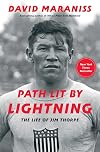
Many biographies of the “greatest athlete of them all” have been written over the years, and Maraniss’ has to be among the very best. Scrupulously researched, Maraniss gives the reader deep insight into not only Jim Thorpe’s incredible talent in many sports, but he also educates the reader about Jim’s battle with his Indian culture and the obstacles placed in front of him by white society. I learned much about both and feel those lessons are worth the time it took to read this show more lengthy book. I noticed the few negative reviews on Amazon seem to center on the feeling by those readers that Maranass is attempting some sort of “political correctness” in setting the record straight about the white man’s treatment of Native Americans throughout history. Those reviews shouldn’t distract other readers who want to know the truth about this issue. show less
Lists
Awards


You May Also Like


Associated Authors
Statistics
- Works
- 15
- Also by
- 3
- Members
- 4,450
- Popularity
- #5,625
- Rating
- 4.0
- Reviews
- 85
- ISBNs
- 110
- Languages
- 3
- Favorited
- 5


