

Clayborne Carson
Author of The Autobiography of Martin Luther King, Jr.
About the Author
Clayborne Carson lives in Palo Alto, California. (Bowker Author Biography)
Image credit: Courtesy of Clayborne Carson
Series
Works by Clayborne Carson
A Call to Conscience: The Landmark Speeches of Dr. Martin Luther King, Jr. (2001) — Editor — 350 copies, 8 reviews
The Eyes on the Prize Civil Rights Reader: Documents, Speeches, and Firsthand Accounts from the Black Freedom Struggle (1991) — Editor — 326 copies
The Papers of Martin Luther King, Jr., Volume 1: Called to Serve, January 1929-June 1951 (1992) — Editor — 49 copies
The Papers of Martin Luther King, Jr., Volume 2: Rediscovering Precious Values : July 1951-November 1955 (1994) — Editor — 28 copies
The Papers of Martin Luther King, Jr., Volume 5: Threshold of a New Decade, January 1959-December 1960 (2005) — Editor — 24 copies
The Papers of Martin Luther King, Jr., Volume 3: Birth of a New Age, December 1955-December 1956 (1997) — Editor — 22 copies, 1 review
The Papers of Martin Luther King, Jr., Volume 6: Advocate of the Social Gospel, September 1948-March 1963 (2007) — Editor — 22 copies
The Papers of Martin Luther King, Jr., Volume 4: Symbol of the Movement, January 1957-December 1958 (2000) — Editor — 17 copies
Martin Luther King: The Essential Box Set: The Landmark Speeches and Sermons of Martin Luther King, Jr. (2009) 7 copies
The Papers of Martin Luther King, Jr., Volume VII: To Save the Soul of America, January 1961-August 1962 (Martin Luther King Papers) (2014) — Editor — 6 copies
The Student Voice, 1960-1965: Periodical of the Student Nonviolent Coordinating Committee (1990) 4 copies
The Struggle for Freedom: A History of African Americans, Concise Edition, Volume 2 (Penguin Academic Series) (2nd Edition) (2010) 3 copies
African American Lives, American History, Preliminary Edition, Single Volume Edition (2004) 2 copies
The papers of Martin Luther King, Jr. — Editor — 1 copy
Study Guide to Accompany African American Lives: The Struggle for Freedom Vol 1 (Volume 1) (2005) 1 copy
The Struggle for Freedom: A History of African Americans, Concise Edition, Volume 1 (Penguin Academic Series) (2nd Edition) (2010) 1 copy
Reporting Civil Rights, Part One: American Journalism 1941-1963 (Library of America) (2003-01-06) (2003) 1 copy
The Papers of Martin Luther King, Jr.: Volume: I & II — Editor — 1 copy
Autobiography of M.L.K., Jr 1 copy
Associated Works
I Wish I'd Been There: Twenty Historians Bring to Life Dramatic Events That Changed America (2006) — Contributor — 302 copies, 3 reviews
A Knock at Midnight: Inspiration from the Great Sermons of Reverend Martin Luther King, Jr. (1998) — Editor — 239 copies, 2 reviews
The Chicago Freedom Movement: Martin Luther King Jr and Civil Rights Activism in the North (2016) — Foreword — 18 copies
Tagged
Common Knowledge
- Birthdate
- 1944-06-15
- Gender
- male
- Education
- University of California, Los Angeles (BA|1967, MA|1970, PhD|1975)
- Occupations
- historian
university professor - Organizations
- Martin Luther King, Jr., Research and Education Institute
American Historical Association
Organization of American Historians
Social Science History Association
Association for the Study of Afro-American Life and History
Southern Historical Association - Nationality
- USA
- Birthplace
- Buffalo, New York, USA
- Places of residence
- Palo Alto, California, USA
- Associated Place (for map)
- USA
Members
Reviews
A Call to Conscience: The Landmark Speeches of Dr. Martin Luther King, Jr. by Martin Luther King, Jr.
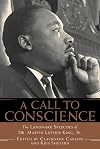
If you're not familiar with King's actual writings and (especially) speeches, you will not regret anything you do to rectify that. 50 years later, we tend to hold a pretty abstract notion of the man, as a kind of saint or—as Cornell West is fond of saying—a Santa-Claus figure. We are aware that he gave at least one important speech, possibly even more than one. But as you listen to these speeches, what you will become aware of is King's piercing intellect, and his devotion to the cause show more of uplifting the American nation and its people. You will see a man fully committed to nonviolence, aware of both its power and its difficulty. I was enraptured over and over again as I listened.
To be sure, this is not a biography. You will see few if any of King's faults and foibles as a human being here. The introductions, while well written and compelling, stick fairly closely to a vision of MLK as a moral and political leader. Which he certainly was. Feel free to look elsewhere if you are looking for a narrative of his life. But you could do worse than to start here if you are looking for an understanding of his spirit and his legacy. show less
To be sure, this is not a biography. You will see few if any of King's faults and foibles as a human being here. The introductions, while well written and compelling, stick fairly closely to a vision of MLK as a moral and political leader. Which he certainly was. Feel free to look elsewhere if you are looking for a narrative of his life. But you could do worse than to start here if you are looking for an understanding of his spirit and his legacy. show less
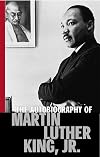
Martin Luther King Jr never wrote his autobiography, but he left sufficient books, essays, articles, sermons, interviews, letters... in a word: such a vast array of documents, that they can allow to retrace his life with quite a remarkable precision. That's exactly what Clayborne Carson, historian specialist of the Civil Right Movement in the USA, has done here; asking himself the question: what if such campaigner, 1964's Noble Prize Winner, had written his autobiography? The answer is this show more brilliant book.
Using the first person singular, he tells his fight against racial segregation - from the boycott of Montgomery's buses in 1955 until the march on Washington in 1963, all through his actions in Albany, the Birmingham campaign, and so many others. He gives us insight into the creation and evolution of his organisation (The Southern Christian Leadership Conference). He allows us in his meeting with Ghandi, Kwame Nkrumah, John F. Kennedy, Lyndon Johnson, Malcolm X... He offers us to see a pacifist whose fight, always non-violent, went way beyond the struggle against racism to also touch to helping the poor, and opposing the Vietnam war.
Each step of the pastor's life is dealt with in short chapters, all introduced by a brief chronology telling about the events that will be described. The whole is at times interrupted by letters, speeches, extracts of interviews, and other first hand materials that, far from being a distraction, provide more depth and insights to the text. Skilful, Carson in fact transcribes the documents he had access to in the first person; without, ever, taking the pen for King, give vent to his own positions and preconceived ideas of what the man may have been and thought. Indeed, such biography can be unsettling because of the use of the first person, but the author never sounds simplistic, futile, and/ or wordy. He goes straight to the point, made himself the voice of a man who transformed America, knowing perfectly well when to step back when necessary. Many could have failed miserably; not him. The historian, brilliantly, tackles his challenge perfectly well: telling Martin Luther King Jr by Martin Luther King Jr, not by Clayborne Carson.
Do we hold here the autobiography the pastor would have written himself should he had done so? In any case, it's a must read for anyone interested in the topic! show less
Using the first person singular, he tells his fight against racial segregation - from the boycott of Montgomery's buses in 1955 until the march on Washington in 1963, all through his actions in Albany, the Birmingham campaign, and so many others. He gives us insight into the creation and evolution of his organisation (The Southern Christian Leadership Conference). He allows us in his meeting with Ghandi, Kwame Nkrumah, John F. Kennedy, Lyndon Johnson, Malcolm X... He offers us to see a pacifist whose fight, always non-violent, went way beyond the struggle against racism to also touch to helping the poor, and opposing the Vietnam war.
Each step of the pastor's life is dealt with in short chapters, all introduced by a brief chronology telling about the events that will be described. The whole is at times interrupted by letters, speeches, extracts of interviews, and other first hand materials that, far from being a distraction, provide more depth and insights to the text. Skilful, Carson in fact transcribes the documents he had access to in the first person; without, ever, taking the pen for King, give vent to his own positions and preconceived ideas of what the man may have been and thought. Indeed, such biography can be unsettling because of the use of the first person, but the author never sounds simplistic, futile, and/ or wordy. He goes straight to the point, made himself the voice of a man who transformed America, knowing perfectly well when to step back when necessary. Many could have failed miserably; not him. The historian, brilliantly, tackles his challenge perfectly well: telling Martin Luther King Jr by Martin Luther King Jr, not by Clayborne Carson.
Do we hold here the autobiography the pastor would have written himself should he had done so? In any case, it's a must read for anyone interested in the topic! show less
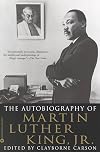
This was a fantastic read.
I was looking through my calendar one day when I realized that MLK Day was a couple of weeks away. I thought about it for a second and a sudden thought hit me – my knowledge of Mr. King as a person and his accomplishments were something I knew almost nothing about. I decided to change that.
Firstly, this isn’t your usual biography. Clayborne Carson was granted access to a trove of paperwork that included King’s sermons, publications in magazines, writings and show more speeches. Carson put these written works together to form a type of narrative. What the reader gets is insight directly from Martin Luther King Jr. on a slew of topics.
We learn about his years in college and learn about the books and people that inspired him to fully follow the philosophy of non-violent protest and revolution. He deeply believed that doing so would bring about much needed change that violent protest couldn’t achieve. Starting with the Montgomery Bus Boycott and every protest that bloomed afterwards we can see that the very act of kindness and love helped bring about a change in America.
Mr. King was an extremely intelligent man. Besides his studies, he was an extremely eloquent writer. To hear him speak was one thing; I think we’ve all have gotten shivers when listening to him read his “I Have A Dream” speech. But reading his words? An absolute treat.
On his reading and learning about different theologies:
"But my intellectual odyssey on nonviolence did not end here. During my senior year in theological seminary, I engaged in the exciting reading of various theological theories. Having been raised in a rather strict fundamentalist tradition, I was occasionally shocked when my intellectual journey carried me through new and sometimes complex doctrinal lands, but the pilgrimage was always stimulating; it gave me a new appreciation for objective appraisal and critical analysis, and knocked me out of my dogmatic slumber."
I haven’t even mentioned his “Letter from Birmingham Jail”. Holy cow.
The rest of his writings are amazing and will make you a better person, if you heed his words. I finished this book feeling the same way after finishing Malcolm X’s biography: filled with a new sense of urgency to help others. To be good to each other. To try and be a better person. To be more kind and generous. To combat hate with love. Things are better solved when the hands are not clenched in a fist but open for a handshake. Highly recommend! show less
I was looking through my calendar one day when I realized that MLK Day was a couple of weeks away. I thought about it for a second and a sudden thought hit me – my knowledge of Mr. King as a person and his accomplishments were something I knew almost nothing about. I decided to change that.
Firstly, this isn’t your usual biography. Clayborne Carson was granted access to a trove of paperwork that included King’s sermons, publications in magazines, writings and show more speeches. Carson put these written works together to form a type of narrative. What the reader gets is insight directly from Martin Luther King Jr. on a slew of topics.
We learn about his years in college and learn about the books and people that inspired him to fully follow the philosophy of non-violent protest and revolution. He deeply believed that doing so would bring about much needed change that violent protest couldn’t achieve. Starting with the Montgomery Bus Boycott and every protest that bloomed afterwards we can see that the very act of kindness and love helped bring about a change in America.
Mr. King was an extremely intelligent man. Besides his studies, he was an extremely eloquent writer. To hear him speak was one thing; I think we’ve all have gotten shivers when listening to him read his “I Have A Dream” speech. But reading his words? An absolute treat.
On his reading and learning about different theologies:
"But my intellectual odyssey on nonviolence did not end here. During my senior year in theological seminary, I engaged in the exciting reading of various theological theories. Having been raised in a rather strict fundamentalist tradition, I was occasionally shocked when my intellectual journey carried me through new and sometimes complex doctrinal lands, but the pilgrimage was always stimulating; it gave me a new appreciation for objective appraisal and critical analysis, and knocked me out of my dogmatic slumber."
I haven’t even mentioned his “Letter from Birmingham Jail”. Holy cow.
The rest of his writings are amazing and will make you a better person, if you heed his words. I finished this book feeling the same way after finishing Malcolm X’s biography: filled with a new sense of urgency to help others. To be good to each other. To try and be a better person. To be more kind and generous. To combat hate with love. Things are better solved when the hands are not clenched in a fist but open for a handshake. Highly recommend! show less
At the request of the family of Martin Luther King, Jr., King Scholar Claybourne Carson used Stanford University’s vast collection of King’s essays, his speeches and interviews with King, to construct this book, which tells the story of King’s life, with particular attention on his work for Civil Rights and equal opportunities for black Americans. Each chapter focuses on a specific time, campaign or incident, and describes not only the events taking place, but King’s own show more determination to keep going, the difficulties that he faced – both emotionally and physically – and the reasoning behind his actions, including his absolute determination that the campaign should be non-violent.
I found the book thoroughly absorbing. King was clearly an eloquent man with a passionate belief in justice for all, and this comes through on every page. I knew about the man and his life prior to picking up this book, but reading his thoughts in his own words was still very enlightening. I was full of admiration for a man who knew that his work put him in physical danger and indeed saw friends and colleagues die for the cause, who felt sometimes that he was fighting a losing (non-violent) battle, who encountered differences of opinion even within his own campaign, but yet refused to give up striving for what was right and fair.
Clayborne Carson has done a wonderful job of using King’s writings to build a clear chronological narrative, and it was often heartbreaking, but never less than inspiring to read. I thoroughly recommend this book to anyone and everyone. show less
I found the book thoroughly absorbing. King was clearly an eloquent man with a passionate belief in justice for all, and this comes through on every page. I knew about the man and his life prior to picking up this book, but reading his thoughts in his own words was still very enlightening. I was full of admiration for a man who knew that his work put him in physical danger and indeed saw friends and colleagues die for the cause, who felt sometimes that he was fighting a losing (non-violent) battle, who encountered differences of opinion even within his own campaign, but yet refused to give up striving for what was right and fair.
Clayborne Carson has done a wonderful job of using King’s writings to build a clear chronological narrative, and it was often heartbreaking, but never less than inspiring to read. I thoroughly recommend this book to anyone and everyone. show less
Lists
Awards


You May Also Like


Associated Authors
Statistics
- Works
- 43
- Also by
- 6
- Members
- 3,500
- Popularity
- #7,266
- Rating
- 4.2
- Reviews
- 41
- ISBNs
- 104
- Languages
- 7
