
Gordon Parks (1912–2006)
Author of The Learning Tree
About the Author
Works by Gordon Parks
Leadbelly 1 copy
Harlem: The artist's annotations on a city revisited in two classic photographic essays (Homage) (1997) 1 copy
Bare witness 1 copy
A Fertile Awakening 1 copy
Associated Works
Autobiography of a People: Three Centuries of African American History Told by Those Who Lived It (2000) — Foreword — 112 copies
Antaeus No. 61, Autumn 1988 - Journals, Notebooks & Diaries (1988) — Contributor — 37 copies, 2 reviews
Tagged
Common Knowledge
- Canonical name
- Parks, Gordon
- Legal name
- Parks, Gordon Roger Alexander Buchanan
- Birthdate
- 1912-11-30
- Date of death
- 2006-03-07
- Gender
- male
- Occupations
- photographer
novelist
film director
autobiographer - Awards and honors
- NAACP Spingarn Medal (1972)
National Medal of Arts (1988)
Anisfield-Wolf Book Award (Lifetime Achievement, 1998) - Relationships
- Parks, Gordon, Jr. (son)
Parks, David (son) - Nationality
- USA
- Birthplace
- Fort Scott, Kansas, USA
- Places of residence
- Fort Scott, Kansas, USA (birth)
- Place of death
- New York, New York, USA
- Associated Place (for map)
- Kansas, USA
Members
Reviews
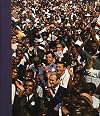
Injustice, violence, the Civil Rights Movement, fashion and the arts--Gordon Parks captured half a century of the vast changes to the American cultural landscape in his multifaceted career. I Am You: Selected Works 1934–1978 reveals the breadth of his work as the first African American photographer for Vogue and Life magazines as well as a filmmaker and writer.
Reportage for major magazines dominated Parks’ work from 1948 to 1972. He chronicled black America’s struggle for equality, show more exposing the harsh realities of life in Harlem, institutionalized racism and shocking poverty. Parks was equally accomplished as a portraitist, capturing figures such as Malcolm X, Martin Luther King, Duke Ellington and Ingrid Bergman. He turned his attention to film in the 1960s with social documentaries, as well as the cult classic Shaft (1971).
This volume traces all the threads of Parks’ achievement, examining the interaction between his photographic and filmic visions.
Gordon Parks (1912–2006) was born in Fort Scott, Kansas. He worked as a brothel pianist and railcar porter, among other jobs, before buying a camera at a pawnshop, training himself, and becoming a photographer. In addition to his tenures photographing for the Farm Security Administration (1941–45) and Life (1948–72), Parks evolved into a modern-day Renaissance man, finding success as a film director, writer and composer. He wrote numerous memoirs, novels and poetry, and received many awards, including the National Medal of Arts and more than 50 honorary degrees. show less
Reportage for major magazines dominated Parks’ work from 1948 to 1972. He chronicled black America’s struggle for equality, show more exposing the harsh realities of life in Harlem, institutionalized racism and shocking poverty. Parks was equally accomplished as a portraitist, capturing figures such as Malcolm X, Martin Luther King, Duke Ellington and Ingrid Bergman. He turned his attention to film in the 1960s with social documentaries, as well as the cult classic Shaft (1971).
This volume traces all the threads of Parks’ achievement, examining the interaction between his photographic and filmic visions.
Gordon Parks (1912–2006) was born in Fort Scott, Kansas. He worked as a brothel pianist and railcar porter, among other jobs, before buying a camera at a pawnshop, training himself, and becoming a photographer. In addition to his tenures photographing for the Farm Security Administration (1941–45) and Life (1948–72), Parks evolved into a modern-day Renaissance man, finding success as a film director, writer and composer. He wrote numerous memoirs, novels and poetry, and received many awards, including the National Medal of Arts and more than 50 honorary degrees. show less
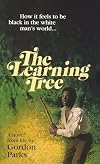
The Learning Tree by Gordon Parks is a story about being a black kid in the south long before the days of Civil Rights. It's funny in places and very sad in others. If you want to know how lucky you are today, read this book.
The Learning Tree is Gordon Parks’ autobiographical novel about his years growing up in Fort Scott, Kansas. Set during the 1920s, the book follows Newt Winger, Parks’ alter ego, as he comes of age in a turbulent border community dealing with often frightening racial issues. The town, renamed Cherokee Flats for the novel, is divided geographically and socially by the railroad tracks, with well-to-do white folks on one side, and a few poor whites scattered amongst the black people living show more on the other.
Here Newt and his family encounter situations that are practically universal in the experience of African Americans in this country during the days before the civil rights movement: segregated movie theaters and restaurants; separate schools that are definitely not equal; the harm that can come to a black man for paying attention to a white woman; light-skinned African Americans who choose to “pass” as white for the advantages white skin provides.
Despite the social status (or lack thereof) assigned to them because they are black, the Winger family is upstanding and respected. Jack, the patriarch, is an honest, hard-working man, when he can get work. Although he has trouble expressing his love for his children, he is rock-solid, and everyone knows that he, and his word, can be depended upon. Newt’s mother, Sarah, is the heart of the family. A strong woman who can handle her son-in-law without fear when he is in a gun-toting drunken rage, she is also the parent who dreams of a better life for her children, especially Newt. Sarah encourages Newt’s love for learning, and tells him often that he can be whatever he wants to be, if he works hard enough.
Newt dreams, too, of a better life in a better place. He bristles at the daily indignities he suffers and, when he witnesses a murder, he is torn about whether to tell what he saw for fear of the racial explosion that may rock the town when the truth is known. Ultimately, Newt does the right thing, with his parents standing by him. In the process he learns for himself the lesson his mother imparts to him early in the book: “[Cherokee Flats] ain’t a all-good place and it ain’t a all-bad place. But you can learn just as much here about people and things as you can learn any place else…let it be your learnin’ tree.”
http://skyways.lib.ks.us/orgs/kcfb/lt/book_review.htm show less
Here Newt and his family encounter situations that are practically universal in the experience of African Americans in this country during the days before the civil rights movement: segregated movie theaters and restaurants; separate schools that are definitely not equal; the harm that can come to a black man for paying attention to a white woman; light-skinned African Americans who choose to “pass” as white for the advantages white skin provides.
Despite the social status (or lack thereof) assigned to them because they are black, the Winger family is upstanding and respected. Jack, the patriarch, is an honest, hard-working man, when he can get work. Although he has trouble expressing his love for his children, he is rock-solid, and everyone knows that he, and his word, can be depended upon. Newt’s mother, Sarah, is the heart of the family. A strong woman who can handle her son-in-law without fear when he is in a gun-toting drunken rage, she is also the parent who dreams of a better life for her children, especially Newt. Sarah encourages Newt’s love for learning, and tells him often that he can be whatever he wants to be, if he works hard enough.
Newt dreams, too, of a better life in a better place. He bristles at the daily indignities he suffers and, when he witnesses a murder, he is torn about whether to tell what he saw for fear of the racial explosion that may rock the town when the truth is known. Ultimately, Newt does the right thing, with his parents standing by him. In the process he learns for himself the lesson his mother imparts to him early in the book: “[Cherokee Flats] ain’t a all-good place and it ain’t a all-bad place. But you can learn just as much here about people and things as you can learn any place else…let it be your learnin’ tree.”
http://skyways.lib.ks.us/orgs/kcfb/lt/book_review.htm show less
J.T. by Jane Wagner
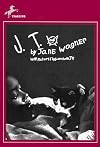
My boyfriend remembers this book as one that really impacted him as a child. I read it for the first time today and I find the story's themes timeless. Great photographs, too.
Lists
Awards


You May Also Like


Associated Authors
Statistics
- Works
- 45
- Also by
- 8
- Members
- 1,680
- Popularity
- #15,303
- Rating
- 4.0
- Reviews
- 15
- ISBNs
- 80
- Languages
- 2
- Favorited
- 3
