
Richard Wright (1) (1908–1960)
Author of Native Son
For other authors named Richard Wright, see the disambiguation page.
About the Author
Richard Wright was generally thought of as one of the most gifted contemporary African American writers until the rise of James Baldwin. "With Wright, the pain of being a Negro is basically economic---its sight is mainly in the pocket. With Baldwin, the pain suffuses the whole man. . . . If show more Baldwin's sights are higher than Wright's, it is in part because Wright helped to raise them" (Time). Wright was born on a plantation near Natchez, Mississippi, the son of a sharecropper. At the age of 15, he started to work in Memphis, then in Chicago, then "bummed all over the country," supporting himself by various odd jobs. His early writing was in the smaller magazines---first poetry, then prose. He won Story Story's $500 prize---for the best story written by a worker on the Writer's Project---with "Uncle Tom's Children" in 1938, his first important publication. He wrote Native Son (1940) in eight months, and it made his reputation. Based in part on the actual case of a young black murderer of a white woman, it was one of the first of the African American protest novels, violent and shocking in its scenes of cruelty, hunger, rape, murder, flight, and prison. Black Boy (1945) is the simple, vivid, and poignant story of Wright's early years in the South. It appeared at the beginning of a new postwar awareness of the evils of racial prejudice and did much to call attention to the plight of the African American. The Outsider (1953) is a novel based on Wright's own experience as a member of the Communist party, an affiliation he terminated in 1944. He remained politically inactive thereafter and from 1946 until his death made his principal residence in Paris. His nonfiction writings on problems of his race include Black Power: A Record of Reactions in a Land of Pathos (1954), about a visit to the Gold Coast, White Man, Listen (1957), and Twelve Million Black Voices: A Folk History of the Negro in the United States. (Bowker Author Biography) Richard Wright was born on a plantation near Natchez, Mississippi. His father left the family when Wright was only five years old, and he was raised first by his mother and then by a series of relatives. What little schooling he had ended with his graduation from ninth grade in Memphis, Tennessee. At age 15, he started to work in Memphis, and later worked in Chicago before traveling across the country supporting himself with odd jobs. When Wright finally returned to Chicago, he got a job with the federal Writer's Project, a government-supported arts program. He was quite successful, winning a $500 prize from a magazine for the best fiction written by a participant in that program. In Chicago, he was also introduced to leftist politics and became a member of the Communist Party. In 1937, Wright left Chicago for New York, where he became Harlem editor for the Communist national newspaper, The Daily Worker, and where he met future novelist, Ralph Ellison. Wright became a celebrated author with the publication of Native Son (1940), a novel he wrote in only eight months. Based on the actual case of a young black murderer of a white woman, it was one of the first of the modern black protest novels, violent and shocking in its sense of cruelty, hunger, rape, murder, flight, and prison. This novel brought Wright both fame and financial security. He followed it with his autobiography, Black Boy (1945), which was also successful. In 1942, Wright and his wife broke with the Communist Party, and in 1947, they moved to France, where Wright lived the rest of his life. His novel The Outsider (1953) is based on his experiences as a member of the Communist Party. Wright is regarded as a major modern American writer, one of the first black writers to reach a large white audience, and thereby raise the level of national awareness of the continuing problem of racism in America. In many respects Wright paved the way for all black writers who followed him. (Bowker Author Biography) show less
Image credit: Richard Wright (1908-1960)
Photograph by Gordon Parks, May 1943
(Farm Security Administration-
Office of War Information Photograph Collection,
Library of Congress)
Photograph by Gordon Parks, May 1943
(Farm Security Administration-
Office of War Information Photograph Collection,
Library of Congress)
Works by Richard Wright
Richard Wright: Early Works: Lawd Today!, Uncle Tom's Children, Native Son (1991) 409 copies, 4 reviews
Black Power: Three Books from Exile: Black Power; The Color Curtain; and White Man, Listen! (2008) 108 copies
Down by the Riverside 5 copies
The Man Who Was Almost a Man 5 copies
How "Bigger" was born; the story of Native son, one of the most significant novels of our time 3 copies
Mi vida de negro 2 copies
Sanje nekega življenja 1 copy
Sangre negra 1 copy
Native Son (1950-USA) 1 copy
Wright Richard 1 copy
Długi sen 1 copy
Fire and Cloud {Short Story} 1 copy
BIG BOY LEAVES HOME 1 copy
Five Famous Writers 1 copy
Associated Works
Literature: An Introduction to Fiction, Poetry, and Drama (1995) — Contributor, some editions — 1,017 copies, 7 reviews
Race, Class, and Gender in the United States: An Integrated Study (1992) — Contributor, some editions — 561 copies
American Poetry: The Twentieth Century, Volume Two: E. E. Cummings to May Swenson (2000) — Contributor — 444 copies, 1 review
The Art of the Tale: An International Anthology of Short Stories (1986) — Contributor — 381 copies, 3 reviews
Against Forgetting: Twentieth-Century Poetry of Witness (1993) — Contributor — 376 copies, 2 reviews
The Norton Anthology of African American Literature {2nd edition} (2003) — Contributor, some editions — 283 copies, 2 reviews
African American Poetry: 250 Years of Struggle and Song (2020) — Contributor — 237 copies, 4 reviews
This is My Best: American Greatest Living Authors Present and Give Their Reasons Why (1942) — Contributor — 214 copies
The Best Short Stories by Black Writers, 1899-1967: The Classic Anthology (1967) — Contributor — 201 copies, 1 review
From Totems to Hip-Hop: A Multicultural Anthology of Poetry Across the Americas 1900-2002 (2002) — Contributor — 181 copies
Black Metropolis: A Study of Negro Life in a Northern City (1993) — Introduction, some editions — 173 copies, 3 reviews
Growing Up in the South: An Anthology of Modern Southern Literature (1991) — Contributor — 165 copies, 1 review
The Mark Twain Anthology: Great Writers on His Life and Work (2010) — Contributor — 160 copies, 1 review
An American Album: One Hundred and Fifty Years of Harper's Magazine (2000) — Contributor — 145 copies, 1 review
The Norton Anthology of American Literature, Volume 2: 1865 to Present (1979) — Contributor, some editions — 137 copies
Black on White: Black Writers on What It Means to Be White (1998) — Contributor — 129 copies, 2 reviews
Calling the Wind: Twentieth Century African-American Short Stories (1992) — Contributor — 116 copies
In Search of Color Everywhere: A Collection of African-American Poetry (1994) — Contributor — 106 copies
Go the Way Your Blood Beats: An Anthology of Lesbian and Gay Fiction by African-American Writers (1996) — Contributor — 92 copies
Bearing Witness: Selections from African-American Autobiography in the Twentieth Century (1991) — Contributor — 74 copies
The Heath Anthology of American Literature, Concise Edition (2003) — Contributor — 73 copies, 1 review
Buzz Words: Poems About Insects (Everyman's Library Pocket Poets Series) (2021) — Contributor — 56 copies
Years of Protest: A Collection of American Writings of the 1930's (1967) — Contributor — 44 copies, 1 review
Fifty Years of the American Short Story from the O. Henry Awards 1919-1970 (1970) — Contributor — 17 copies, 1 review
Black Metropolis: A Study of Negro Life in a Northern City, Volume I (1962) — Introduction, some editions; some editions — 12 copies, 1 review
The Best Short Stories of 1941 and the Yearbook of the American Short Story (1941) — Contributor — 11 copies
The Best Short Stories of 1939 and the Yearbook of the American Short Story (1939) — Contributor — 8 copies
Fifty Years of the American Short Story from the O. Henry Awards 1919-1970, Volume 2 (1970) — Contributor — 5 copies
The Ethnic Image in Modern American Literature, 1900-1950, Volumes 1-2 (1984) — Contributor — 1 copy
Tagged
Common Knowledge
- Canonical name
- Wright, Richard
- Legal name
- Wright, Richard Nathaniel
- Birthdate
- 1908-09-04
- Date of death
- 1960-11-28
- Gender
- male
- Education
- Lanier High School, Jackson, Mississippi, USA
- Occupations
- novelist
short story writer
poet
essayist
editor
postal clerk - Organizations
- John Reed Club
Communist Party
National Negro Congress
South Side Writers Group (chairman)
Left Front (editor)
Daily Worker (editor) (show all 7)
Works Progress Administration Federal Writers' Project - Awards and honors
- Spingarn Medal (1941)
Guggenheim Fellowship
Chicago Literary Hall of Fame (2010)
Story Prize (1938) - Relationships
- Wright, Malcolm (grandson)
- Cause of death
- heart attack
- Nationality
- USA (birth)
France (naturalized 1947) - Birthplace
- Roxie, Mississippi, USA
- Places of residence
- Jackson, Mississippi, USA
Chicago, Illinois, USA
New York, New York, USA
Paris, Île-de-France, France - Place of death
- Paris, Île-de-France, France
- Burial location
- Le Père Lachaise Cemetery, Paris, Île-de-France, France
- Associated Place (for map)
- USA
Members
Reviews
Rating: 5* of five
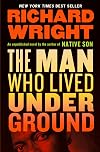
The Publisher Says: A major literary event: an explosive, previously unpublished novel from the 1940s by the legendary author of Native Son and Black Boy.
Fred Daniels, a black man, is picked up randomly by the police after a brutal murder in a Chicago neighborhood and taken to the local precinct where he is tortured until he confesses to a crime he didn't commit. After signing a confession, he escapes—or is permitted to escape—from the precinct and takes up residence in show more the sewers below the streets of Chicago.
This is the simple, horrible premise of Richard Wright's scorching novel, The Man Who Lived Underground, a masterpiece written in the same period as his landmark books Native Son (1940) and Black Boy (1945) that he was unable to publish in his lifetime. Only small parts of it have appeared in print, and in a significantly redacted form it would eventually be included in the short story collection Eight Men (1961). Now, for the first time, by special arrangement with the author’s estate, the full text of the work that meant more to Wright than any other (“I have never written anything in my life that stemmed more from sheer inspiration”) is published in the form that he intended, complete with his companion essay, “Memories of My Grandmother.” Malcolm Wright, the author’s grandson, contributes an afterword.
I RECEIVED A DRC FROM THE PUBLISHER VIA NETGALLEY. THANK YOU.
My Review: Richard Wright was one of the twentieth century's crop of Great American Storytellers, a writer whose entire life of creation was a gift to a country that did not deserve his passionate voice calling into the face of its indifference that we can be better, do better, and must in order to survive.
People my age were required to read Native Son in high school English, and I am so very glad we were. I wouldn't have picked up the book any other way. It needed to be shoved on me. And wonder of wonders, the Austin (Texas) Independent School District of the early 1970s did. It was a tough thing to let myself believe, that people simply but sincerely hated for no better reason than someone was a different skin color than they were. I assumed all those yahoos were just performing their snotty, hateful idiocy like they did their fake homophobia; it seemed to me that racism against Black and Hispanic students was the same. Anything to look cool, after all, and these were teenagers whose ideas of Cool were neither self-reflective nor rebellious enough to have progressed from the 1950s their own parents were stuck in.
Then we read the equally astounding true-crime (I call racism a crime and am not likely to stop doing so) Black Like Me, an account of a white man passing as Black in the Jim Crow South. It too was gut-wrenching, but was different in kind than the novel Native Son. A factual report...well, I am quite sure that my own racism got hard, hard knocks that year. (I am fully aware that I'm complicit in racist society, that in no way am I "not a racist" just because I support Black political candidates and so on.) It's a pity we couldn't have read this jaw-dropping, intense, visceral evocation of the Other as refiner and perfecter of his Othering. It is the apotheosis of Otherness and Othering that this intense story tells its readers.
Anyone who's paid me any attention knows that I can be run off from continuing a read by child abuse, by use of the n-word, by cruelty to animals...the list goes on...and not a few unfriendlies are smirking in anticipation of taxing me with this book's abusive, rage-filled, n-word-bombing ethos...how can I give this five stars and still abandon ship with content warnings in other, arguably less offensive cases? Because Richard Wright never does a single thing to make the awfulness of PoV character Fred Daniels's world sensational. The author isn't kidding around, bedizening a story with nastiness to provoke a response. He is telling a story about how Othering a man will, over time, after many small and large blows and much deliberate infliction of every kind of pain, turn him in to the thing that he was not, did not want to be, and could not bear to know that he now was.
It worked, in its honesty and its clarity of purpose. I left the sewer Fred lived in without regret, without revulsion, and with the most horrified, profound acceptance of Fred as he was abused and neglected into being. Acceptance of his re-creation, transformation.
In the inexcusably hate-filled twenty-first century, we are fighting the battle that Fred lost all over again. There are wins...the conviction of Ahmaud Arbery's murderers...there are defeats, the gerrymandering cases standing out to me as disasters to Black people...but the trend is towards, as it ever was, the endless and pointless perpetuation of hate based on stupidity among the haters and truculence among the hated.
Books like this are strong medicine against both ends of the spectrum. Fred, a victim, sees what the System does to people, and ultimately still surrenders to it. Not to fight against the dehumanizing and brutalizing actions and inactions of the system that allows Fred to exist in the literal sewers is to acquiesce in the process of creating more Freds...and that is a moral wrong and a societal tragedy. Author Wright doesn't allow his readers the luxury of redemption. This book remained unpublished for seventy years because it is the most hopeless document of degradation's triumph I've ever read. White people of the 1940s would've been offended by the clear-eyed assertion of police violence as it happened...nowadays that illusion is gone...but they wouldn't have wanted to read about a good man surrendering his humanity regardless of that knee-jerk response. The accusing fingers pointing back at them as they called out Author Wright for his bleak treatment of Fred (theirs was the system he succumbed to, after all) were simply too on-the-nose.
There is an extended essay included with the novel entitled “Memories of My Grandmother” that enables our appalled eyes to see where so much of the story we've just read originated. The fact that Christian religion played such a big role in Wright's formation into a man capable of the kind of wordsmithing he does isn't a big surprise. I'm very grateful that the author's daughter required the essay to be published within the book containing the novel...it's a long piece and, even if you're on the fence about reading the novel, I hope you'll consider procuring it to read the essay alone. It is a marvelous explication of how each generation forms the next, for good and ill.
What Author Wright isn't, in the writing of this story, is subtle. The metaphors defining it simply aren't debatable: Whites own the sunshine and consign the Blacks to the literal sewers to eke out whatever existences they can. A Black man who's innocent of any crime is shoved into the sewer with the rest of the leavings because he's never had a place in the sunshine that was truly his. As he copes increasingly poorly with the sewers, he's not allowed to leave them; he's run away from the white police, deprived them of their fun of torturing and eventually killing him, so they say "stay there and die."
The author doesn't, then, offer Redemption to either side. It's a very uncharitable and un-Christian thing to withhold. But he's got a reason, does Author Wright: "Chickens come home to roost, don’t they?" his daughter quotes him as saying.
They very much do. The perch they roost on is, in this rare and exquisitely painful read, your complicit soul. show less
The Publisher Says: A major literary event: an explosive, previously unpublished novel from the 1940s by the legendary author of Native Son and Black Boy.
Fred Daniels, a black man, is picked up randomly by the police after a brutal murder in a Chicago neighborhood and taken to the local precinct where he is tortured until he confesses to a crime he didn't commit. After signing a confession, he escapes—or is permitted to escape—from the precinct and takes up residence in show more the sewers below the streets of Chicago.
This is the simple, horrible premise of Richard Wright's scorching novel, The Man Who Lived Underground, a masterpiece written in the same period as his landmark books Native Son (1940) and Black Boy (1945) that he was unable to publish in his lifetime. Only small parts of it have appeared in print, and in a significantly redacted form it would eventually be included in the short story collection Eight Men (1961). Now, for the first time, by special arrangement with the author’s estate, the full text of the work that meant more to Wright than any other (“I have never written anything in my life that stemmed more from sheer inspiration”) is published in the form that he intended, complete with his companion essay, “Memories of My Grandmother.” Malcolm Wright, the author’s grandson, contributes an afterword.
I RECEIVED A DRC FROM THE PUBLISHER VIA NETGALLEY. THANK YOU.
My Review: Richard Wright was one of the twentieth century's crop of Great American Storytellers, a writer whose entire life of creation was a gift to a country that did not deserve his passionate voice calling into the face of its indifference that we can be better, do better, and must in order to survive.
People my age were required to read Native Son in high school English, and I am so very glad we were. I wouldn't have picked up the book any other way. It needed to be shoved on me. And wonder of wonders, the Austin (Texas) Independent School District of the early 1970s did. It was a tough thing to let myself believe, that people simply but sincerely hated for no better reason than someone was a different skin color than they were. I assumed all those yahoos were just performing their snotty, hateful idiocy like they did their fake homophobia; it seemed to me that racism against Black and Hispanic students was the same. Anything to look cool, after all, and these were teenagers whose ideas of Cool were neither self-reflective nor rebellious enough to have progressed from the 1950s their own parents were stuck in.
Then we read the equally astounding true-crime (I call racism a crime and am not likely to stop doing so) Black Like Me, an account of a white man passing as Black in the Jim Crow South. It too was gut-wrenching, but was different in kind than the novel Native Son. A factual report...well, I am quite sure that my own racism got hard, hard knocks that year. (I am fully aware that I'm complicit in racist society, that in no way am I "not a racist" just because I support Black political candidates and so on.) It's a pity we couldn't have read this jaw-dropping, intense, visceral evocation of the Other as refiner and perfecter of his Othering. It is the apotheosis of Otherness and Othering that this intense story tells its readers.
Anyone who's paid me any attention knows that I can be run off from continuing a read by child abuse, by use of the n-word, by cruelty to animals...the list goes on...and not a few unfriendlies are smirking in anticipation of taxing me with this book's abusive, rage-filled, n-word-bombing ethos...how can I give this five stars and still abandon ship with content warnings in other, arguably less offensive cases? Because Richard Wright never does a single thing to make the awfulness of PoV character Fred Daniels's world sensational. The author isn't kidding around, bedizening a story with nastiness to provoke a response. He is telling a story about how Othering a man will, over time, after many small and large blows and much deliberate infliction of every kind of pain, turn him in to the thing that he was not, did not want to be, and could not bear to know that he now was.
It worked, in its honesty and its clarity of purpose. I left the sewer Fred lived in without regret, without revulsion, and with the most horrified, profound acceptance of Fred as he was abused and neglected into being. Acceptance of his re-creation, transformation.
In the inexcusably hate-filled twenty-first century, we are fighting the battle that Fred lost all over again. There are wins...the conviction of Ahmaud Arbery's murderers...there are defeats, the gerrymandering cases standing out to me as disasters to Black people...but the trend is towards, as it ever was, the endless and pointless perpetuation of hate based on stupidity among the haters and truculence among the hated.
Books like this are strong medicine against both ends of the spectrum. Fred, a victim, sees what the System does to people, and ultimately still surrenders to it. Not to fight against the dehumanizing and brutalizing actions and inactions of the system that allows Fred to exist in the literal sewers is to acquiesce in the process of creating more Freds...and that is a moral wrong and a societal tragedy. Author Wright doesn't allow his readers the luxury of redemption. This book remained unpublished for seventy years because it is the most hopeless document of degradation's triumph I've ever read. White people of the 1940s would've been offended by the clear-eyed assertion of police violence as it happened...nowadays that illusion is gone...but they wouldn't have wanted to read about a good man surrendering his humanity regardless of that knee-jerk response. The accusing fingers pointing back at them as they called out Author Wright for his bleak treatment of Fred (theirs was the system he succumbed to, after all) were simply too on-the-nose.
There is an extended essay included with the novel entitled “Memories of My Grandmother” that enables our appalled eyes to see where so much of the story we've just read originated. The fact that Christian religion played such a big role in Wright's formation into a man capable of the kind of wordsmithing he does isn't a big surprise. I'm very grateful that the author's daughter required the essay to be published within the book containing the novel...it's a long piece and, even if you're on the fence about reading the novel, I hope you'll consider procuring it to read the essay alone. It is a marvelous explication of how each generation forms the next, for good and ill.
What Author Wright isn't, in the writing of this story, is subtle. The metaphors defining it simply aren't debatable: Whites own the sunshine and consign the Blacks to the literal sewers to eke out whatever existences they can. A Black man who's innocent of any crime is shoved into the sewer with the rest of the leavings because he's never had a place in the sunshine that was truly his. As he copes increasingly poorly with the sewers, he's not allowed to leave them; he's run away from the white police, deprived them of their fun of torturing and eventually killing him, so they say "stay there and die."
The author doesn't, then, offer Redemption to either side. It's a very uncharitable and un-Christian thing to withhold. But he's got a reason, does Author Wright: "Chickens come home to roost, don’t they?" his daughter quotes him as saying.
They very much do. The perch they roost on is, in this rare and exquisitely painful read, your complicit soul. show less
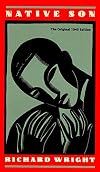
Summary: The story of Bigger Thomas, whose unpremeditated murder of Mary Dalton and second murder covering up the first, fires rage and fear in Chicago, and in a strange way gives meaning to a young man who felt himself imprisoned in Chicago’s Black Belt.
This is an uncomfortable book to read from the moment Bigger Thomas wakes up until the last pages. It is uncomfortable to view the rat-infested tenement room a family of four share, where Bigger’s first act is to kill a giant rat with a show more pan.
It is uncomfortable to hear Bigger’s mother nag him about going to the job set up by the relief program. He already has a record for theft, some of which he’s involved his girlfriend Bessie in.
It’s uncomfortable to hear him plot to rob a white jeweler with his three friends. Then when one doesn’t show up on time, he nearly slits his throat in anger.
It’s uncomfortable to go to the Daltons and be treated so well by the family and other household staff. Mr. Dalton has an interest in the companies operating the tenement housing Bigger lives in, confining Blacks to one area of south Chicago known as the Black Belt. He also gives lots of money to charities for the uplift of Blacks and employs people recommended by the relief agency who sent Bigger–an uncomfortable tension of interests that emerges as the story unfolds.
It’s uncomfortable to see Bigger on his first chauffeuring job, supposedly taking Mary Dalton, the Dalton’s only daughter to a lecture, but in reality to a rendezvous with a Communist lover, Jan. We sense Bigger’s discomfort as he takes them to a south side restaurant to eat “his kind of food,” and invited to socialize with them while proselytized into the Communist cause. We sense his discomfort as Jan drives with all of them in the front seat, then as they drink while he drives.
It’s uncomfortable to see Bigger having to help the drunken Mary into the house, and up to her room, getting her to bed, only to have her blind mother come in to this incriminating scene. We sense his discomfort as he tries to silence her so her mother won’t discover his presence and think Mary asleep in a drunken stupor, and when Mrs. Dalton leaves, to find he has asphyxiated her and she is dead.
It’s uncomfortable to witness Bigger’s desperation which leads him to stuff her in the trunk she’s taking to Detroit, to haul it to the basement and stuff her body into the coal furnace, hacking off her head so it would all fit, and then feeding the fire but fearing to remove the ashes for what he might find.
It’s uncomfortable as Mary’s disappearance becomes known to watch Bigger deflect suspicions toward Jan while involving his girlfriend in a ransom plot, ultimately telling her what he’s done, and then as Mary’s bones are found in the furnace ashes, fleeing with Bessie to an abandoned building where he has sex with her then kills her with a brick and throws her down an airshaft, where she did not immediately die.
It’s uncomfortable to see the police cordon close around him, then the final futile efforts to elude capture. It’s uncomfortable to hear the racist vitriol, of crowds who would lynch him and a prosecutor who charges him with rape as well as murder.
It’s uncomfortable to hear him tell his communist attorney, Mr. Max, how, for a brief moment, when he killed, he felt his most free and alive, how in these moments, he found meaning, a momentary escape from the destiny to which his birth and race, in his own mind, had imprisoned him.
His relationship with his attorney, who made an impassioned plea before the court for his life, is the one shining moment. Someone who asked him questions, and listened, and treated him as a man. No one understands more of his life than this man. But he is not a confessor. While Bigger tells the truth of what he had done, there was no remorse, no repentance.
We want to argue that Bigger could have made different choices. Yet the sense is of a human being trapped–in a tenement, into reliance on white charity, in an awkward social situation with two people with no clue who “mean well,” in Mary Dalton’s bedroom where no good explanation could be made for his presence. We’re rightly horrified by the murders, but also at the logic by which Bigger finds meaning in them.
We’re left uncomfortable with social structures that the execution of this young killer will not change. We’re left uncomfortable with the thought of how many other Biggers lurk in such structures–also wanting to do things with their lives, also questing for meaning, perhaps in distorted ways that will end badly for them and others. And this is as it should be. A minister friend of mine once remarked that he believed the gospel not only offered comfort to the disturbed but also disturbed the comfortable. This book does the latter. Don’t read it if you want to remain in comfort. show less
This is an uncomfortable book to read from the moment Bigger Thomas wakes up until the last pages. It is uncomfortable to view the rat-infested tenement room a family of four share, where Bigger’s first act is to kill a giant rat with a show more pan.
It is uncomfortable to hear Bigger’s mother nag him about going to the job set up by the relief program. He already has a record for theft, some of which he’s involved his girlfriend Bessie in.
It’s uncomfortable to hear him plot to rob a white jeweler with his three friends. Then when one doesn’t show up on time, he nearly slits his throat in anger.
It’s uncomfortable to go to the Daltons and be treated so well by the family and other household staff. Mr. Dalton has an interest in the companies operating the tenement housing Bigger lives in, confining Blacks to one area of south Chicago known as the Black Belt. He also gives lots of money to charities for the uplift of Blacks and employs people recommended by the relief agency who sent Bigger–an uncomfortable tension of interests that emerges as the story unfolds.
It’s uncomfortable to see Bigger on his first chauffeuring job, supposedly taking Mary Dalton, the Dalton’s only daughter to a lecture, but in reality to a rendezvous with a Communist lover, Jan. We sense Bigger’s discomfort as he takes them to a south side restaurant to eat “his kind of food,” and invited to socialize with them while proselytized into the Communist cause. We sense his discomfort as Jan drives with all of them in the front seat, then as they drink while he drives.
It’s uncomfortable to see Bigger having to help the drunken Mary into the house, and up to her room, getting her to bed, only to have her blind mother come in to this incriminating scene. We sense his discomfort as he tries to silence her so her mother won’t discover his presence and think Mary asleep in a drunken stupor, and when Mrs. Dalton leaves, to find he has asphyxiated her and she is dead.
It’s uncomfortable to witness Bigger’s desperation which leads him to stuff her in the trunk she’s taking to Detroit, to haul it to the basement and stuff her body into the coal furnace, hacking off her head so it would all fit, and then feeding the fire but fearing to remove the ashes for what he might find.
It’s uncomfortable as Mary’s disappearance becomes known to watch Bigger deflect suspicions toward Jan while involving his girlfriend in a ransom plot, ultimately telling her what he’s done, and then as Mary’s bones are found in the furnace ashes, fleeing with Bessie to an abandoned building where he has sex with her then kills her with a brick and throws her down an airshaft, where she did not immediately die.
It’s uncomfortable to see the police cordon close around him, then the final futile efforts to elude capture. It’s uncomfortable to hear the racist vitriol, of crowds who would lynch him and a prosecutor who charges him with rape as well as murder.
It’s uncomfortable to hear him tell his communist attorney, Mr. Max, how, for a brief moment, when he killed, he felt his most free and alive, how in these moments, he found meaning, a momentary escape from the destiny to which his birth and race, in his own mind, had imprisoned him.
His relationship with his attorney, who made an impassioned plea before the court for his life, is the one shining moment. Someone who asked him questions, and listened, and treated him as a man. No one understands more of his life than this man. But he is not a confessor. While Bigger tells the truth of what he had done, there was no remorse, no repentance.
We want to argue that Bigger could have made different choices. Yet the sense is of a human being trapped–in a tenement, into reliance on white charity, in an awkward social situation with two people with no clue who “mean well,” in Mary Dalton’s bedroom where no good explanation could be made for his presence. We’re rightly horrified by the murders, but also at the logic by which Bigger finds meaning in them.
We’re left uncomfortable with social structures that the execution of this young killer will not change. We’re left uncomfortable with the thought of how many other Biggers lurk in such structures–also wanting to do things with their lives, also questing for meaning, perhaps in distorted ways that will end badly for them and others. And this is as it should be. A minister friend of mine once remarked that he believed the gospel not only offered comfort to the disturbed but also disturbed the comfortable. This book does the latter. Don’t read it if you want to remain in comfort. show less
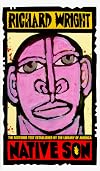
This was a difficult but important book to read. The essay at the end, entitled “How Bigger was Born,” is equal parts an exploration of Wright’s creative process and a klaxon sounding against white ignorance of the black experience. When Wright began this essay talking about the overused trumped-up charge of r*pe levied against black men in the Jim Crow era, I couldn’t help but think of the reaction of many conservative whites to #MeToo, to the effect that they were worried that show more their sons’ or their own lives would be ruined by false accusations of sexual misconduct. Wright would surely say something to the effect of “Now, you understand something of what we’ve been going through.” I don’t recall if there were any black commentators who made this point, but it wouldn’t surprise me. A key difference, of course, is that the vast majority of mostly powerful whites who were accused were likely guilty, whereas the vast majority of kostly powerless blacks were likely innocent.
I also recognized some parallels to Winston Smith in George Orwell’s 1984: a strong desire to rebel against an oppressive system, couched even in terms of violence, but ultimately the same fate and failure. show less
I also recognized some parallels to Winston Smith in George Orwell’s 1984: a strong desire to rebel against an oppressive system, couched even in terms of violence, but ultimately the same fate and failure. show less
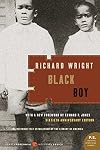
I think this book will sit with me forever. Wright has such intuitive self-awareness. He brings you right down to the raw experience of his life and doesn’t spare himself or others. He is unflinchingly honest.
Lists
To read (1)
Southern Fiction (1)
On the pile (1)
First Novels (1)
1940s (1)
Read These Too (1)
AP Lit (2)
Overdue Podcast (1)
Carole's List (2)
. (1)
Black Authors (1)
bound (1)
"We" narration (1)
Awards


You May Also Like


Associated Authors
Statistics
- Works
- 57
- Also by
- 76
- Members
- 19,626
- Popularity
- #1,108
- Rating
- 4.0
- Reviews
- 240
- ISBNs
- 373
- Languages
- 15
- Favorited
- 34
