
Alice Walker (1) (1944–)
Author of The Color Purple
For other authors named Alice Walker, see the disambiguation page.
About the Author
Alice Walker won the Pulitzer Prize and the American Book Award for her novel The Color Purple. Her other bestselling novels include By the Light of My Father's Smile, Possessing the Secret of Joy, and The Temple of My Familiar. She is also the author of two collections of short stories, three show more collections of essays, five volumes of poetry, and several children's books. Her books have been translated into more than two dozen languages. Born in Eaton, Georgia, Walker now lives in Northern California. Like so many characters in her fiction, Alice Walker was born into a family of sharecroppers in Eaton, Georgia. She began Spelman College on a scholarship and graduated from Sarah Lawrence College in 1965. While still in college, Walker became active in the civil rights movement and continued her involvement after she graduated, serving as a voter registration worker in Georgia. She also worked in a Head Start program in Mississippi and was on the staff of the New York City welfare department. She has lectured and taught at several colleges and universities and currently operates a publishing house, Wild Trees Press, of which she is a co-founder. Walker began her literary career as a poet, publishing Once: Poems in 1968. The collection reflects her experiences in the civil rights movement and her travels in Africa. Her second collection of poetry, Revolutionary Petunias and Other Poems (1973), is a celebration of the struggle against oppression and racism. In between these two collections, she published her first novel, The Third Life of Grange Copeland (1970), the story of Ruth Copeland, a young black girl, and her grandfather, Grange, who brutalizes his own family out of the frustrations of racial prejudice and his own sense of inadequacy. Walker's first collection of short stories, In Love and Trouble: Stories of Black Women (1973), established her special concern for the struggles, hardships, loyalties, and triumphs of black women, a powerful force in the rest of her fiction. Meridian (1976), her second novel, is the story of Meridian Hill, a civil rights worker. In her second collection of short stories, You Can't Keep A Good Woman Down (1981), Walker again portrays black women struggling against sexual, racial, and economic oppression. Walker's third novel, The Color Purple (1982), brought her the national recognition denied her earlier works. Through this story of the sharecropper Celie and the abuses she endures, Walker draws together the themes that have run through her earlier work into a concentrated and powerful attack on racism and sexism, and produces a triumphant celebration of the spirit and endurance of black women. The book received the Pulitzer Prize and was made into a successful film. Walker describes her most recent novel, The Temple of My Familiar (1989) as "a romance of the last 500,000 years." The book is a blend of myth and history revolving around three marriages. As the married couples tell their stories, they explore both their origins and the inner life of modern African Americans. (Bowker Author Biography) show less
Image credit: Alice Walker, on May 31, 2013 in Seattle, Washington
Series
Works by Alice Walker
Warrior Marks: Female Genital Mutilation and the Sexual Blinding of Women (1992) 324 copies, 1 review
Alice Walker: The Third Life of Grange Copeland, Meridian, The Color Purple (Black Expressions Rediscovered) (1989) 177 copies
The Color Purple Collection: The Color Purple, The Temple of My Familiar, and Possessing the Secret of Joy (2012) 103 copies
Overcoming Speechlessness: A Poet Encounters the Horror in Rwanda, Eastern Congo, and Palestine/Israel (2010) 103 copies, 8 reviews
Sent by Earth: A Message from the Grandmother Spirit After the Bombing of the World Trade Center and the Pentagon (2001) 62 copies
The Cushion in the Road: Meditation and Wandering as the Whole World Awakens to Being in Harm's Way (2013) 47 copies
Sweet People Are Everywhere (Children Around the World Books, Diversity Books) (2021) 30 copies, 1 review
Alice Walker: Collected Poems: Her Blue Body Everything We Know: Earthling Poems 1965-1990 (2005) 25 copies
Pema Chödrön & Alice Walker in Conversation on the Meaning of Suffering and the Mystery of Joy (1999) — Features — 25 copies, 2 reviews
Giving Birth, Finding Form: Three Writers Explore Their Lives, Their Loves, Their Art (1993) 4 copies
Bestseller_ Alice Walker (Paperback) 2 copies
Bloesem plukken onder vuur 2 copies
Alice Walker: Beauty in Truth (DVD) 2 copies
Alice Walker 1 copy
Vivendo pela Palavra 1 copy
All Things Censored 1 copy
Really, Doesn't Crime Pay? 1 copy
From Alice Walker 1 copy
Coming Apart {article} 1 copy
"The Flowers" 1 copy
Am I Blue 1 copy
Walker, Alice Archive 1 copy
Kindred Spirits 1 copy
Warriors Marks 1 copy
Associated Works
Barracoon: The Story of the Last "Black Cargo" (2018) — Foreword, some editions — 2,173 copies, 80 reviews
Literature: An Introduction to Fiction, Poetry, and Drama (1995) — Contributor, some editions — 1,017 copies, 7 reviews
Perrine's Literature: Structure, Sound, and Sense (1970) — Contributor, some editions — 895 copies, 4 reviews
The Scribner Anthology of Contemporary Short Fiction: Fifty North American American Stories Since 1970 (1999) — Contributor — 585 copies, 4 reviews
Zora Neale Hurston: The Complete Stories (1995) — Contributor, some editions — 570 copies, 2 reviews
A Patriot's Handbook: Songs, Poems, Stories, and Speeches Celebrating the Land We Love (2003) — some editions — 567 copies, 5 reviews
Ain't I a Woman! A Book of Women's Poetry from Around the World (1987) — Contributor — 492 copies, 1 review
Writers on Writing: Collected Essays from the New York Times (2001) — Contributor — 480 copies, 5 reviews
I Love Myself When I Am Laughing And Then Again When I Am Looking Mean & Impressive (1979) — Editor, afterword — 473 copies, 1 review
Sisters of the Earth: Women's Prose and Poetry About Nature (1991) — Contributor — 443 copies, 5 reviews
Points of View: An Anthology of Short Stories, Revised & Updated Edition (1995) — Contributor — 443 copies, 7 reviews
You've Got to Read This: Contemporary American Writers Introduce Stories that Held Them in Awe (1994) — Contributor — 414 copies, 3 reviews
Cries of the Spirit: A Celebration of Women's Spirituality (2000) — Contributor — 404 copies, 2 reviews
Weaving the Visions: New Patterns in Feminist Spirituality (1989) — Contributor — 387 copies, 2 reviews
Breaking Ice: An Anthology of Contemporary African-American Fiction (1990) — Contributor — 304 copies, 1 review
The Norton Anthology of African American Literature {2nd edition} (2003) — Contributor, some editions — 282 copies, 2 reviews
Words of Fire: An Anthology of African-American Feminist Thought (1995) — Contributor — 265 copies, 1 review
African American Poetry: 250 Years of Struggle and Song (2020) — Contributor — 237 copies, 4 reviews
The Best Short Stories by Black Writers, 1899-1967: The Classic Anthology (1967) — Contributor — 201 copies, 1 review
The Writer on Her Work, Volume I: Contemporary Women Writers Reflect on their Art and Situation (1980) — Contributor — 199 copies, 1 review
First Fiction: An Anthology of the First Published Stories by Famous Writers (1994) — Contributor — 196 copies, 1 review
Daughters of Africa: An International Anthology of Words and Writings by Women of African Descent from the Ancient Egyptian to the Present (1992) — Contributor — 186 copies
Growing Up in the South: An Anthology of Modern Southern Literature (1991) — Contributor — 165 copies, 1 review
An American Album: One Hundred and Fifty Years of Harper's Magazine (2000) — Contributor — 146 copies, 1 review
Black on White: Black Writers on What It Means to Be White (1998) — Contributor — 129 copies, 2 reviews
Children of the Night: The Best Short Stories by Black Writers, 1967 to the Present (1995) — Contributor — 127 copies
Black Like Us: A Century of Lesbian, Gay, and Bisexual African American Fiction (2002) — Contributor — 127 copies, 1 review
Calling the Wind: Twentieth Century African-American Short Stories (1992) — Contributor — 116 copies
Stop the Next War Now: Effective Responses to Violence and Terrorism (2005) — Foreword — 116 copies, 2 reviews
Black-Eyed Susans and Midnight Birds: Stories by and about Black Women (1990) — Contributor — 114 copies
The General's Son: Journey of an Israeli in Palestine (2012) — Foreword, some editions — 114 copies, 4 reviews
In Search of Color Everywhere: A Collection of African-American Poetry (1994) — Contributor — 108 copies
The Sweet Breathing of Plants: Women Writing on the Green World (2001) — Contributor — 101 copies, 1 review
Black Ink: Literary Legends on the Peril, Power, and Pleasure of Reading and Writing (2018) — Contributor — 95 copies
Meena, Heroine of Afghanistan: The Martyr Who Founded RAWA, the Revolutionary Association of the Women of Afghanistan (2003) — Foreword — 94 copies, 2 reviews
Go the Way Your Blood Beats: An Anthology of Lesbian and Gay Fiction by African-American Writers (1996) — Contributor — 92 copies
On Girlhood: 15 Stories from the Well-Read Black Girl Library (2021) — Contributor — 83 copies, 1 review
Bearing Witness: Selections from African-American Autobiography in the Twentieth Century (1991) — Contributor — 74 copies
The Heath Anthology of American Literature, Concise Edition (2003) — Contributor — 73 copies, 1 review
This Is the Honey: An Anthology of Contemporary Black Poets (2024) — Contributor — 69 copies, 1 review
How I Learned to Cook and Other Writings on Complex Mother-Daughter Relationships (2004) — Contributor — 62 copies
I Wouldn't Thank You for a Valentine: Poems For Young Feminists (1992) — Contributor — 57 copies, 2 reviews
The Literary Lover: Great Stories of Passion and Romance (1993) — Contributor — 55 copies, 2 reviews
Revolutionary Tales: African American Women's Short Stories, from the First Story to the Present (1995) — Contributor — 54 copies
Angles of Ascent: A Norton Anthology of Contemporary African American Poetry (2013) — Contributor — 48 copies
We Have Not Been Moved: Resisting Racism and Militarism in 21st Century America (2012) — Afterpoem — 46 copies
With Wings: An Anthology of Literature by and about Women with Disabilities (1987) — Contributor — 42 copies
Face to Face: Women Writers on Faith, Mysticism, and Awakening (2004) — Contributor — 39 copies, 1 review
The Second Gates of Paradise: The Anthology of Erotic Short Fiction (1997) — Contributor — 38 copies
The Haves and Have Nots: 30 Stories About Money and Class in America (1999) — Contributor — 36 copies
Centers of the Self: Stories by Black American Women, from the Nineteenth Century to the Present (1994) — Contributor — 31 copies
The Audre Lorde Compendium: Essays, Speeches, and Journals (1996) — Introduction, some editions — 30 copies
Selected Shorts: American Classics (Selected Shorts: A Celebration of the Short Story) (2010) — Contributor — 28 copies, 6 reviews
A Rock Against the Wind: African-American Poems and Letters of Love and Passion (1996) — Contributor — 24 copies
The Unforgetting Heart: An Anthology of Short Stories by African American Women, 1859-1993 (1993) — Contributor — 22 copies
Democracy in Print: The best of the Progressive Magazine, 1909-2009 (2009) — Contributor — 14 copies
Georgia Stories: Major Georgia Short Fiction of the Nineteenth and Twentieth Centuries (1992) — Contributor — 12 copies, 1 review
The Bluelight Corner: Black Women Writing on Passion, Sex, and Romantic Love (1998) — Contributor — 10 copies
Amerika, Amerika bloemlezing — Contributor — 8 copies
Tagged
Common Knowledge
- Legal name
- Walker, Alice Malsenior
- Other names
- WALKER, Alice Malsenior Tallulah-Kate
WALKER, Alice Malsenior
WALKER, Alice - Birthdate
- 1944-02-09
- Gender
- female
- Education
- Spelman College
Sarah Lawrence College (BA) - Occupations
- poet
political activist
novelist - Organizations
- Wild Trees Press (cofounder)
- Awards and honors
- Lillian Smith Award (National Endowment for the Arts)
Rosenthal Award (National Institute of Arts and Letters)
Radcliffe Institute Fellowship
Guggenheim Fellowship
Front Page Award (Newswoman's Club of New York)
Townsend Prize (show all 11)
Lyndhurst Prize
California Hall of Fame (2006)
Humanist of the Year (1997)
Pulitzer Prize (1982)
Carl Sandburg Literary Award (2016) - Relationships
- Chapman, Tracy (former partner)
- Nationality
- USA
- Birthplace
- Eatonton, Georgia, USA
- Places of residence
- Jackson, Mississippi, USA
New York, New York, USA
California, USA - Associated Place (for map)
- USA
Members
Reviews
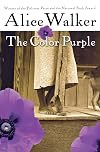
“I think it pisses God off if you walk by the color purple in a field somewhere and don’t notice it.” – Shug Avery
In this book of letters written to God by Celie (main protagonist), Nettie (Celie’s younger sister) to Celie, and finally, Celie to Nettie, themes of strength amidst adversity, resilience, love, growth, forgiveness and topics of racism, rape, abuse of women, colonialism of Africa, family flood the pages filling our minds and hearts. The book doesn’t sugarcoat, and I show more thought ‘holy sh*t’ reading page 1. Cruelty and ambivalence permeate the first pages as Celie writes to god about her rape (at age 14) and her two children taken from her, the forced marriage to Mr. ___, and the abuse from Mr. ___ and his kids. Damn.
Celie, the kind, gentle soul, eventually wins over all those around her, including the mistress of Mr. ___, Shug Avery, who in turn becomes the love of her life. (Yes, that’s right, throw in some lesbianism too.) Celie finally loses her cool when she learns Mr. ___ has been hiding the letters from Nettie. Shug, the strong willed and life-wise singer, gives Celie the love she needed and the strength to make something of herself, and Celie does!
Nettie, forced to be separate from Celie because of Mr. ___, finds herself in the home of the adoptive parents of Celie children and ends up following them to Africa, to a village called Olinka and worked as a missionary.
Despite much mention of god and missionaries, I didn’t find the book to be preachy. In fact, this book has a self-deprecating quality that I appreciated. Not that I’m familiar with black or African American literature, I was *surprised* to read of Nettie raising/asking about the role of the fellow Africans who participated in the slave trade, meaning the in-power Africans handed over their fellow brothers knowing they will become slaves in the hands of these foreigners for financial gains. Nettie also was disappointed when the Olinka refused to acknowledge such part of history. Whoa, mind blown on my part. Also, the book stated the missionaries were never asked to come; they are convenient when wanted, but in the end, never truly part of the Olinka world.
Overall, a well told tale that touched my heart strings just right. Recommend!
Some Quotes:
On Being a Girl in the South – what a horridly difficult life:
“She say, All my life I had to fight. I had to fight my daddy. I had to fight my brothers. I had to fight my cousins and my uncles. A girl child ain’t safe in a family of men. But I never thought I’d have to fight in my own house. She let out her breath. I loves Harpo, she say. God knows I do. But dead son-in-law you just keep on advising him like you doing. She put her hand on her hip. I used to hunt game with a bow and arrow, she say.” (She = Sofia)
On Sex:
“Listen, she say, right down there in your pussy is a little button that gits real hot when you do you know what with somebody. It git hotter and hotter and then it melt. That the good part. But other parts good too, she say. Lot of sucking go on, here and there, she say. Lot of finger and tongue work.” (She = Shug)
On White Folks – this passage has a Langston Hughes’ “Ways of the White Folks” quality to it:
“So it end up with me and Jack driving her back home in the pick-up, then Jack driving me to town to git a mechanic, and at five o’clock I was driving Miz Millie’s car back to her house.
I spent fifteen minutes with my children.
And she been going on for months bout how ungrateful I is.
White folks is a miracle of affliction, say Sofia.”
On History and Slavery:
From Nettie: “’Hard times’ is a phrase the English love to use, when speaking of Africa. And it is easy to forget that Africa’s “hard times” were made harder by them. Millions and millions of Africans were captured and sold into slavery – you and me, Celie! And whole cities were destroyed by slave catching wars. Today the people of Africa – having murdered or sold into slavery their strongest folks – are riddled by disease and sunk in spiritual and physical confusion.”
On Black Beauty (not the horse :P) – I thought of Lupita Nyong'o when I read this:
From Nettie: “Tall, thin, with long necks and straight backs. …Because I felt like I was seeing black for the first time. And Celie, there is something magical about it. Because the black is so black the eye is simply dazzled, and then there is the shining that seems to come, really, from moonlight, it is so luminous, but their skin glows even in the sun.”
On Africans – another example of the self-deprecating quality I mentioned:
“I think Africans are very much like white people back home, in that they think they are the center of the universe and that everything that is done is done for them. The Olinka definitely hold this view. And so they naturally thought the road being built was for them.” (…and everything that follows eventually destroys the whole village)
On Love – Mr. ___ finally learning to open his heart, for real:
“I think us here to wonder, myself. To wonder. To ast. And that in wondering bout the big things and asting bout the big things you learn about the little ones, almost by accident. But you never know nothing more about the big things than you start out with. The more I wonder, he say, the more I love.”
On Love – Celie regarding Shug – I stared at this for a long time; if only I can reach this level of zen on love:
“If she come, I be happy. If she don’t, I be content.” show less
In this book of letters written to God by Celie (main protagonist), Nettie (Celie’s younger sister) to Celie, and finally, Celie to Nettie, themes of strength amidst adversity, resilience, love, growth, forgiveness and topics of racism, rape, abuse of women, colonialism of Africa, family flood the pages filling our minds and hearts. The book doesn’t sugarcoat, and I show more thought ‘holy sh*t’ reading page 1. Cruelty and ambivalence permeate the first pages as Celie writes to god about her rape (at age 14) and her two children taken from her, the forced marriage to Mr. ___, and the abuse from Mr. ___ and his kids. Damn.
Celie, the kind, gentle soul, eventually wins over all those around her, including the mistress of Mr. ___, Shug Avery, who in turn becomes the love of her life. (Yes, that’s right, throw in some lesbianism too.) Celie finally loses her cool when she learns Mr. ___ has been hiding the letters from Nettie. Shug, the strong willed and life-wise singer, gives Celie the love she needed and the strength to make something of herself, and Celie does!
Nettie, forced to be separate from Celie because of Mr. ___, finds herself in the home of the adoptive parents of Celie children and ends up following them to Africa, to a village called Olinka and worked as a missionary.
Despite much mention of god and missionaries, I didn’t find the book to be preachy. In fact, this book has a self-deprecating quality that I appreciated. Not that I’m familiar with black or African American literature, I was *surprised* to read of Nettie raising/asking about the role of the fellow Africans who participated in the slave trade, meaning the in-power Africans handed over their fellow brothers knowing they will become slaves in the hands of these foreigners for financial gains. Nettie also was disappointed when the Olinka refused to acknowledge such part of history. Whoa, mind blown on my part. Also, the book stated the missionaries were never asked to come; they are convenient when wanted, but in the end, never truly part of the Olinka world.
Overall, a well told tale that touched my heart strings just right. Recommend!
Some Quotes:
On Being a Girl in the South – what a horridly difficult life:
“She say, All my life I had to fight. I had to fight my daddy. I had to fight my brothers. I had to fight my cousins and my uncles. A girl child ain’t safe in a family of men. But I never thought I’d have to fight in my own house. She let out her breath. I loves Harpo, she say. God knows I do. But dead son-in-law you just keep on advising him like you doing. She put her hand on her hip. I used to hunt game with a bow and arrow, she say.” (She = Sofia)
On Sex:
“Listen, she say, right down there in your pussy is a little button that gits real hot when you do you know what with somebody. It git hotter and hotter and then it melt. That the good part. But other parts good too, she say. Lot of sucking go on, here and there, she say. Lot of finger and tongue work.” (She = Shug)
On White Folks – this passage has a Langston Hughes’ “Ways of the White Folks” quality to it:
“So it end up with me and Jack driving her back home in the pick-up, then Jack driving me to town to git a mechanic, and at five o’clock I was driving Miz Millie’s car back to her house.
I spent fifteen minutes with my children.
And she been going on for months bout how ungrateful I is.
White folks is a miracle of affliction, say Sofia.”
On History and Slavery:
From Nettie: “’Hard times’ is a phrase the English love to use, when speaking of Africa. And it is easy to forget that Africa’s “hard times” were made harder by them. Millions and millions of Africans were captured and sold into slavery – you and me, Celie! And whole cities were destroyed by slave catching wars. Today the people of Africa – having murdered or sold into slavery their strongest folks – are riddled by disease and sunk in spiritual and physical confusion.”
On Black Beauty (not the horse :P) – I thought of Lupita Nyong'o when I read this:
From Nettie: “Tall, thin, with long necks and straight backs. …Because I felt like I was seeing black for the first time. And Celie, there is something magical about it. Because the black is so black the eye is simply dazzled, and then there is the shining that seems to come, really, from moonlight, it is so luminous, but their skin glows even in the sun.”
On Africans – another example of the self-deprecating quality I mentioned:
“I think Africans are very much like white people back home, in that they think they are the center of the universe and that everything that is done is done for them. The Olinka definitely hold this view. And so they naturally thought the road being built was for them.” (…and everything that follows eventually destroys the whole village)
On Love – Mr. ___ finally learning to open his heart, for real:
“I think us here to wonder, myself. To wonder. To ast. And that in wondering bout the big things and asting bout the big things you learn about the little ones, almost by accident. But you never know nothing more about the big things than you start out with. The more I wonder, he say, the more I love.”
On Love – Celie regarding Shug – I stared at this for a long time; if only I can reach this level of zen on love:
“If she come, I be happy. If she don’t, I be content.” show less
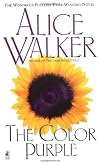
Wow. "The Color Purple" definitely holds up. I loved the movie when I saw it as a kid and I read the book for the first time in college. At the time I remember being shocked that it was a book. My professor at the time called Stephen Speilberg a coward for not depicting Shug and Ms. Celie's relationship on the screen the way the book did. I didn't get it at the time, but definitely did at the end of the book.
Walker does a great job of showing us Celie and her growing awareness of her own show more sexuality and how her acceptance or I guess her being forced to be subservient to Mr. drove a lot of things she said and did. When we get to Celie growing into her own and realizing that she doesn't have to stay in a life that she never wanted, it was glorious. Walker goes back and forth between Celie writing to "God" and then her sister Nettie. And then we get to read Nettie's letters to Celie.
Walker does a wonderful job of showing how black women were not only ground down by the patriarchal and racist society in America, but how they were ground down by other black women and men.
We get to see a lot of women portrayed in this book besides Shug, Ms. Celie, and Nettie. I loved the story-line following Squeak (Mary Agnes) as well as Sophia.
I also shook my head at how Walker showed the hypocrisy of those white people who are racist to your face, and those who consider themselves allies (like the young girl that Sophie raised) . Walker showing that many black men and black women in this book knew about their white relatives, i.e. many of them were sons and daughters of men who raped their mothers, grandmothers, aunts, and sisters. And we get the aftermath of a rape and the understanding that Ms. Celie was raped repeatedly as a child and that was something that everyone knew and just accepted.
This book is exceptional and it definitely speaks to me. show less
Walker does a great job of showing us Celie and her growing awareness of her own show more sexuality and how her acceptance or I guess her being forced to be subservient to Mr. drove a lot of things she said and did. When we get to Celie growing into her own and realizing that she doesn't have to stay in a life that she never wanted, it was glorious. Walker goes back and forth between Celie writing to "God" and then her sister Nettie. And then we get to read Nettie's letters to Celie.
Walker does a wonderful job of showing how black women were not only ground down by the patriarchal and racist society in America, but how they were ground down by other black women and men.
We get to see a lot of women portrayed in this book besides Shug, Ms. Celie, and Nettie. I loved the story-line following Squeak (Mary Agnes) as well as Sophia.
I also shook my head at how Walker showed the hypocrisy of those white people who are racist to your face, and those who consider themselves allies (like the young girl that Sophie raised) . Walker showing that many black men and black women in this book knew about their white relatives, i.e. many of them were sons and daughters of men who raped their mothers, grandmothers, aunts, and sisters. And we get the aftermath of a rape and the understanding that Ms. Celie was raped repeatedly as a child and that was something that everyone knew and just accepted.
This book is exceptional and it definitely speaks to me. show less
Overcoming Speechlessness: A poet encounters the horror in Rwanda, Eastern Congo, and Palestine/Israel by Alice Walker

A short, but moving, book illustrating the power of a gentle voice speaking the truth. Using stories of her visits to Rwanda, Eastern Congo, and Palestine/Israel, Alice Walker tries to answer the question "What has happened to humanity?"
I always think I'm prepared to read yet another story about the atrocities people do to each other, but of course, I am always amazed/ashamed anew. I was impressed by the way Walker used very short vignettes to illustrate these atrocities. In fact, the whole show more book reads a bit like a series of postcards, giving us a glimpse into other people's experiences while at the same time not allowing us to remain removed from our own role, historically and/or currently, in these stories.
Even more amazing was Walker's ability to move us beyond the atrocities to see and hear the inspiring stories of the sacrifices people have made in response to injustice done to others, seemingly unlike themselves; people who are able to see beyond difference to our shared humanity.
Finally, the stories of the survivors provide the remedy for the speechlessness of the title. In the midst of "overwhelm", there is "Nothing to do, finally, but dance." And speak out; find a way to voice the truth. Because "allowing freedom to others brings freedom to ourselves." show less
I always think I'm prepared to read yet another story about the atrocities people do to each other, but of course, I am always amazed/ashamed anew. I was impressed by the way Walker used very short vignettes to illustrate these atrocities. In fact, the whole show more book reads a bit like a series of postcards, giving us a glimpse into other people's experiences while at the same time not allowing us to remain removed from our own role, historically and/or currently, in these stories.
Even more amazing was Walker's ability to move us beyond the atrocities to see and hear the inspiring stories of the sacrifices people have made in response to injustice done to others, seemingly unlike themselves; people who are able to see beyond difference to our shared humanity.
Finally, the stories of the survivors provide the remedy for the speechlessness of the title. In the midst of "overwhelm", there is "Nothing to do, finally, but dance." And speak out; find a way to voice the truth. Because "allowing freedom to others brings freedom to ourselves." show less
 This review was written for LibraryThing Early Reviewers.
Purple is for pride, didn't you know? Purple is the royal pride to boot, the one that can afford full protection and wears its self-assumed precious state on its sleeve. There's some in love and some in hate and some, perhaps the most, in the calm reserve that takes what it gets and builds itself a home. For purple is also piety, and the potential of the purpling palimpsest is breathtaking.
If you look up 'purpling', you will find both a transformation and an act of love, the latter grounded show more in gendered stereotypes but, for our purposes, will be pruned of its connotations and left as a simple affection. No lust, no obsession, nothing of the usual pride of desiring and feeling oneself more than worthy of receiving reciprocation. That was stripped before the pages even began, a summary of rape and pain and separations all along the spectrum of self and self-worth.
It is not a mark of the author, but the reader, if this beginning is more believed in than the final ending. Too pat and contrived they say, too much that a being both woman and black would take thirty years to find peace of mind. Or perhaps it's the duality that so hard to swallow, two sisters in such disparate circumstances each discovering a measure of resolve upon which to thrive. Perhaps it's the lack of fight and final 'success' on each and every frontier that the readers object to, the concept that you can't always get what you want and yet. And yet.
And yet in the face of all the hate and straightened circumstances, two girls become wizened lovers of life. Through the weaving of cloth and of thought, each discover their methodology of creation, remembering where they came from and going forward nevertheless. They forgive, they relish, they come to grips with the facts of sexism and racism and colonialism and deconstruct their God accordingly. They are not even the only ones, as myriad family and friends inspire and are inspired by these two souls, traversing their own ways in the sorrow and joy that always accompanies the search for personal truth. A time for anger, a time for acceptance, and the prodigal others all along the path.
What matters here is not the means by which they achieve their ends, or that they achieved them at all. What matters is the thought enabled by fruitful discovery, the meanderings of the mind over what it means to find value in existence day in, day out. The majority of literature was penned by those blessed by all varieties of sociocultural windfalls, so it should be no surprise when characters find their philosophical footing as a result of fortuitous regeneration. Decry the believability all you like, but if that little was enough for you to forget the life-affirming themes galore, grown through every slow and subtle machination of time and circumstance, be sure to treat the rest of your readings accordingly. I guarantee a sharp decrease in once favored pieces if you're honest, or objective, if that's the vernacular with which you appease yourself.
There are no name drops or modes of thought approved by academia here, but if you're truly open minded, you will recognize the mixing and melding of universal experience without any need for labels. This is as fine a contemplation of small winners in the midst of brutal reality as any, a flowering of humanity with full knowledge of every level of high and low, all the more worthy of attention for its status as a rare breed of literature. The latter has no affect on quality, but in terms of building a common humanity on the backs of pride and piety, on the steps of believing the self worth having and finding the others worth cherishing, in the color purple, it is worth everything. show less
If you look up 'purpling', you will find both a transformation and an act of love, the latter grounded show more in gendered stereotypes but, for our purposes, will be pruned of its connotations and left as a simple affection. No lust, no obsession, nothing of the usual pride of desiring and feeling oneself more than worthy of receiving reciprocation. That was stripped before the pages even began, a summary of rape and pain and separations all along the spectrum of self and self-worth.
It is not a mark of the author, but the reader, if this beginning is more believed in than the final ending. Too pat and contrived they say, too much that a being both woman and black would take thirty years to find peace of mind. Or perhaps it's the duality that so hard to swallow, two sisters in such disparate circumstances each discovering a measure of resolve upon which to thrive. Perhaps it's the lack of fight and final 'success' on each and every frontier that the readers object to, the concept that you can't always get what you want and yet. And yet.
And yet in the face of all the hate and straightened circumstances, two girls become wizened lovers of life. Through the weaving of cloth and of thought, each discover their methodology of creation, remembering where they came from and going forward nevertheless. They forgive, they relish, they come to grips with the facts of sexism and racism and colonialism and deconstruct their God accordingly. They are not even the only ones, as myriad family and friends inspire and are inspired by these two souls, traversing their own ways in the sorrow and joy that always accompanies the search for personal truth. A time for anger, a time for acceptance, and the prodigal others all along the path.
What matters here is not the means by which they achieve their ends, or that they achieved them at all. What matters is the thought enabled by fruitful discovery, the meanderings of the mind over what it means to find value in existence day in, day out. The majority of literature was penned by those blessed by all varieties of sociocultural windfalls, so it should be no surprise when characters find their philosophical footing as a result of fortuitous regeneration. Decry the believability all you like, but if that little was enough for you to forget the life-affirming themes galore, grown through every slow and subtle machination of time and circumstance, be sure to treat the rest of your readings accordingly. I guarantee a sharp decrease in once favored pieces if you're honest, or objective, if that's the vernacular with which you appease yourself.
I think us here to wonder, myself. To wonder. To ast. And that in wondering bout the big things and asting bout the big things, you learn about the little ones, almost by accident. But you never know nothing more about the big things than you start out with. The more I wonder, he say, the more I love.
There are no name drops or modes of thought approved by academia here, but if you're truly open minded, you will recognize the mixing and melding of universal experience without any need for labels. This is as fine a contemplation of small winners in the midst of brutal reality as any, a flowering of humanity with full knowledge of every level of high and low, all the more worthy of attention for its status as a rare breed of literature. The latter has no affect on quality, but in terms of building a common humanity on the backs of pride and piety, on the steps of believing the self worth having and finding the others worth cherishing, in the color purple, it is worth everything. show less
Lists
The Zora Canon (4)
1970 Club (1)
Carole's List (1)
. (1)
AP Lit (1)
Read (1)
100 (1)
Unread books (1)
Best First Lines (1)
Gen X Library (1)
Book Ideas (1)
BBC Big Read (1)
Women's Stories (1)
Overdue Podcast (1)
Zora Canon (4)
Five star books (2)
Black Authors (2)
Southern Fiction (1)
Epistolary Books (1)
Books I've read (1)
Schwob Nederland (1)
Banned Books (1)
. (1)
A Novel Cure (1)
1980s (1)
Female Author (1)
Favourite Books (1)
Family Drama (1)
BitLife (1)
bound (1)
BBC Big Read (1)
Awards


You May Also Like


Associated Authors
Statistics
- Works
- 96
- Also by
- 140
- Members
- 41,062
- Popularity
- #426
- Rating
- 4.0
- Reviews
- 645
- ISBNs
- 640
- Languages
- 21
- Favorited
- 28


