
Audre Lorde (1934–1992)
Author of Sister Outsider: Essays and Speeches
About the Author
An African American lesbian feminist critic and writer, Lorde was born in Harlem and educated at National University of Mexico, Hunter College, and Columbia University. She married in 1962 and divorced in 1970, after having two children. Lorde first came to critical attention with her poetry. Her show more first poem was published in Seventeen magazine while she was in high school; it had been rejected by her high school newspaper because it was "too romantic" (Lorde considered her "mature" poetry, which focuses on her lesbian relationships, to be romantic also). Other early poems were published in many different journals, many of them under the pseudonym Rey Domini. Her first volume of poetry, "The First Cities," was published in 1968. Lorde then quit her job as head librarian at a school in New York City in order to devote her time to teaching and writing. She was a professor of English at Hunter College from 1980 until her untimely death from cancer in 1992. Although many of Lorde's poems are about love, many are about anger, particularly anger about racism, sexism, and homophobia in America. "The Brown Menace or Poem to the Survival of Roaches" likens African Americans to cockroaches---hated, feared, and poisoned by whites but survivors nevertheless. Other poems express a daughter's anger toward her mother; still others eschew anger for affirmation and inspiration, which are represented as coming from lesbian love and traditional African myths because, as Lorde has said, "the master's tools will not dismantle the master's house." Lorde is also well known for her prose. Her courageous account of her struggle with breast cancer and the mastectomy that she underwent is movingly chronicled in "The Cancer Journals" (1980), her first major prose publication. "Zami, a New Spelling of My Name" (1982) is, in Lorde's words, a "biomythography," combining history, biography, and myth. In "Zami," Lorde focuses on her developing lesbian identity and her response to racism in the white feminist and gay communities, and to sexism and homophobia in the African American community. Lorde's critical essays, collected in "Sister/Outsider" (1984) and "A Burst of Light "(1988), have been quite influential, particularly "Uses of the Erotic: The Erotic as Power," in which she discusses the relationship of poetry to politics and the erotic. Lorde was the recipient of several grants---from the National Endowment for the Arts in 1968 and 1981 and from the Creative Artists Public Service in 1972---as well as the Borough of Manhattan President's Award for Literary Excellence in 1987. She was also nominated for the National Book Award for poetry in 1974 for her third volume of verse, "From a Land Where Other People Live"(1973). (Bowker Author Biography) show less
Works by Audre Lorde
Apartheid U.S.A. / Our Common Enemy, Our Common Cause: Freedom Organizing in the Eighties (1986) 9 copies
Revolutionary Hope: A Conversation Between James Baldwin and Audre Lorde — Author — 8 copies
Irmã Marginal 3 copies
Shorelines 2 copies
New Year´s Day 1 copy
Echoes 1 copy
Hvem sa det var enkelt 1 copy
A Sign/I Was Not Alone 1 copy
Os diários do cancro 1 copy
La luz que nos encargaron 1 copy
Audre Lorde 1 copy
Lorde, Audre Archive 1 copy
Hanging Fire {poem} 1 copy
Ημερολόγια Καρκίνου 1 copy
Associated Works
This Bridge Called My Back: Writings by Radical Women of Color (1981) — Contributor — 1,146 copies, 4 reviews
Race, Class, and Gender in the United States: An Integrated Study (1992) — Contributor, some editions — 561 copies
Chloe Plus Olivia: An Anthology of Lesbian Literature from the 17th Century to the Present (1994) — Contributor — 482 copies, 1 review
Cries of the Spirit: A Celebration of Women's Spirituality (2000) — Contributor — 404 copies, 2 reviews
Weaving the Visions: New Patterns in Feminist Spirituality (1989) — Contributor — 387 copies, 2 reviews
The Norton Anthology of African American Literature {2nd edition} (2003) — Contributor, some editions — 283 copies, 2 reviews
Words of Fire: An Anthology of African-American Feminist Thought (1995) — Contributor — 265 copies, 1 review
African American Poetry: 250 Years of Struggle and Song (2020) — Contributor — 237 copies, 4 reviews
Wise Women: Over Two Thousand Years of Spiritual Writing by Women (1996) — Contributor — 231 copies, 1 review
No More Masks: An Anthology of Twentieth-Century American Women Poets (1993) — Contributor, some editions — 226 copies, 3 reviews
Gay and Lesbian Poetry in Our Time (Stonewall Inn Editions) (1988) — Contributor — 190 copies, 1 review
Daughters of Africa: An International Anthology of Words and Writings by Women of African Descent from the Ancient Egyptian to the Present (1992) — Contributor — 188 copies
Let Nobody Turn Us Around: An African American Anthology (1999) — Contributor — 174 copies, 1 review
Writing Women's Lives: An Anthology of Autobiographical Narratives by Twentieth-Century American Women Writers (1994) — Contributor — 127 copies, 3 reviews
Black Like Us: A Century of Lesbian, Gay, and Bisexual African American Fiction (2002) — Contributor — 127 copies, 1 review
Nepantla: An Anthology Dedicated to Queer Poets of Color (2018) — Contributor — 126 copies, 2 reviews
The Glorious American Essay: One Hundred Essays from Colonial Times to the Present (2020) — Contributor — 119 copies
In Search of Color Everywhere: A Collection of African-American Poetry (1994) — Contributor — 106 copies
Every Shut Eye Ain't Asleep: An Anthology of Poetry by African Americans Since 1945 (1994) — Contributor — 99 copies
Poems Between Women: Four Centuries of Love, Romantic Friendship, and Desire (1997) — Contributor — 97 copies, 1 review
Go the Way Your Blood Beats: An Anthology of Lesbian and Gay Fiction by African-American Writers (1996) — Contributor — 92 copies
Bearing Witness: Selections from African-American Autobiography in the Twentieth Century (1991) — Contributor — 74 copies
The Heath Anthology of American Literature, Concise Edition (2003) — Contributor — 73 copies, 1 review
She Rises Like the Sun: Invocations of the Goddess by Contemporary American Women Poets (1989) — Contributor — 71 copies
Queer: A Collection of LGBTQ Writing from Ancient Times to Yesterday (2021) — Contributor, some editions — 65 copies
Poemhood: Our Black Revival: History, Folklore & the Black Experience: A Young Adult Poetry Anthology (2024) — Contributor — 58 copies, 2 reviews
I Wouldn't Thank You for a Valentine: Poems For Young Feminists (1992) — Contributor — 57 copies, 2 reviews
Our Caribbean: A Gathering of Lesbian and Gay Writing from the Antilles (2008) — Contributor — 57 copies, 1 review
Before Stonewall: The Making of a Gay and Lesbian Community [1984 film] (1984) — Self — 54 copies, 2 reviews
Angles of Ascent: A Norton Anthology of Contemporary African American Poetry (2013) — Contributor — 49 copies
Daughters of Latin America: An International Anthology of Writing by Latine Women (2023) — Contributor — 40 copies, 1 review
Tagged
Common Knowledge
- Canonical name
- Lorde, Audre
- Legal name
- Lorde, Audrey Geraldine (birth name)
- Other names
- Adisa, Gamba
- Birthdate
- 1934-02-18
- Date of death
- 1992-11-17
- Gender
- female
- Education
- Hunter College High School
Hunter College
National University of Mexico
Columbia University (Masters/Library science) - Occupations
- librarian
activist
poet
essayist - Awards and honors
- Publishing Triangle (Bill Whitehead Award for Lifetime Achievement ∙ 1992)
National Book Critics Circle Award (1994)
Honorary Doctorate of Literature, Hunter College (1991)
Walt Whitman Citation of Merit (1991)
Honorary Doctorate of Letters, Oberlin College (1990)
Honorary Doctorate of Humane Letters, Haverford College (1989) (show all 8)
Manhattan Borough President's Award for Excellence in the Arts (1988)
New York State Poet (1991-1993) - Relationships
- Clayton, Frances (partner until 1989)
Joseph, Gloria (partner 1989 - 1992) - Nationality
- USA
- Birthplace
- New York, New York, USA
Harlem, New York, USA - Places of residence
- New York, New York, USA (birth)
St. Croix, Virgin Islands (death)
Jackson, Mississippi, USA
Stamford, Connecticut, USA
Mexico City, Distrito Federal, Mexico
Cuernavaca, Morelos, Mexico - Place of death
- St. Croix, Virgin Islands
- Associated Place (for map)
- USA
Members
Reviews
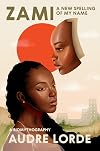
In this "biomythography" Lorde explores the various women who impacted her life, starting with her mother in her childhood, her friend Gennie, and as she grows into young adulthood, the various lovers she had over the years.
This seems to be one of those books that straddle fiction and nonfiction, though it reads like a memoir and includes the emotional truths Lorde experiences as a Black lesbian woman, starting with growing up in Harlem and moving through her young adulthood. The first half show more of the book dealing with her childhood, her mother, and her school friends connected most with me. She kind of lost me when she started talking about her relationships, but I could appreciate the way they each helped her become more herself. It was sometimes harrowing to read - she has an unsafe abortion, and the FBI just casually show up at her door. Lorde explains how, despite being lesbian, she still experienced racism in the gay community and had to deal with not fitting into the molds that even the "gay girls" as she calls them had for relationship roles. Being a Black gay woman in the 1940s and 50s was no easy thing, yet Lorde also experiences joy and love. A powerful read that will stick with me for a long time. show less
This seems to be one of those books that straddle fiction and nonfiction, though it reads like a memoir and includes the emotional truths Lorde experiences as a Black lesbian woman, starting with growing up in Harlem and moving through her young adulthood. The first half show more of the book dealing with her childhood, her mother, and her school friends connected most with me. She kind of lost me when she started talking about her relationships, but I could appreciate the way they each helped her become more herself. It was sometimes harrowing to read - she has an unsafe abortion, and the FBI just casually show up at her door. Lorde explains how, despite being lesbian, she still experienced racism in the gay community and had to deal with not fitting into the molds that even the "gay girls" as she calls them had for relationship roles. Being a Black gay woman in the 1940s and 50s was no easy thing, yet Lorde also experiences joy and love. A powerful read that will stick with me for a long time. show less
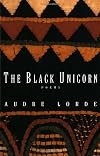
The more poetry I read, the more I'm starting to understand what I love in a collection. I want a thread, a theme, a constant idea that connects. I want free verse and strict form, a mix of flow and form that ebbs and weaves a story of a time, a place, a person, a mythology. Playfulness mixed with seriousness—just like life: that constant swerving from joy to sadness to anger and back again. And more than anything, I want to know the trees, the birds, the insects, the flowers, all of the show more nature that surrounds that time, place, person. Ecopoetry seems to be my sweet spot. This collection does so much of what I love, with an added bonus at the end explaining some of the African mythological figures that I (shamefully) knew nothing about.
There are ideas from this collection that will live in my head like "psychic graffiti." "Compromise is a coffin nail" seems to be what Congress believes. "I have died too many deaths / that were not mine" says SO MUCH about the pain and suffering of a lifetime. I loved BUT WHAT CAN YOU TEACH MY DAUGHTER :
But there's also a lot that went right over my head, I tried to parse out the meaning and got stuck. I need a course on Audre Lorde. show less
There are ideas from this collection that will live in my head like "psychic graffiti." "Compromise is a coffin nail" seems to be what Congress believes. "I have died too many deaths / that were not mine" says SO MUCH about the pain and suffering of a lifetime. I loved BUT WHAT CAN YOU TEACH MY DAUGHTER :
when she talks of liberation
she means freedom
from that pain
she knows
what you know
can hurt
but what you do
not know
can kill.
But there's also a lot that went right over my head, I tried to parse out the meaning and got stuck. I need a course on Audre Lorde. show less
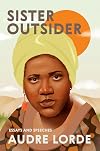
It's at once amazing and depressing just how many of the pieces in this collection by Audre Lorde—some of them more than 40 years old—could believably be responses to the events of 2020 with only one or two minor edits. True, there are some dated elements—invocations of the Goddess spirit which inhabits all women, etc, are so 70s to me that you can just about smell the patchouli, and they don't resonate with my feminism at all. But wow, when Lorde was good she was good—able to craft show more a short sentence that seems simple at first glance but that knocks you flat on your metaphorical ass as soon as you start to think about it in a combination intellectual/moral/ethical challenge. show less

Audre Lorde, with the nearness of death palpable and tangible, has written a profoundly insightful anecdote/reflection on her experience with breast cancer as a black, lesbian feminist in The Cancer Journals. Through journal excerpts, seminal speeches, and self-examining essays, Lorde bridges the personal and the political. Having had a mastectomy and a cancer diagnosis, she begins with the dangers of silence; how the sight of death makes us fear not having done or said what we needed or show more wanted to; how a realisation of doing nothing or doing something doesn't change the fact of mortality. Within this silence, desire subduedly courses. This desire is not solely driven by the want for words to crawl out of mouths in their truth and will. It includes the love of women, the intense wish for the desired to desire back.
As society continuously constrict the definition of "woman" based on her femininity, Lorde speaks of the struggles in accepting the loss of one of her breasts. While people around her insist on the use of silicone prosthesis instead of reserving a space on her full recovery or time to grieve this loss, it reveals how we reduce women to their body parts. Horrifically, a nurse got mad at Lorde for not wearing her prosthesis, proceeding to mention how one-breasted women in public make people uncomfortable. Having one breast is not shameful or embarrassing; physical asymmetry is not ugly. This constant need for women to adhere to society's brutal norms, its encouragement to hide or remedy appearances post-surgery, notwithstanding the mental, physical, and emotional toll of illness are deeply harmful. Several ideas aim at the fashion industry's blatant disregard for different bodies as well; its standards of beauty contribute to this cyclic demand. In turn, women lose themselves, solely clings to their identity through others' perception. And so Lorde wrote, "Women have been programmed to view our bodies in terms of how they look and feel to others, rather than how they feel to ourselves, and how we wish to use them."
The Cancer Journals is an intimate, thought-provoking look at a subject that doesn't often find its place in the public forum. It is a compelling dismantling of notions and expectations on women we don't otherwise notice, most we have come to embrace as ordinary. Lorde's sincerity and distinct voice reverberate across its pages, rare tears even surface in my eyes once. This is a crucial feminist text, where a much-needed societal and medical criticism reside. show less
As society continuously constrict the definition of "woman" based on her femininity, Lorde speaks of the struggles in accepting the loss of one of her breasts. While people around her insist on the use of silicone prosthesis instead of reserving a space on her full recovery or time to grieve this loss, it reveals how we reduce women to their body parts. Horrifically, a nurse got mad at Lorde for not wearing her prosthesis, proceeding to mention how one-breasted women in public make people uncomfortable. Having one breast is not shameful or embarrassing; physical asymmetry is not ugly. This constant need for women to adhere to society's brutal norms, its encouragement to hide or remedy appearances post-surgery, notwithstanding the mental, physical, and emotional toll of illness are deeply harmful. Several ideas aim at the fashion industry's blatant disregard for different bodies as well; its standards of beauty contribute to this cyclic demand. In turn, women lose themselves, solely clings to their identity through others' perception. And so Lorde wrote, "Women have been programmed to view our bodies in terms of how they look and feel to others, rather than how they feel to ourselves, and how we wish to use them."
The Cancer Journals is an intimate, thought-provoking look at a subject that doesn't often find its place in the public forum. It is a compelling dismantling of notions and expectations on women we don't otherwise notice, most we have come to embrace as ordinary. Lorde's sincerity and distinct voice reverberate across its pages, rare tears even surface in my eyes once. This is a crucial feminist text, where a much-needed societal and medical criticism reside. show less
Lists
Reading LIst (4)
Overdue Podcast (1)
top 100 (1)
important (1)
essays (1)
Literary Witches (3)
Sapph-Lit (2)
The Zora Canon (2)
Zora Canon (2)
Female Author (1)
QLAP (1)
Black Authors (1)
Awards


You May Also Like


Associated Authors
Statistics
- Works
- 67
- Also by
- 96
- Members
- 10,410
- Popularity
- #2,279
- Rating
- 4.2
- Reviews
- 102
- ISBNs
- 153
- Languages
- 13
- Favorited
- 40
