
Cherrié Moraga
Author of This Bridge Called My Back: Writings by Radical Women of Color
About the Author
Cherrie L. Moraga is Artist-in-Residence at Stanford University
Image credit: Cherríe Moraga
Works by Cherrié Moraga
This Bridge Called My Back: Writings by Radical Women of Color (1981) — Editor — 1,150 copies, 4 reviews
This Bridge Called My Back, Fourth Edition: Writings by Radical Women of Color (2015) — Editor — 381 copies, 1 review
This Bridge Called My Back, Fortieth Anniversary Edition: Writings by Radical Women of Color (2021) — Editor — 73 copies
Associated Works
Race, Class, and Gender in the United States: An Integrated Study (1992) — Contributor, some editions — 562 copies
Chloe Plus Olivia: An Anthology of Lesbian Literature from the 17th Century to the Present (1994) — Contributor — 483 copies, 1 review
Sister and Brother: Lesbians and Gay Men Write About Their Lives Together (1994) — Contributor — 227 copies, 1 review
No More Masks: An Anthology of Twentieth-Century American Women Poets (1993) — Contributor, some editions — 226 copies, 3 reviews
Gay and Lesbian Poetry in Our Time (Stonewall Inn Editions) (1988) — Contributor — 190 copies, 1 review
Daughters of the Fifth Sun: A Collection of Latina Fiction and Poetry (1995) — Contributor — 60 copies, 1 review
Daughters of Latin America: An International Anthology of Writing by Latine Women (2023) — Contributor — 41 copies, 1 review
Out of the Fringe: Contemporary latina/latino theatre and performance (1999) — Contributor — 21 copies, 1 review
Tagged
Common Knowledge
- Canonical name
- Moraga, Cherrié
- Other names
- Moraga, Cherrié L.
- Birthdate
- 1952-09-25
- Gender
- female
- Education
- Immaculate Heart College, Los Angeles (BA)
San Francisco State University (MA|1980) - Occupations
- feminist
poet
playwright - Short biography
- Internationally renowned Chicana lesbian playwright, poet, essayist, and activist. Co-edited the landmark, foundational feminist anthology This Bridge Called My Back: Writings by Radical Women of Color alongside Gloria Anzaldúa. Graduated from Hollywood High School, earned her BA from Immanculate Heart College, and an MA from San Francisco State University. Served as Artist-in-Residence at Stanford University and the University of California, Santa Barbara. Co-founded the Intergenerational Chicana/o Latina/o Indigenous Theater Company Las Maestras Center. Explicitly self-identifies as an out Chicana lesbian creator whose work pioneers Chicana feminist theory and queer post-colonial dramaturgy
- Nationality
- USA
- Birthplace
- Whittier, California, USA
- Places of residence
- Whittier, California, USA
Los Angeles, California, USA
San Francisco, California, USA
Palo Alto, California, USA - Associated Place (for map)
- California, USA
Members
Reviews
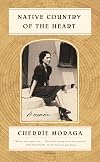
A heartfelt book and an often painful read, Cherríe Moraga's Native Country of the Heart is a memoir both of the author's mother Elvira, of mother and daughter's relationship, and of the slow loss of Elvira to dementia. As the narrative moves back and forth between Moraga's pain and grief at her mother's present illness, and their often difficult relationship during Moraga's youth, Moraga also grapples with issues of identity, indigeneity, sexuality, and colonialism. While her mother was show more Mexican-American of indigenous descent, Moraga's father (whose last name she stopped using as a young woman) was a white man, and Moraga herself is a lesbian.
One of my own grandmothers died of Alzheimer's disease, a long and awful process of dying for her which was terrible to observe and which amplified existing familial fractures. I found reading the parts of the book which dealt with the last stage of Elvira's life both very familiar and impossibly painful. Moraga's prose powerfully captures Elvira's personality, though with a number of stylistic tics that I found irritating. (For example: italicising the prepositions in a sentence does not automatically make it more profound or meaningful.) show less
One of my own grandmothers died of Alzheimer's disease, a long and awful process of dying for her which was terrible to observe and which amplified existing familial fractures. I found reading the parts of the book which dealt with the last stage of Elvira's life both very familiar and impossibly painful. Moraga's prose powerfully captures Elvira's personality, though with a number of stylistic tics that I found irritating. (For example: italicising the prepositions in a sentence does not automatically make it more profound or meaningful.) show less
Loving in the War Years: Lo Que Nunca Paso por Sus Labios (South End Press Classics Series) (English and Spanish Edition) by Cherríe L. Moraga
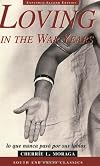
I wouldn't have re-read this if my co-teacher hadn't suggested we assign it in our experimental Queer Writing class, but you know what? It really holds up. And reading it on the heels of a bunch of New Narrative stuff made me think about how queer writers of color like Moraga have been fucking shit up for a LONG time--narrative, genre, gender etc etc--and not getting the cool points for it. What's that about?
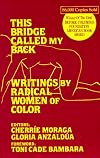
For some reason I went into this thinking it was some sort of feminist manifesto, but it's an anthology of experiences of women of color, told through essays, poetry, biography and only sometimes political manifesto. It focuses particularly on experiences in feminism and those interpreted through feminist ideas but the focus is by no means exclusive. It has some limitations within its remit such as those mentioned in the introduction - eg limited to the US, almost exclusively talks about show more lesbian sexuality - but does an excellent job of covering a broad spectrum of experiences and voices. A lot of the writing is only a few pages so a lot of people and a lot of different perspectives get covered - even though I disagree with some of the politics etc it's inevitable and interesting and important to see it talked about. Reading about experiences from nearly 35 years ago and their hopes for change is inspiring and sometimes sad. Ultimately I have trouble faulting it, as long as you go in realising it's an anthology of experiences, all of which are emotional and interesting. show less
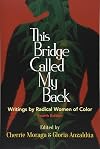
Just incredible, obviously. Even when they contradict one another, each piece is just so rich and powerful. Cherríe Moraga's introductions to the sections, especially talking about lesbianism as an orientation towards women and how that made her a feminist, are breath-taking, and Audre Lorde fucks me up every time in the absolute best ways. Some of it maybe might seem dated to people, or the historical context might mean you miss some things (I don't know that the editor's added notes show more giving that context are honestly all that helpful in this regard,) but regardless, it's absolutely a required read and I want to go out and buy copies of it for every single woman I know. show less
Lists
Awards


You May Also Like


Associated Authors
Statistics
- Works
- 18
- Also by
- 27
- Members
- 2,639
- Popularity
- #9,730
- Rating
- 4.1
- Reviews
- 16
- ISBNs
- 44
- Languages
- 1
- Favorited
- 4