
Lillian Faderman
Author of Odd Girls and Twilight Lovers: A History of Lesbian Life in Twentieth-Century America
About the Author
Lillian Faderman is an internationally revered scholar of lesbian and ethnic history and literature. She is the recipient of six Lambda Literary Awards, two American Library Association Awards, and several lifetime achievement awards for her scholarship. She is the author of Surpassing the Love of show more Men and Odd Girls and Twilight Lovers, both New York Times Notable Books. show less
Image credit: Susan Forrest
06-02-09 Stonewall Anniversary History panel, City of West Hollywood.
Series
Works by Lillian Faderman
Odd Girls and Twilight Lovers: A History of Lesbian Life in Twentieth-Century America (1991) 1,212 copies, 10 reviews
Surpassing the Love of Men: Romantic Friendship and Love Between Women from the Renaissance to the Present (1981) — Author — 741 copies, 5 reviews
Chloe Plus Olivia: An Anthology of Lesbian Literature from the 17th Century to the Present (1994) — Editor — 482 copies, 1 review
Lesbian-Feminism in Turn-of-the-Century Germany (Stories and Autobiographies) (1980) 33 copies, 1 review
Gay, Lesbian, Bisexual, Transgender Events, Volume 1: 1848-1983 (Great Events from History) (2006) 10 copies
Great Events from History: Gay, Lesbian, Bisexual, and Transgender Events, 1848-2006, V.2 (2006) 6 copies
Associated Works
In Search of Stonewall: The Riots at 50, The Gay and Lesbian Review at 25, Best Essays 1994-2018 (2019) — Contributor — 94 copies, 1 review
The Columbia Reader on Lesbians & Gay Men in Media, Society, and Politics (1999) — Contributor — 86 copies
Precious and Adored: The Love Letters of Rose Cleveland and Evangeline Simpson Whipple, 1890–1918 (2019) — Foreword, some editions — 28 copies
Tagged
Common Knowledge
- Canonical name
- Faderman, Lillian
- Other names
- Frost, Gigi
- Birthdate
- 1940-07-18
- Gender
- female
- Education
- University of California, Berkeley (BA|1962)
University of California, Los Angeles (MA|1964|Ph.D|1967) - Occupations
- historian
professor - Organizations
- California State University, Fresno
- Awards and honors
- Bill Whitehead Award for Lifetime Achievement (2004)
Stonewall Book Award (1982, 1992)
Lambda Literary Award (1992, 2000, 2003, 2007, 2013)
James Brudner Prize (2001)
Paul Monette-Roger Horwitz Trust Award (1999)
Judy Grahn Award for Memoir (2004) (show all 8)
Anisfield-Wolf Book Award (2016)
Golden Crown Literary Society Trailblazer Award (2017) - Relationships
- Irwin, Phyllis (partner)
Faderman, Avrom (son) - Nationality
- USA
- Birthplace
- Bronx, New York, USA
- Places of residence
- Fresno, California, USA
- Associated Place (for map)
- USA
Members
Reviews
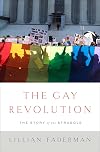
This book provides a historical overview of the gay rights movement in the United States from the post-World War II era to the present. This sprawling account covers numerous groups, individuals, movements, protests, and legal cases that changed the status for LGBTQ people. If one thing is clear, there is no one "great person" who lead the struggle, but it was a multi-generational effort of groups of people who stood up for equality.
The book starts in the 1950s when gays & lesbians were not show more only in danger of arrests, beatings, robbery, and sexual assault at the hands of the local police "Morals Squad," but a "Lavender Scare" saw the exposure and firing of numerous gay & lesbian people working for the US government. This occurred at the same time as the more famous "Red Scare," but may have had an even more widespread and devastating effect. In 1950, the Mattachine Society organized in Los Angeles as the first activist group to advocate for the rights of gay American citizens, with chapters in other cities established soon afterward. The Daughters of Bilitis, a lesbian civil rights group, was founded in San Francisco in 1956. Early activism focused on court cases to defend gay people from losing employment, with some success.
The Stonewall Uprising of 1969 was a turning point, where the patrons of the Greenwich Village gay bar - inspired by the Civil Rights and anti-war movements - decided to stand their ground against a police raid. The multi-day riots kicked off a decade of mass movement protests and pride parades. The 1970s also saw gay activists take on the American Psychiatric Association to stop having homosexuality classified as a mental disorder. Communities began to include gays and lesbians in their antidiscrimination codes, which prompted a backlash from conservative Christians. Most famously, entertainer Anita Bryant lead an anti-gay movement in Florida. Faderman credits Bryant as an accidental advocate for gay civil rights by bringing attention to their discrimination.
The 1980s is defined by the AIDS crisis and the deaths that devastated a generation of gay people. Faderman notes that AIDS had the effect of strengthening gay rights activism, with the shadow of death making previous infighting seem irrelevant, and prompting people to be greater radicalism. ACT UP, founded in New York in 1987, staged direct action events at government buildings, the New York Stock Exchanged, and churches to bring attention to the lack of action to treat people with AIDS and seek a cure. (Oddly enough, I had a run in with an angry conservative woman in the early 90s who said that gay men spit out communion at St. Patrick's Cathedral, which I'd always thought to be bigoted hyperbole, but it turns out it actually happened, although it makes more sense in the context of the protest).
I found the final chapters of the book that cover the 1990s and 2000s less interesting than the rest of the book, perhaps because it covered events that I remember living through. The focus here shifts from activist people and groups, to government action and becomes more a litany of court cases and presidential campaigns that affected gay civil rights, than the work of the people behind it. Still, this book is overall a good resource to get the big picture of struggle for LGBTQ equality. show less
The book starts in the 1950s when gays & lesbians were not show more only in danger of arrests, beatings, robbery, and sexual assault at the hands of the local police "Morals Squad," but a "Lavender Scare" saw the exposure and firing of numerous gay & lesbian people working for the US government. This occurred at the same time as the more famous "Red Scare," but may have had an even more widespread and devastating effect. In 1950, the Mattachine Society organized in Los Angeles as the first activist group to advocate for the rights of gay American citizens, with chapters in other cities established soon afterward. The Daughters of Bilitis, a lesbian civil rights group, was founded in San Francisco in 1956. Early activism focused on court cases to defend gay people from losing employment, with some success.
The Stonewall Uprising of 1969 was a turning point, where the patrons of the Greenwich Village gay bar - inspired by the Civil Rights and anti-war movements - decided to stand their ground against a police raid. The multi-day riots kicked off a decade of mass movement protests and pride parades. The 1970s also saw gay activists take on the American Psychiatric Association to stop having homosexuality classified as a mental disorder. Communities began to include gays and lesbians in their antidiscrimination codes, which prompted a backlash from conservative Christians. Most famously, entertainer Anita Bryant lead an anti-gay movement in Florida. Faderman credits Bryant as an accidental advocate for gay civil rights by bringing attention to their discrimination.
The 1980s is defined by the AIDS crisis and the deaths that devastated a generation of gay people. Faderman notes that AIDS had the effect of strengthening gay rights activism, with the shadow of death making previous infighting seem irrelevant, and prompting people to be greater radicalism. ACT UP, founded in New York in 1987, staged direct action events at government buildings, the New York Stock Exchanged, and churches to bring attention to the lack of action to treat people with AIDS and seek a cure. (Oddly enough, I had a run in with an angry conservative woman in the early 90s who said that gay men spit out communion at St. Patrick's Cathedral, which I'd always thought to be bigoted hyperbole, but it turns out it actually happened, although it makes more sense in the context of the protest).
I found the final chapters of the book that cover the 1990s and 2000s less interesting than the rest of the book, perhaps because it covered events that I remember living through. The focus here shifts from activist people and groups, to government action and becomes more a litany of court cases and presidential campaigns that affected gay civil rights, than the work of the people behind it. Still, this book is overall a good resource to get the big picture of struggle for LGBTQ equality. show less

A detailed and intimately researched biography of one of the earliest openly queer people elected to public office. Beginning with his grandparents' immigration to America and continuing on through his youth, political career, assassination, and aftermath, this book takes time to examine a historical figure as he truly was, not just as he presented himself. The author does not shy away from the scandal, pain, and unhealthy cycles in Mr. Milk's life. By so doing, she presents him as a whole show more human being, rather than an angelic martyr which makes his loss all the more tragic.
This book is a window into a dangerous and all too recent period of history when the LGBTQ movement was still finding its voice and path to political power and impact. show less
This book is a window into a dangerous and all too recent period of history when the LGBTQ movement was still finding its voice and path to political power and impact. show less
Surpassing the Love of Men: Romantic Friendship and Love Between Women from the Renaissance to the Present by Lillian Faderman
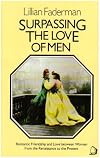
I found this book wholly fascinating and compelling, yet sad. It tells the story of love between women and how perceptions and prejudices have shaped it across the centuries. As it was first published in 1981, the subtitle is no longer accurate. The lesbian-feminist movement of the 1970s is the last trend described and it is salutary to compare this to the situation today. The book begins with the notion of ‘romantic friendship’, which reached its height of popularity in the 18th show more century. Faderman’s examination of romantic friendship demonstrates powerfully how changeable cultural norms are, in an area (love and sex) often blithely treated as immutable. Certainly, you have the trend today of framing so-called masculine and feminine behaviours as biologically fixed, as challenged in the excellent [b:Delusions of Gender: How Our Minds, Society, and Neurosexism Create Difference|8031168|Delusions of Gender How Our Minds, Society, and Neurosexism Create Difference|Cordelia Fine|https://images.gr-assets.com/books/1348833681s/8031168.jpg|12635310].
A major theme that I felt ran through the book was how sexuality is currently seen as a matter of desire and attraction, rather than behaviour, whereas this has not always been the case. Romantic friendships were a loving behaviour between women which did not tie them to a particular identity, sexual or otherwise. In the 18th century, though, it was widely assumed that none of these romantic friendships could have a sexual aspect, as a) women were assumed to have little or no libido, and b) the men whose writings on the topic have survived did not know how two women could have sex! There is thus a bittersweet tone to the initial chapters on romantic friendship. Undoubtedly their bonds brought a lot of women much joy, companionship, and deep love, however this was within a deeply oppressive patriarchal society. When it became possible for women to be financially independent from men, romantic friendships became suspect.
Thus, the chapters on the 19th century are saddening, as they recount how romantic friendship became pathologised, exoticised, and condemned. Women who had been happily emotionally involved with one another were now treated as sick, in need of psychotherapy, and a threat to family life/the children/society in general. The sexologists, especially Freud, were at the vanguard of this. In short, the patriarchy attempted to ruin the emotional bonds that women had developed in part as a way to survive misogyny. Faderman examines the fictional depictions of women loving women (by then labelled ‘lesbianism’) that promulgated these negative ideas. I was amused by her palpable scorn at the decadent movement’s voyeuristic lesbian stereotyping. For example, ‘The emphasis in most of Verlaine’s other lesbian poems, as in Baudelaire’s, is on sex and sin - but of course the women are always young and lovely and arousing as they shuffle off to hell’.
In Faderman’s opinion, only the feminist movement of the 1970s has been able to rehabilitate love between women. I didn’t previously understand what feminists of that decade meant by lesbian, as it seems to differ significantly from the assumed definition today. Lesbian-feminists of the 1970s apparently made a decision to focus their important emotional relationships (which could be sexual but might not be) on other women. Their lesbianism is thus defined by choice and behaviour, whereas today it is assumed that a lesbian is a woman who is sexually attracted to other women whether she likes it or not. In a way, this shifting definition powerfully demonstrates that in the 21st century, there is an assumption of compulsory sexuality. Thus, behaviour is presumed to follow attraction. Lesbians are women who are attracted to women and therefore have sex with them. Whereas Faderman is at pains to point out that romantic friendships seems often to have been sensual, maybe even sexual, but that was by no means the most important thing about them. Love today is so defined by sex. All serious non-familial relationships and emotional attachments are assumed to have a sexual component. I seem to recall that Freud even claimed that all platonic friendships have sexual attraction buried at their core. Freud has a lot to answer for, really. Even as his theories have been academically discredited, their influence on Western popular culture continues.
‘Surpassing the Love of Men’ reminded me that as women in Europe and the US have gained more sexual freedom, this has brought new constraints and novel forms of sexism. The idea of sexuality as being innate, something you’re born with, counters homophobia by denying the possibility of medical rehabilitation. On the other hand, it also tends to exclude the freedom to choose your sexual and emotional behaviours and aims to neatly categorise everyone. I can imagine the hostile confusion that would result today if you came out as a lesbian, on the basis of not wanting emotional relationships with men whether or not you are attracted to them. Women’s bodies are still generally presumed to be sexually available to men. Moreover, any attraction is generally assumed to be sexual, despite the asexual community’s efforts at subdivision (sexual/romantic/sensual elements, etc). And as sexual attraction is treated as the most important and irresistible component of love, non-sexual relationships are deemed unimportant. This is why I felt a sense of loss when reading about romantic friendships. I love my close female friends very much, however none of them are my 'girlfriend', so these relationships are trivialised. In the media, there are very few depictions of female friendships that are recognisable to me. Female characters in films and on TV are so often rivals for a man's interest, rather than having emotional attachments to one another. Since the 18th century women's lives have improved immeasurably, but not without some losses. We still live in a misogynistic world, though I'm well aware that as a white, middle class woman I'm insulated from the worst of it. show less
A major theme that I felt ran through the book was how sexuality is currently seen as a matter of desire and attraction, rather than behaviour, whereas this has not always been the case. Romantic friendships were a loving behaviour between women which did not tie them to a particular identity, sexual or otherwise. In the 18th century, though, it was widely assumed that none of these romantic friendships could have a sexual aspect, as a) women were assumed to have little or no libido, and b) the men whose writings on the topic have survived did not know how two women could have sex! There is thus a bittersweet tone to the initial chapters on romantic friendship. Undoubtedly their bonds brought a lot of women much joy, companionship, and deep love, however this was within a deeply oppressive patriarchal society. When it became possible for women to be financially independent from men, romantic friendships became suspect.
Thus, the chapters on the 19th century are saddening, as they recount how romantic friendship became pathologised, exoticised, and condemned. Women who had been happily emotionally involved with one another were now treated as sick, in need of psychotherapy, and a threat to family life/the children/society in general. The sexologists, especially Freud, were at the vanguard of this. In short, the patriarchy attempted to ruin the emotional bonds that women had developed in part as a way to survive misogyny. Faderman examines the fictional depictions of women loving women (by then labelled ‘lesbianism’) that promulgated these negative ideas. I was amused by her palpable scorn at the decadent movement’s voyeuristic lesbian stereotyping. For example, ‘The emphasis in most of Verlaine’s other lesbian poems, as in Baudelaire’s, is on sex and sin - but of course the women are always young and lovely and arousing as they shuffle off to hell’.
In Faderman’s opinion, only the feminist movement of the 1970s has been able to rehabilitate love between women. I didn’t previously understand what feminists of that decade meant by lesbian, as it seems to differ significantly from the assumed definition today. Lesbian-feminists of the 1970s apparently made a decision to focus their important emotional relationships (which could be sexual but might not be) on other women. Their lesbianism is thus defined by choice and behaviour, whereas today it is assumed that a lesbian is a woman who is sexually attracted to other women whether she likes it or not. In a way, this shifting definition powerfully demonstrates that in the 21st century, there is an assumption of compulsory sexuality. Thus, behaviour is presumed to follow attraction. Lesbians are women who are attracted to women and therefore have sex with them. Whereas Faderman is at pains to point out that romantic friendships seems often to have been sensual, maybe even sexual, but that was by no means the most important thing about them. Love today is so defined by sex. All serious non-familial relationships and emotional attachments are assumed to have a sexual component. I seem to recall that Freud even claimed that all platonic friendships have sexual attraction buried at their core. Freud has a lot to answer for, really. Even as his theories have been academically discredited, their influence on Western popular culture continues.
‘Surpassing the Love of Men’ reminded me that as women in Europe and the US have gained more sexual freedom, this has brought new constraints and novel forms of sexism. The idea of sexuality as being innate, something you’re born with, counters homophobia by denying the possibility of medical rehabilitation. On the other hand, it also tends to exclude the freedom to choose your sexual and emotional behaviours and aims to neatly categorise everyone. I can imagine the hostile confusion that would result today if you came out as a lesbian, on the basis of not wanting emotional relationships with men whether or not you are attracted to them. Women’s bodies are still generally presumed to be sexually available to men. Moreover, any attraction is generally assumed to be sexual, despite the asexual community’s efforts at subdivision (sexual/romantic/sensual elements, etc). And as sexual attraction is treated as the most important and irresistible component of love, non-sexual relationships are deemed unimportant. This is why I felt a sense of loss when reading about romantic friendships. I love my close female friends very much, however none of them are my 'girlfriend', so these relationships are trivialised. In the media, there are very few depictions of female friendships that are recognisable to me. Female characters in films and on TV are so often rivals for a man's interest, rather than having emotional attachments to one another. Since the 18th century women's lives have improved immeasurably, but not without some losses. We still live in a misogynistic world, though I'm well aware that as a white, middle class woman I'm insulated from the worst of it. show less
Odd Girls and Twilight Lovers: A History of Lesbian Life in Twentieth-Century America (Between Men--Between Women) by Lillian Faderman
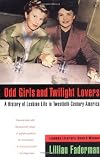
A relatively succinct, yet comprehensive history of lesbian women in America, which also touches on feminism, civil rights and relations between the gay and lesbian communities. As far as I am aware this is the most comprehensive work on lesbian history available. Faderman did extensive research and the book is rife with footnotes and comprised predominately of interviews conducted for this book.
Faderman is upfront about her biases, although her disbelief in "congenitalism" may make modern show more readers uncomfortable. She does seem to view the 80's as a terminal point in lesbian history, and it would be interesting to see her characterize the 90's and 00's. show less
Faderman is upfront about her biases, although her disbelief in "congenitalism" may make modern show more readers uncomfortable. She does seem to view the 80's as a terminal point in lesbian history, and it would be interesting to see her characterize the 90's and 00's. show less
Lists
Awards

Odd Girls and Twilight Lovers: A History of Lesbian Life in Twentieth-Century America (Winner – Editor's Choice – 1991)
Odd Girls and Twilight Lovers: A History of Lesbian Life in Twentieth-Century America (Nominee – Lesbian Nonfiction – 1991)
Surpassing the Love of Men: Romantic Friendship and Love Between Women from the Renaissance to the Present (Winner – 100 Best Lesbian/Gay Books of the 20th Century)
Chloe Plus Olivia: An Anthology of Lesbian Literature from the 17th Century to the Present (Winner – Anthology/Fiction – 1994)
Chloe Plus Olivia: An Anthology of Lesbian Literature from the 17th Century to the Present (Nominee – Lesbian Studies – 1994)


You May Also Like


Associated Authors
Statistics
- Works
- 20
- Also by
- 5
- Members
- 4,060
- Popularity
- #6,199
- Rating
- 3.9
- Reviews
- 31
- ISBNs
- 74
- Languages
- 4
- Favorited
- 6

