
Randy Shilts (1951–1994)
Author of And the Band Played On: Politics, People, and the AIDS Epidemic
About the Author
Works by Randy Shilts
Associated Works
Tagged
Common Knowledge
- Birthdate
- 1951-08-08
- Date of death
- 1994-02-17
- Gender
- male
- Education
- University of Oregon (BA | 1975 | journalism)
- Occupations
- journalist
author - Organizations
- San Francisco Chronicle
- Awards and honors
- Lifetime Achievement Award (National Lesbian and Gay Journalists' Association, 1993)
Outstanding Author Award (American Society of Journalists and Authors, 1988)
Hall of Achievement (University of Oregon School of Journalism, 1998)
Rainbow Honor Walk (2014)
National LGBTQ Wall of Honor (2019) - Relationships
- Barbieri, Barry (partner)
- Cause of death
- AIDS-related illness
- Nationality
- USA
- Birthplace
- Davenport, Iowa, USA
- Places of residence
- Davenport, Iowa, USA (birth)
Aurora, Illinois, USA
San Francisco, California, USA
Guerneville, California, USA (death) - Place of death
- San Francisco, California, USA
- Burial location
- Redwood Memorial Gardens, Guerneville, Sonoma County, California, USA
- Associated Place (for map)
- California, USA
Members
Reviews

i can't imagine that there will ever be a more comprehensive or exhaustive book (of journalism or any other kind) about the early years of the aids epidemic. this is just so detailed, so seemingly even-handed, so full of history and science and personal anecdotes. it's such an important and such a hard read. shilts does a truly excellent job of showing what was happening on all sides of the issue through every stage. (socially, politically, personally, etc.)
the first time i read this was in show more (or near) sept 2003. it absolutely shattered me. i mean shattered. while i had forgotten a lot of the details and specifics, i am not sure i ever fully recovered from reading this book the first time. i was a bit nervous about rereading it because of how deeply i was affected by it; i might even be able to say that this book tangibly changed the course of my life, but that might be a bit extreme, i'm not sure. either way, i was utterly gutted by this the first time, and for good reason.
the information here is so unbelievable, so hard to accept, and so important to understand. it was crushing to my naive, idealist self, the one who believed that people genuinely have each other's best interests at heart, that government is supposed to work for the people, and especially that scientific institutions are there to do the work of science and to help people.
there are few heroes in this book. even the good people fighting the good fight stopped short or made excuses or only decided to fight when it was long past the time to make that decision. and as for everyone else - well, it's almost incomprehensible how callous and self-serving people were, throwing other people's lives away like they were so much garbage. (and i only say "almost" because of the time we're living in right now, with the trump administration. honestly i'm sure that there are awful things done by every administration, but some are worse than others, and both trump and reagan qualify.) it's stunning what was left to happen, and how many were left to die (and die horribly) for political expediency and bigotry. i believed in things, and in people, before reading this book for the first time. the reality of the infighting between the world's largest science institutions, the lying to protect an uncaring administration, the value placed on some lives versus others, that there is a cost/benefit weighed even when people's (*thousands* of people's) lives are in the balance, and even the resistance to changing behavior or societal norms when necessary - all put together it was crushing to see that, at its base, people are out for profit. whether that's in making their business thrive, saving their business money, getting an award, getting more money in a grant, making less work for themselves, getting to do what they want regardless of how it harms others, or myriad other ways - it's just about what's best for themselves, irregardless of everyone else.
when they saw this new disease and realized it looked fatal, they (and i mean the government, the pharmaceutical companies, the scientists, the bathhouse owners) didn't care because it was happening at first to gay men and because it would cost them money and work to do something about it. really and truly they didn't care. reagan in particular wasn't willing to do anything about it; while thousands of people were dying, he wouldn't even think about it. and he was allowed to get away with it by his administration and everyone else in government, scientists, the media. no one cared enough to do something about it. (sure, a few people here and there tried, and some even tried hard, but no one was willing to take a step that would go against their boss or make a statement to the media so people would understand what was really happening. even the "good guys" in the story are often letting 16 months go by before pressing an issue, or are lying to congress about the administration, or not subpoenaing documents to save someone embarrassment, etc.) the world didn't care until someone famous (rock hudson) died. it's the most appalling history of disinterest, lying, under-funding, under-educating, misleading, hoarding of information to the detriment of science, that is imaginable. literally every step of the way they fucked it up more than before, and people died because of it. literally every step of the way they had a chance to finally make it right (at least for the people not yet infected or infected but not symptomatic) and they entrenched themselves deeper into the path of death. it's an incredible story and one that makes a person lose faith in just about everything. truly. such a hard, but important story. i'm not sure i can put myself through reading it ever again, though.
(ok, you have to read between the lines to find them, but there are heroes - the people themselves who had aids and didn't hide it, who said what it was. the people who cared for them. the guy (cliff montgomery maybe?) who started the aids ward that allowed the patient to decide who could visit, the activists and even the congresspeople who asked some hard questions, expecting that they were being given honest answers. even orrin hatch asked for more money when reagan gave too little (but i'll never call him a hero). there were people giving everything they had to fight this. and by "this" i mean not just the virus, but the politics, the media, the society, the culture, even the gay community that wouldn't accept certain things or allow certain things to be said. a perfect confluence of things to make it so completely fucked up. so yes, some heroes, but they were mostly the everyday people dealing with the devastation of the virus, not the people we needed to be heroes.)
from the prologue, this really made me think of where we are right now with climate change: "By the time America paid attention to the disease, it was too late to do anything about it."
it was hard for me to understand truly how strapped the scientists were for money, how the reagan administration wouldn't approve anything for aids research, until this sentence: "At one point, Don Francis ordered a basic textbook on retroviruses, only to have the requisition refused. The CDC could not afford even $150 for a textbook."
while the reagan administration was particularly egregious in its handling (by completely ignoring) of the aids virus, everyone failed. largely because it most (initially) affected the gay community. but everyone failed. the media failed. scientists failed. (although international scientists sure did a better job. so i should say american scientists failed.) gay community leaders failed (although they failed less often). local governments failed. everyone down the line failed. and so many people died. and are still dying. if the world health organization is to be believed, 35 million people have died from aids. had action been taken - reasonable, basic action - when it first appeared, most of those people would be alive today. i mean only a few hundred might have died. what contributions are we without because their lives, mostly gay lives at the outset, weren't valued?
it's overwhelmingly sad. i'm not shattered, reading it this time, likely because i was never quite whole again (it's hard to unknow the stuff that you can't be an idealist and know) but i'm shaken. so important, this book, for so many reasons. show less
the first time i read this was in show more (or near) sept 2003. it absolutely shattered me. i mean shattered. while i had forgotten a lot of the details and specifics, i am not sure i ever fully recovered from reading this book the first time. i was a bit nervous about rereading it because of how deeply i was affected by it; i might even be able to say that this book tangibly changed the course of my life, but that might be a bit extreme, i'm not sure. either way, i was utterly gutted by this the first time, and for good reason.
the information here is so unbelievable, so hard to accept, and so important to understand. it was crushing to my naive, idealist self, the one who believed that people genuinely have each other's best interests at heart, that government is supposed to work for the people, and especially that scientific institutions are there to do the work of science and to help people.
there are few heroes in this book. even the good people fighting the good fight stopped short or made excuses or only decided to fight when it was long past the time to make that decision. and as for everyone else - well, it's almost incomprehensible how callous and self-serving people were, throwing other people's lives away like they were so much garbage. (and i only say "almost" because of the time we're living in right now, with the trump administration. honestly i'm sure that there are awful things done by every administration, but some are worse than others, and both trump and reagan qualify.) it's stunning what was left to happen, and how many were left to die (and die horribly) for political expediency and bigotry. i believed in things, and in people, before reading this book for the first time. the reality of the infighting between the world's largest science institutions, the lying to protect an uncaring administration, the value placed on some lives versus others, that there is a cost/benefit weighed even when people's (*thousands* of people's) lives are in the balance, and even the resistance to changing behavior or societal norms when necessary - all put together it was crushing to see that, at its base, people are out for profit. whether that's in making their business thrive, saving their business money, getting an award, getting more money in a grant, making less work for themselves, getting to do what they want regardless of how it harms others, or myriad other ways - it's just about what's best for themselves, irregardless of everyone else.
when they saw this new disease and realized it looked fatal, they (and i mean the government, the pharmaceutical companies, the scientists, the bathhouse owners) didn't care because it was happening at first to gay men and because it would cost them money and work to do something about it. really and truly they didn't care. reagan in particular wasn't willing to do anything about it; while thousands of people were dying, he wouldn't even think about it. and he was allowed to get away with it by his administration and everyone else in government, scientists, the media. no one cared enough to do something about it. (sure, a few people here and there tried, and some even tried hard, but no one was willing to take a step that would go against their boss or make a statement to the media so people would understand what was really happening. even the "good guys" in the story are often letting 16 months go by before pressing an issue, or are lying to congress about the administration, or not subpoenaing documents to save someone embarrassment, etc.) the world didn't care until someone famous (rock hudson) died. it's the most appalling history of disinterest, lying, under-funding, under-educating, misleading, hoarding of information to the detriment of science, that is imaginable. literally every step of the way they fucked it up more than before, and people died because of it. literally every step of the way they had a chance to finally make it right (at least for the people not yet infected or infected but not symptomatic) and they entrenched themselves deeper into the path of death. it's an incredible story and one that makes a person lose faith in just about everything. truly. such a hard, but important story. i'm not sure i can put myself through reading it ever again, though.
(ok, you have to read between the lines to find them, but there are heroes - the people themselves who had aids and didn't hide it, who said what it was. the people who cared for them. the guy (cliff montgomery maybe?) who started the aids ward that allowed the patient to decide who could visit, the activists and even the congresspeople who asked some hard questions, expecting that they were being given honest answers. even orrin hatch asked for more money when reagan gave too little (but i'll never call him a hero). there were people giving everything they had to fight this. and by "this" i mean not just the virus, but the politics, the media, the society, the culture, even the gay community that wouldn't accept certain things or allow certain things to be said. a perfect confluence of things to make it so completely fucked up. so yes, some heroes, but they were mostly the everyday people dealing with the devastation of the virus, not the people we needed to be heroes.)
from the prologue, this really made me think of where we are right now with climate change: "By the time America paid attention to the disease, it was too late to do anything about it."
it was hard for me to understand truly how strapped the scientists were for money, how the reagan administration wouldn't approve anything for aids research, until this sentence: "At one point, Don Francis ordered a basic textbook on retroviruses, only to have the requisition refused. The CDC could not afford even $150 for a textbook."
while the reagan administration was particularly egregious in its handling (by completely ignoring) of the aids virus, everyone failed. largely because it most (initially) affected the gay community. but everyone failed. the media failed. scientists failed. (although international scientists sure did a better job. so i should say american scientists failed.) gay community leaders failed (although they failed less often). local governments failed. everyone down the line failed. and so many people died. and are still dying. if the world health organization is to be believed, 35 million people have died from aids. had action been taken - reasonable, basic action - when it first appeared, most of those people would be alive today. i mean only a few hundred might have died. what contributions are we without because their lives, mostly gay lives at the outset, weren't valued?
it's overwhelmingly sad. i'm not shattered, reading it this time, likely because i was never quite whole again (it's hard to unknow the stuff that you can't be an idealist and know) but i'm shaken. so important, this book, for so many reasons. show less
Randy Shilts' 1987 book is the definitive, thread to the needle eye account of the discovery, denial and destruction of the AIDS epidemic which devastated thousands of lives in the 1980s. Even today, when most people understand how HIV is transmitted and with antiretroviral treatment available to slow the onset of AIDS, the disease is still a newsworthy issue, with the NHS refusing to fund PrEP treatment in the UK.
Charting the first cases of AIDS - or GRID (Gay Related Immune Deficiency), show more which was the original call-it-as-you-see-it acronym for the disease - in 1980, up until the release of the book in 1987, Shilts tells a modern medical horror story of ignorance, denial, underfunding, prejudice and the almost willful manslaughter of thousands of gay men in America, primarily, but eventually worldwide. First there was the slur of 'gay cancer', and the assumption that only homosexual men were vulnerable to the strange and seemingly unconnected symptoms of Kaposi's sarcoma, cytomegalovirus (CMV) and pneumocystis pneumonia (PCP) - so there was no urgent need to look for a cause or a cure. The government withheld funding for research, so that doctors like Marcus Conant, Jim Curran and Michael Gottlieb were left struggling to put the pieces of the viral jigsaw together. Neither did the gay community help matters, fighting the closure of bathhouses in San Francisco and New York - the greatest danger to gay men - and refusing to heed advice on safe sex because they valued so-called 'civil rights' over staying alive. Men like airline steward Gaetan Dugas - Patient Zero, or the 'Typhoid Mary' of AIDS - knowingly infected others with the disease, through denial or anger at being struck down themselves.
Punctuated by statistical updates from the aptly termed Morbidity and Mortality Weekly Report - 50 cases, 100 cases, 1000, 2000, with growing numbers of casualties every year - the chapters in Stilts' book cover the medical and political aspects of AIDS, from petty scientists refusing to work together and seeking recognition over results to 'AIDSpeak' (don't offend or embarrass anyone) and the Reagan administration turning a blind eye to the epidemic sweeping America for five years. 'It was about sex and it was about homosexuals,' Stilts quotes Mark Gottlieb.' Taken together, it had simply embarrassed people - the politicians, the reporters, the scientists'. Nobody wanted to talk openly about the sexual transmission of the disease, and when other methods of infection were revealed - blood transfusions, treatment for hemophilia, intravenous drug users, mothers passing the virus on to their unborn babies - 'respectable' society was having none of the truth. The sheer selfish greed of the blood banking industry, who wouldn't test donors for signs of AIDS for fear that they would lose money, staggered me - and this is thirty-plus years on!
There is a human element to story, too, of course. Long before Rock Hudson made AIDS famous, men like Gary Walsh and Bobbi Campbell, the self-styled 'KS poster boy', and Frances Borchelt, a grandmother infected by a blood transfusion - were dying long, painful and miserable deaths while the government withheld money for tests and treatment.
Even now, everybody should read Randy Shilts' book because AIDS is still a fact of life, and the struggle that doctors, scientists and epidemiologists went through to isolate the virus and find a combination of drugs which halts the AIDS death sentence shouldn't be forgotten. show less
Charting the first cases of AIDS - or GRID (Gay Related Immune Deficiency), show more which was the original call-it-as-you-see-it acronym for the disease - in 1980, up until the release of the book in 1987, Shilts tells a modern medical horror story of ignorance, denial, underfunding, prejudice and the almost willful manslaughter of thousands of gay men in America, primarily, but eventually worldwide. First there was the slur of 'gay cancer', and the assumption that only homosexual men were vulnerable to the strange and seemingly unconnected symptoms of Kaposi's sarcoma, cytomegalovirus (CMV) and pneumocystis pneumonia (PCP) - so there was no urgent need to look for a cause or a cure. The government withheld funding for research, so that doctors like Marcus Conant, Jim Curran and Michael Gottlieb were left struggling to put the pieces of the viral jigsaw together. Neither did the gay community help matters, fighting the closure of bathhouses in San Francisco and New York - the greatest danger to gay men - and refusing to heed advice on safe sex because they valued so-called 'civil rights' over staying alive. Men like airline steward Gaetan Dugas - Patient Zero, or the 'Typhoid Mary' of AIDS - knowingly infected others with the disease, through denial or anger at being struck down themselves.
Punctuated by statistical updates from the aptly termed Morbidity and Mortality Weekly Report - 50 cases, 100 cases, 1000, 2000, with growing numbers of casualties every year - the chapters in Stilts' book cover the medical and political aspects of AIDS, from petty scientists refusing to work together and seeking recognition over results to 'AIDSpeak' (don't offend or embarrass anyone) and the Reagan administration turning a blind eye to the epidemic sweeping America for five years. 'It was about sex and it was about homosexuals,' Stilts quotes Mark Gottlieb.' Taken together, it had simply embarrassed people - the politicians, the reporters, the scientists'. Nobody wanted to talk openly about the sexual transmission of the disease, and when other methods of infection were revealed - blood transfusions, treatment for hemophilia, intravenous drug users, mothers passing the virus on to their unborn babies - 'respectable' society was having none of the truth. The sheer selfish greed of the blood banking industry, who wouldn't test donors for signs of AIDS for fear that they would lose money, staggered me - and this is thirty-plus years on!
There is a human element to story, too, of course. Long before Rock Hudson made AIDS famous, men like Gary Walsh and Bobbi Campbell, the self-styled 'KS poster boy', and Frances Borchelt, a grandmother infected by a blood transfusion - were dying long, painful and miserable deaths while the government withheld money for tests and treatment.
Even now, everybody should read Randy Shilts' book because AIDS is still a fact of life, and the struggle that doctors, scientists and epidemiologists went through to isolate the virus and find a combination of drugs which halts the AIDS death sentence shouldn't be forgotten. show less
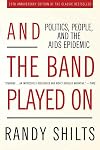
And the Band Played On: Politics, People, and the AIDS Epidemic, 20th-Anniversary Edition by Randy Shilts
“Those ignorant of history are doomed to repeat it.”
“The primary problems we now face are not scientific problems but social problems involving science.”
Such statements certainly provide an impetus to read this classic about the early history of AIDS in America. Though this book is over thirty years old, its meticulous research still communicates how human nature often denies diseased persons respect, compassion, and the resources necessary to recover. Such was certainly true in the show more 1980s with HIV/AIDS when the ball was dropped by almost everyone – politicians, doctors, scientists, activists, those with a disease, those afraid of a disease, the gay community, and the business community, to list a few.
Reading this in an era of a new global pandemic (COVID), I am struck by the emotions that AIDS evoked during the 1980s and how those same emotions are reflected in encounters with a new disease. Denial, bargaining, pride, and greed are all common, human responses when encountering deadly threats. In this book, Shilts brings to life how those factors played into the advent of AIDS. He educates readers not just about HIV but about social responses to adversity.
This book does not delve into pure science much. Indeed, if anything, it’s a little light on biology. However, what it lacks in hard science, it makes up for in human concern and focuses on four leading cities: San Francisco, New York City, Washington, and Paris. It treats impacted individuals with a depth of empathic understanding and detailed reporting that sucks the reader in. Intrigue is built section by section, chapter by chapter, part by part, through presenting the right facts in the right order.
Few heroes dwell in this book; in fact, most heroes end up dying. Instead, this story becomes a malady of errors where human weaknesses continually jeopardize ultimate success. Forty years later, AIDS remains with us. Successful treatments exist, but they are not cures. Vaccine trials, in which I am involved as a community advisor, have repeatedly failed. Homosexuals are less socially stigmatized in America, thanks to prolonged efforts of activists. Indeed, homophobia, the norm in this book, has become more stigmatized. Reagan’s legacy has positively become bound up with the defeat of totalitarian communism, but this book reminds us that his legacy also negatively reflected a coldness when presented with his people’s suffering.
This book deserves a serious read by just about everyone due to the accuracy of its depiction of human nature. As COVID reminds us, pandemics can still occur, and humans can still struggle to squarely face their realities. This book gripped me so much that while reading, I allocated most of my spare energy and all of my spare time towards digging deeper into the subject. If more people read this book decades after the emergence of AIDS, perhaps America and the world can deal with the next pandemic better. (But don’t count on it!) The obvious, most recent options to study about pandemics are the Spanish flu and AIDS. Having studied both, I definitely think this book deserves its place on a short reading list about modern epidemics and the sociology of disease. show less
“The primary problems we now face are not scientific problems but social problems involving science.”
Such statements certainly provide an impetus to read this classic about the early history of AIDS in America. Though this book is over thirty years old, its meticulous research still communicates how human nature often denies diseased persons respect, compassion, and the resources necessary to recover. Such was certainly true in the show more 1980s with HIV/AIDS when the ball was dropped by almost everyone – politicians, doctors, scientists, activists, those with a disease, those afraid of a disease, the gay community, and the business community, to list a few.
Reading this in an era of a new global pandemic (COVID), I am struck by the emotions that AIDS evoked during the 1980s and how those same emotions are reflected in encounters with a new disease. Denial, bargaining, pride, and greed are all common, human responses when encountering deadly threats. In this book, Shilts brings to life how those factors played into the advent of AIDS. He educates readers not just about HIV but about social responses to adversity.
This book does not delve into pure science much. Indeed, if anything, it’s a little light on biology. However, what it lacks in hard science, it makes up for in human concern and focuses on four leading cities: San Francisco, New York City, Washington, and Paris. It treats impacted individuals with a depth of empathic understanding and detailed reporting that sucks the reader in. Intrigue is built section by section, chapter by chapter, part by part, through presenting the right facts in the right order.
Few heroes dwell in this book; in fact, most heroes end up dying. Instead, this story becomes a malady of errors where human weaknesses continually jeopardize ultimate success. Forty years later, AIDS remains with us. Successful treatments exist, but they are not cures. Vaccine trials, in which I am involved as a community advisor, have repeatedly failed. Homosexuals are less socially stigmatized in America, thanks to prolonged efforts of activists. Indeed, homophobia, the norm in this book, has become more stigmatized. Reagan’s legacy has positively become bound up with the defeat of totalitarian communism, but this book reminds us that his legacy also negatively reflected a coldness when presented with his people’s suffering.
This book deserves a serious read by just about everyone due to the accuracy of its depiction of human nature. As COVID reminds us, pandemics can still occur, and humans can still struggle to squarely face their realities. This book gripped me so much that while reading, I allocated most of my spare energy and all of my spare time towards digging deeper into the subject. If more people read this book decades after the emergence of AIDS, perhaps America and the world can deal with the next pandemic better. (But don’t count on it!) The obvious, most recent options to study about pandemics are the Spanish flu and AIDS. Having studied both, I definitely think this book deserves its place on a short reading list about modern epidemics and the sociology of disease. show less

I waited a long time to read this, but it’s probably good that I did because it allowed comparison between AIDS and COVID:
• Mixed messages from medical authorities. Author Randy Shilts documents a doctor with the NIH suggesting that AIDS could be spread by routine household contact. This caused no end of problem for AIDS patients; nurses refused to enter a room with an AIDS patient, parents demanded children with AIDS be removed from schools, etc. The person who made this statement – show more picked up by all the news media – was Doctor Anthony Fauci). For COVID, the WHO insisted for two years that the virus was not airborne and was spread by contact with surfaces.
• Refusal to admit that personal choices were a factor in disease transmission (note: I am NOT saying being gay is a personal choice, but anonymous sex with multiple partners is). It proved gut-wrenchingly hard to get gays to stop engaging in promiscuous sexual activities even though there was abundant evidence that this facilitated disease transmission; it proved gut-wrenchingly hard to get Evangelicals to stop singing in church choirs even though there was abundant evidence that this facilitated disease transmission.
• Pseudoscience in abundance. People with AIDS went to faith healers, psychics, and dubious Mexican clinics and later (after Shilts wrote) claimed the disease was genetically engineered. People with COVID took horse dewormer and claimed the disease was a Liberal plot.
There are obviously a lot of differences, though; politicians were active almost immediately in the COVID epidemic but were mostly indifferent to AIDS (Shilts notes that there were some unexpected political positions; devout Mormon senator Orrin Hatch and Republican governor George Deukmejian both supported government spending on AIDS while liberal governors Mario Cuomo and Michael Dukakis shortchanged AIDS research). The COVID virus was rapidly identified, while HIV took years to track down; this gave ammunition to people who opposed shutting down bathhouses and testing blood donations because it could be claimed “the cause of AIDS isn’t known”. Vaccines for COVID were developed astonishingly quickly while AIDS vaccine is still off in the indeterminate future.
Shilts’ book is a tragedy; the reader gets acquainted with vital, interesting people. And then those people notice a telltale purple spot. Shilts spreads the blame around; it isn’t just Jerry Falwell and Ronald Reagan, it’s Ed Koch and the New York Times. And it’s gays themselves; an activist laments “we fought for the right to have all the sex we wanted; we should have fought for the right to get married”. I found Shilts’ story gripping and moving. Other readers complained that the story jumped around too much, shifting from New York to San Francisco to Washington to Paris, but I found that added to my interest. I wish Shilts had discussed public health history more; the cornerstones of public health for infectious diseases have always been quarantine and contact tracing – but those didn’t happen with AIDS. I understand the reasons why, but I wish Shilts would have discussed them some more. No footnotes or bibliography, but there’s a section on sources, mostly interviews, in the end matter. A very good index. show less
• Mixed messages from medical authorities. Author Randy Shilts documents a doctor with the NIH suggesting that AIDS could be spread by routine household contact. This caused no end of problem for AIDS patients; nurses refused to enter a room with an AIDS patient, parents demanded children with AIDS be removed from schools, etc. The person who made this statement – show more picked up by all the news media – was Doctor Anthony Fauci). For COVID, the WHO insisted for two years that the virus was not airborne and was spread by contact with surfaces.
• Refusal to admit that personal choices were a factor in disease transmission (note: I am NOT saying being gay is a personal choice, but anonymous sex with multiple partners is). It proved gut-wrenchingly hard to get gays to stop engaging in promiscuous sexual activities even though there was abundant evidence that this facilitated disease transmission; it proved gut-wrenchingly hard to get Evangelicals to stop singing in church choirs even though there was abundant evidence that this facilitated disease transmission.
• Pseudoscience in abundance. People with AIDS went to faith healers, psychics, and dubious Mexican clinics and later (after Shilts wrote) claimed the disease was genetically engineered. People with COVID took horse dewormer and claimed the disease was a Liberal plot.
There are obviously a lot of differences, though; politicians were active almost immediately in the COVID epidemic but were mostly indifferent to AIDS (Shilts notes that there were some unexpected political positions; devout Mormon senator Orrin Hatch and Republican governor George Deukmejian both supported government spending on AIDS while liberal governors Mario Cuomo and Michael Dukakis shortchanged AIDS research). The COVID virus was rapidly identified, while HIV took years to track down; this gave ammunition to people who opposed shutting down bathhouses and testing blood donations because it could be claimed “the cause of AIDS isn’t known”. Vaccines for COVID were developed astonishingly quickly while AIDS vaccine is still off in the indeterminate future.
Shilts’ book is a tragedy; the reader gets acquainted with vital, interesting people. And then those people notice a telltale purple spot. Shilts spreads the blame around; it isn’t just Jerry Falwell and Ronald Reagan, it’s Ed Koch and the New York Times. And it’s gays themselves; an activist laments “we fought for the right to have all the sex we wanted; we should have fought for the right to get married”. I found Shilts’ story gripping and moving. Other readers complained that the story jumped around too much, shifting from New York to San Francisco to Washington to Paris, but I found that added to my interest. I wish Shilts had discussed public health history more; the cornerstones of public health for infectious diseases have always been quarantine and contact tracing – but those didn’t happen with AIDS. I understand the reasons why, but I wish Shilts would have discussed them some more. No footnotes or bibliography, but there’s a section on sources, mostly interviews, in the end matter. A very good index. show less
Lists
Awards


You May Also Like


Associated Authors
Statistics
- Works
- 10
- Also by
- 3
- Members
- 5,024
- Popularity
- #4,979
- Rating
- 4.4
- Reviews
- 89
- ISBNs
- 53
- Languages
- 4
- Favorited
- 7