
Michelangelo Signorile
Author of Queer in America Sex, the Media, and the Closets of Power
About the Author
Michelangelo Signorile is a syndicated columnist and lives in New York City
Image credit: Credit: David Shankbone, Nov. 13, 2008, demonstration in New York City
Works by Michelangelo Signorile
Outing Yourself: How to Come Out as Lesbian or Gay to Your Family, Friends, and Coworkers (1995) 299 copies, 1 review
Life Outside - The Signorile Report on Gay Men: Sex, Drugs, Muscles, and the Passages of Life (1997) 225 copies
It's Not Over: Getting Beyond Tolerance, Defeating Homophobia, and Winning True Equality (2015) 64 copies, 3 reviews
Associated Works
The Columbia Reader on Lesbians & Gay Men in Media, Society, and Politics (1999) — Contributor — 86 copies
Tagged
Common Knowledge
- Other names
- Signorile, Mike
- Birthdate
- 1960-12-19
- Gender
- male
- Education
- Syracuse University, Newhouse School
- Occupations
- publicist
AIDS activist
journalist
radio host - Organizations
- ACT UP
OutWeek magazine - Relationships
- Gerstner, David A. (husband)
- Nationality
- USA
- Places of residence
- New York, New York, USA
Dunedin, New Zealand - Associated Place (for map)
- USA
Members
Reviews
It's Not Over: Getting Beyond Tolerance, Defeating Homophobia, and Winning True Equality by Michelangelo Signorile
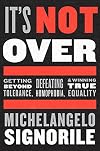
The message of It's Not Over is that we must not be seduced by claim of "victory blindness," or "the illusion that we've almost won" and that gays' rights is an inevitable outcome. We should therefore be "magnanimous" in our success, and overlook minor slights and residual, passing inequities. Instead, says Signorile, we should continue to press our case for full equality. "Anything less than full acceptance and full civil rights must be defined as an expression of bias," and treated as show more such. This book is a quick and inspiring read, and should prove provocative and inspiring in sufficient measures.
The book is at its best when recounting anecdotes from callers and guests to the author's radio program, recounting acts of prejudice and violence in this supposed age of impending victory. A surprising section argues why incrementalism is not a defensible path to the achievement of civil rights. Surprising not because it is new (it's not: http://works.bepress.com/james_donovan/28/), but because it has taken mainstream activists so long to recognize this fact.
The problems spring first from the narrative's inconsistent focus. Signorile cannot decide who is his primary audience: sometimes he speaks to movement leaders, others to grassroots activists, and still others to industry allies and society at large. This shifting focus prevents the book from presenting a coherent argument, staying instead at the level of offering connected but independent variations on the initial theme. A stronger editor may have been able to channel the effort into a single crescendoing argument rather than monotonic variations on the motif.
Another disturbing undercurrent is that Signorile seems blissfully unaware concerning the realities for gay men and women outside his New York City cocoon. While it is all good and well for a yuppie in a gay mecca to advise readers to "Settle for nothing less than full civil rights," sometimes that's just not possible while still expecting to survive. "Covering" remains for many a prudent strategy, even given its shortcomings as a general movement plan. Signorile comes off as exceedingly condescending when he writes in ignorance of these existential realities. A little less parochialism would have benefited this book significantly. show less
The book is at its best when recounting anecdotes from callers and guests to the author's radio program, recounting acts of prejudice and violence in this supposed age of impending victory. A surprising section argues why incrementalism is not a defensible path to the achievement of civil rights. Surprising not because it is new (it's not: http://works.bepress.com/james_donovan/28/), but because it has taken mainstream activists so long to recognize this fact.
The problems spring first from the narrative's inconsistent focus. Signorile cannot decide who is his primary audience: sometimes he speaks to movement leaders, others to grassroots activists, and still others to industry allies and society at large. This shifting focus prevents the book from presenting a coherent argument, staying instead at the level of offering connected but independent variations on the initial theme. A stronger editor may have been able to channel the effort into a single crescendoing argument rather than monotonic variations on the motif.
Another disturbing undercurrent is that Signorile seems blissfully unaware concerning the realities for gay men and women outside his New York City cocoon. While it is all good and well for a yuppie in a gay mecca to advise readers to "Settle for nothing less than full civil rights," sometimes that's just not possible while still expecting to survive. "Covering" remains for many a prudent strategy, even given its shortcomings as a general movement plan. Signorile comes off as exceedingly condescending when he writes in ignorance of these existential realities. A little less parochialism would have benefited this book significantly. show less
It's Not Over: Getting Beyond Tolerance, Defeating Homophobia, and Winning True Equality by Michelangelo Signorile

Signorile’s summary of the campaign for LGBT+ rights in the USA as it stood in mid 2015, in the immediate aftermath of the Supreme Court‘s Obergefell decision affirming marriage equality. He points out the many challenges still ahead, and the dangers from right-wing groups all too ready to find new ways of oppressing those who don’t match their vision of the world. And of course he couldn‘t even know at the time of writing that the US would be facing four years of Trump show more horror…
Apart from the interesting historical snapshot, Signorile makes some good points about strategy, in particular the importance of not allowing ourselves to be pressured into “covering”, i.e. conforming outwardly to social pressure in order to stay below the radar. As far as he is concerned — and he’s probably right — the only way to fight injustice is to stand up for yourself and make a noise whenever it happens. We can’t always rely on other people doing that for us, unfortunately. show less
Apart from the interesting historical snapshot, Signorile makes some good points about strategy, in particular the importance of not allowing ourselves to be pressured into “covering”, i.e. conforming outwardly to social pressure in order to stay below the radar. As far as he is concerned — and he’s probably right — the only way to fight injustice is to stand up for yourself and make a noise whenever it happens. We can’t always rely on other people doing that for us, unfortunately. show less

Queer in America is a monumental work, equal parts first-hand history and polemic, and impossible to ignore. First published almost two decades ago, Signorile's book -- his first -- has deeply influenced LGBT activists, politicians, and the public. His analysis of the closet is at times overwrought, but nevertheless rings true for anyone who has ever been there. The pressure to stay in, not just because of potential disapproval, but also because of the multitude of benefits only available to show more the perceived heterosexual. Family acceptance, business and political success, fame, and security are all powerful possibilities keeping the closeted where they are. You will not find a more cogently-argued, closet-busting piece of writing anywhere. For that, it is deservedly a classic.
But what about those who were, at the time, closeted? For them, along comes -- according to Signorile -- mostly Signorile. While there is no doubting his enormous influence, then and now, perhaps the most frustrating yet compelling aspect of Queer in America is the extremely personal engagement of its author in the central controversies of the narrative. From ACT-UP to outing Pete Williams and Malcolm Forbes, Signorile chronicles events in which he played a major role. On one hand, his reportage is often gripping and always educational; on the other hand, he also brings a big bag full of personal grudges to be settled. I wish more people took his utter demolition of Andrew Sullivan seriously, but his ire is often aimed at the less-visible and less-noxious, and could be off-putting to a reader without background knowledge of the political and cultural terrain which Queer in America covers. show less
But what about those who were, at the time, closeted? For them, along comes -- according to Signorile -- mostly Signorile. While there is no doubting his enormous influence, then and now, perhaps the most frustrating yet compelling aspect of Queer in America is the extremely personal engagement of its author in the central controversies of the narrative. From ACT-UP to outing Pete Williams and Malcolm Forbes, Signorile chronicles events in which he played a major role. On one hand, his reportage is often gripping and always educational; on the other hand, he also brings a big bag full of personal grudges to be settled. I wish more people took his utter demolition of Andrew Sullivan seriously, but his ire is often aimed at the less-visible and less-noxious, and could be off-putting to a reader without background knowledge of the political and cultural terrain which Queer in America covers. show less
It's Not Over: Getting Beyond Tolerance, Defeating Homophobia, and Winning True Equality by Michelangelo Signorile
Well written with lots of important statistics and anecdotal accounts of homophobia and examples of how it has been dealt with. The major theme of the book is that even though there have been great victories in LGBT rights, we cannot rest on our laurels. Even though many rights have been gained, such as the right to same sex marriage, the culture is still largely homophobic, either explicitly or implicitly. He also introduces the concept of "covering," where LGBT individuals will just let show more various amounts of prejudiced behavior pass without confronting it, or they will behave in ways that sort of mute their LGBT status to reduce the amount of homophobic behavior they might experience. Signorile says that if we want true and lasting progress on LGBT rights, covering needs to stop. LGBT people need to live openly as LGBT and not accept homophobic behavior from others. It needs to be confronted regularly. Although I agree with the author on many of the things in this book, sometimes I think he might be coming on a bit too strongly. show less
Lists
Awards


You May Also Like


Associated Authors
Statistics
- Works
- 7
- Also by
- 1
- Members
- 1,070
- Popularity
- #24,040
- Rating
- 3.6
- Reviews
- 5
- ISBNs
- 21
- Favorited
- 2