
Andrew Holleran
Author of Dancer from the Dance
About the Author
Disambiguation Notice:
Please do not combine this author page with that of the writer on gay history and science fiction. Although they share a legal name, none of the books on Garber's author page were written by Holleran. Thank you.
Works by Andrew Holleran
Ties {short story} 1 copy
Associated Works
Boys Like Us: Gay Writers Tell Their Coming Out Stories (1996) — Contributor — 426 copies, 2 reviews
Wrestling with the Angel: Faith and Religion in the Lives of Gay Men (1995) — Contributor — 257 copies, 2 reviews
The Violet Quill Reader: The Emergence of Gay Writing After Stonewall (1994) — Contributor — 247 copies
In Search of Stonewall: The Riots at 50, The Gay and Lesbian Review at 25, Best Essays 1994-2018 (2019) — Contributor — 94 copies, 1 review
Tagged
Common Knowledge
- Canonical name
- Holleran, Andrew
- Legal name
- Garber, Eric
- Birthdate
- 1944
- Gender
- male
- Education
- Harvard University
- Occupations
- lecturer (Creative Writing)
- Organizations
- The Violet Quill
American University, Washington DC, USA - Awards and honors
- Publishing Triangle (Bill Whitehead Award for Lifetime Achievement, 2007)
- Nationality
- USA
- Birthplace
- Aruba
- Disambiguation notice
- Please do not combine this author page with that of the writer on gay history and science fiction. Although they share a legal name, none of the books on Garber's author page were written by Holleran. Thank you.
- Associated Place (for map)
- Aruba
Members
Reviews

That's how you know you've been in Florida too long — you no longer go to the beach.
The narrator of this book is a typical Holleran figure, a single gay man rather cut off from the humdrum provincial world around him. He has moved to a small town in northern Florida to look after his elderly parents and has somehow stuck there long after their deaths, well on his way into old age himself.
He can't find any good reason to be there: his parents' old neighbours are all gone, whatever natural show more attractions the region might have had once have all been destroyed by human activity, the cruising zones at the video store and the boat ramp are rarely frequented by anyone under sixty, and his only local gay friend, Earl, with whom he watches old movies once or twice a week, is well over eighty. The town isn't even convenient for shopping or airports. Yet he's somehow unable to bring himself to throw out his parents' stuff and sell up the house. Moving seems to carry an even greater threat of lonely old age than staying put. Maybe the only solution is Earl's strategy of putting himself in the hands of a fortune-hunting paid carer?
It's perhaps somehow ironic that Holleran, who started his career by celebrating the gay community's cult of youth and beauty, is the writer who now feels it his duty to warn us what happens to you in the end if you allow that aesthetic to become the sole basis on which you let love and companionship into your life. He's almost at the point of agreeing with our parents when they regretted how sad it was that we wouldn't have any children to look after us in old age.
Not a cheerful book, but near enough to the real lives of plenty of people I know that it can't be dismissed as unduly pessimistic. This is what old age is about for a lot of people: not just gay men. show less
The narrator of this book is a typical Holleran figure, a single gay man rather cut off from the humdrum provincial world around him. He has moved to a small town in northern Florida to look after his elderly parents and has somehow stuck there long after their deaths, well on his way into old age himself.
He can't find any good reason to be there: his parents' old neighbours are all gone, whatever natural show more attractions the region might have had once have all been destroyed by human activity, the cruising zones at the video store and the boat ramp are rarely frequented by anyone under sixty, and his only local gay friend, Earl, with whom he watches old movies once or twice a week, is well over eighty. The town isn't even convenient for shopping or airports. Yet he's somehow unable to bring himself to throw out his parents' stuff and sell up the house. Moving seems to carry an even greater threat of lonely old age than staying put. Maybe the only solution is Earl's strategy of putting himself in the hands of a fortune-hunting paid carer?
It's perhaps somehow ironic that Holleran, who started his career by celebrating the gay community's cult of youth and beauty, is the writer who now feels it his duty to warn us what happens to you in the end if you allow that aesthetic to become the sole basis on which you let love and companionship into your life. He's almost at the point of agreeing with our parents when they regretted how sad it was that we wouldn't have any children to look after us in old age.
Not a cheerful book, but near enough to the real lives of plenty of people I know that it can't be dismissed as unduly pessimistic. This is what old age is about for a lot of people: not just gay men. show less

How do people cope with grief? That's the subject of this small and lovely novel. The narrator, whose mother has recently died after a number of years in a nursing home ("Was it true, as the nurse had said, that families keep their loved ones alive even when the loved ones wish to go? Was that the dark, the nightmare, side of loving care?"), goes to Washington, D.C., as a visiting professor. His landlord has thoughtfully left a number of books in his room, including a volume of Mary Todd show more Lincoln's letters, on which he muses frequently.
I was very much engaged with this book, and found the use of Mrs. Lincoln as a foil for the narrator intriguing, particularly as I had recently visited the Lincoln Museum in Springfield (IL) and learned much about her that I had not known. It led me to agree with the narrator's landlord, as he describes a scene between Mrs. Lincoln and former Secretary of State William Seward. They meet on a train and he brings her a cup of tea, which she tosses out the window, "tucking her head down and shedding bitter tears”. “What a scene in a movie that would make!” said my landlord. He gazed into the garden. “Why has no one written an opera on this woman?" Good question!
This quote struck me: “What is better than reading in the same room or same house with someone at night? Reading is an activity both communal and separate. The lighted lamps, the quiet, the knowledge that my landlord was downstairs, all made me happy: the two of us seemed to constitute a household then; that home for which everyone is looking. In truth, of course, I felt my status as a boarder all the more keenly at such moments.” It contrasts with a similar image used by Paul Monette in his poem, "The House on King's Road":
the wall of books laid brick by brick the lamp
pooling on the blue-bound Plato as we held
our ground through August let the material go
what you cannot buy or have in your name
is the ghost of a touch the glancing stroke
as a man passes through a room where his love
sits reading later much later the nodding head
of the one on the other's shoulder no title
usurps that place this is its home forever
And another definition of home described in the book: “When Nureyev went back to Russia, he said, he was accosted by an old woman who asked him, “Where is home for you?” And Nureyev said, “Home? What is home?” And the babushka replied: “Where someone waits for you.”
I have shared experiences similar to this one: “Class was strange, I told him -- walking back I felt so drained by the seminar on Literature and AIDS, all I wanted to do was get home and lie down. The reason I said was this: That I was in a room once a week at a long table talking about something that for these students was simply a historical event being studied in a seminar made me recall, as I led the discussion, all the people who were no longer alive. Here I am, I frequently thought, sitting in a seminar in Washington, D.C., twenty years later, discussing as a historical event the thing that killed my friends.”
I do urge you to read this one. show less
I was very much engaged with this book, and found the use of Mrs. Lincoln as a foil for the narrator intriguing, particularly as I had recently visited the Lincoln Museum in Springfield (IL) and learned much about her that I had not known. It led me to agree with the narrator's landlord, as he describes a scene between Mrs. Lincoln and former Secretary of State William Seward. They meet on a train and he brings her a cup of tea, which she tosses out the window, "tucking her head down and shedding bitter tears”. “What a scene in a movie that would make!” said my landlord. He gazed into the garden. “Why has no one written an opera on this woman?" Good question!
This quote struck me: “What is better than reading in the same room or same house with someone at night? Reading is an activity both communal and separate. The lighted lamps, the quiet, the knowledge that my landlord was downstairs, all made me happy: the two of us seemed to constitute a household then; that home for which everyone is looking. In truth, of course, I felt my status as a boarder all the more keenly at such moments.” It contrasts with a similar image used by Paul Monette in his poem, "The House on King's Road":
the wall of books laid brick by brick the lamp
pooling on the blue-bound Plato as we held
our ground through August let the material go
what you cannot buy or have in your name
is the ghost of a touch the glancing stroke
as a man passes through a room where his love
sits reading later much later the nodding head
of the one on the other's shoulder no title
usurps that place this is its home forever
And another definition of home described in the book: “When Nureyev went back to Russia, he said, he was accosted by an old woman who asked him, “Where is home for you?” And Nureyev said, “Home? What is home?” And the babushka replied: “Where someone waits for you.”
I have shared experiences similar to this one: “Class was strange, I told him -- walking back I felt so drained by the seminar on Literature and AIDS, all I wanted to do was get home and lie down. The reason I said was this: That I was in a room once a week at a long table talking about something that for these students was simply a historical event being studied in a seminar made me recall, as I led the discussion, all the people who were no longer alive. Here I am, I frequently thought, sitting in a seminar in Washington, D.C., twenty years later, discussing as a historical event the thing that killed my friends.”
I do urge you to read this one. show less
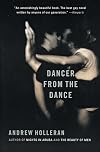
Don't give up on this novel halfway through, as I almost did. Even though in the middle stretches the characters become tiresome and the prose tries too hard to charm the reader, it all picks up again in the final quarter. The queens age and the death mentioned at the beginning approaches and the story derives some direction from both of these elements. There are a couple of quotable passages, too, so all in all reading this somewhat flawed book is an experience I'm glad I've had.
I read this book for a 20th Century Queer project, where I am reading 100 books for 100 years, one for each year in the 20th century.
I adored this novel. Which, I realise now, at the end of lots of period-accurate racism and fetishisation, is a position of privilege. This project has taught me that although reading 100 books from 100 years of LGBTQ history seems like a great idea and a wonderful exploration of my ancestors, uh, a lot of the people published during that time were cis, white, show more able-bodied, gay and for the most part racist, transphobic, biphobic and ableist. And whether it's the characters or the author, it hurt then, and it hurts now.
(Hence why I am determined to read, purchase and support LGBTQ living authors as well, but this is a train of thought you're not here for, you're here for the review).
Behold, Dancer from the Dance by Andrew Holleran. Dancer from the Dance begins with two letters between friends. One, still living in New York City, is updating his friend on the drama, the gossip and the hook ups and break ups. On page 12, it reads:
"I am in fact so depressed that last night while Bob Cjaneovic was sitting on my face, I began to think how futile life is, no matter what you do - it all ends in Death, we are given such a short time, and everything truly is, as Ecclesiastes says, Vanity, Vanity, Vanity. Of course, that only made be burrow deeper, but still - to have the thought!"
And from page 12, I was hooked. So many readers these days are tired of New York City as a setting for a book, and that I understand, but listen. Holleran brings New York to life in this novel. Few authors have so artfully rendered New York as the hot and heaving beast of my memory.
This long, sprawling book goes on and on and on about men shirtless in the summer, sleeping in parks because it's too hot to sleep in their apartment. Fire hydrants spewing water out into the street, and soda cans cooling in fridges of bodegas.
There's something Proustian about Holleran's writing, which feels odd to say, but he writes in such a worshipful way, going over every detail again and again with such care and attention that you can really feel the craft of it all.
“The greatest drug of all, my dear, was not one of those pills in so many colours that you took over the years, was not the opium, the hash you smoked in houses at the beach, or the speed or smack you shot up in Sutherland's apartment, no, it wasn't any of these. It was the city, darling, it was the city, the city itself. And do you see why I had to leave? As Santayana said, dear, artists are unhappy because they are not interested in happiness; they live for beauty. God, was that steaming, loathsome city beautiful!!! And why finally no human lover was possible, because I was in love with all men, with the city itself.”
The book certainly has its flaws. A lot of it sounds the same. The racism, the sex, and the characters just go on and on and ON. Sometimes it feels a little bit self-important, but somehow still satirical. It's a hard book to recommend, because either you'd love it or you wouldn't.
That is to say, this book is not a fast read, but a slow, meandering one. Complete with a nameless narrator in the style of Daphne du Maurier and I have to say it reminds me more of Henry James or any other great American author, perhaps a little like F Scott for all the excessive drinking, drugs and beautiful parties surrounded by beautiful people.
Glittering, gluttonous, how will we ever tell the dancer from the dance?
tw: racism, fetishisation, suicide (p. 220 or so) show less
I adored this novel. Which, I realise now, at the end of lots of period-accurate racism and fetishisation, is a position of privilege. This project has taught me that although reading 100 books from 100 years of LGBTQ history seems like a great idea and a wonderful exploration of my ancestors, uh, a lot of the people published during that time were cis, white, show more able-bodied, gay and for the most part racist, transphobic, biphobic and ableist. And whether it's the characters or the author, it hurt then, and it hurts now.
(Hence why I am determined to read, purchase and support LGBTQ living authors as well, but this is a train of thought you're not here for, you're here for the review).
Behold, Dancer from the Dance by Andrew Holleran. Dancer from the Dance begins with two letters between friends. One, still living in New York City, is updating his friend on the drama, the gossip and the hook ups and break ups. On page 12, it reads:
"I am in fact so depressed that last night while Bob Cjaneovic was sitting on my face, I began to think how futile life is, no matter what you do - it all ends in Death, we are given such a short time, and everything truly is, as Ecclesiastes says, Vanity, Vanity, Vanity. Of course, that only made be burrow deeper, but still - to have the thought!"
And from page 12, I was hooked. So many readers these days are tired of New York City as a setting for a book, and that I understand, but listen. Holleran brings New York to life in this novel. Few authors have so artfully rendered New York as the hot and heaving beast of my memory.
This long, sprawling book goes on and on and on about men shirtless in the summer, sleeping in parks because it's too hot to sleep in their apartment. Fire hydrants spewing water out into the street, and soda cans cooling in fridges of bodegas.
There's something Proustian about Holleran's writing, which feels odd to say, but he writes in such a worshipful way, going over every detail again and again with such care and attention that you can really feel the craft of it all.
“The greatest drug of all, my dear, was not one of those pills in so many colours that you took over the years, was not the opium, the hash you smoked in houses at the beach, or the speed or smack you shot up in Sutherland's apartment, no, it wasn't any of these. It was the city, darling, it was the city, the city itself. And do you see why I had to leave? As Santayana said, dear, artists are unhappy because they are not interested in happiness; they live for beauty. God, was that steaming, loathsome city beautiful!!! And why finally no human lover was possible, because I was in love with all men, with the city itself.”
The book certainly has its flaws. A lot of it sounds the same. The racism, the sex, and the characters just go on and on and ON. Sometimes it feels a little bit self-important, but somehow still satirical. It's a hard book to recommend, because either you'd love it or you wouldn't.
That is to say, this book is not a fast read, but a slow, meandering one. Complete with a nameless narrator in the style of Daphne du Maurier and I have to say it reminds me more of Henry James or any other great American author, perhaps a little like F Scott for all the excessive drinking, drugs and beautiful parties surrounded by beautiful people.
Glittering, gluttonous, how will we ever tell the dancer from the dance?
tw: racism, fetishisation, suicide (p. 220 or so) show less
Lists
Awards


You May Also Like


Associated Authors
Statistics
- Works
- 14
- Also by
- 35
- Members
- 2,985
- Popularity
- #8,548
- Rating
- 3.8
- Reviews
- 31
- ISBNs
- 69
- Languages
- 6
- Favorited
- 11

