
Edmund White (1940–2025)
Author of A Boy's Own Story
About the Author
Author Edmund White was born in Cincinnati, Ohio on January 13, 1940. He majored in Chinese at the University of Michigan. Before spending a year in Rome, he worked for Time-Life Books from 1962 until 1970. Upon his return, he became an editor for The Saturday Review and Horizon. He lived in France show more from 1983 until 1990. His works have chronicled gay life with such books as A Boy's Own Story, The Beautiful Room Is Empty, and The Farewell Symphony. (Bowker Author Biography) show less
Image credit: Edmund White on March 15, 1997 in Paris, France
Series
Works by Edmund White
The Joy of Gay Sex: An Intimate Guide for Gay Men to the Pleasures of a Gay Lifestyle (1977) 193 copies
Skinned Alive {short story} 1 copy
Jack Holmes and His Friend 1 copy
Il giovane Gatsby 1 copy
Aaron Copland 1 copy
Feliz Mendelssohn 1 copy
'Forster in Love: the story' in NYRB 61/17, 6 November 2014 [review of Galgut's 'Arctic Summer'] 1 copy
Shrinks 1 copy
Associated Works
Boys Like Us: Gay Writers Tell Their Coming Out Stories (1996) — Contributor — 426 copies, 2 reviews
The Art of the Story: An International Anthology of Contemporary Short Stories (1999) — Contributor — 395 copies, 5 reviews
Lost Classics: Writers on Books Loved and Lost, Overlooked, Under-read, Unavailable, Stolen, Extinct, or Otherwise Out of Commission (2000) — Contributor — 319 copies, 6 reviews
The Condé Nast Traveler Book of Unforgettable Journeys: Great Writers on Great Places (2007) — Contributor — 280 copies, 5 reviews
The Violet Quill Reader: The Emergence of Gay Writing After Stonewall (1994) — Contributor — 245 copies
The Vintage Book of Amnesia: An Anthology of Writing on the Subject of Memory Loss (2000) — Contributor — 228 copies, 2 reviews
Writers on Writing, 2: More Collected Essays from the New York Times (2003) — Contributor — 202 copies, 3 reviews
In Another Part of the Forest: An Anthology of Gay Short Fiction (1994) — Contributor — 193 copies, 2 reviews
Salvation Army (Semiotext(e) / Native Agents) (2006) — Introduction, some editions — 168 copies, 1 review
Men on Men 2000: Best New Gay Fiction for the Millennium (2000) — Contributor — 161 copies, 2 reviews
The Ecco Anthology of Contemporary American Short Fiction (2008) — Contributor — 141 copies, 2 reviews
Selected Writings Of Jean Genet (Ecco Companions) (1993) — Editor & Introduction — 112 copies, 1 review
The Dark End of the Street: New Stories of Sex and Crime by Today's Top Authors (2010) — Contributor — 97 copies, 22 reviews
In Search of Stonewall: The Riots at 50, The Gay and Lesbian Review at 25, Best Essays 1994-2018 (2019) — Contributor — 94 copies, 1 review
The Passion of Gengoroh Tagame: Master of Gay Erotic Manga, Vol. 1 (2013) — Introduction — 80 copies, 1 review
Mentors, Muses & Monsters: 30 Writers on the People Who Changed Their Lives (2009) — Contributor — 71 copies, 2 reviews
Positive Lives: Responses to HIV - A Photodocumentary (The Cassell Aids Awareness) (1993) — Foreword, some editions — 24 copies
Tagged
Common Knowledge
- Legal name
- White, Edmund Valentine, III
- Birthdate
- 1940-01-13
- Date of death
- 2025-06-03
- Gender
- male
- Education
- University of Michigan
- Occupations
- university teacher
journalist
novelist
essayist - Organizations
- Gay Men's Health Crisis / GMHC (cofounder)
The Violet Quill
Publishing Triangle (1989)
Princeton University - Awards and honors
- American Academy of Arts and Letters Academy Award ( [1983])
Fellowships from the Ingram Merrill Foundation ( [1976, 1978])
Guggenheim Fellowship (1983)
Officier de L’Ordre des Arts et des Lettres (French Government)
American Academy of Arts and Letters (1996)
Honorary doctorate, State University of New York at Oneonta (2000) (show all 8)
Festival of Deauville (France ∙ entire body of work)
Bill Whitehead Award for Lifetime Achievement (1989) - Agent
- Clegg, Bill
- Relationships
- Carroll, Michael (husband)
Sorin, Hubert (partner) - Cause of death
- natural causes
- Nationality
- USA
- Birthplace
- Cincinnati, Ohio, USA
- Places of residence
- Cincinnati, Ohio, USA
Chicago, Illinois, USA
France
New York, New York, USA
Rome, Italy - Place of death
- New York, New York, USA
- Map Location
- Ohio, USA
Members
Reviews
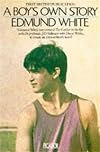
"What I wanted was to be loved by men and love them back but not to be a homosexual"
By sally tarbox on 3 June 2018
Format: Paperback
Very readable and vivid account of the author's teens, growing up gay when such things were not discussed. His efforts to date a girl, to tell himself he's just going through a phase, while spending his days yearning for men.
Yet while homosexuality is not openly mentioned, it's going on all around him, from a neighbour's young son to his classmates and show more teachers... He dabbles in religion and psychoanalysis; he contends with a rather dysunctional broken family.
I thought his descriptions of his insecure mother were fabulous:
-"You're handsome and intelligent."
-"Handsome! With these big nostrils?"
-"Oh, that's just your sister. She's so frustrated she has to pick on you. There's nothing wrong with your nostrils. At least I don't see anything wrong. Of course, I know you too well. If you like, we could consult a nose doctor". A long pause. "Nostrils...Do people generally dwell on them? I mean, do people think about them a lot?" Smal high voice: "Are mine okay?"
A hopeless silence.
White's evocation of adolescence, the efforts to fit in, be popular will strike a note with readers whatever their gender or sexual orientation. show less
By sally tarbox on 3 June 2018
Format: Paperback
Very readable and vivid account of the author's teens, growing up gay when such things were not discussed. His efforts to date a girl, to tell himself he's just going through a phase, while spending his days yearning for men.
Yet while homosexuality is not openly mentioned, it's going on all around him, from a neighbour's young son to his classmates and show more teachers... He dabbles in religion and psychoanalysis; he contends with a rather dysunctional broken family.
I thought his descriptions of his insecure mother were fabulous:
-"You're handsome and intelligent."
-"Handsome! With these big nostrils?"
-"Oh, that's just your sister. She's so frustrated she has to pick on you. There's nothing wrong with your nostrils. At least I don't see anything wrong. Of course, I know you too well. If you like, we could consult a nose doctor". A long pause. "Nostrils...Do people generally dwell on them? I mean, do people think about them a lot?" Smal high voice: "Are mine okay?"
A hopeless silence.
White's evocation of adolescence, the efforts to fit in, be popular will strike a note with readers whatever their gender or sexual orientation. show less

Edmund White’s last published fiction is a novel of sexual obsession, like some of his earliest books. But, in his eighties, he doesn’t take it quite so seriously. When octogenarian patrician ballet queen Aldwych West becomes infatuated with the brilliant young French-Canadian dancer August, White is quite prepared to share the reader’s sense of how absurd the situation is, particularly when West’s Proustian niece-by-marriage Ernestine makes a play for August herself, and the comedy show more turns rather dark.
There seem to be a lot of in-jokes here that you would have to be a balletomane and a New York socialite to appreciate, and there are also positively 1970s quantities of (deliberately grotesque) sex-scenes punctuating the text: White clearly doesn’t need to care any more at this point in his life whom he might upset, and is having fun going too far wherever he likes.
Insofar as there is a message here, it seems to be to remind us that the power of the idea of love and sex goes on long after our ability to pursue it in practice. Or perhaps simply that there’s no fool like an old fool…
Fun, up to a point, but not for the squeamish. show less
There seem to be a lot of in-jokes here that you would have to be a balletomane and a New York socialite to appreciate, and there are also positively 1970s quantities of (deliberately grotesque) sex-scenes punctuating the text: White clearly doesn’t need to care any more at this point in his life whom he might upset, and is having fun going too far wherever he likes.
Insofar as there is a message here, it seems to be to remind us that the power of the idea of love and sex goes on long after our ability to pursue it in practice. Or perhaps simply that there’s no fool like an old fool…
Fun, up to a point, but not for the squeamish. show less

Edmund White is in an unusually jolly mood in this darkly comic satire about a pair of twin sisters from the outskirts of Dallas. It sometimes feels rather like Nancy Mitford's retelling of The Power and the Glory as we follow narrator Yvonne's shameless social climbing from forties Texas suburban nouveau-riche to Parisian gratin against the background of her sister Yvette's equally challenging and oddly parallel quest for humility and saintliness in a Colombian convent (that's "Why-von" and show more "Why-vet" if you're from Texas, BTW).
The set-up gives White the chance to play around with ideas about the problem of attributing "saintliness" to an actual, complex human being who has lived in the modern world, and to wonder whether the religious life doesn't involve just as much social climbing and backstabbing as more worldly careers. And also about how much rewriting and expurgation inevitably goes into any kind of biography.
But the main raison-d'être of the book is clearly to allow White to make fun of his aristocratic friends in France. It's full of ironic observations of the manners of the French upper classes, and wicked little sketches of people we would obviously recognise if we'd moved in the right circles back in the day. And a certain amount of name-dropping-with-hindsight ("Tell me about this Jacqueline Bouvier." — "She's nobody."). I particularly enjoyed White's send-up of the contemporary music world — Yvonne starts to hold musical salons, inviting the most appalling and deafening avant-garde composers she can find, and of course Paris society can't get enough of it.
Very entertaining. show less
The set-up gives White the chance to play around with ideas about the problem of attributing "saintliness" to an actual, complex human being who has lived in the modern world, and to wonder whether the religious life doesn't involve just as much social climbing and backstabbing as more worldly careers. And also about how much rewriting and expurgation inevitably goes into any kind of biography.
But the main raison-d'être of the book is clearly to allow White to make fun of his aristocratic friends in France. It's full of ironic observations of the manners of the French upper classes, and wicked little sketches of people we would obviously recognise if we'd moved in the right circles back in the day. And a certain amount of name-dropping-with-hindsight ("Tell me about this Jacqueline Bouvier." — "She's nobody."). I particularly enjoyed White's send-up of the contemporary music world — Yvonne starts to hold musical salons, inviting the most appalling and deafening avant-garde composers she can find, and of course Paris society can't get enough of it.
Very entertaining. show less

Edmund White's lockdown novel starts from a new take on the Decameron idea: a married couple, stuck in their ski-chalet at Sils Maria because the husband has broken his leg, decide to amuse themselves by writing down and then reading aloud to each other accounts of their previous sexual relationships. Both Constance (American and 30) and Ruggero (Sicilian and 70) have previous marriages and a selection of interesting lovers of both genders behind them, but the clou is that back in 2018, when show more he was only forty, Ruggero had a passionate affair with a now-forgotten American writer called Edmund White, then in his late seventies. Yes, that's right, we seem to be in the 2050s, although this clearly isn't science-fiction, and the world has changed remarkably little since the 2020s.
Because Constance and Ruggero are educated people but not novelists, and because they are meant to be writing only for their mutual amusement, White has the excuse to give us a lot of carefully calculated "bad" writing, much of it shamelessly pornographic. At times, especially in Ruggero's teenage memories, he seems to be parodying his own overwrought writing from the Boy's own story era — "At the same moment we had peeled down our mutande, releasing our hard Sicilian cocks like overeager hunting dogs." (Of course, he's only using the Italian word for underpants because it gives him an excuse to make that terrible middle-class-gay-dinner-party joke about mutatis mutandis...)
There is maybe a bit of a serious point behind all the raunchiness, as White reflects on the many ways old age makes both love and sex more difficult without noticeably reducing our need for them. He makes fun of his unappetising old man's body and its weaknesses, but he wants us to understand that he's still as happy to fantasise about hard Sicilian cocks as he was when he was fourteen. And there's also an extended joke about the way it's more often than not the discarded lovers who get to define how you will be remembered after your death...
Fun, although I was getting very bored with Ruggero's arrogant voice by the end of the book. show less
Because Constance and Ruggero are educated people but not novelists, and because they are meant to be writing only for their mutual amusement, White has the excuse to give us a lot of carefully calculated "bad" writing, much of it shamelessly pornographic. At times, especially in Ruggero's teenage memories, he seems to be parodying his own overwrought writing from the Boy's own story era — "At the same moment we had peeled down our mutande, releasing our hard Sicilian cocks like overeager hunting dogs." (Of course, he's only using the Italian word for underpants because it gives him an excuse to make that terrible middle-class-gay-dinner-party joke about mutatis mutandis...)
There is maybe a bit of a serious point behind all the raunchiness, as White reflects on the many ways old age makes both love and sex more difficult without noticeably reducing our need for them. He makes fun of his unappetising old man's body and its weaknesses, but he wants us to understand that he's still as happy to fantasise about hard Sicilian cocks as he was when he was fourteen. And there's also an extended joke about the way it's more often than not the discarded lovers who get to define how you will be remembered after your death...
Fun, although I was getting very bored with Ruggero's arrogant voice by the end of the book. show less
Lists
Awards


You May Also Like


Associated Authors
Statistics
- Works
- 68
- Also by
- 69
- Members
- 13,119
- Popularity
- #1,779
- Rating
- 3.9
- Reviews
- 192
- ISBNs
- 377
- Languages
- 17
- Favorited
- 41


