
Ned Rorem (1923–2022)
Author of The Paris Diary & The New York Diary 1951-1961
About the Author
Ned Rorem is one of America's fore-most living composers
Image credit: Berkshire Fine Arts
Works by Ned Rorem
War Scenes 6 copies
O you whom I often and silently come 3 copies
Ned Rorem Sally's Smile (High) Score 2 copies
Praise the Lord, O My Soul 2 copies
Songs 2 copies
Our Town [programme book] 1 copy
Ned Rorem: Women's Voices 1 copy
The Santa Fe Songs - Twelve poems of Witter Bynner for medium voice, violin, viola, cello and piano (2013) 1 copy
Ned Rorem Memory Score 1 copy
Trios, piano, flute, cello 1 copy
Trio 1 copy
Romeo & Juliet 1 copy
Memory 1 copy
The Waking 1 copy
Song For A Girl 1 copy
A Christmas Carol 1 copy
Pippa's Song 1 copy
Early in the Morning 1 copy
Poems of Love and the Rain 1 copy
In the Gondola 1 copy
A Journey 1 copy
I Am Rose 1 copy
Alleluia 1 copy
Spring Music 1 copy
Works for choir and organ 1 copy
Ned Rorem : an interview 1 copy
In Time of Pestilence 1 copy
Prayers and Responses 1 copy
Song & Dance 1 copy
The works of Ned Rorem 1 copy
Day music/night music 1 copy
Ned Rorem/John Corigliano 1 copy
Hearing: 32 Songs 1 copy
Piano album 1 copy
The Sonata Fe songs 1 copy
Three poems of Baudelaire 1 copy
Boosey and Hawkes Picnic on the Marne (Alto Saxophone and Piano) Boosey & Hawkes Chamber Music Series by Ned Rorem (1984) 1 copy
String Symphony 1 copy
Three Calamus Poems 1 copy
Little Prayers 1 copy
Love Alone 1 copy
Whitman Cantata 1 copy
All glorious God 1 copy
Surge, Illuminare 1 copy
Childhood Miracle 1 copy
Exaltabo te, Domine 1 copy
Concerto for English horn 1 copy
Associated Works
The Assassin's Cloak: An Anthology of the World's Greatest Diarists (2000) — Contributor, some editions — 623 copies, 9 reviews
Conjunctions: 46, Selected Subversions: Essays on the World at Large (2006) — Contributor — 10 copies
Antaeus No. 29, Spring 1978 — Contributor — 2 copies
Tagged
Common Knowledge
- Birthdate
- 1923-10-23
- Date of death
- 2022-11-18
- Gender
- male
- Education
- Northwestern University
Curtis Institute of Music
Juilliard School (M.A.|1948) - Occupations
- composer
pianist
diarist - Organizations
- American Academy of Arts and Letters (Music, 1979)
- Awards and honors
- American Academy of Arts and Letters Academy Award (Music, 1968)
Gold Medal, American Academy of Arts and Letters (Music, 2003) - Nationality
- USA
- Birthplace
- Richmond, Indiana, USA
- Places of residence
- Richmond, Indiana, USA
Chicago, Illinois, USA
Philadelphia, Pennsylvania, USA
New York, New York, USA
Paris, France - Associated Place (for map)
- USA
Members
Reviews

Well, that was fun! Ned Rorem fills in the first 27 years of his life, the part before the published diaries start. His childhood and adolescence in an academic, Quaker family in Chicago’s Hyde Park, his early days in the musical world of 1940s Philadelphia and New York, and his subsequent adventures in Paris, Morocco and the South of France in the early fifties. We meet just about everyone who was anybody in the world of classical music and the arts generally — in New York starting with show more Leonard Bernstein, Billie Holiday and Virgil Thomson, in Paris with Poulenc, Cocteau and Georges Auric.
Most of those he becomes close to are women or gay men, as you might expect, and we get plenty of delightfully naughty gossip about all of them, especially the ones he quarrelled with or didn‘t approve of. John Cage gets a particularly hard time. Rorem also loved to spar publicly with Truman Capote (he describes it with hindsight as ‘kindergartners flinging mudpies’), but seems to have respected him as a writer despite that. Pierre Boulez evokes similarly mixed reactions — Rorem approved of him as a conductor, but, being unrepentantly tonal in his own work, disliked Boulez’s autocratic dictating of musical orthodoxy. Things do occasionally descend into bitchiness, but thirty years on and with no personal stake in any of this, it made me giggle frequently as I read.
What’s less appealing, but obviously necessary, is Rorem’s attempt to analyse his own character and behaviour as a young man. Notoriously beautiful, he clearly got too used to his face being enough to open any door he chose — he used to enclose shirtless photos of himself with fan letters to the great and famous. He also got far too used to partying and damaged himself and the people around him with alcohol and anonymous sex, although he does seem to have been canny enough to withdraw himself from the party zone from time to time to do some sustained creative work, and eventually had the strength of mind to give up booze altogether. But his record of incessant drinking binges, men picked up in bars and urinals, and romantic moments ruined by vomiting or passing out get a bit much after 500 pages or so.
Also slightly disturbing — although perhaps inevitable in a book written nearly forty years later — is his habit of telling us almost as soon as he introduces a new character about whatever grisly end they came to: “a few years later he killed himself”; “she ended up as a dietician at a mid-western college and died forgotten” (oddly, this seems to have happened to two people in different chapters); “we never saw Martinu again, but he lived in continual pain until his death thirteen years later”. And so on.
Not the best memoir I’ve ever read, then, but a very enjoyable one, and also full of interesting background about a period in (musical) history I only know about very patchily.
Most of those he becomes close to are women or gay men, as you might expect, and we get plenty of delightfully naughty gossip about all of them, especially the ones he quarrelled with or didn‘t approve of. John Cage gets a particularly hard time. Rorem also loved to spar publicly with Truman Capote (he describes it with hindsight as ‘kindergartners flinging mudpies’), but seems to have respected him as a writer despite that. Pierre Boulez evokes similarly mixed reactions — Rorem approved of him as a conductor, but, being unrepentantly tonal in his own work, disliked Boulez’s autocratic dictating of musical orthodoxy. Things do occasionally descend into bitchiness, but thirty years on and with no personal stake in any of this, it made me giggle frequently as I read.
What’s less appealing, but obviously necessary, is Rorem’s attempt to analyse his own character and behaviour as a young man. Notoriously beautiful, he clearly got too used to his face being enough to open any door he chose — he used to enclose shirtless photos of himself with fan letters to the great and famous. He also got far too used to partying and damaged himself and the people around him with alcohol and anonymous sex, although he does seem to have been canny enough to withdraw himself from the party zone from time to time to do some sustained creative work, and eventually had the strength of mind to give up booze altogether. But his record of incessant drinking binges, men picked up in bars and urinals, and romantic moments ruined by vomiting or passing out get a bit much after 500 pages or so.
Also slightly disturbing — although perhaps inevitable in a book written nearly forty years later — is his habit of telling us almost as soon as he introduces a new character about whatever grisly end they came to: “a few years later he killed himself”; “she ended up as a dietician at a mid-western college and died forgotten” (oddly, this seems to have happened to two people in different chapters); “we never saw Martinu again, but he lived in continual pain until his death thirteen years later”. And so on.
Not the best memoir I’ve ever read, then, but a very enjoyable one, and also full of interesting background about a period in (musical) history I only know about very patchily.
An artist works because there's nothing else to do; whatever else he tries will make him sick. However, one might add that much of the "else" feeds his art: brandy, sex, and oversleeping, as well as books and paint and country sunshine, not to mention procrastination — all this serves as fodder.show less
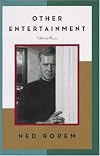
Ned Rorem has had a celebrated career as a composer and a diarist, but he has also contributed many pieces to contemporary publications reviewing books, the lives of famous artists, and his experiences in the art community. Other Entertainment is a collection of such pieces ranging from 1978 to 1995. In it, Rorem discusses—among other things—his views on Kazuo Ishiguro’s The Unconsoled, the Frenchness of Jean Cocteau, an overview of American opera, and even small vignettes on those who show more passed in his lifetime (including Aaron Copland).
These pieces, while originally published in 1996, seem better than some of the book reviews being done today. The tone is all at once dignified, jocular, breezy, and learned. It’s hard to maintain such a voice for very long, but Rorem’s essays were very pleasureable to read, especially since I didn’t really know a lot about some of his subjects. This seems almost like the kind of book you would read to prep for a dinner party; you could trot out many of the opinions in the book without seeming too pompous. The other thing that surprised me was that I thought the world didn’t have any more diarists. I figured Samuel Pepys was the last real famous person to have a published diary. I guess you learn something new every day. A quaint and intriguing read. show less
These pieces, while originally published in 1996, seem better than some of the book reviews being done today. The tone is all at once dignified, jocular, breezy, and learned. It’s hard to maintain such a voice for very long, but Rorem’s essays were very pleasureable to read, especially since I didn’t really know a lot about some of his subjects. This seems almost like the kind of book you would read to prep for a dinner party; you could trot out many of the opinions in the book without seeming too pompous. The other thing that surprised me was that I thought the world didn’t have any more diarists. I figured Samuel Pepys was the last real famous person to have a published diary. I guess you learn something new every day. A quaint and intriguing read. show less
A varietal collection of essays that spans the worlds of music and literature - this is just what you would expect from Ned Rorem. When he was not writing he was composing beautiful music and vice versa. I would recommend this collection to any music lover on the assumption that they would be literary fans as well.
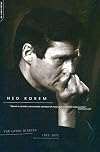
It does seem churlish to criticize a diarist for being self-centered, but there's something missing here that prevents the "Later Diaries" of the 1960s from being as interesting as they could have been or should have been. And maybe it is that Ned Rorem was so wrapped up in his own personal life with its rather minor accomplishments and frustrations that he failed to see what was going on around him. I mean: the 1960s! The youth rebellion, the Vietnam War, Race Riots in the cities. He does show more write a little bit about Rock and Roll music, for which I give him some credit, but there is no sense that he appreciated the significance of the tumultuous decade that the time frame of this publication encompasses.
Rorem combines discretion and indiscretion in a peculiar manner. There's something "chilly" as he recounts (like Don Giovanni) his thousands of sexual encounters in his twenties and thirties - it seems as if these were accomplished through compulsion, without any true significance or meaning. At a certain point in the decade represented here, he appears to have foresworn further sexual encounters, but it's not really clear why or when he does so. Moreover, by the early 1970s he seems to have entered into a long term committed emotional relationship with a younger man, JH (Jimmy Holmes, as identified in the photographs), but there is no elaboration or explanation.
Then there's the recurrent self-pity, which is rather unappealing in a man who is living a comfortable upper-middle class lifestyle in Mid-Manhattan, without personal tragedy or major illness. He's getting older and is not quite as beautiful as he used to be! Alas.
Rorem is most interesting in writing about his friends and rivals who were also active composers of the time: Copland, Menotti, Bernstein, Boulez - they all show up here and Rorem has interesting things to say about them.
If you are looking to read the journals of a prominent gay artist in the 1960s, I would recommend the Diaries of Cecil Beaton. Beaton no doubt was "bitchier" and probably a lot harder to get along with, but the Beaton Diaries give a better sense of what it is was like to be a middle aged gay artist in the 1960s. (Admittedly Beaton was a visual artist, and 18 years older than Rorem, but he actually seems to have had a lot more young friends than the composer.) show less
Rorem combines discretion and indiscretion in a peculiar manner. There's something "chilly" as he recounts (like Don Giovanni) his thousands of sexual encounters in his twenties and thirties - it seems as if these were accomplished through compulsion, without any true significance or meaning. At a certain point in the decade represented here, he appears to have foresworn further sexual encounters, but it's not really clear why or when he does so. Moreover, by the early 1970s he seems to have entered into a long term committed emotional relationship with a younger man, JH (Jimmy Holmes, as identified in the photographs), but there is no elaboration or explanation.
Then there's the recurrent self-pity, which is rather unappealing in a man who is living a comfortable upper-middle class lifestyle in Mid-Manhattan, without personal tragedy or major illness. He's getting older and is not quite as beautiful as he used to be! Alas.
Rorem is most interesting in writing about his friends and rivals who were also active composers of the time: Copland, Menotti, Bernstein, Boulez - they all show up here and Rorem has interesting things to say about them.
If you are looking to read the journals of a prominent gay artist in the 1960s, I would recommend the Diaries of Cecil Beaton. Beaton no doubt was "bitchier" and probably a lot harder to get along with, but the Beaton Diaries give a better sense of what it is was like to be a middle aged gay artist in the 1960s. (Admittedly Beaton was a visual artist, and 18 years older than Rorem, but he actually seems to have had a lot more young friends than the composer.) show less
Awards


You May Also Like


Associated Authors
Statistics
- Works
- 137
- Also by
- 6
- Members
- 1,083
- Popularity
- #23,732
- Rating
- 4.1
- Reviews
- 13
- ISBNs
- 54
- Languages
- 2
- Favorited
- 1