
Anaïs Nin (1903–1977)
Author of Delta of Venus
About the Author
Anaïs Nin 1903-1977 Writer and diarist Anaïs Nin was born February 21, 1903 in Neuilly, France to a Catalan father and a Danish mother. She spent many of her childhood years with her Cuban relatives. Later, she became a naturalized American citizen. Nin is best known for her journals,"The Diary show more of Anais Nin, Vols. I-VII" and her erotic fiction. In fact, Nin was one of the raliest writers of erotica for women. She also wrote the book Henry and June, which was made into a movie of the same name in 1990. In 1973 Anaïs Nin received an honorary doctorate from the Philadelphia College of Art. She was elected to the United States National Institute of Arts and Letters in 1974. She died of cancer in Los Angeles, California, on January 14, 1977. (Bowker Author Biography) show less
Image credit: Anaïs Nin, c. 1960s.
Series
Works by Anaïs Nin
The Mystic of Sex and Other Writings [A First Look At D. H. Lawrence, uncollected writings 1931-1974] (1995) 37 copies
The Veiled Woman (PENGUIN MODERN) 29 copies
The White Blackbird and Other Writings / The Tale of an Old Geisha and Other Stories (1985) 10 copies
The diary of Anas̐ Nin 9 copies
7 Volume SET the Diary of Anais Nin 1943 Thru 1974 (The Diary of Anais, Volume 1, Volume 2, Volume 3, Volume 4, Volume 5, Volume 6 , Volume 7) (1975) 6 copies
The Queen 4 copies
The Diary of Anais Nin, 1944-1947 4 copies
A Model [short story] 3 copies
The Woman on the Dune 3 copies
Delta Of Venus: Erotica by Anaïs Nin 3 copies
On Writing 2 copies
Great Voices Audio Collection/Anais Nin, Ernest Hemingway, James Joyce, E.E. Cummings (1993) 2 copies
The Hungarian Adventurer 2 copies
Mandra 2 copies
Linda 2 copies
Runaway 2 copies
Saffron 2 copies
The Chanchiquito 2 copies
Hilda And Rango 2 copies
Sirocco 2 copies
Two Sisters 2 copies
Lina 2 copies
Marcel 2 copies
Manuel 2 copies
La campana di vetro e altri racconti 2 copies
Pierre 2 copies
The Basque And Bijoe 2 copies
Marianne 2 copies
Lilith 2 copies
Mallorca 2 copies
The Ring 2 copies
The Boarding School 2 copies
Mathilde 2 copies
Solar Barque 2 copies
The Maja 2 copies
La Casa Dell' Incesto 1 copy
Journal 1913 - 1934 1 copy
A Child Born Out of the Fog 1 copy
Anaïs Nin 1 copy
Little Birds [short story] 1 copy
Izabrane priče 1 copy
Anais Nin - Sanftmut des Zorns - Was es heißt, Frau zu sein. Vorträge, Seminare u. Interviews. 1. Auflage (1979) 1 copy
Anais Nin DELTA OF VENUS Erotica 1977 Harcourt Brace Jovanovich, NY Book Club Ed [Hardcover] unknown (1904) 1 copy
La séduction du minotaure 1 copy
Set of 4 Erotica ~ Delta of Venus ~ Little Birds ~ The Sexual Life of Catherine M. ~ Women on Top 1 copy
Pájaros de fuego 1 copy
Delta Of Venus: The Landmark Feminist Erotica Collection—Provocative Short Stories of Sensuality 1 copy
Racconti erotici 1 copy
Anaïs Nin Journal 1944-1947 1 copy
The White Blackbird 1 copy
The journals of Anais Nin 1 copy
The journals of Anaïs Nin — Author — 1 copy
Nin, Anais Archive 1 copy
Henry 1 copy
Tajne sveske 1 copy
Im Zeichen der Venus. Frauen schreiben erotische Geschichten ( Anthologie). (2001) — Contributor — 1 copy
Unaðsreitur gleðisögur 1 copy
Briefe der Leidenschaft 1932 - 1953. Das Zeugnis einer einzigartigen literarischen und erotischen Beziehung (1989) 1 copy
Anais Nin Reads 1 copy
Corazón Cuarteado 1 copy
Anaïs Nin par elle-même 1 copy
Journal (4 tomos, 1931-1947) 1 copy
Delta de Venus: Selección 1 copy
Associated Works
The Assassin's Cloak: An Anthology of the World's Greatest Diarists (2000) — Contributor, some editions — 623 copies, 9 reviews
Chloe Plus Olivia: An Anthology of Lesbian Literature from the 17th Century to the Present (1994) — Contributor — 482 copies, 1 review
Drinking, Smoking and Screwing: Great Writers on Good Times (1994) — Contributor — 354 copies, 5 reviews
The Graphic Canon, Vol. 3: From Heart of Darkness to Hemingway to Infinite Jest (2013) — Contributor — 162 copies, 1 review
Daughters of Latin America: An International Anthology of Writing by Latine Women (2023) — Contributor — 41 copies, 1 review
Rediscoveries: Informal Essays in Which Well-Known Novelists Rediscover Neglected Works of Fiction by One of Their Favorite Authors (1971) — Contributor — 27 copies
Works in Progress Number 4: Selections from the Best in Books to be Published in Coming Months (1971) — Contributor — 7 copies
American Aphrodite: A Quarterly for the Fancy Free (Volume 5, Number 19) (1955) — Contributor — 2 copies
Oyez Review : Vol. 8, No. 1 — Contributor — 1 copy
Tagged
Common Knowledge
- Canonical name
- Nin, Anaïs
- Legal name
- Nin y Culmell, Angela Anaïs Juana Antolina Rosa Edelmira
- Birthdate
- 1903-02-21
- Date of death
- 1977-01-14
- Gender
- female
- Occupations
- novelist
short story writer
diarist - Organizations
- National Institute of Arts and Letters (USA) (1974)
- Awards and honors
- Honorary Doctorate (Philadelphia College of Art, 1973)
American Academy of Arts and Letters (Literature, 1974) - Relationships
- Miller, Henry (Liebhaber)
Hugo, Ian (husband)
Nin, Joaquin (father)
Nin-Culmell, Joaquín (brother) - Cause of death
- cancer (cervical)
- Nationality
- USA
- Birthplace
- Neuilly-sur-Seine, France
- Places of residence
- Neuilly, France
Barcelona, Spain
New York, New York, USA
Paris, Île-de-France, France
Los Angeles, California, USA - Place of death
- Los Angeles, California, USA
- Burial location
- Santa Monica Bay, California, USA (ashes scattered)
- Map Location
- France
Members
Discussions
Henry Miller in Bug Collectors (January 2015)
Reviews
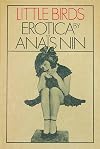
“This little wound women have . . . it frightens me.”
I held off on reviewing this for obvious reasons. It's more than a little bold to tell the internet you've read an erotic novel, and even more so for a girl a few weeks out of high school. My peers, fortunately, are not flocking to Goodreads (though now is better than later to apologize to my 12th grade English teacher if she sees this, hello and sorry Ms. Leaney), and so with that weight flying off my shoulders like those pesky show more pedophilia-laced symbols of the birds, here I am.
My aunt gave me this book with trepidation a few months before I read it; when I left it beside the bed so as not to look too eager she promptly hid it in her dresser drawer to pretend the topic never came up. Well, reader, I found it—and it was a wild ride.
I was at first confronted with how shame-free the sexual exploits were. For something written in the early 1940s, pre-sexual awakening as we know it in the later decades, the affairs and acts are focused on the mental and physical pleasure rather than any internal woe for such blasé fecundity. The scenes were at times ridiculous, the acts intrepid—but beyond the unbelievable veil all pornography contains Nin sews a very human, compassionate, intelligent thread throughout the character's minds and actions. Starkly feminist, the power and sexual independence of the female leads was thrilling. Bisexuality is as normal as day, lesbianism as night, and the awakening of this and the character's broader sense of life was like a drug.
I'll never forget the beautiful lull it put me under as I began reading it on my flight into Dublin at 5 in the morning—Mahler one and a not too terrible tea by my side, the sunrise a radiant rainbow wash at the other. I don't know how to explain to you how erotica can be "intelligent", but you'll just have to believe me. Maybe it's the care of the human mind, maybe the prose that melts across your mind like velvet.
"The idea that the first man who takes a woman will have complete power over her... I think that is a superstition. It was created to help preserve women from promiscuity. It is actually untrue."
Nin, you have my vote.
Before I forget, I also read this while I was traveling with the rest of my English teachers in Scotland and Ireland, and boy was it a laugh. I'll never forget my junior year teacher Ms. Beebe's "naughty" and shoulder shimmy laugh, or my freshman English teacher Mrs. Floto asking what I was reading and flipping it over as we waited in US Customs before I could answer fully ("I mean, it's literature" "You're not wrong there"). show less
I held off on reviewing this for obvious reasons. It's more than a little bold to tell the internet you've read an erotic novel, and even more so for a girl a few weeks out of high school. My peers, fortunately, are not flocking to Goodreads (though now is better than later to apologize to my 12th grade English teacher if she sees this, hello and sorry Ms. Leaney), and so with that weight flying off my shoulders like those pesky show more pedophilia-laced symbols of the birds, here I am.
My aunt gave me this book with trepidation a few months before I read it; when I left it beside the bed so as not to look too eager she promptly hid it in her dresser drawer to pretend the topic never came up. Well, reader, I found it—and it was a wild ride.
I was at first confronted with how shame-free the sexual exploits were. For something written in the early 1940s, pre-sexual awakening as we know it in the later decades, the affairs and acts are focused on the mental and physical pleasure rather than any internal woe for such blasé fecundity. The scenes were at times ridiculous, the acts intrepid—but beyond the unbelievable veil all pornography contains Nin sews a very human, compassionate, intelligent thread throughout the character's minds and actions. Starkly feminist, the power and sexual independence of the female leads was thrilling. Bisexuality is as normal as day, lesbianism as night, and the awakening of this and the character's broader sense of life was like a drug.
I'll never forget the beautiful lull it put me under as I began reading it on my flight into Dublin at 5 in the morning—Mahler one and a not too terrible tea by my side, the sunrise a radiant rainbow wash at the other. I don't know how to explain to you how erotica can be "intelligent", but you'll just have to believe me. Maybe it's the care of the human mind, maybe the prose that melts across your mind like velvet.
"The idea that the first man who takes a woman will have complete power over her... I think that is a superstition. It was created to help preserve women from promiscuity. It is actually untrue."
Nin, you have my vote.
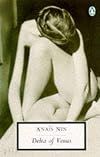
A rather uneven collection of stories whose faults lie in the fact that Nin was trying to write both for herself and for a patron (for money), one who wanted more pornography and less poetry from her.
At its best, this integrated collection of erotic encounters is evocative and it occasionally kicks off the deeper unconscious into reverie but at its worst it is risible - an orgy can be sex by numbers and dull as dishwater or as erotic as 'Eyes Wide Shut' in her hands.
The text is regarded as a show more classic but I suggest this is only because of its sociological importance as proof-positive that a woman can write well within the classic French erotic tradition and introduce a definite feminine perspective.
That is valuable in itself and so earns its status but I wish that she had written this on her own terms and not for cash. Catherine Millet and even Pauline de Reage sometimes appear more authentic and it is true that it was a secret text for many years so the claim of innovation is a little 'after the fact' when conditions permitted.
When she writes within the French erotic tradition for the patron, the material is often frankly second rate. When she is liberated to think of the sexual from a women's perspective and escapes the tradition, it is masterful (or should I say, mistressful).
However, at no time could I say honestly that I was truly sexually aroused and I hear differing reports from women friends about its effect on them. What I did feel at times (though rare) was a sense of the magical-erotic, a dream-like state beyond the brute. Part of the pleasure lay then in communing with a feminine vision as one shared.
The first story and the final four - shorter pieces - are the best. The longeurs are in the longer almost novella central items. There is a lesson in this - the erotic is more momentary than other sentiments and is best experienced in relatively short bursts.
The view of men is also quintessentially feminine - little bravado here, just men with some weakness, often fetishistic, that inspires tenderness even when it is brutal. The worship of the phallus is always under the surface. There is a definite 'Belle de Jour' moment.
I cannot recommend or not recommend the book to a woman - it will be a matter of personal aethetic - but I would recommend it to any man with a curiosity about how women, certainly women with some sexual spark about them even if hidden, may 'see' sex.
Nothing is explicitly informative in this regard but the whole feels intuitively right as the view from the other side. Paradoxically, it shows men that women can be more sexual than they may believe but just how contingent on particular conditions that sexual expression will be.
Reading the book will not provide clues to the seduction of women (if anything it should counsel private despair that any man is truly in control of his situation) but it will allow a man to enjoy what he can obtain more readily and understand a little better how it will end.
The book was written in exile after the French intellectual class either escaped to the US (as Nin was able to do) or was forced into the deadly business of complicity or resistance to occupation. The sense of loss is well expressed in two paragraphs near the end.
"Why do women never tell men this? Why do women make such a secret and mystery of it all? They think it destroys their mystery, but it is not true. And here you come out and say just what you felt. It is wonderful."
"I believe in saying it. There are enough mysteries, and these do not help our enjoyment of each other. Now the war is here and many people will die, knowing nothing because they are tongue-tied about sex. It’s ridiculous"
There is an entire philosophy of sexuality in these words which eventually make the book worthwhile. Nin rebels against an entire culture (alive today especially in Britain) of non-communication about desire but especially non-communication by women. Many Northern Europeans and Americans still find sex vaguely disturbing and creepy.
The defensive and learned feminine secret of mystery is presented as a fact perhaps but not lauded here. Though a man speaks, Nin also speaks. The male wants to hear of female desire and some women, like Nin, wish to speak of it. It is in the interests of both that they should loosen up a little and become less defensive.
The second paragraph uses war as a metaphor for death in general (and perhaps for aging which comes up as a theme more than once in the cracks of the text). To have died ignorant of sex and the erotic is to die without having lived, she seems to say. I suspect she is right. show less
At its best, this integrated collection of erotic encounters is evocative and it occasionally kicks off the deeper unconscious into reverie but at its worst it is risible - an orgy can be sex by numbers and dull as dishwater or as erotic as 'Eyes Wide Shut' in her hands.
The text is regarded as a show more classic but I suggest this is only because of its sociological importance as proof-positive that a woman can write well within the classic French erotic tradition and introduce a definite feminine perspective.
That is valuable in itself and so earns its status but I wish that she had written this on her own terms and not for cash. Catherine Millet and even Pauline de Reage sometimes appear more authentic and it is true that it was a secret text for many years so the claim of innovation is a little 'after the fact' when conditions permitted.
When she writes within the French erotic tradition for the patron, the material is often frankly second rate. When she is liberated to think of the sexual from a women's perspective and escapes the tradition, it is masterful (or should I say, mistressful).
However, at no time could I say honestly that I was truly sexually aroused and I hear differing reports from women friends about its effect on them. What I did feel at times (though rare) was a sense of the magical-erotic, a dream-like state beyond the brute. Part of the pleasure lay then in communing with a feminine vision as one shared.
The first story and the final four - shorter pieces - are the best. The longeurs are in the longer almost novella central items. There is a lesson in this - the erotic is more momentary than other sentiments and is best experienced in relatively short bursts.
The view of men is also quintessentially feminine - little bravado here, just men with some weakness, often fetishistic, that inspires tenderness even when it is brutal. The worship of the phallus is always under the surface. There is a definite 'Belle de Jour' moment.
I cannot recommend or not recommend the book to a woman - it will be a matter of personal aethetic - but I would recommend it to any man with a curiosity about how women, certainly women with some sexual spark about them even if hidden, may 'see' sex.
Nothing is explicitly informative in this regard but the whole feels intuitively right as the view from the other side. Paradoxically, it shows men that women can be more sexual than they may believe but just how contingent on particular conditions that sexual expression will be.
Reading the book will not provide clues to the seduction of women (if anything it should counsel private despair that any man is truly in control of his situation) but it will allow a man to enjoy what he can obtain more readily and understand a little better how it will end.
The book was written in exile after the French intellectual class either escaped to the US (as Nin was able to do) or was forced into the deadly business of complicity or resistance to occupation. The sense of loss is well expressed in two paragraphs near the end.
"Why do women never tell men this? Why do women make such a secret and mystery of it all? They think it destroys their mystery, but it is not true. And here you come out and say just what you felt. It is wonderful."
"I believe in saying it. There are enough mysteries, and these do not help our enjoyment of each other. Now the war is here and many people will die, knowing nothing because they are tongue-tied about sex. It’s ridiculous"
There is an entire philosophy of sexuality in these words which eventually make the book worthwhile. Nin rebels against an entire culture (alive today especially in Britain) of non-communication about desire but especially non-communication by women. Many Northern Europeans and Americans still find sex vaguely disturbing and creepy.
The defensive and learned feminine secret of mystery is presented as a fact perhaps but not lauded here. Though a man speaks, Nin also speaks. The male wants to hear of female desire and some women, like Nin, wish to speak of it. It is in the interests of both that they should loosen up a little and become less defensive.
The second paragraph uses war as a metaphor for death in general (and perhaps for aging which comes up as a theme more than once in the cracks of the text). To have died ignorant of sex and the erotic is to die without having lived, she seems to say. I suspect she is right. show less
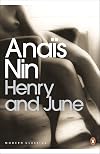
The sensual yet morally-dubious companion to volume one of Anaïs Nin's expurgated journal.
Just when I thought Nin could not be more open and frank* with exposing herself in her diaries, these unexpurgated excerpts take me even deeper into her psyche. Her fears and deceptions and desires, all laid out, the uncertainties layered with inchoate convictions that melt into more uncertainties.
It could very well be that her entire diary is mere narcissism and performative, what with her obsessive show more recording of dialogues and letters and emotions, and with her willingness to give her diaries for her acquaintances to read. Yet the mellifluous way she writes and the rawness of the senses she so successfully conveys - her words thrumming with such intensity and honesty -, it's all so touchingly and embarrassingly human.
*it's odd to claim that the expurgated version is honest when Nin purposely cut out very pertinent events, claiming to wish to protect her husband Hugh. Yet even after reading the unexpurgated version, my first reading still doesn't feel like a lie by omission. Nin still comes across as incredibly candid (as much as she could be in that instant at that particular time).
Aside: June features so little, even in Henry and Anais' subconscious, that to read this without having read the corresponding expurgated journal would only be confusing the reader as to the attraction of the titular characters.
Sympathy: poor poor Hugh. I would like to read his version of events. I feel like he knew but just didn't want to know or have it confirmed for him. show less
Just when I thought Nin could not be more open and frank* with exposing herself in her diaries, these unexpurgated excerpts take me even deeper into her psyche. Her fears and deceptions and desires, all laid out, the uncertainties layered with inchoate convictions that melt into more uncertainties.
It could very well be that her entire diary is mere narcissism and performative, what with her obsessive show more recording of dialogues and letters and emotions, and with her willingness to give her diaries for her acquaintances to read. Yet the mellifluous way she writes and the rawness of the senses she so successfully conveys - her words thrumming with such intensity and honesty -, it's all so touchingly and embarrassingly human.
*it's odd to claim that the expurgated version is honest when Nin purposely cut out very pertinent events, claiming to wish to protect her husband Hugh. Yet even after reading the unexpurgated version, my first reading still doesn't feel like a lie by omission. Nin still comes across as incredibly candid (as much as she could be in that instant at that particular time).
Aside: June features so little, even in Henry and Anais' subconscious, that to read this without having read the corresponding expurgated journal would only be confusing the reader as to the attraction of the titular characters.
Sympathy: poor poor Hugh. I would like to read his version of events. I feel like he knew but just didn't want to know or have it confirmed for him. show less

I loved this: the introspection, the analysis, the self-sabotage, and the destructive relationships.
Nin is so honest a chronicler in her feelings that you go beyond the discomfort of being in someone's most intimate thoughts and just accept them as a late-night daily recap conversation with a very very close self-analytical friend (which explains why I underlined and commented in the margins so much). To be fair though, this diary seems to be more "cleaned up" as there's a distinct lack of show more her home life as well as the more intimate aspects of her relationships. Just an immediate jump from her interior to her analysis sessions or her writing or her friendships.
I have a copy of Henry and June which promises to be the unexpurgated account of the same period and knowing Nin's usual reputation for erotica, perhaps I'll have to work my way up to it. show less
Nin is so honest a chronicler in her feelings that you go beyond the discomfort of being in someone's most intimate thoughts and just accept them as a late-night daily recap conversation with a very very close self-analytical friend (which explains why I underlined and commented in the margins so much). To be fair though, this diary seems to be more "cleaned up" as there's a distinct lack of show more her home life as well as the more intimate aspects of her relationships. Just an immediate jump from her interior to her analysis sessions or her writing or her friendships.
I have a copy of Henry and June which promises to be the unexpurgated account of the same period and knowing Nin's usual reputation for erotica, perhaps I'll have to work my way up to it. show less
Lists
Literary Witches (4)
Read These Too (1)
Reading LIst (1)
Read in 2010 (1)
Guilty Pleasures (1)
Female Author (1)
Erotic Fiction (3)
Sex in the past (1)
Awards


You May Also Like


Associated Authors
Statistics
- Works
- 239
- Also by
- 29
- Members
- 24,816
- Popularity
- #848
- Rating
- 3.7
- Reviews
- 249
- ISBNs
- 795
- Languages
- 23
- Favorited
- 117


