
Colette (1873–1954)
Author of Chéri and The Last of Chéri
About the Author
Works by Colette
The Complete Claudine: Claudine at School / Claudine in Paris / Claudine Married / Claudine and Annie (1900) 713 copies, 6 reviews
Gigi (Vintage Heroines) 8 copies
Colette, tome 3 : Romans, récits, souvenirs (1941-1949), critique dramatique (1934-1938) (1989) 5 copies
Colette 4 copies
Letters From Colette. Selected And Translated By Robert Phelps - 1st Edition/1st Printing (1980) 3 copies
Obras completas I 3 copies
My Mother's House 3 copies
Gigi et autres nouvelles 2 copies
The Little Bouilloux Girl 2 copies
The Shackles/ Break of Day 2 copies
La Maison de Claudine 2 copies
The Cat/ The Vagabond 2 copies
WORKS 2: The Last of Chéri; the Sick Child; The Photographer's Missus; The Rainy Moon (1969) — Author — 2 copies
DİŞİ KEDİ 2 copies
Osení 2 copies
Oeuvres de Colette. 1 1 copy
Oeuvres completes 1 copy
Gigi, julie, chance 1 copy
Oeuvres de Colette. 3 1 copy
Oeuvres de Colette. 2 1 copy
The Other Wife [short story] 1 copy
Oeuvres de colette t1 t2 t3 1 copy
HOINARA/ DUO 1 copy
Oeuvres complètes de Colette : Journal à rebours, le Képi, De ma fenêtre, Trois... Six... Neuf... 1 copy
Oeuvres complètes de Colette : Le pur et l'impur, La chatte, Duo, Le toutounier, Belles saisons 1 copy
Oeuvres complètes de Colette : Gigi, L'étoile vesper, Mes cahiers, Discours de réception, tome 13 1 copy
L'envers du music-hall 1 copy
The Stories of Colette 1 copy
Gigi e altri racconti 1 copy
Il rifugio sentimentale 1 copy
Colette Oeuvres I 1 copy
Album Colette 1 copy
The Mother of Claudine 1 copy
Colette,... Le Blé en herbe 1 copy
Oeuvres complètes de Colette : Claudine en ménage, Claudine s'en va, La retraite sentimentale 1 copy
Colette. La Chatte , roman 1 copy
Sido Le pur et l'impur L'étoile Vesper Le fanal bleu : Préf. par Pierre Kyria (OEuvres de Colette.) (1996) 1 copy
Les « Claudine » : Claudine à l'école, Claudine à Paris, Claudine en ménage, Claudine s'en va (2019) 1 copy
Oeuvres complètes 1 copy
CUENTOS 1 copy
Gigi, "Le Toutounier" 1 copy
Il Mestiere di Scrivere 1 copy
Le pur et l'impur 1 copy
L'ingénue libertine + Chéri 1 copy
Os Imortais 1 copy
Oeuvres complètes de Colette : La maison de Claudine, Sido, Noces, Le blé en herbe, La femme cachée 1 copy
Oeuvres complètes de Colette : Chéri, La fin de Chéri, le voyage égoïste, Aventures quotidiennes 1 copy
Œuvres Complètes - Chéri 1 copy
Œuvres Complètes - Gigi 1 copy
Chři 1 copy
STORIES. Limited Edition. A Volume in The Collected Stories of the World's Greatest Writers Series. (1977) 1 copy
Quatre saisons 1 copy
The Secret Woman 1 copy
Claudine odlazi 1 copy
Život i smrt Chery Pelouxa 1 copy
Une vie merveilleuse 1 copy
Gigi. La dama del fotógrafo 1 copy
I Paris 1 copy
Klaudina ve škole 1 copy
Klaudina v manželství 1 copy
Klaudina odchází 1 copy
Citové zátiší 1 copy
Prostopášná naivka 1 copy
Duygusal Sürgün 1 copy
Colette : Armande 9/10 1 copy
Pages choisies 1 copy
Sido og Bøgerne 1 copy
Saklaus léttúð 1 copy
Œuvres III 1 copy
Colette : La Cire verte 8/10 1 copy
Colette : Le Tendron 7/10 1 copy
La Vagabonde : "Renée Néré". Roman. Colette. Berecht. Übers. aus d. Franz. von Rosa Breuer-Lucka, Fischer Bücherei ; 69 (1954) 1 copy
L'homme objet 1 copy
Colette Works I 1 copy
La Treille muscate : De Colette. Illustré de 14 lithographies originales en couleurs de Terechkovitch (1961) 1 copy
Œuvres I 1 copy
Album masques 1 copy
Œuvres Complètes - Paysages & Portraits, Derniers Ecrits, Ces Dames Anciennes, Gîte D' Ecrivain 1 copy
Lettres à Moune et au Toutounet (Hélène Jourdan-Morhange et Luc-Albert Moreau) 1929-1954 (1985) 1 copy
O fim de Chéri 1 copy
Skitnica 1 copy
Shackle 1 copy
Oeuvres, 3 volumes 1 copy
Colette`s Bedste Noveller 1 copy
Neun von Colette 1 copy
Julie de Carneilhan/ Mitsou 1 copy
Le Fanal bleu 1 copy
Associated Works
Wayward Girls and Wicked Women: An Anthology of Subversive Stories (1986) — Contributor — 582 copies, 9 reviews
The World of the Short Story: A 20th Century Collection (1986) — Contributor — 513 copies, 4 reviews
Chloe Plus Olivia: An Anthology of Lesbian Literature from the 17th Century to the Present (1994) — Contributor — 482 copies, 1 review
The Graphic Canon, Vol. 3: From Heart of Darkness to Hemingway to Infinite Jest (2013) — Contributor — 162 copies, 1 review
The Sophisticated Cat: A Gathering of Stories, Poems, and Miscellaneous Writings About Cats (1992) — Contributor — 112 copies, 1 review
My Favorite Plant: Writers and Gardeners on the Plants They Love (1998) — Contributor — 100 copies, 1 review
Jo's Girls: Tomboy Tales of High Adventure, True Grit, and Real Life (1997) — Contributor — 48 copies
Out of the Best Books: An Anthology of Literature, Vol. 1: The Individual and Human Values (1964) — Contributor — 40 copies
The Second Gates of Paradise: The Anthology of Erotic Short Fiction (1997) — Contributor — 38 copies
The Red Velvet Seat: Women's Writings on the Cinema: The First Fifty Years (2006) — Contributor — 20 copies
Gender in Modernism: New Geographies, Complex Intersections (2007) — Contributor — 12 copies, 1 review
Het neusje van de zalm een feestelijke bloemlezing uit Querido's 'vlaggetjesreeks' (1986) — Contributor — 7 copies
From Flaubert to the Present: French Stories — Contributor — 3 copies
Meesters der vertelkunst : zevenendertig verhalen uit de moderne wereldliteratuur (1975) — Contributor — 2 copies
Ravel : L'Enfant et les Sortilèges + L'Heure Espagnole {video recording} {1987 film} {Glyndebourne} (1987) — Writer — 2 copies
Kinder sind auch Menschen : Heiteres gezeichnet und geschrieben für alle, die Kinder lieben — Contributor — 1 copy
50 seltsame Geschichten — Contributor — 1 copy
Tagged
Common Knowledge
- Canonical name
- Colette
- Legal name
- Colette, Sidonie-Gabrielle
- Birthdate
- 1873-01-28
- Date of death
- 1954-08-03
- Gender
- female
- Occupations
- novelist
actor
journalist - Awards and honors
- Grand officier de la Légion d'Honneur (1953)
Belgian Royal Academy (1935)
Académie Goncourt (1945)
Chevalier, Ordre de la Légion d'honneur (1920) - Relationships
- Gauthier-Villars, Henry (husband)
de Jouvenel, Henry (husband) - Nationality
- France
- Birthplace
- Saint-Sauveur-en-Puisaye, Yonne, France
- Places of residence
- Paris, France
- Place of death
- Paris, France
- Burial location
- Cimetière du Père-Lachaise, Paris, France
- Associated Place (for map)
- Paris, France
Members
Discussions
Break of Day by Colette - LIMITED EDITIONS CLUB 1983 in George Macy devotees (October 2025)
Reviews

Phil’s parents and Vinca’s parents have spent the summer together in the same villa on the Brittany coast since time immemorial, and Phil and Vinca have been best friends throughout their childhood. But now they are adolescents, and their relationship has started to get a bit more complicated. All the more so after Phil is initiated sexually by Camille Dalleray, a stranger who has taken a villa a little further along the coast and is very obviously turned on by his casually exposed show more suntanned flesh.
As you would expect, it’s all in what looks to us like the best possible taste but was moderately shocking coming from a woman writer in the 1920s, with lots of fecund Breton coastal scenery and lashings of lightly-encoded awakening teenage sexuality. Something like a Famous Five novel as imagined by D H Lawrence, perhaps.
I was intrigued by the way Colette superficially follows the plot conventions of classic French fiction by having the young hero pulled into a liaison by an older woman who subsequently renounces him for his own good, but she undermines this (and maybe throws a retrospective question-mark over the heros of Balzac, Stendhal and the rest) by emphasising Mme Dalleray’s “masculine” looks and ways of behaving, and even her non-gendered first name Camille. Are we supposed to think that, but for the requirements of literary propriety, it would have been a man who chatted up Phil and invited him in for an Orangina? show less
As you would expect, it’s all in what looks to us like the best possible taste but was moderately shocking coming from a woman writer in the 1920s, with lots of fecund Breton coastal scenery and lashings of lightly-encoded awakening teenage sexuality. Something like a Famous Five novel as imagined by D H Lawrence, perhaps.
I was intrigued by the way Colette superficially follows the plot conventions of classic French fiction by having the young hero pulled into a liaison by an older woman who subsequently renounces him for his own good, but she undermines this (and maybe throws a retrospective question-mark over the heros of Balzac, Stendhal and the rest) by emphasising Mme Dalleray’s “masculine” looks and ways of behaving, and even her non-gendered first name Camille. Are we supposed to think that, but for the requirements of literary propriety, it would have been a man who chatted up Phil and invited him in for an Orangina? show less
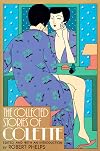
There are one hundred stories in this collection, many of which are fairly short vignettes of 2 or 3 pages. There are a few longer stories and these are the ones that stay in the memory. Most everything by Collette is worth reading, just for some wonderful descriptions of the world around her and these stories come from many periods of her long writing career 1900-1953.
These are English translations from the french by several translators and most of them read very well. They are grouped show more together so that during her "La Vagabond" period where she was working as an actress for a group of travelling "revue artists" the reader gets a fairly complete picture of backstage life.
Some of her best longer short stories are collected here, The Kepi, The Tender Shoot, Gribiche, Green Sealing wax, Bella Vista, The Photographers Wife, Rainy Moon and my own favourite The Rendez-vous. It is however the shorter stories and the cumulative effect of these that left an impression on me after this read. I think for a first time reader of this wonderful french author this is a very good introduction. It would have been useful to have these stories dated and Mr Phelps introduction is a little perfunctory. It should be noted also that this is a collection, it is not the complete stories. 4 stars. show less
These are English translations from the french by several translators and most of them read very well. They are grouped show more together so that during her "La Vagabond" period where she was working as an actress for a group of travelling "revue artists" the reader gets a fairly complete picture of backstage life.
Some of her best longer short stories are collected here, The Kepi, The Tender Shoot, Gribiche, Green Sealing wax, Bella Vista, The Photographers Wife, Rainy Moon and my own favourite The Rendez-vous. It is however the shorter stories and the cumulative effect of these that left an impression on me after this read. I think for a first time reader of this wonderful french author this is a very good introduction. It would have been useful to have these stories dated and Mr Phelps introduction is a little perfunctory. It should be noted also that this is a collection, it is not the complete stories. 4 stars. show less

The lengthy final section of this novella decided it for me. I had been asking myself if this were a good book or sentimental kitsch. Of course, sentimental kitsch might be your idea of good book, but tastes differ.
The first third of the narrative had been told largely from the point of view of Léa, an aging courtesan who has permitted herself the luxury of a boy toy, her “Chéri,” who just happens to be the indolent, insolent son of her best frenemy. She oscillates between intoxication show more at his physical beauty and irritation over his bothersome personality. This ends when he announces he will soon marry. They agree to end their five-year affair.
Léa leaves town and disappears from the narrative. The middle section switches to Fred’s point of view. That is Chéri’s given name, which Léa never uses. He soon feel trapped in his marriage. His bride is rich, young, beautiful, and vapid. After the challenge of jousting with his “Nounoune,” as he calls Léa, he becomes restless and disappears for three months. The narrative follows him in his dissipation. He stays out to all hours, drinks too much, dabbles in drugs — does everything, in fact, except the one thing his wife and mother both assume he has done: have one last romance before settling down to married life.
Toward the end of his binge, he haunts Léa’s home. When a light in the window shows that she has returned to Paris, the stage is set for the dénouement. Léa has become philosophical, accepting that she will now live the life of an old woman (she is just turned 50; a century ago, that was old, especially for one who has lived on her beauty). She has retired for the night, but at midnight Chéri appears at her door. The remainder of the book is one final jousting tournament between these two who are obsessed with the other.
The author animates both characters here, but explores more deeply the ever-shifting feelings and perceptions of Léa. They make love. Here is where I began to fear the worst, since prose about love-making is often embarrassingly bad. Colette pulls it off, though, which saved the book for me. Her handling of the morning after, in particular, impressed me.
I selected this book as a way to brush up my French. It wasn’t too thick, so I thought it wouldn’t take me as long as it does to read Flaubert. I have a good grasp of basic French vocabulary — the most common four-to-five thousand words — but in reading this, there was hardly a page on which I didn’t have to look up at least four words. When this happens, it’s often a sign that the author has gone all pretentious and abstract (I’m looking at you, Sartre), but in this case, it’s because Colette chooses very concrete, specific vocabulary. The names of trees, flowers, articles of clothing, and body parts abound. The result is languid and sensuous, much like the two characters.
My final impression is that this book is all the more an impressive achievement because of what it risked. Instead of being a sentimental tear-jerker, it is a sensitive exploration of what a less-complicated age liked to call the war of the sexes. show less
The first third of the narrative had been told largely from the point of view of Léa, an aging courtesan who has permitted herself the luxury of a boy toy, her “Chéri,” who just happens to be the indolent, insolent son of her best frenemy. She oscillates between intoxication show more at his physical beauty and irritation over his bothersome personality. This ends when he announces he will soon marry. They agree to end their five-year affair.
Léa leaves town and disappears from the narrative. The middle section switches to Fred’s point of view. That is Chéri’s given name, which Léa never uses. He soon feel trapped in his marriage. His bride is rich, young, beautiful, and vapid. After the challenge of jousting with his “Nounoune,” as he calls Léa, he becomes restless and disappears for three months. The narrative follows him in his dissipation. He stays out to all hours, drinks too much, dabbles in drugs — does everything, in fact, except the one thing his wife and mother both assume he has done: have one last romance before settling down to married life.
Toward the end of his binge, he haunts Léa’s home. When a light in the window shows that she has returned to Paris, the stage is set for the dénouement. Léa has become philosophical, accepting that she will now live the life of an old woman (she is just turned 50; a century ago, that was old, especially for one who has lived on her beauty). She has retired for the night, but at midnight Chéri appears at her door. The remainder of the book is one final jousting tournament between these two who are obsessed with the other.
The author animates both characters here, but explores more deeply the ever-shifting feelings and perceptions of Léa. They make love. Here is where I began to fear the worst, since prose about love-making is often embarrassingly bad. Colette pulls it off, though, which saved the book for me. Her handling of the morning after, in particular, impressed me.
I selected this book as a way to brush up my French. It wasn’t too thick, so I thought it wouldn’t take me as long as it does to read Flaubert. I have a good grasp of basic French vocabulary — the most common four-to-five thousand words — but in reading this, there was hardly a page on which I didn’t have to look up at least four words. When this happens, it’s often a sign that the author has gone all pretentious and abstract (I’m looking at you, Sartre), but in this case, it’s because Colette chooses very concrete, specific vocabulary. The names of trees, flowers, articles of clothing, and body parts abound. The result is languid and sensuous, much like the two characters.
My final impression is that this book is all the more an impressive achievement because of what it risked. Instead of being a sentimental tear-jerker, it is a sensitive exploration of what a less-complicated age liked to call the war of the sexes. show less
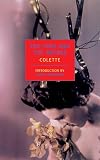
I picked up this used copy from the Book Burrow because I'd enjoyed Cheri and The Last of Cheri, and I'd gotten more curious about Colette herself after watching the trailer for her new biopic. I was expecting fiction, but instead got some blend of memoir/journalistic essays or a thinly fictionalized version of the same.
Here Colette (or "Colette?") sets as her subject love/romance/sex and the ways they are intwined with each other -- particularly among those whose romantic/sex lives deviated show more from the norms of the time. There are peeks into lesbian enclaves, communities of gay men, a conversation with a Don Juan type, a long piece on the Ladies of Llangollen. There is a thrill to get a glimpse at some of the sorts of lives that history has deliberately hidden from us -- but still Colette herself is hardly an impartial observer. She reveals much of herself along the way -- her own opinions on love, sex, and gender -- some of which are radical and liberating and some which a modern reader can't help wondering to what extent were limited by the views of the time. How much of her observations of lesbians, let's say -- is true to the nature of women and/or lesbians, and how much an artifact of how lesbians had to hide themselves and dissemble -- and how that must have shaped their lives even when in the limited communities where they were able to be "free" with themselves?
In short, Colette as a narrator is in turns charming, radically open-minded, empathetic to the point of excusing what seems like very bad behavior, but then sometimes surprisingly conservative. She is resolutely herself -- shaped by her own time in and among the communities she reveals here. And that is deeply intriguing. show less
Here Colette (or "Colette?") sets as her subject love/romance/sex and the ways they are intwined with each other -- particularly among those whose romantic/sex lives deviated show more from the norms of the time. There are peeks into lesbian enclaves, communities of gay men, a conversation with a Don Juan type, a long piece on the Ladies of Llangollen. There is a thrill to get a glimpse at some of the sorts of lives that history has deliberately hidden from us -- but still Colette herself is hardly an impartial observer. She reveals much of herself along the way -- her own opinions on love, sex, and gender -- some of which are radical and liberating and some which a modern reader can't help wondering to what extent were limited by the views of the time. How much of her observations of lesbians, let's say -- is true to the nature of women and/or lesbians, and how much an artifact of how lesbians had to hide themselves and dissemble -- and how that must have shaped their lives even when in the limited communities where they were able to be "free" with themselves?
In short, Colette as a narrator is in turns charming, radically open-minded, empathetic to the point of excusing what seems like very bad behavior, but then sometimes surprisingly conservative. She is resolutely herself -- shaped by her own time in and among the communities she reveals here. And that is deeply intriguing. show less
Lists
Female Author (1)
Europe (1)
1940s (1)
Favourite Books (1)
Schwob Nederland (1)
Short and Sweet (2)
French Books (2)
1920s (1)
1930s (1)
My TBR (1)
Awards


You May Also Like


Associated Authors
Statistics
- Works
- 395
- Also by
- 63
- Members
- 14,564
- Popularity
- #1,577
- Rating
- 3.7
- Reviews
- 229
- ISBNs
- 859
- Languages
- 17
- Favorited
- 7


