
Émile Zola (1840–1902)
Author of Germinal
About the Author
Zola was the spokesperson for the naturalist novel in France and the leader of a school that championed the infusion of literature with new scientific theories of human development drawn from Charles Darwin (see Vol. 5) and various social philosophers. The theoretical claims for such an approach, show more which are considered simplistic today, were outlined by Zola in his Le Roman Experimental (The Experimental Novel, 1880). He was the author of the series of 20 novels called The Rougon-Macquart, in which he attempted to trace scientifically the effects of heredity through five generations of the Rougon and Macquart families. Three of the outstanding volumes are L'Assommoir (1877), a study of alcoholism and the working class; Nana (1880), a story of a prostitute who is a femme fatale; and Germinal (1885), a study of a strike at a coal mine. All gave scope to Zola's gift for portraying crowds in turmoil. Today Zola's novels have been appreciated by critics for their epic scope and their visionary and mythical qualities. He continues to be immensely popular with French readers. His newspaper article "J'Accuse," written in defense of Alfred Dreyfus, launched Zola into the public limelight and made him the political conscience of his country. (Bowker Author Biography) show less
Series
Works by Émile Zola
The Fortune of the Rougons/The Kill/The Belly of Paris/The Conquest of Plassans/The Sins of Father Mouret (1960) 56 copies, 2 reviews
Les Rougon-Macquart : Histoire naturelle et sociale d'une famille sous le Second Empire, tome 4 (La Pléiade) (1966) 40 copies, 2 reviews
Les Rougon-Macquart, Tome 2 : La Faute de l'abbé Mouret ; Son Excellence Eugène Rougon ; L'Assomoir (1970) 22 copies
Les Rougon-Macquart Tome 1 : La fortune des Rougon. : La curée. Le ventre de Paris. La conquête de Plassans (1969) 12 copies
Germinal - Col. A Obra-Prima De Cada Autor - Série Ouro - Vol. 41 (Em Portuguese do Brasil) (2005) 6 copies
Rom: Band 1 6 copies
Ladies' Paradise : part two 5 copies
L'assommoir : part one 5 copies
Verdade em Marcha, A 5 copies
J'Accuse! (Eu Acuso). A Verdade Em Marcha - Coleçøo L&PM Pocket (Em Portuguese do Brasil) 5 copies, 1 review
Ladies' Paradise : part one 4 copies
Haita 4 copies
Loves' chase 4 copies
Les Rougon-Macquart Tome 3 : Nana. Pot-Bouille. A Bonheur des dames. La joie de vivre (2002) 4 copies
L'assommoir : part two 3 copies
Fruitfulness : part one 3 copies
Conquest of Plassans : part one 3 copies
Nana / Therese Raquin 3 copies
Round Trip (in Three Faces of Love) 2 copies
Les œuvres complètes, 29. Travail I 2 copies
A patkányfogó 2 copies
Le serate di Medan: note d'un amico 2 copies
Les romans d' mile Zola en vingt-quatre volumes. 21, La confession de Claude ; Thřs̈e Raquin 2 copies, 1 review
KARRIERA E RUGONËVE 2 copies
Jacques Damour en andere verhalen 2 copies
La faute de l'abbé Mouret (tome2) 2 copies
Le Ventre de Paris: Tome 1 2 copies
Zola: L'Assommoir 2 copies
Les œuvres complètes, 32. Vérité II 2 copies
Thérèse Raquin / Madeleine Férat 2 copies
Les œuvres complètes, 39. Théâtre II 2 copies
Emile Zola: Wahrheit 2 copies
L'attaque du moulin : Suivi de Jacques Damour — Author — 2 copies
Obras de Zola - 10 Volumes 2 copies
APARTMAN 1 2 copies
Les Rougon-Macquart Tome 5 : La bête humaine. L'argent. La débâcle. Le docteur Pascal (2002) 2 copies
Paraja — Author — 2 copies
Racconti 2 copies
Nos auteurs dramatiques 2 copies
Therese Raquin (Edition pedagogique): Dossier thematique : La force du regard (2017) — Author — 2 copies, 1 review
Zola's werken: De mijn 2 copies
Enquete medico-psychologique 2 copies
Bányaoomlás 1 copy
Párizs gyomra 1 copy
Emek 1 copy
O crime do padre Mouret 1 copy
Grand éloge du vélo 1 copy
Állat az emberben 1 copy
A kegyelmes úr 1 copy
Hölgyek öröme 1 copy
The Dead Woman's Wish 1 copy
Štiastie Rougonovcov 1 copy
Germinal I. kötet 1 copy
2 - La curée - Émile Zola - Collection Les Rougon-Macquart: Texte intégral (French Edition) 1 copy, 1 review
Die Meute: Roman 1 copy
Novelas 1 copy
Fiche de lecture Germinal de Émile Zola (Analyse littéraire de référence et résumé complet) (2016) 1 copy
1 - La fortune des Rougon - Émile Zola - Collection Les Rougon-Macquart: Texte intégral (French Edition) (2021) 1 copy
Fiche de lecture La Curée de Émile Zola (Analyse littéraire de référence et résumé complet) (French Edition) (2016) 1 copy
Rofvet : Roman 1 copy
«J'accuse... !» 1 copy
Germinal III. kötet 1 copy
Drink 1 copy
Germinal II. kötet 1 copy
La besita umana 1 copy
HIl Iparadiso delle signore 1 copy
Germinal - extraits 1 copy
Τό ὄνειρο 1 copy
Életöröm 1 copy
Pod pokličkou 1 copy
Il romanzo sperimentale 1 copy
Der Totschläger 1 copy
Lássommoir 1 copy
Paris: roman 1 copy
The kill 1 copy
Páris regény 1 copy
A patkányfogó regény 1 copy
A pénz 1 copy
Nana (De Luxe Editions Club) 1 copy
El dinero (Penguin Clásicos) 1 copy
L'Argent (French Edition) 1 copy
Le Rêve, par Émile Zola 1 copy
Madeleine Férat: roman 1 copy
Menneskedyret 1 copy
Западня 1 copy
Тереза Ракен / Жерминаль 1 copy
" Kar'era Rugonov.Dobycha". 1 copy
Oeuvres complètes illustrées de Émile Zola. Les Rougon-Macquart. Pot-Bouille. Tome 2 (Litterature) (French Edition) (2013) 1 copy
Vérité: roman 1 copy
Les trois villes: Lourdes 1 copy
Le voeu d'une morte 1 copy
Une campagne, 1880-1881 1 copy
Travail 1 copy
Les soirées de Médan 1 copy
La confession de Claude 1 copy
Oeuvres complètes illustrées de Émile Zola 1-20. Les Rougon-Macquart. Le ventre de Paris (Litterature) (French Edition) (2013) 1 copy
Oeuvres complètes illustrées de Émile Zola. T. 17 La bête humaine (Litterature) (French Edition) (2013) 1 copy
Oeuvres complètes illustrées de Émile Zola 1-20. Les Rougon-Macquart. Germinal (Litterature) (French Edition) (2013) 1 copy
El Sueño 1 copy
A BESTA HUMANA 1 copy
Prawda. T. 2 1 copy
Prawda. T. 1 1 copy
Chleb i węgiel 1 copy
Samlade berättelser, noveller och skisser. 1, Kapten Burle ; Inför döden ; För en kärleksnatt 1 copy
L'Assommoir / Nana 1 copy
Gan-ʻeden la-ishah 1 copy
Documents littéraires 1 copy
Bir asayfasi 1 copy
Das Glück der Familie Rougon Natur- und Sozialgeschichte einer Familie unter dem Zweiten Kaiserreich 1. Auflage (1981) 1 copy
Róma regény 1 copy
Hans excellens 1 copy
Ein feines Haus. Roman. Aus dem Französischen von Gerhard Krüger nach der Gesamtausgabe, Paris 1928, Band 11. (1965) 1 copy
Drunkard 1 copy
Émile Zola Collection - The Soil (La Terre) - Annotated (Unforgettable Classic Series) (2017) 1 copy
Parīze 1 copy
Die Erde : Roman. 1 copy
Zola Emile 1 copy
Kako se umire 1 copy
Vruchtbaarheid 1 copy
Thérèse Raquin / Shame 1 copy
Zola's werken: De droom 1 copy
Hulya 1 1 copy
Hulya 2 1 copy
Naturalizam u pozorištu 1 copy
Plavi ogrtač ljubavi 1 copy
Hölgyek Öröme 1 copy
Le Rougon-Macquart - Volume III - Pot-bouille / Au bonheur des dames / La joie de vivre / Germinal 1 copy
Several Works 1 copy
Arbeit - Die vier Evangelien 1 copy
Nouvelle campagne 1896 1 copy
L' Argent - Tome II 1 copy
L' Argent - Tome I 1 copy
Izabrana pisma 1 copy
Paris Yıldızı 1 copy
La Fête à Coqueville 1 copy
Kertomuksia 1 copy
TRAVAIL en 2 TOMES 1 copy
Selections from Emile Zola: Edited with Introduction, Notes and Bibliography (Classic Reprint) (2017) 1 copy
Lettres de Paris 1 copy
Obras de Emile Zola 1 copy
Emile Zola's Werken 1 copy
Le Ventre de Paris: Tome 2 1 copy
Der zerbrorhene? Konig 1 copy
Captain Burle / Nana 1 copy
Zola. génies et réalités. 1 copy
APARTMAN 2 1 copy
A suplica 1 copy
Diario romano 1 copy
Oeuvres Completes Illustrees de Emile Zola. Les Quatre Evangiles. Travail. Tome 2 (Litterature) (French Edition) (2013) 1 copy
1900 1 copy
Tomar partido. Crónica epistolar de un distanciamiento. 1878-1887: 3 (Acuse de recibo, correspondencias) (2019) 1 copy
Les Cahiers Naturalistes 1 copy
The Invisible Man 1 copy
APARTMAN 3 1 copy
Fécondité 1 copy
Parisian Sketches 1 copy
Un bagno — Author — 1 copy
Erinnerungen 1 copy
The Attack on the Mill 1 copy
Lettres à Maître Labori 1 copy
Les œuvres complètes [v. 45] : Œuvres critiques [4] ; Documents littéraires : études et portraits 1 copy
Racconti scelti 1 copy
Pinigai 1 copy
Acuso... Livro 1 1 copy
la curée, tome premier 1 copy
Madame Sourdis 1 copy
Nos Auteurs 1 copy
Fiche de lecture J'accuse de Zola (Analyse littéraire de référence et résumé complet) (French Edition) (2022) 1 copy
Il romanzo sperimentale 1 copy
Saloanele mele 1 copy
La terre ( tome quatréme) 1 copy
Ana 1 copy
Dzieła wybrane 1 copy
Germinal II. 1 copy
Állat az emberekben 1 copy
Életöröm 1 copy
LE NATURALISME AU THÉATRE 1 copy
Germinal 1 1 copy
Shpartallimi 1 copy
Miserias Humanas 1 copy
MAIS MICOULIN 1 copy
La conquète de Plassans 1 copy
Pamantul 1 copy
O Simplório 1 copy
Vida en común 1 copy
Obra Selectas II 1 copy
La terre (tome cinquième) 1 copy
La terre (tome troisième) 1 copy
Krytyka miłości 1 copy
The sundering of Abbe Mouret 1 copy
Erzählungen — Author — 1 copy
Meistererzählungen, Audio-CDs, Tl.2, Die vier Tage des Jean Gourdon; Für eine Liebesnacht, 3 Audio-CDs (2000) 1 copy
Sanning : roman. Del 1. 1 copy
Théâtre 1 copy
Les Héritiers Rabourdin 1 copy
La reve: extraits 1 copy
Associated Works
Choice Cuts: A Savory Selection of Food Writing from Around the World and Throughout History (2002) — Contributor — 368 copies, 2 reviews
The Sophisticated Cat: A Gathering of Stories, Poems, and Miscellaneous Writings About Cats (1992) — Contributor — 112 copies, 1 review
The World of Law, Volumes I-II: The Law in Literature, The Law as Literature (1960) — Contributor — 54 copies
Lapham's Quarterly - Lines of Work: Volume IV, Number 2, Spring 2011 (2011) — Contributor — 32 copies, 2 reviews
Out of the Best Books: An Anthology of Literature, Vol. 4: The World Around Us (1968) — Contributor — 28 copies
Oogst Der Tijden. keur uit de werken van schrijvers en dichters aller volken en eeuwen (1940) — Contributor — 12 copies
Profil D'une Oeuvre: Zola: La Bete Humaine (French Edition) (1986) — Contributor — 6 copies, 1 review
I magnifici 7 capolavori della letteratura francese (eNewton Classici) (Italian Edition) (2013) 5 copies
Die Totenhand und andere Novellen — Contributor, some editions — 1 copy
Opowiadania Pisarzy Francuskich Dziewiętnastego Wieku — Contributor — 1 copy
Tagged
Common Knowledge
- Canonical name
- Zola, Émile
- Legal name
- Zola, Émile François
- Other names
- Золя, Эмиль
Ζολά, Εμίλ
Zola, Émile Édouard Charles Antoine - Birthdate
- 1840-04-02
- Date of death
- 1902-09-29
- Gender
- male
- Education
- Lycée Saint-Louis
- Occupations
- journalist
novelist
clerk
social activist
art critic - Organizations
- L'Aurore
La Cloche, Journal (Journaliste)
La Tribune, Journal (Journaliste, 18 68)
Le Bien public (Rédacteur)
Le Figaro, Journal
L'Illustration, Journal (Rédacteur, 18 66) (show all 10)
L'Événement, Journal (Chroniqueur, 18 66)
Louis Hachette, Editions (Commis puis Publicitaire puis attaché de presses, 18 62 | 18 66)
Société des gens de lettres (Président, 18 91 | 18 94 puis 18 95 | 18 96)
Assistance publique (Légataire de la propriété de Medan, 1905 par Alexandrine Zola) - Awards and honors
- Inhumation au Panthéon de Paris, le 04 juin 1906
- Relationships
- Cezanne, Paul (friend)
Manet, Édouard (friend)
Maupassant, Guy de (friend)
de la Vaudère, Jane (friend) - Cause of death
- carbon monoxide poisoning (possibly murder)
- Nationality
- France
- Birthplace
- Paris, Île-de-France, France
- Places of residence
- Paris, Île-de-France, France
Aix-en-Provence, France
Bordeaux, Gironde, Nouvelle-Aquitaine, France
Médan, Île-de-France, France
London, Middlesex, England, UK - Place of death
- Paris, Île-de-France, France
- Burial location
- Panthéon, Paris, Île-de-France, France
- Associated Place (for map)
- Île-de-France, France
Members
Discussions
November 2025 Au Bonheur des Dames: (1883) (The Ladies Paradise) Ch1-4 in Emile Zola Group Read (February 8)
July 2025 The Conquest of Plassans (La Conquête de Plassans) Intro-Chapters 1-3 in Emile Zola Group Read (January 4)
May 2025 The Dream Chapter 16-end in Emile Zola Group Read (November 2025)
March 2025 Money Chapters 1-3 in Emile Zola Group Read (October 2025)
September 2025 Pot-Bouille (Pot Luck) Preface-Chapters 1-3 in Emile Zola Group Read (September 2025)
May 2025 The Dream Intro-Chapters 1 & 2 in Emile Zola Group Read (May 2025)
Zola Group Read in Reading Through Time (May 2025)
November 2024 His Excellency, Eugene Rougon Preface, Ch 1-3 in Emile Zola Group Read (January 2025)
January 2025 The Kill Preface, Notes, Introduction, Chapter 1 in Emile Zola Group Read (January 2025)
September 2024 The Fortune of the Rougons Preface/Translation Notes/Chapters I/II in Emile Zola Group Read (September 2024)
Interest in Zola Group Read? in 2024 Category Challenge (September 2024)
Interest in Zola Group Read? in 75 Books Challenge for 2024 (September 2024)
Emile Zola - Resources and General Discussion in Author Theme Reads (September 2024)
July 2024: Émile Zola in Monthly Author Reads (August 2024)
A tale of two Nanas in George Macy devotees (September 2023)
Germinal by Zola in Author Theme Reads (September 2018)
Mad on Zola, all right in Mad on Zola (January 2015)
The Beast Within by Zola in Author Theme Reads (February 2014)
The Ladies' Paradise by Zola in Author Theme Reads (August 2013)
The Kill by Zola in Author Theme Reads (August 2013)
The Belly of Paris by Zola in Author Theme Reads (July 2013)
L'Assommoir by Zola in Author Theme Reads (July 2013)
The Conquest of Plassans by Zola in Author Theme Reads (May 2013)
Nana by Zola in Author Theme Reads (May 2013)
Abbe Mouret's Sin by Zola in Author Theme Reads (April 2013)
His Excellency Eugene Rougon by Zola in Author Theme Reads (January 2013)
The Fortune of the Rougons by Zola in Author Theme Reads (January 2013)
Reviews

This was a re-read of the first novel in Zola's 20 novel Rougon-Macquart cycle about the lives of two related families in the Second Empire period of Napoleon III between 1851-70. When I first read this almost exactly ten years ago, I wasn't too impressed and found it dull and slow moving. I have a more positive opinion now, and quite enjoyed most of the interplay between the generations of the two branches of the family, especially the opportunism and desire for fame and fortune of Pierre show more Rougon, dominated by his wife Felicite, the tragic backstory of his mother "Aunt" Dide, and the youthful romanticism, both political and emotional, of Silvere and Miette. While some of the manoeuvrings around the fictional town of Plassans dragged a bit, for the most part I enjoyed the story and feel an appetite now to tackle the following books in the series, which I did not feel ten years ago. At one point, the families are described colourfully as "a pack of unbridled, insatiate appetites amidst a blaze of gold and blood". Once the Coup d'Etat has brought the Emperor to power and buried the second French Republic, it is the Rougons' time to prosper: "Their appetites, sharpened by thirty years of restrained desire, now fell to with wolfish teeth. These fierce, insatiate wild beasts, scarcely entering upon indulgence, exulted at the birth of the Empire — the dawn of the Rush for the Spoils. The Coup d’Etat, which retrieved the fortune of the Bonapartes, also laid the foundation for that of the Rougons." show less

Zola's big sex-and-shopping novel turns out to have surprisingly little obvious sex, but makes up for it by giving us what's essentially a complete primer in retail theory and practice circa 1870. And some gloriously erotic descriptions of textiles and haberdashery, which help us to see Zola's point that in the new capitalist society of the Second Empire there isn't any meaningful distinction to be made between sex and shopping: they are simply two different aspects of the way society is show more based on the exploitation of women.
We follow the unstoppable expansion of the Bonheur des Dames from simple draper's shop to vast department store from the perspectives of its proprietor, Octave Mouret (last seen marrying into the business in Pot-Bouille), and of a young shop assistant from the provinces, Denise, who comes to work for him. And we experience the effect of the new retail phenomenon as seen by Octave's middle-class women friends — the customers whose money it is designed to extract — and from the less sanguine viewpoint of the small shopkeepers in the neighbourhood who are being crushed under Mouret's wheels.
Not Zola's strongest novel in terms of its human plot, which turns out to be a very standard sort of romance. But he more than makes up for it with the non-fiction aspect of the book, its detailed analysis of how big retail works, not only the front-of-house manipulation of customer psychology we expect, but also the behind-the-scenes business administration that makes it all possible. Right down to the economics of staff-canteen menus. All very fascinating, and surprisingly modern: it's a shock to be reminded that we're still in the age of gas-light, horses and carts, and snail-mail... show less
We follow the unstoppable expansion of the Bonheur des Dames from simple draper's shop to vast department store from the perspectives of its proprietor, Octave Mouret (last seen marrying into the business in Pot-Bouille), and of a young shop assistant from the provinces, Denise, who comes to work for him. And we experience the effect of the new retail phenomenon as seen by Octave's middle-class women friends — the customers whose money it is designed to extract — and from the less sanguine viewpoint of the small shopkeepers in the neighbourhood who are being crushed under Mouret's wheels.
Not Zola's strongest novel in terms of its human plot, which turns out to be a very standard sort of romance. But he more than makes up for it with the non-fiction aspect of the book, its detailed analysis of how big retail works, not only the front-of-house manipulation of customer psychology we expect, but also the behind-the-scenes business administration that makes it all possible. Right down to the economics of staff-canteen menus. All very fascinating, and surprisingly modern: it's a shock to be reminded that we're still in the age of gas-light, horses and carts, and snail-mail... show less

"When you're young you think that you're going to be happy later on, there are things you look forward to; and then you keep finding you're as hard up as ever, you stay bogged down in poverty... I don't blame anyone for it, but there are times when I feel sick at the injustice of it all."
In the thirteenth novel of Zola's staggering Rougon-Macquart cycle, we are reunited with Étienne Lantier, brother of Nana and son of Gervaise, the pathetic heroine of L'Assommoir (neither of which is show more required reading here, although the latter is my favourite of the cycle thus far). Étienne, impoverished and unemployed, finds himself at the coal mines of Le Voreux, where he attempts to radicalise the miners and their families into a strike to protect their working conditions.
By now, Zola was at the peak of his powers. Buoyed by a fear that he would reach death or senility before the planned end of his great series of novels, the author found himself writing with a renewed vigour. While he has previously explored the lives of the working classes in L'Assommoir, this was to be a novel about active resistance, as opposed to the "passive" poverty of the former. Although Étienne has dreams for a great socialist state, most of the miners are fighting not for revolution but to hang on to their existing (barbarous) conditions in the face of new restrictions imposed by management. Living in the factory town - with the cookie-cutter name of Village Two Hundred and Forty - entire generations trudge each morning to the mines, children being enrolled as soon as they are able, with the oldies transitioning to above-ground work once the back-breaking labour becomes too much. Their life is one of 'knowing their place', like the heartbreaking - and richly symbolic - horses, Bataille and Trompette, who have served their entire adult lives hundreds of metres below ground, clinging to some atavistic memory of sunlight. And always in the background, the mine of Le Voreux "crouching like a vicious beast of prey, snorting louder and longer, as if choking on its painful digestion of human flesh".
I read the final chapters of the novel during the early stages of the 2020 global pandemic, which was an interesting parallel to stories of families scraping to get by, pantries exhausted of resources as the strike drags on, vacillating between the two great human urges of kindness to others and self-preservation. Zola chooses a different narrative tone for each of his novels, and here his narrator is scrupulously fair. This is not the same voice that moralised on Nana or gossiped about the sex lives of the characters in Pot-Luck. This is Zola the social anatomist, asking the reader to decide from the evidence alone whether the current system is a fair one. The ownership class are either cautiously sympathetic, too removed to be aware of the reality of the situation, or pitying... but appreciative of the hierarchical nature of society ("Doubtless they were brutes", says one such with compassion, "but they were illiterate starving brutes"). The peasant mob is too easily spurred on by their hunger and oppression to commit acts of grotesque violence (the single most stomach-churning scene in the series thus far occurs, but I'm not going to repeat it here). And the extreme radicals whom Étienne admires are - like the advocates of social reform in any modern era - all too easily caricatured by the media and the bourgeois to appear as ungrateful or even spiteful.
In short, there is no way to win. Accepting the status quo is an implicit death-knell for oneself and one's children and grandchildren. Politely asking for more is a humiliating and fruitless task. Pushing for it, demanding it, taking it by force is considered the act of brutes - and indeed, often is barbaric in its execution. (Zola's refusal to sugar-coat the lives and intentions of the poor, just as the rich, is especially remarkable - contrast with his contemporary, Charles Dickens.) Germinal is not without hope, but it is a distant hope, a plea for an awakening. This is a novel of ideas, at heart, although Zola's delight in crowd scenes, dissection of character, and "spirit of place" remain on show. Most of his novels have at least one great set-piece, and here it is the final 100 pages, in which a great catastrophe is recounted in excruciating detail. (As always, the author had spent some brief time at an actual coal mine to understand the intricacies of the field.)
There is an additional note for modern readers, which we should keep in mind. Although set in the mid-1860s (the peak of Second Empire France), this was being written in 1884, the year in which trade unions were finally legalised in what was now the Republic of France. Zola was reflecting on the importance of a movement, although many of the outrageous practices chronicled herein still continued, in France as in other countries. And I would be remiss not to mention a translation: go for a modern one. I read Peter Collier's, as I am devoted to the Oxford series, but what's important is to avoid anything older than the 1970s. You will be inevitably faced with cuts, extreme censorship, or just archaic prose. Avoid it!
Subjectively, Germinal easily sits within my Top Five of Zola's series but from an objective standpoint, it is perhaps the most important. show less
In the thirteenth novel of Zola's staggering Rougon-Macquart cycle, we are reunited with Étienne Lantier, brother of Nana and son of Gervaise, the pathetic heroine of L'Assommoir (neither of which is show more required reading here, although the latter is my favourite of the cycle thus far). Étienne, impoverished and unemployed, finds himself at the coal mines of Le Voreux, where he attempts to radicalise the miners and their families into a strike to protect their working conditions.
By now, Zola was at the peak of his powers. Buoyed by a fear that he would reach death or senility before the planned end of his great series of novels, the author found himself writing with a renewed vigour. While he has previously explored the lives of the working classes in L'Assommoir, this was to be a novel about active resistance, as opposed to the "passive" poverty of the former. Although Étienne has dreams for a great socialist state, most of the miners are fighting not for revolution but to hang on to their existing (barbarous) conditions in the face of new restrictions imposed by management. Living in the factory town - with the cookie-cutter name of Village Two Hundred and Forty - entire generations trudge each morning to the mines, children being enrolled as soon as they are able, with the oldies transitioning to above-ground work once the back-breaking labour becomes too much. Their life is one of 'knowing their place', like the heartbreaking - and richly symbolic - horses, Bataille and Trompette, who have served their entire adult lives hundreds of metres below ground, clinging to some atavistic memory of sunlight. And always in the background, the mine of Le Voreux "crouching like a vicious beast of prey, snorting louder and longer, as if choking on its painful digestion of human flesh".
I read the final chapters of the novel during the early stages of the 2020 global pandemic, which was an interesting parallel to stories of families scraping to get by, pantries exhausted of resources as the strike drags on, vacillating between the two great human urges of kindness to others and self-preservation. Zola chooses a different narrative tone for each of his novels, and here his narrator is scrupulously fair. This is not the same voice that moralised on Nana or gossiped about the sex lives of the characters in Pot-Luck. This is Zola the social anatomist, asking the reader to decide from the evidence alone whether the current system is a fair one. The ownership class are either cautiously sympathetic, too removed to be aware of the reality of the situation, or pitying... but appreciative of the hierarchical nature of society ("Doubtless they were brutes", says one such with compassion, "but they were illiterate starving brutes"). The peasant mob is too easily spurred on by their hunger and oppression to commit acts of grotesque violence (the single most stomach-churning scene in the series thus far occurs, but I'm not going to repeat it here). And the extreme radicals whom Étienne admires are - like the advocates of social reform in any modern era - all too easily caricatured by the media and the bourgeois to appear as ungrateful or even spiteful.
In short, there is no way to win. Accepting the status quo is an implicit death-knell for oneself and one's children and grandchildren. Politely asking for more is a humiliating and fruitless task. Pushing for it, demanding it, taking it by force is considered the act of brutes - and indeed, often is barbaric in its execution. (Zola's refusal to sugar-coat the lives and intentions of the poor, just as the rich, is especially remarkable - contrast with his contemporary, Charles Dickens.) Germinal is not without hope, but it is a distant hope, a plea for an awakening. This is a novel of ideas, at heart, although Zola's delight in crowd scenes, dissection of character, and "spirit of place" remain on show. Most of his novels have at least one great set-piece, and here it is the final 100 pages, in which a great catastrophe is recounted in excruciating detail. (As always, the author had spent some brief time at an actual coal mine to understand the intricacies of the field.)
There is an additional note for modern readers, which we should keep in mind. Although set in the mid-1860s (the peak of Second Empire France), this was being written in 1884, the year in which trade unions were finally legalised in what was now the Republic of France. Zola was reflecting on the importance of a movement, although many of the outrageous practices chronicled herein still continued, in France as in other countries. And I would be remiss not to mention a translation: go for a modern one. I read Peter Collier's, as I am devoted to the Oxford series, but what's important is to avoid anything older than the 1970s. You will be inevitably faced with cuts, extreme censorship, or just archaic prose. Avoid it!
Subjectively, Germinal easily sits within my Top Five of Zola's series but from an objective standpoint, it is perhaps the most important. show less
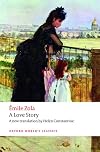
Despite its title, A Love Story is actually several different versions of love: the love of a mother for a child, passionate adulterous love, de rigueur society affairs, and the quiet love of close family friends are just a few. Love inspires many other emotions though, and in this novel rage and jealousy feature strongly.
Hélène Grandjean was a young widow living in Passy, just outside Paris proper. Her apartment had a magnificent view of the the city in the distance. Although she did not show more venture there, she spent many happy hours at her window, contemplating the city in its many moods. Hélène lived with her eleven year old daughter Jeanne, a sickly child, given to wild mood swings which seemed to induce illness if she encountered any opposition. Here the reader is in familiar Zola territory: the study of family and environment. Hélène was the daughter of Ursule Mouret, part of the first illegitimate generation of Macquarts, the unstable line in Zola's multigenerational family history. Hélène herself seemed free of any taint, but Jeanne clearly was a throwback.
When Jeanne started seizuring one night, Hélène was forced to search for a doctor, securing by chance her neighbour Doctor Deberle. The families got to know one another. Hélène and Deberle developed a strong mutual attraction. Hélène learned from listening and observing at Mme Deberle's that the bourgeois society in which she found herself thought nothing of adulterous affairs. She started wondering, then rationalizing.
Jeanne, however, had sensed the deepening connection between her doctor and her mother. Unsure what it meant, her child's psyche tried to defeat the doctor, paradoxically by becoming more ill. A Love Story followed the publication of L'Assommoir, and there are suggestions that Zola tamed it down following the critical reception of the depravity the public found in the latter. While that is true to a certain extent, Zola has directed his energy elsewhere, and in Jeanne, has created perhaps the most diabolical child in literature, one who would stop at nothing to punish those whom she felt had crossed her.
One afternoon when Hélène had rushed out of the flat, She had a vague feeling that her mother was somewhere where children were not allowed to go. She had not taken her, they were holding something from her. At these thoughts her heart tightened in inexpressible sadness and pain,
...
... she was suspicious and her face grew deathly pale with jealous rage. Suddenly the thought that her mother must love the people she had rushed to see more than her... caused her to clutch her chest with both hands. Now she knew. Her mother was betraying her.
Sitting at the window where her mother had spent so much time, Jeanne too surveyed the skyline. Jeanne at the window coughed violently. But she felt that by being cold she was getting her revenge, she wanted to be ill. Her hands held against her chest, she felt her discomfort increase. She was suffering and her body was delivering itself up to it.
This novel is divided into five parts. Each of the first four ends at this window, allowing Zola to show Paris in its infinite variety of moods and colours. In the end, A Love Story]is not only a story of mere mortals, it is Zola's declaration of love to his city. All else may fall away, but Paris will never fail to arouse the emotions. show less
Hélène Grandjean was a young widow living in Passy, just outside Paris proper. Her apartment had a magnificent view of the the city in the distance. Although she did not show more venture there, she spent many happy hours at her window, contemplating the city in its many moods. Hélène lived with her eleven year old daughter Jeanne, a sickly child, given to wild mood swings which seemed to induce illness if she encountered any opposition. Here the reader is in familiar Zola territory: the study of family and environment. Hélène was the daughter of Ursule Mouret, part of the first illegitimate generation of Macquarts, the unstable line in Zola's multigenerational family history. Hélène herself seemed free of any taint, but Jeanne clearly was a throwback.
When Jeanne started seizuring one night, Hélène was forced to search for a doctor, securing by chance her neighbour Doctor Deberle. The families got to know one another. Hélène and Deberle developed a strong mutual attraction. Hélène learned from listening and observing at Mme Deberle's that the bourgeois society in which she found herself thought nothing of adulterous affairs. She started wondering, then rationalizing.
Jeanne, however, had sensed the deepening connection between her doctor and her mother. Unsure what it meant, her child's psyche tried to defeat the doctor, paradoxically by becoming more ill. A Love Story followed the publication of L'Assommoir, and there are suggestions that Zola tamed it down following the critical reception of the depravity the public found in the latter. While that is true to a certain extent, Zola has directed his energy elsewhere, and in Jeanne, has created perhaps the most diabolical child in literature, one who would stop at nothing to punish those whom she felt had crossed her.
One afternoon when Hélène had rushed out of the flat, She had a vague feeling that her mother was somewhere where children were not allowed to go. She had not taken her, they were holding something from her. At these thoughts her heart tightened in inexpressible sadness and pain,
...
... she was suspicious and her face grew deathly pale with jealous rage. Suddenly the thought that her mother must love the people she had rushed to see more than her... caused her to clutch her chest with both hands. Now she knew. Her mother was betraying her.
Sitting at the window where her mother had spent so much time, Jeanne too surveyed the skyline. Jeanne at the window coughed violently. But she felt that by being cold she was getting her revenge, she wanted to be ill. Her hands held against her chest, she felt her discomfort increase. She was suffering and her body was delivering itself up to it.
This novel is divided into five parts. Each of the first four ends at this window, allowing Zola to show Paris in its infinite variety of moods and colours. In the end, A Love Story]is not only a story of mere mortals, it is Zola's declaration of love to his city. All else may fall away, but Paris will never fail to arouse the emotions. show less
Lists
French Books (7)
Overdue Podcast (1)
french letters (1)
AP Lit (1)
Five star books (1)
psychological (1)
Read in 2013 (1)
Slightly Foxed 2 (1)
100 knjiga (1)
Short and Sweet (1)
Vine Reads (1)
1890s (1)
. (1)
Out of Copyright (1)
stories at work (1)
Disco Elysium (1)
BBC Big Read (1)
Country Life (1)
Folio Society (1)
Franklit (1)
A Novel Cure (2)
Europe (3)
19th Century (3)
Favourite Books (7)
War Literature (1)
Take Four Books (1)
THE WAR ROOM (1)
Schwob Nederland (1)
Sense of place (2)
Awards


You May Also Like


Associated Authors
Statistics
- Works
- 702
- Also by
- 62
- Members
- 35,792
- Popularity
- #524
- Rating
- 3.9
- Reviews
- 728
- ISBNs
- 3,438
- Languages
- 34
- Favorited
- 145


