
Gustave Flaubert (1821–1880)
Author of Madame Bovary
About the Author
Born in the town of Rouen, in northern France, in 1821, Gustave Flaubert was sent to study law in Paris at the age of 18. After only three years, his career was interrupted and he retired to live with his widowed mother in their family home at Croisset, on the banks of the Seine River. Supported by show more a private income, he devoted himself to his writing. Flaubert traveled with writer Maxime du Camp from November 1849 to April 1851 to North Africa, Syria, Turkey, Greece, and Italy. When he returned he began Madame Bovary, which appeared first in the Revue in 1856 and in book form the next year. The realistic depiction of adultery was condemned as immoral and Flaubert was prosecuted, but escaped conviction. Other major works include Salammbo (1862), Sentimental Education (1869), and The Temptation of Saint Antony (1874). His long novel Bouvard et Pecuchet was unfinished at his death in 1880. After his death, Flaubert's fame and reputation grew steadily, strengthened by the publication of his unfinished novel in 1881 and the many volumes of his correspondence. (Bowker Author Biography) show less
Series
Works by Gustave Flaubert
Bouvard and Pecuchet with The Dictionary of Received Ideas (Penguin Classics) (1976) 488 copies, 3 reviews
Bouvard et Pécuchet - Sottisier - L'Album de la Marquise - Le Dictionnaire des idées reçues (1999) 85 copies
Five Novels: Madame Bovary / Salammbô / Sentimental Education / The Temptation of Saint Anthony / Bouvard and Pécuchet (2007) 65 copies, 1 review
Flaubert : Correspondance, tome 2 Juillet 1851 - Décembre 1858 (1980) — Author — 30 copies, 1 review
Three short works The Dance of Death, the Legend of Saint Julian the Hospitaller, a Simple Soul. (2004) 23 copies, 2 reviews
Flaubert : Correspondance, tome 3 Janvier 1859 - Décembre 1868 (1991) — Author — 18 copies, 1 review
La Tentación de San Antonio; Un Corazón Sencillo; San Julián el Hospitalario; Herodías (1975) 14 copies
Œuvres complètes 2: L'education sentimentale: trois contes: Bouvard et pécuchet: Le dictionnaire des idées recues: Theatre: Voyages (1996) 10 copies
Collected Works of Gustave Flaubert One Volume Edition (The Giant International Series) (2017) 9 copies
Gustave Flaubert : Oeuvres complètes et Annexes - 69 titres (Nouvelle édition enrichie) (French Edition) (2014) 7 copies
Oeuvres 5 copies
Madame Bovary ; L'Éducation sentimentale ; Bouvard et Pécuchet ; Dictionnaire des idées reçues ; Trois contes (1981) 5 copies, 1 review
The Temptation of St. Antony, or, a Revelation of the Soul | Over Strand and Field: a Record of Travel Through Brittany (2007) 5 copies
OEuvres completes II, III: (1845-1862) [Bibliotheque de la Pleiade] (Bibliothèque de la Pléiade) (French Edition) (2013) 5 copies
Rakas vanha trubaduuri : George Sandin ja Gustave Flaubertin kirjeenvaihtoa vuosilta 1863-1876 (2007) 5 copies
YoungELIReaders-Fables:Lerenardetlesraisins VideoMulti-ROM[VHS]: Le renard et les raisins downloadable multimedia (2017) 4 copies
FRENCH BELLES-LETTRES: 1640-1870 Illustrated with Photogravures on Japan Vellum & Full Page Portraits of Authors: Paul Scarron, Count Volney, Prosper Merimee, Gustave Flaubert,… (1901) 4 copies, 1 review
The candidate ; The castle of hearts ; The legend of St. Julien the Hospitaller (The complete works of Gustave Flau (2012) 3 copies
Oeuvres / texte établi et annoté par A. Thibaudet et R. Dumesnil (1936) — Author — 3 copies, 1 review
From Flaubert to the Present: French Stories — Contributor — 3 copies
Lettres de Grèce 3 copies
Lettres inédites : De Gustave Flaubert à son éditeur Michel Lévy, correspondance présentée par Jacques Suffel (1965) 3 copies
L'educazione sentimentale 2 copies
La betise, l'art et la vie: En ecrivant Madame Bovary (Le Regard litteraire) (French Edition) (1991) 2 copies
Uren met Flaubert : inleiding met fragmenten uit Flaubert's brieven, en vertalingen uit zijne werken 2 copies
Bouvard & Pécuchet, Oeuvre Posthume 2 copies
Salambó : texto original completo 2 copies
Bà Bôvary 2 copies
Madame Bovary : extracts 2 copies
Adolescencia 2 copies
The Works of Gustave Flaubert 2 copies
Flaubert, Correspondance, Supplément, Recueillie, Classee et Annotee par Dumesnil, Pommier et Digeon (1864 - 1871 (1954) 2 copies
Souvenirs, notes et pensées intimes 2 copies
Cuentos 2 copies
Избранные сочинения 2 copies
Bouvard et Pécuchet : Avec des fragments du second volume, dont le Dictionnaire des idées reçues 2 copies
Ermiş Antonius ve Şeytan 2 copies
FLAUBERT, CORRESPONDANCE, NOUVELLE EDITION AUGMENTEE, NEUVIEME SERIE (1880) INDEX ANALYTIQUE (9) (1933) 2 copies
Voyages. T. II: (Orient et Arique) 2 copies
Flaubert Correspondance: Quatriéme 1869-1880 — Author — 2 copies
Flaubert Correspondance: Troisième Série 1854-1869 — Author — 2 copies
Bouvard e P©♭cuchet 2 copies
Tre fortl̆linger 1 copy
Giáo dục tình cảm 1 copy
Ba truyện kể 1 copy
Salammbô Illustrated 1 copy
Tiga Cerita 1 copy
Salomé 1 copy
Aforismos 1 copy
Frau Bovary 1 copy
Flaubert's Three Tales 1 copy
Lettres à Maupassant 1 copy
Passion et vertu 1 copy
Mándame Bovary 1 copy
Bouvard and Pecuchet Volume IX: A Tragi-Comic Novel of Bourgeois Life (Volume I) by Gustave Flaubert (1904) 1 copy
SENTIMENTAL EDUCATION 1 copy
Kasım 1 copy
Madame Bovary 1 copy
Salammbo 1 copy
Salambo, vol I 1 copy
Salambô, vol II 1 copy
Oeuvres T5 1 copy
Saf Bir Yürek 1 copy
Bovari kundze. Romāns 1 copy
Kuszenie świętego Antoniego 1 copy
Listy do Luizy 1 copy
LETRA DASHURIE 1 copy
Herbert Lottman 1 copy
Franca Esperantisto 1 copy
Oeuvres T1 1 copy
Szkoła uczuć 1 copy
Flaubert's dictionary of accepted ideas. Translated with an introduction and notes by Jacques Barzun. (1954) 1 copy
Kasım 1 copy
Os imortais 1 copy
Mandame Bovary 1 copy
A simple heart 1 copy
Correspondance De Flaubert, Nouvelle Edition Augmentee, Sixieme Serie (1869 - 1872) (6) (1930) 1 copy
Correspondance: Nouvelle Edition Augmentee, Deuxieme Serie 1847-1852 (Oeuvres Completes de Gustave Flaubert) (1926) 1 copy
Bir Delikanlının Romanı 1 copy
Bibliyomani 1 copy
আহাম্মকের অভিধান 1 copy
Pisma 1 copy
Госпожа Бовари. Новеллы 1 copy
Саламбо / Клеопатра 1 copy
Саламбо 1 copy
Твори в двох томах 1 copy
Madame bovary 1 copy
L'opera e il suo doppio 1 copy
Madame Bocary 1 copy
Sallambô 1 copy
La tentación de San Antonio Un corazón sencillo. La leyenda de San Julián el Hospitalario. Heredías 1 copy
Három mese 1 copy
French Classics in French and English: Three Tales by Gustave Flaubert (Dual-Language Book) (French Edition) (2012) 1 copy
Cehennem Rüyası 1 copy
سلامبو 1 copy
مدام بوفاري 1 copy
L' Education Sentimentale ( Préface, Notes, Variantes De Edouard Maynial ) - Cercle Du Bibliophile 1 copy
℗L'℗educazione sentimentale 1 copy
Madam Bovary 1 copy
Yksinkertainen sydän 1 copy
Αισθηματική Αγωγή 1 copy
Ik begrijp alle dingen 1 copy
Œuvres 1 copy
vol IV: Salammbo: A Romance of Ancient Carthage part II — Author — 1 copy
Breve før berømmelsen 1 copy
Flaubert Oeuvres 1 copy
Racconti neri 1 copy
Hjertets skole I — Author — 1 copy
Hjertets skole II — Author — 1 copy
Dopisy 1 copy
Gustave Flaubert művei 1 copy
The Best Known Works Of Gustave Flaubert: Madame Bovary, The Temptation Of Saint Anthony (1941) 1 copy
Odabrana djela (Novembar, Tri priče, Iskušenje svetog Antuna) — Author — 1 copy
The Complete Works of Gustave Flaubert : embracing romances, travels, comedies, sketches, and correspondence (1904) 1 copy
vol III: Salammbo: A Romance of Ancient Carthage part I — Author — 1 copy
Opere 1 copy
Oeuvres [vol 1-2/2] 1 copy
Selected Correspondence 1 copy
Dance of Death 1 copy
Correspondance 1853-1856 1 copy
Castle of Hearts 1 copy
Briefe über seine Werke 1 copy
Rabelais [critique] 1 copy
Tagebücher 1 copy
Two Famous Novels 1 copy
L'education sentimentale-Bouvard et Pecuchet — Author — 1 copy
A SIMPLE HEART. Plus HERODIAS. Beaux Art Classics — Author — 1 copy
Textes de jeunesse Tome 2 — Author — 1 copy
Première œuvres 1 copy
Jugendbriefe 1 copy
Notes de voyages 1 copy
I capolavori 1 copy
Cartago, enemigos de Roma 1 copy
Herodias and Other Works by Gustave Flaubert (Unexpurgated Edition) (Halcyon Classics) (2009) 1 copy
Die größten Liebesromane der Weltliteratur: Madame Bovary - Effi Briest - Rot und Schwarz - Anna Karenina (2013) 1 copy
Novelas completas 1 copy
Salammbô 1 copy
L'amour de l'art 1 copy
OEUVRES COMPLETES 1 1 copy
Théâtre 1 copy
Gospoda Bovari 1 copy
Razones y osadías 1 copy
Tři povídky 1 copy
Un cœur simple - Gustave Flaubert - Texte intégral: Édition illustrée | 36 pages Format 15,24 cm x 22,86 cm (French Edition) (2020) 1 copy
Ein einfältig Herz 1 copy
Tentazione di Sant’Antonio 1 copy
Lettere alla musa 1 copy
Oeuvres Completes De Gustave Flaubert: Correspondance, Quatrieme Serie (1854-1861), Volume 4 (1927) 1 copy
Cartas del viaje a Oriente 1 copy
The Dance of Death 1 copy
Gustave Flaubert. Souvenirs, notes et pensées intimes : . Avant-propos de Lucie Chevalley Sabatier (1965) 1 copy
L'amour de l'art 1 copy
Fiche de lecture L'Éducation sentimentale de Gustave Flaubert (Analyse littéraire de référence et résumé complet) (2019) 1 copy
A Simple Soul illustrated 1 copy
Ik begrijp alle ondeugden 1 copy
Amor al Arte 1 copy
Análisis de Madame Bovary 1 copy
L'éducation senimentale II 1 copy
Associated Works
Literature: An Introduction to Fiction, Poetry, and Drama (1995) — Contributor, some editions — 1,025 copies, 7 reviews
The Graphic Canon, Vol. 2: From "Kubla Khan" to the Brontë Sisters to The Picture of Dorian Gray (2012) — Contributor — 213 copies, 2 reviews
Best-Loved Short Stories: Flaubert, Chekhov, Kipling, Joyce, Fitzgerald, Poe and Others (2004) — Contributor — 34 copies
Lapham's Quarterly - Lines of Work: Volume IV, Number 2, Spring 2011 (2011) — Contributor — 32 copies, 2 reviews
I magnifici 7 capolavori della letteratura francese (eNewton Classici) (Italian Edition) (2013) 5 copies
Hoog zomerboek : dertien romans, novellen en lange verhalen van Gabriel García Márquez, Roald Dahl, Herman Koch, David (1994) — Contributor — 3 copies
Profil littérature, profil d'une oeuvre : Flaubert : Madame Bovary (12 sujets corrigés) (1995) — Contributor — 2 copies
Ingeborg Bachmann in Ägypten. 'Landschaft, für die Augen gemacht sind.' (1996) — Contributor — 2 copies
Narrativa romántica francesa — Contributor — 1 copy
Opowiadania Pisarzy Francuskich Dziewiętnastego Wieku — Contributor — 1 copy
Gefährliche Ferien - Bretagne und Atlantikküste: mit Martin Walker und vielen anderen (detebe) (2019) — Contributor — 1 copy
Tagged
Common Knowledge
- Canonical name
- Flaubert, Gustave
- Birthdate
- 1821-12-12
- Date of death
- 1880-05-08
- Gender
- male
- Education
- Lycée Pierre-Corneille, Rouen
- Occupations
- novelist
short story writer
playwright - Awards and honors
- Légion d'Honneur (1866)
- Relationships
- Colet, Louise (lover)
- Cause of death
- cerebral hemorrhage
- Nationality
- France
- Birthplace
- Rouen, Normandy, Kingdom of France
- Places of residence
- Rouen, France
Paris, Île-de-France, France
Croisset, France - Place of death
- Croisset, Canteleu, Rouen, French Third Republic
- Burial location
- family vault, Rouen Monumental Cemetery, Rouen, France
- Map Location
- France
Members
Discussions
New LE: Madame Bovary in Folio Society Devotees (March 2024)
Madame Bovary in Someone explain it to me... (January 2023)
Madame Bovary LE - help me decide in Folio Society Devotees (September 2021)
Madame Bovary- Bowie's top 100 Group Read in 75 Books Challenge for 2016 (October 2016)
Madame Bovary: Part 3 in Group Reads - Literature (April 2011)
Madame Bovary: Part 2 in Group Reads - Literature (March 2011)
Reviews
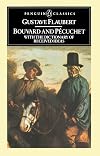
I left my reading about ten pages before the end of this incomplete novel. It ends arbitrarily, so on a whim, or a plan, I ended it. I haven’t given the last pages another thought. I read Flaubert’s ‘plan’ that comes afterwards. But that fittingly too is incomplete and in keeping with the non-‘end’.
At the beginning, I thought Bouvard and Pecuchet would wander around Paris together. But that lasted only for a few pages. I followed where they went on google maps to no end, either. show more I thought I might be reading the earliest version of Samuel Beckett's Mercier et Camier. But I was wrong. B & P moved to the country and physically stayed put. Intellectually, they sort of move in circles.
They pursue human knowledge systems. Though in reality that is a grandiose description of their idiotic pursuits, which are grandiose in approach, too. They try everything, philosophy, palaeontology, medicine, etc etc. Their approach starts in one place and abruptly changes, they are incomplete learners. Their entire experience reminds me of spending an evening searching for something on the web, only to end up in dark places, or places I didn’t expect. No knowledge gained, but much time lost.
My favourite is agriculture. I could see the disasters and read with one hand covering my eyes peaking through the gaps in my fingers at this cerebral slapstick.
The tone is comic, or heightened to focus on the folly of B & Ps mission. Along the way, we know some of their ideas are stupid, only because we know they are false - as history has told us. They argue regularly with the town’s curé when their inclination goes to matters of religion. They espouse nonsense they just read, and half understood, from books. But the curé’s answers are just as daft anyway. Imagine people espousing stupid ideas to each other across an intellectual abyss. Sounds familiar. Sounds modern.
Some of the writing is wonderful. Here is a comic moment following an argument in the rain:
The water ran along his spine into to his boots, his ears, his eyes, despite the peak of his Amoros cap, the curé picked up the skirts of his cassock with one arm, baring his legs, and the points of his tricorn gushed water over his shoulders like gargoyles in a cathedral
Arguments come and go, started enthusiastically, easily derailed. Little time is spent mastering a system of knowledge:
‘Oh! You are sophist!’ And Pecuchet was so vexed he sulked for three days… They both confessed that they were tired of philosophers. So many systems only confuse you. Metaphysics is useless. One can live without it.
But their quest goes on regardless. Another human knowledge system is pursued yet again. And then again. They must attempt it at least. Do they die? I’ll never know. I didn’t finish, nor did Flaubert. But I can imagine the two of them dancing their way to heaven, having refuted it. Perhaps only changing dance steps along the way. show less

Flaubert is mostly known for Madame Bovary, but when I first heard of Salammbo I was instantly intrigued. A sword-and-sandal epic set in Carthage during the Mercenary Revolt after the First Punic War? Sign me up! While reading I could see how it influenced later fantasy stories such as Conan the Barbarian and Elric, despite being a work of historical fiction. All the ingredients were there: larger-than-life warriors, sensual priestesses (with the essential accessory of a pet snake), decadent show more empires, lurid descriptions of battle, lavishly described feasts. Though Salammbo eschews psychological insight in favor of evocative descriptions of a fantastical Carthage, I found it unputdownable once the action got going and devoured the novel over the course of a few hours. show less
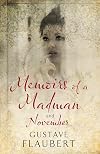
Finally getting my first taste of Flaubert in the original French, and I decided to start with something shorter to build myself up to finally getting to read Bovary (which is part of the final motivation for me to begin this attempt to learn to read French to begin with). Mémoires d'un fou is a strange little tome - Flaubert wrote it when he was 17, and once you know this you find it unmistakably the work of a teenage boy... and yet already there were the first shoots of what was to become show more a great talent.
The book is structured quite oddly - there's a main story of sorts, a first (and frustrated) love that shapes the first person narrator indelibly, yet this also contains plenty of other remembrances/reflections on youth that feel more like something from a personal journal, as well as some adolescent philosophy along the way. The last of these three is definitely the worst of the structures and moods the story explores, sometimes becoming quite tedious or trite even though the core mode of thinking is one Flaubert would more or less stick to for the rest of his life with much more development and nuance (and if you ever doubt the extent to which Emma Bovary was in good part a personalisation of Flaubert himself, and his own scathing and mordant wit a kind of self-criticism, you can find it here in barrels). The more nostalgic and melancholic sections on the other hand feel oddly as if they're in an early lineage with what Nerval would do in Sylvie 20 years or so later and which would eventually form the basis of Proust's project, a commonality it's difficult to find between the two great French writers elsewhere.
Already the core elements of the kind of romanticist/realist blend Flaubert would master are in evidence and if at times this made me double-take or roll my eyes, I found that in the closing chapters I was quite moved and that at points the great writer who could turn a phrase as if wielding a dagger into your heart was already in evidence this early on. As much as this is juvenilia, a first draft of a confessional novel that feels very obviously a first draft, it's times like this I'm reminded that however good my own writing may one day get I'm operating a thousand leagues below what Gustave was capable of before he was even fully an adult... depressing for me but at least we all got to experience the benefits.
Also if you're into psychoanalysis you'll get a lot of grist for the mill out of all the sexual elements at play here. Be prepared.
________
Found this a really gentle read that I completed in a single day - had to do some word look-ups but this came close to extensive reading. show less
The book is structured quite oddly - there's a main story of sorts, a first (and frustrated) love that shapes the first person narrator indelibly, yet this also contains plenty of other remembrances/reflections on youth that feel more like something from a personal journal, as well as some adolescent philosophy along the way. The last of these three is definitely the worst of the structures and moods the story explores, sometimes becoming quite tedious or trite even though the core mode of thinking is one Flaubert would more or less stick to for the rest of his life with much more development and nuance (and if you ever doubt the extent to which Emma Bovary was in good part a personalisation of Flaubert himself, and his own scathing and mordant wit a kind of self-criticism, you can find it here in barrels). The more nostalgic and melancholic sections on the other hand feel oddly as if they're in an early lineage with what Nerval would do in Sylvie 20 years or so later and which would eventually form the basis of Proust's project, a commonality it's difficult to find between the two great French writers elsewhere.
Already the core elements of the kind of romanticist/realist blend Flaubert would master are in evidence and if at times this made me double-take or roll my eyes, I found that in the closing chapters I was quite moved and that at points the great writer who could turn a phrase as if wielding a dagger into your heart was already in evidence this early on. As much as this is juvenilia, a first draft of a confessional novel that feels very obviously a first draft, it's times like this I'm reminded that however good my own writing may one day get I'm operating a thousand leagues below what Gustave was capable of before he was even fully an adult... depressing for me but at least we all got to experience the benefits.
Also if you're into psychoanalysis you'll get a lot of grist for the mill out of all the sexual elements at play here. Be prepared.
________
Found this a really gentle read that I completed in a single day - had to do some word look-ups but this came close to extensive reading. show less
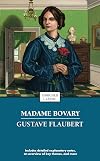
I came to Madame Bovary bearing in mind two quotes: author Dan Simmons' claim that it "separated the history of novels into two categories — Before Madame Bovary and After Madame Bovary"; and what Henry James said, that this novel "has a perfection that not only stamps it, but that makes it stand almost alone". The consensus is that Flaubert exhibited himself as a master of style in writing this novel, employing Realism in its detail of commoners' lives, his exacting word choice and show more descriptions. Letters written by Flaubert at the time speak to his frustration and despair at ever achieving the perfection he was aiming for ("Writing this book I am like a man playing the piano with lead balls attached to his knuckles."), but posterity has since brushed away those fears and Madame Bovary is found, over and over again, on lists of the best novels ever written in any language.
I'm a poor scholar who could not have recognized any of these facts if I'd not been hit over the head with them beforehand. The book I read appears fairly straightforward, simple. That may be its deception. The sentence structure, as Mr. Simmons has pointed out, is purposely perfect throughout for reading aloud, in its lengths and pauses. I did admire the wonderful choices of detail in describing a scene or characters' actions, and the way Flaubert expertly described difficult-to-capture feelings through metaphor. I'm extremely curious how much of the novel's vaunted perfection is lost in translation from French to English, but still I can be appreciative of what comes across. My final impression of the novel's style is that, while I can't point to exactly what its perfection entails, I sense the evidence sufficiently well to accept the opinions of my scholastic betters at face value.
I've not yet addressed what the novel is about. A woman married to a country doctor becomes dissatisfied with her present circumstances, comparing it always to an alternative of which she dreams. Her fatal flaw lies in believing happiness is delivered to oneself as a package with a particular setting, with particular accoutrements. She lives in her dreams of a fantasy life that is expressly free of all domestic concerns, thoughts for others, practical matters. Her desire for its attainment becomes her only goal of worth, to be had at any cost, for which she begins to excuse herself any action. It is her fascination with the fantasy life she dreams of obtaining that continuously places more distance between her and reality, until she becomes susceptible to those who would take advantage. With even so little external validation as that, she loses all ability to distinguish between fantasy and reality and becomes lost thereafter.
What does it all mean? It's unlikely to simply be a commentary on the immorality of adultery. I've gathered Flaubert was no fan of the bourgeoisie, and this novel may summarize his views: their fascination with haute-culture, their equating it with happiness, and how very far from happiness this attitude taken to its extreme might lead. The flip side interpretation is that Emma's flights of fancy are in fact condoned by the author as insightfulness into beauty, which the staid bourgeoisie community surrounding her is entirely blind even to imagining. Either way, bourgeoisie get the shaft.
I'm going to dare a criticism and say, what I felt missing was Madame's inner thoughts and feelings which led her into marriage. They are so quickly mentioned and then put behind her, I barely grasped what placed her in her predicament. It would have been more satisfying to me had more of the initial story been told from her perspective, so we could witness and better understand what her impressions and expectations of Charles had been. Perhaps Flaubert felt this was irrelevant to his story, or sufficiently described and/or implied as it stands, and perhaps a million critics before me have agreed with him - but I wonder at it. In spite of that, what I won't dare is to give this novel a less than perfect score. show less
I'm a poor scholar who could not have recognized any of these facts if I'd not been hit over the head with them beforehand. The book I read appears fairly straightforward, simple. That may be its deception. The sentence structure, as Mr. Simmons has pointed out, is purposely perfect throughout for reading aloud, in its lengths and pauses. I did admire the wonderful choices of detail in describing a scene or characters' actions, and the way Flaubert expertly described difficult-to-capture feelings through metaphor. I'm extremely curious how much of the novel's vaunted perfection is lost in translation from French to English, but still I can be appreciative of what comes across. My final impression of the novel's style is that, while I can't point to exactly what its perfection entails, I sense the evidence sufficiently well to accept the opinions of my scholastic betters at face value.
I've not yet addressed what the novel is about. A woman married to a country doctor becomes dissatisfied with her present circumstances, comparing it always to an alternative of which she dreams. Her fatal flaw lies in believing happiness is delivered to oneself as a package with a particular setting, with particular accoutrements. She lives in her dreams of a fantasy life that is expressly free of all domestic concerns, thoughts for others, practical matters. Her desire for its attainment becomes her only goal of worth, to be had at any cost, for which she begins to excuse herself any action. It is her fascination with the fantasy life she dreams of obtaining that continuously places more distance between her and reality, until she becomes susceptible to those who would take advantage. With even so little external validation as that, she loses all ability to distinguish between fantasy and reality and becomes lost thereafter.
What does it all mean? It's unlikely to simply be a commentary on the immorality of adultery. I've gathered Flaubert was no fan of the bourgeoisie, and this novel may summarize his views: their fascination with haute-culture, their equating it with happiness, and how very far from happiness this attitude taken to its extreme might lead. The flip side interpretation is that Emma's flights of fancy are in fact condoned by the author as insightfulness into beauty, which the staid bourgeoisie community surrounding her is entirely blind even to imagining. Either way, bourgeoisie get the shaft.
I'm going to dare a criticism and say, what I felt missing was Madame's inner thoughts and feelings which led her into marriage. They are so quickly mentioned and then put behind her, I barely grasped what placed her in her predicament. It would have been more satisfying to me had more of the initial story been told from her perspective, so we could witness and better understand what her impressions and expectations of Charles had been. Perhaps Flaubert felt this was irrelevant to his story, or sufficiently described and/or implied as it stands, and perhaps a million critics before me have agreed with him - but I wonder at it. In spite of that, what I won't dare is to give this novel a less than perfect score. show less
Lists
A Novel Cure (1)
Europe (1)
current (1)
el (1)
Take Four Books (1)
Folio Society (1)
. (1)
Realism (1)
bound (1)
100 (1)
Five star books (1)
important (1)
Read (1)
Unread books (1)
. (1)
Women's Stories (1)
Reading LIst (1)
Short and Sweet (1)
BitLife (1)
First Novels (1)
BBC Big Read (1)
Favourite Books (2)
Romans (1)
Books I've read (1)
Cooper (1)
100 knjiga (2)
My TBR (3)
French Books (3)
19th Century (2)
AP Lit (1)
Mitski! (1)
Read This Next (1)
BBC Top Books (1)
Western Canon (1)
Florida (1)
Read in 2006 (1)
Read in 2015 (1)
Out of Copyright (1)
Elegant Prose (1)
1850s (1)
Overdue Podcast (1)
Awards


You May Also Like


Associated Authors
Statistics
- Works
- 563
- Also by
- 52
- Members
- 49,439
- Popularity
- #313
- Rating
- 3.8
- Reviews
- 699
- ISBNs
- 2,888
- Languages
- 43
- Favorited
- 147


