
Arthur Ransome (1884–1967)
Author of Swallows and Amazons
About the Author
Children's author Arthur Ransome was born in Leeds, England on January 18, 1884. As a child, he spent many vacations sailing, camping, and exploring the countryside in England's Lake Country. He studied chemistry for one year at Yorkshire College before dropping out to become a writer. He worked show more for a London publisher and then for the Manchester Guardian newspaper. He wrote his first book, Bohemia in London, in 1907 and went to study folklore in Russia in 1913. In 1916, he published Old Peter's Russian Tales, a collection of 21 folktales. During World War I, he became a reporter for the Daily News and covered the war on the Eastern Front. While in Russia, he also covered the Russian Revolution in 1917. He eventually settled in England's Lake District with his second wife. In 1929, he wrote Swallows and Amazons, which was the first book in his well-know Swallows and Amazons series about children who sail and explore the lakes and mountains of England. He drew inspiration for the books from his own childhood memories. In 1936, he won the Carnegie Medal for children's literature for Pigeon Post. He died on June 3, 1967. (Bowker Author Biography) show less
Series
Works by Arthur Ransome
The twilight years 3 copies
Swallows and Amazons Series Collection Series 4 Books (Winter Holiday, Peter Duck, Swallowdale, Swallows and Amazons) Book for Childrens (2018) 3 copies
Svalerne og Den mystiske Mand 2 copies
Svalerne som Guldgravere 2 copies
Svalerne på Skatteneøen 2 copies
Svalerne på Opdagelse 2 copies
Svalerne og den Sorte Skonnert 2 copies
Highways and byways in fairy land 2 copies
Svalerne Gar I Land 2 copies
Svalerne og Piraterne 2 copies
Svalerne på Fastlandet 2 copies
Fecske-vl̲gy. Regňy 1 copy
Drawn at a venture 1 copy
[Unknown] 1 copy
Pierre Canné [manuscript] 1 copy
Associated Works
Daemon Voices: On Stories and Storytelling (2017) — Illustrator, some editions — 737 copies, 9 reviews
Sailing alone around the world, and Voyage of the Liberdade (1948) — Introduction, some editions — 158 copies, 3 reviews
Oscar Wilde: Collection of 300 Classic Works with Analysis and Historical Background (2013) — Contributor — 13 copies
Stories by Daudet and Coppée — Editor — 3 copies
Then and Now. A Selection of Articles, Stories & Poems, Taken from the First Fifty Numbers of ‘Now & Then’, 1921–35. Together with Some Illustrations, etc. (1935) — Contributor — 2 copies
You and your reading — Contributor, some editions — 1 copy
Stories for girls — Contributor — 1 copy
Tagged
Common Knowledge
- Legal name
- Ransome, Arthur Michell
- Other names
- Ransome, Arthur M.
Blunt, William (pseudonym|1939-1940) - Birthdate
- 1884-01-18
- Date of death
- 1967-06-03
- Gender
- male
- Education
- Old College, Windermere
Rugby School
Yorkshire College - Occupations
- journalist
foreign correspondent
literary critic
columnist
sailor
fisherman (show all 9)
children's author
illustrator
autobiographer - Organizations
- Temple Bar Magazine (editor)
Daily News
Manchester Guardian
London Library (1903-)
Garrick Club (member|1943-) - Awards and honors
- DLitt (h.c. ∙ Durham University)
- Relationships
- Ransome, Cyril (father)
Lupton, Joyce (sister)
Lupton, Hugh (great-nephew) - Short biography
- Arthur Ransome used the pseudonym William Blunt as a reviewer of new detective novels for The Observer between 1939 and 1940.
- Nationality
- UK
- Birthplace
- Leeds, Yorkshire, England, UK
- Places of residence
- Leeds, Yorkshire, England, UK (birthplace)
London, England, UK
Petersfield, Hampshire, England, UK
Hatch, Wiltshire, England, UK
St. Petersburg, Russia
Riga, Latvia (show all 10)
Ludderburn, Cumbria, England, UK
Levington, Suffolk, England, UK
Nibthwaithe, Lancashire, England, UK
Haverthwaite, Lancashire, England, UK - Place of death
- Cheadle, Cheshire, UK
- Burial location
- Rusland churchyard, England
- Map Location
- England, UK
Members
Discussions
Arthur Ransome in Legacy Libraries (August 2013)
Reviews

Lovely as always. Every time I read this book I'm struck by how much freedom these kids are allowed - can you imagine a modern parent allowing a 7-year-old up to a maybe 11- or 12-year-old to go out on the water, sail their own boat, camp on an island that can't easily be reached (half an hour by rowing boat)....? The adventures Titty makes up aren't a patch on the real thing, what they're actually doing. It's wonderful. I read this first when I was about Titty's age, though I always show more identified with John (as the eldest, and the responsible and capable one). Susan never really appealed to me - she apparently enjoys doing all the camp work and the like, but it would drive me nuts. And Roger was and is too young and silly (rash, thoughtless, adventurous...) to suit me. But between them, and Nancy and Peggy, there's someone to appeal to everyone. You can actually learn at least some of the concepts of sailing and camping from the book, too - there's details of how to lay a fire, what to watch for when sailing before the wind, and so on. And what to do - and not to do - when things go wrong, as well. Good story, that has rewarded multiple rereads in the last 30-some years. show less

The four Walker children are back on Wild Cat Island, eager for another summer of adventure with the pirates, Nancy and Peggy. Unfortunately, the Blackett girls are marooned at home with a dreadfully traditional great-aunt, who wants them in pinafores and reciting poetry. While out exploring, John runs the Swallow into a rock, and they must swim for it. Shipwrecked on shore while the Swallow is under repairs, they discover a hidden vale, perfect for a temporary camp. More adventures await as show more they cross the moors to sneak into Beckfoot under cover of darkness to meet the crew of the Amazon, climb the rugged Kanchenjunca, get lost in fog, and more. Swallows and Amazons forever!
I love both the idea of children having adventures without adult hovering and Ransome's writing. The kids are allowed to create imaginary worlds and test themselves in the real one. Sailing, camping, and hiking on their own gives them a resiliency and ability to problem-solve that makes them seem older than they are, yet their make-believe world is very much the product of children. Ransome writes with such detail and understanding that it is no surprise to me that his books draw upon his own experiences with his brother and sisters growing up. Like the Walkers, they would go to a lake for the summer holidays and were set free to explore the lake and hills. What I wouldn't give to have had such a childhood! Fortunately, landlubbers like myself have the books to carry us away and let us live such a childhood vicariously.
"It's no good their trying to make the owl call," said Roger. "They can't do it."
"What they're good at is ducks," said John. "I've never heard anybody quack so well as Peggy."
"Nobody can be good at everything," said Titty. show less
I love both the idea of children having adventures without adult hovering and Ransome's writing. The kids are allowed to create imaginary worlds and test themselves in the real one. Sailing, camping, and hiking on their own gives them a resiliency and ability to problem-solve that makes them seem older than they are, yet their make-believe world is very much the product of children. Ransome writes with such detail and understanding that it is no surprise to me that his books draw upon his own experiences with his brother and sisters growing up. Like the Walkers, they would go to a lake for the summer holidays and were set free to explore the lake and hills. What I wouldn't give to have had such a childhood! Fortunately, landlubbers like myself have the books to carry us away and let us live such a childhood vicariously.
"It's no good their trying to make the owl call," said Roger. "They can't do it."
"What they're good at is ducks," said John. "I've never heard anybody quack so well as Peggy."
"Nobody can be good at everything," said Titty. show less
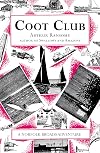
Coot Club was a trip of nostalgia, since it is one of Arthur Ransome's Swallows & Amazons books, but this time set in Norfolk, where I live. It was published 1934, but between then and the late 60s little had changed, other than the luxury of a fridge on board the wooden sailing boats. Ten years later most of these boats had been fitted with diesel engines so that quant poles (for pushing the boat along on windless days) were consigned to history. The story is wrapped around the tension show more arising between the locals in the form of the Coot Club, Tom and his friends, who sail the rivers and lakes and protect wildlife, and the "foreigners", who rent boats for holidays and tear up and down regardless of the courtesies of the rules of the road – which are there both for wildlife and other boaters. It's exciting, funny and with wonderful characters.
A couple of years back my brother hired a boat for a week’s holiday and I joined them for a day and did the exact sail that is described in the first part of the story – and nothing has changed. Ranworth and its wildlife, Horning and its races, holidaymakers in cruisers being flummoxed by sailing boats criss-crossing in front of them, the coots and moorhens nesting at the side of the river, the boom of the bitterns… the stuck-up cruiser sailors with their yachting caps (and in the 60s, their cravats!) and the women with strangely gaudy unsuitable clothing and loud voices. Oh, it’s all still there! I’d add that the main change which could stop this adventure happening now is the ubiquity of mobile phones, but given we’re in Norfolk, and only one network works at my house, I suspect that reception is patchy over the Broads, so maybe you could still have this rollicking adventure of the local boy protecting the wildlife, arousing the ire of the foreigners, who pursue him all over the Broads, causing havoc wherever they go. Maybe today’s kids wouldn’t be able to hitch a lift on a passing wherry, although you do still see the occasional one, but not a working one taking goods up the Yare to Norwich or down to Lowestoft.
Should it best be viewed as a historical novel for today’s kids? I suspect so. I had no trouble doing the same with Princess and the Goblin, or even Professor Branestawm. It’s a cracking story that rips along and got me thoroughly engrossed in it. I’m just not sure today’s youngsters would enjoy it unless they have a keen interest in wildlife or sailing. And that’s the only reason I wouldn’t give it five stars. Oh hang it, it's brilliant and I loved it – I’ll give it five stars! show less
A couple of years back my brother hired a boat for a week’s holiday and I joined them for a day and did the exact sail that is described in the first part of the story – and nothing has changed. Ranworth and its wildlife, Horning and its races, holidaymakers in cruisers being flummoxed by sailing boats criss-crossing in front of them, the coots and moorhens nesting at the side of the river, the boom of the bitterns… the stuck-up cruiser sailors with their yachting caps (and in the 60s, their cravats!) and the women with strangely gaudy unsuitable clothing and loud voices. Oh, it’s all still there! I’d add that the main change which could stop this adventure happening now is the ubiquity of mobile phones, but given we’re in Norfolk, and only one network works at my house, I suspect that reception is patchy over the Broads, so maybe you could still have this rollicking adventure of the local boy protecting the wildlife, arousing the ire of the foreigners, who pursue him all over the Broads, causing havoc wherever they go. Maybe today’s kids wouldn’t be able to hitch a lift on a passing wherry, although you do still see the occasional one, but not a working one taking goods up the Yare to Norwich or down to Lowestoft.
Should it best be viewed as a historical novel for today’s kids? I suspect so. I had no trouble doing the same with Princess and the Goblin, or even Professor Branestawm. It’s a cracking story that rips along and got me thoroughly engrossed in it. I’m just not sure today’s youngsters would enjoy it unless they have a keen interest in wildlife or sailing. And that’s the only reason I wouldn’t give it five stars. Oh hang it, it's brilliant and I loved it – I’ll give it five stars! show less

This is not my thing. Something in the telling annoyed me and siblings that get along frictionlesly are so beyond my ability to imagine that I was kept at a further emotional distance. Susan's assumed assumption of all cooking chores and the basic we're explorers, everyone else is natives speaks to a long history of colonialism.
Lists
BBC Big Read (1)
Books About Boys (1)
1930s (1)
4th Grade Books (1)
Ambleside Y3 (1)
Spirit of Place (4)
Put a Bird On It (3)
Ambleside Books (2)
2024-25 reading (2)
Elevenses (2)
Best Sea Stories (2)
Favorite Series (1)
Ambleside Year 3 (1)
BBC Big Read (1)
Awards


You May Also Like


Associated Authors
Statistics
- Works
- 100
- Also by
- 62
- Members
- 18,539
- Popularity
- #1,183
- Rating
- 4.0
- Reviews
- 318
- ISBNs
- 473
- Languages
- 13
- Favorited
- 50
