
L. M. Boston (1892–1990)
Author of The Children of Green Knowe
About the Author
Image credit: Cambrideshire Agenda
Series
Works by L. M. Boston
Associated Works
The House of the Nightmare and Other Eerie Tales (1967) — Contributor; Author, some editions — 54 copies, 2 reviews
The Haunted and the Haunters: Tales of Ghosts and Other Apparitions (1975) — Contributor — 12 copies
Tagged
Common Knowledge
- Canonical name
- Boston, L. M.
- Legal name
- Boston, Lucy Maria
- Other names
- Wood, Lucy Maria (birth name)
Boston, Lucy M.
Boston, Lucy - Birthdate
- 1892-12-10
- Date of death
- 1990-05-25
- Gender
- female
- Education
- Somerville College, Oxford
- Occupations
- children's book author
artist - Awards and honors
- Carnegie Medal (1961)
Lewis Carroll Shelf Award 1969 - Relationships
- Boston, Peter (son and illustrator)
Boston, Diana (daughter-in-law) - Cause of death
- stroke
- Nationality
- UK
- Birthplace
- Southport, Lancashire, England, UK
- Places of residence
- The Manor, Hemingford Grey, Cambridgeshire, England, UK
Southport, Lancashire, England, UK
Paris, Île-de-France, France - Place of death
- Hemingford Grey, Cambridgeshire, England, UK
- Map Location
- England, UK
Members
Discussions
old children's book about children's small boat adventure in Name that Book (March 2012)
Reviews

Displaying in this short novella (51 pages) the powerful sense of place that made The Green Knowe Chronicles| such classics, L.M. Boston tells the story of Tom Morgan, a young Welsh boy transplanted from his rural home to a factory town. It is the Park, an undeveloped field in the center of town, and the ancient house attached to it, that present Tom with the one bright spot in this desolation of planned uniformity. It is here that Tom likes to fish, and it is here that he one day witnesses show more the owner - an eccentric old lady believed by the local children to be a witch - and her gardener depart. Seizing the opportunity, Tom lets himself into the unlocked house, where he has a series of amazing encounters with the masks and artifacts that act as "guardians." A Malayan goddess, a Roman triton-head, a worn Indian figure, all take Tom to another time and place, each teaches him a "lesson" of sorts...
It is difficult to know how to read this odd but enchanting book. As one reviewer has noted, it lacks a coherent and linear plot-line, seeming instead to be a series of linked vignettes. The structure of the story, with Tom's various "lessons," seems to hint that Boston had some end-goal in sight, but what was it? It is tempting to think that the ethical message of the story is that art will yield its full enchantment only to those who respect its power and appreciate it beauty, rather than those who attempt to conquer, master, or steal it. This seems born out by the fact that the first two "lessons" show the destructive nature of looters, and that Tom is twice prevented from stealing one of the house's treasures. But this argument in turn is undermined by the fact that these artifacts must necessarily have been severed most brutally from their natural homes, or they would not be present in the house, or in Britain for that matter, at all. Unlike some reviewers elsewhere, I do believe that this book represents more than Boston's surreal daydreams about the faces to be found in her own home (the inspiration for so many of her works), but like Tom, "the Secret is too hard" for me. Perhaps that is the point...
Illustrated by Peter Boston, the author's son. show less
It is difficult to know how to read this odd but enchanting book. As one reviewer has noted, it lacks a coherent and linear plot-line, seeming instead to be a series of linked vignettes. The structure of the story, with Tom's various "lessons," seems to hint that Boston had some end-goal in sight, but what was it? It is tempting to think that the ethical message of the story is that art will yield its full enchantment only to those who respect its power and appreciate it beauty, rather than those who attempt to conquer, master, or steal it. This seems born out by the fact that the first two "lessons" show the destructive nature of looters, and that Tom is twice prevented from stealing one of the house's treasures. But this argument in turn is undermined by the fact that these artifacts must necessarily have been severed most brutally from their natural homes, or they would not be present in the house, or in Britain for that matter, at all. Unlike some reviewers elsewhere, I do believe that this book represents more than Boston's surreal daydreams about the faces to be found in her own home (the inspiration for so many of her works), but like Tom, "the Secret is too hard" for me. Perhaps that is the point...
Illustrated by Peter Boston, the author's son. show less

L.M. Boston, who lived for many years in a twelfth-century manor house that is reputed to be the oldest continually inhabited residence in Britain, has a stronger sense of place than any author I have ever encountered, and Green Knowe itself - the setting (clearly inspired by her own home) for her six interrelated children's novels, beginning with this one, first published in 1954, and concluding with her 1976 The Stones of Green Knowe - comes alive in her stories, almost as a character in show more its own right. Boston, who published her first book at the age of sixty-two - if ever something was worth the wait! - draws the reader immediately into her narrative, and into her world, in The Children of Green Know, following young Toseland (Tolly) Oldknow as he approaches his ancestral home, "Green Noah," for the first time, on a Christmas visit to the great-grandmother he has never met. Here he discovers a place where the past - his family's past - is not quite done, and the ghosts of his ancestors - particularly, of Toby (another Toseland), Alexander and Linnet, three young Oldknows from the seventeenth century - are not at rest.
A heady feeling of almost immediate involvement, a sense of being drawn in, and slowly engulfed by an atmosphere of enchantment and mystery, is powerfully evoked here, in the text itself - which begins: "A little boy was sitting in the corner of a railway carriage looking out at the rain, which was splashing against the windows and blotching downward in an ugly, dirty way. He was not the only person in the carriage, but the others were strangers to him. He was alone as usual" - and in the artwork as well. Although very happy indeed that the Green Knowe books are again available, and well aware that new cover artwork plays a role in their continuing appeal for today's young readers - the series, after being out of print for many years, was reprinted here in the states beginning in 2002, with new cover artwork by Brett Helquist - I believe that the original cover art by Peter Boston (the author's son), best captures that sense of being drawn into a magical landscape. Here we have Tolly, holding a lantern aloft, as Boggis (Green Knowe's factotum) rows him toward the ancient house, which, standing like a sentinel in the midst of the seasonal flood, with every window lit, waits to welcome him home. And what a home it is! Boston's descriptions are lovely, really capturing the beauty of the place, and her characters (whether living or ghostly) terribly real, making The Children of Green Knowe one of the most compelling works of children's fiction I have ever read. I do not know, all told, that its subtle eldritch enchantment with ensnare ever reader, as it did me, when I first read it a few years ago (how I wish I'd discovered these books when still a child!), but for those who are lucky enough to find their way into its secret heart, it is an experience like no other! show less
A heady feeling of almost immediate involvement, a sense of being drawn in, and slowly engulfed by an atmosphere of enchantment and mystery, is powerfully evoked here, in the text itself - which begins: "A little boy was sitting in the corner of a railway carriage looking out at the rain, which was splashing against the windows and blotching downward in an ugly, dirty way. He was not the only person in the carriage, but the others were strangers to him. He was alone as usual" - and in the artwork as well. Although very happy indeed that the Green Knowe books are again available, and well aware that new cover artwork plays a role in their continuing appeal for today's young readers - the series, after being out of print for many years, was reprinted here in the states beginning in 2002, with new cover artwork by Brett Helquist - I believe that the original cover art by Peter Boston (the author's son), best captures that sense of being drawn into a magical landscape. Here we have Tolly, holding a lantern aloft, as Boggis (Green Knowe's factotum) rows him toward the ancient house, which, standing like a sentinel in the midst of the seasonal flood, with every window lit, waits to welcome him home. And what a home it is! Boston's descriptions are lovely, really capturing the beauty of the place, and her characters (whether living or ghostly) terribly real, making The Children of Green Knowe one of the most compelling works of children's fiction I have ever read. I do not know, all told, that its subtle eldritch enchantment with ensnare ever reader, as it did me, when I first read it a few years ago (how I wish I'd discovered these books when still a child!), but for those who are lucky enough to find their way into its secret heart, it is an experience like no other! show less
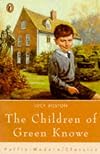
This is a hard one for me to review. I think if you read it as a child, it's going to have a really strong pull - it speaks to something about what it is to be a small, imaginative child, particularly a small, imaginative, only child, that I don't think I've ever seen represented in prose before. It's a favorite book of a close friend of mine, who read it when young, but I didn't read it for the first time until I was almost 30. It doesn't have the same pull for me - I don't really see how show more it could.
It's a relatively free-form story, almost a "sandbox" story in the way we talk about video games where characters can explore environments at will and at their own pace. Predominantly, it's about a young boy arriving to stay with his great-grandmother at Christmas, and exploring the house and grounds that have been in his family for over 400 years. He and the great-grandmother strike up a special relationship, and she tells him about a trio of his ancestors who lived as happy children in the same house. They died in the Great Plague, and soon, by playing with their toys and engaging in their games, the boy realizes that their ghosts are still there.
This is not a scary book, although there are one or two dark moments. The ghost children are kind presences, and the overall tone is a dreamy one that pushes gently toward whimsy. The protagonist, Tolly, is fascinated by everything he sees; his mind goes into overdrive as he imagines how his ghostly relatives were inspired by the same house, the same gardens, the same topiaries. He leaves sugar cubes for a legendary horse in the stable and pretends that a ceramic mouse is alive in his pocket. It isn't really a question whether or not he's dreaming, or whether or not the children are really there - it's all kind of a blur, without a lot of boundaries, and mostly we are simply aware that both Tolly and his grandmother are pleased by what they experience. There is a great love of the natural world, too; does it really matter if the squirrel and the mole and the hare that Tolly sees are the same ones those long-ago children named and tamed? No, it doesn't - everything is in its place and all's right with the world.
I'll be honest and say that I, personally, usually prefer a children's book with just a little bit more to it. I don't mind the "sandbox" idea of drifting without a really defined plot, but I think it would work better for me with some slightly more contrasting characters involved. The most enjoyable bits of the book, to me, are the rare ones where the gardener, Boggis, brings his somewhat earthy pragmatism into the "airy" world Tolly inhabits (and which his grandmother supports). There's a gentle conflict of personalities there that is very appealing without being abrasive in any way. Having one, more central character exhibit a stronger down-to-earth perspective, or even a dry sense of humor, would have punctured some of the "fairy tale"-ness that, for me, simply goes on too long without tonal variation. I can see how other people might like that undisturbed "golden glow," though.
Happily, I think the final quarter moves the story from merely good to very good, at least for me. The magic (or whatever you wish to call it) is at its height, and there's a sequence of genuine terror, offset by the joy of a Christmas Day that includes feeding all the animals who find their homes on the grounds. At that point I'm content to let the book be as dreamy and sweet as it wants to be without any further complaint: after all, it's Christmas! show less
It's a relatively free-form story, almost a "sandbox" story in the way we talk about video games where characters can explore environments at will and at their own pace. Predominantly, it's about a young boy arriving to stay with his great-grandmother at Christmas, and exploring the house and grounds that have been in his family for over 400 years. He and the great-grandmother strike up a special relationship, and she tells him about a trio of his ancestors who lived as happy children in the same house. They died in the Great Plague, and soon, by playing with their toys and engaging in their games, the boy realizes that their ghosts are still there.
This is not a scary book, although there are one or two dark moments. The ghost children are kind presences, and the overall tone is a dreamy one that pushes gently toward whimsy. The protagonist, Tolly, is fascinated by everything he sees; his mind goes into overdrive as he imagines how his ghostly relatives were inspired by the same house, the same gardens, the same topiaries. He leaves sugar cubes for a legendary horse in the stable and pretends that a ceramic mouse is alive in his pocket. It isn't really a question whether or not he's dreaming, or whether or not the children are really there - it's all kind of a blur, without a lot of boundaries, and mostly we are simply aware that both Tolly and his grandmother are pleased by what they experience. There is a great love of the natural world, too; does it really matter if the squirrel and the mole and the hare that Tolly sees are the same ones those long-ago children named and tamed? No, it doesn't - everything is in its place and all's right with the world.
I'll be honest and say that I, personally, usually prefer a children's book with just a little bit more to it. I don't mind the "sandbox" idea of drifting without a really defined plot, but I think it would work better for me with some slightly more contrasting characters involved. The most enjoyable bits of the book, to me, are the rare ones where the gardener, Boggis, brings his somewhat earthy pragmatism into the "airy" world Tolly inhabits (and which his grandmother supports). There's a gentle conflict of personalities there that is very appealing without being abrasive in any way. Having one, more central character exhibit a stronger down-to-earth perspective, or even a dry sense of humor, would have punctured some of the "fairy tale"-ness that, for me, simply goes on too long without tonal variation. I can see how other people might like that undisturbed "golden glow," though.
Happily, I think the final quarter moves the story from merely good to very good, at least for me. The magic (or whatever you wish to call it) is at its height, and there's a sequence of genuine terror, offset by the joy of a Christmas Day that includes feeding all the animals who find their homes on the grounds. At that point I'm content to let the book be as dreamy and sweet as it wants to be without any further complaint: after all, it's Christmas! show less

This short novella from the author of the beloved Green Knowe Chronicles follows young Libby as she goes to spend a week in the country with a family friend. When the local river overflows its bounds, and the house gardens are flooded by underground springs, Libby's holiday is transformed into an enchanted idyll, during which she gains a greater appreciation of the beauties of nature. But the week reaches its peak during an unexpected encounter with a lovely creature of myth...
Boston's show more luminously descriptive prose is in full force here, with some beautiful passages devoted to the river Babble, the garden, and the waterfalls on the mountain. Nothing Said has strong ecological themes, with some sharp comments made about development and the destruction of the environment. Its greatest strength though, lies in its author's understanding of a young person's need for privacy, and the necessity of secrecy for true enchantment.
Like so many of Boston's work, this was illustrated by her son, Peter Boston. show less
Boston's show more luminously descriptive prose is in full force here, with some beautiful passages devoted to the river Babble, the garden, and the waterfalls on the mountain. Nothing Said has strong ecological themes, with some sharp comments made about development and the destruction of the environment. Its greatest strength though, lies in its author's understanding of a young person's need for privacy, and the necessity of secrecy for true enchantment.
Like so many of Boston's work, this was illustrated by her son, Peter Boston. show less
Lists
Awards


You May Also Like


Associated Authors
Statistics
- Works
- 28
- Also by
- 9
- Members
- 5,580
- Popularity
- #4,446
- Rating
- 4.0
- Reviews
- 151
- ISBNs
- 163
- Languages
- 3
- Favorited
- 20