

Alan Garner (1) (1934–)
Author of The Owl Service
For other authors named Alan Garner, see the disambiguation page.
About the Author
Image credit: Richard Haughton
Series
Works by Alan Garner
The Alan Garner Omnibus: "Elidor", "Weirdstone of Brisingamen", "Moon of Gomrath" (1994) 43 copies, 1 review
The Owl Service / The Weirdstone of Brisingamen / The Moon of Gomrath / A Bag of Moonshine / Elidor (2005) 13 copies
The Weirdstone of Brisingamen / The Moon of Gomrath / The Owl Service / Elidor / Red Shift / The Lad of the Gad / A Bag of Moonshine (2015) 3 copies
Labrys 7: Alan Garner 2 copies
Feel Free {story} 1 copy
The Smoker 1 copy
Gobbleknoll 1 copy
Associated Works
Freedom: Stories Celebrating the Universal Declaration of Human Rights (2009) — Contributor — 85 copies, 2 reviews
Essential Modern Classics Fantasy Collection: The Phantom Tollbooth / Elidor / the Sword in the Stone (2010) — Contributor — 7 copies
Tagged
Common Knowledge
- Birthdate
- 1934-10-17
- Gender
- male
- Education
- Magdalen College, Oxford (Classics) (did not graduate)
- Occupations
- novelist
general labourer
freelance television reporter - Organizations
- Blackden Trust
Society of Antiquaries of London
Royal Artillery - Awards and honors
- Images ( [1981])
Order of the British Empire ( [2001])
British Fantasy Society, Karl Edward Wagner Award (2003)
Society of Antiquaries of London (Fellow)
World Fantasy Award for Life Achievement (2012) - Nationality
- UK
- Birthplace
- Congleton, Cheshire, England, UK
- Places of residence
- Alderley Edge, Cheshire, England, UK
Blackden, Cheshire, England, UK
Goostrey, Cheshire, England, UK - Map Location
- England, UK
Members
Discussions
149.5 Backlisted Special: Treacle Walker by Alan Garner in Backlisted Book Club (March 2022)
Reviews
Stone Book Quartet: From the author of the 2022 Booker Shortlisted Treacle Walker (Harper Perennial Modern Classics) by Alan Garner
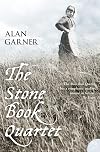
I have read a lot of books this year, but this may be the most extraordinary. Four novellas, each about a child in a different generation of the same family, at a moment of discovery or grace or insight, intersected by people and words, places and ideas, shapes and histories, resonant with the shared myth of family and craft.
There are people who write spare prose that is sharp and precise and economical; hard-boiled sometimes. Alan Garner's prose is stripped and polished, but the result is show more beautifully, poetically evocative. Language for Garner is not just surface, it is something that goes all the way down, sedimentary geological layers, with the spoken sounds and read letters merely the visible features of millennia of history expressed unwittingly and perceived unknowingly. There is no sense of loss or grief in these books as things pass and people pass (though I cried twice reading it) but the sense that all things exist in their brief bright moment, and survive in the language and the actions and the genes of their ancestors and in the very bones of the place where they lived, shaping the lives of those who come after in invisible ways, only manifesting in rare secret physical forms: a name carved on a hidden block in a church steeple or a clay pie unearthed with the potatoes. So we live and commune with what has gone before, ignorant but not ignored. So we become the place where we live. Marks carved in books of stone, with love. show less
There are people who write spare prose that is sharp and precise and economical; hard-boiled sometimes. Alan Garner's prose is stripped and polished, but the result is show more beautifully, poetically evocative. Language for Garner is not just surface, it is something that goes all the way down, sedimentary geological layers, with the spoken sounds and read letters merely the visible features of millennia of history expressed unwittingly and perceived unknowingly. There is no sense of loss or grief in these books as things pass and people pass (though I cried twice reading it) but the sense that all things exist in their brief bright moment, and survive in the language and the actions and the genes of their ancestors and in the very bones of the place where they lived, shaping the lives of those who come after in invisible ways, only manifesting in rare secret physical forms: a name carved on a hidden block in a church steeple or a clay pie unearthed with the potatoes. So we live and commune with what has gone before, ignorant but not ignored. So we become the place where we live. Marks carved in books of stone, with love. show less
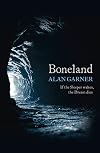
Growing up is weird, and can seem quite sad, especially when you remember the things that used to ring and resonate and you can almost remember what the ring and the resonance sounded like but not why it set your nerves on fire and filled your head with light. I suppose they were simple things in their way. Magic. Adventure. Heroes. Villains. Whether it's age or the world, such things don't quite hold the thrill they used to, or the thrill seems cheapened by camp and over-saturation and the show more acute knowledge of how dreary reality can be.
But maybe it's not supposed to be quite like that. We assume as we grow that we put magic aside and sigh and set our shoulders and stride in the grey light of adulthood, and that fantasy and adventure and romance are now cheap escape routes from the grey. But there is more than one sort of knowledge, isn't there? As we grow, we acquire the tools we need to live. Language. Skills. Strength. Learning. perhaps within those tools are deeper, more profound consolations and magics.
Alan Garner wrote two children's novels: The Weirdstone Of Brisingamen and The Moon Of Gomrath. They were wildly popular, and I know I wore my copies out with rereading. They were an odd mix; old-fashioned, inventive but somewhat conventional children's stories imbued with deeper, darker roots into folklore and landscape. The adventure narrative dominated, though, and they were quite thrilling and exciting reads, for all the slight tingle of unease they left when completed. The conventional narrative was to shrink and the unease to grow through Garner's subsequent novels: Elidor and The Owl Service, until with Red Shift he broke with linear narrative completely and jumbled time and place and memory and history and myth and wove them into an extraordinary, disorienting form.
Garner does not seem to have retained much fondness for Weirdstone or Gomrath, and has a tendency to disparage them. It was a surprise, therefore, to discover that they were the first two volumes of a trilogy, and he was finally, decades later, going to complete it.
Boneland is not an adventure narrative of heroes and magic. Boneland is, if anything, almost an apology for those first two books, addressed to the landscape they exploited, the myths, the people the community and the history they, perhaps, cheapened. It is an author coming to terms with his own beginnings, both as a person as an author. And it is an offering to the reader, hopefully the reader who grew up with those two books, of a reading experience that is at once harsher, more difficult, less fantastical, much more uneasy and ambiguous, and yet also deeper, richer, broader, invoking the lost memories of deep time and the unfathomable vastness of the entire universe, while reaffirming the debt, the ties and the need for a deep rooting in a a home place.
In Boneland, Colin cannot leave Alderley Edge, cannot spend a night out of its sight or else it will vanish and the world will end. The wisdom of this book is that this is both something true and a metaphor for something else, and though we use different tools to examine the truth and the metaphor, they do not have to be divided. And so Garner offers his readers, who thrilled as children to magic and adventure, a conception of the adult world that encompasses its dreariness and a form of magic and adventure that cannot be cheapened or made camp. show less
But maybe it's not supposed to be quite like that. We assume as we grow that we put magic aside and sigh and set our shoulders and stride in the grey light of adulthood, and that fantasy and adventure and romance are now cheap escape routes from the grey. But there is more than one sort of knowledge, isn't there? As we grow, we acquire the tools we need to live. Language. Skills. Strength. Learning. perhaps within those tools are deeper, more profound consolations and magics.
Alan Garner wrote two children's novels: The Weirdstone Of Brisingamen and The Moon Of Gomrath. They were wildly popular, and I know I wore my copies out with rereading. They were an odd mix; old-fashioned, inventive but somewhat conventional children's stories imbued with deeper, darker roots into folklore and landscape. The adventure narrative dominated, though, and they were quite thrilling and exciting reads, for all the slight tingle of unease they left when completed. The conventional narrative was to shrink and the unease to grow through Garner's subsequent novels: Elidor and The Owl Service, until with Red Shift he broke with linear narrative completely and jumbled time and place and memory and history and myth and wove them into an extraordinary, disorienting form.
Garner does not seem to have retained much fondness for Weirdstone or Gomrath, and has a tendency to disparage them. It was a surprise, therefore, to discover that they were the first two volumes of a trilogy, and he was finally, decades later, going to complete it.
Boneland is not an adventure narrative of heroes and magic. Boneland is, if anything, almost an apology for those first two books, addressed to the landscape they exploited, the myths, the people the community and the history they, perhaps, cheapened. It is an author coming to terms with his own beginnings, both as a person as an author. And it is an offering to the reader, hopefully the reader who grew up with those two books, of a reading experience that is at once harsher, more difficult, less fantastical, much more uneasy and ambiguous, and yet also deeper, richer, broader, invoking the lost memories of deep time and the unfathomable vastness of the entire universe, while reaffirming the debt, the ties and the need for a deep rooting in a a home place.
In Boneland, Colin cannot leave Alderley Edge, cannot spend a night out of its sight or else it will vanish and the world will end. The wisdom of this book is that this is both something true and a metaphor for something else, and though we use different tools to examine the truth and the metaphor, they do not have to be divided. And so Garner offers his readers, who thrilled as children to magic and adventure, a conception of the adult world that encompasses its dreariness and a form of magic and adventure that cannot be cheapened or made camp. show less

I always preferred this ever so slightly to Weirdstone, and one of the reasons may be that Colin and Susan have a little more agency in this book, while at the same time having less. More stuff happens to them directly and they do things and even have opinions, but they remain, sadly, ciphers, albeit ciphers on the cusp of change. More than that, though, it was the idea of wild magic, magic that exists purely for its own sake, savage and emotional and dangerous, set against the more ordered, show more courtly magic of Cadellin, which anticipates a lot of modern fantasy magic with rules and systems, but of course, it is the wild magic that breaks Susan's heart at the end, and leaves the reader haunted too.
Gomrath is a wilder, more formless book as opposed to the rather tidy chase narrative of Weirdstone. The magic comes out of the very landscape, and the danger from the shadowy Brollachain and the shape-changing Morrigan while Colin and Susan's relationship with their allies is more uneasy, and strained to the point of bitterness with the lios-alfar. Futhermore, much is left unsettled at the end, unless I missed some details, with the Morrigan still on the loose and whatever was bothering the lios-alfar unresolved. In retrospect, the set-up for a third volume was always there, but Garner resisted or refused, and many years later we got Boneland, something of an entirely different order. show less
Gomrath is a wilder, more formless book as opposed to the rather tidy chase narrative of Weirdstone. The magic comes out of the very landscape, and the danger from the shadowy Brollachain and the shape-changing Morrigan while Colin and Susan's relationship with their allies is more uneasy, and strained to the point of bitterness with the lios-alfar. Futhermore, much is left unsettled at the end, unless I missed some details, with the Morrigan still on the loose and whatever was bothering the lios-alfar unresolved. In retrospect, the set-up for a third volume was always there, but Garner resisted or refused, and many years later we got Boneland, something of an entirely different order. show less

Where to start with a book like this? It's been said of Garner's work that it's complex, not complicated, and that seems fair.
There's a simplicity in presenting much of the story as dialogue, but as the time periods of the present day, 17th and 2nd centuries overlap and intertwine, there's more going on than is immediately apparent.
I picked this up in the Children's section, but this is far from suitable for a child, in terms of the interplay of dialogue, the swearing, the references to sex, show more rape used as a weapon of war, murder, beheadings, and themes of isolation, alienation and the breakdown of personality.
In the Romano-British period, we are with survivors of the historically mysterious Legio IX Hispania, the Ninth Legion who disappeared from Imperial records, possibly (or possibly not) in an uprising of the Celtic Brigantes tribe. Garner translates their Roman soldierly talk into that of modern day special forces, seeking to survive in the hostile territory that became Cheshire by "going tribal". One of their number has fits of violently psychotic behaviour, replicated in the 17th century by a Cheshire villager, living in the same area, and further linked by possession of a Bronze Age stone axe. The historical Civil War Barthomley Massacre of 1643 is the setting of these episodes, and while not explicitly named, the Royalist leader of the massacre, John, 1st Lord Byron, proves that "mad, bad, and dangerous to know" ran in that family.
In 1973, Tom and Jan, late teens in a long distance relationship, have found the axe and keep it as a talisman to feel connected with each other. Tom's disintegrating mental health resonates with his historical counterparts, and I think there's a hint of metempsychosis in their shared visions.
Then there are the possible autobiographical elements of Garner's own experiences of being bipolar, growing up in this exact area, and, like modern Tom, being the first of his family to enter higher education, and feeling alienated from them as a result.
There's no neat conclusion, and it's simultaneously bewildering, frustrating and marvelous! 4.75♦️ show less
There's a simplicity in presenting much of the story as dialogue, but as the time periods of the present day, 17th and 2nd centuries overlap and intertwine, there's more going on than is immediately apparent.
I picked this up in the Children's section, but this is far from suitable for a child, in terms of the interplay of dialogue, the swearing, the references to sex, show more rape used as a weapon of war, murder, beheadings, and themes of isolation, alienation and the breakdown of personality.
In the Romano-British period, we are with survivors of the historically mysterious Legio IX Hispania, the Ninth Legion who disappeared from Imperial records, possibly (or possibly not) in an uprising of the Celtic Brigantes tribe. Garner translates their Roman soldierly talk into that of modern day special forces, seeking to survive in the hostile territory that became Cheshire by "going tribal". One of their number has fits of violently psychotic behaviour, replicated in the 17th century by a Cheshire villager, living in the same area, and further linked by possession of a Bronze Age stone axe. The historical Civil War Barthomley Massacre of 1643 is the setting of these episodes, and while not explicitly named, the Royalist leader of the massacre, John, 1st Lord Byron, proves that "mad, bad, and dangerous to know" ran in that family.
In 1973, Tom and Jan, late teens in a long distance relationship, have found the axe and keep it as a talisman to feel connected with each other. Tom's disintegrating mental health resonates with his historical counterparts, and I think there's a hint of metempsychosis in their shared visions.
Then there are the possible autobiographical elements of Garner's own experiences of being bipolar, growing up in this exact area, and, like modern Tom, being the first of his family to enter higher education, and feeling alienated from them as a result.
There's no neat conclusion, and it's simultaneously bewildering, frustrating and marvelous! 4.75♦️ show less
Lists
My Wishlist - YA (1)
At the Library (1)
Awards


You May Also Like


Associated Authors
Statistics
- Works
- 51
- Also by
- 12
- Members
- 11,048
- Popularity
- #2,134
- Rating
- 3.8
- Reviews
- 291
- ISBNs
- 327
- Languages
- 13
- Favorited
- 45