

William Mayne (1928–2010)
Author of The Patchwork Cat
About the Author
William Mayne was born on March 16, 1928. Before dropping out of school at 17, he was a chorister at Canterbury Cathedral from 1937 until 1942. He wrote more than 100 books during his lifetime and is best known for his Choir School quartet comprising of A Swarm in May, Choristers' Cake, Cathedral show more Wednesday and Words and Music, and his Earthfasts trilogy comprising of Earthfasts, Cradlefasts and Candlefasts. He won numerous awards including the Carnegie Medal in 1957 for A Grass Rope, the Guardian Award in 1993 for Low Tide, and the Kurt Maschler prize in 1997 for Lady Muck. He also wrote under the pseudonyms Martin Cobalt, Dynely James and Charles Molin. In 2004, he was convicted of 11 charges of sexual abuse with young girls and was sentenced to two and a half years in prison and placed on the sex offenders' register for life. His books were largely removed from shelves from 2004 onwards, but he continued to write. He died on March 24, 2010 at the age of 82. (Bowker Author Biography) show less
Series
Works by William Mayne
Narrative of Campaigns of the Loyal Lusitanian Legion During the Years 1809-11 (1812) 4 copies, 1 review
Water boatman 1 copy
Gespenstisch, aber nicht für Lesley und Debby. Aus dem Englischen übersetzt von Alex Wienand (1977) 1 copy
Pigs in the Middle 1 copy
Leapfrog 1 copy
In choirs... 1 copy
The Hill Road 1 copy
Associated Works
Tagged
Common Knowledge
- Legal name
- Mayne, William James Carter
- Other names
- Cobalt, Martin
James, Dynely
Molin, Charles - Birthdate
- 1928-02-13
- Date of death
- 2010-03-24
- Gender
- male
- Education
- Canterbury Cathedral School
- Occupations
- children's book author
- Nationality
- UK
- Birthplace
- Hull, Yorkshire, England, UK
- Places of residence
- Thornton Rust, North Yorkshire, England, UK
- Place of death
- Thornton Rust, North Yorkshire, England, UK
- Associated Place (for map)
- England, UK
Members
Reviews
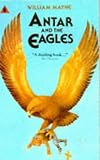
A strange book. It takes place in a vaguely historical and vaguely unplaceable European setting - the sort of countryside that features in the tales of the Brothers Grimm or Hans Christian Andersen - and in some respects it resembles a fairy tale, beginning with a boy whisked from a church steeple by an eagle to fulfil a quest. But despite this fairytale element, the narrative itself is simultaneously realistic and fantastic. What would it actually be like for the fairytale hero dropped into show more an eagle's nest: vertiginous, smelly, and full of aggressive baby eagles with sharp beaks? If a boy must live with the eagles, what can he do for wings? This semi-realism does require quite of lot of suspension of disbelief, but despite the sheer oddity of the premise, I enjoyed the book.
MB 19-iv-2021 show less
MB 19-iv-2021 show less

It’s the Yorkshire Dales in the 1960’s and two friends are investigating a strange noise that seems to be coming from underground, from a newly formed mound in a field. Keith thought that the noise was badgers underground and David though that it might be an underground stream, but neither of them expected that it was the sound of a drum being played underground, and getting closer and closer to the surface. And neither did they expect that that drum was being played by a drummer boy of show more the eighteenth century, who had entered the tunnel under the local castle over two hundred years before, looking for the legendary treasure of King Arthur that was supposed to be buried underneath, and had not been heard of since. But Nellie Jack John, as he introduces himself, will not believe the time that has passed while he was underground, as to him it seems he was walking for less than half an hour, and is certainly ill equipped to deal with the twentieth century.
This is a reread of a book I had as I child, and I was surprised to find that while I remembered certain elements of it very well, I had forgotten other equally vivid elements. But Nellie Jack John’s appearance isn’t the only strange thing that happens. Standing stones start to move, (if they are actually standing stones at all), candles burn cold, and time itself seems to becoming more fluid. This is a very well written children’s book, a lot more literary perhaps than most, and it holds up well rereading it as an adult. show less
This is a reread of a book I had as I child, and I was surprised to find that while I remembered certain elements of it very well, I had forgotten other equally vivid elements. But Nellie Jack John’s appearance isn’t the only strange thing that happens. Standing stones start to move, (if they are actually standing stones at all), candles burn cold, and time itself seems to becoming more fluid. This is a very well written children’s book, a lot more literary perhaps than most, and it holds up well rereading it as an adult. show less

Mayne depicts a realistic, chaotic, ordinary family coping with a brain damaged and deaf oldest child, now an adult but full of childlike fears and understanding very little. They find a place for him working on a canal barge. He does well, aside from his little quirks such as taking his pay in cash and throwing away the paper money -- Gideon has no use for paper -- until the end of the tourist season throws him into a complete tailspin. Where did his job go?
I found the end of the book show more puzzling. Gideon runs away, spends a night outside in the rain, and is brought back deathly ill. His mother insists on keeping him at home because she doesn't want him to die in hospital. He lies unconscious for several days and wakes up able to hear again. I can't imagine deafness working like that, but perhaps Mayne wanted the book to end with a change in Gideon's life. show less
I found the end of the book show more puzzling. Gideon runs away, spends a night outside in the rain, and is brought back deathly ill. His mother insists on keeping him at home because she doesn't want him to die in hospital. He lies unconscious for several days and wakes up able to hear again. I can't imagine deafness working like that, but perhaps Mayne wanted the book to end with a change in Gideon's life. show less
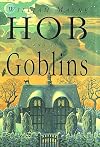
Before Rowling (Dobby the house elf even talks like Hob) and before Gaiman (old magic in the modern world, as in American Gods and The Graveyard Book) there was this snip of enchantment. Begins on a bus route in today's London, refers to Wales (cutch), ends with the implied reminder that evil can never be completely conquered, anywhere in the world. It can be read by anyone who likes slightly creepy magic with a modern family and a ancient curse... and the brave little creature who will show more manage to save them from the goblins, their children, and their King. The illustrations are silhouette-style drawings formed to the initial letter of each chapter - perfect fit for the subject, style, and structure of the book. What is likely to interest some readers a lot, and possibly turn off others, is the language - it's almost like word-play, almost like poetry, and utterly bewitching. show less
Lists
Read in 2003 (1)
Awards


You May Also Like


Associated Authors
Statistics
- Works
- 123
- Also by
- 4
- Members
- 2,254
- Popularity
- #11,376
- Rating
- 4.0
- Reviews
- 48
- ISBNs
- 295
- Languages
- 8
- Favorited
- 3