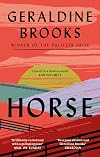
In Horse, Geraldine Brooks interweaves the story of Lexington, a famous racehorse from nineteenth century U.S.A. with a contemporary tale of race relations in modern day America. Lexington is foaled in 1850 in Lexington, Kentucky, and Jarret Lewis, the enslaved son a an African American man who has bought his own freedom, is there for the foal’s first breath. Their lives intertwine as Jarret grooms and then trains Lexington to massive success.
In contemporary Washington D.C., Theo is a PhD student, of American and Nigerian parentage, but who has spent his formative years in elite public schools and University in the U.K. An art historian, he picks up an old oil painting of a horse and a black groom that his neighbour is throwing away. Jess is an Australian zoologist working on bones in the Smithsonian Institute, when an English scientist arrives to investigate Lexington’s skeleton. As Theo and Jess’s lives begin to intertwine around Lexington it becomes apparent that the racism that Jarret experienced in the ante-bellum States is alive and well in present day America.
Lots of people love this book. Lots and lots. But I didn’t. I doubt I would have finished it to be honest if I hadn’t been reading it for my book group. Perhaps I’m not the target audience as I’m not at all interested in racing and not really very interested in horses. Overall, I think the sections set in the nineteenth century were the best part, although I didn’t get a huge sense of time or show more place from them. There is also a section set in the 1950’s which I really didn’t see the point of at all.. But there were a lot of things about the contemporary section that really annoyed me. In particular, the way it seems to hit the reader over the head with a sledgehammer every time there was an incidence of racism. A little nuance would be good, thank you very much, we can work it out for ourselves. And I didn’t believe in the portrayal of Theo as a posh black boy from an elite British public school (although some difference in Theo’s outlook from what might be expected in a young African-American man are rather driven in with a sledgehammer too). And when a British character arrives does she really have to be wearing a Liberty scarf (so stereotypical) and have been a polo groupie at University? Overall I just found so many of the characters poorly drawn and to pick up on overused tropes.
I’ve read [Year of Wonders] by the same author, and had reservations about that one as well, so I don’t think Geraldine Brooks is for me. show less
In contemporary Washington D.C., Theo is a PhD student, of American and Nigerian parentage, but who has spent his formative years in elite public schools and University in the U.K. An art historian, he picks up an old oil painting of a horse and a black groom that his neighbour is throwing away. Jess is an Australian zoologist working on bones in the Smithsonian Institute, when an English scientist arrives to investigate Lexington’s skeleton. As Theo and Jess’s lives begin to intertwine around Lexington it becomes apparent that the racism that Jarret experienced in the ante-bellum States is alive and well in present day America.
Lots of people love this book. Lots and lots. But I didn’t. I doubt I would have finished it to be honest if I hadn’t been reading it for my book group. Perhaps I’m not the target audience as I’m not at all interested in racing and not really very interested in horses. Overall, I think the sections set in the nineteenth century were the best part, although I didn’t get a huge sense of time or show more place from them. There is also a section set in the 1950’s which I really didn’t see the point of at all.. But there were a lot of things about the contemporary section that really annoyed me. In particular, the way it seems to hit the reader over the head with a sledgehammer every time there was an incidence of racism. A little nuance would be good, thank you very much, we can work it out for ourselves. And I didn’t believe in the portrayal of Theo as a posh black boy from an elite British public school (although some difference in Theo’s outlook from what might be expected in a young African-American man are rather driven in with a sledgehammer too). And when a British character arrives does she really have to be wearing a Liberty scarf (so stereotypical) and have been a polo groupie at University? Overall I just found so many of the characters poorly drawn and to pick up on overused tropes.
I’ve read [Year of Wonders] by the same author, and had reservations about that one as well, so I don’t think Geraldine Brooks is for me. show less
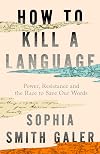
At the moment there are estimated to be over 7000 languages in the world, but they are being lost at a phenomenal rate. It’s estimated that by the twenty-second century we will be lucky to have as many as 4000 left. How to Kill A Language by Sophia Smith Galer looks at a number of different endangered languages to examine what are the factors which cause languages to become extinct.
I found the story of the following languages the most interesting:
- Ladino - spoken by the large Jewish community in Thessaloniki prior to the Second World War (originally derived from Spanish but with strong influences of Turkish and Hebrew) now functionally extinct as a result of the Holocaust.
- Hebrew - obviously not an endangered language now but a fascinating story of how Hebrew was lost from day to day conversation and then readopted.
- Piaśintein - the language of the author’s own grandmother, and dismissed as simply the dialect of Italian spoken in Piacenza, but in reality a language in its own right. Illustrative of the poor attention paid to many of Italy’s ‘dialects’.
I bought this book as I thought there might be something about Welsh (which I have been studying for some time) in it, but in the context of this book Welsh, with all its issues, is surviving much better than virtually all of the languages in this book, classified as Vulnerable rather than Endangered in the UNESCO classification.
Very interesting- recommended to anyone interested in languages.
I found the story of the following languages the most interesting:
- Ladino - spoken by the large Jewish community in Thessaloniki prior to the Second World War (originally derived from Spanish but with strong influences of Turkish and Hebrew) now functionally extinct as a result of the Holocaust.
- Hebrew - obviously not an endangered language now but a fascinating story of how Hebrew was lost from day to day conversation and then readopted.
- Piaśintein - the language of the author’s own grandmother, and dismissed as simply the dialect of Italian spoken in Piacenza, but in reality a language in its own right. Illustrative of the poor attention paid to many of Italy’s ‘dialects’.
I bought this book as I thought there might be something about Welsh (which I have been studying for some time) in it, but in the context of this book Welsh, with all its issues, is surviving much better than virtually all of the languages in this book, classified as Vulnerable rather than Endangered in the UNESCO classification.
Very interesting- recommended to anyone interested in languages.
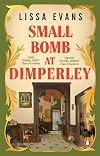
World War II has just finished and Valentine Vere-Thissett is about to be demobbed and return to his family home Dimperley when he discovers that his elder brother, missing in action for some time, has now been pronounced dead. So Valentine is now Sir Valentine, and the crumbling indebted Dimperley estate is all his. Except that the slightly ineffectual Valentine can’t imagine anything worse than to have to manage the estate: having failed miserably at school he does not consider himself to have the skills to rescue Dimperley from ruin, and unfortunately neither does anyone else in his family.
The older generation of the family, brought up in an era when dozens of servants looked after the house are bewildered by their reduced circumstances:
So Valentine returns to his family: his show more mother Lady Vere-Thissett; his long suffering (now widowed) sister-in-law and her two daughters (just returned from having spent the war years in America); his brother Ceddy, brain-damaged as a result of a childhood illness; and his uncle Alaric, writing a long and intensely boring history of the family which no one will ever read. And Alaric’s new secretary Mrs Baxter, who seems to be the only person in the household who able to organise anything in the changed post world era.
An enjoyable read, with believable multi-faceted characters. Lady Vere-Thissett might be a dreadful snob, and have an incredibly high opinion of her place in the world, but she cares for her disabled son Ceddy with love and attention.
This is the fourth book of Lissa Evans’s that I’ve read, and I’ve enjoyed them all so far. show less
The older generation of the family, brought up in an era when dozens of servants looked after the house are bewildered by their reduced circumstances:
When, recently, the light-bulb in the library had blown, Alaric’s initial irritation had turned to bewilderment: where was the new bulb? Why was it not being replaced? Why was he even having to think about such a matter? The chain of invisible events which would, in the past, have speedily linked the ringing of the servants’ bell to the insertion of a new bulb had rusted away. There were no longer any bells and the only remaining servant was Miss Hersey, who still called herself Lady Irene’s lady’s maid, although (as far as Zena could see) she was now required to do almost everything except shovel coal, but even she hadn’t been able to produce a bulb when none were being manufactured.
So Valentine returns to his family: his show more mother Lady Vere-Thissett; his long suffering (now widowed) sister-in-law and her two daughters (just returned from having spent the war years in America); his brother Ceddy, brain-damaged as a result of a childhood illness; and his uncle Alaric, writing a long and intensely boring history of the family which no one will ever read. And Alaric’s new secretary Mrs Baxter, who seems to be the only person in the household who able to organise anything in the changed post world era.
An enjoyable read, with believable multi-faceted characters. Lady Vere-Thissett might be a dreadful snob, and have an incredibly high opinion of her place in the world, but she cares for her disabled son Ceddy with love and attention.
This is the fourth book of Lissa Evans’s that I’ve read, and I’ve enjoyed them all so far. show less
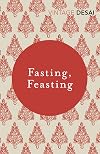
As a middle-aged women living with her parents in a town in India, Uma has long ago ceased to hope for much in her life. She was never pretty or bright and her parents, (who Uma thinks of as the combined entity of MamaPapa), having long ago failed in their attempts to find her a husband, now view her purely as someone to fetch and carry for them at all hours of the day or night, rather than someone who might conceivably want a life of her own. Even her younger sister Aruna no longer seems to find value in her relationship with her sister:
And as much as Uma is trapped by her parents’ disappointment, so her brother Arun is trapped by their high expectations. A childhood filled nothing but study has won him a scholarship to an American university, but has left him with a desire for nothing more than to be alone and completely divorced from parental expectations.
This is not a book for people who like clear endings or a lot of plot. As with the short stories of hers show more that I have read, the ending here is ambiguous. This was shortlisted for the Booker Prize in 1999 (as were two of her other books in other years) and I think it was a worthy contender. show less
’When the first two attempts at marrying Uma off had ended in disgrace, she had listed to Mama’s storms of temper, saying, ‘I told you he was no good, didn’t I?’ and looked sympathetically at Uma. But now a certain mockery was creeping into her behaviour, a kind of goading, like that a sprightly little dog will subject a large dull ox to when it wants a little action. Uma’s ears were already filled to saturation with Mama’s laments, and Aruna’s little yelps of laughter were additional barbs.’
And as much as Uma is trapped by her parents’ disappointment, so her brother Arun is trapped by their high expectations. A childhood filled nothing but study has won him a scholarship to an American university, but has left him with a desire for nothing more than to be alone and completely divorced from parental expectations.
This is not a book for people who like clear endings or a lot of plot. As with the short stories of hers show more that I have read, the ending here is ambiguous. This was shortlisted for the Booker Prize in 1999 (as were two of her other books in other years) and I think it was a worthy contender. show less
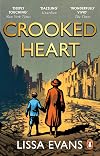
At the start of WWII Noel Bostock is living with his elderly godmother, the ex-suffragette Mattie, and as the evacuations start, the question of whether Noel is to be evacuated is discussed:
Following Mattie’s death, Noel is indeed evacuated to St Albans, where the widowed Vee Sedge does not know what to make of the silent bookish child that she has taken in purely for the money. But as Vera’s debts threaten to overwhelm her, she finds that Noel is surprisingly useful when it comes to money making schemes.
I started this series with [Old Baggage] (the prequel) and moved on straight away to [V for Victory] the book following this one, not realising that this one came in between. So this book fills in a lot of the gaps and paints a believable picture of WWII life. I learnt quite a lot in the process of reading this as well. It had never occurred to me that children would be evacuated so near to London as St.Albans, but apparently they show more were.
So a great read depicting Britain in the blitz, but not one that tries to sugarcoat everything with ‘blitz spirit’.
Recommended. show less
‘Do you want to be evacuated?’ Mattie asked Noel, afterwards. ‘No,’ he said. ‘I’m sure Roberta would have you to stay in … where is it that Roberta lives? Ipswich? I’m sure you’d be safe there.’ ‘I don’t want to go anywhere,’ he said. He was a little bit worried by the thought of bombs. He was far, far more worried by the fact that Mattie seemed to have forgotten that her best friend Roberta was dead. The funeral had been eighteen months ago. Mattie had worn her old sash, and a white, green and purple rosette.
Following Mattie’s death, Noel is indeed evacuated to St Albans, where the widowed Vee Sedge does not know what to make of the silent bookish child that she has taken in purely for the money. But as Vera’s debts threaten to overwhelm her, she finds that Noel is surprisingly useful when it comes to money making schemes.
I started this series with [Old Baggage] (the prequel) and moved on straight away to [V for Victory] the book following this one, not realising that this one came in between. So this book fills in a lot of the gaps and paints a believable picture of WWII life. I learnt quite a lot in the process of reading this as well. It had never occurred to me that children would be evacuated so near to London as St.Albans, but apparently they show more were.
So a great read depicting Britain in the blitz, but not one that tries to sugarcoat everything with ‘blitz spirit’.
Recommended. show less
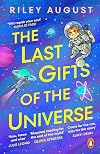
This is a book that seems to have mixed reviews on LT but I loved it.
Scout and her brother Kieran are archivists, wandering the galaxy (together with their cat Pumpkin) for the remains of lost civilisations. And there are a lot of lost civilisations on a lot of planets. But outside their own home worlds, all these worlds are now lifeless. Completely and utterly lifeless: no water, no atmosphere, not even the smallest microbe. Something has destroyed them and the assumption is that sooner or later it will come for Scout’s own world. So when they find something on planet 357 that may shred light on just what that ‘something’ was, Scout will go to any lengths to obtain it…
I can’t help thinking that the last animal I would want to help explore a dead planet would be a cat (and I’m not 100% sure how a cat spacesuit would work) but I did like Pumpkin as a character anyway. And as I say, I really enjoyed the book which ended up being a meditation on love and grief, something I wasn’t expecting.
Recommended.
Scout and her brother Kieran are archivists, wandering the galaxy (together with their cat Pumpkin) for the remains of lost civilisations. And there are a lot of lost civilisations on a lot of planets. But outside their own home worlds, all these worlds are now lifeless. Completely and utterly lifeless: no water, no atmosphere, not even the smallest microbe. Something has destroyed them and the assumption is that sooner or later it will come for Scout’s own world. So when they find something on planet 357 that may shred light on just what that ‘something’ was, Scout will go to any lengths to obtain it…
It’s always harrowing, seeing places like this, knowing that our work could be the difference between our own home thriving or becoming … that. But those are the stakes. That’s why we’re here: to find out what happened to not only this civilisation but every dead civilisation we’ve ever found in the universe. Because as far as we know, ours is the last one left.
I can’t help thinking that the last animal I would want to help explore a dead planet would be a cat (and I’m not 100% sure how a cat spacesuit would work) but I did like Pumpkin as a character anyway. And as I say, I really enjoyed the book which ended up being a meditation on love and grief, something I wasn’t expecting.
Recommended.
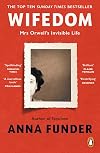
During a period of mental overload Anna Funder returned to one of her favourite authors - George Orwell - and read all six of the major biographies. What soon starts to become apparent is how the the influence of women in Orwell’s life was almost totally neglected, and particularly the influence of his first wife Eileen O’Shaughnessy.
What emerges in [Wifedom] is a portrait of Eileen that portrays someone much more than the traditional help meet than had been previously portrayed. During Orwell’s time in Catalonia, rather than twiddling her thumbs in a hotel room awaiting his return, we find Eileen organising the supplies, communication and banking operation for the organisation for which Orwell has come to fight, a position which means she is equally endangered when the organisation falls foul of the Stalinists. In London, during WWII, it is Eileen’s fairly senior work at the Ministry of Information that keeps the couple show more financially afloat. In fact, throughout most of their marriage it is Eileen who seems to be responsible for most things.
George Orwell does not come out of this well, to be honest, rather a man who is negligently careless of other people as well as himself. A man who had numerous affairs despite having contagious T.B. A man who dragged his wife to live in cottages with no electricity or sanitation (in which she had to do all the work) despite her own poor health. (I’d always thought his time on Jura when writing 1984 was strange, but not until reading this had I realised just how ill he was at the time. I’ve been to Jura, twice, it’s the back of beyond in U.K. terms and even today I don’t think I’d be happy staying there if there was a likelihood of a medical emergency. You’d need the air ambulance, and they can’t always fly in bad weather …) Overall, clearly a man who didn’t want to think about his wife’s own health at all.
Overall, this is an interesting and well written book which everyone in my RL book group enjoyed. show less
As I read the biographies, I began to see that just as patriarchy allowed Orwell to benefit from his wife’s invisible work, it then allowed biographers to give the impression that he did it all alone. The biographers are choosing the facts for his story in a world that has already sifted them in his favour. The narrative techniques of patriarchy and biography combine seamlessly so as to leave the woman who taught and nurtured Orwell, influenced and helped him, like offcuts on the editing floor, buttresses to be removed once the edifice is up.
What emerges in [Wifedom] is a portrait of Eileen that portrays someone much more than the traditional help meet than had been previously portrayed. During Orwell’s time in Catalonia, rather than twiddling her thumbs in a hotel room awaiting his return, we find Eileen organising the supplies, communication and banking operation for the organisation for which Orwell has come to fight, a position which means she is equally endangered when the organisation falls foul of the Stalinists. In London, during WWII, it is Eileen’s fairly senior work at the Ministry of Information that keeps the couple show more financially afloat. In fact, throughout most of their marriage it is Eileen who seems to be responsible for most things.
George Orwell does not come out of this well, to be honest, rather a man who is negligently careless of other people as well as himself. A man who had numerous affairs despite having contagious T.B. A man who dragged his wife to live in cottages with no electricity or sanitation (in which she had to do all the work) despite her own poor health. (I’d always thought his time on Jura when writing 1984 was strange, but not until reading this had I realised just how ill he was at the time. I’ve been to Jura, twice, it’s the back of beyond in U.K. terms and even today I don’t think I’d be happy staying there if there was a likelihood of a medical emergency. You’d need the air ambulance, and they can’t always fly in bad weather …) Overall, clearly a man who didn’t want to think about his wife’s own health at all.
Overall, this is an interesting and well written book which everyone in my RL book group enjoyed. show less
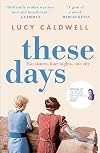
By 1941, Belfast has perhaps been less touched by war than the other big cities of the U.K. There has been no bombing and travel to Dublin is possible to buy goods that aren’t rationed (although they must be hidden from customs on the way back). The Bell family live a comfortable middle-class life in one of the better suburbs: Philip Bell a senior doctor at the local hospital; his wife Florence; their oldest daughter Audrey, just twenty one and engaged to another doctor; Emma a voluntary first-aid worker at the local air raid post; and their son Paul, still at school.
But all that changes at the start of 1941 when the first air raid begins:
As the raids continue, each increasing in severity, the Bells are changed in ways that they cannot predict and each must come to terms with their life in a city that will perhaps never be the same again.
This book was a worthy winner of the 2023 Walter Scott Prize for historical fiction. Its portrait of the Belfast Blitz, an event that seems to have fallen out of the national consciousness, was atmospheric and harrowing, and the quieter portrait of the Bell family was equally believable.
Recommended. show less
But all that changes at the start of 1941 when the first air raid begins:
Oh, but it is airless in there, cramped. Every few minutes the sky flares magnesium-white: the entire sky lights up, and the eerie thing is that you feel rather than see it. Under the waves of planes passing back and forth they start to hear the sound of handheld sirens, which is encouraging: it is the fire engines and the auxiliary services. But they haven’t, to Paul’s consternation, heard a single RAF plane. He can tell the difference, he swears, between the Jerries’ and ours, and he attempts to explain to them, at great length, why the German planes sound like woo, wooo, woooo, as opposed to the drone of ours.show more
Every so often Father unfolds his long limbs and ducks outside, into the hallway, into the front porch, to stretch out, to look at the sky. Paul begging to go with him, Mother absolutely forbidding it. Father crawling
back in, thin-lipped, shaking his head. Not good, he says. Not good at-all, at-all.
As the raids continue, each increasing in severity, the Bells are changed in ways that they cannot predict and each must come to terms with their life in a city that will perhaps never be the same again.
This book was a worthy winner of the 2023 Walter Scott Prize for historical fiction. Its portrait of the Belfast Blitz, an event that seems to have fallen out of the national consciousness, was atmospheric and harrowing, and the quieter portrait of the Bell family was equally believable.
Recommended. show less
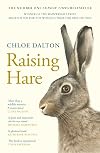
During the Covid lockdown Chloe Dalton is taking a walk in the countryside when she comes across a tiny baby hare in an exposed position on a farm track, somewhere a baby hare should never be. Their mothers keep them hidden away from the prying eyes of predators, but this was in full view with no mother in sight. Uncertain as to what to do, Chloe continued on her walk, but when she returned the hare was still there:
After deciding to taking the hare home, she finds there is very little available information on home to rear an orphaned hare. But against the odds the hare thrives on milk used for raising lambs and the greenery that Chloe’s garden can provide. And little by little the life of the hare intertwines itself with Chloe in ways that she would not have imagined possible.
This is a fascinating book, about an animal to which I’d never really given much thought before. I’ve seen hares, in the distance, but never close up, and had no real ideas of how they lived until reading this book.
Recommended. show less
I crested the skyline, deep in my thoughts, and began to walk down the slight slope towards the lane, when I was brought up short by a tiny creature facing me on the grass strip running down the track’s centre. I stopped abruptly. Leveret.show more
The word surfaced in my mind, even though I had never seen a young hare before. The animal, no longer than the width of my palm, lay on its stomach with its eyes open and its short, silky ears held tightly against its back. Its fur was dark brown, thick and choppy, and grew in delicate curls along its spine. Long, pale guard hairs and whiskers stood out from its body and glowed in the weak sun, creating a corona of light around its rump and muzzle. Set against the bare earth and dry grass it was hard to tell where its fur ended and the ground began. It blended into the dead winter landscape so completely that, but for the rapid rise and fall of its flanks, I would have mistaken it for a stone. Its forepaws were pressed tightly together, fringed in fur the colour of bone and overlapping as if for comfort. Its jet-black eyes
were encircled with a thick, uneven band of creamy fur. High on its forehead was a distinct white mark that stood out like a minute dribble of paint. It did not stir as I came into view, but studied the ground in front of it, unmoving. Leveret.
After deciding to taking the hare home, she finds there is very little available information on home to rear an orphaned hare. But against the odds the hare thrives on milk used for raising lambs and the greenery that Chloe’s garden can provide. And little by little the life of the hare intertwines itself with Chloe in ways that she would not have imagined possible.
This is a fascinating book, about an animal to which I’d never really given much thought before. I’ve seen hares, in the distance, but never close up, and had no real ideas of how they lived until reading this book.
Recommended. show less
Ned, a 15 year old from Montreal, is spending some time in Provence with his father, a famous photographer, as he completes his work for a new book. A chance encounter in the cathedral in Aix-en-Provence starts a chain of events linking the present day to the events of over two thousand years ago, when the Celts native to the area were overrun by the forces of the Roman Empire. Together with Kate, an American girl studying in Aix, Ned becomes more and more intertwined with the supernatural events that become evident all around him, as they start to become a danger to his family and friends…
I’ve read some Guy Gabriel Kay before (The Summer Tree I think), which I found OK and nothing more, and I think I’d say the same for this, so overall I don’t think he’s the author for me. I read an article last year about the over abundance of pan-Celticism in fantasy novels, and ever since then, I’ve been seeing this everywhere, and it’s certainly here in this novel. A mixture of Welsh and Irish tropes and why either of those should be in the Provence of two and a half thousand years ago is beyond me. As soon as the ‘Welsh grandmother’ was spoken of it was so obvious that something supernatural was going to be going on. Why can’t we ever have normal Welsh grandmothers? Mine liked feeding her grandchildren apple tart, chatting and playing bingo. Not a whiff of the supernatural anywhere!
Sorry, I’m probably being harsh, but it’s started to annoy me that it’s so common for Wales to be mentioned in a book as nothing more than a shorthand for mystical events! show less
He’d seen the boy appear at the open window upstairs, and then, a little later, watched him come outside, half naked, vulnerable and alone. The observing figure is amused by this, by almost all that has happened today, but he does think about killing him.show more
It is almost too easy.
Because of the day that is coming he holds himself in check. If you are in the midst of shaping something urgently awaited, you do not give way to impulses like this, however satisfying they might be. He is impulsive by nature, but hardly a fool. He has lived too long for that.
The boy, he has decided, is random, trivial, an accident, not anyone or anything that matters. And it is not a good idea to cause any disturbance now, among either the living or the spirits, some of them already beginning to stir. He knows about the spirits. He is waiting for them, diverting himself as best he can while he does so. He
lets the boy go back inside, alive and inconsequential.
I’ve read some Guy Gabriel Kay before (The Summer Tree I think), which I found OK and nothing more, and I think I’d say the same for this, so overall I don’t think he’s the author for me. I read an article last year about the over abundance of pan-Celticism in fantasy novels, and ever since then, I’ve been seeing this everywhere, and it’s certainly here in this novel. A mixture of Welsh and Irish tropes and why either of those should be in the Provence of two and a half thousand years ago is beyond me. As soon as the ‘Welsh grandmother’ was spoken of it was so obvious that something supernatural was going to be going on. Why can’t we ever have normal Welsh grandmothers? Mine liked feeding her grandchildren apple tart, chatting and playing bingo. Not a whiff of the supernatural anywhere!
Sorry, I’m probably being harsh, but it’s started to annoy me that it’s so common for Wales to be mentioned in a book as nothing more than a shorthand for mystical events! show less
A man is found dead nailed to a tree in Epping Forest just north of London, so of course the police are brought in to investigate. But in this alternative history the Norman Conquest never happened and Great Britain is divided into three separate kingdoms: the Anglo-Saxon south and east, the Norse north and the Celts in the West. All with different cultures and speaking different languages. So Detective Captain Aedith Mercia, daughter of the current Earl, is surprised to find a Celtic detective inspector joining her team - it turns out the murdered man is the senior Celtic diplomat in the upcoming conference to discuss unification of the three countries…
Towards the beginning of the book I couldn’t help but try and work out exactly when the timeline was supposed to split off from our show more own. There was no Norman Conquest but did the Romans invade at all? There are Romans mentioned but no mention of them in Britain, and there’s no Christianity (although Islam exists). I don’t quite understand either why the Saxon kingdom is so poor just because there was no Norman Conquest: late Saxon Britain was fairly prosperous and a country with good agricultural land and natural resources would have been expected to have developed over the years. I struggled with the Celts remaining so very ‘tribal’ as well and it seemed highly unlikely that fashions and culture would remain distinctive over fifteen hundred years, but the Celts still wear their torcs and the Saxons have their seaxes.
But once I’d got all that out of my system and just took the book at face value, I enjoyed it a lot. It’s clearly set up for a sequel and I’d be happy to read that. show less
A slim bearded Celt in a dark suit and overcoat was walking out of the trees towards them.
A couple of uniforms were running towards him even as he lifted his warrant card. They backed away. The forensics guys looked at each other, confused, as he drew closer, but the Celt obviously knew procedure, turning aside from the tape between the trees and working his way round to Aedith and Agapos, holding a hand up against the lights now shining right into his face. His facial hair was close-cropped, his hair long and partly-braided, swept back over the collar of his coat. His torc was a dull gunmetal grey.
‘DI Drustan,’ he said. ‘I was told Detective Captain Mercia is running this case?’
Towards the beginning of the book I couldn’t help but try and work out exactly when the timeline was supposed to split off from our show more own. There was no Norman Conquest but did the Romans invade at all? There are Romans mentioned but no mention of them in Britain, and there’s no Christianity (although Islam exists). I don’t quite understand either why the Saxon kingdom is so poor just because there was no Norman Conquest: late Saxon Britain was fairly prosperous and a country with good agricultural land and natural resources would have been expected to have developed over the years. I struggled with the Celts remaining so very ‘tribal’ as well and it seemed highly unlikely that fashions and culture would remain distinctive over fifteen hundred years, but the Celts still wear their torcs and the Saxons have their seaxes.
But once I’d got all that out of my system and just took the book at face value, I enjoyed it a lot. It’s clearly set up for a sequel and I’d be happy to read that. show less
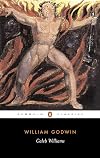
Published in 1794 by William Godwin to illustrate his political theories about the abuse of power over the populace by institutions and persons of influence, I think without a doubt this is one of the most miserable books that I have ever read.
Caleb Williams, a well-meaning young man, is taken into the service of Mr Falkland as secretary, a man whose early promise and happiness have been dashed for initially unexplained reasons. Initially, settling well into his new position, Caleb’s life is forever changed when he discovers the secret that Falkland has been desperate to conceal, and he finds himself trapped in a nightmarish web from which neither his friends nor the law is able to rescue him.
I certainly read this wanting to know what happened next, although the plot is definitely far fetched at time, and in particular the character of Falkland doesn’t altogether make sense. But cheerful it is not!
Caleb Williams, a well-meaning young man, is taken into the service of Mr Falkland as secretary, a man whose early promise and happiness have been dashed for initially unexplained reasons. Initially, settling well into his new position, Caleb’s life is forever changed when he discovers the secret that Falkland has been desperate to conceal, and he finds himself trapped in a nightmarish web from which neither his friends nor the law is able to rescue him.
I certainly read this wanting to know what happened next, although the plot is definitely far fetched at time, and in particular the character of Falkland doesn’t altogether make sense. But cheerful it is not!
Matt Danmor is leading a very unsatisfactory life as a hospital porter at a general hospital in Oxford. It wasn't what he was expecting to be doing in his late twenties - he was expecting to be finishing his medical training at Bristol University - but a car crash in which he was seriously injured has put those dreams on hold. And with him still suffering from extreme clumsiness, as well as what his psychiatrist assures him are hallucinations of a non-existent girlfriend, he is starting to wonder if he will ever be able to return to his studies.
Then one day on his return from work after a night shift he is confronted by a strange scene in a public park. An older man is tied to a roundabout, surrounded by a group of ... children ... who are chanting and waving a knife:
And from that point on Matt's life starts to get stranger and stranger, although in reality it had got very strange some time previously, but he had completely failed to notice.
A fun urban fantasy, nothing earth-shattering, but enjoyable, apparently previously published as [The 400 pound gorilla]. I thought the second half of the book let it down slightly, but I will carry on to read the next in the series. show less
Then one day on his return from work after a night shift he is confronted by a strange scene in a public park. An older man is tied to a roundabout, surrounded by a group of ... children ... who are chanting and waving a knife:
It was a children’s play area, so it was slightly less incongruous to see a handful of kids in there too. Why they were standing around chanting was anyone’s guess. It added a very odd vibe to the scene. And the cherry on the weirdsville cake was the kid on top of the roundabout straddling the splayed victim, brandishing what looked like a small scimitar in both hands.show more
Matt would have been the first to admit that Oxford was an interesting city, full of very bright people who knew as much about the real world as a life dedicated to theoretical quantum physics or medieval Ottoman architecture of the Balkans might allow. Which was to say, not much. He saw them in the street every day, dressed in clothes
chosen from a charity shop by a visually challenged chimpanzee. Perfectly polite, but as eccentric as a box of croakers.
He had not yet, however, seen anyone sacrificed. Let alone sacrificed by a group of children.
And from that point on Matt's life starts to get stranger and stranger, although in reality it had got very strange some time previously, but he had completely failed to notice.
A fun urban fantasy, nothing earth-shattering, but enjoyable, apparently previously published as [The 400 pound gorilla]. I thought the second half of the book let it down slightly, but I will carry on to read the next in the series. show less
Eight years previously Dominic Salt brought his children to live on the remote Shearwater Island, halfway between Tasmania and Antarctica, where he acts as caretaker for the Global Seed Vault located there. There have always been scientists at the research station on the island, but they have been pulled out as the melting permafrost and rising sea levels makes the seed vault unviable, and the research station starts to flood. Only Dominic's family remain, (18 year old Raff, 16 year old Fen, and 9 year old Orly) as they wait for the final supply ship that will take them, and at least some of the remaining seeds, back to the mainland. But it's a life that Dominic is reluctant to leave ...
But into this seemingly peaceful show more existence comes Rowan, washed ashore when her boat was wrecked in a massive storm. But why is she coming to Shearwater Island in the first place, somewhere that is far too remote for casual visitors? And why is she so suspicious of the family that has saved her? And what in turn, is she hiding?
I found this ecological thriller doubly fascinating, both for the plot and for the descriptions of the natural environment of Shearwater Island, with its massive colonies of seals and penguins, and which is loosely based on the sub-Antarctic Macquarie Island. I've been tempted by [[Charlotte McConaghy]]'s other books ([Migrations] and [Once There Were Wolves]) but this is the first one I've read and I will definitely be reading more. show less
Mostly it is quiet here. A life of simple tasks, of day-to-day routines, of grass and hills and sea and sky. A life of wind and rain and fog and of smiles huddled around a heater and of books read each evening. Of hands clasping a hot cup of chocolate or the bend of a head against the weather, of wet clothes flung off at the door and trying to pick out the difference between a giant petrel and an albatross at distance. Of frozen food and sometimes downloaded movies and schoolwork and training and music. Of the gurgling roar of an elephant seal or the banana pose of a fur, of the flamboyant orange eyebrows of the last royal penguin colony in the world. Of seeds. Of parenting. Of grappling constantly with what to tell them about the world we left behind.
But into this seemingly peaceful show more existence comes Rowan, washed ashore when her boat was wrecked in a massive storm. But why is she coming to Shearwater Island in the first place, somewhere that is far too remote for casual visitors? And why is she so suspicious of the family that has saved her? And what in turn, is she hiding?
I found this ecological thriller doubly fascinating, both for the plot and for the descriptions of the natural environment of Shearwater Island, with its massive colonies of seals and penguins, and which is loosely based on the sub-Antarctic Macquarie Island. I've been tempted by [[Charlotte McConaghy]]'s other books ([Migrations] and [Once There Were Wolves]) but this is the first one I've read and I will definitely be reading more. show less
The fourth in the Teifi Valley Coroner series. As ever the narrative is split between Harry Probert-Lloyd, now officially coroner of the Teifi Valley (as well as being the owner of the Glanteifi Estate), and his clerk (and recently appointed estate manager) John Davies. When a young girl dies unexpectedly in her sleep, the local doctor confirms that the death was due to natural causes. But her mother insists there must be a more sinister reason for the death, and Harry soon becomes involved. It is obvious that someone is lying about the circumstances of the death, but who and why?
As always with these books, there is quite a large element of social history, in this case dealing with the Great Exhibition of 1851 in London, and the coming of the mechanised woollen industry to West Wales. And a really convincing picture is painted of the social structure of the period, when with no easy transport someone from just a few miles away almost becomes a foreigner.
This is a series that I've enjoyed throughout, but this read as if it was the last one.
As always with these books, there is quite a large element of social history, in this case dealing with the Great Exhibition of 1851 in London, and the coming of the mechanised woollen industry to West Wales. And a really convincing picture is painted of the social structure of the period, when with no easy transport someone from just a few miles away almost becomes a foreigner.
This is a series that I've enjoyed throughout, but this read as if it was the last one.
As (virtually) everyone knows James is a retelling of Mark Twain's Huckleberry Finn. I've never read Huckleberry Finn (I did mean to read it before reading James but real life intervened) but I suppose I had a very basic idea of the premise. But rather than being told from Huck's perspective, James is told from the perspective of the runaway slave (known as Jim to all the white people) with whom Huckleberry travels down the Mississippi.
I was a little unsure as to whether this would work well for me, as the last rewrite of a classic novel that I read, Demon Copperhead didn't work well for me at all, although everyone else seemed to love it. But I needed have worried, as James was marvellous. It managed to be both horrifying and (blackly) humorous in parts as well.
As I haven't read the original I don't know which events of the novel are taken directly from the book and which (if any) are unique to James]. And I also don’t know what Mark Twain's Jim was like as a character. But Percival Everett's James is a thoughtful man who has educated himself, but who must strive to keep that education and his mastery of the English language a secret from the white people who he meets.
I listed to the audio version which made the language come alive. Highly recommended. show less
I was a little unsure as to whether this would work well for me, as the last rewrite of a classic novel that I read, Demon Copperhead didn't work well for me at all, although everyone else seemed to love it. But I needed have worried, as James was marvellous. It managed to be both horrifying and (blackly) humorous in parts as well.
As I haven't read the original I don't know which events of the novel are taken directly from the book and which (if any) are unique to James]. And I also don’t know what Mark Twain's Jim was like as a character. But Percival Everett's James is a thoughtful man who has educated himself, but who must strive to keep that education and his mastery of the English language a secret from the white people who he meets.
'"Why they doin' that, Jim?"show more
"Dey's tryin' to get yo body to float up to the top o' da water."
"Be funny if some other body float up," he said.
"Hilarious," I said,
"What?" He looked at me.
"I say da 'he harry us.'"
"What's that mean?"
"What? Looky naw," I said.
The boy turned and we watched the man at the bow
float something into the water. I was relieved to be able to redirect his attention. In all my life that was the first time I had ever had a language slip. That had to be an indication of just how addled and agitated I was. '
I listed to the audio version which made the language come alive. Highly recommended. show less
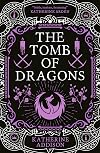
Thara Celehar has lost the ability to speak to the dead. So how can he continue in his calling of being Witness for the Dead if he can't communicate with them? While he comes to terms with his new condition he is assigned a task by the Archprelate: to resolve the problems in a local cemetery which have prevented it functioned for decades, a harder task than they originally assumed. But further problems arise when Thara encounters miners from the Tomb of Dragons: something in the mine is killing the miners and they want him to put a stop to it.
As in previous books (this is Book 3 in the Cemeteries of Amalo series) there are several issues that Thara Celehar must deal with at once. I would have benefitted from reading the first two books in the series a bit more recently than I actually did - the books in this series expect the reader to be familiar with past events and frequently refer back to the events of prior books without any explanation.
For those people who have read the prior books in the series, this is recommended.
As in previous books (this is Book 3 in the Cemeteries of Amalo series) there are several issues that Thara Celehar must deal with at once. I would have benefitted from reading the first two books in the series a bit more recently than I actually did - the books in this series expect the reader to be familiar with past events and frequently refer back to the events of prior books without any explanation.
For those people who have read the prior books in the series, this is recommended.
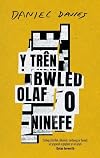
A series of interconnected short stories set in West Wales where a peripheral character in one story becomes the main character of the next. A out-of-work drug dealer finds his life is turned upside down when he does a good deed... A recently retired shop assistant decides to spend her retirement attending funerals of people that she has never met... A man discovers that the most meaningful relationship in his adult life has been with his dog... Nobody is very happy, and although the book starts with an element of black humour it seems to get darker and darker towards the end.
I never did understand what the connection with bullet trains or with Ninevah was, to be honest, but a worthwhile read.
Welsh language only.
I never did understand what the connection with bullet trains or with Ninevah was, to be honest, but a worthwhile read.
Welsh language only.
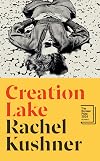
Sadie Smith, an ex-FBI undercover agent from Priest Valley, California, is now freelancing in France and attempting to infiltrate an environmental activist group living a communal life in the Vantôme. Sadie Smith isn't her real name, but she's been undercover so long she's almost forgotten what her real name is, and Priest Valley doesn't exist either. Paid by nameless employers, she attempts to entrap members of the group (and particularly to implicate its leader Pascal Balmy) into the assassination of a minor French politician who is promoting the construction of massive water storage facilities in the region, a policy to which the group is vehemently opposed.
In the course of her infiltration she gains access to the emails sent to the group by their mentor, Bruno Lacombe, à veteran of the 1968 rebellions, now living in a cave, eschewing cooked food and firmly of the opinion that things had gone down hill for humanity ever since the Neanderthals had died out.
I really didn't like this book. I should have liked it - I'm interested in environmentalism and Neanderthals - but I really didn't. At times when reading it I felt if I saw the words 'Bruno said' one more time then I would scream. And it's populated by a host of unlikeable characters none of which I am interested in. I wouldn't have finished it if I hadn't been committed to reading the Booker shortlist. I've given it two stars as it's very well written, but it's not for me. show less
In the course of her infiltration she gains access to the emails sent to the group by their mentor, Bruno Lacombe, à veteran of the 1968 rebellions, now living in a cave, eschewing cooked food and firmly of the opinion that things had gone down hill for humanity ever since the Neanderthals had died out.
'Bruno had renounced much of the baggage that came with man's ascent of the cooked, but fire itself he regarded as mystical. It was fire that allowed the Thals to sleep for long stretches, warm and safe from animals, who were warded off by the plume of smoke exiting their cave. Protected from predators and from harsh climates by their fire, the Neanderthals had slept for longer and longer periods, from generation to generation. Sleep was key to thought, and to intellectual development. As man's thoughts became evershow more
more complex, the longer he needed to sleep. The longer man slept, Bruno said, the longer he dreamed, and the more penetrating and wondrous his waking thought became.
I really didn't like this book. I should have liked it - I'm interested in environmentalism and Neanderthals - but I really didn't. At times when reading it I felt if I saw the words 'Bruno said' one more time then I would scream. And it's populated by a host of unlikeable characters none of which I am interested in. I wouldn't have finished it if I hadn't been committed to reading the Booker shortlist. I've given it two stars as it's very well written, but it's not for me. show less
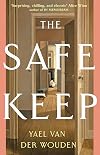
It's 1961 and since her mother's death Isabel lives alone in her house in the Dutch countryside. At least, she thinks of it as her house, but after her uncle's death it is to be inherited by her brother Louis.
But something happens to disturb Isabel's contentment. Louis needs to travel abroad for a month or so and insists that his girlfriend Eva should stay with Isabel while she is away. A girlfriend who Isabella has met only once, and to whom she behaved abominably. But then Isabel behaves abominably to most people outside her close family circle, and not necessarily well within it. So Eva arrives and Isabel's peace is shattered, but there is more to Eva's visit than Isabel, or indeed Louis, ever expected.
I found the historical context of this book very interesting, looking back to the events of the Second World War in show more the Netherlands. But other aspects worked less well for me. In particular, the relationship that develops between Isabel and Eva. Why would Eva consent to a relationship with someone who has treated her so very poorly? That doesn't ring true for me. . So overall, it's a book that's worth reading, but with definite flaws, in my opinion. show less
Isabel's heart gave a dull thud. She looked away. Uncle Karel had promised the house to Louis, should he ever want it. The unspoken caveat was: should he ever want it for a family of his own. Isabel never had any reason to worry: Louis never did seem to want for a family, never did seem to want the house at all. Had kept himself so far away from it all. Isabel had developed a thought over the years and the thought was: They would allow her to stay here, her brothers. Her uncle. They had to, where else could she go? She had nowhere else in the world. Nothing but these clean floors and neatly made beds. It was enough. If she could keep it, it would be enough.
But something happens to disturb Isabel's contentment. Louis needs to travel abroad for a month or so and insists that his girlfriend Eva should stay with Isabel while she is away. A girlfriend who Isabella has met only once, and to whom she behaved abominably. But then Isabel behaves abominably to most people outside her close family circle, and not necessarily well within it. So Eva arrives and Isabel's peace is shattered, but there is more to Eva's visit than Isabel, or indeed Louis, ever expected.
I found the historical context of this book very interesting, looking back to the events of the Second World War in show more the Netherlands. But other aspects worked less well for me. In particular,
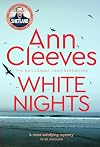
Some months after the events of 'Raven Black', Jimmy Perez is tentatively forming a relationship with Fran Hunter. Attending the opening of an art exhibition in which Fran has been invited to participate by the celebrated local artist Bella Sinclair, Jimmy comes across a man behaving oddly - claiming to have lost his memory. But when the man disappears Jimmy thinks no more of it – until the next morning that is when local crafter Kenny Thompson discovers the body of the man hanging in the shed where he keeps his fishing equipment. It's soon clear that this is murder, not suicide, and of course it's soon not the only suspicious death in the tiny community of Biddista.
I enjoyed this one more than 'Raven Black', the first book in the series, partially because this is a completely new story to me and partly because I'm getting used to the different approach taken to the characters in the books compared to the TV series. The Jimmy Perez on the page is a less forceful and more tentative character than on the screen, and murder investigations need the assistance of the specialist teams from the mainland. (I have to admit, watching the TV series, I was always a little surprised at just how many police officers Shetland seemed to have, with a population of no more than 23,000!) But I'm enjoying the different approach, even if Douglas Henshall will always be Jimmy Perez for me!
I enjoyed this one more than 'Raven Black', the first book in the series, partially because this is a completely new story to me and partly because I'm getting used to the different approach taken to the characters in the books compared to the TV series. The Jimmy Perez on the page is a less forceful and more tentative character than on the screen, and murder investigations need the assistance of the specialist teams from the mainland. (I have to admit, watching the TV series, I was always a little surprised at just how many police officers Shetland seemed to have, with a population of no more than 23,000!) But I'm enjoying the different approach, even if Douglas Henshall will always be Jimmy Perez for me!
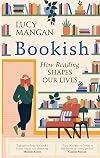
Lucy Mangan, it's fair to say, is a book lover. Her earlier book, Bookworm, tells the story of her bookish childhood, and this one, 'Bookish: How Reading Shapes our Lives', takes up where that one left off, as the teenage (but equally bookish) Lucy is moving on to adult books. And as we follow her progress to the current day we encounter all sorts of books that are important at different times, from studying 'Gawain and the Green Knight' in Middle English at Cambridge to Lee Child's Jack Reacher books which got her through the toddlerhood of her young son.
But rather than talking about a love of individual books, what this book is so good at is talking about a love of reading and books in general, in a way that really spoke to me. Here she is on re-reading:
I read Bookworm, a few years ago and enjoyed it but didn't love it, perhaps because the favourite books of the young Lucy weren't my favourites (I was definitely a fantasy loving child, and she definitely wasn't). But I loved this one. We still aren't necessarily reading the same books, but that doesn't really matter. Very strongly recommended. show less
But rather than talking about a love of individual books, what this book is so good at is talking about a love of reading and books in general, in a way that really spoke to me. Here she is on re-reading:
'I was an obsessive re-reader. I would be still, if I had the time and remained unaware of my limited span on this Earth and the number of absolutely irresistible books coming out each year. All reading is comfort reading, but oh God, the absolute joy and security that comes with sinking back into a book that you already know virtually by heart. You can lean into the twists and turns, appreciating them anew, but knowing nothing's going to surprise you this time. You can linger over the best parts, skim over others – effectively performing a bespoke edit that is your right as a reader; enjoy the words, the make-up, the structure; get to know the characters so well that you can take a moment here and there to stare offshow more
into the distance and imagine further scenes for them, knowing exactly how they'd react; eagerly anticipate your favourite moments and sigh with satisfaction once they're past; and ... oh, just enjoy the whole thing, every bit of it, all over again.'
I read Bookworm, a few years ago and enjoyed it but didn't love it, perhaps because the favourite books of the young Lucy weren't my favourites (I was definitely a fantasy loving child, and she definitely wasn't). But I loved this one. We still aren't necessarily reading the same books, but that doesn't really matter. Very strongly recommended. show less
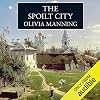
Book 2 in the Balkan Trilogy carries on with the story of Guy and Harriet Pringle as they continue their newly married life in the Bucharest of WWII. As German influence over Romania grows and political chaos reigns in Bucharest, Harriet becomes more and more convinced that staying in Romania is neither safe nor sensible. The British, once popular in Romania, become less and less so as the German hegemony increases.
But Guy will not leave while he has students to teach and Harriet will not leave without Guy...
As with the first book in the trilogy ([The Great Fortune]) virtually everyone in this book is intensely irritating in their failure to appreciate the gravity of their situation. Surely they can see the writing on the wall, you think? Can't they just use a bit of common sense and get out show more while they still can? Is the teaching of English really that important? But despite this (or perhaps because of it) the characters seem intensely real and I will definitely be carrying on to the next book in the series. show less
Hearing English spoken, an elderly man leapt up from a near-by table and reminded everyone that Britain had guaranteed Rumania. Now that Rumania was menaced, what were the British going to do? “Nothing, nothing,” he screamed in rage. “They are finished,” and he made a lunge towards the Pringles with his tussore parasol.
Harriet looked uneasily about her. When, ten months before, she had first arrived in Bucharest, the British here had been respected: now, on the losing side, they were respected no longer. She half feared actual attack – but no attack came. A certain sentiment, even affection, persisted for the once great, protecting power which was believed to be doomed.
But Guy will not leave while he has students to teach and Harriet will not leave without Guy...
As with the first book in the trilogy ([The Great Fortune]) virtually everyone in this book is intensely irritating in their failure to appreciate the gravity of their situation. Surely they can see the writing on the wall, you think? Can't they just use a bit of common sense and get out show more while they still can? Is the teaching of English really that important? But despite this (or perhaps because of it) the characters seem intensely real and I will definitely be carrying on to the next book in the series. show less
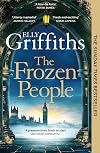
Ali Dawson is a detective working in a cold case unit in London - but a top secret cold case unit where investigation is carried out by going back in time to observe what actually happened. It's still an experimental process and the furthest back in time that anyone has been so far was to investigate a murder from the 1970's. But then Isaac Templeton, the justice minister in a Conservative Government and one of the few people in the government who know the facts about the unit, makes a strange request. Can the unit discover the truth about his ancestor Cain Templeman, rumoured to have been a serial killer in the 1850s? But why does Isaac Templeman (coincidentally the boss of Ali's son Finn) request that it is Ali specifically that undertakes this mission? And why does Ali become trapped in the year 1850?
As might be expected, Finn is somewhat shocked to discover the true nature of his mother's work.
But he soon has troubles enough of his own, as the events of the 1850s seem to be impinging on the present.
I always think I should enjoy time travel books in theory more than I do in practice. At least haven't enjoyed the two time-travel series that I've tried most recently. I know everyone loves [The Chronicles of St. Mary's] by [[Jodi Taylor]] but I've never been able to get past the fact that they send historians to investigate dinosaurs in Book 1 (I've tried - twice). I'm married to a historian - they know nothing whatsoever about dinosaurs! And in [[Connie Willis]]'s books everyone seems to rush around like headless chickens all the time, which I also find annoying... But this one I enjoyed, and I'll look forward to the next one in the series. show less
As might be expected, Finn is somewhat shocked to discover the true nature of his mother's work.
Jones’s voice is low and almost unsettlingly melodic. Finn knows what’s she’s doing, creating a sense of intimacy by speaking so softly that he has to lean forwards to catch her words, but he does it all the same. ‘Some years ago,’ she says, ‘I discovered a way of moving in time. It’s hard to explain but think of the difference between walking up the stairs, one by one, and taking the lift.’show more
Finn thinks of the out-of-order elevator downstairs. The names Quantum Mechanics, Niffenegger and Co, Wells, Pevensie Ltd start to make a horrible kind of sense. Audrey
Niffenegger, The Time Traveler’s Wife. H. G. Wells and his time machine. Wasn’t there a TV programme called Quantum Leap? He’s not sure about Pevensie, although the name rings a faint bell that first sounded in his childhood. 'Make your choice, adventurous Stranger. Strike the bell and bide the danger . . . '
Jones is still speaking, her slight Italian accent turning the words into a song.
But he soon has troubles enough of his own, as the events of the 1850s seem to be impinging on the present.
I always think I should enjoy time travel books in theory more than I do in practice. At least haven't enjoyed the two time-travel series that I've tried most recently. I know everyone loves [The Chronicles of St. Mary's] by [[Jodi Taylor]] but I've never been able to get past the fact that they send historians to investigate dinosaurs in Book 1 (I've tried - twice). I'm married to a historian - they know nothing whatsoever about dinosaurs! And in [[Connie Willis]]'s books everyone seems to rush around like headless chickens all the time, which I also find annoying... But this one I enjoyed, and I'll look forward to the next one in the series. show less
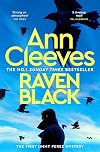
The first book in [[Ann Cleeves]]'s Shetland series.
Jimmy Perez has returned to his native Shetland after the break-up of his marriage, disillusioned with life and his job as a police inspector. But when Fran Hunter, the divorced wife of Shetland bigwig Duncan Hunter, finds the body of a murdered teenage girl lying in the snow, something of his old feelings for the job returns.
The murdered Catherine Ross lived in the same house from which eleven year old Catriona Bruce had disappeared eight years before. Is there a connection between the two cases? The local community are certainly quick to blame Magnus Tait, an old man they consider 'odd', interviewed at the time of Catriona's disappearance but never charged. But Perez isn't so sure.
It's difficult to read this without comparing it to the BBC TV series. Perez show more is certainly a different character here, less appealing in my opinion (but then I really like Douglas Henshall in this part). And I miss the banter and bromance between Perez and Duncan from the TV series. But on the other hand the book seems much more realistic about the policing resources (or rather the lack of them) available on Shetland. But I'll be interested to see how the characters develop. show less
Jimmy Perez has returned to his native Shetland after the break-up of his marriage, disillusioned with life and his job as a police inspector. But when Fran Hunter, the divorced wife of Shetland bigwig Duncan Hunter, finds the body of a murdered teenage girl lying in the snow, something of his old feelings for the job returns.
He’d moved back to Shetland after Sarah had left. He’d seen it as a failure, an act of running away. It had been a sort of promotion, but it wasn’t real policing, was it? That was what his colleagues in Aberdeen had said. A bit young for retirement, aren’t you, Jimmy lad? After losing the baby and separating from Sarah, he hadn’t really cared. The big cases hadn’t excited him any more. He’d stopped caring about the glory. And now he had a big case on his own patch and he felt something of the old thrill. Nothing to make a song and dance about just yet. But something stirring in his guts so he felt a bit more alive. The possibility of getting it right.
The murdered Catherine Ross lived in the same house from which eleven year old Catriona Bruce had disappeared eight years before. Is there a connection between the two cases? The local community are certainly quick to blame Magnus Tait, an old man they consider 'odd', interviewed at the time of Catriona's disappearance but never charged. But Perez isn't so sure.
It's difficult to read this without comparing it to the BBC TV series. Perez show more is certainly a different character here, less appealing in my opinion (but then I really like Douglas Henshall in this part). And I miss the banter and bromance between Perez and Duncan from the TV series. But on the other hand the book seems much more realistic about the policing resources (or rather the lack of them) available on Shetland. But I'll be interested to see how the characters develop. show less
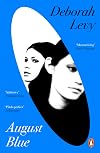
Elsa is at a market in Athens watching a woman purchase two mechanical horses. Going up to the stall holder in her turn to purchase two for herself she discovers that there are none left. Aggravated, she takes the strangers trilby hat which has accidentally been left behind.
Elsa is an acclaimed concert pianist, famous, with concerts in all the great concert halls of the world behind her, but weeks before that day in Athens she had walked off the stage in Vienna, leaving the audience demanding their money back. Nobody really knows why, show more including herself. As she travels from Greece to Paris and back to London she keeps seeing the woman from the Athens market. Is she her doppelgänger? Is she real? And is it time to finally confront her history as an adopted child, brought up from the age of six by the world-famous teacher Arthur Epstein?
Another book where the writing was beautiful but I was left not really understanding what it was about. show less
I felt she had stolen something from me, something that I would miss in my life. I walked away from the stall of dancing animals, bereft, towards a wagon piled with pistachio nuts. Lying on the ground next to the wagon was the black felt trilby hat the woman had been wearing. She had tucked a small sprig of a delicate, pale pink flower into its grey ribbon. I had seen these same flowers on the slopes of the hills of the Acropolis on a walk earlier that morning. Perhaps they would have been growing there when real horses pulled carriages loaded with marble to build the Parthenon.
I picked the hat up and looked for her and the old man but couldn’t see them anywhere. Her male companion was about the same age as my teacher, Arthur Goldstein.
At that moment I decided to keep the trilby hat. The horses were hers and not mine. It seemed like a fair exchange. I put it on right there in the market, tipping it forwards over my eyes, as she had done.
Elsa is an acclaimed concert pianist, famous, with concerts in all the great concert halls of the world behind her, but weeks before that day in Athens she had walked off the stage in Vienna, leaving the audience demanding their money back. Nobody really knows why, show more including herself. As she travels from Greece to Paris and back to London she keeps seeing the woman from the Athens market. Is she her doppelgänger? Is she real? And is it time to finally confront her history as an adopted child, brought up from the age of six by the world-famous teacher Arthur Epstein?
Another book where the writing was beautiful but I was left not really understanding what it was about. show less
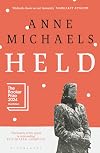
It’s 1917 and John is lying in the mud of a WW1 battlefield staring into the eyes of a dead young soldier, fully expecting to die himself. It’s 1920 and John is living above his photography shop in North Yorkshire with his wife Helena. It’s 1951 and Helena is in London.
It’s 1984 … it’s 1964 … it’s 1984 again. The book goes forwards and back in time, from France to England to Estonia and back, and each time we have vignettes of the lives of people confronted by trauma and grief, each connected to a greater or lesser extent. The dead do not stay firmly in the grave in this book:
I have mixed feelings about this book. The writing is beautiful, poetical and I enjoyed the backwards and forwards movements in time. (Although I do think that this is overdone at times - do we need Marie Curie as a character - I would argue not). But the voices of the characters show more didn’t ring true to me - they might have been poetical but they didn’t sound ‘real’. The voice of a youngish man in 1984 sounds the same as that of someone who must have been in his nineties. Elements of people’s life just didn’t seem to add up to make a whole real person.
Several reviewers have said that this is a book to reread, and I can understand why they say that. But I don’t think I enjoyed my first reading enough to want to read again. show less
It’s 1984 … it’s 1964 … it’s 1984 again. The book goes forwards and back in time, from France to England to Estonia and back, and each time we have vignettes of the lives of people confronted by trauma and grief, each connected to a greater or lesser extent. The dead do not stay firmly in the grave in this book:
He placed the negative in the developer and then into the fixer. The image in the fluid, like mist slowly parting the closer one approaches, began to emerge: the young man, beautifully clear and evocatively lit, handsome and whole in body: behind him, the luxurious drapery, the nap of velvet and details of brocade, sharp and precise; and in his hand, a book, Matthew Arnold's 'Stanzas', even the shadows of the letters embossed on the cover. And beside him, semi-opaque but perfectly distinct, an older woman, well-dressed, pearl buttons, her fine head and lustrous hair, and her expression of intolerable longing.
I have mixed feelings about this book. The writing is beautiful, poetical and I enjoyed the backwards and forwards movements in time. (Although I do think that this is overdone at times - do we need Marie Curie as a character - I would argue not). But the voices of the characters show more didn’t ring true to me - they might have been poetical but they didn’t sound ‘real’. The voice of a youngish man in 1984 sounds the same as that of someone who must have been in his nineties. Elements of people’s life just didn’t seem to add up to make a whole real person.
Several reviewers have said that this is a book to reread, and I can understand why they say that. But I don’t think I enjoyed my first reading enough to want to read again. show less
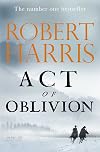
It's 1660 and Charles II has returned to England after the collapse of the Republic. An amnesty is announced for those that took up arms against Charles I in the civil war, with one exception: there is to be no forgiveness for anyone directly involved in the killing of the king. And so two so-called regicides – Colonel Edward Whalley, cousin to Oliver Cromwell, and Colonel Williams Goffe his son-in-law – both signatories of the death warrant of Charles I, flee England to escape the fate of being hanged, drawn and quartered. They arrive in Cambridge, Massachusetts as guests of the puritan Daniel Gookin, but to the consternation of his wife:
But Massachusetts does not prove the safe haven that the colonels had been hoping for. And in London, Richard Naylor, most zealous member of the committee charged with finding the regicides, has his own personal reasons for wanting them dead.
This is a historical novel that follows as far as possible the known facts about Edward Whalley and William Goffe. A pet hate of mine in historical novels is to find characters with all the attitudes and beliefs of the twenty-first century dropped into a quasi historical setting. There is none of that here. Whalley and Goffe are completely believable as men of the seventeenth century, religious fanatics by today's standards. And the New England in which they find themselves is so believable as well: I found the descriptions of the early colonies was one of the most interesting parts of the book.
I've enjoyed quite a few of Robert Harris's books over the years, and this one is no exception. Recommended. show less
'And why was it so urgent for them to leave?'show more
'To put the matter briefly, the King's son is returning to the throne by invitation of Parliament, the army has agreed – or most of it – and England is to be a republic no more.'
The information came in such a rush, was so overwhelming and unexpected, she had to sit on the bed beside him to absorb it. After a few moments she said, 'Why did the army agree to such a thing?'
'A new law, what they call an Act of Oblivion, has been laid before Parliament. The past is to be forgotten. There's to be an amnesty for all who took up arms against the late King – with one exception. All those regicides, as they call them, who had direct involvement in the trial and execution of Charles Stuart are required to surrender themselves for judgement.' He took her hand. There you have it, as plain as
I can tell it. This was ten weeks ago. Ours is the first ship to reach Boston with the news.'
But Massachusetts does not prove the safe haven that the colonels had been hoping for. And in London, Richard Naylor, most zealous member of the committee charged with finding the regicides, has his own personal reasons for wanting them dead.
This is a historical novel that follows as far as possible the known facts about Edward Whalley and William Goffe. A pet hate of mine in historical novels is to find characters with all the attitudes and beliefs of the twenty-first century dropped into a quasi historical setting. There is none of that here. Whalley and Goffe are completely believable as men of the seventeenth century, religious fanatics by today's standards. And the New England in which they find themselves is so believable as well: I found the descriptions of the early colonies was one of the most interesting parts of the book.
I've enjoyed quite a few of Robert Harris's books over the years, and this one is no exception. Recommended. show less
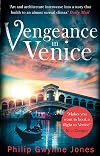
This is the second in Philip Gwynne Jones's Venice series. I read the first one, The Venetian Game, just before Christmas and this is an equally enjoyable read. As I said in my review of the first book, this is basically a love letter to Venice with a mystery thrown in, but it's a well written book (written by someone who clearly knows Venice like the back of his hand) that keeps you reading. This isn't cozy crime exactly, but our detective, honorary British Consol Nathan Sutherland, is a basically decent man who wants to do the right thing.
A perk of Nathan's 'job' (if you can call it that, as it is an unpaid position) is that he receives an invite to the opening of several exhibitions at the famous Venice Biennale. As well as being able to view the art, the drinks usually flow profusely at these occasions, always popular with Nathan. The opening of the British pavilion, featuring a glass installation by the artist Paul Considine, is the first exhibition that Nathan attends as the Biennale opens:
I made my way upstairs, a little unwillingly. I've never been good with heights, but that wasn't the problem. It was the effect of feeling oneself suspended in the air above a valley of jagged, broken glass. The safety barriers – glass themselves, and a little lower than I'd have liked – provided no real feeling of security. One wall was lined with seven glass scythes. Another with seven swords. Another with seven daggers. It was simultaneously one of the most beautiful and show more terrifying things I'd ever seen.
But a horrific accident leads to the decapitation of a famous art critic. But was it an accident, and is Paul Considine really the quiet inoffensive man that he appears?
After reading this book all I want to do is go to Venice and drink a marrochino. (I had to look it up, but now that I know what it it, I definitely want one. And I've never seen one in Starbucks or Costa so I suppose I'll have to go to Italy.)
These books don't seem particularly well known on LT, but I think a lot of people would enjoy the series, particularly anyone interested in art or lovers of Italy. I'll be reading book three in due course. show less
A perk of Nathan's 'job' (if you can call it that, as it is an unpaid position) is that he receives an invite to the opening of several exhibitions at the famous Venice Biennale. As well as being able to view the art, the drinks usually flow profusely at these occasions, always popular with Nathan. The opening of the British pavilion, featuring a glass installation by the artist Paul Considine, is the first exhibition that Nathan attends as the Biennale opens:
I made my way upstairs, a little unwillingly. I've never been good with heights, but that wasn't the problem. It was the effect of feeling oneself suspended in the air above a valley of jagged, broken glass. The safety barriers – glass themselves, and a little lower than I'd have liked – provided no real feeling of security. One wall was lined with seven glass scythes. Another with seven swords. Another with seven daggers. It was simultaneously one of the most beautiful and show more terrifying things I'd ever seen.
But a horrific accident leads to the decapitation of a famous art critic. But was it an accident, and is Paul Considine really the quiet inoffensive man that he appears?
After reading this book all I want to do is go to Venice and drink a marrochino. (I had to look it up, but now that I know what it it, I definitely want one. And I've never seen one in Starbucks or Costa so I suppose I'll have to go to Italy.)
These books don't seem particularly well known on LT, but I think a lot of people would enjoy the series, particularly anyone interested in art or lovers of Italy. I'll be reading book three in due course. show less
As I was reading this book I started to think how very little thought I've ever given to sheep. Sheep were something that were just ... well ... around. Certainly, within walking distance of my childhood home there were fields with sheep in them but I'd never given them a moments thought, apart from at lambing time, and only then because of the cuteness of the lambs. The sheep we encountered on the way to visit my great aunt in the Welsh Valleys were marginally more interesting, mainly because those sheep of the unfenced mountains had a tendency to walk in front of the car at random moments, which made driving more interesting. So it's a tribute to the quality of James Rebanks's book that I've come away with a real feeling of the love that he has for his life as a shepherd.
The Shepherd's Life is part description of the hill shepherd's year, part autobiography, part history of the author's family who have farmed in the Lake District for generations, but above all a celebration of the life of the hill farmer. And of course the sheep. Who knew sheep could be so interesting? James Rebanks own passion is for the Herdwick sheep, the traditional breed of the Lake District, sheep that have been are "hefted" (or attached) to their own piece of upland for generation after generation so that they will stay there and not wander. And it could be argued that Rebanks's family are "hefted" too, belonging to the land in a way that is alien to most British people today. Reading this book show more made me think what a very long time it is since anyone in my own family could have felt that they belonged to the landscape in the way that the author describes, a hundred and fifty years ago at the very least I would imagine.
James Rebanks is a man of strong opinions, not all of which I agree with. But as a portrait of a different way of life, that is continuing traditions in the twenty-first century that have gone on for centuries, this can't be bettered. So highly recommended ... and not just to lovers of sheep. show less
The Shepherd's Life is part description of the hill shepherd's year, part autobiography, part history of the author's family who have farmed in the Lake District for generations, but above all a celebration of the life of the hill farmer. And of course the sheep. Who knew sheep could be so interesting? James Rebanks own passion is for the Herdwick sheep, the traditional breed of the Lake District, sheep that have been are "hefted" (or attached) to their own piece of upland for generation after generation so that they will stay there and not wander. And it could be argued that Rebanks's family are "hefted" too, belonging to the land in a way that is alien to most British people today. Reading this book show more made me think what a very long time it is since anyone in my own family could have felt that they belonged to the landscape in the way that the author describes, a hundred and fifty years ago at the very least I would imagine.
James Rebanks is a man of strong opinions, not all of which I agree with. But as a portrait of a different way of life, that is continuing traditions in the twenty-first century that have gone on for centuries, this can't be bettered. So highly recommended ... and not just to lovers of sheep. show less