
Joan Aiken (1924–2004)
Author of The Wolves of Willoughby Chase
About the Author
Joan Delano Aiken was born in Rye, Sussex, England, on September 4, 1924, the daughter of the Pulitzer Prize winner, writer Conrad Aiken. She was raised in a rural area and home schooled by her mother until the age 12. She then attended Wychwood School, a boarding school in Oxford. Her work first show more appeared in 1941 when the British Broadcasting Corporation, where she worked as a librarian, broadcast some of her short stories on their Children's Hour program. Aiken also worked at St. Thomas's Hospital, and in 1943 she moved to the reference department of the London office of the United Nations, where she collected information about resistance movements. She worked for the UN until 1949, all the while continuing to write stories. In 1953 a collection of short fiction called All You've Ever Wanted and Other Stories was published. While writing The Wolves of Willoughby Chase, begun in 1952, her husband became ill and died of lung cancer in 1955. After working for five years as a copy editor at Argosy Magazine, and at the J. Walter Thompson Advertising Firm, she returned and finished the book in 1963. The Wolves of Willoughby Chase won the Lewis Carroll Shelf Award and was made into a successful film in 1988. In 1969 The Whispering Mountain won the Guardian Children's Book Award, and in 1972, Night Fall won America's Edgar Allen Poe Award for juvenile mystery. Aiken is best known for her adult "fantasy" stories. She has received awards for children's fiction and for mystery fiction, and has also written ''sequels'' to Jane Austen books. She collaborated with her daughter to write many episodes of her Arabel and Mortimer the raven series for the BBC. In all, Aiken wrote 92 novels - including 27 for adults - as well as plays, poems and short stories, although she was best known as a writer of children's stories. Joan Aiken died in January of 2004 at the age of 79. (Bowker Author Biography) show less
Image credit: Rod Delroy
Series
Works by Joan Aiken
Jane Fairfax: The Secret Story of the Second Heroine in Jane Austen's Emma (1990) — Author — 397 copies, 12 reviews
The Watsons and Emma Watson: Jane Austen's Unfinished Novel Completed by Joan Aiken (1996) 131 copies, 3 reviews
The rented swan 4 copies
Lodgers [short fiction] 3 copies
Clem's Dream [short fiction] 3 copies
Hair 2 copies
A necklace of raindrops : taken from ‘A necklace of raindrops and other stories’ (1 vol Stock no.18) 2 copies
UN EN LA NOCHE 1 copy
1992 1 copy
1991 1 copy
De schreeuw 1 copy
Fantastic Fables 1 copy
Das Todesparfüm 1 copy
Visszatérés a mansfieldi kastélyba [Jane Austen A mansfieldi kastély című regényének folytatása] (2007) 1 copy
Goblin Music 1 copy
Find Me 1 copy
Water of Youth (short story) 1 copy
The Companion 1 copy
Finders Keepers 1 copy
Marmalade Wine [short story] 1 copy
Lungewater [short story] 1 copy
Model Wife (short story) 1 copy
Wee Robin (short story) 1 copy
Harp Music (short story) 1 copy
Honeymaroon (short story) 1 copy
The Helper (short story) 1 copy
Angst und Bange 1 copy
Associated Works
The 20th-Century Children's Book Treasury: Picture Books and Stories to Read Aloud (1998) — Contributor — 1,828 copies, 14 reviews
The Year's Best Fantasy and Horror: First Annual Collection (1986) — Contributor — 333 copies, 6 reviews
The Collected Ghost Stories of E. F. Benson (1992) — Foreword, some editions — 308 copies, 5 reviews
The Year's Best Fantasy and Horror: Second Annual Collection (1987) — Contributor — 207 copies, 1 review
The Year's Best Fantasy and Horror: Third Annual Collection (1988) — Contributor — 193 copies, 2 reviews
Sixteen: Short Stories by Outstanding Writers for Young Adults (1985) — Contributor — 176 copies, 1 review
The Best Science Fiction and Fantasy of the Year, Volume 3 (2009) — Contributor — 150 copies, 2 reviews
Ladies of Fantasy: Two Centuries of Sinister Stories by the Gentle Sex (1975) — Contributor — 53 copies, 1 review
Bruce Coville's Book of Nightmares II: More Tales to Make You Scream (1997) — Contributor — 50 copies
Deadly Dolls: Midnight Tales of Uncanny Playthings: 50 (British Library Tales of the Weird) (2024) — Contributor — 33 copies, 1 review
The Best of Both Worlds: An Anthology of Stories for All Ages (1968) — Contributor — 25 copies, 1 review
The Dead of Summer: Strange Tales of May Eve and Midsummer: 19 (British Library Gilded Nightmares) (2025) — Contributor — 18 copies, 1 review
The Magazine of Fantasy and Science Fiction July/August 2011, Vol. 121, Nos. 1 & 2 (2011) — Contributor — 16 copies, 1 review
The Haunted and the Haunters: Tales of Ghosts and Other Apparitions (1975) — Contributor — 12 copies
Geschichten, Geschichten, Geschichten. ( Ab 8 J.). Zum Vorlesen und zum Selberlesen. (1988) — Contributor — 11 copies
Cricket Magazine, Vol. 4, No. 6, February 1977 — Contributor — 3 copies
Cricket Magazine, Vol. 4, No. 11, July 1977 — Contributor — 2 copies
Cricket Magazine, Vol. 4, No. 10, June 1977 — Contributor — 1 copy
Tagged
Common Knowledge
- Legal name
- Goldstein, Joan Delano Aiken Brown
- Birthdate
- 1924-09-04
- Date of death
- 2004-01-04
- Gender
- female
- Education
- Wychwood School for Girls, Oxford
- Occupations
- children's author
novelist
advertising copywriter
editor - Organizations
- BBC
Argosy - Awards and honors
- Guardian Award (1969)
Edgar Allan Poe Award (1972)
Order of the British Empire (Member, 1999) - Agent
- A. M. Heath & Co.
- Relationships
- Aiken, Conrad (father)
Armstrong, Martin (stepfather)
Hodge, Jane Aiken (sister)
Aiken, John (brother)
Brown, Ronald George (husband)
Goldstein, Julius (husband) (show all 7)
Aiken, Lizza (daughter) - Short biography
- Joan Aiken was an English writer who received the MBE for services to Children's Literature. She was known as a writer of wild fantasy, Gothic novels and short stories.
She was born in Rye, East Sussex, into a family of writers, including her father, Conrad Aiken (who won a Pulitzer Prize for his poetry), and her sister, Jane Aiken Hodge. She worked for the United Nations Information Office during the second world war, and then as an editor and freelance on Argosy magazine before she started writing full time, mainly children's books and thrillers. For her books she received the Guardian Award (1969) and the Edgar Allan Poe Award (1972).
Her most popular series, the "Wolves Chronicles" which began with The Wolves of Willoughby Chase, was set in an elaborate alternate period of history in a Britain in which James II was never deposed in the Glorious Revolution,and so supporters of the House of Hanover continually plot to overthrow the Stuart Kings. These books also feature cockney urchin heroine Dido Twite and her adventures and travels all over the world.
Another series of children's books about Arabel and her raven Mortimer are illustrated by Quentin Blake, and have been shown on the BBC as Jackanory and drama series. Others including the much loved Necklace of Raindrops and award winning Kingdom Under the Sea are illustrated by Jan Pieńkowski.
Her many novels for adults include several that continue or complement novels by Jane Austen. These include Mansfield Revisited and Jane Fairfax.
Aiken was a lifelong fan of ghost stories. She set her adult supernatural novel The Haunting of Lamb House at Lamb House in Rye (now a National Trust property). This ghost story recounts in fictional form an alleged haunting experienced by two former residents of the house, Henry James and E. F. Benson, both of whom also wrote ghost stories. Aiken's father, Conrad Aiken, also authored a small number of notable ghost stories. - Nationality
- UK
- Birthplace
- Rye, East Sussex, England, UK
- Places of residence
- London, Middlesex, England, UK
New York, USA - Place of death
- Petworth, West Sussex, England, UK
- Map Location
- England, UK
Members
Discussions
British Author Challenge January 2024: Joan Aiken & Arthur Conan Doyle in 75 Books Challenge for 2024 (February 2024)
THE DEEP ONES: "Cold Flame" by Joan Aiken in The Weird Tradition (September 2022)
THE DEEP ONES: "Reading in Bed" by Joan Aiken in The Weird Tradition (June 2022)
Joan Aiken romance- main female lead dies in Name that Book (March 2016)
Reviews

After her mother drops dead, Pandora Crumbe becomes an unofficial auxiliary of the Morningquest clan, a family of prodigies. But as much as Pandora loves the Morningquests, she and they are not salutary influences on one another.
The big narrative arc of Morningquest depends on Pandora's slow disillusionment with a family that she is eager to idolize, a disillusionment complicated by a maturing, clear-sighted affection for the family, so that the big clanging moments of the novel come when show more Pandora realizes (again and again) just how badly she has "misread" the dynamics of the Morningquest family.
Or this is Morningquest's intention, at least. It does not manage it, because neither the reader nor Pandora is ever given a chance to fall in love with the Morningquests. The book is narrated by an older Pandora, looking back with all the cynicism of hindsight, and her curdled suspicions alert the reader to the terrible, terrible substance that lurks behind the Morningquest exterior. (After being told by the adorable Morningquest matriarch that Pandora's mother wanted her to attend a particular university, the book itself asks, portentuous with paranoia, "Had that conversation really taken place?" [30]) We never see Pandora establish any childhood bonds with the Morningquests; we only hear about their endearing accomplishments second-hand. All evidence of their humanity happens off-stage.
And thus, when the Morningquests start committing their many sins and suicides, Pandora gasps and the reader yawns. It does not help that Morningquest embraces a mode of excessive melodrama; after a while, it becomes unclear if there exists any taboo or commandment that the Morningquests have not trespassed. (Bestiality, I guess? Necrophilia?) The novel's rising assault of gratuitous sensationalism upon the reader is numbing. show less
The big narrative arc of Morningquest depends on Pandora's slow disillusionment with a family that she is eager to idolize, a disillusionment complicated by a maturing, clear-sighted affection for the family, so that the big clanging moments of the novel come when show more Pandora realizes (again and again) just how badly she has "misread" the dynamics of the Morningquest family.
Or this is Morningquest's intention, at least. It does not manage it, because neither the reader nor Pandora is ever given a chance to fall in love with the Morningquests. The book is narrated by an older Pandora, looking back with all the cynicism of hindsight, and her curdled suspicions alert the reader to the terrible, terrible substance that lurks behind the Morningquest exterior. (After being told by the adorable Morningquest matriarch that Pandora's mother wanted her to attend a particular university, the book itself asks, portentuous with paranoia, "Had that conversation really taken place?" [30]) We never see Pandora establish any childhood bonds with the Morningquests; we only hear about their endearing accomplishments second-hand. All evidence of their humanity happens off-stage.
And thus, when the Morningquests start committing their many sins and suicides, Pandora gasps and the reader yawns. It does not help that Morningquest embraces a mode of excessive melodrama; after a while, it becomes unclear if there exists any taboo or commandment that the Morningquests have not trespassed. (Bestiality, I guess? Necrophilia?) The novel's rising assault of gratuitous sensationalism upon the reader is numbing. show less

This was the fourth book in Aiken's James III sequence, but chronologically, it's a prequel, self-contained and entirely satisfying all on its ownsome. Full of wonderful Welsh dialect and phrases, it's an adventure set in the valleys and mountains and caves around Fig Hat Ben, the Whispering Mountain of the title.
We join the action more or less in full swing. Our hero Owen Hughes is bracing himself for a confrontation with some bullies, but soon has a lot more on his mind as the local show more Marquess has taken a hankering to take possession of the battered old golden harp found by Owen's grandfather, the curator of the local museum. Two thieves hired for the task make off with the harp, kidnapping Owen and making it look as though he is responsible. Aided by his friend, the herbalist daughter of an itinerant poet and an old wandering monk, Owen must retrieve the harp, capture the thieves, defeat the evil nobleman, help the mysterious people who live in the caves, rescue the Prince Of Wales and persuade his crotchety grandfather that he's not himself a villain.
Pure joyful adventure and escapism, this is thrilling and exciting and adventurous and packed with characters and incidents and ideas and mystery and atmosphere and all manner of good things. Fantastic. show less
We join the action more or less in full swing. Our hero Owen Hughes is bracing himself for a confrontation with some bullies, but soon has a lot more on his mind as the local show more Marquess has taken a hankering to take possession of the battered old golden harp found by Owen's grandfather, the curator of the local museum. Two thieves hired for the task make off with the harp, kidnapping Owen and making it look as though he is responsible. Aided by his friend, the herbalist daughter of an itinerant poet and an old wandering monk, Owen must retrieve the harp, capture the thieves, defeat the evil nobleman, help the mysterious people who live in the caves, rescue the Prince Of Wales and persuade his crotchety grandfather that he's not himself a villain.
Pure joyful adventure and escapism, this is thrilling and exciting and adventurous and packed with characters and incidents and ideas and mystery and atmosphere and all manner of good things. Fantastic. show less

A wonderful read; technically a series of short stories, but many of them revolve around the same family (the Armitages) and especially the two children (Harriet and Mark); there's enough connection here to make it feel like a light novel, with interludes.
Every story is either magical or very funny - many of them, both. There are lots of direct references to classical mythology, and several stories follow the familiar logic of fairy tales, which Aiken plays for real; she takes her fantasy show more seriously. Yet the stories are never cold or distant. Aiken's humor is dry and matter-of-fact, cutting through the mysticism as if to say, "Well, this is just how it is, I suppose." A little boy reads stories to inanimate objects, who are grateful for the company; a dragon curls up near a space heater like a cat; a princess rides to the ends of the earth to bring back a piece of the dark. The stories are full of odd, strange, even terrifying things that are treated as totally run-of-the-mill, and as a result, become extremely funny. If ever a book recreated the humor of a slow double-take in print, this is the one.
This is a real treasure of a book and it's a shame Aiken isn't as well known in the United States as her contemporary Roald Dahl, whose work hers sometimes resembles (especially the incongruities of James and the Giant Peach or The Witches); hers is a quieter and gentler set of tales, though, without any of the misanthropy or malice. show less
Every story is either magical or very funny - many of them, both. There are lots of direct references to classical mythology, and several stories follow the familiar logic of fairy tales, which Aiken plays for real; she takes her fantasy show more seriously. Yet the stories are never cold or distant. Aiken's humor is dry and matter-of-fact, cutting through the mysticism as if to say, "Well, this is just how it is, I suppose." A little boy reads stories to inanimate objects, who are grateful for the company; a dragon curls up near a space heater like a cat; a princess rides to the ends of the earth to bring back a piece of the dark. The stories are full of odd, strange, even terrifying things that are treated as totally run-of-the-mill, and as a result, become extremely funny. If ever a book recreated the humor of a slow double-take in print, this is the one.
This is a real treasure of a book and it's a shame Aiken isn't as well known in the United States as her contemporary Roald Dahl, whose work hers sometimes resembles (especially the incongruities of James and the Giant Peach or The Witches); hers is a quieter and gentler set of tales, though, without any of the misanthropy or malice. show less
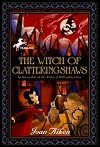
The Witch of Clatteringshaws lives in Scotland in a disused Ladies Convenience - not at all convenient, the plumbing having long been smashed. In London, Simon Battersea, unhappily settled on the throne of England, is forced to live in St James's Palace with his good friend, Dido Twite. Never has Joan Aiken's wild imagination been more in evidence as Dido, travelling north to investigate a false claimant to the throne, is confronted by abandoned children, monsters and murderers, while Simon show more has to defend his country against invading Wends.
Their instinct to go north is a good one for it is the witch, Malise, who provides the key to everyone's troubles in a wonderfully swift and extravagant climax. A tremendous read and a truly satisfying ending to the Dido and Simon saga. show less
Their instinct to go north is a good one for it is the witch, Malise, who provides the key to everyone's troubles in a wonderfully swift and extravagant climax. A tremendous read and a truly satisfying ending to the Dido and Simon saga. show less
Lists
Edgar Award (1)
Ghosts (1)
Spirit of Place (1)
Best Young Adult (1)
grrrrrl power (1)
Read in 2003 (1)
Books with Twins (1)
Sonlight Books (2)
Elevenses (3)
Female Author (3)
Children's Humor (4)
Austenland (5)
1960s (1)
1964 Project (1)
Awards


You May Also Like


Associated Authors
Statistics
- Works
- 216
- Also by
- 131
- Members
- 19,789
- Popularity
- #1,095
- Rating
- 3.9
- Reviews
- 498
- ISBNs
- 1,035
- Languages
- 20
- Favorited
- 79
