Leon Garfield (1921–1996)
Author of Shakespeare Stories
About the Author
Author Leon Garfield was born in Brighton, England on July 14, 1921. When World War II began, he stopped studying art and joined the British Army Medical Corps. While posted in Belgium, he met Vivien Alcock, who would later become his wife as well as a popular children's author. After the war, he show more worked as a biochemical laboratory technician until the 1960's when he became a full-time writer. He wrote more than thirty books for both children and adults and scripted Shakespeare: The Animated Tales for television. His second book, Devil-in-the-Fog won the first ever Guardian Award and was made into a television series. He also won the Carnegie Medal for The God Beneath the Sea, the Whitbread Award for John Diamond, and the Phoenix Award for Smith. His novel Black Jack was made into a full-length feature film and was the joint winner of the International Jury Award at the 1979 Cannes Film Festival. He died in London on June 2, 1996. (Bowker Author Biography) show less
Series
Works by Leon Garfield
Child O'War 1 copy
Eerlijk is eerlijk 1 copy
Associated Works
Tagged
Common Knowledge
- Birthdate
- 1921-07-14
- Date of death
- 1996-06-02
- Gender
- male
- Education
- Brighton Grammar School
Regent Street Polytechnic, London - Occupations
- fiction writer
laboratory technician - Organizations
- British Army Medical Corps (WWII)
- Awards and honors
- Royal Society of Literature (Fellow, 1985)
- Relationships
- Alcock, Vivien (spouse)
- Nationality
- UK
- Birthplace
- Brighton, Sussex, England, UK
- Places of residence
- Islington, London, Middlesex, England, UK
- Place of death
- Islington, London, Middlesex, England, UK
- Map Location
- England, UK
Members
Discussions
Found: Fiction, historical. Boy raised in acting troupe suddenly declared heir to a lord in Name that Book (March 2025)
Reviews
This is my fifth Dickens novel. Normally I wouldn’t read a final, unfinished work so early in my perusal of an author’s oeuvre, but when I learned that the BBC was going to be airing what sounded like a pretty interesting adaptation of Drood, I decided that I ought to give it a shot.
Like anyone approaching this book, I had to make one very important decision. Would I read it as Dickens left it to the world, incomplete and with no resolution, yet all the work of the master himself? Or show more would I settle for a conclusion by one of his lesser imitators, doing his best to honor Dickens’s intentions? Some purists would balk at the second idea, but I must admit that it appealed to me: the chance to compare the styles of two different authors writing the same story and characters. I selected Leon Garfield’s 1980 completion, as I was already familiar with Garfield as an excellent children’s author with more than a touch of the Dickensian about him.
The Mystery of Edwin Drood is an atypical Dickens novel on several levels. I had to read the first paragraph several times before I could understand it—and, moreover, understand why it was confusing me. To begin with, it was in present tense, unusual for a nineteenth-century novel. Secondly, the exotic scene that was being presented was not of a physical location that the character inhabited; instead, it was part of a character’s opium-induced hallucinations. The orientalism of the vision, coupled with the darkness and squalor of the London opium den that John Jasper wakes up to, made me think more of Wilkie Collins than Charles Dickens. (My instincts were right for once; there’s quite a bit of scholarly speculation that Dickens based Jasper’s opium addiction on Collins’s own addiction.)
Not much of Dickens’s portion of the novel is set in London, however. Instead, most of the action takes place in Cloisterham, an “ancient English cathedral town.” I just love the way in which Dickens describes this community:
A drowsy city, Cloisterham, whose inhabitants seem to suppose, with an inconsistency more strange than rare, that all its changes lie behind it, and that there are no more to come. A queer moral to derive from antiquity, yet older than any traceable antiquity.
This being Dickens, both London and Cloisterham are peopled with eccentric and charming personalities. Chief among them is John Jasper, one of the most fascinating and mysterious antiheroes in the literary canon. It is mainly on his account that one regrets Dickens’s inability to complete the novel; the mystery’s solution would have solved the problem of how exactly one ought to read his character. Others surrounding him are worth notice in their own way, though. It’s almost impossible not to fall in love with Mr. Crisparkle, the cheerful, lonely bachelor of a minor canon who plays at boxing in the mirror every morning. Likewise, I couldn’t help laughing at Mr. Sapsea’s conceitedness. Speaking of humor, how about this exchange between Mr. Jasper and the sodden stonemason Durdles?
“Is there anything new down in the crypt, Durdles?” asks John Jasper.
“Anything old, I think you mean,” growls Durdles. “It ain't a spot for novelty.”
Among the most moving of the figures is Mr. Grewgious, a stiff, seemingly emotionless lawyer who harbors past regrets and heartbreaks all his own. The scene in which Dickens pulls back the curtain and allows us readers a look into this lonely old gentleman’s soul is masterfully done. The only character I didn’t much care for was Rosa Bud, Mr. Grewgious’s ward and the object of so many affections. She is spoiled, pert, and childish, but painted in golden hues. She is simultaneously perfect and annoying—just the sort of Dickens heroine that gives a bad name to all the rest. The other young people are more convincingly drawn, especially the poor, beautiful, and sensible Helena Landless, who ought to be as annoying as Rosa but somehow is not.
The narrative style of the book confused me a bit; it switches between past and present tense, seemingly at random. I believe that in Bleak House Dickens includes two narratives, one in each tense, but here there’s no clear distinction like that.
The mystery of the title revolves around several questions: Why did young Edwin Drood disappear? Was he murdered? And, if so, who was the murderer? Looking at the text, the answers to these questions seem fairly obvious, and the secondhand accounts we have of Dickens's intentions square up with the most common interpretation, but one has to wonder: was he pulling our legs all along?
Leon Garfield goes for a pretty conservative conclusion, but a good one. Stylistically, he copies Dickens admirably; the only things that seemed out of place were the overabundance of Shakespeare references and a few supernatural occurrences. I originally took the back cover’s claim that the contents could be read as a single, unified piece as pure rubbish, but as I read I couldn’t really make distinctions between Dickens’s Jasper and Garfield’s Jasper, Dickens’s Rosa and Garfield’s Rosa. It functioned as a continuous narrative. Bravo to Garfield!
His achievement appears even more stunning when considered alongside some of the film adaptations, which of course make up endings of their own. Claude Rains makes for the perfect John Jasper in a 1935 film, despite his diminutive stature, and the scenes between him and Zeffie Tilbury in the opium den are amazingly good. But the rest of the movie is dated and cartoonish in the manner of most of the older Dickens adaptations, and the narrative winds down too quickly; there’s less than a quarter of an hour’s worth of material added to Dickens’s manuscript. The version recently aired on the BBC and PBS had a more consistently Gothic tone and a great cast—Tamzin Merchant actually made me like Rosa somewhat—but the ending was like something out of Gilbert and Sullivan. Too far-fetched, even for Dickens.
This shouldn’t be anyone’s first Dickens novel, but I recommended it, especially with Garfield’s conclusion. show less
Like anyone approaching this book, I had to make one very important decision. Would I read it as Dickens left it to the world, incomplete and with no resolution, yet all the work of the master himself? Or show more would I settle for a conclusion by one of his lesser imitators, doing his best to honor Dickens’s intentions? Some purists would balk at the second idea, but I must admit that it appealed to me: the chance to compare the styles of two different authors writing the same story and characters. I selected Leon Garfield’s 1980 completion, as I was already familiar with Garfield as an excellent children’s author with more than a touch of the Dickensian about him.
The Mystery of Edwin Drood is an atypical Dickens novel on several levels. I had to read the first paragraph several times before I could understand it—and, moreover, understand why it was confusing me. To begin with, it was in present tense, unusual for a nineteenth-century novel. Secondly, the exotic scene that was being presented was not of a physical location that the character inhabited; instead, it was part of a character’s opium-induced hallucinations. The orientalism of the vision, coupled with the darkness and squalor of the London opium den that John Jasper wakes up to, made me think more of Wilkie Collins than Charles Dickens. (My instincts were right for once; there’s quite a bit of scholarly speculation that Dickens based Jasper’s opium addiction on Collins’s own addiction.)
Not much of Dickens’s portion of the novel is set in London, however. Instead, most of the action takes place in Cloisterham, an “ancient English cathedral town.” I just love the way in which Dickens describes this community:
A drowsy city, Cloisterham, whose inhabitants seem to suppose, with an inconsistency more strange than rare, that all its changes lie behind it, and that there are no more to come. A queer moral to derive from antiquity, yet older than any traceable antiquity.
This being Dickens, both London and Cloisterham are peopled with eccentric and charming personalities. Chief among them is John Jasper, one of the most fascinating and mysterious antiheroes in the literary canon. It is mainly on his account that one regrets Dickens’s inability to complete the novel; the mystery’s solution would have solved the problem of how exactly one ought to read his character. Others surrounding him are worth notice in their own way, though. It’s almost impossible not to fall in love with Mr. Crisparkle, the cheerful, lonely bachelor of a minor canon who plays at boxing in the mirror every morning. Likewise, I couldn’t help laughing at Mr. Sapsea’s conceitedness. Speaking of humor, how about this exchange between Mr. Jasper and the sodden stonemason Durdles?
“Is there anything new down in the crypt, Durdles?” asks John Jasper.
“Anything old, I think you mean,” growls Durdles. “It ain't a spot for novelty.”
Among the most moving of the figures is Mr. Grewgious, a stiff, seemingly emotionless lawyer who harbors past regrets and heartbreaks all his own. The scene in which Dickens pulls back the curtain and allows us readers a look into this lonely old gentleman’s soul is masterfully done. The only character I didn’t much care for was Rosa Bud, Mr. Grewgious’s ward and the object of so many affections. She is spoiled, pert, and childish, but painted in golden hues. She is simultaneously perfect and annoying—just the sort of Dickens heroine that gives a bad name to all the rest. The other young people are more convincingly drawn, especially the poor, beautiful, and sensible Helena Landless, who ought to be as annoying as Rosa but somehow is not.
The narrative style of the book confused me a bit; it switches between past and present tense, seemingly at random. I believe that in Bleak House Dickens includes two narratives, one in each tense, but here there’s no clear distinction like that.
The mystery of the title revolves around several questions: Why did young Edwin Drood disappear? Was he murdered? And, if so, who was the murderer? Looking at the text, the answers to these questions seem fairly obvious, and the secondhand accounts we have of Dickens's intentions square up with the most common interpretation, but one has to wonder: was he pulling our legs all along?
Leon Garfield goes for a pretty conservative conclusion, but a good one. Stylistically, he copies Dickens admirably; the only things that seemed out of place were the overabundance of Shakespeare references and a few supernatural occurrences. I originally took the back cover’s claim that the contents could be read as a single, unified piece as pure rubbish, but as I read I couldn’t really make distinctions between Dickens’s Jasper and Garfield’s Jasper, Dickens’s Rosa and Garfield’s Rosa. It functioned as a continuous narrative. Bravo to Garfield!
His achievement appears even more stunning when considered alongside some of the film adaptations, which of course make up endings of their own. Claude Rains makes for the perfect John Jasper in a 1935 film, despite his diminutive stature, and the scenes between him and Zeffie Tilbury in the opium den are amazingly good. But the rest of the movie is dated and cartoonish in the manner of most of the older Dickens adaptations, and the narrative winds down too quickly; there’s less than a quarter of an hour’s worth of material added to Dickens’s manuscript. The version recently aired on the BBC and PBS had a more consistently Gothic tone and a great cast—Tamzin Merchant actually made me like Rosa somewhat—but the ending was like something out of Gilbert and Sullivan. Too far-fetched, even for Dickens.
This shouldn’t be anyone’s first Dickens novel, but I recommended it, especially with Garfield’s conclusion. show less
A fantastic read, the story of "Smith" was electrifyingly suspenseful! The flavor of Charles Dickens, with the spirit of Mark Twain, all in a bite-sized portion for tween and teen readers. "Smith" has that intangible, gripping quality beyond a great story and excellent writing, that marks it as a classic: it grabs you by the collar and makes you re-assess fundamental assumptions about life and people. Through a suspenseful, thrilling mystery peopled with unforgettable characters, Smith and show more those he meets have the opportunity to discover the nature of justice and compassion. I recommend it unconditionally - a permanent classic. show less
Murder, betrayal and daring...Garfield is as always, a special treat!
Leon Garfield has long been one of my favourite children's authors, so I lept at the chance to reread Smith. This is pure Dicksonian melodrama for a younger audience. A gift of talent indeed.
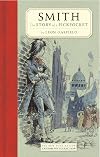
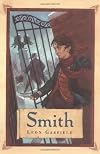
The depths of Eighteenth century London slums, where 'the houses reared and clustered as if to shut out the sky,' are no place for the soft or uninitiated. The very atmosphere weeds the weak from the strong, if not through illness and show more malnourishment, then by the preying on the unknowing. Surrounded by this miasma of complacent intent is Smith, a rapscallion street pickpocket who breezes through the most atrocious situations with an acceptance of life that amazes. Smith lives in the cellar of the Red Lion Inn with his two sisters who eke out a living makeover the gallows clothes of the condemned. They refer to Smith as 'dear Smut' and 'felonious child!' Half will-o-the-wisp, half trickster and with heart of gold, others might be downcast and resentful at their lot but not so young 'glass-half-full' Smith.
Garfield's language draws you in. I was grabbed from the first with utterances like, 'Smith's speed was remarkable...a rat was like a snail beside Smith.'
His descriptive use of phrase, the twists and turns and metaphors are a delight and are as twisty as the narrow streets and alleyways Smith inhabits.
12-year-old Smith's daily haunts, the atmosphere of the crowded, narrow, putrid streets come alive with brilliant imagery. Colourful images that contain a whiff of the overpowering smells and sounds. Language that gives sight and sound.
Smith's troubles begin when in a narrow lane he picks an elderly gentleman's pocket.
Hearing footsteps he blends back into the shadows and witnesses his mark being stabbed. Murdered! Escaping the scene he discovers that he has, not the valuables he was expecting but some sort of document. And therein lay the rub. Smith cannot read!
Ah, the mystery of the fatal,document leads Smith across the dark streets to new acquaintances, the depths of Newgate Prison, and onto Finchley Common with Lord Tom the highwayman. It's all mad dash and adventure, the tension seesawing from despair and anxiety to determination and hope, underlined by daring and courage.
I must say I had my heart in my mouth and the occasional tear in my eye!
The reread only strengthened my admiration.
A NetGalley ARC show less
Leon Garfield has long been one of my favourite children's authors, so I lept at the chance to reread Smith. This is pure Dicksonian melodrama for a younger audience. A gift of talent indeed.
The depths of Eighteenth century London slums, where 'the houses reared and clustered as if to shut out the sky,' are no place for the soft or uninitiated. The very atmosphere weeds the weak from the strong, if not through illness and show more malnourishment, then by the preying on the unknowing. Surrounded by this miasma of complacent intent is Smith, a rapscallion street pickpocket who breezes through the most atrocious situations with an acceptance of life that amazes. Smith lives in the cellar of the Red Lion Inn with his two sisters who eke out a living makeover the gallows clothes of the condemned. They refer to Smith as 'dear Smut' and 'felonious child!' Half will-o-the-wisp, half trickster and with heart of gold, others might be downcast and resentful at their lot but not so young 'glass-half-full' Smith.
Garfield's language draws you in. I was grabbed from the first with utterances like, 'Smith's speed was remarkable...a rat was like a snail beside Smith.'
His descriptive use of phrase, the twists and turns and metaphors are a delight and are as twisty as the narrow streets and alleyways Smith inhabits.
12-year-old Smith's daily haunts, the atmosphere of the crowded, narrow, putrid streets come alive with brilliant imagery. Colourful images that contain a whiff of the overpowering smells and sounds. Language that gives sight and sound.
Smith's troubles begin when in a narrow lane he picks an elderly gentleman's pocket.
Hearing footsteps he blends back into the shadows and witnesses his mark being stabbed. Murdered! Escaping the scene he discovers that he has, not the valuables he was expecting but some sort of document. And therein lay the rub. Smith cannot read!
Ah, the mystery of the fatal,document leads Smith across the dark streets to new acquaintances, the depths of Newgate Prison, and onto Finchley Common with Lord Tom the highwayman. It's all mad dash and adventure, the tension seesawing from despair and anxiety to determination and hope, underlined by daring and courage.
I must say I had my heart in my mouth and the occasional tear in my eye!
The reread only strengthened my admiration.
A NetGalley ARC show less
Having only recently re-read The Strange Affair of Adelaide Harris (in an ancient, falling-apart paperback), I was more than delighted to discover that there was a sequel I had never heard of, and that they had been published together in this beautiful hardcover edition.
Leon Garfield is a British writer whose books were first published in the 1970s and 1980s. What makes his books unique is their well-realised historical setting. They are mostly set in England in the late 1700s and very show more early 1800s. It’s delightful to see them reissued in handsome new illustrated editions by the New York Review of Books.
Although all of Garfield’s stories have splendid touches of humour, in the two novels collected here his intent is specifically a humorous one. Both of these stories feature the roguish pair of schoolboy friends Bostock and Harris, who are around 12 to 13 years old. Harris is the leader of the two, unscrupulous, curious and clever; Bostock his slightly dim-witted follower and admirer.
In The Strange Affair of Adelaide Harris, young Harris becomes fascinated by the stories he learns in his Ancient History class about the Spartans exposing their babies on mountainsides, and the legend of Romulus and Remus being suckled by a she-wolf. He decides to test this out by exposing his own baby sister Adelaide.
With Bostock’s always-eager help, they smuggle the baby out of Harris’ house and take her up to a nearby hill, where they deposit her on the grass in a declivity surrounded by bramble bushes. Then they conceal themselves to watch and await the arrival of some wild creature—a vixen, perhaps?—who will come and suckle the child.
Alas for their plans, the baby is stumbled upon instead by Tizzy Alexander, on her way to a tryst with Ralph Bunnion, the son of the school’s headmaster. Tizzy herself is the daughter of the school’s Arithmetic master. What follows is a mounting series of very funny consequences, literally a comedy of errors.
Tizzy spurns her young man and rushes back to the school with the baby in her arms. Her hot-blooded father demands to know what she was doing going to the trysting-place with Ralph. He demands a duel and to his horror is accepted. The baby Adelaide is despatched to a foundling home, and Bostock and Harris make increasingly desperate attempts to retrieve her while chaos reigns at Harris’ home once Adelaide’s disappearance is discovered. Needless to say, Harris does not confess to his part in any of these proceedings. We are introduced to the brooding, club-footed inquiry agent, Mr. Raven, who sets out to discover the truth of what has happened, an inquiry which draws in more and more of the people surrounding these events.
All of this is literally laugh-out-loud funny and hugely enjoyable.
The Night of the Comet, the sequel, has a less involved plot, but is still very amusing. Harris’ intrigues this time centre around acquiring Bostock’s father’s telescope, the better to see the upcoming passage of a comet. In return, Harris promises to secure the affections of his sister Mary, with whom Bostock has become hopelessly enamoured. Needless to say that Mary herself has not been consulted about this. Tangled into all of this is a pair of Irish roof-menders, one of whom is himself pursuing a romantic interest of his own, which appears equally hopeless. As usual, many unintended consequences ensue.
If you enjoy a light-hearted read, and if you’re not put off by the label of ‘children’s literature’, as I really don’t think you should be, I can heartily recommend this volume. And you should chase up Garfield’s other novels, all of which repay reading. show less
Leon Garfield is a British writer whose books were first published in the 1970s and 1980s. What makes his books unique is their well-realised historical setting. They are mostly set in England in the late 1700s and very show more early 1800s. It’s delightful to see them reissued in handsome new illustrated editions by the New York Review of Books.
Although all of Garfield’s stories have splendid touches of humour, in the two novels collected here his intent is specifically a humorous one. Both of these stories feature the roguish pair of schoolboy friends Bostock and Harris, who are around 12 to 13 years old. Harris is the leader of the two, unscrupulous, curious and clever; Bostock his slightly dim-witted follower and admirer.
In The Strange Affair of Adelaide Harris, young Harris becomes fascinated by the stories he learns in his Ancient History class about the Spartans exposing their babies on mountainsides, and the legend of Romulus and Remus being suckled by a she-wolf. He decides to test this out by exposing his own baby sister Adelaide.
With Bostock’s always-eager help, they smuggle the baby out of Harris’ house and take her up to a nearby hill, where they deposit her on the grass in a declivity surrounded by bramble bushes. Then they conceal themselves to watch and await the arrival of some wild creature—a vixen, perhaps?—who will come and suckle the child.
Alas for their plans, the baby is stumbled upon instead by Tizzy Alexander, on her way to a tryst with Ralph Bunnion, the son of the school’s headmaster. Tizzy herself is the daughter of the school’s Arithmetic master. What follows is a mounting series of very funny consequences, literally a comedy of errors.
Tizzy spurns her young man and rushes back to the school with the baby in her arms. Her hot-blooded father demands to know what she was doing going to the trysting-place with Ralph. He demands a duel and to his horror is accepted. The baby Adelaide is despatched to a foundling home, and Bostock and Harris make increasingly desperate attempts to retrieve her while chaos reigns at Harris’ home once Adelaide’s disappearance is discovered. Needless to say, Harris does not confess to his part in any of these proceedings. We are introduced to the brooding, club-footed inquiry agent, Mr. Raven, who sets out to discover the truth of what has happened, an inquiry which draws in more and more of the people surrounding these events.
All of this is literally laugh-out-loud funny and hugely enjoyable.
The Night of the Comet, the sequel, has a less involved plot, but is still very amusing. Harris’ intrigues this time centre around acquiring Bostock’s father’s telescope, the better to see the upcoming passage of a comet. In return, Harris promises to secure the affections of his sister Mary, with whom Bostock has become hopelessly enamoured. Needless to say that Mary herself has not been consulted about this. Tangled into all of this is a pair of Irish roof-menders, one of whom is himself pursuing a romantic interest of his own, which appears equally hopeless. As usual, many unintended consequences ensue.
If you enjoy a light-hearted read, and if you’re not put off by the label of ‘children’s literature’, as I really don’t think you should be, I can heartily recommend this volume. And you should chase up Garfield’s other novels, all of which repay reading. show less
Lists
Sonlight Books (2)
Awards
You May Also Like
Associated Authors
Statistics
- Works
- 81
- Also by
- 12
- Members
- 4,272
- Popularity
- #5,881
- Rating
- 4.0
- Reviews
- 45
- ISBNs
- 397
- Languages
- 13
- Favorited
- 6