
Margaret Mahy (1936–2012)
Author of The Seven Chinese Brothers
About the Author
Margaret Mahy was born on March 21, 1936 in Whakatane, Bay of Plenty, New Zealand. She received a B.A. degree from the University of New Zealand. She worked as a nurse, an assistant librarian, and a children's librarian in England and New Zealand. Her first book, A Lion in the Meadow, was published show more in 1969. She became a full-time author in 1980. During her lifetime, she wrote more than 120 children's books including The Haunting, The Changeover, Memory, The Seven Chinese Brothers, The Man Whose Mother Was a Pirate and A Summery Saturday Morning. She won the Esther Glen Award five times, the Carnegie Medal of the British Library Association three times, the Boston Globe-Horn Book Award, Hans Christian Andersen Award, and in 1999, she won the New Zealand Post Children's Book Award in two categories, Picture Book and Supreme Award. She died after a brief illness on July 23, 2012 at the age of 76. (Bowker Author Biography) show less
Image credit: Courtesy of Allen and Unwin
Series
Works by Margaret Mahy
Ultra-Violet Catastrophe! or The Unexpected Walk with Great-Uncle Magnus Pringle (1975) 84 copies, 4 reviews
The horrible story and others : a collection of stories from the Margaret Mahy story books (1987) 11 copies
El Rescate Del Chicle Y Otras Historias (Coleccion Torre de Pabel) (Spanish Edition) (2008) 3 copies
Braille at Bedtime : Chibbawokki rain and The Girl with the Green Ear Number 2 (1 vol Stock no.175) 2 copies
Schelmenstreken 1 copy
Mrs Bubbles Baby 1 copy
The Big Fish 1 copy
Once Upon A Story 1 copy
The Old Bus 1 copy
Look Under V 1 copy
Sunshine Books Set (The Mad Puppet, Tai Taylor is Born, Mr. Rumfitt, The Haunting of Miss Cardamon) 1 copy
Mr Rooster's Dilemma 1 copy
An troid ar an chnoc 1 copy
my wonderful aunt story one 1 copy
Adventures of the Robber Pig 1 copy
Associated Works
Are Angels OK?: The Parallel Universes of New Zealand Writers and Scientists (2006) — Contributor — 16 copies, 1 review
Monsters in the Garden: An Anthology of Aotearoa New Zealand Science Fiction and Fantasy (2021) — Contributor — 14 copies
Writing at the Edge of the Universe: Essays From the Creative Writing in New Zealand Conference (2004) — Contributor — 5 copies
Tagged
Common Knowledge
- Canonical name
- Mahy, Margaret
- Legal name
- Mahy, Margaret
- Birthdate
- 1936-03-21
- Date of death
- 2012-07-23
- Gender
- female
- Education
- Auckland University College
Canterbury University College (B.A. | 1955)
New Zealand Library School - Occupations
- librarian
writer-in-residence (Canterbury University ∙ 1984)
children's book author - Organizations
- Canterbury University
- Awards and honors
- Hans Christian Andersen Award (2006)
Member, Order of New Zealand
Honorary Doctorate ( [1985])
Artists to Antarctica (1998/99)
Prime Minister's Award for Literary Achievement (2005)
May Hill Arbuthnot Lecturer (1989) (show all 8)
Margaret Mahy Medal ( [1991])
Sir Julius Vogel Award (Services to Science Fiction and Fantasy ∙ 2006) - Nationality
- New Zealand
- Birthplace
- Whakatane, New Zealand
- Places of residence
- Governor's Bay, Banks Peninsula, New Zealand
- Place of death
- Christchurch, New Zealand
- Associated Place (for map)
- New Zealand
Members
Discussions
Found: YA Ghost/Mystery Story 1980's or older in Name that Book (April 2025)
British YA novel from '80s - girl becomes a witch to save her little brother in Name that Book (February 2013)
RIP Margaret Mahy in The Green Dragon (August 2012)
YA Sci-fi/Fantasy Alchemist??? in Name that Book (August 2010)
Reviews

Although I have always loved Margaret Mahy's fiction - The Tricksters is one of my favorite young-adult novels of all time - for some reason I have never looked at any of her many picture-books. But when I read, in Betsy Hearne's article "Nobody Knows..." (published in the September/October 2009 issue of the Horn Book Magazine, devoted to the theme of "Trouble") that this sweet little story, which first saw print in 1975, had been challenged - They give the little boy a pill! Oh no! There's show more a witch! And you can find her in the telephone directory! Quelle horreur! - I knew I had to track it down. How glad I am that I did!
The story is wonderfully amusing, in that matter-of-factly surreal way that I have come to appreciate in picture-books of a certain stamp. Think Mac Barnett's Billy Twitters and His Blue Whale Problem, or David Small's Imogene's Antlers, in which the young protagonists confront some unusual circumstances (caring for a pet blue whale, and growing antlers, respectively). In The Boy Who Was Followed Home, young Robert finds that he has an ever-growing train of hippopotami following him home from school, and while he himself is pleased - he'd always liked these lumbering creatures, and "was delighted to think that he was the sort of boy that hippopotami would follow" - his parents are less than thrilled at their presence in the back yard. Naturally, when a boy is being followed by a hippopotamine crowd, the solution is to call in a witch, and so Robert's father hires Mrs. Cathy Squinge. Unfortunately (or fortunately, as the case may be), he doesn't listen to her warning about the side-effects of the pill she prescribes...
I loved this book! The story just tickled my funny bone, and the ending - which put me strongly in mind of the similar conclusion in Imogene's Antlers (mentioned above), was just delightful! Steven Kellogg's artwork, which didn't impress me terribly, based on my perusal of the cover, ended up working very well with the narrative. All in all, a fabulous addition to any young reader's picture-book shelf. If this is trouble, then I want more of it! show less
The story is wonderfully amusing, in that matter-of-factly surreal way that I have come to appreciate in picture-books of a certain stamp. Think Mac Barnett's Billy Twitters and His Blue Whale Problem, or David Small's Imogene's Antlers, in which the young protagonists confront some unusual circumstances (caring for a pet blue whale, and growing antlers, respectively). In The Boy Who Was Followed Home, young Robert finds that he has an ever-growing train of hippopotami following him home from school, and while he himself is pleased - he'd always liked these lumbering creatures, and "was delighted to think that he was the sort of boy that hippopotami would follow" - his parents are less than thrilled at their presence in the back yard. Naturally, when a boy is being followed by a hippopotamine crowd, the solution is to call in a witch, and so Robert's father hires Mrs. Cathy Squinge. Unfortunately (or fortunately, as the case may be), he doesn't listen to her warning about the side-effects of the pill she prescribes...
I loved this book! The story just tickled my funny bone, and the ending - which put me strongly in mind of the similar conclusion in Imogene's Antlers (mentioned above), was just delightful! Steven Kellogg's artwork, which didn't impress me terribly, based on my perusal of the cover, ended up working very well with the narrative. All in all, a fabulous addition to any young reader's picture-book shelf. If this is trouble, then I want more of it! show less
4.5
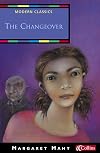
Fourteen-year-old Laura Chant is “a sensitive”. She receives “warnings” from who knows where. Perhaps it has something to do with having had a great-grandfather who was a Polynesian warrior. A voice inside her speaks—“It’s going to happen”—or a face that isn’t quite hers, a face that knows something she does not, looks out at her from the bathroom mirror. Things stop flowing into each other and stand separate; there’s a kind of jarring disruption, and “the world show more gets all accidental.” The unfortunate thing about these messages is that Laura does not initially know what they pertain to and consequently has no way of preventing the dramatic and life-altering events that are to come. The communications seem to be aimed at preparing her to be strong about something—and strong she is, as well as responsible, assertive, and intelligent.
Laura had a warning on the day her father left them for his girlfriend a few years back, a wound that has not healed and has left the family straitened. She had another when the mysterious, studious, and stammering Sorensen “Sorry” Carlisle arrived at her secondary school. He’s three years older than Laura, has tricky quicksilver eyes, and is not quite “safe”; nevertheless, there’s some flicker of recognition between the two young people, a secret. And now, as the story opens, Laura receives a third warning. In this case, the event will involve her beloved three-year-old brother, Jacko, who sometimes seems as if he is Laura’s own baby, so intense is her protectiveness and love for him.
On the day that the third warning comes, Laura collects Jacko from the babysitter’s house after school, takes him to the library where he chooses books and is delighted to have his hand stamped by the librarian. It is when they stop at a tiny shop (displaying unusual knickknacks, ornaments, and curios) and Jacko holds out his opposite hand to be stamped by the unsettling proprietor, Carmody Braque, that the trouble begins. Braque has a face that has “shrunken back around his smile,” blotchy skin suggesting decaying fruit, and a stale, sweet peppermint smell that intensifies, becoming a dreadful odour of mildew, wet mattresses, and “rotting time”.
The stamp Jacko receives is one of a three-dimensional face, Carmody Braque’s, and it can’t be washed off. It sinks deep into Jacko, who sickens. Laura’s mother, Kate, takes her son to a medical clinic where the attending doctor agrees there is something wrong but is mystified as to what it could be. The little boy is soon experiencing convulsions; he grows increasingly weak and is hospitalized. Even the experts can’t get to the bottom of the problem. Interestingly, the specialist also admits to smelling the stale, sickening odour of peppermint occasionally exuded by his sick charge—a smell Laura has been aware of from the start. In fact, she is the only one to have some idea about what’s going on. She does not know how to stop it, however, and is convinced that none other than Sorry Carlisle, whom she is certain is a witch, can help.
The dark and compelling story that unfolds concerns Laura’s efforts to save her little brother by using powers that Sorry’s mother and grandmother introduce her to. Margaret Mahy’s intelligent and sophisticated 1984 novel, now being reissued by Candlewick, also addresses Laura’s challenges in growing up: accepting the vulnerabilities and shortcomings of her parents; adjusting to the changes in her body that now attract male—specifically unreliable and damaged Sorry’s—attention; and grappling with matters of love and sexuality.
Mahy was a prolific and acclaimed New Zealand writer of children’s literature who died in 2012. This is only the third of her many books I’ve read. Interestingly, all three have concerned “an invader of inner space”: hungry ghosts, the lonely, or the dead seeking the company or energy of sensitive, vital children. I understand that this novel is now being referred to by some as “romantasy”. I suppose that this isn’t a bad thing if it attracts new readers. At the same time, I think such categorization trivializes the dark riches and insights that lie within. Mahy was a wonderful writer. One sees the influences of Shakespeare, Blake, and even Buddhist thought in this darkly wise and compelling novel. I’m very glad to see that it’s getting a chance to be appreciated by new readers. Recommended. show less
Fourteen-year-old Laura Chant is “a sensitive”. She receives “warnings” from who knows where. Perhaps it has something to do with having had a great-grandfather who was a Polynesian warrior. A voice inside her speaks—“It’s going to happen”—or a face that isn’t quite hers, a face that knows something she does not, looks out at her from the bathroom mirror. Things stop flowing into each other and stand separate; there’s a kind of jarring disruption, and “the world show more gets all accidental.” The unfortunate thing about these messages is that Laura does not initially know what they pertain to and consequently has no way of preventing the dramatic and life-altering events that are to come. The communications seem to be aimed at preparing her to be strong about something—and strong she is, as well as responsible, assertive, and intelligent.
Laura had a warning on the day her father left them for his girlfriend a few years back, a wound that has not healed and has left the family straitened. She had another when the mysterious, studious, and stammering Sorensen “Sorry” Carlisle arrived at her secondary school. He’s three years older than Laura, has tricky quicksilver eyes, and is not quite “safe”; nevertheless, there’s some flicker of recognition between the two young people, a secret. And now, as the story opens, Laura receives a third warning. In this case, the event will involve her beloved three-year-old brother, Jacko, who sometimes seems as if he is Laura’s own baby, so intense is her protectiveness and love for him.
On the day that the third warning comes, Laura collects Jacko from the babysitter’s house after school, takes him to the library where he chooses books and is delighted to have his hand stamped by the librarian. It is when they stop at a tiny shop (displaying unusual knickknacks, ornaments, and curios) and Jacko holds out his opposite hand to be stamped by the unsettling proprietor, Carmody Braque, that the trouble begins. Braque has a face that has “shrunken back around his smile,” blotchy skin suggesting decaying fruit, and a stale, sweet peppermint smell that intensifies, becoming a dreadful odour of mildew, wet mattresses, and “rotting time”.
The stamp Jacko receives is one of a three-dimensional face, Carmody Braque’s, and it can’t be washed off. It sinks deep into Jacko, who sickens. Laura’s mother, Kate, takes her son to a medical clinic where the attending doctor agrees there is something wrong but is mystified as to what it could be. The little boy is soon experiencing convulsions; he grows increasingly weak and is hospitalized. Even the experts can’t get to the bottom of the problem. Interestingly, the specialist also admits to smelling the stale, sickening odour of peppermint occasionally exuded by his sick charge—a smell Laura has been aware of from the start. In fact, she is the only one to have some idea about what’s going on. She does not know how to stop it, however, and is convinced that none other than Sorry Carlisle, whom she is certain is a witch, can help.
The dark and compelling story that unfolds concerns Laura’s efforts to save her little brother by using powers that Sorry’s mother and grandmother introduce her to. Margaret Mahy’s intelligent and sophisticated 1984 novel, now being reissued by Candlewick, also addresses Laura’s challenges in growing up: accepting the vulnerabilities and shortcomings of her parents; adjusting to the changes in her body that now attract male—specifically unreliable and damaged Sorry’s—attention; and grappling with matters of love and sexuality.
Mahy was a prolific and acclaimed New Zealand writer of children’s literature who died in 2012. This is only the third of her many books I’ve read. Interestingly, all three have concerned “an invader of inner space”: hungry ghosts, the lonely, or the dead seeking the company or energy of sensitive, vital children. I understand that this novel is now being referred to by some as “romantasy”. I suppose that this isn’t a bad thing if it attracts new readers. At the same time, I think such categorization trivializes the dark riches and insights that lie within. Mahy was a wonderful writer. One sees the influences of Shakespeare, Blake, and even Buddhist thought in this darkly wise and compelling novel. I’m very glad to see that it’s getting a chance to be appreciated by new readers. Recommended. show less

Margaret Mahy’s urban fantasy really feels like the blurring of two somethings which are distinct and you think they shouldn’t be able to blur together, and then they do, and you (or rather, I), think, Ohhh… The fantasy seems to creep up on reality in a way which is both alluring and disturbing, but it never takes over, and the urban is not just a setting for the fantasy, but an integral part of the plot. Domesticity – family life, school – given depth and insight and importance. I show more always find something so completely grounding about this – it feels like a world I know very well, a world I maybe walk past or walk through regularly even if it isn’t quite the one I inhabit.
Alchemy reminds me a little of The Changeover but from another perspective; this time, it is a boy who is changing and becoming aware of a supernatural world which is beneath the surface of the one he thinks he lives in. It’s also about family, and power, and relationships, and I liked the way the pieces of the story fitted together – the everyday with the fantastical. I didn’t always like Roland, but I liked how he quoted “Childe Roland to the dark tower came”, and how his chosen quotation came to be more appropriate as the story went on. I liked Jess, with her spoonerisms and word play. I like the way Mahy writes.
It wasn’t exceptionally memorable and it wasn’t the best book I’ve read all year, but I liked it well enough.
“You’ve got all nosy about me for some reason, and you thought I’d fall at your feet with the flattery of being seen – the battery of fleeing scene,” she added, more to herself than to Roland, as if she were testing her own nonsense for unexpected meanings. “Dream on, Fairfield! I’d rather flee the scene, and the battery of the flattery too.”
“Why do you do that?” asked Roland curiously.
“Do what?” she asked, turning with a small measuring cup of ground coffee in her hand.
“Twist words around,” he replied.
“I like trying them out in different ways,” Jess said. “I like spoonerisms… named after Reverend Spooner who used to do it by accident.” show less
Alchemy reminds me a little of The Changeover but from another perspective; this time, it is a boy who is changing and becoming aware of a supernatural world which is beneath the surface of the one he thinks he lives in. It’s also about family, and power, and relationships, and I liked the way the pieces of the story fitted together – the everyday with the fantastical. I didn’t always like Roland, but I liked how he quoted “Childe Roland to the dark tower came”, and how his chosen quotation came to be more appropriate as the story went on. I liked Jess, with her spoonerisms and word play. I like the way Mahy writes.
It wasn’t exceptionally memorable and it wasn’t the best book I’ve read all year, but I liked it well enough.
“You’ve got all nosy about me for some reason, and you thought I’d fall at your feet with the flattery of being seen – the battery of fleeing scene,” she added, more to herself than to Roland, as if she were testing her own nonsense for unexpected meanings. “Dream on, Fairfield! I’d rather flee the scene, and the battery of the flattery too.”
“Why do you do that?” asked Roland curiously.
“Do what?” she asked, turning with a small measuring cup of ground coffee in her hand.
“Twist words around,” he replied.
“I like trying them out in different ways,” Jess said. “I like spoonerisms… named after Reverend Spooner who used to do it by accident.” show less
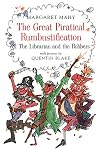
Two books worth of story crammed into 63 magical pages, full of robbers tricked by librarians and retired pirates who know how to party and revive the joys of boyhood (while paying the bills). No impossibly articulate child protagonists with clearly defined goals or desires, no rhyme or reason, just a pair of stories cut from the same cloth as books by Willaim Stieg and Roald Dahl.
In the first story, it is spring and the retired, land-locked pirates are restless. They long for a Pirate Party show more but the sign in the sky informing them of a pending party is not there. The problem is that a pirate party must be stolen.
Next we see the Terrapin family, having moved up from their cramped flat to a spacious house. The three Terrapin boys have been promised that with a bigger house came opportunities for adventurous behavior, but father's overwhelming dread at purchasing a house beyond their means has soured things.
It is only natural that these two parties be united, and when the adult Terrapins call the Mother Goose Baby-sitting service it should be no surprise that they are assigned an ex-pirate as a sitter. Fears of qualifications quelled, the boys find their sitter deserving, and with this the boys are off. Sitter Orpheus Clinker sends up the announcement that he has found a suitable location, and a Pirate Party proceeds to take place at the Terrapin's.
Father Terrapin is at a big, important dinner but he senses something wrong, something taking place elsewhere that is more fun. There appears to be some great rumpus taking place in the part of town near his house, and how he wishes he was there. Leaving the important dinner as soon as he can possibly escape he returns home to find a Pirate Party well under way. Once over his initial indignation, Father Terrapin falls in and enjoys the Pirate Party, after which he is richly rewarded by the pirates and never has to worry about his financial situation ever again.
& & & & &
Our second story in this double-feature finds a band of woods-living robbers who have come upon the idea of stealing the town librarian for ransom. Her warning that she has recently spent time with children infected with measles goes unheeded and soon all the robbers but one, the Chief Robber, are sick. Allowed to return to the library for a reference book to heal the sick robbers the librarian returns with books to read. Having never been read to, or taught how to read, she begins with Peter Rabbit and proceeds to give them a classic education in children's literature.
Eventually everyone forget about the ransom and the librarian returns to work. One day the Chief Robber dashes into the library to escape being apprehended by police. With quick thinking the librarian shelves the Chief Robber and refuses to turn him over to the police without a library card. Of course, once the officer has left the librarian slyly checks the robber out for herself and prevents the officer from coming back and apprehending him for the indefinite future. Saved, the Chief Robber continues with his initial task: checking books out for the other robbers because now they have insatiable reading habit.
One day an earthquake brings down all the books in the library, burying the librarian. Chief Robber and his fellow robbers join the police and other citizens in saving the librarian. Chief Robber admits to liking the librarian and they marry on the condition that they all give up robbing. The Chief Robber even becomes the head children's librarian in perhaps the most rambunctious branch any library has ever seen.
* * * * *
I can understand some of why this book was withdrawn from my town library and put on the 25 cent shelf in the sales alcove. It is hard to imagine any book today would be published where a babysitter requires rum as part of his services, and that he carries a bottle large enough in his coat pocket to cause him to list to one side when he walks. And I'm not sure what to make of an adult male, upon meeting three young boys, exclaiming how he likes the cut of their jibs. Indeed, this very slang expression is the sort of thing that caused me to snort out loud.
But we are talking about pirates here, and removing rum and salty pirate talk (within reason) is like drawing cows without udders or exchanging water for soda in stories because we don't want to scar or unduly influence young minds. This political correctness has its place at times, but not here.
And these are stories about adults primarily, adults behaving like children at times but adults nonetheless. It's as if we don't expect children to identify with anyone except protagonists their own age, but so often these child protagonists are forced to carry the weight of stories and messages beyond their years. The idea of fun seems no longer the province of adults or kids in children's books anymore. Do we think that kids won't understand or identify with a parent character longing for the carefree days before bills and important dinner? Do we feel that they'll reject a book because it includes a romance between an unlikely duo, one half of which is a librarian?
Also, I admire the amount of ground covered despite the brevity of the text. The Great Piratical Rumbustification is told in thirteen chapters, many of them fewer than three full pages. I know this is a hallmark of books aimed at readers who are still gaining fluency, but I'll take a dozen well-crafted books like this any day to a sprawling attempt to build the chapter book into something more substantial from fewer parts. show less
In the first story, it is spring and the retired, land-locked pirates are restless. They long for a Pirate Party show more but the sign in the sky informing them of a pending party is not there. The problem is that a pirate party must be stolen.
Next we see the Terrapin family, having moved up from their cramped flat to a spacious house. The three Terrapin boys have been promised that with a bigger house came opportunities for adventurous behavior, but father's overwhelming dread at purchasing a house beyond their means has soured things.
It is only natural that these two parties be united, and when the adult Terrapins call the Mother Goose Baby-sitting service it should be no surprise that they are assigned an ex-pirate as a sitter. Fears of qualifications quelled, the boys find their sitter deserving, and with this the boys are off. Sitter Orpheus Clinker sends up the announcement that he has found a suitable location, and a Pirate Party proceeds to take place at the Terrapin's.
Father Terrapin is at a big, important dinner but he senses something wrong, something taking place elsewhere that is more fun. There appears to be some great rumpus taking place in the part of town near his house, and how he wishes he was there. Leaving the important dinner as soon as he can possibly escape he returns home to find a Pirate Party well under way. Once over his initial indignation, Father Terrapin falls in and enjoys the Pirate Party, after which he is richly rewarded by the pirates and never has to worry about his financial situation ever again.
& & & & &
Our second story in this double-feature finds a band of woods-living robbers who have come upon the idea of stealing the town librarian for ransom. Her warning that she has recently spent time with children infected with measles goes unheeded and soon all the robbers but one, the Chief Robber, are sick. Allowed to return to the library for a reference book to heal the sick robbers the librarian returns with books to read. Having never been read to, or taught how to read, she begins with Peter Rabbit and proceeds to give them a classic education in children's literature.
Eventually everyone forget about the ransom and the librarian returns to work. One day the Chief Robber dashes into the library to escape being apprehended by police. With quick thinking the librarian shelves the Chief Robber and refuses to turn him over to the police without a library card. Of course, once the officer has left the librarian slyly checks the robber out for herself and prevents the officer from coming back and apprehending him for the indefinite future. Saved, the Chief Robber continues with his initial task: checking books out for the other robbers because now they have insatiable reading habit.
One day an earthquake brings down all the books in the library, burying the librarian. Chief Robber and his fellow robbers join the police and other citizens in saving the librarian. Chief Robber admits to liking the librarian and they marry on the condition that they all give up robbing. The Chief Robber even becomes the head children's librarian in perhaps the most rambunctious branch any library has ever seen.
* * * * *
I can understand some of why this book was withdrawn from my town library and put on the 25 cent shelf in the sales alcove. It is hard to imagine any book today would be published where a babysitter requires rum as part of his services, and that he carries a bottle large enough in his coat pocket to cause him to list to one side when he walks. And I'm not sure what to make of an adult male, upon meeting three young boys, exclaiming how he likes the cut of their jibs. Indeed, this very slang expression is the sort of thing that caused me to snort out loud.
But we are talking about pirates here, and removing rum and salty pirate talk (within reason) is like drawing cows without udders or exchanging water for soda in stories because we don't want to scar or unduly influence young minds. This political correctness has its place at times, but not here.
And these are stories about adults primarily, adults behaving like children at times but adults nonetheless. It's as if we don't expect children to identify with anyone except protagonists their own age, but so often these child protagonists are forced to carry the weight of stories and messages beyond their years. The idea of fun seems no longer the province of adults or kids in children's books anymore. Do we think that kids won't understand or identify with a parent character longing for the carefree days before bills and important dinner? Do we feel that they'll reject a book because it includes a romance between an unlikely duo, one half of which is a librarian?
Also, I admire the amount of ground covered despite the brevity of the text. The Great Piratical Rumbustification is told in thirteen chapters, many of them fewer than three full pages. I know this is a hallmark of books aimed at readers who are still gaining fluency, but I'll take a dozen well-crafted books like this any day to a sprawling attempt to build the chapter book into something more substantial from fewer parts. show less
Lists
Best Young Adult (1)
Awards


Down the Back of the Chair (Special Mention – Picture Books (age range from birth to 8 years) – 2007)
You May Also Like


Associated Authors
Statistics
- Works
- 287
- Also by
- 24
- Members
- 13,527
- Popularity
- #1,715
- Rating
- 3.8
- Reviews
- 387
- ISBNs
- 1,338
- Languages
- 18
- Favorited
- 26
