

Maurice Gee (1931–2025)
Author of Salt
About the Author
Maurice Gee of New Zealand is a novelist and author of children's books. Gee's first book, The Big Season, was published in 1962. He has since produced nearly two dozens novels and collections of short stories and his work has appeared in such publications as Arena, Mate, Landfall, Islands, and show more Listener. Gee received the New Zealand Book Award in fiction in 1979 for Plumb, in 1982 for Meg, and in 1991 for The Burning Boy. Going West won the Goodman Fielder Wattie Book Award in 1993. In 1995 The Fat Man won the AIM Children's Book Award for Junior Fiction, as well as The Esther Glen Award, given for the most distinguished contribution to New Zealand literature for children and young adults. He had previously received The Esther Glen Award in 1983 for Motherstone. (Bowker Author Biography) show less
Series
Works by Maurice Gee
Associated Works
The Dick Francis Complete Treasury of Great Racing Stories (1991) — Contributor — 35 copies, 1 review
Monsters in the Garden: An Anthology of Aotearoa New Zealand Science Fiction and Fantasy (2021) — Contributor — 12 copies
From a room of their own: A celebration of the Katherine Mansfield Fellowship (1993) — Contributor — 5 copies
Tagged
Common Knowledge
- Legal name
- Gee, Maurice Gough
- Birthdate
- 1931-08-22
- Date of death
- 2025-06-12
- Gender
- male
- Education
- Avondale College (BA)
University of Auckland (MA|English)
Auckland Teachers College - Occupations
- teacher
librarian
novelist - Awards and honors
- Margaret Mahy Medal (2002)
Victoria University Writers' Fellow (1989)
Robert Burns Fellowship (1964)
Prime Minister's Award for Literary Achievement (Fiction, 2004) - Agent
- Ray Richards (Richards Literary Agency)
- Relationships
- Gee, Emily (daughter)
Gee, Lyndahl Chapple (mother) - Nationality
- New Zealand
- Birthplace
- Whakatane, New Zealand
- Places of residence
- Wellington, New Zealand
- Map Location
- New Zealand
Members
Reviews
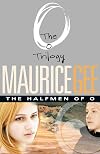
I had vague recollections of reading but not finishing this as a kid, and 30 years later a few certain details stuck with me, so I decided to finally finish it.
With adult eyes it was nice to recognise the New Zealand setting, and even when we moved to the fantasy world, there was such a focus on the details of landscape that I really felt a sense of recognition. Most of the time in fantasy, landscapes are described in a grand sweeping way, with a lack of attention to detail which leaves them show more quite abstract. Maurice Gee describes scree, gullies and pathways in such an intimate way that resonates with me as someone who has explored the New Zealand wilderness and experienced similar settings personally.
The bad guys are pretty one-dimensional edgy evil dudes, complete with black leather and everything, but that's presumably part of the point since the entire premise of the novel hinges on every human in the world having been split into either entirely good or entirely evil, which is what our heroes have to fix. This does raise a few philosophical questions that might not be obvious to a child - the evil humans almost entirely wiped out the good ones, because the good ones are incapable of violence. At one point the last remaining Good human has to siphon some "evil" power from Susan so that she can kill the pursuing bad guys. It makes the point that some evil is a requirement to any fully functional human, since killing or violence is always evil even if you are doing it in defence of yourself or others. Then there is the meat eating vs vegetarian theme - it's not super in-your-face but killing animals, even to survive, could be considered evil. It's part of Jimmy Jaspers dual - perhaps more-evil-than-good - character.
We also see a single child in the evil land - which raises the question - can a child really be evil?
Susan demonstrates a believable emotional response to her situation, one that is not often portrayed in fantasy fiction - the chosen hero feeling isolated and overwhelmed by the task given her. I did get a little pissy at her for abandoning her companions over the darklands - they could easily have died while she floated off.
The bird people and the underground people were one of the ideas I'd remembered all these years, and I enjoyed the bird people culture. Would have loved to experience more of the undergrounders, however the effect of the darkness stayed with me for thirty years so I can't fault the episode too much.
It was a bit weird at the end that they never bothered to turn off the pollution machine themselves - the device that threatened to destroy both our world and the world of O. Instead they trusted the surviving humans to choose their own way. I guess that's very noble of our heroes, but personally I wouldn't take the risk!!
Great read, and finishing it gave me some long-delayed satisfaction. show less
With adult eyes it was nice to recognise the New Zealand setting, and even when we moved to the fantasy world, there was such a focus on the details of landscape that I really felt a sense of recognition. Most of the time in fantasy, landscapes are described in a grand sweeping way, with a lack of attention to detail which leaves them show more quite abstract. Maurice Gee describes scree, gullies and pathways in such an intimate way that resonates with me as someone who has explored the New Zealand wilderness and experienced similar settings personally.
The bad guys are pretty one-dimensional edgy evil dudes, complete with black leather and everything, but that's presumably part of the point since the entire premise of the novel hinges on every human in the world having been split into either entirely good or entirely evil, which is what our heroes have to fix. This does raise a few philosophical questions that might not be obvious to a child - the evil humans almost entirely wiped out the good ones, because the good ones are incapable of violence. At one point the last remaining Good human has to siphon some "evil" power from Susan so that she can kill the pursuing bad guys. It makes the point that some evil is a requirement to any fully functional human, since killing or violence is always evil even if you are doing it in defence of yourself or others. Then there is the meat eating vs vegetarian theme - it's not super in-your-face but killing animals, even to survive, could be considered evil. It's part of Jimmy Jaspers dual - perhaps more-evil-than-good - character.
We also see a single child in the evil land - which raises the question - can a child really be evil?
Susan demonstrates a believable emotional response to her situation, one that is not often portrayed in fantasy fiction - the chosen hero feeling isolated and overwhelmed by the task given her. I did get a little pissy at her for abandoning her companions over the darklands - they could easily have died while she floated off.
The bird people and the underground people were one of the ideas I'd remembered all these years, and I enjoyed the bird people culture. Would have loved to experience more of the undergrounders, however the effect of the darkness stayed with me for thirty years so I can't fault the episode too much.
It was a bit weird at the end that they never bothered to turn off the pollution machine themselves - the device that threatened to destroy both our world and the world of O. Instead they trusted the surviving humans to choose their own way. I guess that's very noble of our heroes, but personally I wouldn't take the risk!!
Great read, and finishing it gave me some long-delayed satisfaction. show less

New Zealand author and setting. An older woman reflects back on her past and her family relationships and tries to understand why one of her brothers seems to have lost the will to live. She's a crusty, wry old bird and tells the story of her life with warmth and wisdom.
Some past crimes are eventually revealed and the mystery is solved. In the closing pages I literally gasped out loud when the surprise twist emerged - had no idea that was coming.
Well worth reading - good writing, good show more dialogue, central characters are well drawn - for a male writer Gee gets the psyche of his female narrator so well. show less
Some past crimes are eventually revealed and the mystery is solved. In the closing pages I literally gasped out loud when the surprise twist emerged - had no idea that was coming.
Well worth reading - good writing, good show more dialogue, central characters are well drawn - for a male writer Gee gets the psyche of his female narrator so well. show less
Plumb by Maurice Gee

This New Zealand novel won the 1978 James Tait Black Memorial Prize.
I have known much disappointment in my children, seeing so many of them disappoint themselves. although they have moved on the margins of my life, each has known his path to the centre, and all have come, all have taken comfort in their need. They have brought little comfort to me, but that is no proper complaint.......And the thorns that prick me now are the thorns of remembrance. Children, followers. Along that other way, show more where I found so few to accompany me, and for distances so short, I reached my goal.
George Plumb, a Presbyterian minister until he was sacked for heresy, jailed for sedition during the first world war, father of twelve, is reflecting on his life. He sees himself as an exceptional person, a man of integrity, determined to follow his own path no matter the consequences, but his story reveals a much smaller man. He surrounds himself with sycophants and believes that to associate with him is a privilege.
The story shifts back and forth between the past and the present. In the beginning, George and his wife Edie are united in their religious beliefs and goals, but they spend less and less time together. George spends his time talking at his acolytes, or isolating himself in his study, reading and thinking. Edie single-handedly looks after the children and the house, with no spare time, very little money, and not enough to eat. With every word George reveals himself to the reader as a monstrously selfish, ineffectual man.
I was impressed by Maurice Gee's writing, the depth of the characters and the multiple levels of the narrative, but I found the book hard to read because of the awfulness of George Plumb, who is based on the author's own grandfather. show less
I have known much disappointment in my children, seeing so many of them disappoint themselves. although they have moved on the margins of my life, each has known his path to the centre, and all have come, all have taken comfort in their need. They have brought little comfort to me, but that is no proper complaint.......And the thorns that prick me now are the thorns of remembrance. Children, followers. Along that other way, show more where I found so few to accompany me, and for distances so short, I reached my goal.
George Plumb, a Presbyterian minister until he was sacked for heresy, jailed for sedition during the first world war, father of twelve, is reflecting on his life. He sees himself as an exceptional person, a man of integrity, determined to follow his own path no matter the consequences, but his story reveals a much smaller man. He surrounds himself with sycophants and believes that to associate with him is a privilege.
The story shifts back and forth between the past and the present. In the beginning, George and his wife Edie are united in their religious beliefs and goals, but they spend less and less time together. George spends his time talking at his acolytes, or isolating himself in his study, reading and thinking. Edie single-handedly looks after the children and the house, with no spare time, very little money, and not enough to eat. With every word George reveals himself to the reader as a monstrously selfish, ineffectual man.
I was impressed by Maurice Gee's writing, the depth of the characters and the multiple levels of the narrative, but I found the book hard to read because of the awfulness of George Plumb, who is based on the author's own grandfather. show less
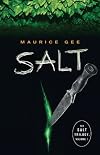
This was an early reviewer book for me and, as a YA series-opener, it works pretty well, particularly since it was free. That might sound harsh, but I'm really not sure that I would have picked this up in a bookshop -- not because it's terrible, but because it doesn't have the instant "grab" of a lot of YA fantasies.
That being said, I did enjoy the read -- I wasn't mentally composing my review as I read, which is a sign of a solid story. I found the prose particularly spare, even for a YA show more adventure; Maurice Gee may have wanted to be Hemingway in his earlier writing life, so the short, stark sentences could simply be authorial style. They do suit the tone of the story to a certain degree -- Salt is set in a world that is harsh, unfair, and dangerous to its inhabitants, including its protagonist (a half-feral boy whose main instincts are to fight and kill) -- but they also make the latter half of the book, which is a bit more philosophical, feel empty, like the reader can only understand a portion of what's happening. In fact, that feeling that we lack some significant understanding is a dominant tone here -- at first it works, as the reader is puzzling out the parameters of the world Gee has created and as the characters are coming to grips with each other, but the longer we have that feeling, as readers, the less we like it.
I do think that there are some truly striking images here; the ideas of Deep Salt (a place where, the text implies, radioactive material is mined) and the extreme social divisions (Burrows vs. City) imitate our own society while making it different enough that the reader is intrigued. The philosophy of harmony (represented by the "native" tribe of Dwellers, who do things the right way, according to the book) is valid for the audience -- this is a book with a message, but it doesn't strain too much to over-impress -- and lends color to an otherwise dark and grim reality. The novel is ultimately realistic -- even within its semi-positive conclusion, there is an acknowledgement that the world goes on much as it always has, and one change does not alter the nature of humanity or society -- but that realism does as much to alienate as to appeal, and how you react to it will depend on how much reality you can take. Overall, I enjoyed reading the book, but I'm not yet sure whether I will seek out the sequels. show less
That being said, I did enjoy the read -- I wasn't mentally composing my review as I read, which is a sign of a solid story. I found the prose particularly spare, even for a YA show more adventure; Maurice Gee may have wanted to be Hemingway in his earlier writing life, so the short, stark sentences could simply be authorial style. They do suit the tone of the story to a certain degree -- Salt is set in a world that is harsh, unfair, and dangerous to its inhabitants, including its protagonist (a half-feral boy whose main instincts are to fight and kill) -- but they also make the latter half of the book, which is a bit more philosophical, feel empty, like the reader can only understand a portion of what's happening. In fact, that feeling that we lack some significant understanding is a dominant tone here -- at first it works, as the reader is puzzling out the parameters of the world Gee has created and as the characters are coming to grips with each other, but the longer we have that feeling, as readers, the less we like it.
I do think that there are some truly striking images here; the ideas of Deep Salt (a place where, the text implies, radioactive material is mined) and the extreme social divisions (Burrows vs. City) imitate our own society while making it different enough that the reader is intrigued. The philosophy of harmony (represented by the "native" tribe of Dwellers, who do things the right way, according to the book) is valid for the audience -- this is a book with a message, but it doesn't strain too much to over-impress -- and lends color to an otherwise dark and grim reality. The novel is ultimately realistic -- even within its semi-positive conclusion, there is an acknowledgement that the world goes on much as it always has, and one change does not alter the nature of humanity or society -- but that realism does as much to alienate as to appeal, and how you react to it will depend on how much reality you can take. Overall, I enjoyed reading the book, but I'm not yet sure whether I will seek out the sequels. show less
 This review was written for LibraryThing Early Reviewers.
Lists
Books with Twins (1)
SFF Down Under (1)
Awards


You May Also Like


Associated Authors
Statistics
- Works
- 45
- Also by
- 10
- Members
- 2,441
- Popularity
- #10,511
- Rating
- 3.7
- Reviews
- 98
- ISBNs
- 196
- Languages
- 4
- Favorited
- 11


