

Maurice Shadbolt (1932–2004)
Author of Season of the Jew
About the Author
Series
Works by Maurice Shadbolt
The People Before 2 copies
Associated Works
Tagged
Common Knowledge
- Legal name
- Shadbolt, Maurice Francis Richard
- Birthdate
- 1932-06-04
- Date of death
- 2004-10-10
- Gender
- male
- Education
- Te Kuiti High School
Avondale College
Auckland University College - Occupations
- journalist
scriptwriter
documentary film director
novelist
short story writer - Organizations
- Waikato University (writer-in-residence, 1992)
- Awards and honors
- Order of the British Empire ( [1989])
Honorary Doctorate (Literature, 1997)
Montana NZ Book Awards ( [2002])
Robert Burns Fellowship (1963) - Relationships
- Sandys, Elspeth (former partner)
Shadbolt, Brigid (daughter) - Cause of death
- Lewy body dementia
- Nationality
- New Zealand
- Birthplace
- Auckland, New Zealand
- Places of residence
- Auckland, New Zealand
- Place of death
- Taumarunui, New Zealand
- Associated Place (for map)
- Auckland, New Zealand
Members
Discussions
ANZAC Author Reading Challenge- February 2015- Cate Kennedy & Maurice Shadbolt in 75 Books Challenge for 2015 (March 2015)
Reviews

Excellent historical novel of the pursuit of Te Kooti (1868-1872) during his campaign against the mostly colonial and allied Maori forces that constituted the country's military structure after 1867.
Shadbolt uses George Fairweather, a sometime imperial officer, sometime itinerant artist and, in this case, colonial soldier as the eyes and mind through which the tragic events are viewed.
Te Kooti, wrongly accused in his view, of communicating with the enemy, (he was enlisted with British show more forces initially) was deported to the Chatham Islands. He underwent a conversion experience there and in a daring escape set sail with followers for Poverty Bay, where his intention was to gain the support of the King movement and other iwi (tribes) for action against the colonial government, and to preach his new faith for all Maori. Te Kooti took the Old Testament as guide, identifying his cause with the Jews of Ancient Israel after their being stripped of their lands and exiled. Hence, the book's title.
A bloody guerilla war erupted. Te Kooti's band massacred colonists at Matawhero in November 1868. The resultant anger in the colony, and the underlying determination to grab whatever suitable agricultural land possible, heralded a ferocious conflict.
Fairweather grows from professional soldier to merciless killer as this war desperately develops.
The book is hard to put down. The lives of those who take part devlope an authenticity as the novel progresses. The chronology is precise, the natural world is portrayed by a writer who knows it well, and the historical narrative is without favour.
A great New Zealand contribution to historical fiction. show less
Shadbolt uses George Fairweather, a sometime imperial officer, sometime itinerant artist and, in this case, colonial soldier as the eyes and mind through which the tragic events are viewed.
Te Kooti, wrongly accused in his view, of communicating with the enemy, (he was enlisted with British show more forces initially) was deported to the Chatham Islands. He underwent a conversion experience there and in a daring escape set sail with followers for Poverty Bay, where his intention was to gain the support of the King movement and other iwi (tribes) for action against the colonial government, and to preach his new faith for all Maori. Te Kooti took the Old Testament as guide, identifying his cause with the Jews of Ancient Israel after their being stripped of their lands and exiled. Hence, the book's title.
A bloody guerilla war erupted. Te Kooti's band massacred colonists at Matawhero in November 1868. The resultant anger in the colony, and the underlying determination to grab whatever suitable agricultural land possible, heralded a ferocious conflict.
Fairweather grows from professional soldier to merciless killer as this war desperately develops.
The book is hard to put down. The lives of those who take part devlope an authenticity as the novel progresses. The chronology is precise, the natural world is portrayed by a writer who knows it well, and the historical narrative is without favour.
A great New Zealand contribution to historical fiction. show less

Living on his own, far from any people, a mountain grows tired of his solitary life and decides that he would like to live in a house like people do. Unfortunately, when he tries to move closer to a human settlement, he precipitates panic in the residents, who flee before him, leaving him as lonely as before. Only Thomas, a young boy living in a town in the mountain's path, sticks around to figure out what the mountain wants. Can he figure out a way to gratify the mountain's wish, while also show more safeguarding the people and animals who need to mountain to stay where it is...?
The only known children's story from celebrated New Zealand author and playwright Maurice Shadbolt, The Mountain Who Wanted to Live in a House makes for an oddly engaging book, one featuring an unusual and unexpectedly poignant tale. I thought the mountain's loneliness was well captured in the text, and appreciated the solution that Thomas and his artist father were able to come up with, in solving the central problem in the story. I'm not sure that the artwork by Renee Haggo was really to my taste - it felt a little flat to me - but it didn't detract from the story. I'm not sure to whom I would recommend this one - perhaps those seeking picture-books from New Zealand, or looking for children's stories featuring the connection between nature and art? - but I definitely enjoyed it. show less
The only known children's story from celebrated New Zealand author and playwright Maurice Shadbolt, The Mountain Who Wanted to Live in a House makes for an oddly engaging book, one featuring an unusual and unexpectedly poignant tale. I thought the mountain's loneliness was well captured in the text, and appreciated the solution that Thomas and his artist father were able to come up with, in solving the central problem in the story. I'm not sure that the artwork by Renee Haggo was really to my taste - it felt a little flat to me - but it didn't detract from the story. I'm not sure to whom I would recommend this one - perhaps those seeking picture-books from New Zealand, or looking for children's stories featuring the connection between nature and art? - but I definitely enjoyed it. show less
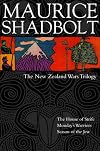
While studying the New Zealand Land Wars, I came across Shadbolt's The New Zealand Wars trilogy. "What a stroke of luck" younger me thought. After all, how best to break the monotony of student life while salvaging my conscience than through a related piece of historic fiction?
Although not a reputed connoisseur of New Zealand fiction, I was nonetheless enthralled by Shadbolt's amalgamation of the factual and fictional to present a vivid portrayal of two divided peoples at war with each other show more and among themselves set against the backdrop of the island-nation's early sanguine history.
Who can forget the innocent but bumbling Hamiora befriended by the cynical yet honest erstwhile military officer George Fairweather who fights to prevent him from becoming a victim of miscarried justice?
Or, the American expatriate soldier turned rebel Kimbell Bent attempting to broach both the worlds of the pristine Maori and the avaricious British?
And how can we forego Ferdinand Wildblood with his literary doppelganger of Henry Youngman fleeing accusations of plagiarism in England but only to end up in a war for souls in bloody New Zealand?
Shadbolt's acumen is on full display in this trilogy. A marvelous work of infinite magnitude. show less
Although not a reputed connoisseur of New Zealand fiction, I was nonetheless enthralled by Shadbolt's amalgamation of the factual and fictional to present a vivid portrayal of two divided peoples at war with each other show more and among themselves set against the backdrop of the island-nation's early sanguine history.
Who can forget the innocent but bumbling Hamiora befriended by the cynical yet honest erstwhile military officer George Fairweather who fights to prevent him from becoming a victim of miscarried justice?
Or, the American expatriate soldier turned rebel Kimbell Bent attempting to broach both the worlds of the pristine Maori and the avaricious British?
And how can we forego Ferdinand Wildblood with his literary doppelganger of Henry Youngman fleeing accusations of plagiarism in England but only to end up in a war for souls in bloody New Zealand?
Shadbolt's acumen is on full display in this trilogy. A marvelous work of infinite magnitude. show less
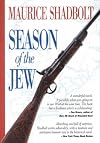
After 2 years in exile on the Chatham Islands, Maori trader Coates contrives to return to the mainland, restyled as Kooti and empowered after reading the Old Testament to do Jehovah’s work on Earth.
Kooti’s return to the East Coast would have far reaching consequences for both the local Maori and the colonists, as he skirmishes and fights his way across the region and back with Captain George Fairweather and the British militia in pursuit.
Set in 1868/69 during the New Zealand Wars, show more Season Of The Jew is the story of the fight to contain and end Kooti’s reign of terror, but also the story of the price war exacts from each individual involved.
I found the first half of the book quite slow and a bit hard to get into, but persevered because of the wonderful witty humour and Fairweather’s character and his conversations, particularly with Trader Read and Colonel Whitmore who both regularly (and amusingly) got tied in knots with Fairweather’s lawyer-like ability to twist words.
I enjoyed the second half much more as the action kicked in, and found the book hard to put down, although there are a couple of gruesome descriptions. Throughout the whole book there are moments of farce, and these moments underline Shadbolt’s themes of the rights of settlers versus those of the Maori people, the lack of compassion and humanity during war and the meaning of honour.
This book is historically accurate and great attention to detail has also been given to the military details. Shadbolt has a great turn of phrase, there are lots of beautiful, atmospheric little snippets used throughout to depict the landscape in quieter moments outside of war.
The characters are wonderfully written and convincingly convey the attitudes of the time – to the point where I found myself getting indignant when mention was made of the seemingly absolute ‘right’ of the English to simply confiscate land for their use. Fairweather, in particular, is extremely interesting as an intellectual painter/soldier who often flirts with dissent and whose sympathies lie with the Maori people as often as with the settlers. I would however, have like Kooti’s motives to have been made a bit clearer, but I suspect his motives may not be particularly easy to understand from the historic sources in any case.
Season Of The Jew is a powerful, moving exploration of war and the politics involved, with accurate and interesting historical detail - most of the main characters are historical figures and short biographies on them were included at the back of my edition. This book is funny, thought provoking and wonderfully written. show less
Kooti’s return to the East Coast would have far reaching consequences for both the local Maori and the colonists, as he skirmishes and fights his way across the region and back with Captain George Fairweather and the British militia in pursuit.
Set in 1868/69 during the New Zealand Wars, show more Season Of The Jew is the story of the fight to contain and end Kooti’s reign of terror, but also the story of the price war exacts from each individual involved.
I found the first half of the book quite slow and a bit hard to get into, but persevered because of the wonderful witty humour and Fairweather’s character and his conversations, particularly with Trader Read and Colonel Whitmore who both regularly (and amusingly) got tied in knots with Fairweather’s lawyer-like ability to twist words.
I enjoyed the second half much more as the action kicked in, and found the book hard to put down, although there are a couple of gruesome descriptions. Throughout the whole book there are moments of farce, and these moments underline Shadbolt’s themes of the rights of settlers versus those of the Maori people, the lack of compassion and humanity during war and the meaning of honour.
This book is historically accurate and great attention to detail has also been given to the military details. Shadbolt has a great turn of phrase, there are lots of beautiful, atmospheric little snippets used throughout to depict the landscape in quieter moments outside of war.
The characters are wonderfully written and convincingly convey the attitudes of the time – to the point where I found myself getting indignant when mention was made of the seemingly absolute ‘right’ of the English to simply confiscate land for their use. Fairweather, in particular, is extremely interesting as an intellectual painter/soldier who often flirts with dissent and whose sympathies lie with the Maori people as often as with the settlers. I would however, have like Kooti’s motives to have been made a bit clearer, but I suspect his motives may not be particularly easy to understand from the historic sources in any case.
Season Of The Jew is a powerful, moving exploration of war and the politics involved, with accurate and interesting historical detail - most of the main characters are historical figures and short biographies on them were included at the back of my edition. This book is funny, thought provoking and wonderfully written. show less
Lists
THE WAR ROOM (2)
Awards


You May Also Like


Associated Authors
Statistics
- Works
- 30
- Also by
- 6
- Members
- 649
- Popularity
- #38,890
- Rating
- 3.8
- Reviews
- 13
- ISBNs
- 77
- Languages
- 2
- Favorited
- 1