

Janet Frame (1924–2004)
Author of Faces in the Water
About the Author
Janet Frame is a writer. She was born in Dunedin, New Zealand in 1924. Frame has written eleven novels, five collections of short stories, a volume of poetry, and a children's book. She has received the Commonwealth Literature Prize, the Turnavsky Prize, a Katherine Mansfield Fellowship, a Robert show more Burns Fellowship, and a Sargeson Fellowship. She was awarded an honorary doctorate in literature from Otago University and is an honorary member of the American Academy of Arts and Letters and she is a past President of Honour of the New Zealand Society of Authors. Her three autobiographies, To the Island, An Angel at My Table, and The Envoy from Mirror City, were turned into a three-part television series, and then a 1990 motion picture directed by Jane Campion. Frame was awarded the CBE in 1983. In 2015 Janet Frame's 1957 debut novel, Owls Do Cry, topped the second annual Great Kiwi Classic poll run by the New Zealand Book Council and Auckland Writers Festival. (Bowker Author Biography) show less
Image credit: Janet Frame - Modernista
Series
Works by Janet Frame
The Reservoir - Stories and Sketches and Snowman Snowman - Fables and Fantasies - Two Volumes (1963) 9 copies
A Night at the Opera 1 copy
Gavin Highly 1 copy
The Bath 1 copy
Frame, Janet Archive 1 copy
Two Sheep 1 copy
Associated Works
In Her Own Words: Women's Memoirs from Australia, New Zealand, Canada, and the United States (1999) — Contributor — 28 copies
Monsters in the Garden: An Anthology of Aotearoa New Zealand Science Fiction and Fantasy (2021) — Contributor — 12 copies
Another English: Anglophone Poems from Around the World (Poets in the World) (2014) — Contributor — 11 copies
Goodbye to Romance: Stories by New Zealand and Australian Women Writers, 1930-1988 (1989) — Contributor — 10 copies
In Deadly Earnest: A Collection of Fiction by New Zealand Women 1870s–1980s (1989) — Contributor — 7 copies
From a room of their own: A celebration of the Katherine Mansfield Fellowship (1993) — Contributor — 5 copies
The Colour of Distance: New Zealand Writers in France, French Writers in New Zealand (2006) — Contributor — 3 copies
Ein Haus mit vielen Zimmern: Autorinnen erzählen vom Schreiben (edition fünf 27) (German Edition) (2015) — Contributor — 2 copies
Tagged
Common Knowledge
- Other names
- Clutha, Nene Janet Paterson (birth)
Clutha, Janet Paterson Frame - Birthdate
- 1924-08-28
- Date of death
- 2004-01-29
- Gender
- female
- Education
- Dunedin Teachers' Training College
Waitaki Girls' High School
University of Otago - Occupations
- novelist
short story writer
poet
autobiographer - Organizations
- American Academy of Arts and Letters (1986)
- Awards and honors
- Officer of the Order of the British Empire
ONZ
Prime Minister's Award for Literary Achievement ( [2003])
Arts Foundation of New Zealand Icon Artist
Robert Burns Fellowship (1965)
Katherine Mansfield Memorial Fellowship (1974) (show all 7)
American Academy of Arts and Letters (Foreign Honorary ∙ Literature ∙ 1986) - Short biography
- Janet Frame (1924-2004) está entre os mais importantes escritores da Nova Zelândia. É mais conhecida por Um Anjo à minha mesa (“Uma das melhores autobiografias do século 20”, segundo Michael Holroyd do Sunday Times), que serviu de inspiração para o filme de Jane Campion, internacionalmente aclamado. É também autora de doze romances, dois volumes de poesias e um livro infantil.
- Cause of death
- acute myeloid leukaemia
- Nationality
- New Zealand
- Birthplace
- Dunedin, New Zealand
- Places of residence
- Oamaru, New Zealand
Dunedin, New Zealand
Auckland, New Zealand
Wanganui, New Zealand
Levin, New Zealand
Shannon, New Zealand - Place of death
- Dunedin, New Zealand
- Burial location
- Oamaru Cemetery, Oamaru, New Zealand
- Associated Place (for map)
- New Zealand
Members
Reviews
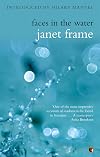
"Much of living is an attempt to preserve oneself by annexing and occupying others."
For reasons that we are never told about Istina Mavet has been committed to a psychiatric hospital where she spends a number of years oscillating between being well enough to be released to being considered so ill that she is suitable for a lobotomy to change her personality. Yet despite her apparent madness, she is keenly observant of her fellow patients and the dictatorial staff.
If you have read the show more introduction by Hilary Mantel you will be aware that the author had a very similar experience to Istina. She, too, was stigmatised as being mad and committed to a mental asylum for eight years, if she hadn't won a literary award would herself have undergone brain surgery. But whilst there are undoubtedly similarities between what Frame and Istina had to endure it is dangerous to view this book as being purely autobiographical. In fact, you would be missing the point. Instead I believe that it should be viewed as a snapshot of how mental illness was misunderstood during the 1950s and how its sufferers were treated or perhaps that should say mistreated, told from the viewpoint of first hand experience.
In 'Faces in the Water' all of the patients, including Istina, are treated as naughty children who must learn to behave and very little effort is made into trying to discover the root of their illnesses. When the more 'progressive' doctors do attempt to understand their patients their efforts fall woefully short. On pre-ordained occasions the patients are allowed to engage in normal human activities but it is always with the threat that if they misbehave they will be sent for ECT. Public relations is apparently more important that therapy.
Istina's fear of the prospect of being treated with ECT and the lengths she goes to avoid it leaves the reader with little doubt about what Frame thinks about ECT. However, she doesn't totally condemn it, rather she is prefers the reader to make their own mind up; she is simply presenting the facts.
I must admit that I initially struggled with the disjointed nature of the writing even if I understood quite why Frame employed it, but there is undoubtedly a certain artistry in her use of it. Although Istina is released from the mental hospitals for short periods of time she always finds herself returning and sees little likelihood of a better life on the outside making this a remarkable but an unremittingly bleak and depressing read also.
I would certainly recommend it to others to but with the fervent hope that it was a book of it's time and that things have since changed for the better.
"There is no past or future. Using tenses to divide time is like making chalk marks on water" show less
For reasons that we are never told about Istina Mavet has been committed to a psychiatric hospital where she spends a number of years oscillating between being well enough to be released to being considered so ill that she is suitable for a lobotomy to change her personality. Yet despite her apparent madness, she is keenly observant of her fellow patients and the dictatorial staff.
If you have read the show more introduction by Hilary Mantel you will be aware that the author had a very similar experience to Istina. She, too, was stigmatised as being mad and committed to a mental asylum for eight years, if she hadn't won a literary award would herself have undergone brain surgery. But whilst there are undoubtedly similarities between what Frame and Istina had to endure it is dangerous to view this book as being purely autobiographical. In fact, you would be missing the point. Instead I believe that it should be viewed as a snapshot of how mental illness was misunderstood during the 1950s and how its sufferers were treated or perhaps that should say mistreated, told from the viewpoint of first hand experience.
In 'Faces in the Water' all of the patients, including Istina, are treated as naughty children who must learn to behave and very little effort is made into trying to discover the root of their illnesses. When the more 'progressive' doctors do attempt to understand their patients their efforts fall woefully short. On pre-ordained occasions the patients are allowed to engage in normal human activities but it is always with the threat that if they misbehave they will be sent for ECT. Public relations is apparently more important that therapy.
Istina's fear of the prospect of being treated with ECT and the lengths she goes to avoid it leaves the reader with little doubt about what Frame thinks about ECT. However, she doesn't totally condemn it, rather she is prefers the reader to make their own mind up; she is simply presenting the facts.
I must admit that I initially struggled with the disjointed nature of the writing even if I understood quite why Frame employed it, but there is undoubtedly a certain artistry in her use of it. Although Istina is released from the mental hospitals for short periods of time she always finds herself returning and sees little likelihood of a better life on the outside making this a remarkable but an unremittingly bleak and depressing read also.
I would certainly recommend it to others to but with the fervent hope that it was a book of it's time and that things have since changed for the better.
"There is no past or future. Using tenses to divide time is like making chalk marks on water" show less
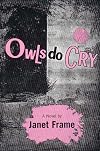
Floating somewhere between free verse and stream of consciousness, Janet Frame's beautifully evocative, semi-autobiographical novel traces the various fortunes of the dirt poor Withers family...most notably siblings Francie, Daphne, Toby, and Teresa (nicknamed "Chicks")...as they grow up and strive to establish lives for themselves in the modern world of 1950's New Zealand. Frame uses words the way a painter uses oils (or a sculptor a chisel) giving her readers not so much a linear story but show more rather a carefully curated collage of memories, impressions, and emotional impacts. One marries well and turns to consumerism in order to fill an inner void; another tries to make their own way despite a severe handicap only to find Poverty traveling alongside them; and yet another struggles to understand the world through a mind crippled by madness. Humorous and heartbreaking in turn, "Owls Do Cry" is the closest I've come to an immersive reading experience in quite some time. show less

Not much changes in the English village of Little Burgelstatham, in East Suffolk. The place and the people have remained much the same since the end of the Second World War. But it’s the 1960s and change is creeping in whether the villagers like it or not. In The Adaptable Man, her fifth novel, Janet Frame explores the tension between progress and stagnation, between adapting to changing times and attitudes and clinging to old, outmoded ways. Her cast of characters are unremarkable people show more whose lives have been disrupted by unwelcome shifts in fortune or are on the cusp of planned change. The Reverend Aisley Maude, who has recently lost his wife and is questioning his faith, has come to Little Burgelstatham after an illness to convalesce at Clematis Cottage, the home of his brother Russell and Russell’s wife Greta. Aisley, who reads Anglo Saxon poetry, is obsessed with St. Cuthbert, a 7th-century monk, and aspires to mimic the saint, who lived as a hermit in quiet contemplation. Russell and Greta have their own obsessions. Russell, a dentist who has resisted updating the equipment in his surgery, is obsessed with teeth and his stamp collection. Greta spends her time gardening and trying to exterminate the pests that are giving her trouble. Living with the Maudes as guests are their 20-year-old son Alwyn and his fiancé Jenny. Alwyn, who seems to float above the fray, fancies himself an amoral creature, a man of his times who welcomes change, untethered to the past, free to do as he pleases. The village in general is suspicious of strangers and resistant to change, especially technology (television, electricity) and the recent influx of holiday visitors from London, who are buying up property as they look to the English countryside as a refuge from the urban rat-race. With patience and remarkable specificity, Frame depicts the goings-on over several months in an assortment of households in a rural community that on its surface appears tranquil, but which a little digging reveals to be a seething hotbed of envy, resentment and fear. To make matters worse, the encroachment of the external world on Little Burgelstatham has taken unexpected and disturbingly tangible form in the body of a young Italian man, a seasonal farm worker, found dead (murdered?) at the edge of a pond on the village outskirts. The novel has a satirical tone and does not shy away from absurdity, and Frame’s lyrical, stream-of-consciousness approach to the narrative poses challenges but offers a huge aesthetic payoff to the persistent reader. Janet Frame delights in exposing the weaknesses, delusions and foibles of her characters—never in mockery, but affectionately, drawing the reader to them in sympathy. The third-person omniscient narrative meanders somewhat but always returns to the notion that change is an inevitable feature of the human condition, and when we resist it, we risk making ourselves look ridiculous. Janet Frame’s work draws inspiration from the author’s fascination with human behaviour, in all its manifestations, and The Adaptable Man is no exception. But this is the first of her novels to not dwell overtly, either exclusively or in part, on the many ways that mental illness can destabilize a person’s life (though a droll critic could argue that all of the characters in this novel are to some extent insane). The catastrophic and tragic event that closes the novel is perhaps a comment on the futility of humanity’s endeavours to assert control over its destiny. But as always with Janet Frame’s fiction, the reader is ultimately left to make of it what she will. show less

"Listening to her one experienced a deep uneasiness, as of having avoided an urgent responsibility, like someone who walking at night along the banks of a stream catches a glimpse in the water of a white face or a moving limb turns quickly away refusing to help or to search for help. We all see the faces in the water. We smother our memory of them, even our belief in their reality, and become calm people of the world; or we can neither forget nor help them; sometimes by a trick of a show more circumstance or dream or a hostile neighbourhood of light we see our own face."
Faces in the Water must be one of the most horrifying and heartbreaking books I have ever read. Deemed as a semi-autobiographical work, this is Istina Mavet's account of her time in two, benighted mental facilities. Breakdown, anxiety, and paranoia crawl from the edges of this novel which deliberately and overwhelmingly crowd its pages yet its harrowing content lie not from these but from the manipulation and abuse the mentally ill suffer from the same people—with their families—expected to be sensitive to their needs and provide care for them. In some cases, they're wincingly made as a laughing stock. The crippling social stigma surrounding mental disorders is utterly palpable; the prejudice and discrimination, on Istina and other suffering women, make them start to believe that they are as disgusting and ugly as how they are treated. These horrors stand opposite the beautiful and breathtaking New Zealand landscape.
The breakdown, anxiety, and paranoia eventually worsen. The mind is a prison that hold them without any reprieve.
What do we have then? ECT / shock therapy is administered not as a cure but a punishment to make the patients cower, tame them like rabid animals. Lobotomy, with its mistaken and controversial promise of reconditioning and its serious side effects ignored, is endorsed as the last hope for a patient (** "I will wake and have no control over myself. I have seen others, how they wet the bed, how their faces are vague and loose with a supply of unreal smiles for which there is no real demand. I will be 're-trained'—that is the word used for leucotomy cases. Rehabilitated. Fitted, my mind cut and tailored to the ways of the world." (p189) and a devastating example would be the story of JFK's sister, Rosemary Kennedy).
With all the brutal and limited psychiatric treatments available in this period, although there is much to consider with the available medications at the present with some labeled as "chemical lobotomy", it is a great feat we have eradicated these and continue to seek and improve medical care in the field. But the most agonising of them all is what I think could be misdiagnosis in some of these cases. I watched French actress Sandrine Bonnaire's documentary about her sister with autism (Her Name is Sabine). Her sister was initially misdiagnosed with mental disorders then years later it was discovered she's on the autism spectrum. It took years for Sabine to finally get the care suited for her condition. Sadly, there were irreversible effects from the years she spent, with the incorrect meds, in a mental institution.
"Conversation is the wall we build between ourselves and other people, too often with tired words like used and broken bottles which, catching the sunlight as they lie embedded in the wall, are mistaken for jewels."
Janet Frame's prose lingers and envelops you. You feel like a helpless spectator too. Weaving Istina's story with that of other women, Frame paints a sympathetic environment outside their circumstances through the reader. It is hard not to be swept away by its poignancy and be immensely affected by it. Whilst it's also interspersed with gentle humour, the impact of this book is beyond the haunting ending it has. It's a hard pill to swallow; it is unforgettable. And I believe the social stigma that continues to burden the mentally ill, though not as worse as before, still needs to be addressed and shattered. We should all work together, start with educating ourselves and calling out others on their insensitivity and indifference; mental health should concern us all.
"Living is so much like one of those childhood games where you keep shutting your eyes and on opening them expect to find everything changed—a new city with glass towers, a table laden for a feast, a kindly forest where the trees no longer strike blows or twist themselves into fearful shapes." show less
Faces in the Water must be one of the most horrifying and heartbreaking books I have ever read. Deemed as a semi-autobiographical work, this is Istina Mavet's account of her time in two, benighted mental facilities. Breakdown, anxiety, and paranoia crawl from the edges of this novel which deliberately and overwhelmingly crowd its pages yet its harrowing content lie not from these but from the manipulation and abuse the mentally ill suffer from the same people—with their families—expected to be sensitive to their needs and provide care for them. In some cases, they're wincingly made as a laughing stock. The crippling social stigma surrounding mental disorders is utterly palpable; the prejudice and discrimination, on Istina and other suffering women, make them start to believe that they are as disgusting and ugly as how they are treated. These horrors stand opposite the beautiful and breathtaking New Zealand landscape.
The breakdown, anxiety, and paranoia eventually worsen. The mind is a prison that hold them without any reprieve.
What do we have then? ECT / shock therapy is administered not as a cure but a punishment to make the patients cower, tame them like rabid animals. Lobotomy, with its mistaken and controversial promise of reconditioning and its serious side effects ignored, is endorsed as the last hope for a patient (** "I will wake and have no control over myself. I have seen others, how they wet the bed, how their faces are vague and loose with a supply of unreal smiles for which there is no real demand. I will be 're-trained'—that is the word used for leucotomy cases. Rehabilitated. Fitted, my mind cut and tailored to the ways of the world." (p189) and a devastating example would be the story of JFK's sister, Rosemary Kennedy).
With all the brutal and limited psychiatric treatments available in this period, although there is much to consider with the available medications at the present with some labeled as "chemical lobotomy", it is a great feat we have eradicated these and continue to seek and improve medical care in the field. But the most agonising of them all is what I think could be misdiagnosis in some of these cases. I watched French actress Sandrine Bonnaire's documentary about her sister with autism (Her Name is Sabine). Her sister was initially misdiagnosed with mental disorders then years later it was discovered she's on the autism spectrum. It took years for Sabine to finally get the care suited for her condition. Sadly, there were irreversible effects from the years she spent, with the incorrect meds, in a mental institution.
"Conversation is the wall we build between ourselves and other people, too often with tired words like used and broken bottles which, catching the sunlight as they lie embedded in the wall, are mistaken for jewels."
Janet Frame's prose lingers and envelops you. You feel like a helpless spectator too. Weaving Istina's story with that of other women, Frame paints a sympathetic environment outside their circumstances through the reader. It is hard not to be swept away by its poignancy and be immensely affected by it. Whilst it's also interspersed with gentle humour, the impact of this book is beyond the haunting ending it has. It's a hard pill to swallow; it is unforgettable. And I believe the social stigma that continues to burden the mentally ill, though not as worse as before, still needs to be addressed and shattered. We should all work together, start with educating ourselves and calling out others on their insensitivity and indifference; mental health should concern us all.
"Living is so much like one of those childhood games where you keep shutting your eyes and on opening them expect to find everything changed—a new city with glass towers, a table laden for a feast, a kindly forest where the trees no longer strike blows or twist themselves into fearful shapes." show less
Lists
My TBR (2)
Literary Witches (3)
Awards


You May Also Like


Associated Authors
Statistics
- Works
- 51
- Also by
- 31
- Members
- 4,680
- Popularity
- #5,392
- Rating
- 4.0
- Reviews
- 95
- ISBNs
- 359
- Languages
- 16
- Favorited
- 21