

C. K. Stead
Author of My Name Was Judas
About the Author
C. K. Stead is a critic, editor, poet, novelist, and educator from New Zealand. He was a professor of English at Auckland University. He is the author of numerous collections of poetry, short stories, novels and literary criticism. He received a New Zealand Book Award in Poetry in 1976 for Quesada show more and a New Zealand Book Award in Fiction for The Singing Whakapapa in 1995. He is the only person to have won the New Zealand Book Award for both poetry and fiction. He received a third place Goodman Fielder Wattie Book Award in 1972 for Smith's Dream and a Montana Prize in 2009 for Collected Poems 1951-2006. He also received the Jessie Mackay award, the King's Lynn Poetry prize, the Hippocrates Prize for Poetry and Medicine, and the Sarah Broom prize. The National Library of New Zealand named C. K. Stead the 2015-2017 New Zealand Poet Laureate. (Bowker Author Biography) show less
Image credit: C.K. Stead at the Order of New Zealand Dinner at Government House in Wellington on 12 August 2011. By New Zealand Government, Office of the Governor-General - https://gg.govt.nz/file/19618, CC BY 4.0, https://commons.wikimedia.org/w/index.php?curid=66655033
Works by C. K. Stead
Associated Works
From a room of their own: A celebration of the Katherine Mansfield Fellowship (1993) — Contributor — 5 copies
The Colour of Distance: New Zealand Writers in France, French Writers in New Zealand (2006) — Contributor — 3 copies
Katherine Mansfield's Men: Perspectives from the 2004 Katherine Mansfield Birthplace Lecture Series (2004) — Contributor — 2 copies
A passion for travel : New Zealand writers & their adventures overseas (1998) — Contributor — 2 copies
Tagged
Common Knowledge
- Legal name
- Stead, Christian Karlson
- Other names
- Stead, Karl
- Birthdate
- 1932-10-17
- Gender
- male
- Education
- Mount Albert Grammar School
University of Auckland
University of Bristol - Occupations
- professor
novelist
poet
critic
editor
short story writer - Organizations
- University of Auckland
- Awards and honors
- Order of the British Empire (Commander, 1985)
Order of New Zealand (2007)
Michael King Writer's Fellowship (2005)
Royal Society of Literature (Fellow)
Katherine Mansfield Memorial Fellowship (1972) - Nationality
- New Zealand
- Birthplace
- Auckland, New Zealand
- Places of residence
- Mt Eden, Auckland, New Zealand
England, UK - Associated Place (for map)
- Auckland, New Zealand
Members
Reviews
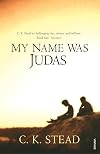
Such a surprisingly good novel that reprises "The Greatest Story Ever Told" as a memoir recounted in old age by Judas Keraiyot (Iscariot). It's intelligent and reasoned, also absorbing reading.
The central premise to this novel is that Judas' betrayal was not the thirty pieces of silver incident, but that he, Judas, could not come to accept that Jesus was Messiah. Despite being friends from boyhood, fellow students together, Judas the disciple gradually becomes disenchanted with Jesus' show more message, especially in the period preceding the crucifixion when Christ's preaching becomes more condemnatory of the powerful, the rich and the Jewish establishment.
The novel is a plea for rational thinking and a warning that inflamed rhetoric and blind faith together inevitably produce discord and disaster if they are permitted to persist. Two thousand years of Middle Eastern mutual loathing among cultures and a lack of true compassion for the human family has been a blight on human well-being. It's hard to imagine a worse place on Earth to advance a Christian message. show less
The central premise to this novel is that Judas' betrayal was not the thirty pieces of silver incident, but that he, Judas, could not come to accept that Jesus was Messiah. Despite being friends from boyhood, fellow students together, Judas the disciple gradually becomes disenchanted with Jesus' show more message, especially in the period preceding the crucifixion when Christ's preaching becomes more condemnatory of the powerful, the rich and the Jewish establishment.
The novel is a plea for rational thinking and a warning that inflamed rhetoric and blind faith together inevitably produce discord and disaster if they are permitted to persist. Two thousand years of Middle Eastern mutual loathing among cultures and a lack of true compassion for the human family has been a blight on human well-being. It's hard to imagine a worse place on Earth to advance a Christian message. show less
If you're an avid reader, you'll no doubt nod your head in agreement when I say that every once in a while you come across a book that is such a surprise, that exceeds your expectations by so much, that you devour each and every word. My Name is Judas is such a book. It sat unread on my shelf for many months and yesterday, after I put it down after devouring it in two short sittings, I lamented why I had left it so long.
It is a truly exceptional book; its genius lies in the familiar. The show more story of Jesus is one we are all familiar with, but C. K. Stead finds a new and subtly subversive angle on it. He tells the story of Judas of Keraiyot (Iscariot) and his boyhood friend Jesus, and charts their childhood in Nazareth and their growing differences in adulthood as the gifted Jesus becomes a well-known orator and prophet. Told from the perspective of an elderly Judas, it paints a picture of a flawed and charismatic, though very much human, Jesus who is come to be seen by many (and perhaps by himself) as the Messiah, the Christ spoken of in prophecy.
This is where the subtle, subversive genius is evident, as Judas recounts their lives at this time, as the cult of Jesus the Christ grows. Judas struggles throughout the book with his scepticism and his thoughtful agnosticism, causing conflict with the other disciples and their blind faith. In an eloquent passage by the author on pages three through six, Judas finally resolves, in his old age, that he will trust in his reason and rationality. You see, Judas' betrayal" was not the thirty pieces of silver as the gospel writers had it, but that, he alone of all the disciples, did not believe his friend was actually the Messiah, and argued with those other disciples who proclaimed his divinity. Key events in the life of Jesus (the loaves and fishes, Lazarus' resurrection, etc.) are ingeniously shown by Stead to have had rational explanations, or were metaphors that over time came to be seen as literal truth. By presenting an entirely-believable interpretation of the life of Jesus which does not require any magic, any divinity, he plants a subversive seed in the reader's mind. As Judas explains as early as page four, he found "that the less we believed in these [divine] forces, the less they gave us reason to." Once the stories are given rational explanations, the need for magical or superstitious explanations crumbles away, just as a scary shadow on a child's bedroom wall ceases to cause fear once it has been revealed as a trick of the light, or a branch swaying in the wind outside. As someone who has read and thought about atheism and religion quite extensively, I have never encountered such a simple and yet gently potent advocacy of rationalism over superstition as My Name is Judas.
But the book is doubly special as it is also a good read. Beyond the admirable and eloquent message, it is also very well-written. The prose is clean and the poetry unobstructive, making it accessible to a potentially great number of people. There is a fair amount of anachronistic language but, with the exception of one of Zebedee's utterances at the bottom of page 147, this never takes you out of the story. If anything, it only emphasises the timelessness of the story - that of two friends growing apart. The characters are also very well-drawn. Judas' recollections never seem self-pitying or biased, Jesus walks a perfectly-balanced line between gifted, thoughtful philosopher and a damaged, insecure man starting to believe his own hype, and the various other characters, from the eleven other disciples to Mary and Joseph and also Mary Magdalene, seem like real human beings rather than pawns in a divinely-ordained game, strongly reinforcing C. K. Stead's secular interpretation of events in Nazareth. The narrative is also surprisingly engaging, breathing new life into the tired old Greatest Story Ever Told. The crucifixion is especially emotional, as Judas' warnings are not heeded and his friend dies slowly and agonisingly (and pointlessly, perhaps counter-productively) on the cross. As Judas reflects in his old age, that was when he realised once and for all that there was no God, for "if there had been one, and He had ordained this end for His faithful son and servant, He would at that moment surely have died of shame." (pg. 231). As mentioned above, the rational explanations for many of the Bible events are ingenious and more believable than their religious interpretations, particularly the ways in which Stead explains the actions of Pontius Pilate and the reason Jesus' body was not present when his tomb was unsealed. I also liked the part where a young and confused Judas, in love with a local girl, looks for the love stories of Hebrew literature for guidance and finds nothing. In contrast to the Greek society which is "full of stories of the love of man and woman, man and muse, human and demigod", the only comparable stories in his own society were ones about the love between man and God (pg. 76). This short, subtle paragraph is a damning indictment of the paucity of genuine expressions of love and compassion in Abrahamic cultures, going a long way in explaining the stunted social growth of mankind and the endless religious conflicts which have plagued the world for millennia, and continue to do so today.
I have often wondered how one might 'convert', for want of a better phrase, someone to atheism. Atheist polemics can be enjoyable to read, but often seem like they are preaching to the choir (again, please excuse the inappropriateness of the phrase). I have concluded that there is no sure-fire way to do so, but one can create doubt, and doubt is not a bad thing. C. K. Stead has managed to create a novel that is subversive and yet also respectful, so that anyone with a truly open mind will be able to engage with it. They will be able to see how religions are created, how the story of one charismatic man can, by a mix of ignorance, hubris and deceit, mutate into a story about the same man being a 'man-god', the Messiah, the son of God. You will begin to wonder how you could ever have believed it in the first place (that is, of course, if you ever did), now that Stead has presented such a believable, rational alternative interpretation of events. My Name is Judas should be at the top of the reading list for every man or woman who holds themselves to certain standards of conscientiousness, thoughtfulness and intelligence." show less
It is a truly exceptional book; its genius lies in the familiar. The show more story of Jesus is one we are all familiar with, but C. K. Stead finds a new and subtly subversive angle on it. He tells the story of Judas of Keraiyot (Iscariot) and his boyhood friend Jesus, and charts their childhood in Nazareth and their growing differences in adulthood as the gifted Jesus becomes a well-known orator and prophet. Told from the perspective of an elderly Judas, it paints a picture of a flawed and charismatic, though very much human, Jesus who is come to be seen by many (and perhaps by himself) as the Messiah, the Christ spoken of in prophecy.
This is where the subtle, subversive genius is evident, as Judas recounts their lives at this time, as the cult of Jesus the Christ grows. Judas struggles throughout the book with his scepticism and his thoughtful agnosticism, causing conflict with the other disciples and their blind faith. In an eloquent passage by the author on pages three through six, Judas finally resolves, in his old age, that he will trust in his reason and rationality. You see, Judas' betrayal" was not the thirty pieces of silver as the gospel writers had it, but that, he alone of all the disciples, did not believe his friend was actually the Messiah, and argued with those other disciples who proclaimed his divinity. Key events in the life of Jesus (the loaves and fishes, Lazarus' resurrection, etc.) are ingeniously shown by Stead to have had rational explanations, or were metaphors that over time came to be seen as literal truth. By presenting an entirely-believable interpretation of the life of Jesus which does not require any magic, any divinity, he plants a subversive seed in the reader's mind. As Judas explains as early as page four, he found "that the less we believed in these [divine] forces, the less they gave us reason to." Once the stories are given rational explanations, the need for magical or superstitious explanations crumbles away, just as a scary shadow on a child's bedroom wall ceases to cause fear once it has been revealed as a trick of the light, or a branch swaying in the wind outside. As someone who has read and thought about atheism and religion quite extensively, I have never encountered such a simple and yet gently potent advocacy of rationalism over superstition as My Name is Judas.
But the book is doubly special as it is also a good read. Beyond the admirable and eloquent message, it is also very well-written. The prose is clean and the poetry unobstructive, making it accessible to a potentially great number of people. There is a fair amount of anachronistic language but, with the exception of one of Zebedee's utterances at the bottom of page 147, this never takes you out of the story. If anything, it only emphasises the timelessness of the story - that of two friends growing apart. The characters are also very well-drawn. Judas' recollections never seem self-pitying or biased, Jesus walks a perfectly-balanced line between gifted, thoughtful philosopher and a damaged, insecure man starting to believe his own hype, and the various other characters, from the eleven other disciples to Mary and Joseph and also Mary Magdalene, seem like real human beings rather than pawns in a divinely-ordained game, strongly reinforcing C. K. Stead's secular interpretation of events in Nazareth. The narrative is also surprisingly engaging, breathing new life into the tired old Greatest Story Ever Told. The crucifixion is especially emotional, as Judas' warnings are not heeded and his friend dies slowly and agonisingly (and pointlessly, perhaps counter-productively) on the cross. As Judas reflects in his old age, that was when he realised once and for all that there was no God, for "if there had been one, and He had ordained this end for His faithful son and servant, He would at that moment surely have died of shame." (pg. 231). As mentioned above, the rational explanations for many of the Bible events are ingenious and more believable than their religious interpretations, particularly the ways in which Stead explains the actions of Pontius Pilate and the reason Jesus' body was not present when his tomb was unsealed. I also liked the part where a young and confused Judas, in love with a local girl, looks for the love stories of Hebrew literature for guidance and finds nothing. In contrast to the Greek society which is "full of stories of the love of man and woman, man and muse, human and demigod", the only comparable stories in his own society were ones about the love between man and God (pg. 76). This short, subtle paragraph is a damning indictment of the paucity of genuine expressions of love and compassion in Abrahamic cultures, going a long way in explaining the stunted social growth of mankind and the endless religious conflicts which have plagued the world for millennia, and continue to do so today.
I have often wondered how one might 'convert', for want of a better phrase, someone to atheism. Atheist polemics can be enjoyable to read, but often seem like they are preaching to the choir (again, please excuse the inappropriateness of the phrase). I have concluded that there is no sure-fire way to do so, but one can create doubt, and doubt is not a bad thing. C. K. Stead has managed to create a novel that is subversive and yet also respectful, so that anyone with a truly open mind will be able to engage with it. They will be able to see how religions are created, how the story of one charismatic man can, by a mix of ignorance, hubris and deceit, mutate into a story about the same man being a 'man-god', the Messiah, the son of God. You will begin to wonder how you could ever have believed it in the first place (that is, of course, if you ever did), now that Stead has presented such a believable, rational alternative interpretation of events. My Name is Judas should be at the top of the reading list for every man or woman who holds themselves to certain standards of conscientiousness, thoughtfulness and intelligence." show less

Talking About O'Dwyer is perhaps unique, in that it is a coming-of-age novel – a bildungsroman – but with a sixty-year-old man as the central character. It is about coming to terms with regrets of a life lived but not lived as you wanted it. It follows the anxieties of Mike, a New Zealand-born teacher at Oxford whose marriage has fallen apart and who still pines for the love of his youth: Marica, an enchanting but pensive daughter of Croatian immigrants who left him, became a show more doctor and married someone else. A parallel storyline follows the mystery of the recently deceased O'Dwyer, Mike's friend, who all his life was plagued by guilt over the death of one of his men in combat in World War Two. Both stories are told by Mike to his patient friend, Winterstoke.
The lives of these people (and there are a surprisingly large number of characters, given the book's short length) are complicated; they are all good people but are entangled, confused and beaten down by life's twists and turns. The novel follows Mike as he (not always consciously) tries to come to terms with his own decisions and emotions. The two main hurdles for this, for him and for the other characters, are identity and memory.
The overall tone of Talking About O'Dwyer is melancholy and perhaps a little bittersweet. The major strength of the novel is that author C. K. Stead's characters cannot be pigeon-holed; whilst they may on occasion behave world-weary, or say something jaded or cynical, these words cannot be used to define them. The same goes for when they act immaturely, spitefully, self-centredly, kind-heartedly, friendly, hopeful or any other word you might cherry-pick from a thesaurus to describe the myriad emotions humans go through. Stead's resolutions to his characters' conflicts are all about accepting life as it is, not as you wish it would be. This acceptance is reached through a mix of wry observation ("What sort of a life is it if you have nothing to regret?" (pg. 197)), hard-bitten stoicism ("[they] had been part of a bigger story which, when it went by the name of History, would attribute cause and perhaps apportion blame, but which to the participants was simply memory, or What Happened..." (pg. 224)) or by looking to the future, even in old age ("There was no going back. But sometimes there was such a thing as going forward." (pg. 189); "Take your time, brother. We're old men, and we have the summer before us." (pg. 14)).
This will be a thought-provoking novel for anyone given to introspection, or who struggles with the memory of past regrets and past mistakes (isn't that everyone?). The sometimes overtly philosophical bent of Talking About O'Dwyer thankfully never becomes didactic, and whilst it probably would become boring if it were a longer novel, Stead's brevity and his liberal splashes of humour make it a compelling and thoroughly worthwhile read. show less
The lives of these people (and there are a surprisingly large number of characters, given the book's short length) are complicated; they are all good people but are entangled, confused and beaten down by life's twists and turns. The novel follows Mike as he (not always consciously) tries to come to terms with his own decisions and emotions. The two main hurdles for this, for him and for the other characters, are identity and memory.
The overall tone of Talking About O'Dwyer is melancholy and perhaps a little bittersweet. The major strength of the novel is that author C. K. Stead's characters cannot be pigeon-holed; whilst they may on occasion behave world-weary, or say something jaded or cynical, these words cannot be used to define them. The same goes for when they act immaturely, spitefully, self-centredly, kind-heartedly, friendly, hopeful or any other word you might cherry-pick from a thesaurus to describe the myriad emotions humans go through. Stead's resolutions to his characters' conflicts are all about accepting life as it is, not as you wish it would be. This acceptance is reached through a mix of wry observation ("What sort of a life is it if you have nothing to regret?" (pg. 197)), hard-bitten stoicism ("[they] had been part of a bigger story which, when it went by the name of History, would attribute cause and perhaps apportion blame, but which to the participants was simply memory, or What Happened..." (pg. 224)) or by looking to the future, even in old age ("There was no going back. But sometimes there was such a thing as going forward." (pg. 189); "Take your time, brother. We're old men, and we have the summer before us." (pg. 14)).
This will be a thought-provoking novel for anyone given to introspection, or who struggles with the memory of past regrets and past mistakes (isn't that everyone?). The sometimes overtly philosophical bent of Talking About O'Dwyer thankfully never becomes didactic, and whilst it probably would become boring if it were a longer novel, Stead's brevity and his liberal splashes of humour make it a compelling and thoroughly worthwhile read. show less
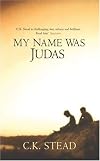
My Name Was Judas by C K Stead Not being a Christian I came to this open-minded-ish.It is completely enthralling. Written by an old Judas looking back on his life he takes us through the Jesus stories one at a time and we see them as he saw them.I'm sure this will upset Christians of pretty much any denomination in some way or another, but I honestly do not think that was the aim. I really think this is the first clear look at any of it that I have been able to get for many many years. Maybe show more because I am older myself and can empathise with Judas's retrospective wisdom. How foolish we all are when young! and long may it be so.Written with a clarity seldom encountered and no gimmicks or tricks. Just plain old solid writing performance from a long in the tooth author of good standing, at least in his own country.Not for the "bible as truth" people I'm afraid, but for those of us still "unsaved" a brilliant take on one of the oldest stories around.
May God help us all :-) show less
May God help us all :-) show less
Lists
Awards


You May Also Like


Associated Authors
Statistics
- Works
- 47
- Also by
- 14
- Members
- 887
- Popularity
- #28,886
- Rating
- 3.7
- Reviews
- 19
- ISBNs
- 154
- Languages
- 10
- Favorited
- 4