
Thomas Hardy (1) (1840–1928)
Author of Tess of the D'Urbervilles
For other authors named Thomas Hardy, see the disambiguation page.
About the Author
Thomas Hardy was born on June 2, 1840, in Higher Bockhampton, England. The eldest child of Thomas and Jemima, Hardy studied Latin, French, and architecture in school. He also became an avid reader. Upon graduation, Hardy traveled to London to work as an architect's assistant under the guidance of show more Arthur Bloomfield. He also began writing poetry. How I Built Myself a House, Hardy's first professional article, was published in 1865. Two years later, while still working in the architecture field, Hardy wrote the unpublished novel The Poor Man and the Lady. During the next five years, Hardy penned Desperate Remedies, Under the Greenwood Tree, and A Pair of Blue Eyes. In 1873, Hardy decided it was time to relinquish his architecture career and concentrate on writing full-time. In September 1874, his first book as a full-time author, Far from the Madding Crowd, appeared serially. After publishing more than two dozen novels, one of the last being Tess of the d'Urbervilles, Hardy returned to writing poetry--his first love. Hardy's volumes of poetry include Poems of the Past and Present, The Dynasts: Part One, Two, and Three, Time's Laughingstocks, and The Famous Tragedy of the Queen of Cornwall. From 1833 until his death, Hardy lived in Dorchester, England. His house, Max Gate, was designed by Hardy, who also supervised its construction. Hardy died on January 11, 1928. His ashes are buried in Poet's Corner at Westminster Abbey. (Bowker Author Biography) show less
Series
Works by Thomas Hardy
Far from the Madding Crowd / The Mayor of Casterbridge / Tess of the d'Urbervilles (1982) 312 copies
Tess of the d’Urbervilles: Complete, Authoritative Text with Biographical and Historical Contexts, Critical History, and Essays from Five Contemporary Critical Perspectives (1891) 80 copies, 1 review
The Works of Thomas Hardy: With an Introduction and Bibliography (Wordsworth Collection) (1994) 65 copies
Far From the Madding Crowd / Jude the Obscure / The Mayor of Casterbridge / The Return of the Native / Tess of the d'Urbervilles (Five Novels) (2006) 56 copies
The Collected Novels: Volume II (Modern Library: Jude the Obscure ∙ Tess of the D'Urbervilles) (1994) 32 copies
A changed man : The waiting supper and other tales : concluding with The romantic adventures of a milk maid (1977) 30 copies, 1 review
The Collected Novels: Volume I (Modern Library: Far from the Madding Crowd ∙ The Return of the Native ∙ The Mayor of Casterbridge) (1994) 29 copies
Far from the Madding Crowd / The Mayor of Casterbridge / The Return of the Native / Tess of the D'Urbervilles / The Trumpet Major / Under the Greenwood Tree (6 Wessex novels) (1991) 24 copies, 1 review
Far from the Madding Crowd / The Mayor of Casterbridge / Tess of the d'Urbervilles / Wessex Tales / The Woodlanders (Omnibus) (1978) 23 copies
Outside the Gates of the World: Selected Short Stories (Everyman's Library (Paper)) (1996) 20 copies
Il violinista delle danze scozzesi 19 copies
Far From the Madding Crowd / The Return of the Native / Tess of the D'Urbervilles (3 novels) (1970) 11 copies
Complete Poetical Works of Thomas Hardy (Delphi Classics) (Delphi Poets Series Book 3) (2012) 9 copies
An triuir choigreach : 9 copies
Under the Greenwood Tree: Our Exploits at West Poley and Humorous Stories (Everyman's Library) (1996) 7 copies
Short Fiction 5 copies
Romance Classics: Jane Eyre / Mansfield Park / Lorna Doone / Far from the Madding Crowd / Middlemarch / Agnes Grey (2001) — Author — 5 copies
The Complete Poetical Works of Thomas Hardy. Volume II: Satires of Circumstance, Moments of Vision, and Late Lyrics and Earlier (1984) 5 copies
The Thomas Hardy Collection (14 Novels, 3 Short Story Collections, and 3 Collections of Poetry all with active Table of Contents) (2011) 5 copies
The Complete Poetical Works of Thomas Hardy. Volume I: Wessex Poems, Poems of the Past and the Present, Time's Laughingstocks (1983) 5 copies
The Complete Poetical Works of Thomas Hardy. Volume III: Human Shows, Winter Words, and Uncollected Poems (1985) 5 copies
Weathers 4 copies
A Tragedy of Two Ambitions 4 copies
To Please His Wive 3 copies
Il meglio di Thomas Hardy 3 copies
The Convergence of the Twain 3 copies
Wessex tales and A group of noble dames (The New Wessex edition of the stories of Thomas Hardy ; v. 1) (1977) 3 copies
Alicia's Diary 2 copies
Seiner Frau zuliebe. Eine Tragödie des Ehrgeizes. (Zwei Erzählungen aus "Life's little ironies") (1920) 2 copies
Channel Firing 2 copies
A Few Crusted Characters 2 copies
Reading & Training : Thomas Hardy : Tess of the D'Urbervilles [book + sound recording] (2003) — Writer — 2 copies
Reading & Training : Thomas Hardy : Far from the madding crowd [book + sound recording] (2017) — Writer — 2 copies
Die Liebe seines Lebens. Roman 2 copies
CRIMEN Y MISTERIO 2 copies
The Complete Poetical Works of Thomas Hardy: Volume IV: The Dynasts, Parts First and Second (1995) 2 copies
The Superstitious Man's Story 2 copies
Montezuma smaragd : Rudyard Kipling, Jules Verne, August Strindberg, Selma Lagerlöf, [Thomas Hardy, Rodrigues Ottolengui (2005) 2 copies
The Darkling Thrush {poem} 1 copy
Poems of the Past & Present: “Beauty lay not in the thing, but in what the thing symbolized” (2020) 1 copy
Romantic Adventures Of A Milkmaid: "Time changes everything except something within us which is always surprised by change." (2013) 1 copy
I Look Up From My Writing 1 copy
Szafirowe oczy 1 copy
Hardy's Works (2 Volume Set) 1 copy
Complete Works, Vol. IV 1 copy
Poesia do Século XX 1 copy
The Thomas Hardy Collection: Far from the Madding Crowd / The Mayor of Casterbridge / Tess of the D'Urbervilles (2010) — Author — 1 copy
The Impercipient 1 copy
Under the Greenwood Tree, Vol. 2 of 2: A Rural Painting of the Dutch School (Classic Reprint) (2016) 1 copy
Rollercoasters (Paperback edit): The Withered Arm and Other Wessex Tales: Thomas Hardy (2010) 1 copy
Complete Works, Vol. V 1 copy
Complete Works, Vol. III 1 copy
Complete Works, Vol. I 1 copy
Heden (andra delen) 1 copy
Bir Hayatın Sırrı 1 copy
Desperate Remedies / A Laodicean/ Two on a Tower / Wessex Tales (The Novels of Thomas Hardy) (1975) 1 copy
A Thomas Hardy songbook 1 copy
Thomas Hardy: Selected Poems 1 copy
Thomas Hardy - Poems of the Past & Present: “Beauty lay not in the thing, but in what the thing symbolized” (2020) 1 copy
The Oxen (Christmas Carol) 1 copy
Three Novels (P) 1 copy
Thomas Hardy Collection Volume III: The Mayor of Casterbridge, Jude the Obscure, Wessex Tales 1 copy
Poems By Thomas Hardy 1 copy
SST 42 - Sotto gli alberi 1 copy
SST 63 - Due sulla torre 1 copy
SST 68 - Nel bosco 1 copy
SST 71 - Due occhi azzurri 1 copy
Christmas Poems 1 copy
Tess of the D'urbervilles: Classic Novel and Notebook (Chiltern Classic; Chiltern Notebook) (2020) 1 copy
Thomas Hardy collection 1 copy
The Man He Killed {poem} 1 copy
Hap 1 copy
During Wind and Rain 1 copy
The Ruined Maid 1 copy
What the Shephard Saw 1 copy
Lifes Little Ironies, A Changed Man, A Group of Nobele Dames (3 Volumes in Slipcase / Boxed Set) (1993) 1 copy
Selected Poems. 1 copy
Literature Connections Sourcebook - Tess of the D'Urbervilles and Related Readings (2-70287) (1997) 1 copy
Poems: Thomas Hardy 1 copy
Hardy and Pound 1 copy
For conscience's Sake 1 copy
Song of the soldiers 1 copy
Complete Works, Vol. VI 1 copy
World's most beautiful poetry (new bilingual edition) - Ivy English book series(Chinese Edition) (2006) 1 copy
Complete Works, Vol. XII 1 copy
Scenes from the Dynasts 1 copy
Complete Works, Vol. II 1 copy
Complete Works, Vol. XI 1 copy
Complete Works, Vol. X 1 copy
Complete Works, Vol. IX 1 copy
The Collected Works of Thomas Hardy: The Complete Works PergamonMedia (Highlights of World Literature) (2015) 1 copy
Complete Works, Vol. VIII 1 copy
Complete Works, Vol. VII 1 copy
Far from the Madding Crowd - With Audio Level 5 Oxford Bookworms Library: 1800 Headwords (2014) 1 copy
Far From the Madding Crowd / The Mayor of Casterbridge / Tess of the d'Urbervilles / Jude the Obscure (2014) 1 copy
Collected Stories 1 copy
Poesie 1 copy
The Mayor of Casterbridge, Far From the Madding Crowd, Tess of the D'Urbervilles, Plus Cliffs Notes on Mayor of Casterbridge (1964) 1 copy
LUOLAN SALAISUUS 1 copy
Complete Novels 1 copy
Lesáci 1 copy
Associated Works
The Making of a Poem: A Norton Anthology of Poetic Forms (2000) — Contributor — 1,473 copies, 9 reviews
The Best Poems of the English Language: From Chaucer Through Robert Frost (2004) — Contributor — 1,250 copies, 3 reviews
Literature: An Introduction to Fiction, Poetry, and Drama (1995) — Contributor, some editions — 1,017 copies, 7 reviews
World Poetry: An Anthology of Verse from Antiquity to Our Time (1998) — Contributor — 500 copies, 2 reviews
75 Short Masterpieces: Stories from the World's Literature (1961) — Contributor — 320 copies, 2 reviews
The Norton Anthology of English Literature, 4th Edition, Volume 2 (1979) — Contributor — 272 copies, 1 review
Poems Bewitched and Haunted (Everyman's Library Pocket Poets Series) (2005) — Contributor — 232 copies
Vampires, Wine and Roses: Chilling Tales of Immortal Pleasure (1997) — Contributor — 170 copies, 2 reviews
An American Album: One Hundred and Fifty Years of Harper's Magazine (2000) — Contributor — 145 copies, 1 review
Poems to See By: A Comic Artist Interprets Great Poetry (2020) — Contributor — 130 copies, 33 reviews
Answering Back: Living Poets Reply to the Poetry of the Past (2007) — Contributor — 119 copies, 1 review
The Sophisticated Cat: A Gathering of Stories, Poems, and Miscellaneous Writings About Cats (1992) — Contributor — 112 copies, 1 review
Frankenstein Dreams: A Connoisseur's Collection of Victorian Science Fiction (2017) — Contributor — 75 copies, 5 reviews
The Roads from Bethlehem: Christmas Literature from Writers Ancient and Modern (1993) — Contributor — 34 copies, 1 review
The Three Strangers (adapted ∙ Oxford bookworms ∙ Stage 3) (2000) — Original author — 34 copies, 11 reviews
Kingfisher Christmas Book: A Collection of Stories, Poems and Carols for the Twelve Days of Christmas (1985) — Contributor — 29 copies
English Short Stories from the Fifteenth Century to the Twentieth Century; #743 (1921) — Contributor — 29 copies
Out of the Best Books: An Anthology of Literature, Vol. 4: The World Around Us (1968) — Contributor — 28 copies
A Quaint and Curious Volume: Tales and Poems of the Gothic (2019) — Contributor — 19 copies, 1 review
The Third Ghost Story Megapack: 26 Classic Ghost Stories (2013) — Contributor — 18 copies, 2 reviews
Creatures of Another Age: Classic Visions of Prehistoric Monsters (2021) — Contributor — 15 copies, 1 review
The Three Strangers and Other Stories (adapted ∙ Heinemann Guided Readers ∙ Intermediate Level) (1992) 15 copies, 1 review
10 Penguin Classics on 45 CDs (The Mayor of Casterbridge, Pride & Prejudice, Great Expectations, Frankenstein, Jane Eyre, Crime & Punishment, Wuthering Heights, Northanger Abbey,… (2007) — Contributor — 9 copies, 1 review
Edexcel Poetry Anthology for Advanced subsidiary and advanced GCE examinations in English Literature (2000) — Contributor, some editions — 6 copies
Die englische Literatur 08 in Text und Darstellung. 19. Jahrhundert 2 (1982) — Contributor — 5 copies
Loves and Deaths: Novelists' Tales of the Nineteenth Century from Scott to Hardy (1972) — Contributor — 4 copies
Die englische Literatur 09 in Text und Darstellung. 20. Jahrhundert. (2001) — Contributor — 3 copies
American Aphrodite: A Quarterly for the Fancy-Free (Volume 4, Number 13) (1954) — Contributor — 2 copies
Modern Short Stories — Contributor — 2 copies
One hundred best novels condensed: 3 of 4 see note: Adam Bede; Tess of the D'Urbervilles; Don Quixote; East Lynne; Count of Monte Cristo; Paul and Virginia; Tom Brown's School… — Contributor — 1 copy
A Caravan of Music Stories by the World's Great Authors — Contributor — 1 copy
English short stories of the nineteenth century — Contributor — 1 copy
Tagged
Common Knowledge
- Birthdate
- 1840-06-02
- Date of death
- 1928-01-11
- Gender
- male
- Education
- King's College, London
- Occupations
- architect
novelist
poet - Awards and honors
- Order of Merit (1910)
Royal Society of Literature (Fellow) - Short biography
- Thomas Hardy (2 June 1840 – 11 January 1928) was an English novelist and poet. A Victorian realist in the tradition of George Eliot, he was influenced both in his novels and in his poetry by Romanticism, including the poetry of William Wordsworth. He was highly critical of much in Victorian society, especially on the declining status of rural people in Britain, such as those from his native South West England.
While Hardy wrote poetry throughout his life and regarded himself primarily as a poet, his first collection was not published until 1898. Initially, he gained fame as the author of novels such as Far from the Madding Crowd (1874), The Mayor of Casterbridge (1886), Tess of the d'Urbervilles (1891), and Jude the Obscure (1895). During his lifetime, Hardy's poetry was acclaimed by younger poets (particularly the Georgians) who viewed him as a mentor. After his death his poems were lauded by Ezra Pound, W. H. Auden and Philip Larkin.
Many of his novels concern tragic characters struggling against their passions and social circumstances, and they are often set in the semi-fictional region of Wessex; initially based on the medieval Anglo-Saxon kingdom, Hardy's Wessex eventually came to include the counties of Dorset, Wiltshire, Somerset, Devon, Hampshire and much of Berkshire, in southwest and south central England. Two of his novels, Tess of the d'Urbervilles and Far from the Madding Crowd, were listed in the top 50 on the BBC's survey The Big Read. - Cause of death
- pleurisy
- Nationality
- UK
- Birthplace
- Higher Bockhampton, Dorsetshire, England, UK
- Places of residence
- Higher Bockhampton, Dorsetshire, England, UK
St. Juliot, Cornwall, England, UK
London, Middlesex, England, UK
Dorchester, Dorset, England, UK - Place of death
- Dorchester, Dorset, England, UK
- Burial location
- Westminster Abbey, London, Middlesex, England, UK
St. Michael's churchyard, Stinsford, Dorset, England, UK (heart) - Map Location
- England, UK
Members
Discussions
November 2025: Thomas Hardy in Monthly Author Reads (December 2025)
THE DEEP ONES: "The Withered Arm" by Thomas Hardy in The Weird Tradition (April 2023)
2013 Quarter 2 - Thomas Hardy in Monthly Author Reads (October 2013)
Just Joined - and my small/humble HP collection... in George Macy devotees (September 2012)
Jude the Obscure: Parts 4-6 in Group Reads - Literature (July 2011)
Jude the Obscure: Parts 1-3 in Group Reads - Literature (July 2011)
Reviews
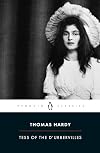
I have a great admiration for this novel. Hardy doesn’t hold back with this one; it’s edgy, it’s dark and it’s merciless. In this allegorical tale, Tess is your loveable scapegoat, the Christ-figure if you will, that evokes our inmost pity. All she innocently desires is to do the right thing, and we martyr her because we won’t compromise our "armoured" regulations. Yes, Hardy goes way over the top here, and some may criticize him as overly romantic, but considering he was working show more within the confines of Victorian censorship and he didn't have much choice, this novel was ground-breaking for cleverly breaking the rules.
As a feminist, I consider this novel seminal to the movement in the late 19th century, much like I consider Huckleberry Finn seminal to racial awareness of the same period. They may not sound robust enough to our modern ears, but they were amongst the ideas that got the gears turning in the first place. show less
As a feminist, I consider this novel seminal to the movement in the late 19th century, much like I consider Huckleberry Finn seminal to racial awareness of the same period. They may not sound robust enough to our modern ears, but they were amongst the ideas that got the gears turning in the first place. show less

From the beginning, it were the occasional dissonant comments -- very brief -- that Hardy planted in his description of an ambitious schoolmaster leaving a tiny Wessex hamlet that gripped me and dragged me into the novel, promising a mildly cynical undercurrent to an everyman’s narrative.
The novel starts there, taking its time describing curbed ambition and stunted growth amidst rural status-quo, but pretty soon it becomes interested in matters of morality and social opprobrium. Is show more marriage a socially sanctioned contract that ought to be cancellable; or is it a promise made to God, and therefore eternally fixed? At what point does social disapproval and the continuation of a community's mores turn into concerted bullying?
Hardy is so very good at the plot archetype where bad things happen to good people: his main characters are unassuming people who mainly want to be left alone to pursue their own choices. Cue a crisis of faith, and a crisis of atheism, unsatisfactory work and life prospects; their resolve to pursue love and happiness is put to stringent tests unintentionally imposed by a society that simply does not get it.
And Hardy uses this outline to examine a range of class issues as well as moral / religious disagreements in his idealized setting of rural Victorian England. Hardy reserves his most direct criticism for class differences: his tale of a working class layman with scholarly ambitions is excellent at conveying frustration with the closed mindset of a self-contained academia, at expressing the resignation of reaching university only through his children and their offspring. But in Jude, Hardy never explicitly chooses sides when it comes to the moral issues. The antagonists, embodied customs and societal taboos though they are, are never portrayed in an unfair light; everyone's behaviour is at all times understandable and (from their own perspective) entirely reasonable. Lack of education, self-interested moral shortcuts and privilege-induced blindness may be deplored, but cannot be demonized, much less personified in easy allegories.
Hardy very skilfully makes readers care about his main characters -- Jude and Sue -- and then proceeds to relentlessly pummel his protagonists with all the disapproval that society and their notions of morality can muster. In this respect, Jude the Obscure reminds me of Eliot’s The Mill on the Floss: a tragedy inflicted by moral considerations that are at least partially self-imposed and that the protagonists feel unable to abandon without betraying their sense of self.
As great as this book is in addressing moral and religious quandaries, the narrator’s voice is one of the best things about Jude. Most of the narrative is told fairly straightforwardly, without omniscient interference or explicit moralizing. But the narrator's voice sprinkles wry remarks on the text -- be they explicit comments or, more subtly, choice of words and connotations. It doesn’t often make an appearance, but when it engages in a little omniscient foreshadowing or offers a general comment about human nature, it is noticeably but not intrusively different from the surrounding narrative, and the effect is much amplified.
To sum up: Jude the Obscure was a very engaging read, and felt like a mature novel, written by an accomplished and highly skilled novelist-- it is so satisfying to feel you're in the hands of a master at their craft. It offered moral complexity, protagonists to root for, and a world with no easy, blameable antagonists. I loved every page of it, because there was so much to keep me intellectually interested as well as emotionally invested. show less
The novel starts there, taking its time describing curbed ambition and stunted growth amidst rural status-quo, but pretty soon it becomes interested in matters of morality and social opprobrium. Is show more marriage a socially sanctioned contract that ought to be cancellable; or is it a promise made to God, and therefore eternally fixed? At what point does social disapproval and the continuation of a community's mores turn into concerted bullying?
Hardy is so very good at the plot archetype where bad things happen to good people: his main characters are unassuming people who mainly want to be left alone to pursue their own choices. Cue a crisis of faith, and a crisis of atheism, unsatisfactory work and life prospects; their resolve to pursue love and happiness is put to stringent tests unintentionally imposed by a society that simply does not get it.
And Hardy uses this outline to examine a range of class issues as well as moral / religious disagreements in his idealized setting of rural Victorian England. Hardy reserves his most direct criticism for class differences: his tale of a working class layman with scholarly ambitions is excellent at conveying frustration with the closed mindset of a self-contained academia, at expressing the resignation of reaching university only through his children and their offspring. But in Jude, Hardy never explicitly chooses sides when it comes to the moral issues. The antagonists, embodied customs and societal taboos though they are, are never portrayed in an unfair light; everyone's behaviour is at all times understandable and (from their own perspective) entirely reasonable. Lack of education, self-interested moral shortcuts and privilege-induced blindness may be deplored, but cannot be demonized, much less personified in easy allegories.
Hardy very skilfully makes readers care about his main characters -- Jude and Sue -- and then proceeds to relentlessly pummel his protagonists with all the disapproval that society and their notions of morality can muster. In this respect, Jude the Obscure reminds me of Eliot’s The Mill on the Floss: a tragedy inflicted by moral considerations that are at least partially self-imposed and that the protagonists feel unable to abandon without betraying their sense of self.
As great as this book is in addressing moral and religious quandaries, the narrator’s voice is one of the best things about Jude. Most of the narrative is told fairly straightforwardly, without omniscient interference or explicit moralizing. But the narrator's voice sprinkles wry remarks on the text -- be they explicit comments or, more subtly, choice of words and connotations. It doesn’t often make an appearance, but when it engages in a little omniscient foreshadowing or offers a general comment about human nature, it is noticeably but not intrusively different from the surrounding narrative, and the effect is much amplified.
To sum up: Jude the Obscure was a very engaging read, and felt like a mature novel, written by an accomplished and highly skilled novelist-- it is so satisfying to feel you're in the hands of a master at their craft. It offered moral complexity, protagonists to root for, and a world with no easy, blameable antagonists. I loved every page of it, because there was so much to keep me intellectually interested as well as emotionally invested. show less
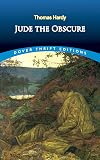
I said this before, in another review, that Thomas Hardy is such a literary talent that you can't give him less than three stars, no matter what you may think of the story itself. And I sure didn't think much of this one. I don't mean that it wasn't thought provoking, I just didn't care for the thoughts it provoked. I think it should have had an additional title: "Sue the Absurd", because this woman was too unbelievable to be believable. She's supposed to be a modern woman yet she acts more show more like an old fashioned martyr, sacrificing herself, for no really good reason. She makes a foolish marriage to Phillotson, who physically repulses her, makes the wise choice to ask him for her freedom, but once that's granted and Jude, (whom she loves....or cares for, since I don't think she was emotionally capable of love) gets his freedom from his conniving wife, Arabella, she won't marry him, and risks the disapproval of society by just living with him. Even when they're both legally free, she prefers not to revisit the altar, (or whatever). Makes perfect sense: marry a man you hate, but don't marry one you love. Her short fiasco with Phillotson couldn't have soured her on marriage that badly, and while it's true there was plenty of hypocrisy in it back then (not to mention mercenary gains, social pressure, and plenty that has nothing to do with love), back then, if you want children it should have been clear that they'd be much better off if their parents were legally wed.
So, they live together, but can't settle anywhere, too much disapproval, (so much stupidity....how many "respectably" married people had "bits on the side", as they said back then, and yet had the nerve to judge others) and are never really happy. When a terrible tragedy results, Sue's answer is to do penance by sacrificing herself and returning to Phillotson, despite her physical repulsion. He's all too eager to remarry her (talk about a desperate man, I'm guessing he couldn't find any other woman to sleep with him, including prostitutes), makes perfect (non)sense! Why not devote yourself to good works, charities, helping orphaned children, cleaning the street of horse manure, whatever....but this was just too ABSURD to be believed!
Almost as absurd as Jude believing that Arabella's kid was his. Considering that she had lied before about being pregnant (and he fell for that trap like a real nincompoop), left him for another man, and couldn't keep her legs together if she tried, not to mention there weren't even blood tests back then, let alone DNA ones, does it really seem likely he was the boy's father? I think NOT. But then again, considering the way the kid acted....insanity does run in families!
To sum it up, neither of these fools deserved a happy ending and I'm sure glad they didn't get one. show less
So, they live together, but can't settle anywhere, too much disapproval, (so much stupidity....how many "respectably" married people had "bits on the side", as they said back then, and yet had the nerve to judge others) and are never really happy. When a terrible tragedy results, Sue's answer is to do penance by sacrificing herself and returning to Phillotson, despite her physical repulsion. He's all too eager to remarry her (talk about a desperate man, I'm guessing he couldn't find any other woman to sleep with him, including prostitutes), makes perfect (non)sense! Why not devote yourself to good works, charities, helping orphaned children, cleaning the street of horse manure, whatever....but this was just too ABSURD to be believed!
Almost as absurd as Jude believing that Arabella's kid was his. Considering that she had lied before about being pregnant (and he fell for that trap like a real nincompoop), left him for another man, and couldn't keep her legs together if she tried, not to mention there weren't even blood tests back then, let alone DNA ones, does it really seem likely he was the boy's father? I think NOT. But then again, considering the way the kid acted....insanity does run in families!
To sum it up, neither of these fools deserved a happy ending and I'm sure glad they didn't get one. show less
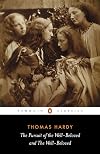
19th century novelists spent a lot of time thinking about relationships, and even though society has changed dramatically since then, many of their insights are still useful. My copy of this novel contains two different editions: the 1892 serialized version, and the edited 1897 novel version with a slightly different plot. Both versions offer an interesting look at the costs of obsession: we can't ever truly understand why we sometimes become fixated on certain people, but what do we do with show more that knowledge? How much do we let an obsession affect our relationships with other people, how do we analyze what specific qualities of it are meaningful, how does it relate to the uncertainty we feel about any relationship, and can anything good ever come from it? While Hardy is often too verbose in that excessively discursive Victorian English way, his keen eye for the essential irrationality of attraction makes this study of the costs of unhealthy romantic patterns quite relevant to the modern reader.
Jocelyn Pearston (Pierston in the 1897 edition) is the scion of a stoneworking dynasty who has an issue with his romantic attractions: he becomes fixated on any woman who has been inhabited by a "migratory, elusive idealization he called his Love" - the "Well-Beloved" of the title. It's the spirit that precedes the woman, so he can actually become obsessed with someone before he even sees her, but once he detects that a woman has the halo, he doesn't care about anyone else. He has several relationships in the novel, which takes place from when he is 20 to the age of 60, but most troublesome for him are his obsessions with three generations of a woman from his same isolated home town of Portland: Avice Caro. The three Avices each become the object of Pearston's attention when they reach the age of 20, which would be creepy and pathetic if it didn't have such shades of Wooderson's famous line in Dazed and Confused that "That's what I like about these high school girls; I get older, they stay the same age". Though they're all different people, his consistent infatuation with each incarnation deeply affects his ability to commit to the other women he meets in his life.
Wanting to marry a woman, her daughter, and her granddaughter in turn is a fairly extreme parody of the notion of having a "type". Some people try to date within a range while others play the field, but is one actually better than the other when it's driven by irrationality? In this case, it's clear that going back to the same well too often is the wrong choice, as Pearston chases his memories of the first Avice, who, though she at first had captivated him, is "the only woman he had NEVER loved of those who had loved him", and therefore according to the dream logic of obsession is the one he can't let go of. Try as he might to find her original magic in her descendants, he's disappointed each time by the fact that their reality doesn't measure up in some essential way to his fantasy. But obsession is usually immune to reproof, and the dramatic failure of each attempt to marry an Avice doesn't dissuade him from trying again. Pearston's a successful sculptor of statues of women, and Hardy draws the obvious metaphorical parallels between his art and his life.
Along the way he becomes involved with two other women, Marcia Bencomb and Nichola Pine-Avon. His affairs with these two women differ slightly between the two versions, but it is with both that the price of his obsession with Avice become apparent. Marcia, whose family history is entwined with his in a Romeo and Juliet-ish way, is a rebound after the first Avice rejects him whose incompatibility dooms their relationship (his eventual reconnection with her at the end is fairly ghastly in the serialized version; the novel's retelling is less depressing, but the way they "settle" for each other is not exactly joyous). Nichola is a London society woman who honestly would have been just fine for him, and Pearston's abandonment of her to chase after the various Avices leads to her deciding to marry his best friend at just the time when he decides that maybe she's not so bad after all. As life is all about choices, pursuing a fantasy means that you have to give up on something real. At least Pearston recognizes the limits of his unreason, and helps the lesser Avices find happiness when he realizes that he can't have them.
One thing I found weird about the novel is that, according to the introduction, society was scandalized by sexual content in the book, but in fact there's zero sex whatsoever: Pearston's failed attempt to sleep with the first Avice before they're married (according to "island custom", as if premarital sex hasn't been ubiquitous since forever) is what sets the whole story in motion, and he spends the entire rest of the book utterly failing to sleep with any of the other hosts of his "Well-Beloved". What gives? Perhaps the idea of a 60 year old man desperately trying to marry young girls was so shocking that society just couldn't handle it, but it's worth pointing out that in real life, about 20 years after Hardy published this novel he married his secretary, who was 40 years younger than him. Hmm. Another thing that's odd is that although marital status is taken very seriously, the process of getting married is not - Pearston proposes to half the women in the book at the drop of a hat, and most of them seem to treat it with less gravity than a decision on where to go for lunch.
Still, Hardy's exposition of the absurd lengths some people will go to in order to chase an idea instead of a person is well-done and very relevant. How do you know whether your desire is "real", as opposed the kind of phantom that Pearston can't stop chasing, and when should you give up on the ghost and embrace what you have? Unsurprisingly, Hardy is a bit less helpful on that score, but anyone who has lamented their own tendencies to excessive romanticism will find plenty to ponder here. show less
Jocelyn Pearston (Pierston in the 1897 edition) is the scion of a stoneworking dynasty who has an issue with his romantic attractions: he becomes fixated on any woman who has been inhabited by a "migratory, elusive idealization he called his Love" - the "Well-Beloved" of the title. It's the spirit that precedes the woman, so he can actually become obsessed with someone before he even sees her, but once he detects that a woman has the halo, he doesn't care about anyone else. He has several relationships in the novel, which takes place from when he is 20 to the age of 60, but most troublesome for him are his obsessions with three generations of a woman from his same isolated home town of Portland: Avice Caro. The three Avices each become the object of Pearston's attention when they reach the age of 20, which would be creepy and pathetic if it didn't have such shades of Wooderson's famous line in Dazed and Confused that "That's what I like about these high school girls; I get older, they stay the same age". Though they're all different people, his consistent infatuation with each incarnation deeply affects his ability to commit to the other women he meets in his life.
Wanting to marry a woman, her daughter, and her granddaughter in turn is a fairly extreme parody of the notion of having a "type". Some people try to date within a range while others play the field, but is one actually better than the other when it's driven by irrationality? In this case, it's clear that going back to the same well too often is the wrong choice, as Pearston chases his memories of the first Avice, who, though she at first had captivated him, is "the only woman he had NEVER loved of those who had loved him", and therefore according to the dream logic of obsession is the one he can't let go of. Try as he might to find her original magic in her descendants, he's disappointed each time by the fact that their reality doesn't measure up in some essential way to his fantasy. But obsession is usually immune to reproof, and the dramatic failure of each attempt to marry an Avice doesn't dissuade him from trying again. Pearston's a successful sculptor of statues of women, and Hardy draws the obvious metaphorical parallels between his art and his life.
Along the way he becomes involved with two other women, Marcia Bencomb and Nichola Pine-Avon. His affairs with these two women differ slightly between the two versions, but it is with both that the price of his obsession with Avice become apparent. Marcia, whose family history is entwined with his in a Romeo and Juliet-ish way, is a rebound after the first Avice rejects him whose incompatibility dooms their relationship (his eventual reconnection with her at the end is fairly ghastly in the serialized version; the novel's retelling is less depressing, but the way they "settle" for each other is not exactly joyous). Nichola is a London society woman who honestly would have been just fine for him, and Pearston's abandonment of her to chase after the various Avices leads to her deciding to marry his best friend at just the time when he decides that maybe she's not so bad after all. As life is all about choices, pursuing a fantasy means that you have to give up on something real. At least Pearston recognizes the limits of his unreason, and helps the lesser Avices find happiness when he realizes that he can't have them.
One thing I found weird about the novel is that, according to the introduction, society was scandalized by sexual content in the book, but in fact there's zero sex whatsoever: Pearston's failed attempt to sleep with the first Avice before they're married (according to "island custom", as if premarital sex hasn't been ubiquitous since forever) is what sets the whole story in motion, and he spends the entire rest of the book utterly failing to sleep with any of the other hosts of his "Well-Beloved". What gives? Perhaps the idea of a 60 year old man desperately trying to marry young girls was so shocking that society just couldn't handle it, but it's worth pointing out that in real life, about 20 years after Hardy published this novel he married his secretary, who was 40 years younger than him. Hmm. Another thing that's odd is that although marital status is taken very seriously, the process of getting married is not - Pearston proposes to half the women in the book at the drop of a hat, and most of them seem to treat it with less gravity than a decision on where to go for lunch.
Still, Hardy's exposition of the absurd lengths some people will go to in order to chase an idea instead of a person is well-done and very relevant. How do you know whether your desire is "real", as opposed the kind of phantom that Pearston can't stop chasing, and when should you give up on the ghost and embrace what you have? Unsurprisingly, Hardy is a bit less helpful on that score, but anyone who has lamented their own tendencies to excessive romanticism will find plenty to ponder here. show less
Lists
Folio Society (9)
1870s (1)
Read in 2007 (1)
BBC Top Books (1)
Florida (1)
United Kingdom (1)
Ambleside Books (1)
Read These Too (1)
Didactic Fiction (1)
bound (1)
Down on the Farm (1)
THE WAR ROOM (1)
Classics (1)
Read in 2009 (1)
Women's Stories (1)
Elegant Prose (1)
1880s (1)
100 (1)
AP Lit (4)
. (3)
Read in 2006 (3)
A Novel Cure (4)
BBC Big Read (3)
19th Century (4)
Unread books (5)
Books I've read (5)
BBC Big Read (4)
Victorian Period (4)
Out of Copyright (3)
Country Life (2)
Favourite Books (2)
. (1)
Take Four Books (1)
el (3)
Reading LIst (2)
1890s (2)
Awards


You May Also Like


Associated Authors
Statistics
- Works
- 468
- Also by
- 156
- Members
- 86,126
- Popularity
- #126
- Rating
- 3.9
- Reviews
- 1,343
- ISBNs
- 4,101
- Languages
- 31
- Favorited
- 415


