
Simon Rae (1)
Author of The 20th Century in Poetry
For other authors named Simon Rae, see the disambiguation page.
About the Author
Image credit: Faber
Works by Simon Rae
It's Not Cricket: Skullduggery, Sharp Practice and Downright Cheating in the Noble Game (2001) 25 copies, 1 review
The Face of War 1 copy
Tagged
Common Knowledge
- Gender
- male
- Occupations
- poet
playwright
author
broadcaster - Organizations
- University of Warwick
Warwickshire County Cricket Club
The Guardian
BBC - Nationality
- UK
- Associated Place (for map)
- UK
Members
Reviews

Let's start with a few clarifications on the scope of this anthology:
- All poems are originally published in English, in the year they are indexed under (with a few minor exceptions where they are filed under the period they cover or under the composition date); no translations are collected.
- The poems are not the best in the year or best from that specific author - they illustrate the year (its history, events, culture and so on)
- There is just so much you can collect in a book spanning show more 101 years.
As a result, what we get is an anthology of over 400 poems, with most authors getting one or two spots only and very few getting more than 2 (the maximum per poet is still in the single digits): Thomas Hardy opens the volume with a poem composed in the last day of 1900, Jeffrey Harrison closes it with one composed in the last day of 2000. Between them are spanning the 101 years - with at least 2 poems per year, more in most, moving slowly through the years, chronicling the history around them and the change in poetry itself.
The book is split into 7 sections:
1900-1914 Never Such Innocence Again
1915-1922 War to Waste Land
1923-1939 Danger and Hope
1940-1945 War
1946-1968 Peace and Cold War
1969-1988 From the Moon to Berlin
1989-2000 Endgames
And each section starts with a short introduction by the editors and then follows through its years. A lot of the poems have notes, a few of the longer ones are just excerpted (the book is long enough, there is no point reprinting a 100 pages poem).
Poem by poem, year by year, the century passes by. But the poems are not just about the history of the world - there are love poems and elegies, there are poems about little known facts and poems about people that are forgotten by time, poems of hope and poems of despair. And sometimes what is not included is louder than what is inside - the 1917 revolution in Russia is barely mentioned; the non-English/Irish/Australian/US voices are missing in the first part of the anthology. When those voices start appearing they add the pictures missing before that - Asian and African poems which can be written only by someone who calls a country there home.
If you look at the table of contents, you will find all the big names but maybe not all the big poems. And that is by design - it is supposed to be a history of a century of poetry, not a best of anthology. And yet, a lot of the poems you expect to see will be here and virtually all the poets will be there. But there are a lot more - poets who time forgot and some that had become unfashionable; poets who are better known about their non-poetic writings.
If I could have asked for one change, it would have been to put the author's nationality in the poems' headers - the information is there, in the biographies section at the end (which also contains the list of poems per poet) so one can find these but I found myself flipping back to these while reading the poems - it seemed important in some of them to know where the author was from. And in some it did not matter - maybe that is why they were banished at the end.
There was the random editorial mistake (a poem described in the introduction of one section ends up opening the next section for example) - it seems like there was some shifting of years somewhere in the editorial process. But that made me smile - if anything, it just showed that we are all human.
And the editors could not have found a better poem to close the volume. When Jeffrey Harrison wrote the poem about the skyline of New York and its two towers disappearing while flying away from the city at the last day of December 2000, he had no idea what is coming in the next year. But the editors did - and chose to close the century with that picture.
I cannot say that I liked all the poems - but there were enough that I did and the book works as a whole. It will work also as an anthology to dip into now and then but read in order, as assembled and ordered, it gives an overview of a turbulent century from a new perspective. show less
- All poems are originally published in English, in the year they are indexed under (with a few minor exceptions where they are filed under the period they cover or under the composition date); no translations are collected.
- The poems are not the best in the year or best from that specific author - they illustrate the year (its history, events, culture and so on)
- There is just so much you can collect in a book spanning show more 101 years.
As a result, what we get is an anthology of over 400 poems, with most authors getting one or two spots only and very few getting more than 2 (the maximum per poet is still in the single digits): Thomas Hardy opens the volume with a poem composed in the last day of 1900, Jeffrey Harrison closes it with one composed in the last day of 2000. Between them are spanning the 101 years - with at least 2 poems per year, more in most, moving slowly through the years, chronicling the history around them and the change in poetry itself.
The book is split into 7 sections:
1900-1914 Never Such Innocence Again
1915-1922 War to Waste Land
1923-1939 Danger and Hope
1940-1945 War
1946-1968 Peace and Cold War
1969-1988 From the Moon to Berlin
1989-2000 Endgames
And each section starts with a short introduction by the editors and then follows through its years. A lot of the poems have notes, a few of the longer ones are just excerpted (the book is long enough, there is no point reprinting a 100 pages poem).
Poem by poem, year by year, the century passes by. But the poems are not just about the history of the world - there are love poems and elegies, there are poems about little known facts and poems about people that are forgotten by time, poems of hope and poems of despair. And sometimes what is not included is louder than what is inside - the 1917 revolution in Russia is barely mentioned; the non-English/Irish/Australian/US voices are missing in the first part of the anthology. When those voices start appearing they add the pictures missing before that - Asian and African poems which can be written only by someone who calls a country there home.
If you look at the table of contents, you will find all the big names but maybe not all the big poems. And that is by design - it is supposed to be a history of a century of poetry, not a best of anthology. And yet, a lot of the poems you expect to see will be here and virtually all the poets will be there. But there are a lot more - poets who time forgot and some that had become unfashionable; poets who are better known about their non-poetic writings.
If I could have asked for one change, it would have been to put the author's nationality in the poems' headers - the information is there, in the biographies section at the end (which also contains the list of poems per poet) so one can find these but I found myself flipping back to these while reading the poems - it seemed important in some of them to know where the author was from. And in some it did not matter - maybe that is why they were banished at the end.
There was the random editorial mistake (a poem described in the introduction of one section ends up opening the next section for example) - it seems like there was some shifting of years somewhere in the editorial process. But that made me smile - if anything, it just showed that we are all human.
And the editors could not have found a better poem to close the volume. When Jeffrey Harrison wrote the poem about the skyline of New York and its two towers disappearing while flying away from the city at the last day of December 2000, he had no idea what is coming in the next year. But the editors did - and chose to close the century with that picture.
I cannot say that I liked all the poems - but there were enough that I did and the book works as a whole. It will work also as an anthology to dip into now and then but read in order, as assembled and ordered, it gives an overview of a turbulent century from a new perspective. show less
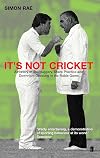
A comprehensive overview of the history and cultutral place of cricket, both in the UK and abroad, specifically with reference to the ideas of sportsmanship that are bandied about; Rae strips off the rose-tinted glasses that insist that the sport enjoyed an undefined era of gentlemanly conduct, replacing them with a far more interesting and complex view of its roots as a workingman's sport and capture by the upper classes. Along the way he demolishes the grievence industry of bodyline and show more the idea of the sanctity of "walking". show less
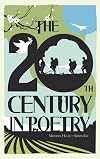
The 20th Century in Poetry is an anthology of the poetry describing the 20th Century. With a degree in history and another in international relations I looked forward to reading this collection. I have always liked to see how other fields see history. Art history of the 20th Century is an amazing reflection of the culture. Art Deco completely captures the 1930s. The Pop Art of the 1960s captured that decade's spirit: from Andy Worhol to the style Janis Joplin's Cheap Thrills album cover. show more Many times you can look at the art and know the decade and the origin. I am sure poetry could do the same. I did have one condition in a poetry collection of the twentieth century. It had to have on poem that I felt was, historically, a very important part of the 20th century*.
Historians look at the 20th Century a bit differently than the calendar shows. Historians start the century at the start of World War I, the official end of the 19th century world view. The century not only starts late, but ends early too. The fall of the Soviet Union closes the book on the 20th Century for most historians; the beginning of “The New World Order” and “Peace Dividends.” 20th Century in Poetry takes the reader year by year from 1900 through 2000 with at least one poem from each year. It further divides the poems into sensible groupings.
1900-1914 Never Such an innocence again
1915-1922 War to Wasteland
1923-1939 Danger to hope
1940-1945 War
1946-1968 Peace and Cold War
1969-1988 From the Moon to Berlin
1988-2000 Endgames
From the innocence of Thomas Hardy “The Darkling Thrush” to the great sadness of Wilfred Owen's “Anthem for Doomed Youth.” From Robert Frost's “Acquainted with the Night” to Jeffrey Harrison's “Sketch”. From Alan Ginsberg’s “America” to Bob Dylan's “Blowing in the Wind”. From John Updike's “Seven New Ways of Looking at the Moon” to Jeffrey Harrison's “Pale Blue City”. The highs and the lows of the 20th century are all recorded by the eyes and words of the poets of the time.
This is a suburb collection of the the full range of the 20th century. Usually I will keep my poetry in paper, but the selections are so good and so vast, that it makes an excellent ebook. Not many people will sit and read this through cover to cover and it wasn't meant to be read that way. Pick a year or a couple of years and enjoy. Keep it on your reader or your phone and when you have a few minutes pick a poem or two, you won't be disappointed. Of course if you do read it cover to cover, you will get a detailed history of the 20th Century: The events, the people, the achievements, the failures. Perhaps the reader will see that we, as a whole, in this century we have not learned from our previous failings and not learned from advances. A collection like this makes an excellent barometer for where we are and where we are heading, as a people, in the twenty-fist century. Five Stars.
* The poem I was referring to earlier is in the collection: “The Wasteland” by TS Elliott show less
Historians look at the 20th Century a bit differently than the calendar shows. Historians start the century at the start of World War I, the official end of the 19th century world view. The century not only starts late, but ends early too. The fall of the Soviet Union closes the book on the 20th Century for most historians; the beginning of “The New World Order” and “Peace Dividends.” 20th Century in Poetry takes the reader year by year from 1900 through 2000 with at least one poem from each year. It further divides the poems into sensible groupings.
1900-1914 Never Such an innocence again
1915-1922 War to Wasteland
1923-1939 Danger to hope
1940-1945 War
1946-1968 Peace and Cold War
1969-1988 From the Moon to Berlin
1988-2000 Endgames
From the innocence of Thomas Hardy “The Darkling Thrush” to the great sadness of Wilfred Owen's “Anthem for Doomed Youth.” From Robert Frost's “Acquainted with the Night” to Jeffrey Harrison's “Sketch”. From Alan Ginsberg’s “America” to Bob Dylan's “Blowing in the Wind”. From John Updike's “Seven New Ways of Looking at the Moon” to Jeffrey Harrison's “Pale Blue City”. The highs and the lows of the 20th century are all recorded by the eyes and words of the poets of the time.
This is a suburb collection of the the full range of the 20th century. Usually I will keep my poetry in paper, but the selections are so good and so vast, that it makes an excellent ebook. Not many people will sit and read this through cover to cover and it wasn't meant to be read that way. Pick a year or a couple of years and enjoy. Keep it on your reader or your phone and when you have a few minutes pick a poem or two, you won't be disappointed. Of course if you do read it cover to cover, you will get a detailed history of the 20th Century: The events, the people, the achievements, the failures. Perhaps the reader will see that we, as a whole, in this century we have not learned from our previous failings and not learned from advances. A collection like this makes an excellent barometer for where we are and where we are heading, as a people, in the twenty-fist century. Five Stars.
* The poem I was referring to earlier is in the collection: “The Wasteland” by TS Elliott show less
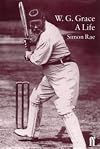
A must read for anyone interested in cricket. One could start it on Boxing Day morning, with the Test burbling on the radio in the background, and you would finish it before the match was completed. Clearly, Dr Grace was a great deal more than the caricuture often portrayed. This is a well written and throughly researched book.
Lists
Awards


You May Also Like


Associated Authors
Statistics
- Works
- 15
- Members
- 364
- Popularity
- #66,013
- Rating
- 4.1
- Reviews
- 6
- ISBNs
- 33