
Kingsley Amis (1922–1995)
Author of Lucky Jim
About the Author
Kingsley Amis is generally considered one of the "angry young men" of the 1950s. He was born in London in 1922 and educated at the City of London School. He received a degree in English language and literature from St. John's College, Oxford, in 1947. Until 1961 Amis lectured in English at show more University College, Swansea, and for the following two years at Cambridge. In 1947 Amis published his first collection of poems, Bright November. Frame of Mind followed in 1953 and Poems: Fantasy Portraits in 1954. His first novel, Lucky Jim (1954), established his reputation as a writer. He followed with That Uncertain Feeling (1956), and I Like It Here (1958). A longtime James Bond devotee, Amis wrote a James Bond adventure after the death of Ian Fleming in 1964. Amis's study of the famous spy was titled The James Bond Dossier (1965). Amis received the Booker Prize for the Old Devils (1986). Amis's later works include Memoirs (1990), and The King's English, a collection of essays on the craft of writing well. Amis was knighted in 1990. He died in 1995. (Bowker Author Biography) show less
Image credit: Courtesy of the NYPL Digital Gallery (image use requires permission from the New York Public Library)
Series
Works by Kingsley Amis
Dear Philip, Dear Kingsley: Starring Alan Bennett & Robert Hardy (BBC Radio Collection) (2002) 7 copies
Take A Girl Like You [1970 film] — Screenwriter — 4 copies
"Journey Into the Past" 2 copies
Mason's Life [short fiction] 2 copies
Colllected letters 2 copies
Egyptologové 1 copy
Kingsley Amis on Drink 1 copy
Amis Kingsley 1 copy
Difficulties with brothers 1 copy
Dear Illusion [short story] 1 copy
Something Strange 1 copy
Who or What Was It? 1 copy
Associated Works
A Truth Universally Acknowledged: 33 Great Writers on Why We Read Jane Austen (2009) — Contributor — 413 copies, 18 reviews
The war of the worlds, The time machine, and selected short stories (1978) — Foreword, some editions — 173 copies
Mister Jelly Roll: The Fortunes of Jelly Roll Morton, New Orleans Creole and "Inventor of Jazz" (1973) — Foreword, some editions — 171 copies, 3 reviews
The lucifer society;: Macabre tales by great modern writers (1972) — Foreword, some editions; Contributor — 51 copies, 1 review
Rejser i tid og rum : en bog om science fiction (1973) — Author, some editions — 12 copies, 1 review
Sylvia Plath's Tomato Soup Cake: A Compendium of Classic Authors' Favourite Recipes (2024) — Contributor — 6 copies
The Green Man [1990 TV series] — Original book — 4 copies
Lucky Jim [1957 film] — Original book — 3 copies
Tagged
Common Knowledge
- Canonical name
- Amis, Kingsley
- Legal name
- Amis, Kingsley William
- Other names
- Markham, Robert (pseudonym)
- Birthdate
- 1922-04-16
- Date of death
- 1995-10-22
- Gender
- male
- Education
- St. John's College, Oxford (BA|1949)
City of London School - Occupations
- writer
author
novelist
university lecturer
army officer (WWII)
college teacher (Wales) (show all 8)
poet
critic - Organizations
- Angry Young Men
Communist Party of Great Britain
Royal Corps of Signals - Awards and honors
- Guest of Honour, Eastercon, UK (1961)
Order of the British Empire (Commander) (1981)
Knight Bachelor (1990) - Relationships
- Amis, Martin (son)
Howard, Elizabeth Jane (second wife)
Larkin, Philip (friend)
Conquest, Robert (friend) - Cause of death
- stroke
- Nationality
- UK
- Birthplace
- Clapham, Wandsworth, London, Middlesex, England, UK
- Places of residence
- London, Middlesex, England, UK
Wales, UK - Place of death
- St Pancras Hospital, London, Middlesex, England, UK
- Burial location
- Golders Green Crematorium, London, Middlesex, England, UK
- Map Location
- England, UK
Members
Reviews
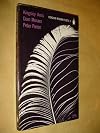
[Penguin Modern Poets 2]: Kingsley Amis, Dom Moraes, Peter Porter.
Kingsley Amis is first up with 25 poems. I Think of Amis first and foremost as a novelist and perhaps that is why I soon got tired of reading his poems. I found it hard to discover a poetic voice, yes there are plenty of good lines, but I never experienced the thrill and the flow when reading one of his poems all the way through. Nothing made me want to re-read them and I was never able to glimpse themes emerging from this show more collection. I didn't wish to spend any more time with him and so I quickly moved onto the 25 poems by Dom Moraes.
By contrast after reading a few of Dom Moraes poems I felt a connection to the poetic voice. A poet who not only comes up with some brilliant lines but weaves them through poems that sing of poetry. I could soon get to grips with the themes that emerged from his poems; alienation certainly, a keen observer of society, perhaps a man who would not quite fit anywhere. You would never call Dom a happy man or an optimistic man; but these thought would apply to many poets, what was peculiar to Moreas was a sense of regret, a sense that things could have been different. He is a poet who looks into his dream world and also a poet that has been guided by his catholic faith, but this seems increasingly in abeyance as I read through this selection.
A few lines from the poem Afternoon Tea are typical of his thoughts and his use of language:
'She poured the tea. Vaguely I watched her hands.
The mask was fitted: In my wandering dream
Were boulder-broken valleys, a strange land.
Remote, astonished, I stood by a stream
Holding her hand in mine. ............'
There is the poet in his own dream world; in a strange land where things could have been different, however he is only vaguely watching her hands pouring the tea, he is not really in this world or the world of his dream. Water is an ongoing theme in his poetry as is rocks and stone as he wavers between a reality and his own inner world.
The second poem in this collection entitled Autobiography is a poem of 4 stanzas of eight lines whose subject is what has led him to write poems and the final stanza makes it clear how he sees himself:
'I have grown up, I think, to live alone
To keep my old illusions, sometimes dream
Glumly that I am unloved and forlorn,
Run away from strangers, often seem
Unreal to myself in the pulpy warmth of a sunbeam.
I have grown up, hand on the primal bone,
Making the poem, taking the word from the stream,
Fighting the sand for speech, fighting the stone.'
The poem 'One of Us' pins down his feelings of alienation, when he recognises another man who is not really part of a group of friends that drink in the same establishment as him. Moreas says 'I never spoke to him' but recognises someone so like himself. There are other poems where he observes lonely figures, outside of the normal friend or family connections, there is nothing malicious or wrong about these men (they are always men) but they do not seem to fit anywhere and then they disappear. There are poems about sex with women, perhaps even love, but 'Snow on a Mountain' starts in typical fashion:
'That dream, her eyes like rocks studded the high
Mountain of her body that I was to climb.
One moment past my hands had swum
The chanting streams of her thighs:
Then I was lost, breathless among the pines.'
Moraes stretches his visionary imagination with a three part poem entitled The Island where he imagines a primitive society that have let their hero become the prey of a dragon; "The unwieldy hero pyred upon the sand" It does not auger well and when conquerers come there is only the dragon to protect them.
This selection is taken from Poems published in 1960 and so is an early collection. Moraes died in 2004. In 1961 he reported on the trial of Eichmann and travelling through Israel and then translating poems from Hebrew gave him a new sense of seriousness and discovery, which you wont find in this early selection. Moraes was a journalist and a travel writer and struggled with alcoholism. Worth further investigation?
Peter Porter is perhaps the most established poet of the three and like Dom Moraes he was not born in Britain; an Australian by birth he emigrated to England in 1951 and by the time his first collection of poems were published in 1961 he was an established member of the "Group" a London based collective of poets. His 26 poems are selections from that first publication titled Once Bitten, Twice Bitten.
The first poem; 'Forefathers' View of Failure' takes as its subject the settlers in Australia building churches and trying to impose their way of life onto the new land. They do take root and set the future for the new country. After this tour de force of a poem the following selections are more concerned with life in Britain and the immediate impression is one of satire. Perhaps only an outsider (non British born) would be able to gather such a clear picture of a society slowly rotting, but determined to hang on to what it has got. In the poem John Marston Advises Anger, Porter compares the Elizabethan society that Marston exposed in his plays with the London scene in 1961 and the poem ends with:
'His had a real gibbet - our death's out of sight
The same thin richness of theses worlds remains -
The flesh packed jeans, the car-stung appetite
Volley on his stage, the cage of discontent.'
The poem Made in Heaven is a satire on a pretty young girl giving up her opportunities to settle for a rich wedding and a well kept life. He satires religion in Who Gets The Popes Nose:
'And high above Rome in a room with wireless
The Pope also waits to die
God is the heat in July
And the iron band of pus tightening in his chest
Of all God's miracles, death is the greatest.'
Death is a recurring themes especially death from cancer; nowhere better depicted than in 'Death in the Pergola Tea-Rooms.' In 'The Historians Call up Pain' he makes the point that today we cannot know the pain that religious martyrs felt and he cannot resist a jibe at his former countrymen in the brilliant; Phar Lap in the Melbourne Museum:
'It is Australian innocence to love
The naturally excessive and be proud
Of a thoroughbred bay gelding who ran fast.'
The poem "Your Attention Please" is a satire on a governments final instruction to its population before an imminent nuclear attack. It was used as a lyric to a song by the Scottish group The Scars; a song that I knew well before discovering it was a poem by Porter. 'Somme and Flanders' is an anti war poem which starts:
'Who am I to speak up for the long dead?
Three uncles I never knew say I'm right.
Their tongues are speaking in my head
I'm related to their flesh by fright.'
There is even a poem entitled 'Reading a Novel' and a wonderfully entitled sonnet; 'A High-Born lady Condenses her Memoirs For Readers Digest.' Arresting images keep on coming and I thoroughly enjoyed almost all of the 26 poems selected here. Most of them work really well and I sort of wish I had read these poems more closely back in the 1960's. I am going to make up for this now; having just ordered a copy of Porters' collected poems.
All in all Penguin Modern Poets 2 is an exhilarating read; it may start off with a questionable poet in Kingsley Amis, but follows with some gorgeous dream-like poems from Dom Moraes, before roaring out with Peter Porter. A five star read. show less
Kingsley Amis is first up with 25 poems. I Think of Amis first and foremost as a novelist and perhaps that is why I soon got tired of reading his poems. I found it hard to discover a poetic voice, yes there are plenty of good lines, but I never experienced the thrill and the flow when reading one of his poems all the way through. Nothing made me want to re-read them and I was never able to glimpse themes emerging from this show more collection. I didn't wish to spend any more time with him and so I quickly moved onto the 25 poems by Dom Moraes.
By contrast after reading a few of Dom Moraes poems I felt a connection to the poetic voice. A poet who not only comes up with some brilliant lines but weaves them through poems that sing of poetry. I could soon get to grips with the themes that emerged from his poems; alienation certainly, a keen observer of society, perhaps a man who would not quite fit anywhere. You would never call Dom a happy man or an optimistic man; but these thought would apply to many poets, what was peculiar to Moreas was a sense of regret, a sense that things could have been different. He is a poet who looks into his dream world and also a poet that has been guided by his catholic faith, but this seems increasingly in abeyance as I read through this selection.
A few lines from the poem Afternoon Tea are typical of his thoughts and his use of language:
'She poured the tea. Vaguely I watched her hands.
The mask was fitted: In my wandering dream
Were boulder-broken valleys, a strange land.
Remote, astonished, I stood by a stream
Holding her hand in mine. ............'
There is the poet in his own dream world; in a strange land where things could have been different, however he is only vaguely watching her hands pouring the tea, he is not really in this world or the world of his dream. Water is an ongoing theme in his poetry as is rocks and stone as he wavers between a reality and his own inner world.
The second poem in this collection entitled Autobiography is a poem of 4 stanzas of eight lines whose subject is what has led him to write poems and the final stanza makes it clear how he sees himself:
'I have grown up, I think, to live alone
To keep my old illusions, sometimes dream
Glumly that I am unloved and forlorn,
Run away from strangers, often seem
Unreal to myself in the pulpy warmth of a sunbeam.
I have grown up, hand on the primal bone,
Making the poem, taking the word from the stream,
Fighting the sand for speech, fighting the stone.'
The poem 'One of Us' pins down his feelings of alienation, when he recognises another man who is not really part of a group of friends that drink in the same establishment as him. Moreas says 'I never spoke to him' but recognises someone so like himself. There are other poems where he observes lonely figures, outside of the normal friend or family connections, there is nothing malicious or wrong about these men (they are always men) but they do not seem to fit anywhere and then they disappear. There are poems about sex with women, perhaps even love, but 'Snow on a Mountain' starts in typical fashion:
'That dream, her eyes like rocks studded the high
Mountain of her body that I was to climb.
One moment past my hands had swum
The chanting streams of her thighs:
Then I was lost, breathless among the pines.'
Moraes stretches his visionary imagination with a three part poem entitled The Island where he imagines a primitive society that have let their hero become the prey of a dragon; "The unwieldy hero pyred upon the sand" It does not auger well and when conquerers come there is only the dragon to protect them.
This selection is taken from Poems published in 1960 and so is an early collection. Moraes died in 2004. In 1961 he reported on the trial of Eichmann and travelling through Israel and then translating poems from Hebrew gave him a new sense of seriousness and discovery, which you wont find in this early selection. Moraes was a journalist and a travel writer and struggled with alcoholism. Worth further investigation?
Peter Porter is perhaps the most established poet of the three and like Dom Moraes he was not born in Britain; an Australian by birth he emigrated to England in 1951 and by the time his first collection of poems were published in 1961 he was an established member of the "Group" a London based collective of poets. His 26 poems are selections from that first publication titled Once Bitten, Twice Bitten.
The first poem; 'Forefathers' View of Failure' takes as its subject the settlers in Australia building churches and trying to impose their way of life onto the new land. They do take root and set the future for the new country. After this tour de force of a poem the following selections are more concerned with life in Britain and the immediate impression is one of satire. Perhaps only an outsider (non British born) would be able to gather such a clear picture of a society slowly rotting, but determined to hang on to what it has got. In the poem John Marston Advises Anger, Porter compares the Elizabethan society that Marston exposed in his plays with the London scene in 1961 and the poem ends with:
'His had a real gibbet - our death's out of sight
The same thin richness of theses worlds remains -
The flesh packed jeans, the car-stung appetite
Volley on his stage, the cage of discontent.'
The poem Made in Heaven is a satire on a pretty young girl giving up her opportunities to settle for a rich wedding and a well kept life. He satires religion in Who Gets The Popes Nose:
'And high above Rome in a room with wireless
The Pope also waits to die
God is the heat in July
And the iron band of pus tightening in his chest
Of all God's miracles, death is the greatest.'
Death is a recurring themes especially death from cancer; nowhere better depicted than in 'Death in the Pergola Tea-Rooms.' In 'The Historians Call up Pain' he makes the point that today we cannot know the pain that religious martyrs felt and he cannot resist a jibe at his former countrymen in the brilliant; Phar Lap in the Melbourne Museum:
'It is Australian innocence to love
The naturally excessive and be proud
Of a thoroughbred bay gelding who ran fast.'
The poem "Your Attention Please" is a satire on a governments final instruction to its population before an imminent nuclear attack. It was used as a lyric to a song by the Scottish group The Scars; a song that I knew well before discovering it was a poem by Porter. 'Somme and Flanders' is an anti war poem which starts:
'Who am I to speak up for the long dead?
Three uncles I never knew say I'm right.
Their tongues are speaking in my head
I'm related to their flesh by fright.'
There is even a poem entitled 'Reading a Novel' and a wonderfully entitled sonnet; 'A High-Born lady Condenses her Memoirs For Readers Digest.' Arresting images keep on coming and I thoroughly enjoyed almost all of the 26 poems selected here. Most of them work really well and I sort of wish I had read these poems more closely back in the 1960's. I am going to make up for this now; having just ordered a copy of Porters' collected poems.
All in all Penguin Modern Poets 2 is an exhilarating read; it may start off with a questionable poet in Kingsley Amis, but follows with some gorgeous dream-like poems from Dom Moraes, before roaring out with Peter Porter. A five star read. show less

Many novelists take to writing about elderly characters when they become old themselves, but Amis was barely in his fifties when he produced this wonderfully grim little black comedy about an ill-assorted group of elderly people who find themselves sharing a house. Of course, he's completely in his element dealing with the stupendously trivial irritations of daily life (who gets to read the Telegraph first, and so on), and only Amis could get away with the grand guignol closing scene. Very show more funny, in a depressing sort of way, and completely English.
I'm not quite sure how this rather minor effort ended up on the 1974 Booker shortlist: it must have been a lean year for the judges, or a very indecisive panel. The prize that year was shared by Nadine Gordimer and Stanley Middleton (an odd couple, if ever there was one...). Beryl Bainbridge's Bottle factory outing was on the shortlist as well. show less
I'm not quite sure how this rather minor effort ended up on the 1974 Booker shortlist: it must have been a lean year for the judges, or a very indecisive panel. The prize that year was shared by Nadine Gordimer and Stanley Middleton (an odd couple, if ever there was one...). Beryl Bainbridge's Bottle factory outing was on the shortlist as well. show less
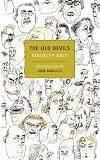
This novel is a story of old friends, married couples in southwestern Wales, and how their lives change when Alun and Rhiannon Weaver return to the country after Alun's long career in London. Alun has for some time been an ambitious media personality whose career resulted in the "popularization" of Wales. He is vaguely blamed for the onslaught of developers and bad architecture in the country, though this seems to me baseless. He's also known for championing the Welsh poet, Brydan, whom I show more suspect is loosely based on Dylan Thomas. Alun's as pure a "shit," Amis's word, as you're likely to come across in English letters. A vile bastard masquerading as a chum. At once upon his return he commences to systematically cuckold most of his friends, whom he then routinely meets the next day at the Bible and Crown for round after round of powerful cirrhotic drinks. Everyone, or almost everyone, in The Old Devils drinks themselves into near insensibility on a daily basis. For what else is there to do in culturally bereft Wales? Peter Thomas was a local college professor in the old days. Back then he seduced and knocked up his student, Rhiannon, still something of a beauty today, whom he promptly left for one Angharad, under the delusion of greener pastures. He's an old fool but at least, unlike Alun, he knows he's an old fool. Peter is now married to the imperious Muriel. He's fat, pushing 70, with a failing heart, and he regrets his hasty youthful choices. In other words, he's still in love with Rhiannon. Then there's Charlie, the book's purest alcoholic, who's been suffering lately from panic attacks, and his wife Sophie, the first old flame to succumb to slick Alun's inexplicable charms. There's also Malcolm Cellan-Davies, more of a Welsh scholar than Alun will ever be, and his wife Gwen, who also falls under Alun's spell. Structurally The Old Devils is a traditional novel; there is nothing new or even innovative about it. There are no sophomoric metafictional tricks, for which I was grateful. The novel beguiles us chiefly through its mastery of technique. It is so sure footed. It makes a virtue of the run on sentence. It was surprising to find amid the rich comedic scenes these stretches of striking descriptive beauty. Amis got the Booker Prize for this novel and one can see why. Here is everything he knows from the writing of, what, twenty novels? Here it is all in one book. The last third I found moving; a surprise since emotion was never something Kingsley Amis's work was known for. He was essentially a comic novelist, like his son. That was another striking thing, the similarity of phrasing between father and son. One can almost imagine them arguing about the merits of a proper sentence during their famous weekly meetings (see MA's Experience). Highly amusing, often LOL funny. Exuberantly recommended. show less
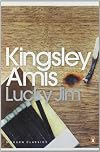
Lucky Jim tells the comic tale of James Dixon, a man of very modest ability and enthusiasm recently appointed lecturer in Medieval History at one of the lesser red brick universities in the 1950s. As he has a two year probationary period, he must make a good impression in the department, especially with its head, Professor Welch. This involves attending awkward social functions in the Professor's home, producing academic work, and avoiding all the potential social disasters and farcical show more mishaps that await him. Two very different love interests provide further source for calamity: Margeret who is another lecturer in the department, and Christine who is already involved with Professor Welch's son.
The set-piece larks are written large and revolve around some excellently conceived faux pas. Slightly more subtle, but no less effective throughout, is the savage skewering of pretensions and personalities, which adds another layer to the humour.
This is undoubtedly a very good comic novel, and has a different style than other academia-based dark humour novels such as Tom Sharpe's Porterhouse Blue, being somewhat less exaggerated and targeting a more realistic world with its satire. Lucky Jim is also probably better suited to contemporary tastes than Sharpe or Waugh's best comic novels, and so I would highly recommend it to anyone with an interest in the subject matter or genre. show less
The set-piece larks are written large and revolve around some excellently conceived faux pas. Slightly more subtle, but no less effective throughout, is the savage skewering of pretensions and personalities, which adds another layer to the humour.
This is undoubtedly a very good comic novel, and has a different style than other academia-based dark humour novels such as Tom Sharpe's Porterhouse Blue, being somewhat less exaggerated and targeting a more realistic world with its satire. Lucky Jim is also probably better suited to contemporary tastes than Sharpe or Waugh's best comic novels, and so I would highly recommend it to anyone with an interest in the subject matter or genre. show less
Lists
Reading LIst (11)
Best Satire (1)
Folio Society (1)
Best Spy Fiction (1)
Favourite Books (1)
. (1)
Nifty Fifties (1)
My TBR (2)
Booker Prize (3)
First Novels (1)
A Novel Cure (1)
United Kingdom (1)
Awards


You May Also Like


Associated Authors
Statistics
- Works
- 104
- Also by
- 49
- Members
- 19,696
- Popularity
- #1,106
- Rating
- 3.6
- Reviews
- 385
- ISBNs
- 525
- Languages
- 14
- Favorited
- 38