
Christopher Ricks
Author of The Oxford Book of English Verse
About the Author
Christopher Ricks is Warren Professor of the Humanities, and Co-director of the Editorial Institute, at Boston University, and a member of the Association of Literary Scholars and Critics.
Image credit: Photo by Frank Beacham
Works by Christopher Ricks
English Poetry and Prose 1540-1674 (Penguin History of Literature, Volume 2) (v. 2) (1970) 62 copies
True Friendship: Geoffrey Hill, Anthony Hecht, and Robert Lowell Under the Sign of Eliot and Pound (2010) 36 copies
Associated Works
The Life and Opinions of Tristram Shandy, Gentleman (-0001) — Introduction, some editions — 8,567 copies, 125 reviews
Paradise Lost [Norton Critical Edition] (1667) — Contributor, some editions — 2,437 copies, 14 reviews
The Poems of T. S. Eliot: Collected and Uncollected Poems (Volume 1) (2015) — Editor — 211 copies, 1 review
The Dylan Companion: A Collection of Essential Writing About Bob Dylan (1990) — Contributor, some editions — 103 copies
Against the Grain: The New Criterion on Art and Intellect at the End of the Twentieth Century (1995) — Contributor — 36 copies
Studies in Bibliography (Vol. 38) — Contributor — 3 copies
Studies in Bibliography (Vol. 18) — Contributor — 2 copies
Studies in Bibliography (Vol. 32) — Contributor — 1 copy
Tagged
Common Knowledge
- Canonical name
- Ricks, Christopher
- Legal name
- Ricks, Sir Christopher Bruce
- Birthdate
- 1933-09-18
- Gender
- male
- Education
- University of Oxford (Balliol College)
- Occupations
- professor
literary critic
scholar - Organizations
- Boston University (Editorial Institute)
University of Bristol
University of Cambridge - Awards and honors
- Fellow, British Academy
Knight Bachelor (2009) - Nationality
- UK
- Birthplace
- Beckenham, London, England, UK
- Places of residence
- London, England, UK
USA - Associated Place (for map)
- London, England, UK
Members
Reviews

When I was sitting down to write something about this book, that Razorlight song ‘America’ came fortuitously on the radio. I've always quite liked it – something about the way he sings ‘All my life / Been watching America…’ as the bass drops from A to D does indeed seem to sum up something essential about the experience of growing up in the UK, subjected to a steady (not unwelcome) drip of American culture. It's not a negative thing, not necessarily, it's just a fact…you show more absorb, through cultural osmosis, the habits, the speech patterns, the preoccupations and the psychic landscape of the United States.
I have a false nostalgia for aspects of my life that never existed: homecoming balls and proms, summer camps, parties after big football games, glances swapped with cheerleaders. I feel I know every square foot of an American high school, from the classrooms, through the locker-lined corridors, into the gymnasium or out on to the bleachers, so well that it's sometimes an effort to remind myself that I never went to one.
The first time I visited New York it felt like stepping on to a movie set – it was one of the most disorienting experiences I can remember. Other cities have landmarks, but New York City is the landmark; I walked around with an enormous grin on my face, recognising everything, and what makes it so bizarre is that it's not just the big stuff (‘Holy shit, this is where they brought down the Stay-Puft Marshmallow Man at the end of Ghostbusters!’), it's everything. The way a woman crosses the street in Tribeca stirs a myriad memories of films and TV shows. Stopping for a bagel at night as the steam pours out of the subway grates: everything you do, every move you make is iconic, laden with preconceptions that have been poured into me since I was tiny.
At school in the late 80s and early 90s, America was like a golden land of magic treats. It was like the future: they would get the best toys and movies weeks before they were released in Europe. They had hundreds of TV channels while we were stuck with just four (well, five after 1997). They had a whole channel just for cartoons! They had a whole channel just for music videos! (Remember when MTV played music videos?) In America, you could get breakfast cereal with marshmallows in it. It's true, Jamie Lloyd's uncle went there on holiday and brought him some back. He brought them in to school to show everyone.
Later, as teenagers, it became fashionable to dislike the US. They're so fat! Why do they talk so loud? Well of course they don't understand sarcasm, over there. What is with the constant patriotism? They have psychologists for their pets. They insist on mispronouncing people's names: Coe-lin. Ahh-nna. Ber-naaard. I met an American once, she asked me if I knew the Queen. HAHAHA! British sketch shows did parodies of American talk shows, parodies which alarmingly would soon be surpassed in ludicrousness by actual American talk shows like Jerry Springer. It was not clear why, exactly, this mood suddenly manifested itself, but it had something to do with the fact that we had all been in awe of America before. When Britpop happened, supplanting the American grunge music that had previously been popular, this cultural inferiority complex found a new expression. I can remember listening to Blur's ‘Magic America’ and feeling that it exactly captured the sophisticated and ironic (as we thought – vapidly sarcastic, I would say now) way all my friends talked:
Bill Barrett has a simple dream
He calls it his Plan B
Where there are buildings in the sky and the air is sugar-free
And everyone is very friendly
Plan B arrived on a holiday
Took a cab to the shopping malls
Bought and ate till he could do neither anymore
Then found love on channel 44…
La la la la la, he wants to go to magic America
La la la la la, he'd like to live in magic America
With all the magic people….
This goes both ways, of course. It is baffling as a European to see the levels of sophistication and respect that are accorded to European products in the US. You only have to look at the way NYRB books are reviewed to see that the most turgid, unreadable nonsense will be greeted with serious nodding and acclamation if it's badly translated from Hungarian and introduced by Jonathan Franzen.
I didn't actually go to the US until quite late, I must have been in my late 20s, and when I did I fell in love with it completely. The space, the food, the lifestyle, the supermarkets, especially the people. American friends regularly complained about the service culture there, but I loved it – I don't care how insincere waiters are, I love being asked how I'm doing and treated with a façade of friendliness; it's infinitely preferable to the English system of ‘What do you want, here it is, fuck off’. (Don't even get me started on Paris.)
I loved it so much that after I got married we spent a month driving round Tennessee for our honeymoon, and then went back the following year and did Virginia. We've tried to go back as often as we can since (though I've still never been to the West Coast, or the hundreds of other places I'd love to see). My initial adulation has certainly faded, but I do think it's very hard not to be deeply inspired by American history, the way the country came into being, the ideals it attempted to embody, the vastness of the country and the extraordinary differences in lifestyle and attitudes found in different places. And hard, too, not to be moved by the situation it finds itself in today, stuck with one of the most egregious systems of inequality in the developed world, social welfare that is bad to nonexistent, and yet shackled with this divisive political system whereby any internal criticism immediately turns into a partisan slanging-match.
This collection, while it sadly doesn't find room for Razorlight or Blur lyrics, is a decent attempt to distil some of these concerns into representative writings from the last few hundred years. It suffers from many of the usual problems of an anthology – being somehow less than the sum of its parts – but it does distinguish itself by including both fiction and non-fiction, from Americans and non-Americans alike. Speeches, diaries, letters, short stories, it's a solid collection which should have plenty to help you work out your own feelings about the United States – envisaged here not so much as a country but as a phenomenon. show less
I have a false nostalgia for aspects of my life that never existed: homecoming balls and proms, summer camps, parties after big football games, glances swapped with cheerleaders. I feel I know every square foot of an American high school, from the classrooms, through the locker-lined corridors, into the gymnasium or out on to the bleachers, so well that it's sometimes an effort to remind myself that I never went to one.
The first time I visited New York it felt like stepping on to a movie set – it was one of the most disorienting experiences I can remember. Other cities have landmarks, but New York City is the landmark; I walked around with an enormous grin on my face, recognising everything, and what makes it so bizarre is that it's not just the big stuff (‘Holy shit, this is where they brought down the Stay-Puft Marshmallow Man at the end of Ghostbusters!’), it's everything. The way a woman crosses the street in Tribeca stirs a myriad memories of films and TV shows. Stopping for a bagel at night as the steam pours out of the subway grates: everything you do, every move you make is iconic, laden with preconceptions that have been poured into me since I was tiny.
At school in the late 80s and early 90s, America was like a golden land of magic treats. It was like the future: they would get the best toys and movies weeks before they were released in Europe. They had hundreds of TV channels while we were stuck with just four (well, five after 1997). They had a whole channel just for cartoons! They had a whole channel just for music videos! (Remember when MTV played music videos?) In America, you could get breakfast cereal with marshmallows in it. It's true, Jamie Lloyd's uncle went there on holiday and brought him some back. He brought them in to school to show everyone.
Later, as teenagers, it became fashionable to dislike the US. They're so fat! Why do they talk so loud? Well of course they don't understand sarcasm, over there. What is with the constant patriotism? They have psychologists for their pets. They insist on mispronouncing people's names: Coe-lin. Ahh-nna. Ber-naaard. I met an American once, she asked me if I knew the Queen. HAHAHA! British sketch shows did parodies of American talk shows, parodies which alarmingly would soon be surpassed in ludicrousness by actual American talk shows like Jerry Springer. It was not clear why, exactly, this mood suddenly manifested itself, but it had something to do with the fact that we had all been in awe of America before. When Britpop happened, supplanting the American grunge music that had previously been popular, this cultural inferiority complex found a new expression. I can remember listening to Blur's ‘Magic America’ and feeling that it exactly captured the sophisticated and ironic (as we thought – vapidly sarcastic, I would say now) way all my friends talked:
Bill Barrett has a simple dream
He calls it his Plan B
Where there are buildings in the sky and the air is sugar-free
And everyone is very friendly
Plan B arrived on a holiday
Took a cab to the shopping malls
Bought and ate till he could do neither anymore
Then found love on channel 44…
La la la la la, he wants to go to magic America
La la la la la, he'd like to live in magic America
With all the magic people….
This goes both ways, of course. It is baffling as a European to see the levels of sophistication and respect that are accorded to European products in the US. You only have to look at the way NYRB books are reviewed to see that the most turgid, unreadable nonsense will be greeted with serious nodding and acclamation if it's badly translated from Hungarian and introduced by Jonathan Franzen.
I didn't actually go to the US until quite late, I must have been in my late 20s, and when I did I fell in love with it completely. The space, the food, the lifestyle, the supermarkets, especially the people. American friends regularly complained about the service culture there, but I loved it – I don't care how insincere waiters are, I love being asked how I'm doing and treated with a façade of friendliness; it's infinitely preferable to the English system of ‘What do you want, here it is, fuck off’. (Don't even get me started on Paris.)
I loved it so much that after I got married we spent a month driving round Tennessee for our honeymoon, and then went back the following year and did Virginia. We've tried to go back as often as we can since (though I've still never been to the West Coast, or the hundreds of other places I'd love to see). My initial adulation has certainly faded, but I do think it's very hard not to be deeply inspired by American history, the way the country came into being, the ideals it attempted to embody, the vastness of the country and the extraordinary differences in lifestyle and attitudes found in different places. And hard, too, not to be moved by the situation it finds itself in today, stuck with one of the most egregious systems of inequality in the developed world, social welfare that is bad to nonexistent, and yet shackled with this divisive political system whereby any internal criticism immediately turns into a partisan slanging-match.
This collection, while it sadly doesn't find room for Razorlight or Blur lyrics, is a decent attempt to distil some of these concerns into representative writings from the last few hundred years. It suffers from many of the usual problems of an anthology – being somehow less than the sum of its parts – but it does distinguish itself by including both fiction and non-fiction, from Americans and non-Americans alike. Speeches, diaries, letters, short stories, it's a solid collection which should have plenty to help you work out your own feelings about the United States – envisaged here not so much as a country but as a phenomenon. show less

There are over sixty essays, extracts and poems in this unwieldy and often self-indulgent guide to the state of the English language in 1990, an update (then) of a similar book that explored the state of English in 1980. I am not surprised the experiment was not repeated in 2000 0r 2010.
The entries are very uneven ranging from obscure poems through literary potboilers and rants to the posturing and preening of pompous academics burnishing their credentials to articles of staggering dullness show more and on to genuinely intelligent and informative articles with honest insights.
There are long periods of boredom and cultural introversion interspersed with a few fascinating gems but the overwhelming impression is of a cultural elite talking to itself somewhat narcissistically without any editorial discipline or preparedness to contextualise.
Looking back on this from the perspective of thirty years of cultural turmoil and wars, the seeds of it all are here if we want to look for them - certainly the activist appropriation of language in the dominant concern with AIDS and the proliferation of -isms and identity concerns.
With 60 or so contributions, it is almost impossible to comment in much detail. There are, of course, the linguistic purists who want a restoration of Latin learning in the schools to underpin grammar (Enoch Powell) and the restorations of right usage but these are relatively few.
There are those at the other extreme (more persuasive) who see language as a fluid and organically developing process where yesterday's solecism can become today's normality if it is consistently used in communication and understood.
In the middle (my preferred breed) are those who just describe without trying to impose value on what they describe although even the describers are not very good at explaining (which is certainly not the same process as judging) what is going on as it is going on.
And there are those, the bane of modern culture, who actively seek to mould language for socio-political purposes, the proof-positive of the great claim that language is essentially not a truth or a virtue but a weapon or a tool in the human struggle for status, power and resources.
George Orwell gets five or six mentions in over 500 pages but we are no longer living in his world of honest use of language. Indeed, since this book's time, Orwell has tended to be used as a weapon himself more often than he is regarded as the standard for a common framework for truth-telling.
While there are many decent academics, dull or not so dull, rising above this tendency to weaponisation, too many do not. The later cultural aggressions surrounding gay rights, BAME discontent and feminism are all played out here as sustained 'ressentiment'.
In fact, the book is to be read as one less about language and more as a psychological source book. Sixty or so different intellectual elite minds talking their book over each other's heads where, in many cases, you can hear behind the verbiage the simple cry - "here, here, look at me!"
From this perspective the tense exchange between linguistic prescriptivists and their opponents and the incursions of identity politics (yes, it really does start around this time and, indeed, comprises the very first section of this book) is unutterably tiresome.
The chaotics are just a reflection of the chaotics of the early stage of globalisation and the rise of a cosmopolitanism that, in cultural terms, should have meant freedom and tolerance within a shared and respected framework but instead would come to mean a nasty struggle for cultural power.
As if to confirm its relationship to power rather than knowledge, the book is strongly orientated towards American culture, use of English and problems and makes the mistake of assuming that English-English and American-English language and culture are more cognate than they are.
This Atlanticist myth is a political construction derived from Churchillian rhetoric but then paradoxically taken up by an academic-intellectual elite towards the end of the last century in obeisance to American progressivism and a racial politics totally alien to the English.
It is a myth that stills drags on us English with its 2020 political context being the recovery of sovereignty but the fighting over its bones by the sinophobic Atlanticist Right and the East Coast-orientated remants of university liberal-leftism still smarting from its recent losses.
In this book you see a culture beginning to oust the old national culture of traditionalism (represented by Enoch Powell and Roger Scruton) and flexing its new elite muscles ready to create the liberal centrism that triumphed before 2008 and collapsed after 2016.
This is not yet at its peak in this book. It is still pushing its way forward. It represents a generation of ambitious intellectuals who know what is right and are angry. One reads some of the articles and feel a deep gloom about what is to come - the Clintons, Blair, political correction, ideology.
Still, we should not disrespect the non-weaponised and non-narcissistic contributions. We are grateful for the relief of tedium. As to tedium, there is a surprising amount of coverage of legal language in American contexts but that is just a reflection of another coming trend - lawfare.
We have Delbridge's review of current Australiian English, Scruton's on the feminist attempt to expropriate the language of dissent and Lesser's informative piece on the history of the language of philanthropy (matched by Keith Thomas' disquisition on the history of letter endings).
There is an extract from a David Lodge novel with its subtle evocation of the fundamentally nasty cultural attitudes that lead to culture wars, Odean's description of the slang of the financial markets with its in-built aggression and Gross' insight into the practice of editing.
There is a descriptive account from Burchfield of how the language of a popular mass market novelist (Archer) and a literary novelist (Brookner) use language, This posits two kinds of English with different purposes and (frankly) of equal value in the context of those purposes.
There is a suggestive piece by Bawtree on why there has been no English high operatic tradition between Purcell and Britten and how this links to language and an excellent piece on the strange linguistic inventions and history of the American entertainment industry magazine 'Variety'.
The book close with Weiner's intelligent account of the attitudinal changes required to create the Second Edition of the Oxford English Dictionary and some examples of linguistic change from Adamson but by then we are exhausted. show less
The entries are very uneven ranging from obscure poems through literary potboilers and rants to the posturing and preening of pompous academics burnishing their credentials to articles of staggering dullness show more and on to genuinely intelligent and informative articles with honest insights.
There are long periods of boredom and cultural introversion interspersed with a few fascinating gems but the overwhelming impression is of a cultural elite talking to itself somewhat narcissistically without any editorial discipline or preparedness to contextualise.
Looking back on this from the perspective of thirty years of cultural turmoil and wars, the seeds of it all are here if we want to look for them - certainly the activist appropriation of language in the dominant concern with AIDS and the proliferation of -isms and identity concerns.
With 60 or so contributions, it is almost impossible to comment in much detail. There are, of course, the linguistic purists who want a restoration of Latin learning in the schools to underpin grammar (Enoch Powell) and the restorations of right usage but these are relatively few.
There are those at the other extreme (more persuasive) who see language as a fluid and organically developing process where yesterday's solecism can become today's normality if it is consistently used in communication and understood.
In the middle (my preferred breed) are those who just describe without trying to impose value on what they describe although even the describers are not very good at explaining (which is certainly not the same process as judging) what is going on as it is going on.
And there are those, the bane of modern culture, who actively seek to mould language for socio-political purposes, the proof-positive of the great claim that language is essentially not a truth or a virtue but a weapon or a tool in the human struggle for status, power and resources.
George Orwell gets five or six mentions in over 500 pages but we are no longer living in his world of honest use of language. Indeed, since this book's time, Orwell has tended to be used as a weapon himself more often than he is regarded as the standard for a common framework for truth-telling.
While there are many decent academics, dull or not so dull, rising above this tendency to weaponisation, too many do not. The later cultural aggressions surrounding gay rights, BAME discontent and feminism are all played out here as sustained 'ressentiment'.
In fact, the book is to be read as one less about language and more as a psychological source book. Sixty or so different intellectual elite minds talking their book over each other's heads where, in many cases, you can hear behind the verbiage the simple cry - "here, here, look at me!"
From this perspective the tense exchange between linguistic prescriptivists and their opponents and the incursions of identity politics (yes, it really does start around this time and, indeed, comprises the very first section of this book) is unutterably tiresome.
The chaotics are just a reflection of the chaotics of the early stage of globalisation and the rise of a cosmopolitanism that, in cultural terms, should have meant freedom and tolerance within a shared and respected framework but instead would come to mean a nasty struggle for cultural power.
As if to confirm its relationship to power rather than knowledge, the book is strongly orientated towards American culture, use of English and problems and makes the mistake of assuming that English-English and American-English language and culture are more cognate than they are.
This Atlanticist myth is a political construction derived from Churchillian rhetoric but then paradoxically taken up by an academic-intellectual elite towards the end of the last century in obeisance to American progressivism and a racial politics totally alien to the English.
It is a myth that stills drags on us English with its 2020 political context being the recovery of sovereignty but the fighting over its bones by the sinophobic Atlanticist Right and the East Coast-orientated remants of university liberal-leftism still smarting from its recent losses.
In this book you see a culture beginning to oust the old national culture of traditionalism (represented by Enoch Powell and Roger Scruton) and flexing its new elite muscles ready to create the liberal centrism that triumphed before 2008 and collapsed after 2016.
This is not yet at its peak in this book. It is still pushing its way forward. It represents a generation of ambitious intellectuals who know what is right and are angry. One reads some of the articles and feel a deep gloom about what is to come - the Clintons, Blair, political correction, ideology.
Still, we should not disrespect the non-weaponised and non-narcissistic contributions. We are grateful for the relief of tedium. As to tedium, there is a surprising amount of coverage of legal language in American contexts but that is just a reflection of another coming trend - lawfare.
We have Delbridge's review of current Australiian English, Scruton's on the feminist attempt to expropriate the language of dissent and Lesser's informative piece on the history of the language of philanthropy (matched by Keith Thomas' disquisition on the history of letter endings).
There is an extract from a David Lodge novel with its subtle evocation of the fundamentally nasty cultural attitudes that lead to culture wars, Odean's description of the slang of the financial markets with its in-built aggression and Gross' insight into the practice of editing.
There is a descriptive account from Burchfield of how the language of a popular mass market novelist (Archer) and a literary novelist (Brookner) use language, This posits two kinds of English with different purposes and (frankly) of equal value in the context of those purposes.
There is a suggestive piece by Bawtree on why there has been no English high operatic tradition between Purcell and Britten and how this links to language and an excellent piece on the strange linguistic inventions and history of the American entertainment industry magazine 'Variety'.
The book close with Weiner's intelligent account of the attitudinal changes required to create the Second Edition of the Oxford English Dictionary and some examples of linguistic change from Adamson but by then we are exhausted. show less
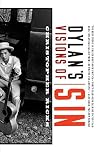
At times playful - at times too playful, so not a five - but with encyclopedic knowledge of Dylan's lyrics, printed and performance, Ricks takes his readers on a tour of Dylan's portrayals of sin, virtue and grace. With the OED particularly to hand there are many times when his arguments are so convincing I am led to fantasize, imagining The Great Man reading him (but would he?) and muttering "bugger, how did he know?" At other times I suspect Ricks' bow is strung too far, and the allusions show more and illustrations approach a degree of tenuousness. Or do they? Certainly Rick's knowledge is greater than mine could dream to be, so maybe it is me not reaching far enough through the annals of literary allusion, influence, and common catchment? Just occasionally, though, Ricks' playing through the smoke rings of Dylan's lyrics, playing on words and half words, becomes exhausting. It has long been however a characteristic of Ricks' approach: ''they had indeed seemed set to be the poem's refrain, and then the poem refrains from them", he observes in T.S. Eliot and Prejudice (12). This is Ricks' hallmark.
Interestingly Ricks, like Milton, is better on the Dark Side of Dylan's Visions of Sin than the bright side of Dylan's Visions of Grace and Virtue. On the other hand Ricks is the first analyst I have read who does not condemn Dyan's "Christian phase" lyrics, the first critic to give those lyrics back to me as having all Dylan's wit and linguistic mastery. Ricks is quick to point the finger at that form of liberalism that is liberal to all beliefs except Christianity: 'the big trap for liberals is always that our liberalism may make us very illiberal about other people's sometimes letting us all down by declining to be liberals' (379). This too is a classic Ricks observation, to be compared with the question asked in T.S. Eliot and Prejudice, 'ought liberal readers of the New York Review to acquiesce so happily in a crass prejudice against Christianity such as they would never countenance against any other religion?' (60).
So not a five, but damned close to it. show less
Interestingly Ricks, like Milton, is better on the Dark Side of Dylan's Visions of Sin than the bright side of Dylan's Visions of Grace and Virtue. On the other hand Ricks is the first analyst I have read who does not condemn Dyan's "Christian phase" lyrics, the first critic to give those lyrics back to me as having all Dylan's wit and linguistic mastery. Ricks is quick to point the finger at that form of liberalism that is liberal to all beliefs except Christianity: 'the big trap for liberals is always that our liberalism may make us very illiberal about other people's sometimes letting us all down by declining to be liberals' (379). This too is a classic Ricks observation, to be compared with the question asked in T.S. Eliot and Prejudice, 'ought liberal readers of the New York Review to acquiesce so happily in a crass prejudice against Christianity such as they would never countenance against any other religion?' (60).
So not a five, but damned close to it. show less
I was living abroad for a long time and suddenly had a hankering to know more about my own country (if you can call it that. It is more like its own continent, not a single country) which I realize was as big as Europe and of which I knew only a about 1/8. This was a nice way to ignite curiosity in something I thought I knew pretty well and eventually did get to know a lot better. Although, I discovered myself and remain a staunch Native Pennsylvanian, stubborn Easterner, and Trans Atlantic show more world citizen. show less
Lists
Awards


You May Also Like


Associated Authors
Statistics
- Works
- 32
- Also by
- 32
- Members
- 2,005
- Popularity
- #12,840
- Rating
- 3.9
- Reviews
- 15
- ISBNs
- 86
- Languages
- 2
- Favorited
- 4