
C. S. Lewis (1898–1963)
Author of The Lion, the Witch and the Wardrobe
About the Author
C. S. (Clive Staples) Lewis, "Jack" to his intimates, was born on November 29, 1898 in Belfast, Ireland. His mother died when he was 10 years old and his lawyer father allowed Lewis and his brother Warren extensive freedom. The pair were extremely close and they took full advantage of this freedom, show more learning on their own and frequently enjoying games of make-believe. These early activities led to Lewis's lifelong attraction to fantasy and mythology, often reflected in his writing. He enjoyed writing about, and reading, literature of the past, publishing such works as the award-winning The Allegory of Love (1936), about the period of history known as the Middle Ages. Although at one time Lewis considered himself an atheist, he soon became fascinated with religion. He is probably best known for his books for young adults, such as his Chronicles of Narnia series. This fantasy series, as well as such works as The Screwtape Letters (a collection of letters written by the devil), is typical of the author's interest in mixing religion and mythology, evident in both his fictional works and nonfiction articles. Lewis served with the Somerset Light Infantry in World War I; for nearly 30 years he served as Fellow and tutor of Magdalen College at Oxford University. Later, he became Professor of Medieval and Renaissance English at Cambridge University. C.S. Lewis married late in life, in 1957, and his wife, writer Joy Davidman, died of cancer in 1960. He remained at Cambridge until his death on November 22, 1963. (Bowker Author Biography) show less
Disambiguation Notice:
C. S. Lewis first published A Grief Observed under the alias "N. W. Clerk". Don't separate that name, unless there will ever be an author called N. W. Clerk turning up.
Series
Works by C. S. Lewis
The Screwtape Letters / Screwtape Proposes a Toast (1942) — Author; Preface — 19,901 copies, 165 reviews
The Pilgrim's Regress: An Allegorical Apology for Christianity Reason and Romanticism (1933) 3,138 copies, 24 reviews
Surprised by Joy / Reflections on the Psalms / The Four Loves / The Business of Heaven (1984) 1,882 copies, 2 reviews
The Discarded Image: An Introduction to Medieval and Renaissance Literature (1964) 1,874 copies, 23 reviews
A Year with C. S. Lewis: Daily Readings from His Classic Works (2003) — Author — 1,536 copies, 10 reviews
The Grand Miracle and Other Selected Essays on Theology and Ethics from God in the Dock (1983) 520 copies
Boxen: The Imaginary World of the Young C. S. Lewis (2008) — Author; Illustrator — 463 copies, 5 reviews
Mere Christianity / The Screwtape Letters / A Grief Observed / The Problem of Pain / Miracles / The Great Divorce (2003) 425 copies, 2 reviews
The Collected Letters of C.S. Lewis, Volume 1: Family Letters, 1905-1931 (1882) 398 copies, 2 reviews
The Magician's Nephew / The Lion, the Witch, and the Wardrobe / The Horse and His Boy (1989) 365 copies, 2 reviews
The Collected Letters of C.S. Lewis, Volume 2: Books, Broadcasts, and the War, 1931-1949 (2004) 329 copies, 1 review
A Book of Narnians: The Lion, the Witch and the Others (Chronicles of Narnia) (1994) 309 copies, 2 reviews
The Abolition of Man / The Great Divorce / Mere Christianity / Miracles / The Problem of Pain / The Screwtape Letters (1978) 308 copies, 1 review
The Chronicles of Narnia: Never Has the Magic Been So Real (Radio Theatre) [Full Cast Drama] (2003) 262 copies, 6 reviews
The Collected Letters of C.S. Lewis, Volume 3: Narnia, Cambridge, and Joy, 1950 - 1963 (2007) 235 copies
The Pilgrim's Regress / Prayer: Letter to Malcolm / Reflections on the Psalms / Till We Have Faces / The Abolition of Man (2002) 159 copies
The C. S. Lewis - 9 Books - Signature Classics Box Set - Includes The C.S. Lewis Journal (2017) 120 copies
The Lion, the Witch and the Wardrobe: (Chronicles of Narnia): Activity Book (2005) 116 copies, 2 reviews
The Chronicles of Narnia: Prince Caspian and the Voyage of the Dawn Treader [1989 BBC TV series] (1989) — Director; Original book — 113 copies, 4 reviews
C. S. Lewis' Little Book of Wisdom: Meditations on Faith, Life, Love, and Literature (2018) 96 copies, 1 review
The Chronicles of Narnia Official Coloring Book: Coloring Book for Adults and Kids to Share (2016) 85 copies
From Narnia to a Space Odyssey : The War of Ideas Between Arthur C. Clarke and C.S. Lewis (2003) 69 copies, 4 reviews
The Lion, the Witch and the Wardrobe / Prince Caspian / The Voyage of the Dawn Treader (1987) 56 copies, 1 review
The Problem of Pain / The Screwtape Letters / The Great Divorce / Mere Christianity (2005) 56 copies, 1 review
C. S. Lewis at War: The Dramatic Story Behind Mere Christianity (Radio Theatre) (2013) 46 copies, 4 reviews
Arthurian Torso: Containing the Posthumous Fragment of the Figure of Arthur & a Commentary on the Arthurian Poems (1948) 39 copies, 1 review
The Complete Chronicles of Narnia: The Classic BBC Radio 4 Full-Cast Dramatisations (2000) — Author — 30 copies, 1 review
C.S. Lewis' Little Instruction Book: A Classic Treasury of Timeless Wisdom and Reflection (Christian Classics Series) (1997) 15 copies
White Christmas (Chronicles of Narnia) 13 copies
The Chronicles of Narnia vol II (2): The Horse and His Boy, The Magicians Nephew, The Last Battle, The Lion of Judah in Never-Never Land (1973) 11 copies
The Voyage of the "Dawn Treader" (BBC Radio Collection: Chronicles of Narnia) (1995) — Author — 9 copies
The Four Loves / Surprised by Joy / A Grief Observed / The Screwtape Letters / The Great Divorce / Mere Christianity (1996) 8 copies
Biographical Works: Surprised by Joy; A Grief Observed; All My Road Before Me; Letters to an American Lady; Letters (4 Volumes) (2017) 7 copies
The Lion the Witch and the Wardrobe | The Horse and His Boy | Prince Caspian | The Voyage of the Dawn Treader (1999) 6 copies
Macmillan paperbacks edition 6 copies
The Chronicles of Narnia, Vol. I 5 copies
Poetry 3 copies
Razão do Cristianismo 3 copies
Sobre cuentos, historias y literatura fantástica: ¡Para que puedas leer mejor y disfrutar más las historias! (Spanish Edition) (2022) 2 copies
"Lewis new" 2 copies
Mere Christianity #3 2 copies
The Chronicles of Narnia Guided Reading Classroom Set (The Lion, the Witch, and the Wardrobe) (1995) 2 copies
Mere Christianity #1 2 copies
Vivisection 2 copies
The Inner Ring 2 copies
Una vida como lector: El gozo de conocer nuevos mundos a través de los ojos de otros (Spanish Edition) (2023) 2 copies
Understanding The Old Testament 2 copies
Trilogia cosmica (Italian Edition) 2 copies
THE LETTERS TO THE CORINTHIANS 2 copies
The C.S. Lewis Essentials Box Set 2 copies
Tanri'nin Uclu Birlik Dogasi 2 copies
Mere Lewis: A Quick Guide to His Books, His Life, and Why He Still Matters--Plus Three Bonus Essays by C. S. Lewis (2017) 2 copies
Problem of Pain/A Grief Observed 2 copies
C.S. Lewis: 55 Life Changing Lessons, Teachings and Inspirational Thoughts by C.S. Lewis (Mere Christianity, The Screwtape Letters, C.S. Lewis Biography) — Author — 2 copies
Christian Reflections 2 copies
CSODA'K 1 copy
George MacDonald Anthology 1 copy
Prince Caspian Audio Book 1 copy
o trono de prata - nárnia 6 1 copy
The Magical Nephew 1 copy
On Grief 1 copy
Ta ohydna siła 1 copy
Eterno Sin Disimulo 1 copy
The screwtape letters 1 copy
Reisen til Malacandra 1 copy
A severe mercy 1 copy
Letters of C. S. Lewis 1 copy
Cztery miłości 1 copy
The silver chair 1 copy
Dieu Au Banc Des Accusés 1 copy
התבוננות ביגון 1 copy
Hroniki Narnii. Poslednyaya bitva. Tri povesti. "Pokoritel zari", ili Plavanie na kray sveta (2017) 1 copy
Lewis classic Museums: From the beginning of the year to the end of the year [paperback](Chinese Edition) (2006) 1 copy
Las Cartas de Screwtape 1 copy
The Horse and his Boy 1 copy
The Þpilgrim's regress 1 copy
Scewtape Letters, The 1 copy
Letters of C.S.Lewis 1 copy
A tearful celebration 1 copy
Om forlatelse og andre essay 1 copy
Oxbridge 2008 1 copy
The Silver Chalice 1 copy
Journal 1 copy
EL VIAJE 1 copy
THE RETURN TO NARNIA 1 copy
The Screw tape Letters - CD 1 copy
Conceptions of God 1 copy
The Lion, the Witch and the Wardrobe; Prince Caspian; The Silver Chair; The Magician's Nephew (1900) 1 copy
Literature 1 copy
De zeebries der eeuwen 1 copy
In Our Tongues 1 copy
The Magician's Nephew / The Lion, the Witch, and the Wardrobe / The Horse and His Boy / Prince Caspian (2004) 1 copy
Anthology 1 copy
Las Crónicas de Narnia 1 copy
Costly Grace 1 copy
Two Titles: 1) The Abolition of Man (Font, 1982); 2) Prayer: Letters to Malcolm (Fontana, 1974). (1974) 1 copy
My Godfather, Letters 1 copy
The Dark Island 1 copy
The Lion, the Witch and the Wardrobe | The Silver Chair | The Magician's Nephew | The Last Battle 1 copy
Narunia Monogatari (The Chronicles of Narnia: The Lion, the Witch and the Wardrobe) Movie brochure 1 copy
The Shoddy Lands 1 copy
Mere Christianity #17 1 copy
Mere Christianity #18 1 copy
Mere Christianity #19 1 copy
Mere Christianity #20 1 copy
Chronicles of Narnia The 1 copy
World's Last Night 1 copy
Cristianismo..¡y nada más! 1 copy
Revelation 1 copy
God and the Dock 1 copy
The splendor of God 1 copy
What is the Gospel 1 copy
Mere Christianity #15 1 copy
The Problem With Pain 1 copy
Prefácio ao Paraíso Perdido 1 copy
RVR, Biblia Reflexiones de C. S. Lewis, Interior a dos colores, Tapa Dura, Comfort Print (Spanish Edition) (2022) 1 copy
Surprised 1 copy
Mere Christianity #16 1 copy
Mere Christianity #14 1 copy
Принц Каспиан; "Покоритель зари", или Плавание на край света; Серебряное кресло; Последняя битва 1 copy
Handprints Set C 1 copy
The Great Divorce / The World's Last Night and Other Essays / A Grief Observed / Abolition of Man (2014) 1 copy
The Companions 1 copy
Mere Christianity #13 1 copy
Mere Christianity #5 1 copy
Mere Christianity #12 1 copy
Mere Christianity #11 1 copy
Mere Christianity #9 1 copy
Mere Christianity #8 1 copy
Mere Christianity #7 1 copy
Mere Christianity #6 1 copy
Mere Christianity #4 1 copy
Of Other Worlds Essays & Stories / Till We Have Faces: A Myth Retold / The Great Divorce (2012) 1 copy
Нарния 1 copy
Associated Works
On the Incarnation: The Treatise De Incarnatione Verbi Dei (0319) — Introduction, some editions — 3,446 copies, 23 reviews
The Chronicles of Narnia: The Lion, the Witch, and the Wardrobe [2005 film] (2005) — Original novel — 1,866 copies, 23 reviews
The Inklings: C. S. Lewis, J. R. R. Tolkien, Charles Williams, and Their Friends (1978) — Contributor — 924 copies, 15 reviews
Watch for the Light: Readings for Advent and Christmas (2004) — Contributor — 903 copies, 10 reviews
Letters to Young Churches: A Translation of the New Testament Epistles (1971) — Introduction, some editions — 868 copies, 2 reviews
The Assassin's Cloak: An Anthology of the World's Greatest Diarists (2000) — Contributor, some editions — 622 copies, 9 reviews
The Chronicles of Narnia Pop-up: Based on the Books by C. S. Lewis (2007) — Contributor — 444 copies, 11 reviews
A Truth Universally Acknowledged: 33 Great Writers on Why We Read Jane Austen (2009) — Contributor — 413 copies, 18 reviews
Understanding The Lord of the Rings: The Best of Tolkien Criticism (2004) — Contributor — 233 copies, 2 reviews
Taliessin through Logres, The Region of the Summer Stars, and Arthurian Torso (1938) 212 copies, 2 reviews
The Moral Life: An Introductory Reader in Ethics and Literature (1999) — Contributor — 205 copies, 2 reviews
The Trials of Theology: Becoming a 'Proven Worker' in a Dangerous Business (2010) — Contributor — 199 copies, 2 reviews
The Chronicles of Narnia: The Complete Series [BBC TV mini-series] (1988) — Original book — 185 copies, 1 review
The Chronicles of Narnia: The Lion, the Witch, and the Wardrobe [1988 BBC TV series] (1988) — Original book — 120 copies, 2 reviews
The Chronicles of Narnia: The Silver Chair [1990 BBC TV series] (1990) — Original book — 102 copies, 1 review
The Graphic Canon of Children's Literature: The World's Greatest Kids' Lit as Comics and Visuals (2014) — Contributor — 101 copies, 1 review
A Reader's Companion to the Hobbit and the Lord of the Rings (1995) — Contributor — 88 copies, 1 review
The Gospel in Dorothy L. Sayers: Selections from Her Novels, Plays, Letters, and Essays (The Gospel in Great Writers) (2018) — Afterword, some editions — 66 copies, 11 reviews
Major British Writers I, Chaucer, Spenser, Shakespeare, Bacon, Donne, Milton, Dryden, Swift, Pope, Johnson, Boswell (Vol (1954) — Contributor — 33 copies
Holding your eight hands; an anthology of science fiction verse (1970) — Contributor — 25 copies, 1 review
On Moral Medicine: Theological Perspectives in Medical Ethics (2012) — Contributor, some editions — 22 copies, 1 review
Rejser i tid og rum : en bog om science fiction (1973) — Author, some editions — 12 copies, 1 review
Interpretations of Shakespeare (British Academy Shakespeare Lectures) (1985) — Contributor — 8 copies
Dystopia Boxed Set: 18 Dystopian Classics in One Edition — Contributor — 1 copy
SFの評論大全集 (別冊奇想天外 4) — Contributor — 1 copy
Tagged
Common Knowledge
- Canonical name
- Lewis, C. S.
- Legal name
- Lewis, Clive Staples
- Other names
- Hamilton, Clive
Clerk, N. W.
Lewis, Jack - Birthdate
- 1898-11-29
- Date of death
- 1963-11-22
- Gender
- male
- Education
- University College, Oxford (BA|1922|BA|1923)
Wynyard School
Campbell College, Belfast
Cherbourg House Preparatory School
Malvern College
private tutors - Occupations
- novelist
essayist
short story writer
literary critic
professor - Organizations
- University of Oxford (Magdalen College)
University of Cambridge (Magdalene College)
Inklings
British Army (WWI) - Awards and honors
- Carnegie Medal (1957)
Sir Israel Gollancz Prize (1937)
British Academy (Fellow, 1955)
Order of the British Empire (Commander, 1951 - declined) - Relationships
- Lewis, W. H. (brother)
Davidman, Joy (wife|deceased)
Gresham, Douglas H. (stepson) - Short biography
- Clive Staples Lewis (29 November 1898 – 22 November 1963) was a British writer and lay theologian. He held academic positions in English literature at both Oxford University (Magdalen College, 1925–1954) and Cambridge University (Magdalene College, 1954–1963). He is best known for his works of fiction, especially The Screwtape Letters, The Chronicles of Narnia, and The Space Trilogy, and for his non-fiction Christian apologetics, such as Mere Christianity, Miracles, and The Problem of Pain.
Lewis and fellow novelist J. R. R. Tolkien were close friends. They both served on the English faculty at Oxford University and were active in the informal Oxford literary group known as the Inklings.[1] According to Lewis's memoir Surprised by Joy, he was baptised in the Church of Ireland, but fell away from his faith during adolescence. Lewis returned to Anglicanism at the age of 32, owing to the influence of Tolkien and other friends, and he became an "ordinary layman of the Church of England".[2] Lewis's faith profoundly affected his work, and his wartime radio broadcasts on the subject of Christianity brought him wide acclaim.
Lewis wrote more than 30 books[3] which have been translated into more than 30 languages and have sold millions of copies. The books that make up The Chronicles of Narnia have sold the most and have been popularised on stage, TV, radio, and cinema. His philosophical writings are widely cited by Christian apologists from many denominations.
In 1956, Lewis married American writer Joy Davidman; she died of cancer four years later at the age of 45. Lewis died on 22 November 1963 from kidney failure, one week before his 65th birthday. In 2013, on the 50th anniversary of his death, Lewis was honoured with a memorial in Poets' Corner in Westminster Abbey. - Cause of death
- kidney failure
- Nationality
- UK
- Birthplace
- Belfast, Ulster, Ireland
- Places of residence
- Cambridge, Cambridgeshire, England, UK
Watford, Hertfordshire, England, UK
Malvern, Worcestershire, England, UK - Place of death
- Oxford, Oxfordshire, England, UK
- Burial location
- Holy Trinity Church, Headington, Oxford, Oxfordshire, England, UK
- Map Location
- Northern Ireland, UK
- Disambiguation notice
- C. S. Lewis first published A Grief Observed under the alias "N. W. Clerk". Don't separate that name, unless there will ever be an author called N. W. Clerk turning up.
Members
Discussions
That hideous hideous strength! in Good Show Sir! — bad science fiction and fantasy covers (November 2025)
Chronicles of Narnia 75th Anniversary… in Folio Society Devotees (November 2025)
Fine Press Edition of Chronicles of Narnia? in Fine Press Forum (August 2023)
Reading That Hideous Strength in July in The Green Dragon (July 2020)
Reading Perelandra in June in The Green Dragon (July 2020)
Reading Out of the Silent Planet in May in The Green Dragon (June 2020)
Lewis Seminar in Friends of Jack (C.S. Lewis) (June 2017)
Mere Christianity in Friends of Jack (C.S. Lewis) (January 2017)
Letters to Malcom in Friends of Jack (C.S. Lewis) (December 2016)
The Four Loves in Friends of Jack (C.S. Lewis) (December 2016)
C. S. Lewis in Legacy Libraries (August 2015)
Favorite Narnia quotes in Book Quotations (December 2014)
Author Grudge Match: Roald Dahl vs. C. S. Lewis in Book talk (March 2014)
50th anniversary of C. S. Lewis' death in Christianity (November 2013)
MAY READ - SPOILERS - Till We Have Faces in The Green Dragon (May 2013)
MAY READ - NO SPOILERS - Till We Have Faces in The Green Dragon (April 2013)
The Holy Spirit in Christianity (June 2012)
April 2012: C. S. Lewis in Monthly Author Reads (May 2012)
Tolkein and Lewis in Friends of Jack (C.S. Lewis) (January 2010)
Group Read - Til We Have Faces in 75 Books Challenge for 2009 (September 2009)
C S Lewis in Philosophy and Theory (January 2008)
Friends of Jack (C.S. Lewis) Message Board in Friends of Jack (C.S. Lewis) (March 2007)
Reviews
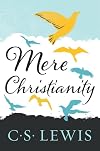
"If we did all that Plato or Aristotle or Confucius told us, we should get on a great deal better than we do. And so what? We never have followed the advice of the great teachers. Why are we likely to begin now? Why are we more likely to follow Christ than any of the others? Because He is the best moral teacher? But that makes it even less likely that we shall follow Him."
A slow starter that once it gets properly going, it really unfolds its wings.
Lewis, as a layman, does a very honourable show more and thorough job at conveying Christian ideas. I particularly like the lack of shallow evangelism. What I mean by that is that it's not constantly talking about Jesus, and if you just love Jesus everything will be allright. That is a huge gripe I have nowadays where it's just Jesus me that, Jesus me this. It's too formulaic, and it absolutely neglects and foregoes the deeper and challenging aspects of faith. Lewis actually wrestles with some of these aspects of belief and makes analogies to break them down for the reader. And he does these things better than most believers and maybe even pastors of today, in my opinion.
"Mere Christianity" actually starts of rather slow, and almost goes around in circles which had me worried, even though I liked the initial subject. The book is divided into four "books" with chapters attached, and it was the second half of the book I loved the most when topics such as marriage, sexuality, sin, virtue, forgiveness, etc. were put under the microscope. The way Lewis conceptualize God and the Holy Spirit were also very insightful to me. Some of the more hardcore theology didn't quite come across that well for me, and didn't always make sense. To be fair, there's a few times where Lewis actually just writes that if this next part does not make sense, skip it.
This is not a book that will convert you - no book will. At the end of the day, you have to be open to the subject, and not sit with crossed arms and a pouty face. Lewis actually used to be an atheist but converted to Christianity, although that journey is not covered in this book. He does state that the book is not a new doctrine, but hopes to bring the reader into a hall where you at some point may find a door of faith that suits you, which you can enter. Personally, I read this book from an agnostic point of view in the midst of a spiritual search. I didn't find a door that fit me yet, as I've gone outside to feel and ponder some more. But I definitely left the hall wiser thanks to this book.
"Pride gets no pleasure out of having something, only out of having more of it than the next man. We say that people are proud of being rich, or clever, or good-looking, but they are not. They are proud of being richer, or cleverer, or better-looking than others [...] It is the comparison that makes you proud: the pleasure of being above the rest. Once the element of competition has gone, pride has gone."
It is worth noting that in some aspects this book is a product of its time, and some of the author's viewpoints on society may not be akin to those of today. It happens a handful of times, but you shouldn't let that deter you from enjoying the book. Some people seem to use these instances as reasons to dismiss anything put forward by Lewis, however, you stand to gain nothing by bringing presentism into this, or anywhere else in life, really. If you're not able to separate the wheat from the chaff, that says more about you than the author.
"Mere Christianity" is one man's faith and how it made sense for him, and should be read as that. I was first introduced to this book on the YouTube channel CSLewisDoodle many years ago, where excerpts were paired with continuous drawings to illustrate the talking points. The talks were quite inspiring, and I am glad that I finally got around to reading the book itself.
It may very well help believers dig further into their faith. It won't do anything for the staunch atheist. And it may very well be illuminating for the seekers and the curious, and make you rub your chin and think. show less
A slow starter that once it gets properly going, it really unfolds its wings.
Lewis, as a layman, does a very honourable show more and thorough job at conveying Christian ideas. I particularly like the lack of shallow evangelism. What I mean by that is that it's not constantly talking about Jesus, and if you just love Jesus everything will be allright. That is a huge gripe I have nowadays where it's just Jesus me that, Jesus me this. It's too formulaic, and it absolutely neglects and foregoes the deeper and challenging aspects of faith. Lewis actually wrestles with some of these aspects of belief and makes analogies to break them down for the reader. And he does these things better than most believers and maybe even pastors of today, in my opinion.
"Mere Christianity" actually starts of rather slow, and almost goes around in circles which had me worried, even though I liked the initial subject. The book is divided into four "books" with chapters attached, and it was the second half of the book I loved the most when topics such as marriage, sexuality, sin, virtue, forgiveness, etc. were put under the microscope. The way Lewis conceptualize God and the Holy Spirit were also very insightful to me. Some of the more hardcore theology didn't quite come across that well for me, and didn't always make sense. To be fair, there's a few times where Lewis actually just writes that if this next part does not make sense, skip it.
This is not a book that will convert you - no book will. At the end of the day, you have to be open to the subject, and not sit with crossed arms and a pouty face. Lewis actually used to be an atheist but converted to Christianity, although that journey is not covered in this book. He does state that the book is not a new doctrine, but hopes to bring the reader into a hall where you at some point may find a door of faith that suits you, which you can enter. Personally, I read this book from an agnostic point of view in the midst of a spiritual search. I didn't find a door that fit me yet, as I've gone outside to feel and ponder some more. But I definitely left the hall wiser thanks to this book.
"Pride gets no pleasure out of having something, only out of having more of it than the next man. We say that people are proud of being rich, or clever, or good-looking, but they are not. They are proud of being richer, or cleverer, or better-looking than others [...] It is the comparison that makes you proud: the pleasure of being above the rest. Once the element of competition has gone, pride has gone."
It is worth noting that in some aspects this book is a product of its time, and some of the author's viewpoints on society may not be akin to those of today. It happens a handful of times, but you shouldn't let that deter you from enjoying the book. Some people seem to use these instances as reasons to dismiss anything put forward by Lewis, however, you stand to gain nothing by bringing presentism into this, or anywhere else in life, really. If you're not able to separate the wheat from the chaff, that says more about you than the author.
"Mere Christianity" is one man's faith and how it made sense for him, and should be read as that. I was first introduced to this book on the YouTube channel CSLewisDoodle many years ago, where excerpts were paired with continuous drawings to illustrate the talking points. The talks were quite inspiring, and I am glad that I finally got around to reading the book itself.
It may very well help believers dig further into their faith. It won't do anything for the staunch atheist. And it may very well be illuminating for the seekers and the curious, and make you rub your chin and think. show less
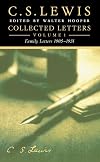
Provides incomparable insights into the man
I ordered this from the UK 9 years ago because I couldn't stand waiting for it to be released in the US, and then I let it sit and gather dust on my shelf until a friend shamed me into reading it by mentioning that he'd finished all 3 volumes. I'm very glad he did, because this was a great read!
Various people have complained about some of the unsavory aspects of Lewis's life that are exposed in these early letters: He's fascinated by weird things, show more snobbish, unkind to his father, and generally not living up to standards he would later propound. But all this had the effect of increasing rather than decreasing my admiration for Lewis, as I was given a front-row seat to the beginnings of a miraculous transformation in his life. As he becomes an adult, suffers the pains of war, copes with his father's death, and is gradually worked upon by faithful friends, the Lewis that we have come to know and love begins to emerge.
Sometimes you encounter an author whose every sentence seems to be remarkable, or nearly so. For me, those authors are Austen, Dickens, and Lewis. By the end of this volume, Lewis the Gifted Writer has made his appearance. This is evident not only in his carefully organized logical arguments but in his humorous asides. How anyone could read the paragraph spanning pages 843 and 844 without laughing out loud is beyond me. And that is in the midst of a careful report about sifting through his late father's belongings!
There's no accounting for taste, but, rather than exhausting me, this 1000-page volume has whetted my appetite, and I began reading my copy of _All My Road Before Me_, immediately after finishing this one. For those who enjoy Lewis's writing and want to understand him better, I give this book my strongest recommendation. show less
I ordered this from the UK 9 years ago because I couldn't stand waiting for it to be released in the US, and then I let it sit and gather dust on my shelf until a friend shamed me into reading it by mentioning that he'd finished all 3 volumes. I'm very glad he did, because this was a great read!
Various people have complained about some of the unsavory aspects of Lewis's life that are exposed in these early letters: He's fascinated by weird things, show more snobbish, unkind to his father, and generally not living up to standards he would later propound. But all this had the effect of increasing rather than decreasing my admiration for Lewis, as I was given a front-row seat to the beginnings of a miraculous transformation in his life. As he becomes an adult, suffers the pains of war, copes with his father's death, and is gradually worked upon by faithful friends, the Lewis that we have come to know and love begins to emerge.
Sometimes you encounter an author whose every sentence seems to be remarkable, or nearly so. For me, those authors are Austen, Dickens, and Lewis. By the end of this volume, Lewis the Gifted Writer has made his appearance. This is evident not only in his carefully organized logical arguments but in his humorous asides. How anyone could read the paragraph spanning pages 843 and 844 without laughing out loud is beyond me. And that is in the midst of a careful report about sifting through his late father's belongings!
There's no accounting for taste, but, rather than exhausting me, this 1000-page volume has whetted my appetite, and I began reading my copy of _All My Road Before Me_, immediately after finishing this one. For those who enjoy Lewis's writing and want to understand him better, I give this book my strongest recommendation. show less

I was so busy reading comic books as a kid, I missed out on a lot of classic children's literature, such as this book about an annoying little drug addict teaming up with Elsa from Frozen to kill Mufasa from The Lion King. And they would have got away with it too if it weren't for those meddling kids!
I have managed to avoid all Narnia books and movies for fifty-eight years (except for one short story by Neil Gaiman about Susan Pevensie), but I had sort of formed a notion of what it was show more about. And the book pretty much starts out as I had imagined, but boy does it get bonkers by the end.
For one thing, I had often heard it was a Christian allegory, but I always assumed it was referring to the Jesus I had grown up with -- you know: turn the other cheek, love thy neighbor, render unto Caesar -- not the Crusades Jesus, colonial Jesus, or the Facebook Jesus who sees some Muslim terrorists and yells, "Not on my watch," as tears off his robes to reveal a WWE wrestler's body and tasks an angel to hold his beer. Are we sure C. S. Lewis isn't American? Because this book smacks of White Christian Nationalism as it puts little white outsiders in power over the indigenous people they encounter on the other side of that innocuous wardrobe, fulfilling their manifest destiny as they destroy anyone in their way.
I also wasn't prepared for the meta narrator and his weird asides. And that Very Special Guest Star in the middle of the book? Hoo boy!
I don't see any reason to read any more books in this series. show less
I have managed to avoid all Narnia books and movies for fifty-eight years (except for one short story by Neil Gaiman about Susan Pevensie), but I had sort of formed a notion of what it was show more about. And the book pretty much starts out as I had imagined, but boy does it get bonkers by the end.
For one thing, I had often heard it was a Christian allegory, but I always assumed it was referring to the Jesus I had grown up with -- you know: turn the other cheek, love thy neighbor, render unto Caesar -- not the Crusades Jesus, colonial Jesus, or the Facebook Jesus who sees some Muslim terrorists and yells, "Not on my watch," as tears off his robes to reveal a WWE wrestler's body and tasks an angel to hold his beer. Are we sure C. S. Lewis isn't American? Because this book smacks of White Christian Nationalism as it puts little white outsiders in power over the indigenous people they encounter on the other side of that innocuous wardrobe, fulfilling their manifest destiny as they destroy anyone in their way.
I also wasn't prepared for the meta narrator and his weird asides. And that Very Special Guest Star in the middle of the book? Hoo boy!
I don't see any reason to read any more books in this series. show less
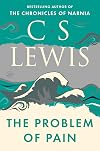
Summary: Lewis's classic work exploring the existence of suffering and pain and how this is possible in a world made and sustained by a good and omnipotent God.
There is some sense a reviewer has when reviewing books like this to feel the mere "poser" and to be simply tempted to say, "read Lewis!" But that would be a very short review! So what I might do is simply suggest a few reasons why we might read Lewis on this subject.
One is that while the experience of suffering, even as Lewis show more acknowledges, requires of us fortitude when we ourselves face it and supportive sympathy when we walk along side friends in the midst of this, there are other times when we must take the larger view and ask "why pain and suffering?" And here, Lewis begins to help us because he observes that this is alike a question for the theist and the materialist. Particularly as we witness both the ravages of disease and the inhumanity of people against each other, it seems that this is a monstrous assault on our sense of the good. The fact that the central figure of Christianity suffered at the hand of evil himself is not in itself an answer to this question but only poses another--why this death?
Some of what Lewis does that is quite helpful is define terms. Omnipotence does not mean that God is able to do what is impossible because of who he is or what he has decreed, to do. For God to be good does not require that he make us happy. We must at least allow that suffering may not be contrary to a God who loves us and seeks our ultimate good.
He also helps us take a hard, and uncomfortable look at human wickedness, in itself, the source of much suffering and pain. We are fallen creatures, not simply by the fault of another but by our own active perversity. We often minimize the "crooked timber" of our own lives even as we displace the focus onto God. Pain, at least has the function of shattering our illusions that all is well, and we are sufficient in ourselves. It also calls us into the belief that holds onto God when there is no benefit in doing so.
He takes on the idea of hell, and perhaps most helpfully says that his aim is not to make the doctrine tolerable, for it is not, but to show that it may be moral, despite the objections raised. He observes that most of us do want to see retributive punishment and that we would find great offense in God forgiving one who remains unrepentant in great wickedness. He notes that eternal may be something different than an endlessly prolonged time. He also cautions against literal interpretations of vivid imagery.
His final chapters consider the question of animal pain and heaven. On animal pain, he cautions that there is much that we do not know about this, nor for that matter the ultimate destiny of animals. On heaven, Lewis observes that whereas hell is privation, heaven is the fulfillment of those deepest longings that we reach for and never quite grasp, that filling of a place in us that nothing has ever filled that being in the presence of God at last fills utterly and beyond measure.
The group with which I discussed this book had one quibble with Lewis. He states that when we reach the maximum of pain, the pain of another does not add to the sum total of the pain. While this may be true at a physical level, we did wonder about the emotional pain we experience when we witness the sufferings to others, particularly those inflicted by human cruelty. It also raises a question about the suffering of Christ. Was the pain he experienced as sin-bearer of humanity (if we believe this) any greater than bearing the sins of just one person? There was something in the way Lewis framed this that was unsatisfying, even if logically true.
This summer, the group I mentioned will probably be reading A Grief Observed, where all of Lewis's ideas are tested in the crucible of the loss of his wife Joy. It will be interesting to see if this changed his thinking in any way, or to what extent his ideas helped him. Stay tuned! show less
There is some sense a reviewer has when reviewing books like this to feel the mere "poser" and to be simply tempted to say, "read Lewis!" But that would be a very short review! So what I might do is simply suggest a few reasons why we might read Lewis on this subject.
One is that while the experience of suffering, even as Lewis show more acknowledges, requires of us fortitude when we ourselves face it and supportive sympathy when we walk along side friends in the midst of this, there are other times when we must take the larger view and ask "why pain and suffering?" And here, Lewis begins to help us because he observes that this is alike a question for the theist and the materialist. Particularly as we witness both the ravages of disease and the inhumanity of people against each other, it seems that this is a monstrous assault on our sense of the good. The fact that the central figure of Christianity suffered at the hand of evil himself is not in itself an answer to this question but only poses another--why this death?
Some of what Lewis does that is quite helpful is define terms. Omnipotence does not mean that God is able to do what is impossible because of who he is or what he has decreed, to do. For God to be good does not require that he make us happy. We must at least allow that suffering may not be contrary to a God who loves us and seeks our ultimate good.
He also helps us take a hard, and uncomfortable look at human wickedness, in itself, the source of much suffering and pain. We are fallen creatures, not simply by the fault of another but by our own active perversity. We often minimize the "crooked timber" of our own lives even as we displace the focus onto God. Pain, at least has the function of shattering our illusions that all is well, and we are sufficient in ourselves. It also calls us into the belief that holds onto God when there is no benefit in doing so.
He takes on the idea of hell, and perhaps most helpfully says that his aim is not to make the doctrine tolerable, for it is not, but to show that it may be moral, despite the objections raised. He observes that most of us do want to see retributive punishment and that we would find great offense in God forgiving one who remains unrepentant in great wickedness. He notes that eternal may be something different than an endlessly prolonged time. He also cautions against literal interpretations of vivid imagery.
His final chapters consider the question of animal pain and heaven. On animal pain, he cautions that there is much that we do not know about this, nor for that matter the ultimate destiny of animals. On heaven, Lewis observes that whereas hell is privation, heaven is the fulfillment of those deepest longings that we reach for and never quite grasp, that filling of a place in us that nothing has ever filled that being in the presence of God at last fills utterly and beyond measure.
The group with which I discussed this book had one quibble with Lewis. He states that when we reach the maximum of pain, the pain of another does not add to the sum total of the pain. While this may be true at a physical level, we did wonder about the emotional pain we experience when we witness the sufferings to others, particularly those inflicted by human cruelty. It also raises a question about the suffering of Christ. Was the pain he experienced as sin-bearer of humanity (if we believe this) any greater than bearing the sins of just one person? There was something in the way Lewis framed this that was unsatisfying, even if logically true.
This summer, the group I mentioned will probably be reading A Grief Observed, where all of Lewis's ideas are tested in the crucible of the loss of his wife Joy. It will be interesting to see if this changed his thinking in any way, or to what extent his ideas helped him. Stay tuned! show less
Lists
Tom's Bookstore (1)
Have read (1)
Deathreads (1)
Winter Books (1)
Read in 2023 (1)
Carole's List (1)
Favourite Books (1)
Read in 2011 (1)
. (1)
Read in 2006 (1)
Robin (1)
Books with Twins (1)
BBC Top Books (1)
Formative books (1)
Lista d2 (1)
Spiritual Growth (1)
Tour of Ireland (1)
READ IN 2021 (1)
BBC Big Read (1)
Read in 2021 (1)
Princess Tales (1)
Slightly Foxed 2 (1)
Litature (1)
Elementary Reads (1)
BitLife (1)
WISHLIST (1)
Books I've read (1)
Ambleside Books (16)
Favourite Books (4)
Five star books (4)
Sonlight Books (5)
um actually (5)
Overdue Podcast (3)
Elevenses (3)
Folio Society (3)
Books About Boys (3)
Nifty Fifties (8)
1950s (9)
Books Read in 2014 (10)
Generation Joshua (14)
Unread books (15)
Christianity (6)
Read in 1999 (7)
Best Young Adult (7)
Pageturners (3)
1930s (2)
al.vick-series (1)
Christmas Books (1)
Witchy Fiction (2)
Best Audiobooks (2)
1970s (2)
Best First Lines (2)
Read in 2003 (2)
4th Grade Books (1)
Epistolary Books (1)
Read These Too (1)
Grief (1)
. (2)
Favorite Series (2)
Read in 2020 (2)
2024-25 reading (2)
Best Satire (2)
Winter Books (2)
BBC Big Read (2)
1940s (2)
1960s (2)
Book club books (2)
el (2)
BookTok Adult (2)
Ambleside Year 8 (2)
Comfort Reads (2)
Awards


You May Also Like


Associated Authors
Statistics
- Works
- 535
- Also by
- 75
- Members
- 523,861
- Popularity
- #3
- Rating
- 4.0
- Reviews
- 5,106
- ISBNs
- 4,477
- Languages
- 46
- Favorited
- 1,506

