
Kenneth Muir (1)
Author of Shakespeare: The Comedies: A Collection of Critical Essays
For other authors named Kenneth Muir, see the disambiguation page.
Works by Kenneth Muir
Shakespeare Survey 30 Henry IV to Hamlet : An Annual Survey of Shakespearian Study and Production (1977) 11 copies
Shakespeare Survey 33 King Lear : An Annual Study of Shakespearian Study and Production (1980) 10 copies
The Life and Letters of Sir Thomas Wyatt (English Texts & Studies) (1963) — Author — 6 copies, 1 review
Sir Thomas Wyatt and his circle; unpublished poems edited from the Blage manuscript (1961) — Editor — 4 copies
Shakespeare, man of the theater : proceedings of the Second Congress of the International Shakespeare Association, 1981 (1983) — Editor — 1 copy
Keats and Hazlitt 1 copy
Associated Works
4 Plays: Hamlet; King Lear; Macbeth; Othello (1982) — Editor, some editions — 1,267 copies, 2 reviews
Essays on Shakespeare and Elizabethan drama in honor of Hardin Craig (1962) — Contributor — 6 copies
"A Poet and a filthy Play-maker": New Essays on Christopher Marlowe (AMS Studies in the Renaissance) (1988) — Contributor — 4 copies
"Fanned and winnowed opinions" : Shakespearean essays presented to Harold Jenkins (1987) — Contributor — 3 copies
Racine: Phaedra, Andromache, Berenice, Athaliah, Britannicus — Editor, some editions — 1 copy
Tagged
Common Knowledge
There is no Common Knowledge data for this author yet. You can help.
Members
Reviews

My honors thesis at Amherst College included Wyatt, "The Uses of Prosody in Reading Wyatt, Donne, Spenser and Milton." My advisor Richard Cody had undergrad degree from London University, and his Ph.D. from U. Minn, where I would proceed for my graduate study, my doctoral thesis advised by Donne expert Leonard Unger, Saul Bellow's best friend there.
My senior chapter on Wyatt begins with W.E. Simonds' on Wyatt's best sonnet, "Whoso list to hunt," that "the versification [is] often rough and show more faulty." I add, that's true throughout Wyatt, in his failures as well as his best. Some critics say Wyatt mainly achieved as a translator and innovator of Italian and French verse.
His best sonnet follows the convention of "deer"/ "dear," loving like hunting, of which he is wearied,
Whoso list to hunt, I know where is an hind,
But as for me, helas, I may no more,
The vain travail hath wearied me so sore,
I am of the last that come behind....
I leave off therefore,
Since in a net I seek to hold the wind.
And ends with a reference to Caesar's Latin and his private deer:
"Noli me tangere, for Caesar's I am,
And wild for to hold, though I seem tame."
This last line is brilliant, and characteristic of Wyatt's prosody, with its medial
caesura: " hold [] though," both stressed; and its anapaest, "for to hold," and the spondaic
end rhyme, "seem [] tame," imaginative rhyme for "I am."
Wyatt's prosodic devices, monorhymes and medial casuras, produce linear parallelism, or less forward movement to the poem as a whole, hence less pointed ness in the climax, always at the end in sonnets, though not in Donne, where "The Apparition" climaxes in the middle. show less
My senior chapter on Wyatt begins with W.E. Simonds' on Wyatt's best sonnet, "Whoso list to hunt," that "the versification [is] often rough and show more faulty." I add, that's true throughout Wyatt, in his failures as well as his best. Some critics say Wyatt mainly achieved as a translator and innovator of Italian and French verse.
His best sonnet follows the convention of "deer"/ "dear," loving like hunting, of which he is wearied,
Whoso list to hunt, I know where is an hind,
But as for me, helas, I may no more,
The vain travail hath wearied me so sore,
I am of the last that come behind....
I leave off therefore,
Since in a net I seek to hold the wind.
And ends with a reference to Caesar's Latin and his private deer:
"Noli me tangere, for Caesar's I am,
And wild for to hold, though I seem tame."
This last line is brilliant, and characteristic of Wyatt's prosody, with its medial
caesura: " hold [] though," both stressed; and its anapaest, "for to hold," and the spondaic
end rhyme, "seem [] tame," imaginative rhyme for "I am."
Wyatt's prosodic devices, monorhymes and medial casuras, produce linear parallelism, or less forward movement to the poem as a whole, hence less pointed ness in the climax, always at the end in sonnets, though not in Donne, where "The Apparition" climaxes in the middle. show less
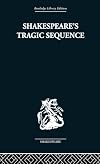
Essays on Julius Caesar; Hamlet; Othello; Kink Lear; Macbeth; Antony and Cleopatra; Coriolanus; Timon of Athens.
You May Also Like
Associated Authors
Statistics
- Works
- 58
- Also by
- 18
- Members
- 576
- Popularity
- #43,501
- Rating
- 4.0
- Reviews
- 2
- ISBNs
- 144
- Languages
- 2