
Charles Williams (1) (1886–1945)
Author of Descent into Hell: A Novel
For other authors named Charles Williams, see the disambiguation page.
About the Author
Charles Williams (1886-1945) joined, in 1908, the staff of the Oxford University Press, the publishing house in which he worked for the rest of his life. Throughout these years, poetry, novels, plays, biographies, history, literary criticism, and theology poured from his pen. At the beginning of show more the Second World War the publishing house was evacuated to Oxford where, in addition to his own writing and his editorial work for the Press, he taught in the University. show less
Series
Works by Charles Williams
Taliessin through Logres, The Region of the Summer Stars, and Arthurian Torso (1938) 212 copies, 2 reviews
The Arthurian Poems of Charles Williams: Taliessin Through Logres & The Region of the Summer Stars (1991) 49 copies
Arthurian Torso: Containing the Posthumous Fragment of the Figure of Arthur & a Commentary on the Arthurian Poems (1948) 39 copies, 1 review
Charles Williams Omnibus: War in Heaven / Many Dimensions / The Place of the Lion / Shadows of Ecstasy / The Greater Trumps / Descent into Hell / All Hallows' Eve / Et in… (2012) 15 copies, 1 review
To Michal from Serge: Letters from Charles Williams to His Wife, Florence, 1939-1945 (2002) 6 copies
The passion of Christ: Being the gospel and narrative of the passion with short passages taken from the saints and doctors of the church (1939) 6 copies
Grab and Grace; or, It's the Second Step (Companion and Sequel to The House by the Stable) (2018) 3 copies
The way of exchange 1 copy
Associated Works
Tales Before Narnia: The Roots of Modern Fantasy and Science Fiction (2008) — Contributor — 126 copies, 3 reviews
Shadows from a Veiled Creation: Classic Tales of Supernatural Fiction in the Christian Tradition (2006) — Contributor — 2 copies
Tagged
Common Knowledge
- Legal name
- Williams, Charles Walter Stansby
- Birthdate
- 1886-09-20
- Date of death
- 1945-05-15
- Gender
- male
- Education
- St Albans Grammar School, St Albans, Hertfordshire, UK
University College London - Occupations
- editor
playwright
novelist
literary critic
poet - Organizations
- Inklings
Fellowship of the Rosy Cross
Oxford University Press
Companions of the Co-Inherence - Awards and honors
- Honorary MA (University of Oxford)
- Relationships
- Conway, Florence (wife)
Williams, Michael (son)
Lewis, C. S. (friend)
Wall, J. Charles (uncle) - Nationality
- UK
- Birthplace
- St. Albans, Hertfordshire, England, UK
- Places of residence
- London, Middlesex, England, UK
Oxford, Oxfordshire, England, UK - Place of death
- Oxford, Oxfordshire, England, UK
- Burial location
- Holywell Cemetery, Oxford, Oxfordshire, England, UK
- Map Location
- England, UK
Members
Discussions
The Place of the Lion - Charles Williams Group Read in Inklings (May 2021)
Reviews

On this, my second foray into the labyrinth of Charles Williams's mind, I find myself still wondering what to make of the man. His work has always been described to me vaguely as "dark" (though he has the saving grace, literarily speaking, of being known as one of the Inklings and that is the principal reason I read him). In The Greater Trumps I noticed an oddly opaque quality to his spirituality, which he of course uses to great effect, building the tension to create a thriller of unusual show more depth. There is something unpredictable and almost occultic about Williams's imagination; it gives me a sense of ominous dread. The gates of Hell might just prevail against us.
War in Heaven, arguably Williams's best-known novel, is a combination of orthodoxy and bold upsets. It almost convinces you at the beginning that it's going to be a murder mystery, until Williams shifts gears abruptly and we have the murderer talking about his crime in the calmest manner imaginable in the next chapter. This is going to be much darker than mere murder, the reader intuits, and so it is. I think Williams is about as far as I'll go in the literature of horror.
This is Williams's contribution to the mythology of the Holy Grail (or, as he calls it, the Graal). In his version, the Graal is an object that has accidentally absorbed a great amount of mystical energy by being in the right place at the right time; in itself it is nothing, but it contains incredible power. The action is centered around it, and part of the tension comes from our lack of knowledge regarding what it can really do.
Fascinating, too, are the attempts to unmake the Graal (and the idea that the opposite of God is non-being). Some of the villains want to possess it and use its spiritual power in their Satanic rites, while the more farseeing wish only for its utter and complete obliteration. There is an intense scene in which, under attack from dark forces, the physical matter of the Graal actually starts shimmering away—until prayer shores it up again and it "defends itself." Destruction and annihilation negate Creation and are thus the final goals of the enemies of God.
And yes, God. He is here, of course, but then again He isn't. His Graal is very much present, and there are some words of Scripture that the Archdeacon repeats throughout the book, but on the whole Heaven seems oddly silent against the roar of Hell. This adds, of course, to the unsettling tone of the story. If God isn't there to fight for us in the face of this monstrous evil, we are most certainly doomed.
Glancing through the short bio on Williams in this copy, I see that he wrote other works, including a theological treatise on the Holy Spirit. Somehow I'm not surprised. He has a fascination—some, like J. R. R. Tolkien, would say an over-fascination—with spiritual warfare and the powers and principalities of the unseen realm. I wonder if his treatise is biblically sound? I can deduce some things about his beliefs from his fiction, but how much is his sense of dramatic mood coloring his real beliefs? I would like to read more of his work.
In the midst of the element of horror and spiritual warfare, there are tiny pinpricks of humor. And yet they have a profundity behind them too—like when one of the villains is told, in quite an offhand manner by an apparently ignorant person, that Satanists are just about on the level of the clerk at a brothel. Or when the Archdeacon comments, "I should never dream of relying on people who made a practice of defying God—in any real sense. They'd be almost bound to lose all sense of proportion" (235–6). Indeed!
I haven't read The Da Vinci Code so I can't venture any comparisons, though from seeing the film I can pick out some similarities. But I think they are superficial at most; based on the samples of Dan' Brown's writing that I've read and the various reviews that have picked him apart, I'd say the main difference between Brown and Williams is that Williams can actually write and there is actually some theological intelligence undergirding his action scenes. I get the sense that there are very real foundations to his thought that I am just not astute enough to really unearth.
I plan to read more of Williams books, but spaced out from one another and over a long period of time. I don't know if I will ever really understand him completely, but he certainly knows the secrets of suspense, and the theological elements give his stories an added interest. An unusual book. show less
War in Heaven, arguably Williams's best-known novel, is a combination of orthodoxy and bold upsets. It almost convinces you at the beginning that it's going to be a murder mystery, until Williams shifts gears abruptly and we have the murderer talking about his crime in the calmest manner imaginable in the next chapter. This is going to be much darker than mere murder, the reader intuits, and so it is. I think Williams is about as far as I'll go in the literature of horror.
This is Williams's contribution to the mythology of the Holy Grail (or, as he calls it, the Graal). In his version, the Graal is an object that has accidentally absorbed a great amount of mystical energy by being in the right place at the right time; in itself it is nothing, but it contains incredible power. The action is centered around it, and part of the tension comes from our lack of knowledge regarding what it can really do.
Fascinating, too, are the attempts to unmake the Graal (and the idea that the opposite of God is non-being). Some of the villains want to possess it and use its spiritual power in their Satanic rites, while the more farseeing wish only for its utter and complete obliteration. There is an intense scene in which, under attack from dark forces, the physical matter of the Graal actually starts shimmering away—until prayer shores it up again and it "defends itself." Destruction and annihilation negate Creation and are thus the final goals of the enemies of God.
And yes, God. He is here, of course, but then again He isn't. His Graal is very much present, and there are some words of Scripture that the Archdeacon repeats throughout the book, but on the whole Heaven seems oddly silent against the roar of Hell. This adds, of course, to the unsettling tone of the story. If God isn't there to fight for us in the face of this monstrous evil, we are most certainly doomed.
Glancing through the short bio on Williams in this copy, I see that he wrote other works, including a theological treatise on the Holy Spirit. Somehow I'm not surprised. He has a fascination—some, like J. R. R. Tolkien, would say an over-fascination—with spiritual warfare and the powers and principalities of the unseen realm. I wonder if his treatise is biblically sound? I can deduce some things about his beliefs from his fiction, but how much is his sense of dramatic mood coloring his real beliefs? I would like to read more of his work.
In the midst of the element of horror and spiritual warfare, there are tiny pinpricks of humor. And yet they have a profundity behind them too—like when one of the villains is told, in quite an offhand manner by an apparently ignorant person, that Satanists are just about on the level of the clerk at a brothel. Or when the Archdeacon comments, "I should never dream of relying on people who made a practice of defying God—in any real sense. They'd be almost bound to lose all sense of proportion" (235–6). Indeed!
I haven't read The Da Vinci Code so I can't venture any comparisons, though from seeing the film I can pick out some similarities. But I think they are superficial at most; based on the samples of Dan' Brown's writing that I've read and the various reviews that have picked him apart, I'd say the main difference between Brown and Williams is that Williams can actually write and there is actually some theological intelligence undergirding his action scenes. I get the sense that there are very real foundations to his thought that I am just not astute enough to really unearth.
I plan to read more of Williams books, but spaced out from one another and over a long period of time. I don't know if I will ever really understand him completely, but he certainly knows the secrets of suspense, and the theological elements give his stories an added interest. An unusual book. show less

All Hallow's Eve was the last of Charles Williams' completed novels, first published in the year of his death, 1945. It begins just after the deaths of two young women, and follows their persisting consciousnesses through "the City" (which is London only as a phantom skin of a mystical heavenly Jerusalem) throughout the book. At the same time as the novel elaborates this perspective of the deceased, it supplies a parallel narrative among their survivors: one's husband who is a diplomatic show more functionary, his friend an art painter, and the painter's fiancee--a former schoolmate of the two dead characters.
The central plot tension of the book is constructed around Simon the Clerk, an aspiring antichrist of impressive talents and no sympathetic qualities whatsoever. The villain's "Jewishness" is emphasized in ways that gave me a wince or two, but were doubtless theologically important to Williams. Like the other "Aspects of Power" novels, this one is an urban fantasy that predates the genre, and it features the kind of fell sorcery that crops up in the earlier books. It clothes supernatural events in the sort of finely-crafted impressionistic prose the author had deployed in Descent Into Hell.
The Eerdmans edition I read had a testimonial introduction by T.S. Eliot, in which he extolled Williams' personal virtues, and briefly discussed the mystical doctrine and psychological insight in Williams' works. There is enough reference to the contents of the novel as if the reader were familiar with it that the Eliot intro might be better enjoyed after reading the book--not for any worry of spoilers, but just for its own appreciation.
By curious chance (?) I read All Hallow's Eve just a few weeks after The Third Policeman. Now I may need to go re-read UBIK. It seems like somebody is trying to tell me something. Did I actually not survive my recent bicycle crash? Maybe it's just that time of year. After all, everybody's going to die, and we're all of us just stories anyway. show less
The central plot tension of the book is constructed around Simon the Clerk, an aspiring antichrist of impressive talents and no sympathetic qualities whatsoever. The villain's "Jewishness" is emphasized in ways that gave me a wince or two, but were doubtless theologically important to Williams. Like the other "Aspects of Power" novels, this one is an urban fantasy that predates the genre, and it features the kind of fell sorcery that crops up in the earlier books. It clothes supernatural events in the sort of finely-crafted impressionistic prose the author had deployed in Descent Into Hell.
The Eerdmans edition I read had a testimonial introduction by T.S. Eliot, in which he extolled Williams' personal virtues, and briefly discussed the mystical doctrine and psychological insight in Williams' works. There is enough reference to the contents of the novel as if the reader were familiar with it that the Eliot intro might be better enjoyed after reading the book--not for any worry of spoilers, but just for its own appreciation.
By curious chance (?) I read All Hallow's Eve just a few weeks after The Third Policeman. Now I may need to go re-read UBIK. It seems like somebody is trying to tell me something. Did I actually not survive my recent bicycle crash? Maybe it's just that time of year. After all, everybody's going to die, and we're all of us just stories anyway. show less
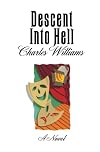
This is not an easy book. In fact, it is a very difficult book on two grounds - the style and the content. But it is a minor masterpiece that deserves much wider readership.
The style owes something to its period. The emotionally cold world of 1930s Britain. It is cerebral. The artistry - like the play at the centre of the first half - is classical and functional. Conversations can seem rhetorical and clipped. The approach to the supernatural is 'Roman' rather than romantic.
Williams is not show more merely a highly educated Christian but he has read his Dante and his classics. His readership is uncompromisingly assumed to know the 'canon' - a barrier in itself to post-modern man.
I found it very difficult and only mastered the style, to the extent that I did, by imagining it first as part-poetic and second to be read out aloud, perhaps on occasions declaimed. As one reads, one senses quotation after quotation for the cognoscenti. This calls for a critical edition.
I came to this book as a result of the enthusiasm of the literary historian Glen Cavaliero, whose ‘The Supernatural in English Fiction’ (reviewed elsewhere on GoodReads) praised Williams for his startling portrayal of the supernatural.
Williams’ books are not easy to find in modern London so I had to resort, not to the edition noted here, but to an old post-war standard edition from Faber & Faber, which is unusually defensive about its limited appeal on the dust jacket, obtained by rummaging through the shelves of our local antiquarian bookshop.
Williams writes as a High Anglican, an Elizabethan Settlement Christian, whose theological commitment is deep, so deep that I will confess that I could not always understand it.
There are obscurities, arrogances almost. The cold word play might alienate many but it is worth persevering – to the point, in my case, where I might well choose to pick up this book again in ten years and know that I will see the great deal that was missed on first reading.
Where his genius lies is in the literary elision of a recognisable material reality into the spiritual realm.
I have seen no writing like this – perhaps the equally difficult and intense but very un-Christian John Cowper Powys might come close and perhaps there is something of the chilled intellect and emotional desert of the world of Brief Encounter in it, but it is rare to find something that can convey so effectively not what we might feel like if we met a ghost but what it is to be a ghost, as a rational possibility.
And that is the point – Williams makes supernaturalism vividly possible, based on persons who are real rather than merely allegorical (though there is a dash of minor key allegory in each).
Centred in a place embedded in history – the appropriately named Battle Hill – the book mixes up space, time and other worlds with more panache than the usual English business of going through a cupboard door, climbing into a police box or getting on a magical train.
The continuity of an existence in which the natural and the supernatural flow ‘naturally’ into one another, all providentially one in space-time with Zion and Gehenna embedded within the Republic (our material world of work and more or less orderly administration), is masterfully handled.
Spirits co-exist who are barely aware or are unaware of each other. A building may be built and not built at the same time. A spirit who dies in one place in time is met much later in time as if scarcely any time had passed.
The occasion for the story is a play at a country house in a village. Far away is the Big City. Journeys between village and City have meaning. The world of work has ultimate meaning.
But the play is the thing – a rather conventional poetic affair that sets off the more fantastic narrative that centres on, amongst others, the ghost of a beaten man, a woman troubled by a doppelganger, a succubus created by a man whose destiny is hell and an earthy and sinister Lilith figure.
The play is to its writer, what the world is to God - a formal affair with poetry and beauty added. Between the formalities, the word play and the disquisitions are moments of exceptional expressive writing.
We see a determined leaden journey to suicide, the ghost that slowly comes to terms with his new world without ever truly realising what he is, the descent into madness or evil (as distance from God) of one character, the haunting but dessicated temptation to lust (in its pure, not sexual sense) of another.
At the bottom of all this is an attempt to express an inexpressible – the ‘mysterium tremendum’ of Christianity. This book does not exist without the author’s faith, intellectualised perhaps but only because the matters of which he writes are so deep that any explanation requires the dignity of intellect, rather than the expression of sentiment. It is a standing rebuke to shallow sentiment.
Rather than do the impossible and try to explain what I might think Williams means, I will hone in one central idea – and the title of a central chapter - ‘The Doctrine of Substituted Love’. What this is, in essence, is redemption through charity where the pain and suffering of another can be taken through will and in trust that another will take yours.
Pauline who wills her own redemption (God is referred to only elliptically throughout) is aided by two ‘saintly’ figures – the poet-playwright Stanhope who introduces her to the Doctrine and her aunt, Mrs Anstruther, an aged person close to the end of existence who is ready for the next stage. The hope for and faith in an eternal redemption is to be expressed through charity.
The character of Wentworth, the darkest of the figures drawn, and the Lilith figure of Mrs Sammile are willfully disregarding of others’ true needs and are expressions of hate and lust respectively. Wentworth’s lust is the negation of love in his construction of a succubus out of the image of his desire. His descent into hell of the title is progressive.
But no more on the content. Although not a thriller with a plot in quite that way, too much information could spoil the story. There is no surprise in persons getting their just deserts but how they get there, the temptations on the way and the opportunities for redemption ignored, that is for you to read.
A highly recommended book – especially if you are not, as I am not, a believer in the religions of the book.
The Christian tradition has degenerated in our eyes into stories of institutional tyranny and abuse and insane irrational politics or we have tried to construct some Gnostic version for our own times but Williams reminds us that, though we may not think it true, the Christian tradition can be noble in the Roman sense.
This book did not get a large readership in its own time and probably will not appeal to most people today. The sensibility is Early Modern and aristocratic. It is also absurdly unscientific. But it will give some people some inkling of a religion that provided solace to many in darker ages.
Above all, it does so by not being ‘traditionalist’ – which is the current fashion of conservative pessimists operating without a myth that is actively present in the world.
Williams is not a Larkin or a Lovecraft. Things change in the material world and this is just how things are (as Pauline and Stanhope understand). Death just ‘is’ and it is not a matter for torment if a life is led well (as Mrs Anstruther demonstrates). Such Christianity is of the Stoic kind.
New housing estates are built and jobs are taken in the City but all such phenomena are still built on the past and on a living tradition rather than some constructed '-ism': religion here is not ideology, at least in the eyes of the author. The torments and sufferings of ancestors are owed their own duty of substituted love.
This is a book of conservative England at its best – and I write as a left-libertarian who wars with this tendency in his own world. Yes, very difficult - but rewarding. show less
The style owes something to its period. The emotionally cold world of 1930s Britain. It is cerebral. The artistry - like the play at the centre of the first half - is classical and functional. Conversations can seem rhetorical and clipped. The approach to the supernatural is 'Roman' rather than romantic.
Williams is not show more merely a highly educated Christian but he has read his Dante and his classics. His readership is uncompromisingly assumed to know the 'canon' - a barrier in itself to post-modern man.
I found it very difficult and only mastered the style, to the extent that I did, by imagining it first as part-poetic and second to be read out aloud, perhaps on occasions declaimed. As one reads, one senses quotation after quotation for the cognoscenti. This calls for a critical edition.
I came to this book as a result of the enthusiasm of the literary historian Glen Cavaliero, whose ‘The Supernatural in English Fiction’ (reviewed elsewhere on GoodReads) praised Williams for his startling portrayal of the supernatural.
Williams’ books are not easy to find in modern London so I had to resort, not to the edition noted here, but to an old post-war standard edition from Faber & Faber, which is unusually defensive about its limited appeal on the dust jacket, obtained by rummaging through the shelves of our local antiquarian bookshop.
Williams writes as a High Anglican, an Elizabethan Settlement Christian, whose theological commitment is deep, so deep that I will confess that I could not always understand it.
There are obscurities, arrogances almost. The cold word play might alienate many but it is worth persevering – to the point, in my case, where I might well choose to pick up this book again in ten years and know that I will see the great deal that was missed on first reading.
Where his genius lies is in the literary elision of a recognisable material reality into the spiritual realm.
I have seen no writing like this – perhaps the equally difficult and intense but very un-Christian John Cowper Powys might come close and perhaps there is something of the chilled intellect and emotional desert of the world of Brief Encounter in it, but it is rare to find something that can convey so effectively not what we might feel like if we met a ghost but what it is to be a ghost, as a rational possibility.
And that is the point – Williams makes supernaturalism vividly possible, based on persons who are real rather than merely allegorical (though there is a dash of minor key allegory in each).
Centred in a place embedded in history – the appropriately named Battle Hill – the book mixes up space, time and other worlds with more panache than the usual English business of going through a cupboard door, climbing into a police box or getting on a magical train.
The continuity of an existence in which the natural and the supernatural flow ‘naturally’ into one another, all providentially one in space-time with Zion and Gehenna embedded within the Republic (our material world of work and more or less orderly administration), is masterfully handled.
Spirits co-exist who are barely aware or are unaware of each other. A building may be built and not built at the same time. A spirit who dies in one place in time is met much later in time as if scarcely any time had passed.
The occasion for the story is a play at a country house in a village. Far away is the Big City. Journeys between village and City have meaning. The world of work has ultimate meaning.
But the play is the thing – a rather conventional poetic affair that sets off the more fantastic narrative that centres on, amongst others, the ghost of a beaten man, a woman troubled by a doppelganger, a succubus created by a man whose destiny is hell and an earthy and sinister Lilith figure.
The play is to its writer, what the world is to God - a formal affair with poetry and beauty added. Between the formalities, the word play and the disquisitions are moments of exceptional expressive writing.
We see a determined leaden journey to suicide, the ghost that slowly comes to terms with his new world without ever truly realising what he is, the descent into madness or evil (as distance from God) of one character, the haunting but dessicated temptation to lust (in its pure, not sexual sense) of another.
At the bottom of all this is an attempt to express an inexpressible – the ‘mysterium tremendum’ of Christianity. This book does not exist without the author’s faith, intellectualised perhaps but only because the matters of which he writes are so deep that any explanation requires the dignity of intellect, rather than the expression of sentiment. It is a standing rebuke to shallow sentiment.
Rather than do the impossible and try to explain what I might think Williams means, I will hone in one central idea – and the title of a central chapter - ‘The Doctrine of Substituted Love’. What this is, in essence, is redemption through charity where the pain and suffering of another can be taken through will and in trust that another will take yours.
Pauline who wills her own redemption (God is referred to only elliptically throughout) is aided by two ‘saintly’ figures – the poet-playwright Stanhope who introduces her to the Doctrine and her aunt, Mrs Anstruther, an aged person close to the end of existence who is ready for the next stage. The hope for and faith in an eternal redemption is to be expressed through charity.
The character of Wentworth, the darkest of the figures drawn, and the Lilith figure of Mrs Sammile are willfully disregarding of others’ true needs and are expressions of hate and lust respectively. Wentworth’s lust is the negation of love in his construction of a succubus out of the image of his desire. His descent into hell of the title is progressive.
But no more on the content. Although not a thriller with a plot in quite that way, too much information could spoil the story. There is no surprise in persons getting their just deserts but how they get there, the temptations on the way and the opportunities for redemption ignored, that is for you to read.
A highly recommended book – especially if you are not, as I am not, a believer in the religions of the book.
The Christian tradition has degenerated in our eyes into stories of institutional tyranny and abuse and insane irrational politics or we have tried to construct some Gnostic version for our own times but Williams reminds us that, though we may not think it true, the Christian tradition can be noble in the Roman sense.
This book did not get a large readership in its own time and probably will not appeal to most people today. The sensibility is Early Modern and aristocratic. It is also absurdly unscientific. But it will give some people some inkling of a religion that provided solace to many in darker ages.
Above all, it does so by not being ‘traditionalist’ – which is the current fashion of conservative pessimists operating without a myth that is actively present in the world.
Williams is not a Larkin or a Lovecraft. Things change in the material world and this is just how things are (as Pauline and Stanhope understand). Death just ‘is’ and it is not a matter for torment if a life is led well (as Mrs Anstruther demonstrates). Such Christianity is of the Stoic kind.
New housing estates are built and jobs are taken in the City but all such phenomena are still built on the past and on a living tradition rather than some constructed '-ism': religion here is not ideology, at least in the eyes of the author. The torments and sufferings of ancestors are owed their own duty of substituted love.
This is a book of conservative England at its best – and I write as a left-libertarian who wars with this tendency in his own world. Yes, very difficult - but rewarding. show less
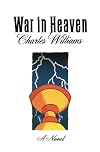
This was the first novel (1930) of Anglican fantasist Charles Williams. It contains all his opacity, irony and subtle and sometimes sardonic humour about a weak but basically decent humanity faced with the ineffable, set within something close to a pastiche of interwar popular fiction.
Elsewhere I have reviewed his later (1937) 'Descent into Hell' which is a much more intense and difficult work and which I know I am going to have to read twice in order to understand it adequately but this show more first novel is a good starting point for entering his world.
Williams is never an easy read but here he is possibly at his most accessible if only because he frames his theology within a murder mystery (which is not the point of the tale) and a tale of Satanism and dark magic (which is) as well as a fantasy about the San Graal.
His books have been called 'supernatural thrillers' but the thriller aspect should not be exaggerated. This is essential a book of 'ideas' that uses magic and fantasy to convey concepts that, in other hands, would require poetry to convey. His gravestone has 'poet' upon it.
I may be wholly out of tune with Williams' religious position, a form of High Anglicanism that can mock gentle but kindly fun at rival Catholics and Wesleyans whilst seeing them as allies in the fight against evil, but I consider Williams to be a subtle genius.
He may not be widely read now but his influence on Anglo-American fantasy fiction is substantial and he is definitely a major figure within a specific genre of it, Christian fantasy, a category that includes the more didactic C S Lewis and T F Powys.
His genius lays not only in laying bare the complexity of the relationship between Man and God (if you believe what he believes) but in doing so in a way that manages to have quasi-allegorical characters who are also human-all-too-human. They are both representative and somehow real.
In his rather peculiar way, he manages to ground magic and the transcendant in everyday reality and sometimes to make reality, and especially human behaviours faced with reality, transcendent and magical. The Arthurian aspect of the tale sets the transcendental within a great tradition.
Human foibles are dissected with compassion. The prize at the end is to see one character of undoubted piety translated to eternal happiness and his counterpoint defeated not in some grand guignol descent into hell but by becoming human again and 'confessing'.
There are descents and ascensions into otherworlds which are never over-explained. Indeed, in other hands, too much might be spelled out.
He has not converted me and will not convert me to his way of seeing the world, one which is essentially mystical and ritualistic but he has helped me to respect it as something more than catholicism made pragmatically viable for the English character.
Anglicanism is, of course, very English (not British but English) and even today defines the easy-going country Tory mentality. Williams, the Oxford intellectual, allows fantasy to be the tool for introducing the magical into English pragmatism where it is very much at home.
Outsiders often find it difficult to understand the traditional English character. It seems to be a classically bourgeois trading and practical mentality (which it can be) and to be a little distant in its social relations, with gradations as complex as those of a Chinese court.
But it is also very romantic about its ideals and about nature and not merely tolerant but hungry for the magical and the fantastic. After all, its only contribution to the creation of a world religion was to be Wicca later in the century.
This one of those books that requires either a relatively brief review on the lines of 'read it because it is unlike anything else you might read' and a lengthy and close critical analysis that would involve as much attention as the Bible, Homer or a Greek Tragedy.
But life is short. I suspect only literary critics and engaged Anglican would do such a thing but, for the rest of us, it is a book that bears reading for the diamonds in the conventional thirties coal seam.
Merged review:
This was the first novel (1930) of Anglican fantasist Charles Williams. It contains all his opacity, irony and subtle and sometimes sardonic humour about a weak but basically decent humanity faced with the ineffable, set within something close to a pastiche of interwar popular fiction.
Elsewhere I have reviewed his later (1937) 'Descent into Hell' which is a much more intense and difficult work and which I know I am going to have to read twice in order to understand it adequately but this first novel is a good starting point for entering his world.
Williams is never an easy read but here he is possibly at his most accessible if only because he frames his theology within a murder mystery (which is not the point of the tale) and a tale of Satanism and dark magic (which is) as well as a fantasy about the San Graal.
His books have been called 'supernatural thrillers' but the thriller aspect should not be exaggerated. This is essential a book of 'ideas' that uses magic and fantasy to convey concepts that, in other hands, would require poetry to convey. His gravestone has 'poet' upon it.
I may be wholly out of tune with Williams' religious position, a form of High Anglicanism that can mock gentle but kindly fun at rival Catholics and Wesleyans whilst seeing them as allies in the fight against evil, but I consider Williams to be a subtle genius.
He may not be widely read now but his influence on Anglo-American fantasy fiction is substantial and he is definitely a major figure within a specific genre of it, Christian fantasy, a category that includes the more didactic C S Lewis and T F Powys.
His genius lays not only in laying bare the complexity of the relationship between Man and God (if you believe what he believes) but in doing so in a way that manages to have quasi-allegorical characters who are also human-all-too-human. They are both representative and somehow real.
In his rather peculiar way, he manages to ground magic and the transcendant in everyday reality and sometimes to make reality, and especially human behaviours faced with reality, transcendent and magical. The Arthurian aspect of the tale sets the transcendental within a great tradition.
Human foibles are dissected with compassion. The prize at the end is to see one character of undoubted piety translated to eternal happiness and his counterpoint defeated not in some grand guignol descent into hell but by becoming human again and 'confessing'.
There are descents and ascensions into otherworlds which are never over-explained. Indeed, in other hands, too much might be spelled out.
He has not converted me and will not convert me to his way of seeing the world, one which is essentially mystical and ritualistic but he has helped me to respect it as something more than catholicism made pragmatically viable for the English character.
Anglicanism is, of course, very English (not British but English) and even today defines the easy-going country Tory mentality. Williams, the Oxford intellectual, allows fantasy to be the tool for introducing the magical into English pragmatism where it is very much at home.
Outsiders often find it difficult to understand the traditional English character. It seems to be a classically bourgeois trading and practical mentality (which it can be) and to be a little distant in its social relations, with gradations as complex as those of a Chinese court.
But it is also very romantic about its ideals and about nature and not merely tolerant but hungry for the magical and the fantastic. After all, its only contribution to the creation of a world religion was to be Wicca later in the century.
This one of those books that requires either a relatively brief review on the lines of 'read it because it is unlike anything else you might read' and a lengthy and close critical analysis that would involve as much attention as the Bible, Homer or a Greek Tragedy.
But life is short. I suspect only literary critics and engaged Anglican would do such a thing but, for the rest of us, it is a book that bears reading for the diamonds in the conventional thirties coal seam. show less
Elsewhere I have reviewed his later (1937) 'Descent into Hell' which is a much more intense and difficult work and which I know I am going to have to read twice in order to understand it adequately but this show more first novel is a good starting point for entering his world.
Williams is never an easy read but here he is possibly at his most accessible if only because he frames his theology within a murder mystery (which is not the point of the tale) and a tale of Satanism and dark magic (which is) as well as a fantasy about the San Graal.
His books have been called 'supernatural thrillers' but the thriller aspect should not be exaggerated. This is essential a book of 'ideas' that uses magic and fantasy to convey concepts that, in other hands, would require poetry to convey. His gravestone has 'poet' upon it.
I may be wholly out of tune with Williams' religious position, a form of High Anglicanism that can mock gentle but kindly fun at rival Catholics and Wesleyans whilst seeing them as allies in the fight against evil, but I consider Williams to be a subtle genius.
He may not be widely read now but his influence on Anglo-American fantasy fiction is substantial and he is definitely a major figure within a specific genre of it, Christian fantasy, a category that includes the more didactic C S Lewis and T F Powys.
His genius lays not only in laying bare the complexity of the relationship between Man and God (if you believe what he believes) but in doing so in a way that manages to have quasi-allegorical characters who are also human-all-too-human. They are both representative and somehow real.
In his rather peculiar way, he manages to ground magic and the transcendant in everyday reality and sometimes to make reality, and especially human behaviours faced with reality, transcendent and magical. The Arthurian aspect of the tale sets the transcendental within a great tradition.
Human foibles are dissected with compassion. The prize at the end is to see one character of undoubted piety translated to eternal happiness and his counterpoint defeated not in some grand guignol descent into hell but by becoming human again and 'confessing'.
There are descents and ascensions into otherworlds which are never over-explained. Indeed, in other hands, too much might be spelled out.
He has not converted me and will not convert me to his way of seeing the world, one which is essentially mystical and ritualistic but he has helped me to respect it as something more than catholicism made pragmatically viable for the English character.
Anglicanism is, of course, very English (not British but English) and even today defines the easy-going country Tory mentality. Williams, the Oxford intellectual, allows fantasy to be the tool for introducing the magical into English pragmatism where it is very much at home.
Outsiders often find it difficult to understand the traditional English character. It seems to be a classically bourgeois trading and practical mentality (which it can be) and to be a little distant in its social relations, with gradations as complex as those of a Chinese court.
But it is also very romantic about its ideals and about nature and not merely tolerant but hungry for the magical and the fantastic. After all, its only contribution to the creation of a world religion was to be Wicca later in the century.
This one of those books that requires either a relatively brief review on the lines of 'read it because it is unlike anything else you might read' and a lengthy and close critical analysis that would involve as much attention as the Bible, Homer or a Greek Tragedy.
But life is short. I suspect only literary critics and engaged Anglican would do such a thing but, for the rest of us, it is a book that bears reading for the diamonds in the conventional thirties coal seam.
Merged review:
This was the first novel (1930) of Anglican fantasist Charles Williams. It contains all his opacity, irony and subtle and sometimes sardonic humour about a weak but basically decent humanity faced with the ineffable, set within something close to a pastiche of interwar popular fiction.
Elsewhere I have reviewed his later (1937) 'Descent into Hell' which is a much more intense and difficult work and which I know I am going to have to read twice in order to understand it adequately but this first novel is a good starting point for entering his world.
Williams is never an easy read but here he is possibly at his most accessible if only because he frames his theology within a murder mystery (which is not the point of the tale) and a tale of Satanism and dark magic (which is) as well as a fantasy about the San Graal.
His books have been called 'supernatural thrillers' but the thriller aspect should not be exaggerated. This is essential a book of 'ideas' that uses magic and fantasy to convey concepts that, in other hands, would require poetry to convey. His gravestone has 'poet' upon it.
I may be wholly out of tune with Williams' religious position, a form of High Anglicanism that can mock gentle but kindly fun at rival Catholics and Wesleyans whilst seeing them as allies in the fight against evil, but I consider Williams to be a subtle genius.
He may not be widely read now but his influence on Anglo-American fantasy fiction is substantial and he is definitely a major figure within a specific genre of it, Christian fantasy, a category that includes the more didactic C S Lewis and T F Powys.
His genius lays not only in laying bare the complexity of the relationship between Man and God (if you believe what he believes) but in doing so in a way that manages to have quasi-allegorical characters who are also human-all-too-human. They are both representative and somehow real.
In his rather peculiar way, he manages to ground magic and the transcendant in everyday reality and sometimes to make reality, and especially human behaviours faced with reality, transcendent and magical. The Arthurian aspect of the tale sets the transcendental within a great tradition.
Human foibles are dissected with compassion. The prize at the end is to see one character of undoubted piety translated to eternal happiness and his counterpoint defeated not in some grand guignol descent into hell but by becoming human again and 'confessing'.
There are descents and ascensions into otherworlds which are never over-explained. Indeed, in other hands, too much might be spelled out.
He has not converted me and will not convert me to his way of seeing the world, one which is essentially mystical and ritualistic but he has helped me to respect it as something more than catholicism made pragmatically viable for the English character.
Anglicanism is, of course, very English (not British but English) and even today defines the easy-going country Tory mentality. Williams, the Oxford intellectual, allows fantasy to be the tool for introducing the magical into English pragmatism where it is very much at home.
Outsiders often find it difficult to understand the traditional English character. It seems to be a classically bourgeois trading and practical mentality (which it can be) and to be a little distant in its social relations, with gradations as complex as those of a Chinese court.
But it is also very romantic about its ideals and about nature and not merely tolerant but hungry for the magical and the fantastic. After all, its only contribution to the creation of a world religion was to be Wicca later in the century.
This one of those books that requires either a relatively brief review on the lines of 'read it because it is unlike anything else you might read' and a lengthy and close critical analysis that would involve as much attention as the Bible, Homer or a Greek Tragedy.
But life is short. I suspect only literary critics and engaged Anglican would do such a thing but, for the rest of us, it is a book that bears reading for the diamonds in the conventional thirties coal seam. show less
Lists
Awards


You May Also Like


Associated Authors
Statistics
- Works
- 74
- Also by
- 9
- Members
- 7,016
- Popularity
- #3,488
- Rating
- 3.9
- Reviews
- 110
- ISBNs
- 526
- Languages
- 14
- Favorited
- 50
