
Philip Larkin (1922–1985)
Author of Collected Poems
About the Author
Philip Larkin was a British poet, novelist, critic, and essayist. Born in 1922 in Coventry, England, he graduated from St. John's College, Oxford, in 1940 and then pursued a career as a librarian, becoming the librarian at the University of Hull in 1955. Although he led a retiring life and show more published infrequently, producing only one volume of poetry approximately every 10 years, Larkin was still considered one of the preeminent contemporary British poets. He is often associated with the "Movement," a 1950s literary group that, through the use of colloquial language and common, everyday subjects, endeavored to create poetry that would appeal to the common reader. However, this association came about mainly because Larkin's poem "Church Going," for which he first gained critical attention, was published in New Lines, an anthology of the "Movement" poets. In reality, his work, particularly his later poems, is not typical of the group. Larkin's published a total of only four volumes of poetry: The North Ship (1945), The Less Deceived (1955), The Whitsun Weddings (1964), and High Windows (1974). He also wrote two novels, Jill and A Girl in Winter, and published two volumes of prose, Required Writing and All That Jazz, a collection of his reviews of jazz records. Philip Larkin died in 1985. (Bowker Author Biography) show less
Works by Philip Larkin
Dear Philip, Dear Kingsley: Starring Alan Bennett & Robert Hardy (BBC Radio Collection) (2002) 7 copies
Femmes damnees 2 copies
Poetry Supplement Compiled By Philip Larkin For The Poetry Book Society, Christmas 1974 (1974) 2 copies
Art of Poetry, no. 30, The 1 copy
Poetry Supplement 1 copy
イギリスに捧げた歌―フィリップ・ラーキンを読む 1 copy
Seçilmiş Şiirler 1 copy
Readings: Philip Larkin Thom Gunn Ted Hughes Seamus Heaney Douglas Dunn Tom Paulin Paul Muldoon (1995) 1 copy
Zebrane 1 copy
Philip Larkin Poems 1 copy
Associated Works
The Making of a Poem: A Norton Anthology of Poetic Forms (2000) — Contributor — 1,474 copies, 9 reviews
Literature: An Introduction to Fiction, Poetry, and Drama (1995) — Contributor, some editions — 1,017 copies, 7 reviews
A Book of Luminous Things: An International Anthology of Poetry (1996) — Contributor — 945 copies, 12 reviews
World Poetry: An Anthology of Verse from Antiquity to Our Time (1998) — Contributor — 499 copies, 2 reviews
The Norton Anthology of English Literature, 4th Edition, Volume 2 (1979) — Contributor — 271 copies, 1 review
The Poetry Pharmacy: Tried-and-True Prescriptions for the Heart, Mind, and Soul (2017) 197 copies, 5 reviews
Poetry Speaks Expanded: Hear Poets Read Their Own Work from Tennyson to Plath (2007) — Contributor — 158 copies, 2 reviews
Answering Back: Living Poets Reply to the Poetry of the Past (2007) — Contributor — 119 copies, 1 review
Lapham's Quarterly - Lines of Work: Volume IV, Number 2, Spring 2011 (2011) — Contributor — 32 copies, 2 reviews
Edexcel Poetry Anthology for Advanced subsidiary and advanced GCE examinations in English Literature (2000) — Contributor, some editions — 6 copies
Die englische Literatur 10 in Text und Darstellung. 20. Jahrhundert 2. (2001) — Contributor — 6 copies
Poetry in the making : catalogue of an exhibition of poetry manuscripts in the British Museum, April-June 1967 — Contributor — 2 copies
Damien Hirst: Superstition — Contributor — 2 copies
Tagged
Common Knowledge
- Legal name
- Larkin, Philip Arthur
- Birthdate
- 1922-08-09
- Date of death
- 1985-12-02
- Gender
- male
- Education
- St. John's College, Oxford (BA, Language and Literature)
- Occupations
- librarian
poet
jazz critic - Organizations
- University of Hull
Queen's University, Belfast
University of Leicester - Awards and honors
- Royal Society of Literature (Fellow ∙ Companion of Literature ∙ Benson Medal)
Order of the Companions of Honour
Order of the British Empire (Commander) - Relationships
- Amis, Kingsley (friend)
Avis, Patricia (lover)
Trickett, Rachel (friend) - Nationality
- UK
- Birthplace
- Coventry, Warwickshire, England, UK
- Places of residence
- Coventry, Warwickshire, England, UK (1922-1940)
Oxford, Oxfordshire, England, UK (1940-1943)
Wellington, Shropshire, England, UK (1943-1946)
Leicester, Leicestershire, England, UK (1946-1950)
Belfast, Northern Ireland, UK (1950-1955)
Hull, Yorkshire, England, UK (1955-1985) - Place of death
- Hull, Yorkshire, England, UK
- Burial location
- Cottingham Municipal Cemetery, Hull, England, UK
- Map Location
- England, UK
Members
Reviews

Reading through Larkin's Collected Works it seems clear that he struggled with poetry - that there was poetry inside him is undoubted - in its creation, in what he wanted it to be and what he was lauded for. There are two basic types of Larkin poetry: 1. the wry, internalised observations of the world; and 2. more formal poetry about nature and abstracted visions of women. The first are the poems that everyone knows, that play around with form or abandon it altogether, and show an almost show more unique voice. The second are all the rest, that are generally pretty boring, if worthy. Without the first he would only ever have been a minor poet. But it feels like the second type are the ones he wanted to do, as his Collected Works is full of them. Perhaps the first only came out in times of 'fuck this poetry lark' stress? I don;t know, but there are some amazing works here in amongst the lesser pieces. show less
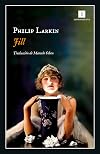
Cómo, una novela en la que todos los personajes, incluido el protagonista, te caen mal, el ambiente es sórdido, no solo por el contexto bélico de la novela, y en la que las cosas van cada vez más a peor, te encandila? De hecho una frase que repite creo que hasta tres veces nos lo recuerda: "Sé que las cosas irán cada vez peor, pero no me importa, porque también mejorarán cada vez más."
Aunque Larkin nos explica en el prólogo que su intención no es contar la historia de un héroe show more desplazado de la clase obrera, algo de esto también se refleja, inevitablemente, cuando parte de los personajes son descritos como "opresores cuyo deseo más violento podía satisfacerse de inmediato, lo cual sin duda era la cumbre de la ambición."
Pero, es verdad, que no es este el único tema. Miedo, soledad, mentira, hipocresía y la imaginación que nos salva de todo, también son importantes.
La novela solo decae un poco en un momento dado pero, una vez superado este, continúa hacia arriba sin parar. Estupenda. show less
Aunque Larkin nos explica en el prólogo que su intención no es contar la historia de un héroe show more desplazado de la clase obrera, algo de esto también se refleja, inevitablemente, cuando parte de los personajes son descritos como "opresores cuyo deseo más violento podía satisfacerse de inmediato, lo cual sin duda era la cumbre de la ambición."
Pero, es verdad, que no es este el único tema. Miedo, soledad, mentira, hipocresía y la imaginación que nos salva de todo, también son importantes.
La novela solo decae un poco en un momento dado pero, una vez superado este, continúa hacia arriba sin parar. Estupenda. show less
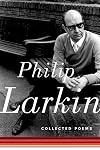
I never really enjoyed or appreciated poetry -- especially that of the "masters" they continually shoved down your throat year after year throughout your educational experience. I mean, is there any official academic ban of a little damn diversity in poets and poetry being taught??? I recall asking a couple of professors why we never read or studied certain prominent poets and got the reply that they weren't worthy of it, weren't good enough to take seriously, etc. So while I have far too show more much education and too many degrees, the fact is as always, tradition academics devoid of open minds and creativity continually decide the appropriate "canon," simply by recycling the same shit every year. I grew to hate Dylan Thomas with a passion, felt like puking when reading Plath, took years for me to appreciate Yeats, etc. If they didn't cram it down your throat every year, I don't think I would have been a poetry-hating English major! Thankfully, one professor quietly pointed me to Larkin as a poet who might appeal to me, and he was right! While not every poem resonated with me, I found relief in Larkin and simply quality poetry that was generally overlooked or ignored in academia. Naturally, I read everything of his that I could. LOL! It wasn't too long, though, before I stumbled across the two poets who would both shape my own life and my own writing: Ferlinghetti and Bukowski, both of whom I had the pleasure of later meeting and getting to know and I will always treasure the various autographed books and other things they each gave me, but I've often wondered if I would have even found them, let alone come to appreciate them so much, if it weren't for Larkin in the first place. I continue to remain grateful to him and his poetry for helping me to turn away from my hatred of poetry by realizing that there were many legitimate alternatives from the same old dusty boring "masters" forever taught in the schools and who gives a damn what some Ivory Tower academic says about what is or is not acceptable quality -- it's purely subjective, and the fact is, both Ferlinghetti and Bukowski have been far more popular and successful than any other American poets, with the sole possible exception of Ginsberg. If you haven't read Larkin, do so and I think you may find yourself surprised at what you read, ideally in a positive way. Obviously recommended. show less
Larkin's poetry is laser precise: he writes fine, delibrate phrases with strict rhythm, never indulging in broad ambiguity. He writes what he means, usually meditations on his being a misfit. He's grumpy, regretful, selfish, stubborn and prone to pursuits of the flesh. He's also completely owns up to all his faults and writes these trim, funny little confessionals, to the benefit of anyone who speaks English and reads poetry.
Lists
Awards


You May Also Like


Associated Authors
Statistics
- Works
- 59
- Also by
- 38
- Members
- 6,909
- Popularity
- #3,539
- Rating
- 4.0
- Reviews
- 60
- ISBNs
- 155
- Languages
- 11
- Favorited
- 54
