
Seamus Heaney (1939–2013)
Author of Opened Ground: Poems 1966–1996
About the Author
Seamus Heaney was born in Mossbawn, Ireland on April 13, 1939. He received a degree in English from Queen's College in Belfast in 1961. After earning his teacher's certificate in English from St. Joseph's College in Belfast the following year, he took a position at the school as an English teacher. show more During his time as a teacher at St. Joseph's, he wrote and published work in the university magazine under the pen name Incertus. In 1966, he became an English literature lecturer at Queen's College in Belfast. His first volume of poems, Death of a Naturalist, went on to receive the E.C. Gregory Award, the Cholmondeley Award, the Somerset Maugham Award, and the Geoffrey Faber Memorial Prize. After the death of his parents, Heaney published the poetry volumes The Haw Lantern, which includes a sonnet sequence memorializing his mother, and Seeing Things, a collection containing numerous poems for his father. His other works included Field Work, Opened Ground: Poems 1966-1996, and Human Chain. Heaney was a professor at Harvard from 1981 to 1997 and its Poet in Residence from 1988 to 2006. From 1989 to 1994 he was also the Professor of Poetry at Oxford and in 1996 was made a Commandeur de l'Ordre des Arts et Lettres. Other awards that he received include the Geoffrey Faber Memorial Prize (1968), the E. M. Forster Award (1975), the PEN Translation Prize (1985), the Golden Wreath of Poetry (2001), T. S. Eliot Prize (2006) and two Whitbread Prizes (1996 and 1999). In 2012, he was awarded the Lifetime Recognition Award from the Griffin Trust For Excellence In Poetry. His literary papers are held by the National Library of Ireland. He died following a short illness on August 30, 2013 at the age of 74. Heaney's last words were in a text to his wife Marie, "Noli timere", which means "Do not be afraid." (Bowker Author Biography) Seamus Heaney lives in Dublin and teaches at Harvard University. He was awarded the Nobel Prize in literature in 1995. (Publisher Provided) Seamus Heaney was born in 1939 in Northern Ireland. He was awarded the Nobel Prize in Literature in 1995. A resident of Dublin, he has taught poetry at Oxford University and Harvard University. (Publisher Provided) show less
Image credit: Photo by Norman McBeath, courtesy of Faber Books
Series
Works by Seamus Heaney
Beowulf: A Verse Translation [Norton Critical Edition] (2000) — Translator — 1,032 copies, 9 reviews
Poems, 1965-1975: Death of a Naturalist / Door Into the Dark / Wintering Out / North (1980) 531 copies, 5 reviews
Stone From Delphi 7 copies
'Room to rhyme' : 'Greatest Minds Lecture' delivered at the celebration of graduation at the University of Dundee, July 2003 (2004) 6 copies
Al buen entendedor. Ensayos escogidos (Lengua Y Estudios Literarios) (Spanish Edition) (2006) 5 copies
Seamus Heaney II Collected Poems (published 1979-1991): Field Work; Station Island; The Haw Lantern; Seeing Things (2018) 5 copies
Seamus Heaney I Collected Poems (published 1966-1975): Death of a Naturalist; Door into the Dark; Wintering Out; North (2018) 5 copies
Blooming through the ashes : an international anthology on violence and the human spirit (2008) 4 copies
A Little Book of Ledwidge: A Selection of the Poems and Letters of Francis Ledwidge (2017) — With an assessment by — 4 copies
de La Emocion a Las Palabras: Ensayos Literarios (Coleccion Argumentos) (Spanish Edition) (1996) 4 copies
New and Selected Poems 3 copies
Something to Write Home About 2 copies
Seamus Heaney III Collected Poems (published 1996-2010): The Spirit Level; Electric Light; District and Circle; Human Chain (2018) 2 copies
Antologia Poética 2 copies
Selected Poems 2 copies
Makings of a Music: Reflections on the Poetry of Wordsworth and Yeats (The Kenneth Allott lectures) (1978) 2 copies
Singing School. Poems. 1966-2002 2 copies
Conlán 2 copies
Seamus Heaney collection 2 copies
Poesie 1 copy
Lidský řetěz 1 copy
100 Poèmes 1 copy
Поленов талог 1 copy
Michael J. Durkan, 1925-1996 1 copy
The Last Walk 1 copy
The last mummer 1 copy
Poems and a Memoir 1 copy
Tree Clock 1 copy
Night Drive 1 copy
A Mid-Term Break 1 copy
Beowolf 1 copy
Seamus Heaney versei 1 copy
ALFABETE 1 copy
An Open Letter 1 copy
Fältarbete 1 copy
Selected Poems: 1931-2004 1 copy
W.B. Yeats 1 copy
Jasanová hůl 1 copy
32 Poems [Printout] 1 copy
Salmagundi 1 copy
Glanmore sonnets 1 copy
Ireland Journal: 1995; 1 copy
Eleven Poems 1 copy
“Punishment” 1 copy
“The Early Purges” 1 copy
VIENDO VISIONES 1 copy
Associated Works
Beowulf (0975) — Introduction, some editions; Narrator, some editions; Translator, some editions — 29,412 copies, 363 reviews
The Making of a Poem: A Norton Anthology of Poetic Forms (2000) — Contributor — 1,474 copies, 9 reviews
A Book of Luminous Things: An International Anthology of Poetry (1996) — Contributor — 945 copies, 12 reviews
The Norton Anthology of English Literature, 9th Edition, Volume A (2005) — Translator, some editions — 518 copies, 1 review
World Poetry: An Anthology of Verse from Antiquity to Our Time (1998) — Contributor — 500 copies, 2 reviews
The Norton Anthology of English Literature, 4th Edition, Volume 2 (1979) — Contributor — 271 copies, 1 review
The People of the Sea: A Journey in Search of the Seal Legend (1954) — Introduction, some editions — 232 copies, 3 reviews
Teaching with Fire: Poetry That Sustains the Courage to Teach (2003) — Contributor — 226 copies, 1 review
The Poetry Pharmacy: Tried-and-True Prescriptions for the Heart, Mind, and Soul (2017) 198 copies, 5 reviews
The Word Exchange: Anglo-Saxon Poems in Translation (2010) — Foreword, some editions — 170 copies, 2 reviews
Poetry Speaks Expanded: Hear Poets Read Their Own Work from Tennyson to Plath (2007) — Contributor — 158 copies, 2 reviews
Poems to See By: A Comic Artist Interprets Great Poetry (2020) — Contributor — 130 copies, 33 reviews
Leading from Within: Poetry That Sustains the Courage to Lead (2007) — Contributor — 116 copies, 3 reviews
The Poet's Work: 29 Poets on the Origins and Practice of Their Art (1979) — Contributor — 96 copies, 1 review
William Golding: The Man and His Books - A Tribute on His 75th Birthday (1986) — Contributor — 18 copies
Nobel Lectures: 20 Years of the Nobel Prize for Literature Lectures (2007) — Contributor — 14 copies
Die englische Literatur 10 in Text und Darstellung. 20. Jahrhundert 2. (2001) — Contributor — 6 copies
Amid Our Troubles: Irish Versions of Greek Tragedy (Plays and Playwrights) (2002) — Contributor — 4 copies
A Centenary Selection of Moore's Melodies — Introduction, some editions — 4 copies
Irish University Review Spring Volume 7 no 1 1977: A Journal of Irish Studies (1977) — Contributor — 2 copies
Tagged
Common Knowledge
- Canonical name
- Heaney, Seamus
- Legal name
- Heaney, Seamus Justin
- Birthdate
- 1939-04-13
- Date of death
- 2013-08-30
- Gender
- male
- Education
- Queen's University Belfast (BA|1961)
- Occupations
- poet
professor - Organizations
- Queen's University Belfast
Harvard University
Oxford University - Awards and honors
- Nobel Prize (Literature, 1995)
Royal Society of Literature (Companion of Literature, 1991)
Kenyon Review Award for Literary Achievement (2004)
Lannan Literary Award (1990)
E. M. Forster Award (1975)
David Cohen British Literature Prize (2009) (show all 14)
American Academy of Arts and Letters (Foreign Honorary ∙ Literature ∙ 1993)
Ordre des Arts et des Lettres (Commandeur, 1996)
Saoi of the Aosdána (1998)
PEN Translation Prize (1985)
Golden Wreath of Poetry (2001)
T. S. Eliot Prize (2006)
Griffin Poetry Prize (2011)
Royal Irish Academy (1997) - Agent
- Steven Barclay Agency
- Relationships
- Heaney, Marie (spouse)
- Short biography
- Born in Londonderry in 1939, Nobel Prize winner Seamus Heaney is among the best in Northern Irish literature. Heaney is considered one of the greatest poets of the late twentieth century, with a spectrum of awards received in his lifetime, including the T. S. Eliot Prize and the Nobel Prize for Literature in 1995. His most famous volume, Death of a Naturalist (1966) explored his childhood in Northern Ireland, from Roman Catholic influences, political life, and the death of his younger brother at age four, in ‘Mid-term Break’ (1966). As a Professor of Poetry at Harvard and Oxford University, he became a Professor at his own institution, Queen’s University, Belfast, which opened the Seamus Heaney centre for poetry in 2003.
- Nationality
- UK
- Birthplace
- Castledawson, Northern Ireland, UK
- Places of residence
- Northern Ireland, UK
Dublin, Ireland
Boston, Massachusetts, USA - Place of death
- Dublin, Ireland
- Map Location
- Northern Ireland, UK
Members
Discussions
Seamus Heaney in Poetry Fool (January 2017)
TIOLI September 2013: Seamus Heaney Memorial Challenge in 75 Books Challenge for 2013 (September 2013)
Reviews

Considering that every year I tell myself that I’m going to make a dent in my TBR shelf of poetry collections, and every year I also fail this goal spectacularly, I’m a bit shocked that I managed to read this one cover to cover in just over three months. Rather than focusing on the work of a single poet, this collection is a haphazard assortment that does its titular moniker proud. Rounded up by poets Seamus Heaney and Ted Hughes (two of my favourites), they confess that the collection show more has little rhyme or reason and is simply a book of poems that they liked and brought together with the idea of exploring and making the genre possibly more accessible. While they may have far more white male poets than I would prefer, I was pleasantly surprised at the oft-included poems in translation and a fair number of poems by women who deserve places alongside their male colleagues. Arranged simply by alphabetizing the titles (or first lines, for those poems lacking in formal designation), the collection juxtaposes poems that would never have appeared together in normal circumstance - creating what could easily have been a dissonant noise, but which instead I found to be a far more pleasant cacophony of words that must simply be let stand. The noise they create is indeed a rattle bag, but it is one that is full of pleasant surprises, wonderful language, and not a few moments of amusement. Maybe letting poetry simply be its chaotic self, rather than trying to form a driven narrative in a singular tone or set of motifs, is the key to its true enjoyment; it definitely seemed to work to keep me engaged with this collection, so here’s hoping we can replicate the experiment and get back into this fun genre. show less
Rating: 4* of five
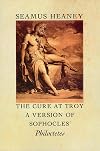
The Publisher Says: The Cure at Troy is Seamus Heaney's version of Sophocles' Philoctetes. Written in the fifth century BC, this play concerns the predicament of the outcast hero, Philoctetes, whom the Greeks marooned on the island of Lemnos and forgot about until the closing stages of the Siege of Troy. Abandoned because of a wounded foot, Philoctetes nevertheless possesses an invincible bow without which the Greeks cannot win the Trojan War. They are forced to return to show more Lemnos and seek out Philoctetes' support in a drama that explores the conflict between personal integrity and political expediency.
Heaney's version of Philoctetes is a fast-paced, brilliant work ideally suited to the stage. Heaney holds on to the majesty of the Greek original, but manages to give his verse the flavor of Irish speech and context.
My Review: Okay, I don't want to alarm anybody, but I am reviewing and rating a playscript written by a poet. And with high praise.
No, I'm not pixilated and I have not been stricken by apoplexy and aliens have not trans-reversed my brain.
The story of the abandoned Philoctetes, a minor moment in the Trojan War saga, is another passage from myth that speaks to me, like The Song of Achilles was. I think this, the myth of the abandoned who is rescued, speaks to many if not most people, at least the ones who feel themselves abandoned or left behind because of their essential selves.
Heaney takes a terrible wrong done to a man who committed no crime and defiled himself with no sin, but whose burden to carry included being too much of a burden for his fellows, his companions, to bear, and cast it in terms we can relate to. Philoctetes is no plaster saint, painted in garish and unreal colors, spouting Love and Tolerance and Forgiveness. He's so goddamned mad he can't see straight and he's so clear-sighted that the nature of the world is plainer to him than to anyone else around him:
And there, in a nutshell, is the Problem of Evil. God is good, not evil. Yet evil exists in God's world. What is one to do with that contradiction? (I know my answer; I don't presume to dictate anyone else's; but I will say that, as phrased by Heaney above, isn't the answer glaringly obvious?)
Philoctetes is tormented by hope, Achilles' son has come (with the wily and amoral Odysseus), to charm him out of the sacred can't-miss bow and the sacred must-kill arrows that he had as his inheritance from semi-divine Herakles. Without these weapons (and Philoctetes to wield them), Troy will never fall; and Achilles' son sets himself to woo the angry, hurt, miserable, ill archer back to a war he could never join because Odysseus couldn't bear his flaw, his wound, his agony sent by the gods to burden him.
And now it is that wounded, flawed man who is the only hope of a Greek victory. Ha ha, Odysseus. Ha ha, world at large. And NO THANKS, Philoctetes shouts, no I won't and no you won't make me! Why should I bother with you, you who left me in my pain and with my own company as you were bound for glory? Achilles' son charms him, but there isn't enough charm in the universe to poultice a wound that deep, a wound of rejection of one's essential self, a throwing away of one's future because in the present the body stinks and hurts.
Philoctetes, by any reasonable person's standards, could be found justified in telling the Greeks to go fuck themselves on foot and on horseback, and all their dreams too. He does, and he does again, and he even does in the face of threats to drag him off to meet his destiny by force.
But then Achilles' son shows his true mettle, and settles in to stay with Philoctetes. He repents of his charm, he even ceremoniously offers Philoctetes his bow and arrows back; Odysseus comes at that moment, full of fear at the failing quest and rants, to no avail; and then deus ex machina (or in this case volcana) arrives as Divine Herakles speaks for the Greeks. Philoctetes understands that his wounds will only be healed when he completes his journey to Troy and fixes his destiny. This is how we remember him three thousand years later: He accepts his burdens and experiences his emotions and defies his fate by embracing his destiny.
Exeunt omnes.
This work is licensed under a Creative Commons Attribution-NonCommercial-ShareAlike 3.0 Unported License. show less
The Publisher Says: The Cure at Troy is Seamus Heaney's version of Sophocles' Philoctetes. Written in the fifth century BC, this play concerns the predicament of the outcast hero, Philoctetes, whom the Greeks marooned on the island of Lemnos and forgot about until the closing stages of the Siege of Troy. Abandoned because of a wounded foot, Philoctetes nevertheless possesses an invincible bow without which the Greeks cannot win the Trojan War. They are forced to return to show more Lemnos and seek out Philoctetes' support in a drama that explores the conflict between personal integrity and political expediency.
Heaney's version of Philoctetes is a fast-paced, brilliant work ideally suited to the stage. Heaney holds on to the majesty of the Greek original, but manages to give his verse the flavor of Irish speech and context.
My Review: Okay, I don't want to alarm anybody, but I am reviewing and rating a playscript written by a poet. And with high praise.
No, I'm not pixilated and I have not been stricken by apoplexy and aliens have not trans-reversed my brain.
The story of the abandoned Philoctetes, a minor moment in the Trojan War saga, is another passage from myth that speaks to me, like The Song of Achilles was. I think this, the myth of the abandoned who is rescued, speaks to many if not most people, at least the ones who feel themselves abandoned or left behind because of their essential selves.
...their whole life spent admiring themselves
For their own long-suffering.
Licking their wounds
And flashing them around like decorations.
I hate it, I always hated it, and I am
A part of it myself.
.
.
And a part of you,
For my part is the chorus, and the chorus
Is more or less a borderline between
The you and the me and the it of it
.
.
Between
The gods' and human beings' sense of things.
.
.
And that's the borderline that poetry
Operates on too, always in between
What you would like to happen and what will --
Whether you like it or not.
Heaney takes a terrible wrong done to a man who committed no crime and defiled himself with no sin, but whose burden to carry included being too much of a burden for his fellows, his companions, to bear, and cast it in terms we can relate to. Philoctetes is no plaster saint, painted in garish and unreal colors, spouting Love and Tolerance and Forgiveness. He's so goddamned mad he can't see straight and he's so clear-sighted that the nature of the world is plainer to him than to anyone else around him:
Of course. Of course. What else could you expect?
The gods do grant immunity, you see,
To everybody except the true and the just.
The more of a plague you are, and the crueller,
The better your chances of being turned away
From the doors of death. Whose side are gods on?
What are human beings to make of them?
How am I to keep on praising gods
If they keep disappointing me, and never
Match the good on my side with their good?
And there, in a nutshell, is the Problem of Evil. God is good, not evil. Yet evil exists in God's world. What is one to do with that contradiction? (I know my answer; I don't presume to dictate anyone else's; but I will say that, as phrased by Heaney above, isn't the answer glaringly obvious?)
Philoctetes is tormented by hope, Achilles' son has come (with the wily and amoral Odysseus), to charm him out of the sacred can't-miss bow and the sacred must-kill arrows that he had as his inheritance from semi-divine Herakles. Without these weapons (and Philoctetes to wield them), Troy will never fall; and Achilles' son sets himself to woo the angry, hurt, miserable, ill archer back to a war he could never join because Odysseus couldn't bear his flaw, his wound, his agony sent by the gods to burden him.
And now it is that wounded, flawed man who is the only hope of a Greek victory. Ha ha, Odysseus. Ha ha, world at large. And NO THANKS, Philoctetes shouts, no I won't and no you won't make me! Why should I bother with you, you who left me in my pain and with my own company as you were bound for glory? Achilles' son charms him, but there isn't enough charm in the universe to poultice a wound that deep, a wound of rejection of one's essential self, a throwing away of one's future because in the present the body stinks and hurts.
History says, Don't hope
On this side of the grave.
But then, once in a lifetime
The longed-for tidal wave
Of justice can rise up,
And hope and history rhyme.
.
.
So hope for a great sea-change
On the far side of revenge.
Believe that a further shore
Is reachable from here.
Believe in miracles
And cures and healing wells.
Philoctetes, by any reasonable person's standards, could be found justified in telling the Greeks to go fuck themselves on foot and on horseback, and all their dreams too. He does, and he does again, and he even does in the face of threats to drag him off to meet his destiny by force.
But then Achilles' son shows his true mettle, and settles in to stay with Philoctetes. He repents of his charm, he even ceremoniously offers Philoctetes his bow and arrows back; Odysseus comes at that moment, full of fear at the failing quest and rants, to no avail; and then deus ex machina (or in this case volcana) arrives as Divine Herakles speaks for the Greeks. Philoctetes understands that his wounds will only be healed when he completes his journey to Troy and fixes his destiny. This is how we remember him three thousand years later: He accepts his burdens and experiences his emotions and defies his fate by embracing his destiny.
Now it's high watermark
And floodtide in the heart
And time to go
The sea-nymphs in the spray
Will be the chorus now
What's left to say?
.
.
Suspect too much sweet talk
But never close your mind,
It was a fortunate wind
That blew me here. I leave
Half-ready to believe
That a crippled trust might walk
.
.
And the half-true rhyme is love.
Exeunt omnes.
This work is licensed under a Creative Commons Attribution-NonCommercial-ShareAlike 3.0 Unported License. show less
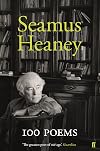
The only particularity of this collection is that the 100 poems selected here were picked, not by professional editors and publishers, but by Heaney's family (his wife, his sons and daughter). It can make for a personal and intimate selection (as there are a lot of poems celebrating friends) yet it doesn't mean that, as an anthology, it cannot serve as a point of entry to his work. In fact, some of his most famous and highly heralded ones are gathered here too, so, as a very short read show more especially, I would still highly recommend it to discover him. What else to say?
The rest, of course, will depend on how you like (or not) Seamus Heaney. Quite frankly, as far as I am personally concerned, it's not enough to merely describe something so as to offer an image of it. Poetry (again, as far as I am personally concerned) should be first and foremost about a creative manipulation of the language to deliver powerful, striking emotions. Quite frankly too, I've never seen such ability in him. Am I harsh?
The issue I have with Heaney is not that he was incapable of offering stirring, moving feelings. 'Digging', 'Follower', 'Mid-Term Break', 'Requiem for the Croppies', or, again, 'From the Republic of Conscience' certainly do that. The issue I have is that he wrote in free verse; and, to me, free verse is just basic story telling, relying on a colloquial language which doesn't require much imagination otherwise (the lack of concern for the aesthetics of language should be telling enough...). Now, I know...
I know: such style has become very fashionable indeed when it comes to contemporary poetry (in some established circles, you'll be even sneered at for dissenting...). Well: I don't like it; and, in fact, I find contemporary poetry as boring as it is pretentious. To each their own. But then, so what?
Should mere story telling,
be hailed as Grandiose Poetry
simply because
it is lineated in verses?
I am not versed in
(but averse to)
fashionable free versing.
I will just type:
that ain't my type.
If it yours, rock your boat! Personally, I gave it another try and, well, nope. I pass -with a yawn. show less
The rest, of course, will depend on how you like (or not) Seamus Heaney. Quite frankly, as far as I am personally concerned, it's not enough to merely describe something so as to offer an image of it. Poetry (again, as far as I am personally concerned) should be first and foremost about a creative manipulation of the language to deliver powerful, striking emotions. Quite frankly too, I've never seen such ability in him. Am I harsh?
The issue I have with Heaney is not that he was incapable of offering stirring, moving feelings. 'Digging', 'Follower', 'Mid-Term Break', 'Requiem for the Croppies', or, again, 'From the Republic of Conscience' certainly do that. The issue I have is that he wrote in free verse; and, to me, free verse is just basic story telling, relying on a colloquial language which doesn't require much imagination otherwise (the lack of concern for the aesthetics of language should be telling enough...). Now, I know...
I know: such style has become very fashionable indeed when it comes to contemporary poetry (in some established circles, you'll be even sneered at for dissenting...). Well: I don't like it; and, in fact, I find contemporary poetry as boring as it is pretentious. To each their own. But then, so what?
Should mere story telling,
be hailed as Grandiose Poetry
simply because
it is lineated in verses?
I am not versed in
(but averse to)
fashionable free versing.
I will just type:
that ain't my type.
If it yours, rock your boat! Personally, I gave it another try and, well, nope. I pass -with a yawn. show less

https://fromtheheartofeurope.eu/death-of-a-naturalist-by-seamus-heaney/
I met Seamus Heaney only once, a chance encounter in a pub (the Foggy Dew in Temple Bar in Dublin, some time around 1989); he offered to buy me a drink on the basis of having known my parents in his Belfast days, but I was too shy to accept. I wish I had. I would have learned something from even ten minutes’ conversation with him. I also once sat opposite his wife Marie at a dinner, but did not pluck up the courage to show more say much to her.
He came from Bellaghy, 30 km up the River Bann from my own ancestors in Aghadowey, and this first collection is very much about growing up there and growing into his role as a poet. I knew a few of them from school days: the opening “Digging”, where he sees his vocation as poetry rather than agriculture:
Between my finger and my thumb
The squat pen rests.
I’ll dig with it.
The heart-wrenching “Mid-Term Break”, about the death of his younger brother in a car accident:
No gaudy scars, the bumper knocked him clear.
A four foot box, a foot for every year.
The rather regrettable “Docker”:
Mosaic imperatives bang home like rivets;
God is a foreman with certain definite views
Reading the full collection is well worth it. There’s a real underlying narrative, of a shift from his family heritage on the farm and boyhood fascinations with the land, to adulthood and poetry, There are some lovely natural images, such as “Waterfall”:
Simultaneous acceleration
And sudden braking; water goes over
Like villains dropped screaming to justice.
And romance in a sequence beginning with “Twice Shy”:
Her scarf à la Bardot,
In suede flats for the walk,
She came with me one evening
For air and friendly talk.
We crossed the quiet river,
Took the embankment walk.
And at the end, another moment of self-dedication in “Personal Helicon”:
I rhyme
To see myself, to set the darkness echoing.
I don’t read a lot of poetry, and I should read more. show less
I met Seamus Heaney only once, a chance encounter in a pub (the Foggy Dew in Temple Bar in Dublin, some time around 1989); he offered to buy me a drink on the basis of having known my parents in his Belfast days, but I was too shy to accept. I wish I had. I would have learned something from even ten minutes’ conversation with him. I also once sat opposite his wife Marie at a dinner, but did not pluck up the courage to show more say much to her.
He came from Bellaghy, 30 km up the River Bann from my own ancestors in Aghadowey, and this first collection is very much about growing up there and growing into his role as a poet. I knew a few of them from school days: the opening “Digging”, where he sees his vocation as poetry rather than agriculture:
Between my finger and my thumb
The squat pen rests.
I’ll dig with it.
The heart-wrenching “Mid-Term Break”, about the death of his younger brother in a car accident:
No gaudy scars, the bumper knocked him clear.
A four foot box, a foot for every year.
The rather regrettable “Docker”:
Mosaic imperatives bang home like rivets;
God is a foreman with certain definite views
Reading the full collection is well worth it. There’s a real underlying narrative, of a shift from his family heritage on the farm and boyhood fascinations with the land, to adulthood and poetry, There are some lovely natural images, such as “Waterfall”:
Simultaneous acceleration
And sudden braking; water goes over
Like villains dropped screaming to justice.
And romance in a sequence beginning with “Twice Shy”:
Her scarf à la Bardot,
In suede flats for the walk,
She came with me one evening
For air and friendly talk.
We crossed the quiet river,
Took the embankment walk.
And at the end, another moment of self-dedication in “Personal Helicon”:
I rhyme
To see myself, to set the darkness echoing.
I don’t read a lot of poetry, and I should read more. show less
Lists
Awards


You May Also Like


Associated Authors
Statistics
- Works
- 210
- Also by
- 57
- Members
- 15,845
- Popularity
- #1,432
- Rating
- 3.9
- Reviews
- 160
- ISBNs
- 395
- Languages
- 20
- Favorited
- 83
