
Helen Vendler (1933–2024)
Author of The Art of Shakespeare's Sonnets
About the Author
Helen Vendler is A. Kingsley Porter University Professor at Harvard University. Her other Harvard books include Soul Says: On Recent Poetry; The Odes of John Keats; The Given and the Made: Strategies of Poetic Redefinition; and Seamus Heaney.
Works by Helen Vendler
Yates at Sonnets 1 copy
Poems by W. B. Yeats. 1 copy
Associated Works
Adrienne Rich's Poetry and Prose [Norton Critical Edition] (1993) — Contributor — 342 copies, 2 reviews
Who's Writing This? Notations on the Authorial I, with Self-Portraits {not Antæus} (1995) — Contributor — 75 copies
The Waste Land And Other Poems: Including The Love Song of J. Alfred Prufrock — Editor — 15 copies
Stone From Delphi — Introduction — 7 copies
Antaeus No. 73/74, Spring 1994 - Who’s Writing This: Notations on the Authorial I {magazine} (1994) — Contributor — 6 copies
Amid Our Troubles: Irish Versions of Greek Tragedy (Plays and Playwrights) (2002) — Contributor — 4 copies
Tagged
Common Knowledge
- Canonical name
- Vendler, Helen
- Legal name
- Vendler, Helen Hennessy
- Birthdate
- 1933-04-30
- Date of death
- 2024-04-23
- Gender
- female
- Education
- Harvard University (Ph.D|1960 - English and American Literature)
Emmanuel College (AB|1954 - Chemistry) - Occupations
- professor
literary critic - Organizations
- Harvard University
Boston University
Smith College
Haverford College
Swarthmore College
Cornell University (show all 7)
Modern Language Association of America - Awards and honors
- American Philosophical Society (1992)
American Academy of Arts and Letters (1993)
American Academy of Arts & Sciences (1972)
Norwegian Academy of Science and Letters (2011)
Honorary Fellow, Magdalene College, University of Cambridge (1997)
Reginald Martin Award for Excellence in Criticism (2025) (show all 14)
American Academy of Arts and Letters Gold Medal for Belles Lettres and Criticism (2023)
Don M. Randel Award for Humanistic Studies (2013)
Jefferson Lecture (2004)
Henry Allen Moe Prize (2000)
Truman Capote Award for Literary Criticism (1996)
Thomas Jefferson Medal (1993)
National Book Critics Circle Award for Criticism (1980)
American Academy of Arts and Letters Academy Award (1975) - Relationships
- Vendler, Zeno (ex-husband)
Lowell, Robert (teacher) - Cause of death
- cancer
- Nationality
- USA
- Birthplace
- Boston, Massachusetts, USA
- Place of death
- Laguna Niguel, California, USA
- Associated Place (for map)
- USA
Members
Reviews
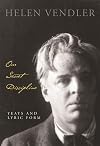
I want to take a class taught by Helen Vendler. It would not be an easy A. Instead, it would challenge and open new doors and windows into some of my favorite poets. Vendler is the poet's great reader, one who spends time and effort rereading and rereading again, studying the structure, asking why the poet went this way instead of that. She is a student of form and its revelatory impact on content.
In this book, Vendler makes an intense study of Yeats, form by form, seeking to understand his show more choices whether conscious or not, explicating the impact of choice on each poem and of the poem on the form. Not an introduction to Yeats but rather a fine advanced study for those who have already spent some time with his poetry. If that's you, then read this book. show less
In this book, Vendler makes an intense study of Yeats, form by form, seeking to understand his show more choices whether conscious or not, explicating the impact of choice on each poem and of the poem on the form. Not an introduction to Yeats but rather a fine advanced study for those who have already spent some time with his poetry. If that's you, then read this book. show less
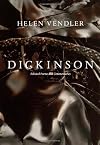
Emily Dicksinson's poetry was unlike just about everything being written at the time by her more famous mostly male contemporaries. She distilled complexities of experience and emotion into language that truly told it slant. Her verse is like Shakespeare's sonnets which are are at their most difficult because they contain deep and sometimes contradictory emotion.
Helen Vendler proves again to be a great companion for the reader, unpacking and guiding. The best way to read this selection is show more to read each poem, Vendler's commentary, and then reread that poem once or twice more. Windows open. I cannot say I always agree with Vendler's interpretations, but they are always illuminating. show less
Helen Vendler proves again to be a great companion for the reader, unpacking and guiding. The best way to read this selection is show more to read each poem, Vendler's commentary, and then reread that poem once or twice more. Windows open. I cannot say I always agree with Vendler's interpretations, but they are always illuminating. show less
Great poetry meets great reader of poetry.
Emily Dickinson was a poet I already admired, but Helen Vendler’s commentaries deepened my appreciation. In addition, they teach by demonstration how we can become better readers of poetry through emulating her careful attention to rhyme, meter, word choice, and syntax. The insights that Vendler’s reading yields not only opened poems that had been opaque to me; even in Dickinson’s relatively accessible poems, I saw much I had missed.
Vendler’s show more approach to Dickinson’s work is not limited to the poems themselves. She delves into the vast array of literature that Dickinson had read and internalized, including Shakespeare, the King James Bible, Keats, Wordsworth, and much more. Vendler even consulted the same edition of Webster’s Dictionary (1844) that Dickinson used, adding another layer of depth to her analysis.
Dickinson was not only a student of great writing; she keenly enjoyed nature and its seasons. She was also an astute observer of human behavior — both in those around her and in her own incandescent spirit. As Vendler writes, the result was to make her “the inventive reconciever and linguistic shaper of her perennial themes: nature, death, religion, love, and the workings of the mind and thought.”
Although Vendler suggests dipping into this book wherever one’s interest may lead, I read it consecutively. Some days, I read as many as twenty poems with commentary; other days, only one or two. Since a rough chronological order for most of her poems has been established, this gave me a feel for Dickinson’s development.
Astonishingly, this generous selection covers less than ten percent of Dickinson’s oeuvre. With the tools Vendler has shared with us, there is much to discover. show less
Emily Dickinson was a poet I already admired, but Helen Vendler’s commentaries deepened my appreciation. In addition, they teach by demonstration how we can become better readers of poetry through emulating her careful attention to rhyme, meter, word choice, and syntax. The insights that Vendler’s reading yields not only opened poems that had been opaque to me; even in Dickinson’s relatively accessible poems, I saw much I had missed.
Vendler’s show more approach to Dickinson’s work is not limited to the poems themselves. She delves into the vast array of literature that Dickinson had read and internalized, including Shakespeare, the King James Bible, Keats, Wordsworth, and much more. Vendler even consulted the same edition of Webster’s Dictionary (1844) that Dickinson used, adding another layer of depth to her analysis.
Dickinson was not only a student of great writing; she keenly enjoyed nature and its seasons. She was also an astute observer of human behavior — both in those around her and in her own incandescent spirit. As Vendler writes, the result was to make her “the inventive reconciever and linguistic shaper of her perennial themes: nature, death, religion, love, and the workings of the mind and thought.”
Although Vendler suggests dipping into this book wherever one’s interest may lead, I read it consecutively. Some days, I read as many as twenty poems with commentary; other days, only one or two. Since a rough chronological order for most of her poems has been established, this gave me a feel for Dickinson’s development.
Astonishingly, this generous selection covers less than ten percent of Dickinson’s oeuvre. With the tools Vendler has shared with us, there is much to discover. show less
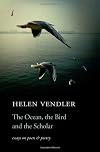
Reading Helen Vendler as she discusses poets and their poetry is like sitting with your favorite professor, one not stuffy though erudite, one brilliant but clear. I may not agree with her exegesis of a given poem or her ultimate judgement on the worth of a given poet's work, I have to face that fact of her cogent arguments. Vendler seems to love poetry so much more than many critics who spend their time demonstrating their superiority to the art their discuss. I enjoy reading her essays and show more explications nearly as much as I do the poetry itself. show less
Lists
Awards


You May Also Like


Associated Authors
Statistics
- Works
- 31
- Also by
- 13
- Members
- 2,559
- Popularity
- #10,034
- Rating
- 4.2
- Reviews
- 13
- ISBNs
- 72
- Languages
- 1
- Favorited
- 5