
Hugh Kenner (1923–2003)
Author of The Pound Era
About the Author
Hugh Kenner (1923-2003) was one of America's great literary critics. He wrote on a range of subjects, including Ezra Pound, James Joyce, Samuel Beckett, T. S. Eliot, and geodesic domes. The following books by Hugh Kenner are available from Dalkey Archive Press: The Counterfeiters, Flaubert, Joyce, show more and Beckett: The Stoic Comedians and Joyce's Voices. show less
Image credit: Owen Barfield World Wide Website
Series
Works by Hugh Kenner
Questioning Minds: The Letters of Guy Davenport and Hugh Kenner (2018) — Author — 56 copies, 2 reviews
A Starchamber Quiry: A James Joyce Centennial Volume, 1882-1982 (1982) — Editor; Contributor — 10 copies
Eliot in his time;: Essays on the occasion of the fiftieth anniversary of The waste land (1973) — Contributor — 9 copies
Literary theory and structure: essays in honor of William K. Wimsatt (1973) — Contributor — 3 copies
Magics and Spells: About Curses, Charms and Riddles (The Bennington Chapbooks in Literature) (1987) 3 copies
"Jim the Comedian" 1 copy
"The Jokes at the Wake" 1 copy
"Beaufoy's Masterplaster" 1 copy
"The Joycean Present" 1 copy
"Taxonomy of an Octopus" 1 copy
"Molly's Masterstroke" 1 copy
"Berlitz Days" 1 copy
The invention of China 1 copy
"The Rhetoric of Silence" 1 copy
"Signs on a White Field" 1 copy
"Shem the Textman" 1 copy
"Focus on Pound" 1 copy
"The Search for Joyce" 1 copy
"Prometheus' Diary" 1 copy
"From a Lost World" 1 copy
"Homer's Sticks and Stones" 1 copy
"Gee!" 1 copy
"Creativity and Inequality" 1 copy
"Images of James Joyce" 1 copy
"Sauce for the Goose" 1 copy
"The Most Beautiful Book" 1 copy
Pound on Joyce 1 copy
Associated Works
Literature: An Introduction to Fiction, Poetry, and Drama (1995) — Contributor, some editions — 1,011 copies, 7 reviews
Axel's Castle: A Study of the Imaginative Literature of 1870-1930 (FSG Classics) (1931) — Introduction, some editions — 728 copies, 7 reviews
The Translations of Ezra Pound (1963) — Editor, some editions; Introduction, some editions — 172 copies
F. Scott Fitzgerald's The Great Gatsby (Bloom's Modern Critical Interpretations) (1986) — Contributor, some editions; some editions; some editions — 125 copies
Did You Ever See a Dream Walking? American Conservative Thought in the Twentieth Century (1970) — Contributor — 86 copies
Published and Perished: Memoria, Eulogies, and Remembrances of American Writers (2002) — Contributor — 41 copies, 1 review
Alger Hiss, Whittaker Chambers, and the Schism in the American Soul (2002) — Contributor — 25 copies, 1 review
T.S. Eliot's The Waste Land (Bloom's Modern Critical Interpretations) (1986) — Contributor, some editions — 22 copies
Agenda : Wyndham Lewis special issue — Contributor — 6 copies
A Poem Containing History: Textual Studies in The Cantos (Editorial Theory and Literary Criticism) (1997) — Contributor — 3 copies
Tagged
Common Knowledge
- Canonical name
- Kenner, Hugh
- Legal name
- Kenner, William Hugh
- Birthdate
- 1923-01-07
- Date of death
- 2003-11-24
- Gender
- male
- Education
- University of Toronto (BA - English, MA - English)
Yale University (PhD) - Occupations
- professor
literary critic
columnist
mathematician
computer programmer
biographer (show all 8)
essayist
editor - Organizations
- Royal Society of Literature
American Academy of Arts and Sciences
American Philosophical Society
American Council of Learned Societies
American Academy of Arts and Letters
National Institute of Arts and Letters (show all 12)
Johns Hopkins University
University of Georgia
Art & Antiques
Byte
National Review
Wired - Awards and honors
- Fellow, American Council of Learned Societies (1949)
Fellow, American Philosophical Society (1956)
Guggenheim fellow, 1957-58, 1964
National Institute of Arts and Letters/American Academy of Arts and Letters prize, 1969
LL.D., University of Notre Dame, 1984 - Relationships
- McLuhan, Marshall (teacher)
Brooks, Cleanth (teacher)
Pound, Ezra (friend)
Beckett, Samuel (friend) - Short biography
- Kenner wrote books of scholarly criticism on some of the most difficult authors in literature (Joyce, Pound, Eliot); literary history; a book on cartoonist Chuck Jones; geodesic math; and a user's guide to the Heathkit H100/Zenith Z-100 computer. He was also a columnist for Art & Antiques and Byte magazine.
- Nationality
- Canada
USA - Birthplace
- Peterborough, Ontario, Canada
- Places of residence
- Baltimore, Maryland, USA
- Place of death
- Athens, Georgia, USA
- Associated Place (for map)
- USA
Members
Reviews
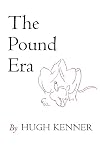
As a youth, Ezra Pound aspired to know everything that could be known about poetry. Nearly seven decades later, his lifework culminated in a last book, tellingly entitled Drafts and Fragments, and he wondered where he had gone wrong.
Hugh Kenner chronicles these decades in this thick book, weighty with bone and sinew. In the course of it, he makes a convincing case that his title, The Pound Era, is a fitting description of what passed for modern English literature when I went to college. show more Pound and his friends in pre-war London defined themselves, their movement, and their time as a vortex. It was a brief, transcendent moment. The major work of most of them still lay ahead but was carried out under a cloud of tragedy. The destruction of the Great War took the life of one of their number, Gaudier-Brzeska, and hurtled the survivors on parallel, lonely trajectories.
They (Joyce, Eliot, Williams, and the others) lived in a time when the newly-discovered cave paintings in southern France and the etymological turn in linguistics made them aware of the inheritance of eons. The gift of their intelligence was to make the past as vibrant as the present. Pound was at the forefront, blending modern idiom with Chinese ideograms, Provençal ballads, the Jefferson-Adams correspondence, and Homer. From beginning to end, Homer. And let's not forget the golden-clad goddess.
To read this magisterial book is an education. I learned many things, such as why the anthropologist Frobenius rejected a word in his own language, Zeitgeist, and used instead an ancient Greek work, paideuma, to express what he meant by a shared culture.
The Pound of the wartime radio broadcasts from Italy is neither excused nor trivialized. The reader is left to ponder what led him to such a quixotic mission, but Kenner supplies much of the background. Pound’s fascination with the economic theories of Douglas, for instance, seems understandable, as it becomes ever clearer that the dominant force in the world is avarice.
When I first discovered Pound a half-century ago, I was fascinated by his Imagist poems. I read and re-read them. I tried his Guide to Kulchur but gave up. And I assumed I was too dense even to attempt the Cantos. With Kenner to breathe courage into me, I just ordered them, and I’m impatient to give them a go. show less
Hugh Kenner chronicles these decades in this thick book, weighty with bone and sinew. In the course of it, he makes a convincing case that his title, The Pound Era, is a fitting description of what passed for modern English literature when I went to college. show more Pound and his friends in pre-war London defined themselves, their movement, and their time as a vortex. It was a brief, transcendent moment. The major work of most of them still lay ahead but was carried out under a cloud of tragedy. The destruction of the Great War took the life of one of their number, Gaudier-Brzeska, and hurtled the survivors on parallel, lonely trajectories.
They (Joyce, Eliot, Williams, and the others) lived in a time when the newly-discovered cave paintings in southern France and the etymological turn in linguistics made them aware of the inheritance of eons. The gift of their intelligence was to make the past as vibrant as the present. Pound was at the forefront, blending modern idiom with Chinese ideograms, Provençal ballads, the Jefferson-Adams correspondence, and Homer. From beginning to end, Homer. And let's not forget the golden-clad goddess.
To read this magisterial book is an education. I learned many things, such as why the anthropologist Frobenius rejected a word in his own language, Zeitgeist, and used instead an ancient Greek work, paideuma, to express what he meant by a shared culture.
The Pound of the wartime radio broadcasts from Italy is neither excused nor trivialized. The reader is left to ponder what led him to such a quixotic mission, but Kenner supplies much of the background. Pound’s fascination with the economic theories of Douglas, for instance, seems understandable, as it becomes ever clearer that the dominant force in the world is avarice.
When I first discovered Pound a half-century ago, I was fascinated by his Imagist poems. I read and re-read them. I tried his Guide to Kulchur but gave up. And I assumed I was too dense even to attempt the Cantos. With Kenner to breathe courage into me, I just ordered them, and I’m impatient to give them a go. show less

This may be Hugh Kenner's crankiest book.
Kenner, a product of still-colonial Canada qualified by later USAn influence, never particularly liked England, and his overall theme is the collapse of a single public for serious literature in England proper, combined with a general turning away of the English literary establishment from international modernism.
He's entirely willing to grant talent to a fair number of writers individually, although he's equally willing to indicate where he thinks show more some of them wasted their talent. But the ones he thinks best of tend to be on the outside: English letters in general are another question.
He begins in 1895, identifying three publics for reading. There is a public for Tit-Bits, a sort of level below Reader's Digest (that public has now, had for some time even in 1988, become a consumer of television rather than printed matter). There is a public represented by Dent's Everyman's Library, now the broad consumer of both bestsellers and most "literary fiction". Finally, there's a small public with an interest in texts as such, and an interest in precision of diction and structural complexity.
Kenner makes a distinction between works with a certain level of complexity / ambition / thematic importance and those falling below it. The "classics" of Everyman's Library, even if they began as challenging, have been made comfortable by a tradition of acceptance and interpretation.
Following Kenner's narrative, although the English literary world learned from international modernism it turned away from it: the dominant poets run Auden, Thomas, Larkin, anti-modernists all. Not only that, but the serious public for literature splintered, and the world of authors splintered as well. There is little commonality between David Jones, Charles Tomlinson, and Geoffrey Hill, and although their publics overlap they are distinct.
In many ways this may be the closest Kenner, trained at the height of New Criticism, ever came to writing, implicitly, about the function of, the justification for, for criticism.
For Kenner, literature itself is self-justifying as something which is to be enjoyed; but enjoyment is tied to it being a challenge, or at least requiring a continued act of attention.
From this point of view, the point of criticism is to assist the reader in approaching and enjoying texts which require either or both of "background" or close reading for full enjoyment. This is certainly the function of Kenner's criticism, running from The Poetry of Ezra Pound and Dublin's Joyce through The Invisible Poet and The Pound Era at the height of his career, to the more minor works of his later years.
And, for all that it put various (primarily English) reviewers' backs up, I think that A Sinking Island has a point. England's retreat from empire has been a cultural turning in, away from ambition and into nostalgia, and a continuing failure to engage with anything coming from outside. It may not be too fanciful to see the decline which Kenner asserts as the beginning of a slide which led, eventually, to the Brexit vote and a political culture in which Boris Johnson can be taken to be a serious politician. show less
Kenner, a product of still-colonial Canada qualified by later USAn influence, never particularly liked England, and his overall theme is the collapse of a single public for serious literature in England proper, combined with a general turning away of the English literary establishment from international modernism.
He's entirely willing to grant talent to a fair number of writers individually, although he's equally willing to indicate where he thinks show more some of them wasted their talent. But the ones he thinks best of tend to be on the outside: English letters in general are another question.
He begins in 1895, identifying three publics for reading. There is a public for Tit-Bits, a sort of level below Reader's Digest (that public has now, had for some time even in 1988, become a consumer of television rather than printed matter). There is a public represented by Dent's Everyman's Library, now the broad consumer of both bestsellers and most "literary fiction". Finally, there's a small public with an interest in texts as such, and an interest in precision of diction and structural complexity.
Kenner makes a distinction between works with a certain level of complexity / ambition / thematic importance and those falling below it. The "classics" of Everyman's Library, even if they began as challenging, have been made comfortable by a tradition of acceptance and interpretation.
Following Kenner's narrative, although the English literary world learned from international modernism it turned away from it: the dominant poets run Auden, Thomas, Larkin, anti-modernists all. Not only that, but the serious public for literature splintered, and the world of authors splintered as well. There is little commonality between David Jones, Charles Tomlinson, and Geoffrey Hill, and although their publics overlap they are distinct.
In many ways this may be the closest Kenner, trained at the height of New Criticism, ever came to writing, implicitly, about the function of, the justification for, for criticism.
For Kenner, literature itself is self-justifying as something which is to be enjoyed; but enjoyment is tied to it being a challenge, or at least requiring a continued act of attention.
From this point of view, the point of criticism is to assist the reader in approaching and enjoying texts which require either or both of "background" or close reading for full enjoyment. This is certainly the function of Kenner's criticism, running from The Poetry of Ezra Pound and Dublin's Joyce through The Invisible Poet and The Pound Era at the height of his career, to the more minor works of his later years.
And, for all that it put various (primarily English) reviewers' backs up, I think that A Sinking Island has a point. England's retreat from empire has been a cultural turning in, away from ambition and into nostalgia, and a continuing failure to engage with anything coming from outside. It may not be too fanciful to see the decline which Kenner asserts as the beginning of a slide which led, eventually, to the Brexit vote and a political culture in which Boris Johnson can be taken to be a serious politician. show less
Delightful and brilliant plunge into the Modernist epoch. As much a work of art as criticism, Kenner’s book brings the 1905-1939 era alive with surging yet layered vividness. Like his subjects (Pound, Eliot, Joyce, HD) Kenner has mastered the "luminous detail" -the one vivid image that achieves a "raid on the inarticulate" giving clarity and voice to the formerly murky and unsung.
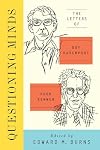
Of only the very great, e.g. Beckett, are reviewers free at whim to assert that they are wearing no clothes. The monkey-minds conspire to protect the second-raters.
There was an audible sigh as I finished the last letter some time after midnight. There was no sense of triumph or even completion. I have problems accepting that these two prolific men as friends/critics/academics would allow the precipitous drop in frequency as displayed here. There must be a cache of letters elsewhere or show more perhaps regrettably carbonized in a fireplace-- a manifestation of pique, a blow to posterity. As noted, my time with the first volume was enhanced by the sensation of the pages not being entirely cut. That sweet tearing sound was music, like the dulcet tones of Dusty Springfield.
Rather than concede what I learned from these two hulking tomes, I should note what they inspired. First off, to read more of both these men. Then, Beckett -- especially the novels. Wittgenstein as well. It is curious that my wary hesitation towards The Cantos is largely intact, might even be enhanced.
While both men wrote for the National Review, each routinely cast aspersions at Nixon and Reagan. What the two men weren't by 21C standards was politically correct. No need for a list. What we also have is a meditation on technology as it is applicable to intellectuals and discourse. The inefficiency and uncertainty involved when Davenport supplied illustrations for Kenner’s Stoic Comedians. That appears maddening to a contemporary reader. There’s a marvel at electric typewriters. Letters cross each other which does enhance the richness of the discussion but it was necessary evil of the epistolary age.
As I noted to Nathan, I feel closer to Davenport if only by reasons of geography. His reference to Kentucky as the American Ukraine is a sound comparison. What I don't understand is his affection for Tolkien. I gritted my teeth as Davenport slammed The Tin Drum but I don't understand the foregrounding of Gandolf and Bilbo.
This was my favorite reading of the year. show less
There was an audible sigh as I finished the last letter some time after midnight. There was no sense of triumph or even completion. I have problems accepting that these two prolific men as friends/critics/academics would allow the precipitous drop in frequency as displayed here. There must be a cache of letters elsewhere or show more perhaps regrettably carbonized in a fireplace-- a manifestation of pique, a blow to posterity. As noted, my time with the first volume was enhanced by the sensation of the pages not being entirely cut. That sweet tearing sound was music, like the dulcet tones of Dusty Springfield.
Rather than concede what I learned from these two hulking tomes, I should note what they inspired. First off, to read more of both these men. Then, Beckett -- especially the novels. Wittgenstein as well. It is curious that my wary hesitation towards The Cantos is largely intact, might even be enhanced.
While both men wrote for the National Review, each routinely cast aspersions at Nixon and Reagan. What the two men weren't by 21C standards was politically correct. No need for a list. What we also have is a meditation on technology as it is applicable to intellectuals and discourse. The inefficiency and uncertainty involved when Davenport supplied illustrations for Kenner’s Stoic Comedians. That appears maddening to a contemporary reader. There’s a marvel at electric typewriters. Letters cross each other which does enhance the richness of the discussion but it was necessary evil of the epistolary age.
As I noted to Nathan, I feel closer to Davenport if only by reasons of geography. His reference to Kentucky as the American Ukraine is a sound comparison. What I don't understand is his affection for Tolkien. I gritted my teeth as Davenport slammed The Tin Drum but I don't understand the foregrounding of Gandolf and Bilbo.
This was my favorite reading of the year. show less
Lists
Awards


You May Also Like


Associated Authors
Statistics
- Works
- 78
- Also by
- 37
- Members
- 2,689
- Popularity
- #9,553
- Rating
- 4.0
- Reviews
- 19
- ISBNs
- 103
- Languages
- 4
- Favorited
- 13