
Richard Ellmann (1918–1987)
Author of Oscar Wilde
About the Author
Image credit: Richard Ellmann 1982
Works by Richard Ellmann
The Norton Anthology of Modern and Contemporary Poetry, Volume 1: Modern Poetry (2003) — Editor — 347 copies
The Norton Anthology of Modern and Contemporary Poetry, Volume 2: Contemporary Poetry (2003) — Editor — 115 copies, 1 review
Oscar Wilde at Oxford : a lecture delivered at the Library of Congress on March 1, 1983 (1984) 11 copies
W.B. Yeats's second puberty : a lecture delivered at the Library of Congress on April 2, 1984 (1985) 9 copies
James Joyce's hundredth birthday, side and front views : a lecture delivered at the Library of Congress on March 10, 1982 (1982) 7 copies
Samuel Beckett, Nayman of Noland: A lecture delivered at the Library of Congress on April 16, 1985 (1986) 7 copies
And More Changes Still — Translator — 4 copies
"A Crux in the New Edition" 1 copy
Joyce's Library In 1920. 1 copy
Joyce in Love 1 copy
"Ulysses, the Divine Nobody" 1 copy
"Joyce as Letter Writer" 1 copy
The backgrounds of Ulysses 1 copy
"Two Perspectives on Joyce" 1 copy
Associated Works
The Picture of Dorian Gray and Other Writings (1890) — Editor, some editions; Foreword, some editions — 2,733 copies, 23 reviews
The Story and Its Writer: An Introduction to Short Fiction (1976) — Contributor — 1,218 copies, 3 reviews
A Portrait of the Artist as a Young Man (Viking Critical Library) (1914) — Contributor, some editions — 459 copies, 2 reviews
Penguins 60s Classics (Loose as the Wind; Now Remember; Florence Nightingale; Rumpole and the Younger Generation; Elephant Tales; Scenes from Havian Life; Less is More Please;… (1996) — Contributor; Contributor — 12 copies
A Mirror for Modern Scholars: Essays in Methods of Research In Literature (1966) — Contributor — 11 copies
Tagged
Common Knowledge
- Canonical name
- Ellmann, Richard
- Legal name
- Ellmann, Richard David
- Birthdate
- 1918-03-15
- Date of death
- 1987-05-13
- Gender
- male
- Education
- Yale University (B.A.|1939|M.A.|1941|Ph.D|1947)
Trinity College, Dublin (B.Litt|1947) - Occupations
- literary critic
editor
professor - Organizations
- Oxford University
Yale University
Northwestern University
Bread Loaf School of English
United States Navy (WWII) - Awards and honors
- Pulitzer Prize (Biography, 1989)
National Book Critics Circle Award (1988)
American Academy of Arts and Letters (1971)
British Academy (Fellow, 1979)
Royal Society of Literature (Fellow) - Relationships
- Ellmann, Mary (wife)
Ellman, Lucy (daughter)
Atlas, James (student) - Cause of death
- motor neurone disease
- Nationality
- USA
- Birthplace
- Highland Park, Michigan, USA
- Places of residence
- Highland Park, Michigan, USA (birth)
Oxford, Oxfordshire, England, UK (death) - Place of death
- Oxford, Oxfordshire, England, UK
- Map Location
- Michigan, USA
Members
Reviews
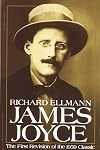
This is a famous biography, justly so, because it is a tour de force in its own right, let alone one about such a unique individual.
What a struggle Joyce's life became. Yet he held to his ideé fixe that writing ought to be transformed by taking the ordinary events (thoughts and action) of life and presenting them as imaginative life that soars from the small to large, simple lyric to epic and literature into myth.
His life ended just as he completed his artistic mission.
It was made show more difficult through his need for exile from Ireland, his penury, his spendthrift ways, his bluntness and continual difficulties with his eyes, but he knew how to enjoy himself too (an enthusiastic conversationalist, good singer and sometime extravagant bon vivant).
He was a simple family man despite his roaring need to write something revolutionary; he was lucky to retain loyal friends and was blessed to see his work published and heralded before his sad death in 1941.
Ellmann sums him up at the end "...his two profound interests - his family and his writing - kept their place. These passions never dwindled. The intensity of the first gave his work its sympathy and humanity; the intensity of the second raised his life to dignity and high dedication".
Nonetheless, I find reading Ulysses and Finnegans Wake impossible. For my money, these works should be read aloud like poetry by someone with a Dublin accent. show less
What a struggle Joyce's life became. Yet he held to his ideé fixe that writing ought to be transformed by taking the ordinary events (thoughts and action) of life and presenting them as imaginative life that soars from the small to large, simple lyric to epic and literature into myth.
His life ended just as he completed his artistic mission.
It was made show more difficult through his need for exile from Ireland, his penury, his spendthrift ways, his bluntness and continual difficulties with his eyes, but he knew how to enjoy himself too (an enthusiastic conversationalist, good singer and sometime extravagant bon vivant).
He was a simple family man despite his roaring need to write something revolutionary; he was lucky to retain loyal friends and was blessed to see his work published and heralded before his sad death in 1941.
Ellmann sums him up at the end "...his two profound interests - his family and his writing - kept their place. These passions never dwindled. The intensity of the first gave his work its sympathy and humanity; the intensity of the second raised his life to dignity and high dedication".
Nonetheless, I find reading Ulysses and Finnegans Wake impossible. For my money, these works should be read aloud like poetry by someone with a Dublin accent. show less

https://fromtheheartofeurope.eu/oscar-wilde-by-richard-ellmann-and-the-importanc...
Richard Ellmann’s Pulitzer-winning biography of Wilde is pretty comprehensive. It starts with his parents, noted surgeon Sir William Wilde and the revolutionary poet and writer born Jane Elgee but known as Speranza. (Oscar was born at 1 Merrion Square.) 550 heavily footnoted pages take us through the 46 years of Oscar’s life, though it’s clear that there is a lot more to say about him (and some of it has show more been said).
It’s a story that combines many elements. While still a student at Oxford, Wilde rapidly became famous for being famous, to the point that D’Oyly Carte sent him on a (very enjoyable) lecture tour of America before launching their opera about him, Patience. But he was a genuinely good writer as well; Ellmann goes into some of his work, but I think more could also be said about the extent to which it echoed his life.
Wilde was a posh boy who made a career out of being a posh boy, but intellectually he was genuinely a supporter of socialism, Irish nationalism and revolution. This is what gives the drawing-room comedies their vicious edge; he is echoing back to his English hosts what he actually heard them saying behind the polite niceties.
He very courageously chose martyrdom because of his sexuality. He could have escaped to France, Italy and/or the USA and avoided prosecution. But he chose to stay and face his fate in the courts, though he knew it would probably kill him.
Wilde was witty but not wise; he spent his way through both money and relationships extravagantly. Even the grand love affair with Bosie Douglas, which brought him down, seems to have brought him as much pain as pleasure. He genuinely loved Constance and his sons, but accepted that the consequences of his own choices had parted him from them.
It’s a really interesting book and I recommend it, though I know that scholarship in the last four decades may have advanced our knowledge of Wilde a bit further. show less
Richard Ellmann’s Pulitzer-winning biography of Wilde is pretty comprehensive. It starts with his parents, noted surgeon Sir William Wilde and the revolutionary poet and writer born Jane Elgee but known as Speranza. (Oscar was born at 1 Merrion Square.) 550 heavily footnoted pages take us through the 46 years of Oscar’s life, though it’s clear that there is a lot more to say about him (and some of it has show more been said).
It’s a story that combines many elements. While still a student at Oxford, Wilde rapidly became famous for being famous, to the point that D’Oyly Carte sent him on a (very enjoyable) lecture tour of America before launching their opera about him, Patience. But he was a genuinely good writer as well; Ellmann goes into some of his work, but I think more could also be said about the extent to which it echoed his life.
Wilde was a posh boy who made a career out of being a posh boy, but intellectually he was genuinely a supporter of socialism, Irish nationalism and revolution. This is what gives the drawing-room comedies their vicious edge; he is echoing back to his English hosts what he actually heard them saying behind the polite niceties.
He very courageously chose martyrdom because of his sexuality. He could have escaped to France, Italy and/or the USA and avoided prosecution. But he chose to stay and face his fate in the courts, though he knew it would probably kill him.
Wilde was witty but not wise; he spent his way through both money and relationships extravagantly. Even the grand love affair with Bosie Douglas, which brought him down, seems to have brought him as much pain as pleasure. He genuinely loved Constance and his sons, but accepted that the consequences of his own choices had parted him from them.
It’s a really interesting book and I recommend it, though I know that scholarship in the last four decades may have advanced our knowledge of Wilde a bit further. show less

There are any number of things I disagree with in here, starting Ellmann's prima facie ludicrous belief that Joyce intended everything in Ulysses to lead towards one major philosophical statement:
"To those who lived meaninglessly in a brutal and consuming present, Joyce offered a world of accountability and did not shrink from calling it spiritual. To those who, nursed by locally distorted Catholic doctrines, spoke of spiritual realities as if they alone existed, he pointed to the realities show more of the body's life," (89).
If that's what Joyce was doing, then I'm fully behind it: he'd be doing negative dialectics decades before Adorno. But Ellmann's argument doesn't stop there. He connects the two terms here (materialism and spiritualism) with two other kind-of-sort-of relevant terms (objectivity and subjectivism), and two philosophers who are relevant, but not in the way that Ellmann seems to think (Aristotle and Hume) to make a grandiose metaphysical statement about how puns represent reality because reality is inevitably doubling and folding in on itself or something. He then claims that this is not mystical.
There's a lot going on there, but there are some pretty obvious points to make. First, Aristotle is not a materialist. In fact, Aristotle holds the very position that Ellmann sometimes attributes to Joyce, of 'form' interacting with matter. Aristotle believes in forms, he just doesn't believe that they can function if they transcend matter. Now, true, this puts him in opposition to Hume, but it also puts him in opposition to actual materialists.
Second, Ellmann goes through all of this without mentioning Kant--you know, the guy who made the problems of materialism vs idealism and scepticism vs dogmatism central to European philosophy. Now, Joyce may not have known Kant. But his not knowing Kant is a pretty good indication that he wasn't making the argument Ellmann attributes to him. Joyce was a knowledgeable guy. If he was making a Kantian argument, he would have known he was doing it.
Third, metaphysics of this kind is always mystical.
More important for most readers of Ulysses, however, is the way Ellmann traces Odyssean and Shakespearean tropes and themes through the book. He makes a number of excellent arguments about small moments (particularly interesting is his take on Bloom/Stephen looking into the mirror and seeing Shakespeare), and you don't have to buy the "Joyce solved all the world's intellectual problems" thing to get a lot out of the book.
So, he hasn't convinced me that Joyce had even one remotely coherent political thought (he might have read some anarchism, but was clearly enamored of the movement's destructive aspects--no institutions! no groups!--rather than its positive, communitarian aspects); nor has he convinced me that Ulysses' is a structural masterpiece. But he makes a strong, reasonable case, one that was worth making, and is well worth reading. show less
"To those who lived meaninglessly in a brutal and consuming present, Joyce offered a world of accountability and did not shrink from calling it spiritual. To those who, nursed by locally distorted Catholic doctrines, spoke of spiritual realities as if they alone existed, he pointed to the realities show more of the body's life," (89).
If that's what Joyce was doing, then I'm fully behind it: he'd be doing negative dialectics decades before Adorno. But Ellmann's argument doesn't stop there. He connects the two terms here (materialism and spiritualism) with two other kind-of-sort-of relevant terms (objectivity and subjectivism), and two philosophers who are relevant, but not in the way that Ellmann seems to think (Aristotle and Hume) to make a grandiose metaphysical statement about how puns represent reality because reality is inevitably doubling and folding in on itself or something. He then claims that this is not mystical.
There's a lot going on there, but there are some pretty obvious points to make. First, Aristotle is not a materialist. In fact, Aristotle holds the very position that Ellmann sometimes attributes to Joyce, of 'form' interacting with matter. Aristotle believes in forms, he just doesn't believe that they can function if they transcend matter. Now, true, this puts him in opposition to Hume, but it also puts him in opposition to actual materialists.
Second, Ellmann goes through all of this without mentioning Kant--you know, the guy who made the problems of materialism vs idealism and scepticism vs dogmatism central to European philosophy. Now, Joyce may not have known Kant. But his not knowing Kant is a pretty good indication that he wasn't making the argument Ellmann attributes to him. Joyce was a knowledgeable guy. If he was making a Kantian argument, he would have known he was doing it.
Third, metaphysics of this kind is always mystical.
More important for most readers of Ulysses, however, is the way Ellmann traces Odyssean and Shakespearean tropes and themes through the book. He makes a number of excellent arguments about small moments (particularly interesting is his take on Bloom/Stephen looking into the mirror and seeing Shakespeare), and you don't have to buy the "Joyce solved all the world's intellectual problems" thing to get a lot out of the book.
So, he hasn't convinced me that Joyce had even one remotely coherent political thought (he might have read some anarchism, but was clearly enamored of the movement's destructive aspects--no institutions! no groups!--rather than its positive, communitarian aspects); nor has he convinced me that Ulysses' is a structural masterpiece. But he makes a strong, reasonable case, one that was worth making, and is well worth reading. show less
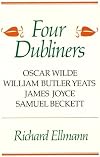
Fascinating and readable critical analysis and synthesis. This book had its origins in lectures Ellmann gave at the Library of Congress in the early 1980s. The theme seems to be the way in which each writer dealt with contradictions in their lives and work. I knew the least about Beckett beforehand and consequently learned a lot about him. I knew the most about Yeats, but my favourite chapters were those on Wilde and Joyce. Contains some mature language (how could it not with these show more modernists?) and outdated language ('commit suicide') but definitely worth reading for those interested in art and its creation, Irish literature and drama, European history 1850-1980.
Strangely, the title has nothing to do with the analysis. The author spends no time on Dublin's effect on the writers and does talk about their time away from Ireland - Wilde at Oxford, Yeats in London and the south of France, Joyce and Beckett in Paris. A better title would have been 'Four Irishmen at Home and Abroad'.
If the book were extended after Wilde (b. 1854), Yeats (b. 1865), Joyce (b. 1882), and Beckett (b. 1906) to bring the literary tradition up to today, who might be included? Maybe Behan (b. 1923), Heaney (b. 1939), Patrick McCabe (b. 1955), and Martin MacDonagh (b. 1970)? show less
Strangely, the title has nothing to do with the analysis. The author spends no time on Dublin's effect on the writers and does talk about their time away from Ireland - Wilde at Oxford, Yeats in London and the south of France, Joyce and Beckett in Paris. A better title would have been 'Four Irishmen at Home and Abroad'.
If the book were extended after Wilde (b. 1854), Yeats (b. 1865), Joyce (b. 1882), and Beckett (b. 1906) to bring the literary tradition up to today, who might be included? Maybe Behan (b. 1923), Heaney (b. 1939), Patrick McCabe (b. 1955), and Martin MacDonagh (b. 1970)? show less
Lists
Five star books (1)
Awards


You May Also Like


Associated Authors
Statistics
- Works
- 48
- Also by
- 20
- Members
- 7,613
- Popularity
- #3,209
- Rating
- 3.9
- Reviews
- 39
- ISBNs
- 147
- Languages
- 12
- Favorited
- 2

