
Guy Davenport (1927–2005)
Author of The Geography of the Imagination
About the Author
Author, artist, literary critic and translator Guy Davenport was born on November 23, 1927 in Anderson, South Carolina. He received his Bachelor of Arts degree from Duke University in 1948 and was selected as a Rhodes Scholar. He earned a Bachelor of Literature from Merton College, Oxford show more University in 1950 and a Doctor of Philosophy from Harvard University in 1961. He taught English at several universities from 1951 until his retirement in 1990. He received numerous awards including the O. Henry Award for short stories, the 1981 Morton Douwen Zabel award for fiction from the American Academy and Institute of Arts and Letters, and translation awards from PEN and the Academy of American Poets. He died on January 4, 2005 in Lexington, Kentucky. (Bowker Author Biography) show less
Image credit: Photograph of Guy Davenport by photographer Guy Mendez from the dust jacket for The Geography of the Imagination : Forty Essays / Guy Davenport (San Francisco : Northpoint Press, 1981.
Works by Guy Davenport
The Medusa 6 copies
The Art of Lafcadio Hearn 1 copy
Jonah, a Story 1 copy
Aperture Eighty-One 1 copy
Girlfriend's Busty Mom: Secret Seduction, Dominated & Humiliated, BDSM, Shared & Ganged (Taboo Age Gap Sex Stories Bundle) (2023) 1 copy
August 1 copy
The Bicycle Rider 1 copy
Associated Works
For the Love of Books: 115 Celebrated Writers on the Books They Love Most (1999) — Contributor — 479 copies, 4 reviews
The Art of the Tale: An International Anthology of Short Stories (1986) — Contributor — 381 copies, 3 reviews
Object Lessons: The Paris Review Presents the Art of the Short Story (2012) — Contributor — 255 copies, 9 reviews
The Glorious American Essay: One Hundred Essays from Colonial Times to the Present (2020) — Contributor — 119 copies
Pure Pagan: Seven Centuries of Greek Poems and Fragments (2004) — Introduction — 107 copies, 2 reviews
Carmina Archilochi: The Fragments of Archilochos (1979) — Translator, some editions — 85 copies, 1 review
Who's Writing This? Notations on the Authorial I, with Self-Portraits {not Antæus} (1995) — Contributor — 76 copies
Counterpoints: 25 Years of The New Criterion on Culture and the Arts (2007) — Contributor — 50 copies
Published and Perished: Memoria, Eulogies, and Remembrances of American Writers (2002) — Contributor — 41 copies, 1 review
Antaeus No. 61, Autumn 1988 - Journals, Notebooks & Diaries (1988) — Contributor — 39 copies, 2 reviews
Against the Grain: The New Criterion on Art and Intellect at the End of the Twentieth Century (1995) — Contributor — 35 copies
The Intelligence of Louis Agassiz: A Specimen Book of Scientific Writings (1983) — Editor — 17 copies
Antaeus No. 64/65, Spring/Autumn 1990 - Twentieth Anniversary Issue (1990) — Contributor — 15 copies
The Man in the Wall: Poems by James Laughlin (New Directions Paperbook) (1993) — Foreword, some editions — 15 copies
Stan Brakhage: Correspondences (Chicago Review, 47:4 and 48:1) — Contributor — 8 copies
Epitaphs for Lorine — Contributor — 6 copies
Antaeus No. 73/74, Spring 1994 - Who’s Writing This: Notations on the Authorial I {magazine} (1994) — Contributor — 6 copies
Antaeus No. 29, Spring 1978 — Contributor — 2 copies
Truck 21, A 50th Birthday Celebration For Jonathan Williams — Contributor — 1 copy
Tagged
Common Knowledge
- Canonical name
- Davenport, Guy
- Legal name
- Davenport, Guy Mattison
- Birthdate
- 1927-11-23
- Date of death
- 2005-01-04
- Gender
- male
- Education
- Harvard University (Ph.D|1961)
Merton College, Oxford University (B.Litt|1950)
Duke University (BA|Classics|English Literature|1948) - Occupations
- polymath
professor
illustrator
critic
translator
essayist (show all 11)
writer (short stories)
artist (visual)
author
philosopher
poet - Organizations
- University of Kentucky
Haverford College
Washington University in St. Louis
United States Army - Awards and honors
- American Academy of Arts & Sciences (1998)
MacArthur Fellow (1990)
PEN Award for Poetry in Translation (1996)
Morton Douwen Zabel award for fiction (1981)
American Academy of Arts and Letters Academy Award (Literature ∙ 2001)
Leviton-Blumenthal Prize (show all 7)
Rhodes Scholar - Relationships
- Cox, Bonnie Jean (partner)
- Cause of death
- lung cancer
- Nationality
- USA
- Birthplace
- Anderson, South Carolina, USA
- Places of residence
- Lexington, Kentucky, USA
Anderson, South Carolina, USA (birth)
North Carolina, USA
Oxford, Oxfordshire, England, UK
St. Louis, St. Louis County, Missouri, USA - Place of death
- Lexington, Kentucky, USA
- Burial location
- body donated to science
- Associated Place (for map)
- USA
Members
Reviews

Davenport was a fabulously inventive assembler of strange modernist fictions, an illustrator, teacher and essayist of great energy and erudition who tried to decipher the world and then present his own peculiar vision there of. For Davenport, convention and category were anathema; in DaVinci’s Bicycle he draws from history, anthropology, archaeology, philosophy, zoology. He takes some singular, striking detail from an unexpected wellspring and then fashions an elaborate circumstance to show more associate with some other inscrutable occurrence—the mating of wasps, for instance, and the decomposition of the body of Charles Fourier in Montmartre. Or Apollinaire and Joyce on the Haile Selassie funeral train.
It’s not just the excavation at odd angles across unexpected juxtapositions that makes Davenport’s fiction a pleasure to read. He wrote flamboyant, vocabulary-rich prose that didn’t feel forced; colorful, scientifically precise descriptions that didn’t dry; and witty vernacular dialogue. The effect of reading Davenport is almost visual, more akin to an abstract painting (Kandinsky, Klee, Ernst) than a short story.
…Genius is as wide as from here to yonder. Long ago, William James said in a lecture, the earth was thought to be an animal as yes it is.
Its skin is water, air and rock. A single intelligence permeates its every part, from the waves of the ocean of light to the still hardness of coal and diamonds deep down in the inmost dark.
In Professor James the nineteenth century had its great whoopee, saw all as the lyric prospect of a curve which we were about to take at full speed, but mistaking the wild synclitic headlong for propinquity to an ideal, we let the fire die in the engine.
On the page opposite that passage are Davenport’s drawings of a steam locomotive, horses from the Lascaux cave, an old-timey newsboy in knickers and cap, a young wrestler in headgear kneeling, and wasps.
Brian Blanchfield wrote in the Oxford American in 2017 that Davenport’s talent was, ‘as a consequence of good, free lifelong idiosyncratic investigation…unlike even [his] own ilk.’ That ilk would probably include Donald Barthelme, who was more self-consciously funny, and W.G. Sebald (at least re Kafka and aeroplanes), who wasn’t funny at all. show less
It’s not just the excavation at odd angles across unexpected juxtapositions that makes Davenport’s fiction a pleasure to read. He wrote flamboyant, vocabulary-rich prose that didn’t feel forced; colorful, scientifically precise descriptions that didn’t dry; and witty vernacular dialogue. The effect of reading Davenport is almost visual, more akin to an abstract painting (Kandinsky, Klee, Ernst) than a short story.
…Genius is as wide as from here to yonder. Long ago, William James said in a lecture, the earth was thought to be an animal as yes it is.
Its skin is water, air and rock. A single intelligence permeates its every part, from the waves of the ocean of light to the still hardness of coal and diamonds deep down in the inmost dark.
In Professor James the nineteenth century had its great whoopee, saw all as the lyric prospect of a curve which we were about to take at full speed, but mistaking the wild synclitic headlong for propinquity to an ideal, we let the fire die in the engine.
On the page opposite that passage are Davenport’s drawings of a steam locomotive, horses from the Lascaux cave, an old-timey newsboy in knickers and cap, a young wrestler in headgear kneeling, and wasps.
Brian Blanchfield wrote in the Oxford American in 2017 that Davenport’s talent was, ‘as a consequence of good, free lifelong idiosyncratic investigation…unlike even [his] own ilk.’ That ilk would probably include Donald Barthelme, who was more self-consciously funny, and W.G. Sebald (at least re Kafka and aeroplanes), who wasn’t funny at all. show less
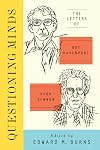
Of only the very great, e.g. Beckett, are reviewers free at whim to assert that they are wearing no clothes. The monkey-minds conspire to protect the second-raters.
There was an audible sigh as I finished the last letter some time after midnight. There was no sense of triumph or even completion. I have problems accepting that these two prolific men as friends/critics/academics would allow the precipitous drop in frequency as displayed here. There must be a cache of letters elsewhere or show more perhaps regrettably carbonized in a fireplace-- a manifestation of pique, a blow to posterity. As noted, my time with the first volume was enhanced by the sensation of the pages not being entirely cut. That sweet tearing sound was music, like the dulcet tones of Dusty Springfield.
Rather than concede what I learned from these two hulking tomes, I should note what they inspired. First off, to read more of both these men. Then, Beckett -- especially the novels. Wittgenstein as well. It is curious that my wary hesitation towards The Cantos is largely intact, might even be enhanced.
While both men wrote for the National Review, each routinely cast aspersions at Nixon and Reagan. What the two men weren't by 21C standards was politically correct. No need for a list. What we also have is a meditation on technology as it is applicable to intellectuals and discourse. The inefficiency and uncertainty involved when Davenport supplied illustrations for Kenner’s Stoic Comedians. That appears maddening to a contemporary reader. There’s a marvel at electric typewriters. Letters cross each other which does enhance the richness of the discussion but it was necessary evil of the epistolary age.
As I noted to Nathan, I feel closer to Davenport if only by reasons of geography. His reference to Kentucky as the American Ukraine is a sound comparison. What I don't understand is his affection for Tolkien. I gritted my teeth as Davenport slammed The Tin Drum but I don't understand the foregrounding of Gandolf and Bilbo.
This was my favorite reading of the year. show less
There was an audible sigh as I finished the last letter some time after midnight. There was no sense of triumph or even completion. I have problems accepting that these two prolific men as friends/critics/academics would allow the precipitous drop in frequency as displayed here. There must be a cache of letters elsewhere or show more perhaps regrettably carbonized in a fireplace-- a manifestation of pique, a blow to posterity. As noted, my time with the first volume was enhanced by the sensation of the pages not being entirely cut. That sweet tearing sound was music, like the dulcet tones of Dusty Springfield.
Rather than concede what I learned from these two hulking tomes, I should note what they inspired. First off, to read more of both these men. Then, Beckett -- especially the novels. Wittgenstein as well. It is curious that my wary hesitation towards The Cantos is largely intact, might even be enhanced.
While both men wrote for the National Review, each routinely cast aspersions at Nixon and Reagan. What the two men weren't by 21C standards was politically correct. No need for a list. What we also have is a meditation on technology as it is applicable to intellectuals and discourse. The inefficiency and uncertainty involved when Davenport supplied illustrations for Kenner’s Stoic Comedians. That appears maddening to a contemporary reader. There’s a marvel at electric typewriters. Letters cross each other which does enhance the richness of the discussion but it was necessary evil of the epistolary age.
As I noted to Nathan, I feel closer to Davenport if only by reasons of geography. His reference to Kentucky as the American Ukraine is a sound comparison. What I don't understand is his affection for Tolkien. I gritted my teeth as Davenport slammed The Tin Drum but I don't understand the foregrounding of Gandolf and Bilbo.
This was my favorite reading of the year. show less

I thoroughly enjoyed reading this excellent book. Although the forty essays collected here deal with a variety of subjects and were written for different occasions, there are several recurrent motifs. These include prehistoric cave paintings at Lescaux and elsewhere and the persistence of the myths of Persephone and Euridice. He is not shy about accolades, naming Louis Zukovsky as the greatest living American poet and Eudora Welty as the greatest prose writer. The modernists loom large, show more including Yeats, Stevens, and Williams, as well as enduring giants from the past, such as Homer, Poe, and Whitman. And above all, Joyce and Pound.
And the rehabilitation of Louis Agassiz was worth the price of admission.
Another recurring idea is that the poet “writes not for himself, but to provide the world with an articulate tongue.” Since Davenport was writing at a time when poets of personal experience (Lowell, Sexton, Plath, for instance) had more public acclaim than poets he championed, I would have liked to have seen him test this assertion on their best work.
Davenport is also an appreciative critic of visual art (pointing to another modern “greatest,” Tcherlitchew). I enjoyed his analysis of Grant Wood’s “American Gothic.”
I found some essays challenging to read, while others were relatively accessible. But all are written in the quiet, assured voice of one who has read widely, thought deeply, and is convinced he has something worthwhile to say. If that sounds elitist, so be it.
Final point: I read the hard-bound first edition. Its production was up to the usual high standards of North Point Press. show less
And the rehabilitation of Louis Agassiz was worth the price of admission.
Another recurring idea is that the poet “writes not for himself, but to provide the world with an articulate tongue.” Since Davenport was writing at a time when poets of personal experience (Lowell, Sexton, Plath, for instance) had more public acclaim than poets he championed, I would have liked to have seen him test this assertion on their best work.
Davenport is also an appreciative critic of visual art (pointing to another modern “greatest,” Tcherlitchew). I enjoyed his analysis of Grant Wood’s “American Gothic.”
I found some essays challenging to read, while others were relatively accessible. But all are written in the quiet, assured voice of one who has read widely, thought deeply, and is convinced he has something worthwhile to say. If that sounds elitist, so be it.
Final point: I read the hard-bound first edition. Its production was up to the usual high standards of North Point Press. show less

When Guy Davenport died in Kentucky in January 2005, the United States lost one of its last great men of letters. The experience of reading The Geography of the Imagination is truly a geographic sort of rush-- a "Cortez-seeing-the-Pacific-for-the-first-time" feeling (yes, I *know* who it was, and you know why I'm saying Cortez-- and if you don't, you can find out in Davenport.) In his writing, erudition is worn so lightly it turns into a hang-glider-- to read these essays is to be reminded, show more palpably and unmistakably, what being learned is *for.*
His was a mind to which nothing was foreign. Davenport wrote fiction, poetry, art and music criticism, and literary essays of wide-ranging and never-failing fascination. His anecdotes from a lifetime of studying under those who he admired will inspire and make you guffaw; his surprising connections between cultural moments a thousand years apart will make you blink with wonder.
He will also show you how easy a difficult text is, and how difficult an easy one. Davenport's efforts to create public appreciation and support of poets beyond the mainstream was a labor of love and radical commitment, and every American reader of poetry is indebted to him. It was from Davenport that I first learned who Jonathan Williams and Robert Kelly were, and why to read Lorine Niedecker and Ronald Johnson. He championed the reading of Olson and Zukofsky and will, if you let him, open up Pound's "Cantos" for you in ways that leave mere *explication du texte* rusting on the side of the road.
Davenport had read everything-- read and digested. Not just "Robinson Crusoe," but its two (!) sequels; not just "Moby-Dick," but "Clarel"; not just Thoreau, but Agassiz, Audubon, Muir, and Lewis and Clark. He compared dozens of translations of Homer and himself rendered the poems of Archilochus, Sappho and others; he studied Chinese inspired by Pound and Fenollosa; for Anglo-Saxon he went to learn from J.R.R. Tolkien. His erudition was always at the service of his curiosity, and high- and low-brow meant nothing to him, decades before it was cool to deconstruct a television commercial. In a few pages, sometimes one, his thought may leap like a living spark from O. Henry to James Joyce to Walt Disney, from Charles Ives to Rimbaud to the Lone Ranger; and moreover-- what is all the more refreshing-- *never* with the cuteness or cleverness that poisons "cultural studies" with the malaise of the always-already-passe. Despite his unflagging chastisement of know-nothing anti-intellectualism and laziness, Davenport was an optimist in a way that used to be considered characteristically American; but his enthusiasm extended to everything, old-world, new-world, what may yet be and what never was.
This is to say, that Davenport's great learning was first of all gratitude, which-- glory be to God-- he expressed over and over again in irrepressibly articulate and unfenced prose. Now that he is gone, who is left so catholic in interest and intrepid in craft? There are still a few truly wide-ranging scholars who do write beautiful and soul-changing sentences: George Steiner, Roberto Calasso, Martha Nussbaum, Anne Carson.... but for sheer generosity married to such voracious self-education, making such song and argument as to shake the mind awake and make the heart glad, Davenport was sui generis. We shall not see his like again. show less
His was a mind to which nothing was foreign. Davenport wrote fiction, poetry, art and music criticism, and literary essays of wide-ranging and never-failing fascination. His anecdotes from a lifetime of studying under those who he admired will inspire and make you guffaw; his surprising connections between cultural moments a thousand years apart will make you blink with wonder.
He will also show you how easy a difficult text is, and how difficult an easy one. Davenport's efforts to create public appreciation and support of poets beyond the mainstream was a labor of love and radical commitment, and every American reader of poetry is indebted to him. It was from Davenport that I first learned who Jonathan Williams and Robert Kelly were, and why to read Lorine Niedecker and Ronald Johnson. He championed the reading of Olson and Zukofsky and will, if you let him, open up Pound's "Cantos" for you in ways that leave mere *explication du texte* rusting on the side of the road.
Davenport had read everything-- read and digested. Not just "Robinson Crusoe," but its two (!) sequels; not just "Moby-Dick," but "Clarel"; not just Thoreau, but Agassiz, Audubon, Muir, and Lewis and Clark. He compared dozens of translations of Homer and himself rendered the poems of Archilochus, Sappho and others; he studied Chinese inspired by Pound and Fenollosa; for Anglo-Saxon he went to learn from J.R.R. Tolkien. His erudition was always at the service of his curiosity, and high- and low-brow meant nothing to him, decades before it was cool to deconstruct a television commercial. In a few pages, sometimes one, his thought may leap like a living spark from O. Henry to James Joyce to Walt Disney, from Charles Ives to Rimbaud to the Lone Ranger; and moreover-- what is all the more refreshing-- *never* with the cuteness or cleverness that poisons "cultural studies" with the malaise of the always-already-passe. Despite his unflagging chastisement of know-nothing anti-intellectualism and laziness, Davenport was an optimist in a way that used to be considered characteristically American; but his enthusiasm extended to everything, old-world, new-world, what may yet be and what never was.
This is to say, that Davenport's great learning was first of all gratitude, which-- glory be to God-- he expressed over and over again in irrepressibly articulate and unfenced prose. Now that he is gone, who is left so catholic in interest and intrepid in craft? There are still a few truly wide-ranging scholars who do write beautiful and soul-changing sentences: George Steiner, Roberto Calasso, Martha Nussbaum, Anne Carson.... but for sheer generosity married to such voracious self-education, making such song and argument as to shake the mind awake and make the heart glad, Davenport was sui generis. We shall not see his like again. show less
Lists
Favourite Books (1)
Awards


You May Also Like


Associated Authors
Statistics
- Works
- 63
- Also by
- 34
- Members
- 2,741
- Popularity
- #9,367
- Rating
- 3.9
- Reviews
- 27
- ISBNs
- 88
- Languages
- 2
- Favorited
- 22