
Susan Howe
Author of My Emily Dickinson
Works by Susan Howe
Women of Wisdom & Knowledge : Talks Selected from the BYU Women's Conferences (1990) — Editor — 17 copies
The Western Borders 3 copies
Poems Found in a Pioneer Museum 3 copies
Bedhangings II 2 copies
Live at the Ear 2 copies
Hinge Picture 1 copy
The Europe of trusts 1 copy
Frolic architecture 1 copy
Maden 1 copy
Fire Exit, April, foldout issue, cover by David von Schlegell — Author — 1 copy
Associated Works
American Women Poets in the 21st Century: Where Lyric Meets Language (2002) — Contributor — 40 copies
The Serpent and the Fire: Poetries of the Americas from Origins to Present (2024) — Contributor — 18 copies
Sulfur 3 — Contributor — 2 copies
ACTS 4, VOL. 1 NO 4, 1985 — Contributor — 2 copies
Dark Ages Clasp the Daisy Root #3 — Contributor — 2 copies
Telephone 15 — Contributor — 1 copy
The Difficulties I.1 — Contributor — 1 copy
Telephone 13 — Contributor — 1 copy
Telephone 17 — Contributor — 1 copy
Jimmy & Lucy's House of "K", #5 — Contributor — 1 copy
HOW(ever), Vol. V, No. 4, October 1989 — Contributor — 1 copy
Telephone 11 — Contributor — 1 copy
Dark Ages Clasp the Daisy Root #1 — Contributor — 1 copy
Talisman: A Journal of Contemporary Poetry and Poetics, Number 4, The Susan Howe Issue — Contributor — 1 copy
New World Journal #5 — Contributor — 1 copy
Fire Exit 4 — Contributor — 1 copy
HAWK-WIND #1 — Contributor — 1 copy
HOW(ever), Vol. V, No. 2, January 1989 — Contributor — 1 copy
L=A=N=G=U=A=G=E, Number 12, (Vol. 3, No. 2) — Contributor — 1 copy
Sulfur 9 — Contributor — 1 copy
L=A=N=G=U=A=G=E, Number 7, (Vol. 2, No. 1) — Contributor — 1 copy
Personal Injury Magazine, no. 4 — Contributor — 1 copy
Ironwood 28 Dickinson/Spicer: A Special Issue — Contributor — 1 copy
Telephone 9 — Contributor — 1 copy
L=A=N=G=U=A=G=E, Number 13, (Vol. 3, No. 3) — Contributor — 1 copy
Tamarisk, Volume V, Number 3/4, Summer/Fall 1983 — Contributor — 1 copy
HOW(ever), Vol. 2, No. 1, November 1984 — Contributor — 1 copy
Archives of American Art Journal, Volume 14, Number 4, 1974 — Contributor — 1 copy
HAWK-WIND #2 — Contributor — 1 copy
Tagged
Common Knowledge
- Birthdate
- 1937-06-10
- Gender
- female
- Education
- School of the Museum of Fine Arts, Boston
- Occupations
- poet
critic - Awards and honors
- Bollingen Prize (2011)
American Academy of Arts and Sciences (1999)
Chancellor of The Academy of American Poets (2000) - Relationships
- Quaytman, R. H. (daughter)
Quaytman, Harvey (husband)
Howe, Fanny (sister)
Howe, Mark deWolfe (father)
Hare, Peter H. (husband)
von Schlegell, Mark (son) (show all 7)
Grubbs, David (collaborater) - Nationality
- USA
- Birthplace
- Boston, Massachusetts, USA
- Places of residence
- Guilford, Connecticut, USA
Buffalo, New York, USA
Berlin, Germany
Dublin, Ireland - Associated Place (for map)
- USA
Members
Reviews
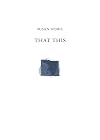
This book has three sections, each remarkably different from one another, and yet connected by a recognizable poetic voice and interest. The first, "The Disappearance Approach" is about the unexpected death of her second husband. Add this to my saddest-reading-list-ever; it fits alongside Didion's The Year Of Magical Thinking and Gomez's Say Her Name. But these shortish prose-blocks are distinctly poetry, where the others are memoir. Of course, the lines are not quite so clear-cut between show more the two, but her frequent moves into the lyric, the shifts into non-normative syntax, and the recurring failures of language on the page to continue on are all gestures that belong more fully to poetry. The end of the first prose-block, for example:
He was lying in bed with his eyes closed. I knew when I saw him with the CPAP mask over his mouth and nose and heard the whooshing sound of air blowing air that he wasn't asleep. No.
Starting from nothing with nothing when everything else has been said
The description begins normatively enough. Then that "No." with its doubling function: affirming her knowledge and simultaneously rejecting it. And then the total shift into lyric, a statement that merely fades rather than ending, a kind of hopelessness in expression, the collapse of logic, the inability to express. No being the only possible utterance. That form shapes the rest of the section: straightforward, surprisingly unsentimental descriptions and memories, followed by a brief lyric diversion.
The second section is extremely different, cut-up collages of type. What's fascinating for me is how the mind always tries to create meaning, to render legible. These collages are for the most part un-readable, except in parts, and still there's an impulse to read slowly, to extrapolate from the fragments to create words, sentences, context. They're beautiful as objects and fascinating as textual remnants.
The final section is composed of sparse, almost hymnal poetry blocks. This was the least engaging for me, but that's because I'm less interested in the Christian metaphysical mysticism and more in the quality of language. The shift back into legibility is welcome, though, after the difficulty of the middle section.
I'm so glad I finally made the time to read this. Inspiring, as always.
[Posted originally at: http://alluringlyshort.com/2013/10/13/that-this-by-susan-howe/ ] show less
He was lying in bed with his eyes closed. I knew when I saw him with the CPAP mask over his mouth and nose and heard the whooshing sound of air blowing air that he wasn't asleep. No.
Starting from nothing with nothing when everything else has been said
The description begins normatively enough. Then that "No." with its doubling function: affirming her knowledge and simultaneously rejecting it. And then the total shift into lyric, a statement that merely fades rather than ending, a kind of hopelessness in expression, the collapse of logic, the inability to express. No being the only possible utterance. That form shapes the rest of the section: straightforward, surprisingly unsentimental descriptions and memories, followed by a brief lyric diversion.
The second section is extremely different, cut-up collages of type. What's fascinating for me is how the mind always tries to create meaning, to render legible. These collages are for the most part un-readable, except in parts, and still there's an impulse to read slowly, to extrapolate from the fragments to create words, sentences, context. They're beautiful as objects and fascinating as textual remnants.
The final section is composed of sparse, almost hymnal poetry blocks. This was the least engaging for me, but that's because I'm less interested in the Christian metaphysical mysticism and more in the quality of language. The shift back into legibility is welcome, though, after the difficulty of the middle section.
I'm so glad I finally made the time to read this. Inspiring, as always.
[Posted originally at: http://alluringlyshort.com/2013/10/13/that-this-by-susan-howe/ ] show less
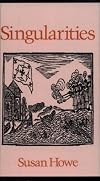
Since Susan Howe came to read last week, I’ve been thinking that I really must immediately read everything she’s ever written starting now go. Before hearing her read I’d read her major works: The Europe of Trusts (which I’m planning on re-reading because it was almost a decade ago I read it); My Emily Dickinson. Recently, you’ll remember perhaps, I read That This. So I went to my local friendly university library and got every book they had of hers. Which it turns out was only show more Singularities. So while I’m waiting for the others to come in through interlibrary loan, I devoured this book.
A very slim volume in three sections. Triptych, again. Challenging, as most of her work is, but rewarding. I find myself having to really slow down, read and re-read passages, engage them with different minds. My listening mind, my tactile mind, my unfocused mind, my graphic mind. One of the things I love most about this book is that the first two sections have an introduction talking about the intent, and a little bit of the process, of the following work. The prose is far from explanatory, though, it feels like the necessary entry-point. “You have to know this in order to begin.” I love that apparatus included unobtrusively. It’s not an explication, not an explanation, but a positioning. You are here, in relation to the poem. Now go there. Not directions but a map.
[Read the whole thing: http://alluringlyshort.com/2014/02/05/singularities-by-susan-howe/ ] show less
A very slim volume in three sections. Triptych, again. Challenging, as most of her work is, but rewarding. I find myself having to really slow down, read and re-read passages, engage them with different minds. My listening mind, my tactile mind, my unfocused mind, my graphic mind. One of the things I love most about this book is that the first two sections have an introduction talking about the intent, and a little bit of the process, of the following work. The prose is far from explanatory, though, it feels like the necessary entry-point. “You have to know this in order to begin.” I love that apparatus included unobtrusively. It’s not an explication, not an explanation, but a positioning. You are here, in relation to the poem. Now go there. Not directions but a map.
[Read the whole thing: http://alluringlyshort.com/2014/02/05/singularities-by-susan-howe/ ] show less
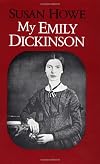
Boy howdy, do I feel like an idiot.
Not one reviewer here says anything along the lines of, "Um, guys – what just happened?"
Not one reader I could find rated it lower than 3 stars – and the vast majority of reviewers give it four or five, and swoon in their reviews.
So I guess it's just me.
I'm the dork who feels as if I stumbled into someone else's drug trip when I thought I was supposed to be reading a book about a poet and her work.
I thought I was reasonably literate (for a civilian), show more but reading this book felt like having books flung at my head by an invisible assailant.
If you know me, you know I'm all about the Post-Its when I read. And my library copy of My Emily Dickinson is stuck with its fair share – but all the passages I found worth hanging onto are quotations from other people's works.
The only bits I marked that Susan Howe actually wrote are things I wanted to mention here because I disagree with them strenuously. "Dickinson means this to be an ugly verse," Howe says at one point, because apparently being a poet herself means having permission to speak on behalf of a long-dead writer. (Hint: NO.)
And "Elizabeth Barrett Browning...failed as a poet herself."
Excuse me? EBB wrote poems even non-poetry lovers can admire:
If thou must love me, let it be for nought
Except for love's sake only.
Does that sound like the beginning of a failed sonnet?
Elizabeth Barrett Browning wrote beautifully, and her writing is remembered – people quote her all the time. (She wrote the sonnet that begins, "How do I love thee? Let me count the ways.") By any reasonable standard, she did NOT fail as a poet.
So I couldn't keep up with most of Howe's writing here, and I didn't like the few opinions I could understand.
I feel like a weirdo and an idiot; but other than being glad to see some of the quotes Howe passed along from other writers, I did not enjoy this book, nor did I get much out of it.
Back to the library it goes, and on to the next book about Dickinson I go. show less
Not one reviewer here says anything along the lines of, "Um, guys – what just happened?"
Not one reader I could find rated it lower than 3 stars – and the vast majority of reviewers give it four or five, and swoon in their reviews.
So I guess it's just me.
I'm the dork who feels as if I stumbled into someone else's drug trip when I thought I was supposed to be reading a book about a poet and her work.
I thought I was reasonably literate (for a civilian), show more but reading this book felt like having books flung at my head by an invisible assailant.
If you know me, you know I'm all about the Post-Its when I read. And my library copy of My Emily Dickinson is stuck with its fair share – but all the passages I found worth hanging onto are quotations from other people's works.
The only bits I marked that Susan Howe actually wrote are things I wanted to mention here because I disagree with them strenuously. "Dickinson means this to be an ugly verse," Howe says at one point, because apparently being a poet herself means having permission to speak on behalf of a long-dead writer. (Hint: NO.)
And "Elizabeth Barrett Browning...failed as a poet herself."
Excuse me? EBB wrote poems even non-poetry lovers can admire:
If thou must love me, let it be for nought
Except for love's sake only.
Does that sound like the beginning of a failed sonnet?
Elizabeth Barrett Browning wrote beautifully, and her writing is remembered – people quote her all the time. (She wrote the sonnet that begins, "How do I love thee? Let me count the ways.") By any reasonable standard, she did NOT fail as a poet.
So I couldn't keep up with most of Howe's writing here, and I didn't like the few opinions I could understand.
I feel like a weirdo and an idiot; but other than being glad to see some of the quotes Howe passed along from other writers, I did not enjoy this book, nor did I get much out of it.
Back to the library it goes, and on to the next book about Dickinson I go. show less
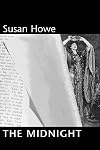
I am assembling materials for a recurrent return somewhere. Familiar sound textures, deliverances, vagabond quotations, preservations, wilderness shrubs, little resuscitated patterns. Historical or miraculous. Thousands of correlations have to be sliced and spliced. […] perhaps there is the surety that after a silence she will contact him again in bits. Escape may be through that dawning light just filtering through the blinds.
What Susan Howe does here is--on the surface--easily boiled show more down, shrugged off. But if I learned anything from this book, it's that surfaces matter, for it's on the surface that such messes as lives are hidden. Hidden and therefore accessible.
Mind the hidden
Being hidden is the first necessary step to being revealed. Let's ruffle then, the surfaces, the particulars that complicate and trouble our sleep so.
She has shown me that access to the metaphysical is the requirement of a N E E D. Poems are the impossibility of plainness rendered in plainest form.
Not only does Howe have faith in a past (both personal and shared) that can be revealed through words found, words printed on a page, words written in the margin, or pictures, photographs and drawings, but also in each word itself.
Portmanteau for a voyage
For each word has a history. An etymology.
"Bare lists of words are found suggestive, to an imaginative and excited mind … The poorest experience is rich enough for all the purposes of expressing thought."
And in the poetic portions of this book she gives us these words as if cryptic designs etched on a curtain. It is up to us to find their histories, their linkages.
Ten thousandth truthshow less
Ten thousandth impulse
Do not mince matter
as if tumbling were apt
parable preached in
hedge-sparrow gospel
Lists
Awards


You May Also Like


Associated Authors
Statistics
- Works
- 38
- Also by
- 34
- Members
- 1,539
- Popularity
- #16,725
- Rating
- 3.7
- Reviews
- 12
- ISBNs
- 43
- Languages
- 3
- Favorited
- 7