
Paul C. Metcalf (1917–1999)
Author of Genoa: A Telling of Wonders
About the Author
Disambiguation Notice:
Do not combine this author with Paul Metcalf. Paul Metcalf is a split author.
Works by Paul C. Metcalf
October mountain: An anthology of Berkshire writers (Berkshire artists collaborative project) (1991) 3 copies
Firebird 2 copies
Upriver Farming and Industry: An Excerpt from Waters of Potowmack, A Documentary History of the Potomac River Basin. (1977) 2 copies
3 x 3 — Author — 1 copy
Guest #13 1 copy
Land, Skin & Blindness 1 copy
From Quarry Road 1 copy
North Carolina 1 copy
Associated Works
Lillabulero: Number 12, Winter 1973: A Special Issue for Paul Metcalf (1973) — Contributor — 2 copies
Glitch 1 — Contributor — 2 copies
Fire Exit 4 — Contributor — 1 copy
Ironwood 28 Dickinson/Spicer: A Special Issue — Contributor — 1 copy
Vort #4, Fall 1973 — Contributor — 1 copy
HAWK-WIND #1 — Contributor — 1 copy
Truck 21, A 50th Birthday Celebration For Jonathan Williams — Contributor — 1 copy
New World Journal, Vol. 1, No. 2/3 — Contributor — 1 copy
Fire Exit 3 — Contributor — 1 copy
The Difficulties I.1 — Contributor — 1 copy
LONGHOUSE, Spring 1988 — Contributor — 1 copy
Tagged
Common Knowledge
- Birthdate
- 1917-11-07
- Date of death
- 1999
- Gender
- male
- Nationality
- USA
- Disambiguation notice
- Do not combine this author with Paul Metcalf. Paul Metcalf is a split author.
- Associated Place (for map)
- USA
Members
Reviews

Who is Paul Metcalf?
I wondered the same when I first saw his name, about nine years ago, listed in my absolute favorite top 100 novels list: Larry McCaffery's The 20th Century's Greatest Hits: 100 English-Language Books of Fiction, a list focused primarily on the most innovative of modernist works, as well as every novelistic niche under that little read (and perhaps lesser understood) literary umbrella known as "postmodernism".
McCaffery featured on his list innovative writers (James Joyce, show more William Gaddis); the avant gardish types (Robert Coover, John Hawkes, Kathy Acker); the poster-boys of postmodernity (Thomas Pynchon, Don Delillo, David Foster Wallace); the magical realists (Salman Rushdie, Gabriel Garcia Marquez); the metafictiony masters (John Barth, Raymond Federman); the linguists (Gertrude Stein, William H. Gass) who replaced plot with language; all of them (and too many more to itemize by name) digressive loopty-loopters who pushed the limits of the novel structurally, narratively, point of view-wise, in ways previously unimagined in literature, assuming we disregard Laurence Sterne's (Tristam Shandy) contribution, as well as Rabelais a couple centuries even earlier, writers both who were essentially writing postmodern literature in the 1700s and 1500s, respectively.
But Sterne and Rabelais are the rare exceptions to what exploded in the 1960s: Narrative that shed the modernist trappings of its more orthodox forebears and embraced instead, in sum, loose linguistics, loose allusions, loose plots (if any), loose connections and non-linearity. Trading obvious meaning, in other words, for secret meanings if not meaninglessness altogether. Fiction that was so experimental it was next to impossible to read at times, like Finnegans Wake or The Making of Americans or Gravity's Rainbow or, the ironically titled, The Recognitions; but fiction, nevertheless, in its oft-purple prose you could not possibly read aloud without pausing often to take a breath (or pausing for your oxygen mask), that was, despite its difficulties, typically fun to read for the sheer flamboyance of it's riffing prose, as if the language itself were shot up with steroids and pranced around in the ring flexing its obscenely large muscles (to the boos of most in the old guard and to the delirious cheers of a hyper, younger minority); literature so loathed (and yet so loved), that it left no middle ground among its audience: You were either in to it all out, or you couldn't stand any of it, no doubt! There was no middle ground.
Paul Metcalf, essayist, poet, under-appreciated postmodern novelist, ranked in the 43rd slot of McCaffery's cult classic list, was definitely in to it. He wrote some weird, and at times, indecipherable shit, to put it bluntly (try making heads or tails of his Araminta and the Coyote) and found no fame or wealth for his lifelong efforts. Just like his great-grandfather before him ... Herman Melville.
Paul Metcalf indeed had some big shoes to fill as a writer, didn't he? The pressure was on. He admitted as much to feeling it. He found being the great-grandson of Herman Melville burdensome, and so went mainstream a bit (for him) when he wrote Genoa: A Telling of Wonders in 1965, his most accessible, and mostly unknown, masterpiece.
Genoa was the novel he had to write in order to get the Melville monkey off his back. No surprise, then, that Melville infiltrates this short, but dense, novel. Though calling it a novel may be inaccurate in describing what Metcalf accomplishes here, as he skillfully weaves together throughout the complex, shifting narrative of Genoa, chunks of quotations from both the works of Melville and the man who influenced him, Christopher Columbus, the latter through his letters and diaries. What Metcalf does with these two legendary oceanic adventurers' writings is not all that dissimilar in concept to what Burroughs did with his "cut-up" technique: chopping up parallel themes and motifs (rather than sentences a la Burroughs) and inserting them in just the right spots to advance the narrative of his novel. A haunting novel of the story of one soul searching man, Michael Mills, presumably Metcalf’s alter ego, desperate for answers, and Carl Mills, his brother, who suffers, we soon learn, from a progressively debilitating, ultimately incapacitating, unspecified mental illness.
The novel opens with Michael Mills in the attic of his home, rummaging through old copies of Melville texts, reminiscing when he and his brother, Carl, discovered old Melville artifacts in the attic of their childhood home in Pittsfield, MA. His reminiscing takes us back to the beginnings for not only he and his brother, but to the nautical and novelistic beginnings of Melville and Columbus. We learn of Melville’s first visits to Polynesia, the setting for his first novel, Typee, and of Columbus’ first voyage across the Atlantic. We read of ensuing voyages, and how those experiences for both affected their psychological and philosophical worldviews. Weaved between the quotations of the two icons, we witness the lives of the Mill's brothers drifting irreparably apart as Carl flounders out -- unreachable -- upon some raging sea inside him, carried farther and farther out to sea by the constant currents of his unhealable madness. The story of Carl’s demise into madness recalls that of the Pequod’s -- and it's captain -- in Moby-Dick (and Metcalf makes the connection clear), while Michael’s repeated attempts to reach across to Carl, over what amounted to a very un-Pacific Ocean of storming insanity, echoed Columbus’ failed attempts to regain the favor, recognition, and support of the Spanish Monarchy for his "blasphemous" expeditions. The Catholic Church was certain the World was flat back then, you might recall, and Columbus proved the proud Church wrong, a dangerous (if not fatal) de-mythologizing endeavor in those days.
Metcalf likewise de-mythologizes, or, rather, humanizes the legend of Melville. Melville had a son commit suicide. Melville's own father died of a mania related madness. Melville suffered, like we all suffer, and he might've been, if we're to believe Metcalf's inside-information gleaned from Genoa, just a tad mad himself. And mad, that is, much like the madness of Carl's -- the veritable, familial white whale -- that Michael Mills must confront, and maybe make some personal peace with.
Metcalf worked his melding storytelling magic to perfection, intermingling Melville's and Columbus' complicated lives, legends, de-mythologizings, and quotations, along with Michael Mills' first person storyline, into one seamless narrative triumphantly: Three voices, in effect, simultaneously speaking, but sounding (and reading) like a single coherent voice, written by one author. A single voice tossed often into its respective troughs of individual despair, yes, but lifted inevitably, despite the melancholy and suffering taking their indefatigable tolls on every person, into individual and collective peace. Acceptance. Again, each individual strand comprising the rope of narrative: Melville's, Columbus', Michael's, Carl's, and toward the conclusion, even a bit of Theodore Dreiser's and the Lewis and Clark expeditions'; no matter their individual outcomes good or bad, collectively attained varying levels of peace with their lives, once the narrator, Michael Mills, reconciled himself with his own past, and with the present plight of his doomed brother. In so doing, Metcalf, vicariously, reconciled himself to the shadow he'd lived under, that brilliant, but daunting, legacy of his great-grandfather, Herman Melville. Sounds like Metcalf experienced a catharsis of Pequodian proportions, I'd say!
Genoa: A Telling of Wonders is a wonderful, complex and profound read. I fear I've not quite done Metcalf's accomplishment (and his genius in accomplishing it) the justice it deserves. So do yourself a favor and read Genoa: A Telling of Wonders, and discover why Larry McCaffery included it in the upper half of his list, The 20th Century's Greatest Hits. I doubt you'll be disappointed. show less
I wondered the same when I first saw his name, about nine years ago, listed in my absolute favorite top 100 novels list: Larry McCaffery's The 20th Century's Greatest Hits: 100 English-Language Books of Fiction, a list focused primarily on the most innovative of modernist works, as well as every novelistic niche under that little read (and perhaps lesser understood) literary umbrella known as "postmodernism".
McCaffery featured on his list innovative writers (James Joyce, show more William Gaddis); the avant gardish types (Robert Coover, John Hawkes, Kathy Acker); the poster-boys of postmodernity (Thomas Pynchon, Don Delillo, David Foster Wallace); the magical realists (Salman Rushdie, Gabriel Garcia Marquez); the metafictiony masters (John Barth, Raymond Federman); the linguists (Gertrude Stein, William H. Gass) who replaced plot with language; all of them (and too many more to itemize by name) digressive loopty-loopters who pushed the limits of the novel structurally, narratively, point of view-wise, in ways previously unimagined in literature, assuming we disregard Laurence Sterne's (Tristam Shandy) contribution, as well as Rabelais a couple centuries even earlier, writers both who were essentially writing postmodern literature in the 1700s and 1500s, respectively.
But Sterne and Rabelais are the rare exceptions to what exploded in the 1960s: Narrative that shed the modernist trappings of its more orthodox forebears and embraced instead, in sum, loose linguistics, loose allusions, loose plots (if any), loose connections and non-linearity. Trading obvious meaning, in other words, for secret meanings if not meaninglessness altogether. Fiction that was so experimental it was next to impossible to read at times, like Finnegans Wake or The Making of Americans or Gravity's Rainbow or, the ironically titled, The Recognitions; but fiction, nevertheless, in its oft-purple prose you could not possibly read aloud without pausing often to take a breath (or pausing for your oxygen mask), that was, despite its difficulties, typically fun to read for the sheer flamboyance of it's riffing prose, as if the language itself were shot up with steroids and pranced around in the ring flexing its obscenely large muscles (to the boos of most in the old guard and to the delirious cheers of a hyper, younger minority); literature so loathed (and yet so loved), that it left no middle ground among its audience: You were either in to it all out, or you couldn't stand any of it, no doubt! There was no middle ground.
Paul Metcalf, essayist, poet, under-appreciated postmodern novelist, ranked in the 43rd slot of McCaffery's cult classic list, was definitely in to it. He wrote some weird, and at times, indecipherable shit, to put it bluntly (try making heads or tails of his Araminta and the Coyote) and found no fame or wealth for his lifelong efforts. Just like his great-grandfather before him ... Herman Melville.
Paul Metcalf indeed had some big shoes to fill as a writer, didn't he? The pressure was on. He admitted as much to feeling it. He found being the great-grandson of Herman Melville burdensome, and so went mainstream a bit (for him) when he wrote Genoa: A Telling of Wonders in 1965, his most accessible, and mostly unknown, masterpiece.
Genoa was the novel he had to write in order to get the Melville monkey off his back. No surprise, then, that Melville infiltrates this short, but dense, novel. Though calling it a novel may be inaccurate in describing what Metcalf accomplishes here, as he skillfully weaves together throughout the complex, shifting narrative of Genoa, chunks of quotations from both the works of Melville and the man who influenced him, Christopher Columbus, the latter through his letters and diaries. What Metcalf does with these two legendary oceanic adventurers' writings is not all that dissimilar in concept to what Burroughs did with his "cut-up" technique: chopping up parallel themes and motifs (rather than sentences a la Burroughs) and inserting them in just the right spots to advance the narrative of his novel. A haunting novel of the story of one soul searching man, Michael Mills, presumably Metcalf’s alter ego, desperate for answers, and Carl Mills, his brother, who suffers, we soon learn, from a progressively debilitating, ultimately incapacitating, unspecified mental illness.
The novel opens with Michael Mills in the attic of his home, rummaging through old copies of Melville texts, reminiscing when he and his brother, Carl, discovered old Melville artifacts in the attic of their childhood home in Pittsfield, MA. His reminiscing takes us back to the beginnings for not only he and his brother, but to the nautical and novelistic beginnings of Melville and Columbus. We learn of Melville’s first visits to Polynesia, the setting for his first novel, Typee, and of Columbus’ first voyage across the Atlantic. We read of ensuing voyages, and how those experiences for both affected their psychological and philosophical worldviews. Weaved between the quotations of the two icons, we witness the lives of the Mill's brothers drifting irreparably apart as Carl flounders out -- unreachable -- upon some raging sea inside him, carried farther and farther out to sea by the constant currents of his unhealable madness. The story of Carl’s demise into madness recalls that of the Pequod’s -- and it's captain -- in Moby-Dick (and Metcalf makes the connection clear), while Michael’s repeated attempts to reach across to Carl, over what amounted to a very un-Pacific Ocean of storming insanity, echoed Columbus’ failed attempts to regain the favor, recognition, and support of the Spanish Monarchy for his "blasphemous" expeditions. The Catholic Church was certain the World was flat back then, you might recall, and Columbus proved the proud Church wrong, a dangerous (if not fatal) de-mythologizing endeavor in those days.
Metcalf likewise de-mythologizes, or, rather, humanizes the legend of Melville. Melville had a son commit suicide. Melville's own father died of a mania related madness. Melville suffered, like we all suffer, and he might've been, if we're to believe Metcalf's inside-information gleaned from Genoa, just a tad mad himself. And mad, that is, much like the madness of Carl's -- the veritable, familial white whale -- that Michael Mills must confront, and maybe make some personal peace with.
Metcalf worked his melding storytelling magic to perfection, intermingling Melville's and Columbus' complicated lives, legends, de-mythologizings, and quotations, along with Michael Mills' first person storyline, into one seamless narrative triumphantly: Three voices, in effect, simultaneously speaking, but sounding (and reading) like a single coherent voice, written by one author. A single voice tossed often into its respective troughs of individual despair, yes, but lifted inevitably, despite the melancholy and suffering taking their indefatigable tolls on every person, into individual and collective peace. Acceptance. Again, each individual strand comprising the rope of narrative: Melville's, Columbus', Michael's, Carl's, and toward the conclusion, even a bit of Theodore Dreiser's and the Lewis and Clark expeditions'; no matter their individual outcomes good or bad, collectively attained varying levels of peace with their lives, once the narrator, Michael Mills, reconciled himself with his own past, and with the present plight of his doomed brother. In so doing, Metcalf, vicariously, reconciled himself to the shadow he'd lived under, that brilliant, but daunting, legacy of his great-grandfather, Herman Melville. Sounds like Metcalf experienced a catharsis of Pequodian proportions, I'd say!
Genoa: A Telling of Wonders is a wonderful, complex and profound read. I fear I've not quite done Metcalf's accomplishment (and his genius in accomplishing it) the justice it deserves. So do yourself a favor and read Genoa: A Telling of Wonders, and discover why Larry McCaffery included it in the upper half of his list, The 20th Century's Greatest Hits. I doubt you'll be disappointed. show less
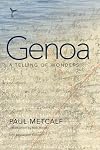
The experience of reading Genoa was disturbing. It wasn't simply the setting, a two hour drive from here. It was a vertigo, the weight borne by the protagonist. There's a Stoner-type grace to the character in his labor. This uphill toil is something palpable. I can relate, along with the anxiety. The whispered doubt. The shudders. I recoil from this awareness and accept it as my own, or at least something similar. I thought the collage mechanic rather effective. I liked the twinning of show more Melville and Columbus. There's something visceral in their failure: the ache of their arc. It was interesting that as I read this novel, my best friend kept sending me pictures from his holiday in Cuba. There's much to measure in that distance. The crash of waves against a relative silence. Though Metcalf informs us early in the book that where I sit typing was once the floor of an ocean and later just south of an enormous glacier. I carried our rock salt down to the basement last weekend. I never opened the bag and the traces of actual snow this past winter were more of a joke than a hazard. The final insertion of Dreiser and Debs didn't work for me, though it must be admitted that all of my trips to Terre Haute were to see my best friend. I had contemplated a Melville project with various adjacent texts including Olson and Perry Miller. I'm not sure about that at the moment. show less

While far less disturbing than Genoa, this piece shares the humility of that meditation on Melville and madness. Patagoni is a triptych of the fauna and flora of Iberian America during the time of Conquest, this is followed by a prose poem on the life of Henry Ford and concludes with a travelogue of a trip Metcalf took across South America, constantly aware of being the ugly American. The last element is especially touching and I was rather pleased that Metcalf shared my love of futbol. The show more Edenic concept of Nature is ran roughshod by Progress, the soft prayer of the indigenous is soon lost to the billowing smoke and incessant roar of the machines as the Amazon is clear cut. show less
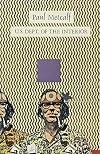
Another wonderful book by Paul Metcalf. I'd expected this to show the signs of his old age, but I should have known that a person who praises Melville for continuing to write for forty years after the failure of Moby-Dick wouldn't produce formulaic novels at any age. As in "Genoa," the links between apparently disjunct subjects are continuously amazing.
After a chapter on the Alaska earthquake, we're plunged into an apparently entirely disconnected chapter on the symptoms of migraine. Three show more pages in, we're given a list of symptoms. (These are indented and double-spaced, without periods.)
an edging of light of a zigzag shape and curruscating [sic: coruscating] at right angles to its length
stars, circles, squares or squiggles, throbbing, spinning, flickering and spinning
bubbles and balloons
in a visual storm, a brilliant sand dune, the brains shimmering
A reader might notice the word "storm," and the next line makes it clear:
a road cracking up with a severe earthquake
This is a spectacular return to the descriptions of Alaskan roads breaking up in the earthquake, because given the list of migraine symptoms that has preceded it, a "road" is an entirely plausible scotoma. Suddenly the earthquake is relived, inside the reader's eye, as an abstract vision. The author's migraine, which becomes the reader's image, is a sign of the impending destruction of his consciousness, just as the earthquake destroyed Anchorage. And in retrospect, it's all set up by the last section of the preceding earthquake chapter, which is about how Houston was lifted four inches by a surface wave from the Alaska quake, 3,300 miles away. That's an analogue, a signal to the reader that distant connections will reappear.
This is only one example, one appearance of one theme. Metcalf should be required reading for all MFA students, because he takes even the most attentive reader to school, demonstrating how to make connections that aren't forced, programmatic, obvious, repetitive, awkward, or otherwise business as usual. It's real poetry, and it's no wonder that in interviews and essays, Metcalf always said that Melville wrote poetry in prose, even if his actual poetry was awful, and that people like Melville and Poe knew they were blurring the boundaries of poetry and prose. That mixture is much more powerful, to my ear, than Metcalf's mixing of historical periods and subjects, because it doesn't take the usual forms of poetry lodged in prose (as in "Paterson," Anne Carson, and many others) or prose as poetry (as in Banville, etc.). show less
After a chapter on the Alaska earthquake, we're plunged into an apparently entirely disconnected chapter on the symptoms of migraine. Three show more pages in, we're given a list of symptoms. (These are indented and double-spaced, without periods.)
an edging of light of a zigzag shape and curruscating [sic: coruscating] at right angles to its length
stars, circles, squares or squiggles, throbbing, spinning, flickering and spinning
bubbles and balloons
in a visual storm, a brilliant sand dune, the brains shimmering
A reader might notice the word "storm," and the next line makes it clear:
a road cracking up with a severe earthquake
This is a spectacular return to the descriptions of Alaskan roads breaking up in the earthquake, because given the list of migraine symptoms that has preceded it, a "road" is an entirely plausible scotoma. Suddenly the earthquake is relived, inside the reader's eye, as an abstract vision. The author's migraine, which becomes the reader's image, is a sign of the impending destruction of his consciousness, just as the earthquake destroyed Anchorage. And in retrospect, it's all set up by the last section of the preceding earthquake chapter, which is about how Houston was lifted four inches by a surface wave from the Alaska quake, 3,300 miles away. That's an analogue, a signal to the reader that distant connections will reappear.
This is only one example, one appearance of one theme. Metcalf should be required reading for all MFA students, because he takes even the most attentive reader to school, demonstrating how to make connections that aren't forced, programmatic, obvious, repetitive, awkward, or otherwise business as usual. It's real poetry, and it's no wonder that in interviews and essays, Metcalf always said that Melville wrote poetry in prose, even if his actual poetry was awful, and that people like Melville and Poe knew they were blurring the boundaries of poetry and prose. That mixture is much more powerful, to my ear, than Metcalf's mixing of historical periods and subjects, because it doesn't take the usual forms of poetry lodged in prose (as in "Paterson," Anne Carson, and many others) or prose as poetry (as in Banville, etc.). show less
Lists
Awards

You May Also Like


Associated Authors
Statistics
- Works
- 37
- Also by
- 14
- Members
- 498
- Popularity
- #49,659
- Rating
- 4.0
- Reviews
- 13
- ISBNs
- 32
- Favorited
- 1